




Cutting the Leaf Yourself Gets You a Latex Problem the Bottle Already Solved
Aloe has the best clinical case of any kitchen remedy — and the fresh-leaf version puts a manual processing step between you and the part that works.
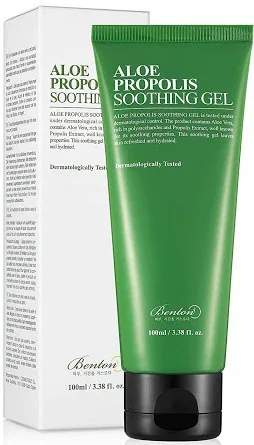
Disclosed percentages — 80% aloe water, 10% propolis — from the era before transparency was a marketing department; the propolis tier lifts it over plain aloe gels for blemish aftercare, and the fragrance-free, alcohol-free, oil-free discipline keeps it compatible with every active a troubled routine runs.
Twelve years of acne-community aftercare in one austere tube: 80% aloe water and 10% propolis at printed percentages, fragrance-free and active-compatible to a fault, calming angry blemishes and sun-flushed evenings for seventeen dollars. The bee-allergic are excluded by the formula's better half, and nothing here treats causes — but as the de-escalation layer every troubled routine needs, the canon chose correctly and never had to revise.
The case for it
What would change this: A researched evidence row for the lead active would replace this with a verdict.
Same rule for everyone. “Good choice” is the verdict on 1,938 of 45,024 concern verdicts across the catalog; rule F2 decided 1,938 of them. Unchanged since September 5, 2026, engine 5.1.1.
Brand or formulator? Disclose a concentration or correct a fact →
The case for it
Same rule for everyone. “Good choice” is the verdict on 9,564 of 45,024 concern verdicts across the catalog; rule R5 decided 9,072 of them. Unchanged since September 5, 2026, engine 5.1.1.
Brand or formulator? Disclose a concentration or correct a fact →
The studies behind the evidence row
Also listed for Acne, Excess Oiliness and Sun Damage — the actives here (Aloe Vera, Propolis, Allantoin, Botanical Extracts) are in our research queue for those concerns; there is no verdict until their evidence rows are written. That is a gap in our table, not a mark against the product.
A verdict is DermApproved’s assessment of how well a product’s ingredients fit a concern — never a claim about what the product treats. Evidence dots and collected reviews sit beside it and are never blended in. Rules 0.5.1 · evidence table ev-2026.09-r228 · how we decide
Every acne routine is secretly two routines. There's the offense — the BHA dissolving plugs, the retinoid reordering keratinization, the benzoyl peroxide running its oxidative raids — and then there's the aftercare: the unglamorous de-escalation work of calming what the offense inflames, cooling what the day flushed, and keeping the skin civil enough to tolerate tomorrow's treatment. The offense gets the credit and the literature; the aftercare gets repurchased. Benton's Aloe Propolis Soothing Gel has spent twelve years as the acne community's standing answer to the second routine — the tube that lived beside a generation's exfoliants — and reading it today is reading the aftercare category's job description, written early and never meaningfully improved upon at the price.
The formula is early-Benton candor in gel form. The label prints its architecture — 80% aloe leaf water, 10% propolis extract — from the era before disclosed percentages became a marketing department's quarterly initiative, and the construction follows honestly: triple-form aloe (water as the base phase, extract and juice powder reinforcing) carrying the polysaccharide soothe-and-hydrate that defines the format, with propolis as the differentiating tier. The bee-glue resin is what separates this from the plain aloe vats of its era — flavonoid-rich, with genuine small-trial literature in wound care and anti-bacterial contexts, contributing the blemish-aftercare edge that made overnight dabs the product's signature move. Underneath, the floor is era-correct and disciplined: betaine and allantoin conditioning, the cucumber-purslane-green-tea chorus, arginine adjusting pH, and — the discipline part — no fragrance, no alcohol, no oil, nothing that argues with the actives this gel was born to follow. The fungal-acne audit passes; the formula's entire exclusion list is its better half, propolis being a true allergen for the bee-sensitive, plus the lichen line for a rare few.
What it does is modest and reliably documented across one of K-beauty's deepest review archives. On contact: cooling, quick set, no sting on freshly-treated skin — the layering manners that made it the universal buffer. Overnight on blemishes: visibly calmer mornings, the propolis-aloe pairing de-escalating the inflammation that makes spots look worse than their biology requires. After sun: the category's defining second job, performed without the alcohol-and-fragrance sting of pharmacy aloe. What it doesn't do, the canon always understood: nothing here touches sebum, keratinization, or bacteria at treatment scale — the gel is the medic, not the infantry, and the routines that loved it loved it precisely because it never tried to fight. It's worth dwelling a moment on why the aftercare slot matters clinically rather than just commercially, because the gel's longevity rides on it. The single biggest reason acne treatments fail isn't formulation — it's abandonment: the retinoid quit in week three because the face felt sandpapered, the BHA shelved because every application stung worse than the last. Tolerability is adherence, and adherence is outcomes. A standing de-escalation layer changes that math quietly — the treated skin that gets calmed tonight accepts tomorrow's treatment, and the routine that would have collapsed in week three limps through to week eight, where the actives finally pay. The community that canonized this tube understood the mechanism through pure trial and error; dermatology's adherence literature just wrote it down later. Twelve years of repurchases are, in that light, twelve years of routines that didn't quit. (The same logic explains the canon's other quiet rule — aftercare stays boring on purpose, because a soothing layer exciting enough to react to defeats its entire reason for existing.)
The honest notes are few and old. The texture tacks if over-applied — thin layers were always the technique. It's too light to moisturize anything but oily summer skin alone, which was never its job. The botanical chorus is era-pleasant garnish. And the formula's survival-by-stasis cuts both ways: twelve years unreformulated means twelve years of receipts, and also a deck that predates modern minimalism — though at nineteen ingredients it's practically austere by its successor franchise's standards. The propolis exclusion is the one line that matters: a disclosed 10% of bee resin is genuine allergen exposure, cross-reactive with sting and honey sensitivities, and the bee-allergic should treat this tube exactly as they'd treat the hive.
Seventeen dollars for 100ml of multi-job aftercare — face step, spot dab, after-sun, razor duty — runs two to four months and embarrasses most of what the category's prestige tier charges for thinner propolis stories. The recommendation has been stable for a decade and survives this review intact: every troubled-skin routine running real actives should keep an aftercare layer, this remains the reference version at the price, and the only buyers with business elsewhere are the bee-allergic (categorically), vegans (on principle), and the dry-skinned shopping for an actual moisturizer (wrong aisle, always was). The offense wins the war; this tube has spent twelve years making sure the territory survives the victory — and the acne community, which repurchases more honestly than it reviews, settled the verdict long before this catalog arrived.
The hero actives that drive this product's performance.
| Ingredient | Function | Evidence |
|---|---|---|
| Aloe Vera (80% Leaf Water + Extract + Juice Powder) (80%) | Triple-form aloe as the literal base — leaf water replacing most of the formula's water phase at a disclosed 80%, with extract and juice powder reinforcing — the polysaccharide hydration-and-soothe that defines the category, at honest density. | Established mechanism for Dehydration · measured |
| Propolis Extract (10%) (10%) | Bee-glue resin at a disclosed tenth of the formula — flavonoid-rich antibacterial and wound-healing support that gives this gel its blemish-aftercare edge over plain aloe competitors. | Not yet assessed |
| Betaine + Allantoin | The conditioning pair smoothing the gel's set — osmolyte comfort and irritation calming layered under the headline duo for the post-blemish, post-sun use the bottle lives for. | Not yet assessed |
| Cucumber + Purslane + Green Tea Trio | The cooling-botanical chorus of the early-2010s K-beauty songbook — supporting antioxidant and soothe at extract tier, era-correct and harmlessly pleasant. | Not yet assessed |
Ingredient standings describe the active at treatment-level doses and vehicles; this product's own condition grades weigh its actual formula.
Aloe Barbadensis Leaf Water, Butylene Glycol, Water, Pentylene Glycol, 1,2-Hexanediol, Glycerin, Propolis Extract, Aloe Barbadensis Leaf Extract, Betaine, Cucumis Sativus (Cucumber) Fruit Extract, Portulaca Oleracea Extract, Camellia Sinensis Leaf Extract, Allantoin, Aloe Barbadensis Leaf Juice Powder, Zanthoxylum Piperitum Fruit Extract, Pulsatilla Koreana Extract, Usnea Barbata (Lichen) Extract, Acrylates/C10-30 Alkyl Acrylate Crosspolymer, Arginine
treatment
AM & PM
A thin layer as the post-toner soothe step, a thicker one as a ten-minute rinse-or-tissue mask on angry days, a dab as overnight blemish aftercare — the gel's whole identity is flexible dosing. Oily skin can end the routine here; everyone else seals with moisturizer once it sets.
On contact: the cool, tightening-then-settling calm that aloe formats deliver. Overnight on blemishes: visibly less angry mornings — the propolis edge over plain aloe gels. Nothing here treats acne's causes; this is the aftercare that keeps the damage civil while actives and time do the causal work.
Aloe and propolis have both accumulated genuine literatures since this formula's 2013 debut, and the gel sits comfortably inside them. Aloe polysaccharides (acemannan principally) carry documented hydration, anti-inflammatory, and minor-wound-healing support across small trials and monograph-adjacent traditions — with the honest caveat that processed leaf-water bases vary widely in polysaccharide retention, making percentage claims less informative than the format's consistent clinical gentleness. Propolis is the deck's more interesting file: flavonoid-and-phenolic-rich bee resin with small randomized trials in wound care, burn management, and acne adjunct contexts (including Korean studies pairing it with aloe in cosmetic formats), plus characterized antibacterial activity against P. acnes-adjacent flora at relevant concentrations — a 10% disclosed tier sits within the studied cosmetic range, supporting the aftercare positioning without licensing treatment claims. Its allergenicity is equally documented: propolis is a recognized contact allergen with meaningful patch-test prevalence, cross-reactive with other bee products — the formula's one real risk line, honestly printed. The conditioning floor (betaine, allantoin, arginine) follows standard evidence; the botanical chorus rides at garnish tier; and the formula's compatibility profile — no fragrance, alcohol, oils, or actives — is its quiet scientific virtue, minimizing interaction surface in routines defined by deliberate irritants. Net: a small-trial-supported pairing executed at honest doses, whose aftercare ceiling and allergen line are both visible from the label.
Soothing gels occupy the adjunct shelf in acne care's clinical conversation — dermatologists treating retinoid- and benzoyl-peroxide-initiated patients routinely bless a bland, compatible calming layer, since tolerability failures drive most treatment abandonment, and an aloe-propolis format that omits fragrance and alcohol fits the prescription's margins well. Propolis draws the conversation's only firm line: bee-product allergy is a true contraindication clinicians flag whenever patients mention apitherapy-adjacent cosmetics, and patch-test clinics know propolis as a recurring positive worth asking about. The after-sun second job earns the standard scope note — cosmetic gels comfort pink-and-tender; blistering and systemic symptoms are medical. And the perennial patient question this product's longevity invites — 'why does my old standby still work?' — gets dermatology's most reassuring answer: aftercare chemistry was never the part of acne science that needed updating.
Flexibly, which is the point: a thin post-toner layer morning and night as the standing soothe step; a generous ten-minute layer (tissued or rinsed) on angry, flushed, or post-sun days; a small dab left overnight on blemishes as aftercare; a palmful on post-razor or post-wax skin anywhere. Let it set a minute before layering moisturizer or sunscreen over. Keep applications thin to dodge the tack, keep the tube from hot cars like any aloe format, and keep it entirely away from bee-allergic households — the propolis is real. Expect two to four months per tube depending on how many of its jobs you let it collect.
Seventeen dollars for 100ml of two-to-four-month, multi-job aftercare is founding-era Benton economics intact: the propolis tier that prestige Korean apiary brands build thirty-to-fifty-dollar serums around, here at a disclosed 10% in a tube priced like the drugstore. Against plain aloe gels at half the price, the propolis edge and the formulation discipline justify the spread for any blemish-prone buyer; against the soothing-serum tier above, the gel concedes elegance and nothing functional. The multi-job pattern is the value multiplier — the tube that covers face step, spot aftercare, after-sun, and post-razor duty replaces three single-purpose purchases, and the acne community's twelve-year repurchase record is the only endorsement arithmetic this product ever needed.
Anyone running real acne actives without a standing aftercare layer — the gel exists for exactly that gap — plus sun-flushed summers, razor-burned jaws, reactive-but-resilient skin wanting one cheap universal soother, and K-beauty historians who want the 2010s canon's most repurchased tube in its original form.
The bee-allergic, categorically — 10% propolis is the hive in cosmetic form. Vegans on principle, the dry-skinned shopping for actual moisture, anyone expecting causal acne treatment from aftercare chemistry, and the rare lichen-sensitized flagged by the usnea line.
Ready to try Benton Aloe Propolis Soothing Gel?
Buy at Amazon ♥A clear, mid-weight gel that spreads cool, sets in a minute to a supple near-nothing, and tacks only when over-poured — the aloe format done with unusual discipline.
None added; a faint honeyed-green note from the propolis and botanicals, gone at set.
Benton's clinical 100ml tube-bottle in the brand's beige austerity — squeeze-dosing that the gel's flexible-use identity actually benefits from.
First use is the category handshake done right: cool spread, quick set, no sting on freshly-treated or sun-flushed skin, and the propolis's faint honey note as the only sensory signature. The conversion moment is usually the first overnight blemish dab and its noticeably calmer morning.
Two to four months depending on how many jobs — face step, after-sun, spot aftercare — the tube collects.
All Year
An early Benton formula from the brand's troubled-skin founding mission, the gel rode the 2010s acne-community wave to canon status — the bottle a generation of BHA-and-retinoid users kept as their standing aftercare — and has outlived most of its era by simply never needing the reformulation its label's honesty would have complicated.
One of Benton's founding-era formulas — 80% aloe water and 10% propolis disclosed on the label in the brand's early percentage-candor style — and a fixture of the 2010s acne-routine canon that has survived essentially unreformulated on the strength of its review history.
Aloe-propolis gel treats acne.
It treats acne's aftermath — the inflammation, heat, and barrier stress around blemishes — while causes (sebum, keratinization, bacteria) belong to actives this gel buffers beautifully but never replaces. The canon position was always adjunct; the routine's BHA did the arresting, this did the de-escalation.
Higher aloe percentage means stronger soothing.
Past the format's working range, aloe percentages are mostly water arithmetic — 80% leaf water versus a competitor's 92% juice describes sourcing dilution more than potency. The propolis tier and the conditioning floor differentiate this gel; the aloe number, honestly printed, was always the era's least informative honest fact.
The flexible soothe slot: thin post-toner layer morning or night, thicker ten-minute mask on angry days, overnight dab on blemishes as aftercare. Oily skin in summer can end routines with it; everyone else seals with moisturizer after it sets.
It calms the inflammation around them — visibly, by most accounts, overnight — while the breakout's causes remain your BHA's or retinoid's job. The canon pairing was always gel-plus-active: arrest with the treatment, de-escalate with this.
Bee-product allergies — propolis at a disclosed 10% is a genuine allergen exposure, and reactions to bee-glue cross-populate with sting and honey sensitivities. Vegans decline on principle; lichen-sensitive skin (rare, real) notes the usnea line.
For oily skin in humid months, functionally yes — the humectant-aloe set holds the line. Anywhere drier, it's the soothe layer under a real seal; aloe formats evaporate too honest to occlude, which is precisely why they layer so universally.
It's the category's defining second job — cool application, no alcohol or fragrance to sting compromised skin, propolis's repair-adjacent support. Genuine burns past pink-and-tender belong to actual after-sun protocols and patience, not any cosmetic gel.
Because its constituency would riot — the gel's role as the acne community's standing aftercare made consistency the feature, and Benton's percentage-printed label left little room for quiet reformulation anyway. The era-piece INCI is the product working as designed.
Recurring themes our editors read across retailer reviews of this product — summaries in our words, not quotations, and not a substitute for your own patch test.
overnight dabs calm angry blemishes visibly
layers under anything without pilling
one bottle serves face, sunburn, and razor duty
propolis excludes the bee-allergic
too light as sole moisturizer outside summer
slight tack if over-applied
Verified answers from our questions library — the nuance a product page cannot carry.