



Octocrylene and Homosalate: The Filters America Is Stuck With
The critics are right about the data gap, and they are right that it took two decades to move. What follows from that is not the conclusion most people draw.
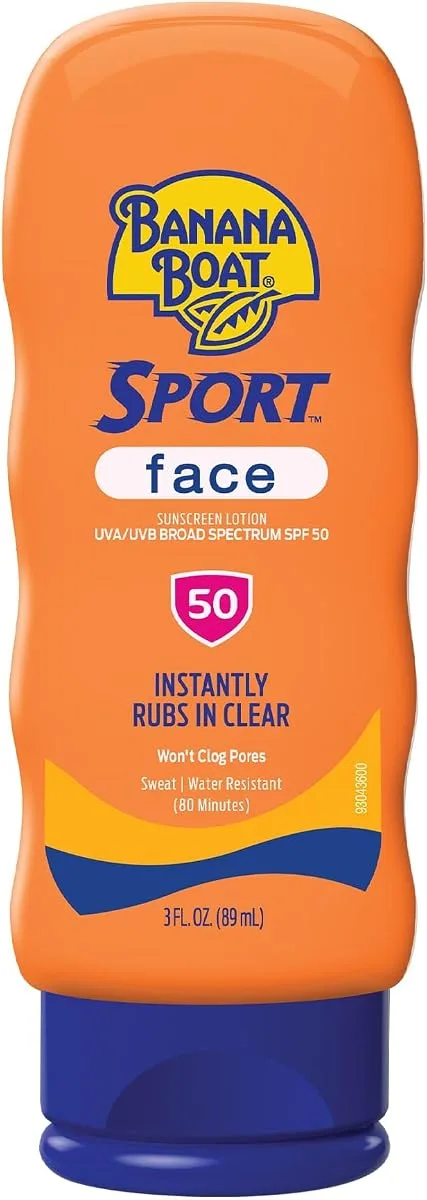
Unlike the brand's body sport formulas, this is reworked for the face: homosalate is dialed back, silica mattes down shine, and ceramide plus aloe counter the drying edge of the filters. The result is a sweat-resistant SPF 50 that actually wears on a face under exertion or makeup rather than sliding into the eyes as a glossy body lotion would.
A genuinely face-adapted version of the brand's sport line: lighter, mattifying, fragrance-free, and built to survive a sweaty workout without sliding into your eyes. Silica controls shine while ceramide and aloe soften the filters' drying edge. The drawbacks are a small tube for the price, a finish that can read too matte on dry skin, and a filter set that reactive skin may not love.
The case for it
Same rule for everyone. “Full protection” is the verdict on 2,288 of 45,024 concern verdicts across the catalog; rule P1 decided 2,232 of them. Unchanged since September 5, 2026, engine 5.1.1.
Brand or formulator? Disclose a concentration or correct a fact →
The studies behind the evidence row
Does the jobDoes what a sunscreen is for: UVA coverage, kind to the skin wearing it. Not measured from the label: pleasant enough to actually use.
A verdict is DermApproved’s assessment of how well a product’s ingredients fit a concern — never a claim about what the product treats. Evidence dots and collected reviews sit beside it and are never blended in. Rules 0.5.1 · evidence table ev-2026.09-r228 · how we decide
Ask any runner or cyclist about sunscreen and you will eventually hear the same grievance: the stuff migrates. You apply a generous layer of body sport sunscreen to your face before a long effort in the sun, you start sweating, and within forty minutes it has trickled into your eyes and turned a pleasant run into a stinging, blinking ordeal. That specific misery is the problem this Banana Boat face formula was built to solve, and understanding that origin explains nearly every formulation choice it makes. This is the brand's sport sunscreen reworked for the unique demands of a sweating face, and on those terms it is a sensible, useful product. The most telling change is what got dialed back. Where the brand's body sport sunscreens push homosalate toward its legal maximum for maximum water resistance and a heavy, durable film, this face version uses it at a restrained four percent. The filter set is otherwise familiar and well-built: avobenzone at 2.7 percent for UVA, stabilized by octocrylene so it does not crumble in sunlight, with octisalate rounding out the UVB. By easing off the heaviest filter, the formula sheds some of the glossy, greasy weight that makes body sunscreen so unpleasant on a face, trading a sliver of beach-grade durability for a finish you can actually wear under a helmet or a face full of sweat. The other smart move is the addition of silica. On the body, shine is irrelevant; on the face, it is the difference between looking healthy and looking like you dipped your head in oil. Silica absorbs oil and mattes the finish down to a soft, slightly powdery dry-down, which is what lets this wear under makeup and survive exertion without turning into a slick. Paired with that is a thoughtful touch: a dose of ceramide NP and some aloe. Chemical filters plus a mattifying silica can leave skin feeling tight and a little stripped, and the ceramide is there specifically to support the facial barrier and offset that drying edge, while the aloe adds a bit of soothing comfort. It is a modest amount of skincare thinking layered onto a sport sunscreen, and on a face it earns its place. The base is otherwise clean for the category: fragrance-free, which matters on facial skin near the eyes, paraben-free, and oil-free. So what are the catches? The first is size and value. At three ounces, this is a small tube, and at its price the per-ounce cost is not cheap for a drugstore sunscreen. Used on the face and neck once or twice a day it will last a couple of months, but you are paying a premium for the face-specific reformulation, and there are no larger sizes to soften the math. The second is the finish on dry skin. The silica that makes this so wearable on oily and combination skin can tip into feeling too matte and slightly tight on genuinely dry skin, and while the ceramide helps, someone with parched skin may find it less comfortable than a more emollient facial sunscreen. The third is the perennial one for this filter family: avobenzone, octocrylene, and homosalate are not the gentlest actives, so reactive or sensitized skin may not tolerate them well, and a dedicated mineral or sensitive-skin facial sunscreen would be the safer route there. The wear experience is good for its intended user. It goes on light, sets to a soft matte within a minute or two, and stays put through sweat far better than a thin daily facial sunscreen would, which is the whole point. There can be a brief faint sheen before the silica mattes things down, but it settles quickly. Crucially, it is far less prone to running into the eyes than a glossy body lotion, which is exactly what the sweating athlete wanted. It also layers under makeup reasonably well thanks to that matte dry-down, making it a viable everyday face sunscreen and not just a workout product. On value, the verdict is mixed but fair. You are paying more per ounce than for a big bottle of body sunscreen, and the small size stings, but the reformulation is real rather than cosmetic: the lighter filter load, the mattifying silica, and the barrier-supporting ceramide genuinely make it better on a face than slathering on body sunscreen. For the specific buyer it targets, that premium is defensible. The recommendation sorts neatly by skin type and use case. If you have normal, combination, or oily skin and you want a sweat-resistant, fragrance-free SPF 50 that will not slide into your eyes during a workout or leave your face greasy, this is a smart, purpose-built pick that also doubles as a solid everyday face sunscreen under makeup. If your skin is dry, you may find the matte finish a touch tight despite the ceramide, and if your skin is reactive, the chemical filters argue for a gentler mineral alternative. And if you simply want the cheapest sunscreen per ounce and do not care about facial finish, a big bottle of body lotion will cost you less, eye-sting and all.
The hero actives that drive this product's performance.
| Ingredient | Function | Evidence |
|---|---|---|
| Avobenzone 2.7% (2.7%) | The dedicated UVA filter, stabilized by the octocrylene in this formula so the long-wave protection holds up through a sweaty workout or a day outdoors rather than fading within an hour. | Regulator-approved for Sun Damage · emerging certainty |
| Homosalate 4.0% (4.0%) | A UVB filter used at a comparatively restrained level here, which is part of why this face formula feels lighter than the brand's body sport sunscreens that push homosalate to its limit. | Regulator-approved for Sun Damage · limited certainty |
| Ceramide NP | A barrier lipid added to this face formula specifically to offset the slightly drying, mattifying effect of the silica and the chemical filters, helping the sunscreen support rather than strain the facial moisture barrier. | Not yet assessed |
| Silica | Absorbs oil and mattes down the finish, which is what makes this version more wearable on the face under sweat or makeup than a glossy body lotion would be in the same situation. | Not yet assessed |
Ingredient standings describe the active at treatment-level doses and vehicles; this product's own condition grades weigh its actual formula.
Active Ingredients: Avobenzone 2.7%, Homosalate 4.0%, Octisalate 4.0%, Octocrylene 5.0%. Inactive Ingredients: Water, Glycerin, Silica, Dimethicone, Isohexadecane, Phenoxyethanol, Caprylyl Glycol, Acrylates/C12-22 Alkyl Methacrylate Copolymer, Sodium Polyacrylate, Chlorphenesin, Disodium EDTA, Glyceryl Stearate, PEG-100 Stearate, Ceramide NP, Tocopheryl Acetate, Aloe Barbadensis Leaf Juice
sunscreen
AM
Apply as the final morning step after moisturizer and before makeup, giving it a couple of minutes to set. Reapply over makeup with a powder or by patting on more product after heavy sweat or every two hours outdoors.
Effective about fifteen minutes after application, with water and sweat resistance up to eighty minutes. There is no cumulative skin benefit beyond ongoing UV-damage prevention, which over years is the main driver of reduced photoaging.
The protective system is a stabilized organic filter set, and the formulation logic is tailored to facial wear. Avobenzone provides the UVA1 coverage but is photolabile on its own, so octocrylene is included to slow its sunlight-driven breakdown, the standard and well-validated stabilizing pairing. What distinguishes this face version is the restrained homosalate level: body sport sunscreens lean on high homosalate for a heavy, durable, water-resistant film, whereas easing it back here yields a lighter feel better suited to skin that has to wear the product under sweat and makeup. The inclusion of silica is functional photoprotection-adjacent rather than a filter: by absorbing sebum and mattifying, it improves film uniformity on oily facial skin and reduces the shine and slippage that cause body sunscreens to migrate into the eyes. The ceramide NP is the genuinely skin-aware addition; ceramides are the barrier lipids that, alongside cholesterol and fatty acids, maintain the stratum corneum's water-holding function, and including one helps counter the mild barrier disruption that chemical filters and mattifying agents can cause on the face over repeated use. The SPF 50 and 80-minute water-resistance ratings come from standardized FDA in vivo testing. As with every sunscreen, the dominant real-world variable is applying enough and reapplying on schedule; the face-specific tweaks improve wearability and compliance, which is itself a meaningful contributor to real protection because a sunscreen that feels good on the face is one people actually keep on.
Face-specific sunscreens are frequently encouraged in everyday practice for people who find body formulas too heavy, greasy, or prone to stinging the eyes, since wearability strongly influences whether sunscreen is actually used and reapplied. A lighter, mattifying chemical formula with a stabilized avobenzone-octocrylene system is considered effective, and the inclusion of a ceramide is viewed as a sensible way to support the facial barrier during repeated use. Clinicians typically steer patients with reactive, rosacea-prone, or highly sensitive facial skin toward fragrance-free mineral sunscreens instead, as chemical filters carry a higher sensitization potential. For oily and acne-prone skin, an oil-free mattifying facial sunscreen like this is often regarded as a reasonable daily option, with the usual emphasis on generous application and reapplication every two hours during sun exposure.
As the last step of your morning routine, after moisturizer and before makeup, smooth an even layer over the dry face and neck about fifteen minutes before sun exposure, then let it set to a matte for a minute or two. Use roughly a quarter-teaspoon for the face and neck so you actually reach the rated SPF. Reapply every two hours of sun exposure and after heavy sweating or swimming, topping up over makeup with a powder sunscreen or by patting on more product. Keep it out of the eyes, and cleanse it off thoroughly at night along with sweat and any makeup.
Value here is a genuine trade-off. At three ounces for its price, the per-ounce cost runs higher than a large bottle of body sunscreen, and the absence of any larger size means there is no way to economize. What you are paying for is a real reformulation rather than a relabel: the reduced homosalate, the mattifying silica, and the barrier-supporting ceramide make it meaningfully better on a face under sweat and makeup than body sunscreen would be. For the athlete or oily-skinned daily wearer it targets, that premium is justified. For someone indifferent to facial finish who just wants maximum sunscreen for the money, a big bottle of body lotion is the cheaper, if less pleasant, route.
Athletes and anyone with normal, combination, or oily skin who wants a sweat-resistant, fragrance-free SPF 50 that wears matte on the face and will not slide into the eyes during exertion. It also works well as an everyday facial sunscreen under makeup for people who dislike the greasy shine of body formulas on their face.
People with dry skin may find the mattifying finish too tight despite the ceramide, and those with reactive, rosacea-prone, or highly sensitive skin should choose a gentler mineral facial sunscreen given the chemical filters. Bargain shoppers focused purely on cost per ounce will get more sunscreen for their money from a large bottle of body lotion.
Ready to try Banana Boat Sport Sunscreen for Face SPF 50?
Buy at Amazon ♥A light, fast-absorbing lotion that mattes down rather than leaving the glossy film of a body sunscreen; the silica gives it a soft, slightly powdery dry-down.
Unscented, with no added fragrance and only a faint neutral base note.
Compact 3 oz squeeze tube sized for a face routine or travel.
Goes on light and sets to a soft matte within a couple of minutes; you may notice a brief faint sheen before the silica mattes it down. Dry skin can feel a slight tightness that the ceramide helps soften. No purge or break-in applies.
Used for the face and neck once or twice daily, roughly six to ten weeks per 3 oz tube depending on reapplication habits.
All Year
Banana Boat adapted its sport platform for the face because athletes kept using body sunscreen on their faces and complaining that it stung their eyes and felt greasy. The face version trades some of the heavy water-resistant feel for a lighter, mattified finish and a small barrier-support boost from ceramide, aiming squarely at runners, cyclists, and anyone who sweats in the sun.
Banana Boat has been a mass-market sun-care brand since 1979, now under Edgewell Personal Care. It is a drugstore label rather than a clinical one, but its face sunscreens meet FDA monograph standards for the SPF and water-resistance claims they carry.
A face sunscreen and a body sunscreen are interchangeable.
They can be in a pinch, but this face version is deliberately lighter and more matte, with silica for shine control and ceramide for barrier support. Body sport sunscreens are glossier and heavier, which is why they tend to sting the eyes and feel greasy on the face during sweat.
Sport sunscreen is too harsh for facial skin.
This formula is fragrance-free, paraben-free, and includes ceramide and aloe to ease wear on the face. It is not as gentle as a dedicated sensitive-skin sunscreen, but it is far from harsh and suits most normal, combination, and oily facial skin.
The face version uses less homosalate for a lighter feel, adds silica to mattify and control shine, and includes ceramide and aloe to support the skin barrier. The result wears better on a sweating face and is less likely to slide into the eyes than the glossier body sunscreen.
It is far less prone to migrating into the eyes than a greasy body sunscreen because of its lighter, matte finish, which is exactly what it was designed for. Keeping it slightly away from the immediate eye area also helps during heavy sweating.
Yes for oily skin, since it is oil-free and mattifying with silica to control shine. For acne-prone skin it is reasonable, though it is not rated fungal-acne safe, so very breakout-prone users should patch test first.
Yes. Its matte, fast-absorbing dry-down makes it one of the more makeup-friendly options here. Let it set for a minute or two before applying foundation, and reapply during the day with a powder sunscreen over your makeup.
It can feel slightly tight on genuinely dry skin because of the mattifying silica, though the ceramide and aloe soften that effect. Oily and combination skin will usually find the finish comfortable; very dry skin may prefer a more emollient facial sunscreen.
Yes, it is unscented with no added fragrance, which is preferable for facial skin near the eyes. It is also paraben-free, though it does use chemical filters that reactive skin may not tolerate.
Recurring themes our editors read across retailer reviews of this product — summaries in our words, not quotations, and not a substitute for your own patch test.
Lighter and more matte than body sunscreen
Does not sting eyes during sweat
No greasy face shine
Layers under makeup reasonably well
Small 3 oz size for the price
Slightly drying on dry skin
Can leave a faint sheen at first
Not a true no-residue facial sunscreen
Verified answers from our questions library — the nuance a product page cannot carry.