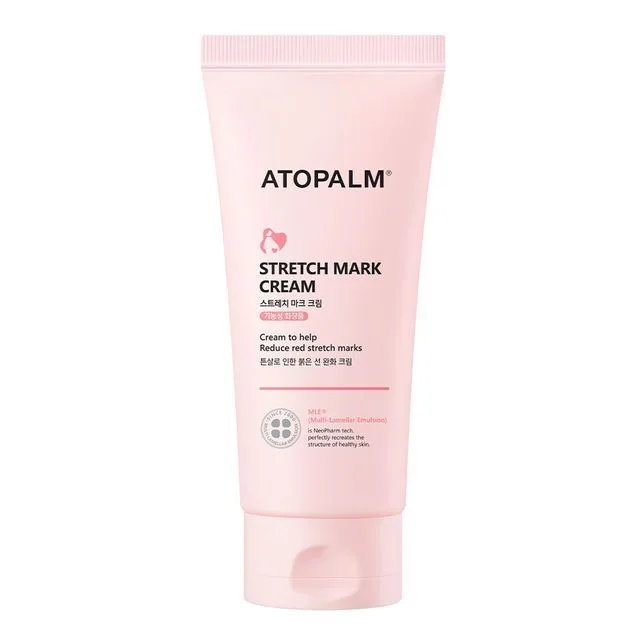
Underneath the maternity branding this is an Atopalm barrier cream — the same patented MLE pseudoceramide lamellar system that gives the brand's eczema line real clinical standing — in a richer olive-and-rapeseed base with a proper soothing trio, which is why it is so good at the itch and tightness of pregnant skin. It is set apart from ordinary stretch-mark creams by that barrier science, and from the rest of Atopalm's range by three essential oils and a face peptide that the brand's core products would never carry.
body carecreamk beautyParaben FreeVeganNot Cruelty Free
A very good pregnancy comfort cream wearing a promise it cannot keep: Atopalm's clinically credible MLE barrier system in a rich olive-and-rapeseed base soothes the itch and tightness of stretched skin better than most, but no topical prevents stretch marks, the peptide and mushroom collagen are decoration, and bergamot and litsea oils are a strange thing to massage onto a belly that may see the sun.
Around 200 reviews across YesStyle and StyleKorean, with an Amazon count that could not be confirmed this session, is a modest base for a cream six years on the market, and the reviews speak to comfort rather than to the outcome the product is named for — which no review can measure. The barrier claims here rest on Atopalm's published MLE trials in atopic dermatitis, not on any study of this cream or of stretch marks.
Verdicts
How well it fits each concern
Verdict by concern tap a concern for the case
Good choicefor DrynessIn your profileYou chose · Ceramides is a reference standard by mechanism for dryness; this cream carries it high in the ingredient list.Moderate evidenceStandard tolerabilityNo reviews collected yet
The case for it
Myristoyl/Palmitoyl Oxostearamide/Arachamide MEA has trial-supported standing for this concern.
It is present at an effective concentration, declared or high in the ingredient list.
The formula carries no trigger this concern is sensitive to, with the cautions noted.
Cautions: fragrance.
Same rule for everyone. “Good choice” is the verdict on 9,564 of 45,024 concern verdicts across the catalog; rule R5 decided 9,072 of them.
As of September 25, 2026, engine 5.1.1.
R5 — Trial-supported or guideline-supported active, adequately or plausibly dosed. · the full register
Carrying active
Myristoyl/Palmitoyl Oxostearamide/Arachamide MEA
Standing
supported — its mechanism is established
Form
adequate
Tolerability
standard — fragrance load
Row checked
against its sources on July 17, 2026 (evidence table ev-2026.09-r228)
The studies behind the evidence row
Elias PM, Feingold KR (eds), Skin Barrier — stratum corneum ceramides are the principal intercellular lamellar lipid; their depletion is the biochemical signature of dry/xerotic skin — reference work
As a body productNot judged: what a body product is for — real substance, not just slip, realistic to use daily — cannot yet be measured from the ingredient list (only fragrance load can).
A verdict is DermApproved’s assessment of how well a product’s ingredients fit a concern — never a claim about what the product treats. Evidence dots and collected reviews sit beside it and are never blended in.
Rules 0.5.1 · evidence table ev-2026.09-r228 · how we decide
Assessment
Pros & Cons
Pros
✓ Atopalm's MLE pseudoceramide barrier system, with randomised-trial backing on eczema, seals stretched skin
✓ Rich olive, rapeseed and jojoba emollient base that absorbs without lasting grease
✓ Panthenol, allantoin and bisabolol genuinely relieve third-trimester itch and tightness
✓ Beta-glucan and tremella polysaccharides hold surface hydration for hours
✓ No synthetic fragrance, retinoids, salicylic acid or other pregnancy-flagged ingredients
✓ Soft one-handed squeeze tube suited to late pregnancy
✓ Near-five-star reviews for comfort across the K-beauty retailers
Cons
✗ No topical has been shown to prevent stretch marks, and this one has no trial
✗ Bergamot oil is a photosensitiser unless furocoumarin-free, which the label does not state
✗ Litsea cubeba and thyme oils add contact-allergen exposure on hormonally reactive skin
✗ Acetyl hexapeptide-8 and mushroom collagen are label ingredients with no relevant evidence
✗ Scented, unlike the fragrance-free rest of Atopalm's range
✗ 150 mL empties in under a month at the label's three daily applications
Review
Full Review
Olive oil is the thirteenth ingredient in this cream, and it is the only one that has ever been put through a randomised trial against stretch marks. It did not prevent them. The 2012 Cochrane review that pooled six trials and eight hundred pregnant women — olive oil, cocoa butter, a Centella-based cream and others against placebo or nothing — found no significant difference in whether stretch marks appeared, and no difference in how severe they were when they did. That is the state of the evidence for the entire category, and it is worth stating before anything else, because Atopalm's Maternity Care Stretch Mark Cream is a genuinely good product being sold for the one thing it cannot do.
What it can do is a different question, and the answer is more flattering than the name. Strip away the maternity branding and this is an Atopalm barrier cream. Eleventh on the list is myristoyl/palmitoyl oxostearamide/arachamide MEA, the synthetic pseudoceramide that NeoPharm's Dr. Raymond Park built into the Multi-Lamellar Emulsion the brand has patented and, unusually for K-beauty, actually tested — including in a 2024 randomised trial on atopic dermatitis. With the phytosterols, stearic acid and emulsifiers around it, that lipid arranges into layers that mimic the skin's own barrier and cut water loss, and on a belly stretched thin and tight in the third trimester it does exactly what it does on an eczema patch: seals it, calms it, stops it feeling like it will split. Around that core sits a rich emollient body — olive oil and its sugar-ester emulsifiers, linoleic-rich rapeseed oil, jojoba, coconut glycerides — plus beta-glucan and a tremella polysaccharide for surface hydration, and a proper soothing trio of panthenol, allantoin and bisabolol in the back third. The reviews on YesStyle, close to five stars across a couple of hundred, are almost entirely about this: the itch stopped, the tightness eased, the skin felt softer. Those are real effects and they are what a pregnant reader should buy it for.
The label, though, is selling something else, and the extras are where the honest reviewer has to push back. Tremella fuciformis extract is marketed as mushroom collagen; it is a polysaccharide humectant, a very good one, and it has no more to do with collagen than a glass of water does. Acetyl hexapeptide-8 is Argireline, the face peptide sold for forehead lines on the theory that it interferes with the muscle-signalling that creases skin — a modest claim on a forehead, and a meaningless one on an abdominal dermis being pulled apart by a growing uterus. Camu camu supplies the vitamin C in the copy, at extract levels that do not survive a cream. None of these harm anything. They are there because the maternity category expects words like collagen, peptide and elasticity, and a reader who understands that the barrier lipids and the soothing agents are the real product will not be disappointed by the decoration.
One choice deserves more than a shrug. The cream is scented, not with synthetic fragrance but with bergamot, litsea cubeba and Thymus mastichina essential oils, and it is being massaged two or three times a day onto a belly, hips and breasts. Bergamot oil is the textbook photosensitiser — its bergapten content has produced blistering phototoxic burns in aromatherapy case reports — unless it is the furocoumarin-free grade, and the label does not say which it is. Litsea cubeba is mostly citral, a common fragrance allergen. Pregnancy makes skin more reactive and more prone to pigmentation, and a pregnant belly at a beach is precisely the scenario in which a bergamot-scented cream applied that morning becomes a problem. The rest of Atopalm's range is fragrance-free on principle; it is hard to see why the maternity line, of all lines, abandoned that. The practical advice is simple — keep treated skin out of direct sun or put sunscreen over it, and patch-test if pregnancy has made you reactive — and it is advice the tube should carry.
On cost the picture is mixed. The tube lists around twenty-four dollars in the US and is routinely discounted to twenty at the K-beauty retailers, which is fair for a barrier cream of this quality and steep for a body moisturiser, especially at the label's three full-torso applications a day, which empty 150 mL in under a month. Used once daily on the belly it lasts six to eight weeks and the value looks better. Against a plain fragrance-free body butter it costs more and does the same comfort job with a better lipid system; against the rest of the stretch-mark-cream category it is priced in line and, on formulation, ahead of most.
The fair verdict follows from the evidence. If you want a cream that makes a stretching belly comfortable, hydrated and less itchy through pregnancy and after, this is a good one, built on a barrier technology with real clinical standing and a soothing trio that earns its reviews. If you want to prevent stretch marks, nothing in a tube has been shown to, and the money is better spent on the same comfort with fewer promises. And if you buy it, keep it away from the sun.
Formula
Key Ingredients
The hero actives that drive this product's performance.
The signature of every Atopalm product, sitting eleventh here — a synthetic pseudoceramide that, with the fatty acids and phytosterols around it, assembles into the lamellar liquid-crystal structure the brand patents as MLE. On a belly stretched thin and itchy in the third trimester it does what it does on eczema: reinforces the lipid barrier and cuts water loss. What it has never been shown to do is prevent the dermal tearing that a stretch mark actually is.
Established mechanismfor Dryness · established mechanism
The emollient body of the cream — olive oil and its sugar-ester emulsifiers, a canola oil rich in linoleic acid, jojoba's wax esters and coconut-derived glycerides — which together give the rich, slow-absorbing slip that makes the twice-daily belly massage the label prescribes pleasant. Olive oil is the one ingredient here that has actually been trialled against stretch marks, and it did not prevent them.
Two polysaccharide humectants at positions twelve and fifteen that bind water on the surface and leave the skin feeling plumped for hours. The brand sells the tremella as mushroom collagen; it is a plant sugar that holds water, not a protein that rebuilds dermis, and the hydration it provides is real while the collagen framing is not.
Argireline, the wrinkle-relaxing face peptide, transplanted to position twenty-two of a body cream for elasticity. Its evidence — modest at best — concerns expression lines on the forehead; there is no mechanism by which it strengthens abdominal dermis under the mechanical load of pregnancy, and its presence here is a label ingredient chosen for what it sounds like.
The soothing trio in the back third, and the reason this cream earns its reviews for third-trimester itch: panthenol draws water into the stratum corneum, allantoin softens rough skin, and bisabolol — the calming fraction of chamomile — dampens the low-grade irritation of skin under stretch. Comfort, honestly delivered, is the thing this product does best.
The aromatherapy scent, near the end of the list — citrus-herbal and pleasant, and the one formulation choice here that should give a pregnant buyer pause. Bergamot oil, unless it is the furocoumarin-free grade the label does not specify, is a documented photosensitiser, and litsea cubeba's citral is a common contact allergen; both are being massaged onto a belly and thighs that may see summer sun, on skin that pregnancy has already made more reactive.
Not yet assessed
Ingredient standings describe the active at treatment-level doses and
vehicles; this product's own condition grades weigh its actual formula.
Apply it the way the label says — to the belly, hips, thighs and breasts, two or three times a day, with a slow upward circular massage — and understand that the massage and the moisture are the benefit, not a shield against stretch marks. It goes on clean, slightly damp skin after a shower for the best barrier effect. Because of the bergamot and litsea oils, keep it off skin that will be in direct sun that day, or put a sunscreen over it; a pregnant belly at the beach is exactly the phototoxicity scenario. Anyone with pregnancy-heightened sensitivity should patch-test the inner arm first.
Results Timeline
Immediate softness and relief of the tight, itchy feeling of stretched skin, lasting several hours per application. Over two to four weeks, dry and flaky skin on the belly and thighs reads smoother and better hydrated. Stretch marks themselves follow genetics, weight gain and hormone levels — there is no point at which this cream has been shown to change whether they appear or how they fade.
Pairs Well With
a fragrance-free body oil layered over it at night for very dry skina broad-spectrum body sunscreen on exposed skinthe brand's MLE Cream on any area that turns eczematous during pregnancy
THIS PRODUCT — belly, hips, thighs, breasts, slow upward massage
Body sunscreen on any area that will see sun
Sample PM Routine
THIS PRODUCT — second application after bathing
Fragrance-free body oil over it on very dry or itchy nights
Evidence
Science & Expert Perspective
The Science
The evidence on stretch-mark prevention is clear and negative, and it frames everything else. Striae gravidarum are dermal tears — disrupted collagen and elastin under mechanical stretch, driven by genetics, rate of weight gain and hormonal changes — and the 2012 Cochrane review of topical preparations for preventing them, covering six randomised or quasi-randomised trials in 800 women, found no statistically significant difference in stretch-mark development between active preparations and placebo or no treatment (average risk ratio 0.74, 95 percent CI 0.53 to 1.03), and no difference in severity; the trials included olive oil, cocoa butter and Centella-based creams. A topical cannot reach the dermal collagen that fails, and this product's formulation does not change that. What the formulation can do is barrier work, and here Atopalm's technology is genuinely distinctive. Multi-Lamellar Emulsion uses a synthetic pseudoceramide — myristoyl/palmitoyl oxostearamide/arachamide MEA — with fatty acids, phytosterols and emulsifiers to form a lamellar liquid-crystal phase that mimics stratum corneum lipids; a 2024 randomised controlled trial in Dermatol Ther (Heidelb) of an MLE moisturiser containing a pseudoceramide and a sphingosine kinase activator reported improvement in atopic dermatitis severity and barrier measures, and earlier NeoPharm work in Ann Dermatol showed a physiological lipid mixture preventing barrier dysfunction after UVB and X-ray injury. That is evidence for reduced transepidermal water loss and improved comfort on stretched, dry skin, and it is the honest basis of this cream's value. The supporting ingredients divide cleanly. Beta-glucan and Tremella fuciformis polysaccharide are effective film-forming humectants; panthenol, allantoin and bisabolol have long records as anti-irritants; olive, rapeseed and jojoba oils are occlusive emollients. Acetyl hexapeptide-8, by contrast, is a facial peptide whose proposed action on SNARE-complex signalling in expression lines has no bearing on body dermis under stretch, and Tremella is a sugar, not collagen. The essential oils raise the one safety question: bergamot oil's bergapten (5-methoxypsoralen) is a potent UVA photosensitiser, with the action spectrum characterised in J Dermatol in 1994 and bullous phototoxic reactions to aromatherapy-grade oil reported in J Am Acad Dermatol in 2001; furocoumarin-free bergamot exists, but the label does not specify it, and litsea cubeba's citral is a frequent contact allergen. No trial of this finished product has been published.
The conversation about stretch-mark creams in an obstetric dermatology setting tends to start with expectation-setting: striae are determined largely by genetics, weight gain and hormones, the Cochrane evidence shows no cream prevents them, and the honest purpose of any product in this category is to keep stretched skin comfortable and to reduce the itch that keeps women awake in the third trimester. Judged on that purpose, a barrier cream built on a clinically tested lamellar lipid system with panthenol, allantoin and bisabolol is a sound choice, and dermatologists familiar with Atopalm's eczema products tend to regard the maternity version as a richer variant of something they already trust. The reservations are two. Fragrance and essential oils in a product applied to a large area of hormonally sensitised skin several times a day is a recognised route to contact dermatitis in pregnancy, and bergamot oil specifically prompts a warning about sun exposure and the risk of phototoxic burns and pigmentation on an already melasma-prone patient. And the peptide and collagen wording is treated as marketing to be talked past. For a pregnant patient with eczema or very reactive skin, the usual steer is to the brand's fragrance-free MLE Cream instead, which delivers the same barrier benefit without the oils.
Guidance
Usage & Recommendations
How to Use
Apply after bathing while the skin is still slightly damp, which is when a barrier cream seals best. Squeeze a generous amount and massage it into the belly, hips, thighs and breasts using slow upward circular strokes, as the label directs — the massage itself is part of the comfort, and it takes a few minutes for the rich cream to absorb. The label suggests two to three times a day; once in the morning and once at night is enough for most and makes the tube last. Because of the bergamot and litsea oils, keep treated skin out of direct sun or apply sunscreen over it, and patch-test on the inner arm first if pregnancy has made your skin reactive. It can be used through pregnancy and postpartum.
Value Assessment
At about $24 for 150 mL — around $4.80 an ounce — this sits at the premium end of body moisturisers and in the middle of the stretch-mark-cream category, and it is routinely discounted to around $20 at the K-beauty retailers. The formulation justifies a barrier-cream price: the MLE lipid system, a good oil base and a real soothing trio are more than most stretch-mark creams offer. What it does not justify is the label's usage schedule, which at two to three full-torso applications a day empties the tube in under a month and turns a fair price into an expensive habit; once daily on the belly is where the value lives. Against a plain fragrance-free body butter it costs more for the same comfort with better lipids; against Atopalm's own MLE Cream it costs similar money and adds scent and decoration rather than benefit. NeoPharm's two decades of clinical work support the barrier claim and nothing else on the tube.
Who Should Buy
Pregnant and postpartum women whose skin is dry, tight and itchy and who want a rich, genuinely soothing barrier cream with a light natural scent — and who understand they are buying comfort, not stretch-mark prevention. Anyone who already trusts Atopalm's eczema products will recognise the same lipid system in a richer body base.
Who Should Skip
Anyone buying it to prevent stretch marks, since no cream does; anyone with fragrance or citral allergy, very reactive pregnancy skin or a melasma tendency who would rather not massage bergamot and litsea oils onto sun-exposed skin; and anyone who wants a fragrance-free product, for whom Atopalm's own MLE Cream is the better pick.
Ready to try Atopalm Maternity Stretch Mark Cream?
A dense white cream that goes on rich and slightly waxy from the olive esters, then absorbs over a few minutes into a soft, cushioned finish without residual grease.
Scent
A light, natural citrus-herbal scent from bergamot, litsea and Spanish marjoram — no synthetic fragrance, but not fragrance-free either, and noticeable for the first ten minutes.
Packaging
A 150 mL soft-touch tube with a flip cap in the Maternity Care line's cream-and-rose livery; easy to squeeze one-handed, which matters in the third trimester.
Finish
velvetysatin
What to Expect on First Use
The first application feels like a good barrier cream — rich, cushioned, quick to lose its tack — with a pleasant citrus-herbal scent that fades within minutes and that most, though not all, pregnant users tolerate. The tight, itchy pull of stretched skin eases straight away. Over the first weeks the belly and thighs feel smoother; whether stretch marks appear is decided elsewhere, and users who expected otherwise say so in reviews.
How Long It Lasts
Around three to four weeks at the label's two to three full-torso applications a day; six to eight weeks used once daily on the belly alone.
NeoPharm built Atopalm around Dr. Raymond Park's Multi-Lamellar Emulsion in the early 2000s for Korean children with atopic dermatitis, and spent fifteen years earning a clinical reputation for it before extending the brand into a Maternity Care line around 2019, following the K-beauty pattern of moving a trusted barrier technology into pregnancy products. This cream was the line's centrepiece, later given a renewal reformulation, and it carries the brand's EWG-green ingredient positioning alongside the peptide and collagen language the maternity category expects.
About Atopalm Legacy Brand (20+ years)
Atopalm is the consumer brand of NeoPharm, the Korean lipid-science company founded by Dr. Raymond Park, whose patented Multi-Lamellar Emulsion technology has been tested in randomised trials for atopic dermatitis — a stronger evidence base than most K-beauty barrier brands can claim. That evidence concerns barrier repair on eczema-prone skin; it does not extend to stretch marks, for which the brand's Maternity Care line offers no trial, and the peptide and collagen language on this cream's label sits well outside what the science supports.
Brand founded: 2002 · Product launched: 2019
Myth vs. Reality
Common Myths
Myth
Massaging this cream in two or three times a day will prevent stretch marks.
Reality
The 2012 Cochrane review of six randomised trials in 800 pregnant women found no significant difference in stretch-mark development between topical preparations and placebo or no treatment — and olive oil, an ingredient here, was among those tested. Striae are dermal tears governed by genetics, weight gain and hormones; a cream can keep the skin comfortable and hydrated, and that is all any cream has been shown to do.
Myth
Mushroom collagen and the peptide in this cream rebuild elasticity in stretched skin.
Reality
Tremella fuciformis extract is a polysaccharide humectant, not collagen, and acetyl hexapeptide-8 is a facial expression-line peptide with no evidence on body skin under mechanical stretch. Both hydrate or do nothing; neither reaches the dermis where elasticity lives.
FAQ
Frequently Asked Questions
Does Atopalm Maternity Stretch Mark Cream actually prevent stretch marks?
No cream has been shown to. A Cochrane review of six randomised trials found topical preparations no better than placebo at preventing stretch marks in pregnancy, and olive oil — an ingredient here — was among those studied. What this cream reliably does is hydrate and calm stretched, itchy skin, which is worth having on its own terms.
Is Atopalm Stretch Mark Cream safe to use while pregnant?
Its ingredients are ordinary emollients, humectants and a barrier lipid, with no retinoids, salicylic acid or other pregnancy concerns. The caveat is the three essential oils: bergamot oil can photosensitise skin unless it is a furocoumarin-free grade, which the label does not state, so keep treated skin out of direct sun or cover it with sunscreen, and patch-test if pregnancy has made your skin reactive.
Is Atopalm's stretch mark cream fragrance-free?
No. It has no synthetic fragrance, but it is scented with bergamot, litsea cubeba and Thymus mastichina essential oils, which give a light citrus-herbal smell. Most pregnant users find it mild; anyone with nausea-triggered scent sensitivity or a citral or fragrance allergy should know it is there.
What is the MLE technology in the Atopalm maternity cream?
Multi-Lamellar Emulsion is NeoPharm's patented lipid structure — a synthetic pseudoceramide with fatty acids, cholesterol-like phytosterols and emulsifiers arranged in layers that mimic the skin's own barrier. It has randomised-trial evidence for atopic dermatitis, and in this cream it is why the skin feels sealed and comfortable; it has not been studied against stretch marks.
How often should I apply Atopalm Stretch Mark Cream and where?
The label says two to three times a day on the belly, hips, thighs and breasts, massaged in upward circles. That schedule empties the 150 mL tube in three to four weeks over the whole torso; once daily on the belly alone stretches it to six to eight weeks. Apply to slightly damp skin after bathing for the best barrier effect.
Can I use Atopalm Maternity Stretch Mark Cream after giving birth?
Yes — the brand positions it for pre- and post-delivery use, and postpartum skin that is deflating, dry and itchy benefits from the same barrier lipids and soothing agents. It will not fade existing stretch marks, which need time and, if treated, a dermatologist's retinoid or laser options rather than a cream.
How does this compare with Atopalm's regular MLE Cream for pregnancy skin?
The core MLE Cream is fragrance-free and built purely for barrier repair; this maternity version adds a richer olive-and-rapeseed oil base, humectants, a soothing trio and three essential oils, plus a peptide and mushroom extract for the label. For a belly that is simply dry or eczematous, the plain MLE Cream does the barrier job with less to react to.
Reviews
What Reviewers Tend to Say
Recurring themes our editors read across retailer reviews of this product — summaries in our words, not quotations, and not a substitute for your own patch test.
Common Praise
Relieves the tight, itchy feeling of a growing belly
Rich without being greasy, and absorbs within a few minutes
Light citrus-herbal scent that does not trigger pregnancy nausea for most
Skin feels softer and smoother after a couple of weeks
Common Complaints
Did not stop stretch marks appearing
Scented, when many expected a fragrance-free pregnancy product
150 mL runs out fast at three applications a day over the whole torso
Pricier than a plain body butter doing the same job
Notable Endorsements
Marketed on EWG Green-grade ingredient ratings and the brand's patented MLE barrier technologySold through YesStyle, Stylevana and StyleKorean alongside the rest of Atopalm's Maternity Care line
The fourth most frequent positive patch test in North America is an oxidation product of a molecule that occurs naturally in lavender. Nobody synthesised it into your face cream.
Western sensitive skincare works by subtraction — remove the fragrance, remove the alcohol, shorten the list. Japan's answer adds a designed molecule back in, and one of the two bets has a trial literature.
Essential oils are declared by botanical name rather than as fragrance, which is why the most heavily perfumed products in the natural aisle can carry the reassuring word — and why the bottle gets more sensitising the longer you own it.
Antiperspirants and deodorants solve unrelated problems, a large share of people buying either are genetically incapable of producing the smell, and the aluminium question has a real answer that nobody bothers to give.
Products, answers, therapy guides, tools and articles in one search. Brand names,
slang and abbreviations all work — accutane finds isotretinoin, bacne finds truncal acne.