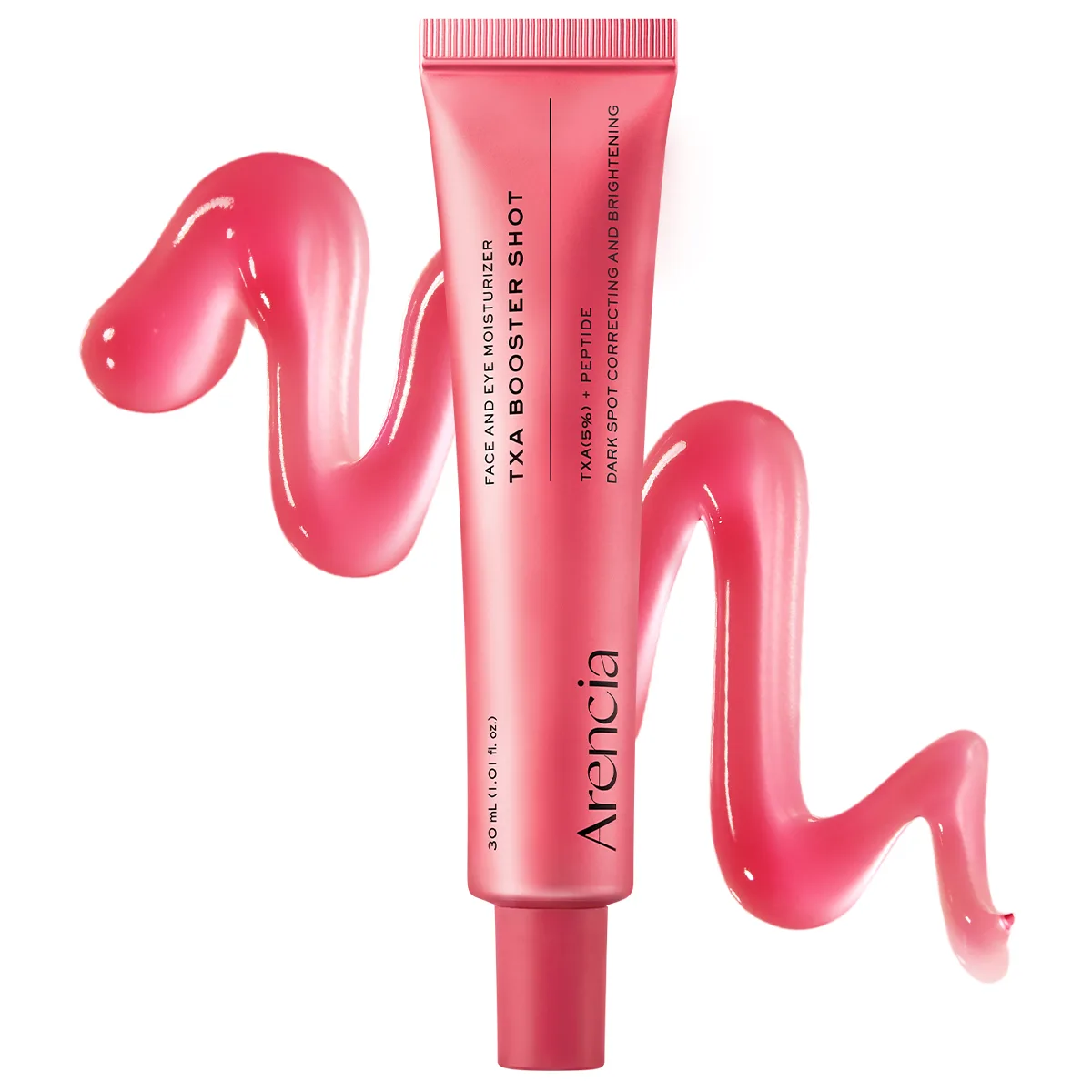
Where most brightening serums lead with vitamin C, this leads with a robust 5% tranexamic acid — the active best suited to stubborn, hormonally-driven pigment like melasma — then surrounds it with niacinamide, glutathione, vitamin C, and a ten-peptide complex for a multi-angle attack. The unusually thorough five-ceramide barrier deck protects against the post-inflammatory pigment that derails most correction efforts.
A dark-spot serum that reaches past vitamin C for its lead active: a robust 5% tranexamic acid, the ingredient best suited to stubborn, hormonally-driven pigment like melasma, backed by niacinamide, glutathione, vitamin C, a ten-peptide complex, and an unusually deep five-ceramide barrier deck. Fragrance-free, gentle, and well-priced at twenty-four dollars, it is a genuinely strong pigment corrector — provided you bring the patience and the sunscreen it demands.
Feedback for this serum is still growing rather than vast, so the assessment leans on the disclosed 5% tranexamic acid figure, the full ingredient list showing niacinamide, glutathione, a multi-peptide complex, and five ceramides, and the well-documented behavior of those actives rather than long-term user data. Pigment results are inherently gradual and depend heavily on consistent use and daily sun protection, so individual outcomes — especially on melasma — vary considerably.
Verdicts
How well it fits each concern
Verdict by concern tap a concern for the case
Good choicefor HyperpigmentationIn your profileYou chose · Niacinamide is a trial-supported active for hyperpigmentation; this serum carries it, though the concentration is not declared.Moderate evidenceGentleNo reviews collected yet
The case for it
Niacinamide has trial-supported standing for this concern.
It is plausibly present at a working level, though the concentration is not declared.
The formula carries none of the triggers this concern is sensitive to.
What would change this: A declared concentration would move this to a firmer reading of the dose.
Same rule for everyone. “Good choice” is the verdict on 9,564 of 45,024 concern verdicts across the catalog; rule R5 decided 9,072 of them.
Unchanged since September 5, 2026, engine 5.1.1.
Good choicefor MelasmaIn your profileYou chose · Tranexamic Acid is a trial-supported active for melasma; this serum carries it at 5%.Strong evidenceGentleNo reviews collected yet
The case for it
Tranexamic Acid has trial-supported standing for this concern.
It is present at an effective concentration, declared or high in the ingredient list.
The formula carries none of the triggers this concern is sensitive to.
Same rule for everyone. “Good choice” is the verdict on 9,564 of 45,024 concern verdicts across the catalog; rule R5 decided 9,072 of them.
Unchanged since September 5, 2026, engine 5.1.1.
Promisingfor Dark SpotsIn your profileYou chose · Niacinamide has trial-level evidence for dark spots but no guideline or regulatory standing yet — promising, short of a recommendation; the other actives here are not yet assessed for it.Moderate evidenceGentleNo reviews collected yet
The case for it
Niacinamide has trial-level evidence for this concern but no guideline or regulatory standing yet.
It is plausibly present at a working level, though the concentration is not declared.
The formula carries none of the triggers this concern is sensitive to.
What would change this: A declared concentration would move this to a firmer reading of the dose.
Same rule for everyone. “Promising” is the verdict on 7,858 of 45,024 concern verdicts across the catalog; rule R9p decided 7,858 of them.
Unchanged since September 5, 2026, engine 5.1.1.
R9p — 0.5.0: 'Unproven' beside three filled dots read as one question answered twice with opposite words (7,018 rows). The chip measures standing, the dots measure trial volume; where the row carries at least one RCT or a tier-2 source (moderate dots) and the active is present at a working level, the honest word is Promising. Unproven is reserved for plausible-standing rows with limited or weak evidence, or an under-dosed form. Same rank as Unproven — a bet either way; the dots order them. · the full register
Carrying active
Niacinamide
Standing
plausible — trials support it
Form
plausible
Tolerability
gentle
Row checked
against its sources on July 17, 2026 (evidence table ev-2026.09-r228)
Promisingfor Sun DamageIn your profileYou chose · Niacinamide has trial-level evidence for sun damage but no guideline or regulatory standing yet — promising, short of a recommendation; the other actives here are not yet assessed for it.Moderate evidenceGentleNo reviews collected yet
The case for it
Niacinamide has trial-level evidence for this concern but no guideline or regulatory standing yet.
It is plausibly present at a working level, though the concentration is not declared.
The formula carries none of the triggers this concern is sensitive to.
What would change this: A declared concentration would move this to a firmer reading of the dose.
Same rule for everyone. “Promising” is the verdict on 7,858 of 45,024 concern verdicts across the catalog; rule R9p decided 7,858 of them.
Unchanged since September 5, 2026, engine 5.1.1.
R9p — 0.5.0: 'Unproven' beside three filled dots read as one question answered twice with opposite words (7,018 rows). The chip measures standing, the dots measure trial volume; where the row carries at least one RCT or a tier-2 source (moderate dots) and the active is present at a working level, the honest word is Promising. Unproven is reserved for plausible-standing rows with limited or weak evidence, or an under-dosed form. Same rank as Unproven — a bet either way; the dots order them. · the full register
Carrying active
Niacinamide
Standing
plausible — trials support it
Form
plausible — studied range 5–10%, from the OTC monograph or label; needs leave-on contact; judge it after ~8 weeks
Tolerability
gentle
Row checked
against its sources on July 17, 2026 (evidence table ev-2026.09-r228)
Also listed for Dullness — the actives here (Tranexamic Acid, Niacinamide, Glutathione, Ceramides) are in our research queue for that concern; there is no verdict until their evidence rows are written. That is a gap in our table, not a mark against the product.
A verdict is DermApproved’s assessment of how well a product’s ingredients fit a concern — never a claim about what the product treats. Evidence dots and collected reviews sit beside it and are never blended in.
Rules 0.5.1 · evidence table ev-2026.09-r228 · how we decide
Assessment
Pros & Cons
Pros
✓ Robust 5% tranexamic acid, ideal for stubborn and hormonal pigment
✓ Four pigment mechanisms: TXA, niacinamide, glutathione, and vitamin C
✓ Unusually deep five-ceramide barrier deck protects against PIH
✓ Ten-peptide complex adds firmness and texture benefits
✓ Genuinely gentle and fragrance-free, with no sting or adjustment period
✓ Strong value bundling many actives into one twenty-four-dollar bottle
✓ Suitable for sensitive skin and twice-daily use
Cons
✗ Pigment correction is slow, requiring two to three months
✗ Results depend entirely on rigorous daily sun protection
✗ Active concentrations beyond the 5% TXA are not disclosed
✗ Severe melasma may still need professional treatment
✗ Single 30ml size for a twice-daily serum
Review
Full Review
When a brightening serum leads with vitamin C, it is usually aiming at general radiance and run-of-the-mill dark spots. When it leads with tranexamic acid, it is signaling something more specific: an interest in the stubborn pigment that vitamin C struggles with. Arencia's TXA Booster Shot makes that choice deliberately, putting a robust 5% tranexamic acid at the front of the formula — and that single decision tells you most of what you need to know about who this serum is for. It is built for the people fighting melasma, post-inflammatory marks, and the kind of hormonally-driven discoloration that shrugs off lighter brighteners.
Tranexamic acid is worth understanding, because it works differently from the more familiar pigment fighters. A derivative of the amino acid lysine, it interrupts the signaling between skin cells and the melanocytes that produce pigment — particularly the inflammatory and hormonal signaling that drives melasma. This is a different mechanism from vitamin C, which mainly inhibits the tyrosinase enzyme, and it is precisely why tranexamic acid has moved from being an oral melasma treatment used by dermatologists into one of the most respected topical pigment correctors available. At 5%, this serum carries a meaningful, effective dose. There is a common misconception that tranexamic acid and vitamin C are interchangeable; they are not, and the smarter formulas — like this one — use both.
And this one genuinely does layer the mechanisms. Niacinamide, high on the list, blocks the transfer of melanin to surface cells — a third angle distinct from both the tranexamic acid's signaling interruption and vitamin C's enzyme inhibition. Glutathione adds antioxidant brightening, and a stable vitamin C ether contributes tyrosinase inhibition and antioxidant defense. Four pigment-fighting pathways, working in parallel. Pigment is a stubborn, multi-causal problem, and attacking it from several directions at once is exactly the right strategy — the same logic the best brightening protocols use.
The part that elevates this from a good pigment serum to a thoughtfully complete one is the barrier deck. Five ceramides — NP, NS, AS, AP, and EOP — plus baobab seed oil and panthenol make for an unusually thorough lipid system in a brightening serum. This is not incidental. A compromised barrier inflames easily, and inflammation drives post-inflammatory pigmentation — meaning a harsh brightening serum can actually create the very dark spots it is supposed to fade. By building in serious barrier support, Arencia protects the results the actives are working toward. There is also a ten-peptide complex, including copper tripeptide-1 and Matrixyl peptides, that adds a firmness-and-texture dimension, sensible given that sun-damaged, hyperpigmented skin is usually dealing with laxity too.
In use, the serum is a model of gentleness. Tranexamic acid is among the kindest of the brightening actives — no sting, no low-pH burn, no adjustment period — and the fragrance-free, ceramide-rich formula reinforces that. It is a lightweight, slightly silky serum that absorbs quickly to a soft finish, comfortable enough for twice-daily use even on sensitive skin. There is nothing dramatic to feel on application; the work happens invisibly, over weeks.
And here is the part that requires honesty, because it is where expectations sink most pigment serums. Tranexamic acid works gradually. Expect a subtle radiance within a couple of weeks, but the real fading of dark spots and evening of tone builds over eight to twelve weeks of consistent twice-daily use — and stubborn or hormonal pigment like melasma takes the full timeline and often beyond. More importantly, melasma is chronic, relapsing, and heavily driven by UV exposure and hormones. Without rigorous daily sunscreen, the pigment regenerates faster than any serum can fade it, and you will conclude the product 'doesn't work' when in truth the sun is simply outpacing it. This is a strong supportive tool, not a standalone cure, and severe melasma may still need professional treatment. Anyone buying it without committing to daily SPF is wasting their money.
There is also the standard caveat that, beyond the disclosed 5% tranexamic acid, the concentrations of the other actives are not published, so the supporting cast's exact potency is a matter of trusting the formulation. Given the ingredient ordering and the brand's transparency elsewhere, this reads as a genuinely well-dosed serum rather than a fairy-dusted one, but percentage-watchers will note the gap.
The value is good. Twenty-four dollars for a 30ml serum with a meaningful 5% tranexamic acid, niacinamide, glutathione, vitamin C, ten peptides, and five ceramides is a strong deck for the price — it bundles what could be several separate products into one bottle and undercuts plenty of single-active pigment serums. A bottle lasts about two months at twice-daily use.
The bottom line is that this is one of the more intelligently constructed over-the-counter dark-spot serums you can buy, and a particularly good choice for stubborn pigment that vitamin C alone has not budged — melasma, post-acne marks, sun-driven discoloration. It is gentle enough for sensitive skin, barrier-supportive enough to avoid making pigment worse, and multi-mechanism enough to give the problem a real fight. It asks two things in return: patience measured in months, and sunscreen measured in every single day. Bring those, and it delivers. Skip them, and no pigment serum on earth will help you.
Formula
Key Ingredients
The hero actives that drive this product's performance.
The headline active at a robust 5%, a derivative of the amino acid lysine that interrupts the signaling between skin cells and pigment-producing melanocytes. Unlike vitamin C, tranexamic acid is particularly effective on stubborn, hormonally-driven pigment like melasma and post-inflammatory marks, which is why this serum reads as a dedicated dark-spot corrector rather than a general brightener.
Sitting high on the list, niacinamide attacks pigment from a second angle by blocking the transfer of melanin to surface skin cells, while refining texture and supporting the barrier. Paired with tranexamic acid, the two address pigment through complementary mechanisms — signaling and transfer — a recognized combination for stubborn discoloration.
A deep peptide bench — copper tripeptide-1, palmitoyl pentapeptide-4 and tetrapeptide-7, sh-oligopeptide-1, and several others — that signals firmness and supports smoother, more elastic skin. It gives the serum an anti-aging dimension alongside its pigment focus, addressing the laxity and texture that often accompany sun-damaged, hyperpigmented skin.
An antioxidant brightening pair — glutathione, the master antioxidant tripeptide associated with shifting melanin toward lighter pigment, and a stable vitamin C ether that inhibits tyrosinase. Together they add antioxidant defense and a third and fourth pigment-fighting angle to back up the tranexamic acid and niacinamide.
Five barrier-identical ceramides plus baobab seed oil rebuild the skin barrier, an unusually thorough lipid deck for a brightening serum. A healthy barrier is essential for pigment correction — a compromised one inflames easily and drives more post-inflammatory pigment — so the ceramides protect the very results the actives are working toward.
Not yet assessed
Ingredient standings describe the active at treatment-level doses and
vehicles; this product's own condition grades weigh its actual formula.
Smooth it onto clean skin after toning, before moisturizer, morning and night. For pigment correction, consistency and sun protection matter more than anything — always follow with broad-spectrum SPF in the AM, since UV constantly regenerates the pigment tranexamic acid is working to fade. The gentle, barrier-supportive formula layers easily and pairs well with vitamin C or exfoliants on a sensible schedule.
Results Timeline
Tranexamic acid works gradually — expect early radiance within a couple of weeks, with visible fading of dark spots and more even tone building over eight to twelve weeks of consistent twice-daily use. Stubborn or hormonal pigment like melasma may take the full timeline and beyond, and requires diligent sun protection to hold.
Pairs Well With
sunscreenvitamin C serumsexfoliants on alternate nightsmoisturizers
This serum's pigment strategy is anchored by a well-evidenced lead active working alongside complementary mechanisms. Tranexamic acid, a synthetic lysine derivative, reduces melanogenesis primarily by interfering with the plasmin-driven and keratinocyte-melanocyte signaling that stimulates pigment production, and it has notable evidence for melasma specifically: multiple clinical studies, including comparisons with hydroquinone, support both oral and topical tranexamic acid for reducing melasma severity, with topical formulations at concentrations around 2-5% showing measurable benefit. At a stated 5%, this serum sits at the upper end of the studied topical range.
The supporting brighteners are mechanistically distinct, which is the formulation's strength. Niacinamide has robust controlled-trial evidence for reducing hyperpigmentation by inhibiting melanosome transfer from melanocytes to keratinocytes. The vitamin C ether (ethyl ascorbyl ether) is a stable derivative that inhibits tyrosinase and provides antioxidant activity, and ferulic acid adds antioxidant stabilization. Glutathione, an endogenous antioxidant tripeptide theorized to shift melanin synthesis toward lighter pheomelanin, has mixed and debated topical evidence and is best regarded as a promising adjunct. Together these target pigment through signaling interruption, transfer inhibition, and enzyme inhibition simultaneously — a multi-pathway approach consistent with how layered pigmentation care is structured clinically.
The barrier component is well grounded and strategically important. The five-ceramide complex (NP, NS, AS, AP, EOP) reflects the natural diversity of stratum corneum ceramides, and topical ceramides are strongly supported for restoring barrier function. This matters because barrier disruption and inflammation drive post-inflammatory hyperpigmentation, so robust barrier support can both improve tolerability and prevent treatment-induced pigment. The peptide complex carries moderate, concentration-dependent evidence for matrix support and the appearance of firmness.
The central scientific caveat is universal to topical pigment care: efficacy is gradual and critically dependent on photoprotection, because UV exposure continuously stimulates melanogenesis. Tranexamic acid's benefit on melasma is well documented but partial and relapse-prone without sun avoidance, and severe cases often require combination or in-office therapy. Beyond the disclosed 5% TXA, supporting-active concentrations are unpublished, so their exact contribution cannot be quantified from the label.
Dermatologist Perspective
Topical tranexamic acid has become a well-regarded option in clinical pigmentation care, particularly for melasma and post-inflammatory hyperpigmentation, where its distinct mechanism complements tyrosinase inhibitors like vitamin C and melanosome-transfer blockers like niacinamide. A serum combining all three, as this one does, reflects the multi-targeted approach commonly used for stubborn discoloration. The robust ceramide content is a thoughtful addition, since maintaining barrier integrity is important for both tolerability and preventing treatment-induced pigment. The essential clinical message is one of expectation-setting: topical pigment correction is gradual, measured over months, and entirely dependent on strict daily broad-spectrum sun protection, without which melasma in particular regenerates faster than any topical can fade it. For severe or resistant melasma, dermatologists often combine topicals with in-office procedures and emphasize that maintenance and photoprotection are lifelong rather than a one-time fix.
Guidance
Usage & Recommendations
How to Use
Apply after cleansing and toning, before moisturizer, morning and night. For pigment correction, the two non-negotiables are consistency and sun protection: use it twice daily and always follow with broad-spectrum SPF 30 or higher in the morning, since UV continuously regenerates the pigment tranexamic acid works to fade. The gentle, barrier-supportive formula layers easily and can be combined with vitamin C or alternated with exfoliants on a sensible schedule. Give it eight to twelve weeks of consistent use before judging results, and longer for stubborn melasma. Maintain sun protection even after pigment improves to prevent relapse.
Value Assessment
At twenty-four dollars for 30ml, this is strong value for a pigment serum, bundling a meaningful 5% tranexamic acid with niacinamide, glutathione, vitamin C, a ten-peptide complex, and five ceramides — actives that as separate products would cost considerably more. It undercuts many single-active dark-spot serums while offering a more complete, multi-mechanism approach plus genuine barrier support. A bottle lasts about two months at twice-daily use. The value caveats are the undisclosed supporting-active concentrations and the single size, but for stubborn pigment specifically, getting tranexamic acid at this strength alongside this much support for the price is a genuinely good deal.
Who Should Buy
Anyone targeting stubborn or hormonally-driven pigment — melasma, post-inflammatory marks, sun-driven dark spots — that lighter brighteners have not budged, and who is willing to commit to months of consistent use plus daily sunscreen. Its gentle, fragrance-free, ceramide-rich formula makes it well suited to sensitive skin, and the multi-mechanism deck offers a more complete approach than a single-active serum at a fair price.
Who Should Skip
Those unwilling to wear daily sunscreen should skip it, since pigment correction is futile without sun protection. Anyone wanting fast, dramatic results in a few weeks will be frustrated by its gradual action, percentage-watchers may dislike the undisclosed supporting-active concentrations, and people with severe or resistant melasma may need professional, combination treatment rather than a topical alone.
Lightweight, slightly silky serum that absorbs quickly into a soft, comfortable finish with no residue
Scent
Fragrance-free, with only a faint neutral note from the formula
Packaging
30ml bottle, typically with a dropper, protecting the actives and metering a controlled dose
Finish
lightweightfast-absorbingnatural
What to Expect on First Use
First use is comfortable and uneventful — no sting, no fragrance, just a lightweight serum that sinks in to a soft finish. Tranexamic acid is among the gentler brightening actives, so there is no tingling or adjustment period. Any early effect is a subtle radiance; the real pigment fading reveals itself slowly over weeks.
Part of Arencia's Booster Shot range of concentrated single-focus 'shots,' the TXA version targets the specific, frustrating problem of stubborn discoloration. It reflects the broader move in skincare toward tranexamic acid — once mainly an oral melasma treatment — as a topical pigment corrector, executed in the brand's clean, vegan, fragrance-free, barrier-forward style.
About Arencia Established Brand (5–20 years)
Arencia, a Korean brand founded around 2018 and known first for artisan soaps, runs a vegan, cruelty-free, fragrance-free skincare line with a growing following. Its Booster Shot serums stack recognizable, transparently-listed actives rather than rely on proprietary clinical claims, and this product's use of tranexamic acid for pigment is a well-evidenced, increasingly mainstream strategy rather than a novel one.
Brand founded: 2018 · Product launched: 2025
Myth vs. Reality
Common Myths
Myth
Tranexamic acid and vitamin C do the same thing, so this is just another vitamin C serum.
Reality
They target pigment through different mechanisms. Vitamin C mainly inhibits the tyrosinase enzyme; tranexamic acid interrupts the signaling between skin cells and melanocytes and is uniquely effective on hormonal and inflammatory pigment like melasma. This serum actually combines both, plus niacinamide and glutathione, for a more complete approach than vitamin C alone.
Myth
A topical tranexamic acid serum will clear melasma on its own.
Reality
Topical tranexamic acid genuinely helps fade melasma and other stubborn pigment, but melasma is chronic and relapsing, heavily driven by UV and hormones. Without rigorous daily sunscreen, the pigment regenerates faster than any serum can fade it. This is a strong supportive tool, not a standalone cure, and severe melasma may still need professional treatment.
FAQ
Frequently Asked Questions
What does tranexamic acid do in the Arencia TXA Booster Shot?
At a stated 5%, tranexamic acid interrupts the signaling between skin cells and melanocytes that drives pigment production. It is especially effective on stubborn, hormonally-driven discoloration like melasma and post-inflammatory marks — a different and complementary mechanism to vitamin C, which this serum also includes.
Is the TXA Booster Shot good for melasma?
It is one of the better over-the-counter options to support melasma, since topical tranexamic acid is well evidenced for that specific concern. It will fade pigment gradually with consistent use, but melasma is chronic and UV-driven, so it must be paired with rigorous daily sunscreen, and severe cases may still need professional treatment.
How is this different from the Arencia Vitamin C Booster Shot?
Both brighten, but through different lead actives. The Vitamin C Booster Shot leads with stable vitamin C for general radiance and dark spots; this TXA serum leads with 5% tranexamic acid, which is better suited to stubborn and hormonal pigment like melasma. This one also layers in a deep peptide and five-ceramide deck.
Will the TXA Booster Shot irritate my skin?
It is unlikely to. Tranexamic acid is among the gentler brightening actives, with no sting or low-pH issues, and the formula is fragrance-free and reinforced with five ceramides and panthenol. That makes it well tolerated by most skin, including sensitive types, with no adjustment period.
How long until I see results from the TXA Booster Shot?
Expect a subtle radiance within a couple of weeks and visible fading of dark spots and more even tone over eight to twelve weeks of consistent twice-daily use. Stubborn or hormonal pigment takes the full timeline and beyond, and holding those results depends entirely on diligent daily sun protection.
Is the Arencia TXA Booster Shot safe during pregnancy?
Its actives — tranexamic acid, niacinamide, glutathione, peptides, and ceramides — are generally considered topically low-risk, and the serum is fragrance-free and vegan. That said, because melasma often arises in pregnancy and individual circumstances vary, confirm with your doctor before starting any pigment treatment while pregnant.
Reviews
What Reviewers Tend to Say
Recurring themes our editors read across retailer reviews of this product — summaries in our words, not quotations, and not a substitute for your own patch test.
Common Praise
Gradually fades dark spots and evens tone with consistent use
Gentle and non-irritating despite the active-heavy formula
Five ceramides keep skin comfortable and barrier-supported
Fragrance-free and suitable for sensitive skin
Common Complaints
Pigment correction is slow, needing two to three months
Results on stubborn melasma require diligent sun protection
Single 30ml size for a twice-daily serum
Active concentrations beyond the TXA are not disclosed
It was invented to stop bleeding during surgery. In 2026 it's in dozens of brightening serums — and the evidence is better than most trend ingredients can claim.
Japan runs a third regulatory tier between cosmetic and pharmaceutical, and once you can see it, the entire J-beauty aisle stops looking modest and starts looking legally precise.
Most heritage claims are unfalsifiable. This one sits on a public regulatory register — which makes it the rare case where you can check what 150 years of institutional research actually bought.
Products, answers, therapy guides, tools and articles in one search. Brand names,
slang and abbreviations all work — accutane finds isotretinoin, bacne finds truncal acne.