The Complete CeraVe Routine: What the Lineup Covers and Where It Runs Out
The barrier-lipid science underneath the brand is real and older than the brand itself. The range built on top of it is flatter and stronger than its reputation suggests — with one clear weak spot and two categories it simply doesn't make.
Read the preview
From the DermApproved blog, in Routine Building: the CeraVe lineup, audited step by step. Start with something the brand doesn't mention — the science underneath it is a decade older than the company, and the key finding is sharper than the marketing. An incomplete mixture of skin lipids doesn't just help less; it can actively delay repair. For the full breakdown, visit dermapproved.com/blog.
The science is older than the brand
Before assessing anything CeraVe sells, it is worth separating the chemistry from the company, because the chemistry came first and does not belong to them.
In 1996, researchers working on barrier physiology published a finding that has shaped moisturiser formulation ever since: applying an incomplete mixture of stratum corneum lipids to damaged skin actually delays barrier recovery, while a complete mixture — ceramides, cholesterol and free fatty acids together — permits normal repair. More than that, increasing any one of the three components up to about threefold accelerates recovery beyond baseline.
That is a genuinely important result and an unusually actionable one. It says the three lipid classes are not interchangeable and not additive — a cream containing ceramides alone is not a partial version of a barrier repair cream, it is potentially worse than nothing on compromised skin. Later work has continued in the same direction, including recent research on whether topical physiological lipids can rebalance the stratum corneum's own ceramide profile rather than merely sitting on top of it.
CeraVe's entire proposition is an application of this: put all three classes in, at a sensible ratio, cheaply, everywhere. The proposition is sound. Whether each individual product executes it well is a separate question, and the answer varies more than the brand's reputation suggests. If you want the ingredient-level version, the ceramides page covers which types do what.
MVE: a delivery claim with interested evidence
The brand's other pillar is MultiVesicular Emulsion — concentric lipid layers that are said to release their contents gradually rather than all at once, extending the moisturising effect beyond application.
There is published work on it. A 2016 review examined multivesicular emulsion ceramide-containing moisturisers across common skin disorders, and a 2020 study investigated the barrier-restoring effects of a cream and lotion built on the technology. Both are real papers in real journals reporting real measurements.
Both also sit close to commercial interest, which is normal in cosmetic science and still worth stating plainly. Nobody outside the industry funds moisturiser trials, so the choice is between industry-funded evidence and no evidence — and the honest response is to discount the effect size rather than dismiss the finding. Slow release is mechanistically plausible, the measurements are consistent with it, and the size of the advantage over a well-formulated conventional emulsion is not something the current literature settles.
A reasonable position: MVE is probably doing something, it is not the reason to buy these products, and the ratio of lipids in the formula matters more than the vesicles carrying them.
Where the range is genuinely deep
Assessed across all 48 products, the range is more even than its reputation predicts.
Moisturisers: ten products, and the range's joint-best result. The Moisturizing Cream is the reference object — sold in a tub large enough that its cost per use lands near the bottom of the entire catalog. The Daily Moisturizing Lotion covers the lighter case nearly as well.
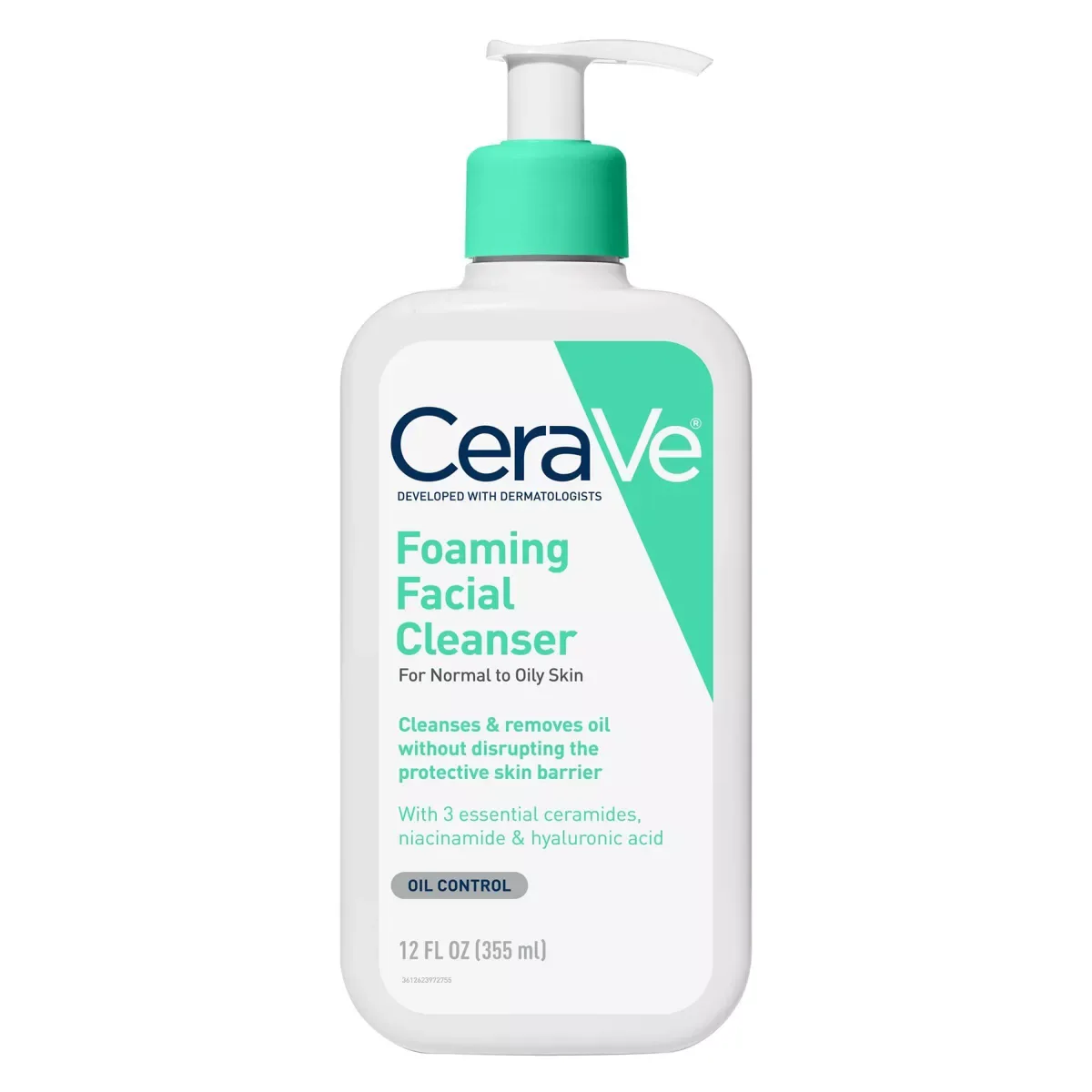
Cleansers: a dozen products, matching that same high mark. The Hydrating Cream-to-Foam Cleanser leads the category, with the original Hydrating Facial Cleanser just behind — a non-foaming, low-strip formula that is genuinely hard to fault at drugstore pricing.
Treatments reach the same level, led by the Healing Ointment, a petrolatum-based occlusive with lipids added.
And the serum category, which its reputation does not predict: the Hyaluronic Acid Serum sits close to the brand's best work elsewhere.
That is four categories at or near the top of the range. The lazy read of CeraVe — a barrier-repair company that also sells other things — turns out to understate it. What the data actually shows is a range that executes a narrow formulation philosophy consistently across most of what it makes, which is a different and more impressive thing. It is why the full CeraVe routine holds up completely for someone whose main problem is a compromised or dry barrier, and why the dry-skin moisturiser ranking keeps returning to it.
Where the range gets uneven
The weakness is not a category that scores badly across the board. It is variance within categories, and it is worth knowing which end of each you are buying.
Serums span 90 to 72. The Hyaluronic Acid serum is excellent; the Vitamin C serum sits at 72 and the Skin Renewing Gel-Oil at 75. Buying "a CeraVe serum" is therefore not one decision — it is three quite different ones, and only one of them is a strong buy.
Treatments span 91 to 79. Same pattern: the Healing Ointment and the psoriasis cream are strong, the Itch Relief cream trails.
Eye creams: 82 and 77. Respectable rather than compelling, and neither offers much that extending your moisturiser wouldn't.
Retinoids: both at 81. Two encapsulated retinol products, both perfectly acceptable, neither a reason to choose the brand. Anyone serious about a retinoid is better served by looking at where a product sits on the strength ladder than by staying in-family.
Exfoliants: none. Toners: none. Not weak — absent. If your routine contains a chemical exfoliant, it was never going to come from here, and the SA Smoothing Cream is a body keratolytic rather than a facial exfoliant.
That last pair is the finding with real consequences. A full routine from this range quietly opts you out of chemical exfoliation altogether, and if that was a deliberate choice on your part it is a defensible one — but it should be a choice rather than an accident of brand loyalty.
The sunscreen problem, which runs the opposite way to expectation
Sun protection is the one place the range clearly drops, and the shape of the drop is not what the standard advice would predict.
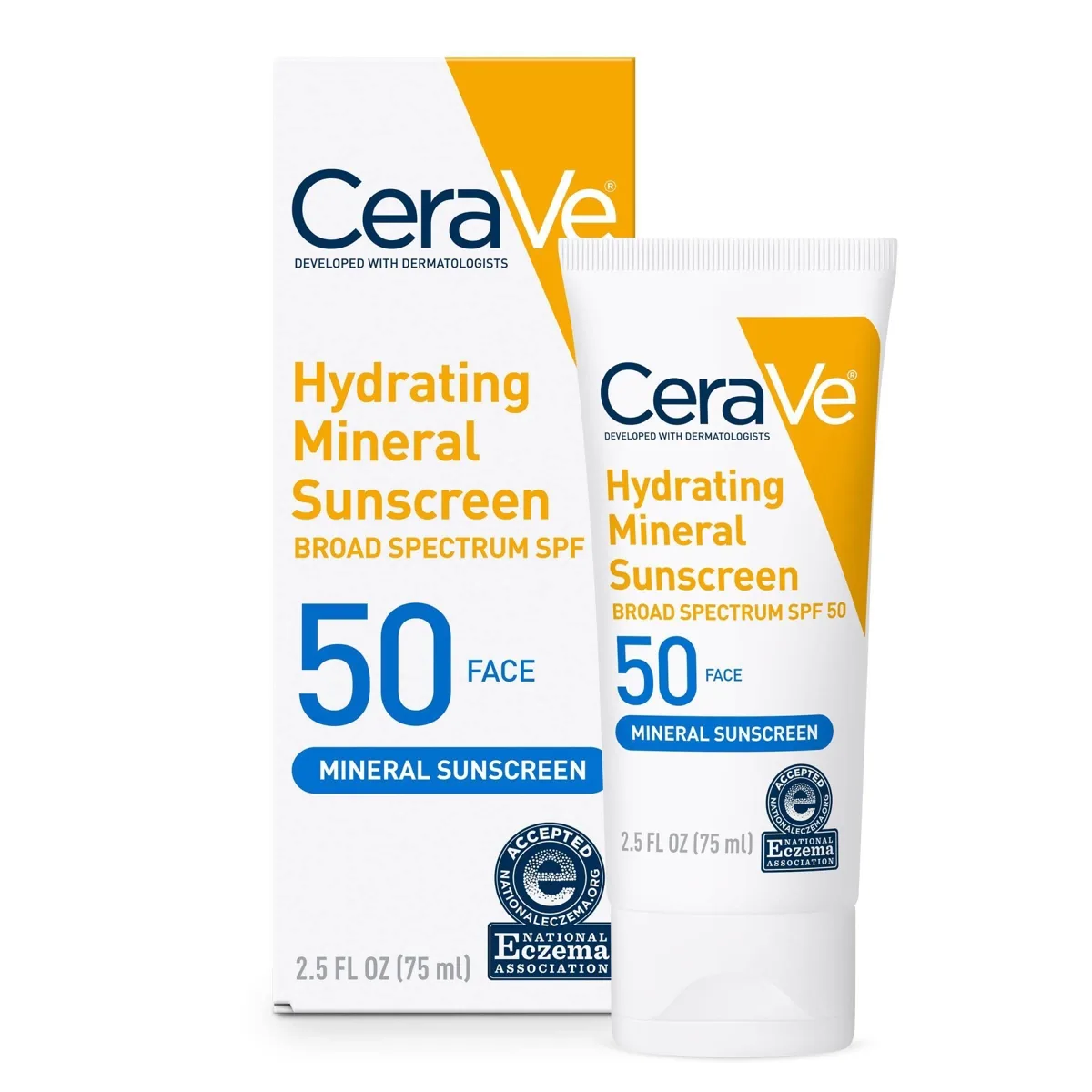
The three standalone sunscreens are all mineral, and they post the lowest results in the entire lineup — the Hydrating Mineral SPF 50 leads a weak field.
The SPF-moisturisers assess better, with the AM Facial Moisturizing Lotion comfortably ahead of any standalone sunscreen the brand makes.
This inverts the usual warning about combination products. The received wisdom is that a formula doing two jobs optimises for neither, and here the combination product is the better one. The reason is visible in the filter lists rather than the marketing: the standalone sunscreens are mineral-only, which limits both cosmetic elegance and measured UVA performance, while the AM lotions use organic filters. This is a constraint the brand could not formulate its way out of — the modern filters that solve it were unavailable in the US market for the entire period this range was built.
So the honest advice is narrower than "avoid combination products." Within this range, the combination products are the better sun option. Across the market, both are beaten, and sunscreen remains the clearest single substitution to make outside the family — judged on filters and on whether you will reapply it, rather than on the convenience of buying it with everything else.
The routine, and the shopping list
What a full CeraVe routine gets right is the foundation, and the foundation is most of the benefit for most people.
Cleanse with the Cream-to-Foam or the original Hydrating version depending on your skin. Moisturise with the Cream or the Lotion depending on season. That is two drugstore-priced products covering the two steps with the least glamorous and most reliable evidence behind them. For dry, sensitive, eczema-prone or barrier-compromised skin this is close to optimal at any price, and a dermatologist will recognise exactly what you are using.
Add the Hyaluronic Acid serum if you want a third step; it earns its place, which cannot be said of the brand's other two serums.
What to buy elsewhere, in order of how much it matters: sunscreen first, for the filter reasons above — and if you do stay in-family, take the AM lotion over the mineral sunscreens rather than the other way round. An exfoliating acid second, if your goals extend past barrier maintenance, because this range does not make one. Eye cream: optional, and extending your moisturiser is not a compromise.
A mixed routine needs its own checks, which is the small tax you pay for leaving the family: the conflict checker flags actives that clash across brands, and the routine order tool sorts a mixed shelf into sequence.
The fair verdict is that CeraVe is a stronger and broader range than its barrier-repair pigeonhole suggests, with one genuine soft spot and two deliberate omissions. Bought for what it is, it is among the best-value propositions in skincare. Bought as a whole regimen, it leaves you weakest in the step that matters most.
Products mentioned
Independently reviewed and scored — the real products behind this piece.




- Routine The Complete CeraVe Routine, Step by Step The built step-by-step routine, including where the range genuinely covers you.
- Ranked list Best Moisturizers for Dry Skin Where the brand's strongest category gets ranked against everything else.
- Ingredient Ceramides The lipid class the whole proposition rests on, and why the ratio matters more than the presence.
References
- Optimization of physiological lipid mixtures for barrier repair — Journal of Investigative Dermatology, 1996
- Multivesicular Emulsion Ceramide-containing Moisturizers: An Evaluation of Their Role in the Management of Common Skin Disorders — The Journal of Clinical and Aesthetic Dermatology, 2016
- An Investigation of the Skin Barrier Restoring Effects of a Cream and Lotion Containing Ceramides in a Multi-vesicular Emulsion in People with Dry, Itchy Skin — Dermatology and Therapy, 2020
- Topical supplementation with physiological lipids rebalances the stratum corneum ceramide profile and strengthens skin barrier function — British Journal of Dermatology, 2025
Every cited link is verified to resolve to the paper named. Where a source could not be independently confirmed, it is listed without a link rather than pointing you somewhere wrong.
Frequently asked
Is CeraVe good enough to be your entire routine?
For barrier maintenance, yes — the cleansers and moisturisers are excellent and inexpensive. As a complete regimen it has two structural gaps: no exfoliant or toner exists in the range at all, and the SPF-moisturisers score lower than the standalone sunscreens. Most people should buy sun protection elsewhere.
Does the ceramide ratio in a moisturiser actually matter?
The foundational research says yes, and more sharply than most marketing implies. Incomplete lipid mixtures were found to delay barrier recovery rather than simply helping less, while complete mixtures permit normal repair and a threefold excess of any one component accelerates it. Presence of ceramides alone is not the same claim.
Is MVE delivery technology real or marketing?
There is published work supporting it, including a review of multivesicular emulsion ceramide moisturisers and a study of barrier restoration. Nearly all of it sits close to commercial interest, which warrants discounting the effect size rather than dismissing the mechanism. It is not the main reason these products work.
Why do the CeraVe AM lotions score lower than the sunscreens?
They don't — it runs the other way here, which surprised us. The standalone sunscreens are mineral-only, which limits measured UVA performance and cosmetic elegance, while the AM lotions use organic filters and assess better. The usual warning about combination products doesn't hold inside this particular range.
What should I buy from another brand if I use CeraVe?
Sunscreen first — the range is mineral-only and its combination products are its weakest items. An active second, whether a retinoid or an exfoliating acid, since the brand deliberately formulates away from the irritation those require. Eye cream is not worth replacing; extending your moisturiser is a legitimate answer.