Telling Men to 'Get It Checked' Doesn't Work. Here's What the Delay Costs, Condition by Condition.
Three dermatological clocks run at different speeds while a man decides it can wait — and one of them cannot be restarted once it stops.
Read the preview
From the DermApproved blog, in Men's Skincare: the appointment men don't book. Telling a man to get checked doesn't work, so here's the specific version. Delay costs a melanoma patient tumour depth, an acne patient permanent scars, and a balding man follicles. Three different clocks — and one of them cannot be restarted once it stops. For the full breakdown, visit dermapproved.com/blog.
The gap is real, measured, and not specific to skin
Secondary analysis of national survey data put men's adjusted odds of having received a routine check-up at 0.53 relative to women, blood pressure screening at 0.44, and cholesterol screening at 0.72. These are not small differences in a soft outcome; they are roughly half the odds of the single most basic act of engaging with a health system.
The reason is not that men do not care. Research on internalised masculinity found that endorsing traditional masculine norms independently predicted avoiding care and delaying it once symptoms appeared — and that the effect applied to women who endorsed those norms too, which is a useful corrective to the idea that this is a biological trait rather than a learned script.
Dermatology then adds a specific accelerant. Skin reads as cosmetic. A chest pain gets a category in a man's head labelled medical; a changing mole, a spreading rash or a jawline full of cysts gets filed under appearance, and appearance is the category men are most trained to treat as unserious to care about. The appointment is not just deferred; it is reclassified as something that would be slightly embarrassing to make.
The standard response to this is an awareness campaign telling men to get checked. That message has been in circulation for decades and the odds ratios above are what it has achieved. So the rest of this piece does the other thing: it puts a price on the delay, separately, for each of the conditions men actually delay on. The prices are different, and one of them is not refundable.
Melanoma: the delay is priced in millimetres
Melanoma is the condition where the arithmetic of waiting is least forgiving, because the single most powerful prognostic variable is the depth the tumour reached before somebody removed it. Nothing done afterwards recovers that number.
A retrospective analysis examined who found the melanoma and how thick it was by the time they did. Patients who had never had a dermatological examination were about twice as likely to present with a lesion over 1 mm in Breslow thickness. Lesions detected by someone other than a dermatologist were more than three times as likely. The authors' conclusion was blunt: self-detection failed to catch melanomas at an early, curable stage even among patients whose skin was straightforward to read.
That finding is worth sitting with, because the standard advice given to men is precisely self-detection — check your own moles, use the ABCDE rule, watch for change. It is better than nothing and it is demonstrably not equivalent to an examination by someone holding a dermatoscope who looks at a thousand of these a year. Men also present with thicker tumours than women on average, and they carry the sites that are hardest to self-inspect: the back, the shoulders, the scalp.
Our skin cancer risk tool gives a structured read on whether your history and phenotype put you in the group where a periodic full-skin examination is the reasonable default rather than an indulgence. It will not diagnose anything. It will tell you whether the appointment is optional.
Acne: the delay is priced in permanent texture
Acne is the condition men most reliably wait out, because it carries a built-in promise — you grow out of it — that happens to be true for the inflammation and false for the consequences.
A clinical evaluation of 185 acne patients correlated the type and extent of scarring against several variables, and the duration of acne before adequate therapy was instituted was among them. More recent work has found treatment delay beyond three years markedly over-represented among patients with scars, with male sex, earlier onset and longer disease duration all associated with higher scar prevalence and severity. The mechanism is not mysterious: scarring is the fibrotic record of cumulative inflammatory injury, so it scales with how long the inflammation ran.
The uncomfortable implication is that the eighteen months a man spends working through the pharmacy shelf are not neutral. They are the period during which the permanent component of the disease is being laid down.
The over-the-counter ceiling is genuinely high and worth using properly first. Differin Adapalene Gel 0.1% made a real prescription-strength retinoid available without a prescription, and PanOxyl Acne Foaming Wash 10% Benzoyl Peroxide covers the antibacterial half of the standard combination. Used correctly and consistently, that pairing clears a lot of mild-to-moderate acne. What matters is knowing where the ceiling is: if twelve weeks of correct use has not meaningfully changed things, or if you are getting deep nodules or anything that leaves a mark, that is the signal to escalate — not a reason to try a fourth cleanser. The acne pathway sets out what a clinician can add above that line, and how to make an acne appointment count covers what to bring so the visit is not wasted.
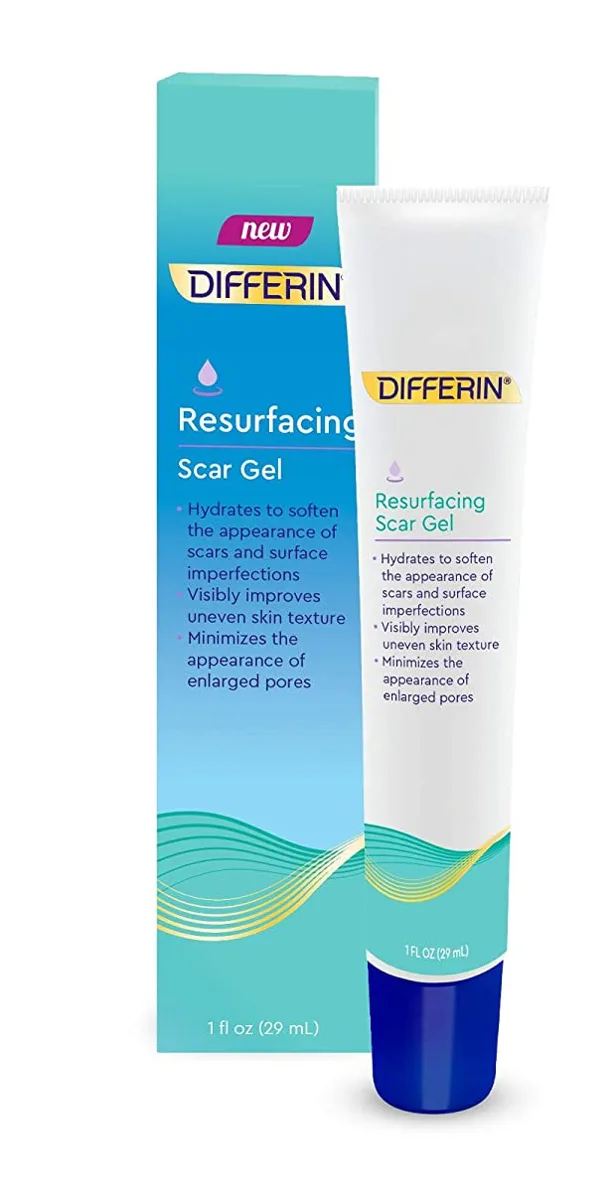
What you are left with if you wait is a different and much harder problem. Products like Differin Resurfacing Scar Gel work on the residual texture, and no topical fully reverses an atrophic scar. Prevention here is not a slogan; it is the only intervention with a good success rate.
Hair: the delay is priced in follicles that do not come back
Androgenetic alopecia has the strangest cost curve of the three, and the one most men misunderstand in the same specific way.
The process is miniaturisation: under androgen influence, susceptible follicles produce progressively finer, shorter, less pigmented hairs across successive cycles until they stop producing a visible hair at all. The clinical point is that a miniaturised follicle is still a follicle and can be pushed back up. A follicle that has been dormant long enough becomes fibrotic tissue, and no available drug retrieves it.
The treatment evidence is strong and it is strong for the population that still has something to work with. A retrospective service evaluation of 502 men on combined low-dose oral minoxidil and finasteride found 92.4% stable or improved at twelve months, with 57.4% showing marked improvement. Those numbers describe maintenance and partial recovery. They do not describe resurrection.
This inverts the usual logic men apply, which is to wait until it is bad enough to be worth treating. In every other cosmetic domain that instinct is reasonable. Here it is precisely backwards: the point of maximum treatment leverage is the point at which the loss is barely visible and the follicles are only beginning to shrink. The hair-loss stages tool exists to let you locate yourself on that curve honestly, including the uncomfortable step of comparing photographs from five years ago rather than relying on the mirror, which updates its baseline daily and will never tell you.
A related note, because it comes up constantly: scalp scaling and itch are a separate problem, treatable at the pharmacy, and worth clearing regardless. Nizoral Anti-Dandruff Shampoo handles the common seborrhoeic case. Clearing it will not change your hairline, and conflating the two costs people years.
What actually happens in the room, for someone who has never been
A large part of the delay is not fear of the diagnosis. It is not knowing what the appointment is, and not wanting to find out in public.
Book it as one of two things and say which. A targeted visit means you have a specific complaint — the acne, the rash, the mole — and it typically runs ten to fifteen minutes: history, examination of the site, often a dermatoscope, and in most inflammatory cases a prescription written before you leave. A full skin examination means undressing to underwear so someone can look systematically at everything including the scalp, between the toes, and the back you have never seen. It takes fifteen to twenty minutes. A chaperone is available and you can ask for one.
If something looks suspicious you may be offered a biopsy at that visit rather than at a later one. Local anaesthetic goes in first — a brief sting, then nothing. A shave biopsy takes a couple of minutes and leaves a shallow wound; a punch biopsy takes a small cylinder and usually one or two stitches. Histology comes back in roughly one to two weeks. Nearly all of these come back benign, and the point of doing it that day is that you do not spend a fortnight negotiating with yourself about whether to return.
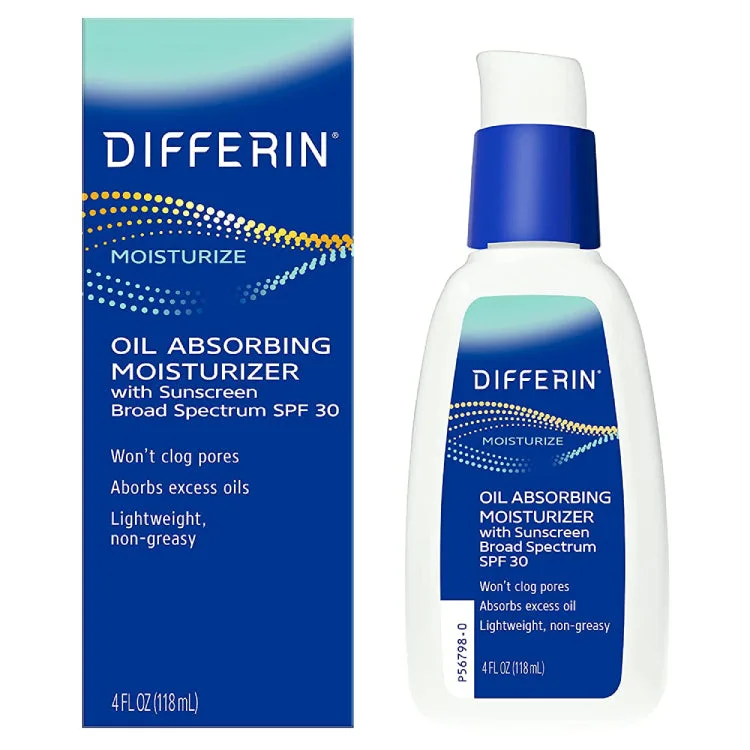
Bring three things and the visit doubles in value: photographs of the problem at its worst, a written list of what you have already used and for how long, and the specific question you want answered. Our derm visit prep tool assembles that list for you, and what to ask at a rosacea appointment is a good model for how specific the questions should be regardless of the condition. In the meantime, an ordinary daily sunscreen step like Differin Oil Absorbing Moisturizer SPF 30 is the one thing that helps every item on this list at once.
Cost, access, and the honest limits of a phone camera
None of the above helps if the appointment is unaffordable or six months out, which for many people it is. Two things are worth knowing precisely rather than vaguely.
First, teledermatology is genuinely good, within limits that the data defines rather than the marketing. A 2026 systematic review and meta-analysis pooling 155 studies found diagnostic concordance with in-person assessment of about 73% across skin cancers and 76% for pigmented lesions, with sensitivity of 87% and specificity of 84% in the pigmented group. Separate work comparing modalities directly found face-to-face accuracy significantly higher than teledermoscopy, with the difference driven by specificity rather than sensitivity.
Read practically, that says two different things depending on what you have. For inflammatory disease you can photograph well — acne, seborrhoeic dermatitis, most rashes, and prescription renewal — remote assessment is a reasonable and often excellent route, and it removes the exact barrier that keeps men out of the room. For a changing pigmented lesion it is a triage layer: good enough to escalate you quickly, not good enough to be the end of the conversation. A remote 'looks fine' on a mole that is still changing is not a discharge. whether online acne treatment is any good goes into which platforms actually prescribe what, and treatment without insurance covers generics, discount pricing and teaching clinics.
Second, the referral. Most men who do go start at primary care and come away with a mild topical and no onward appointment, because they described the problem apologetically. The script that works is four sentences: name the condition and how long it has run, name every treatment you have tried and for how long each, name the consequence you are trying to prevent — scarring, a missed melanoma, further loss — and then ask directly for the referral or the full skin examination. Asking explicitly is not rudeness; it is the difference between a note that reads patient concerned about spots and one that reads eighteen months of nodular acne, failed adapalene and benzoyl peroxide, early scarring, requests dermatology. One of those gets an appointment.
The general version of this advice has never worked on anyone. The specific version might: whichever of these three clocks is running on you, it is running now, and only one of them can be stopped after the fact.
Products mentioned
Independently reviewed and scored — the real products behind this piece.



- Therapy guide Acne What a clinician can add above the over-the-counter ceiling
- Question What should I bring to a short acne appointment? What to bring so a short appointment is not wasted
- Question What are the options if I have no insurance? Generics, discount pricing and teaching clinics for the access barrier
- Question Is an online acne service as good as seeing someone in person? Which remote platforms actually prescribe what
- Question Which questions matter at a rosacea appointment? A model for how specific the questions should be in any first visit
References
- Effects of sex, age, and visits on receipt of preventive healthcare services: a secondary analysis of national data — BMC Health Services Research, 2006
- Masculinity impediments: Internalized masculinity contributes to healthcare avoidance in men and women — Journal of Health Psychology, 2016
- Self-detected Melanomas are Thicker Regardless of Patient's Complexity: A Retrospective Analysis — Acta Dermato-Venereologica, 2023
- A clinical evaluation of acne scarring and its incidence — Clinical and Experimental Dermatology, 1994
- Effectiveness of Combined Oral Minoxidil and Finasteride in Male Androgenetic Alopecia: A Retrospective Service Evaluation — Cureus, 2025
- Diagnostic accuracy of teledermatology for skin diseases: a systematic review and meta-analysis — Frontiers in Medicine, 2026
- Diagnostic accuracy and interobserver concordance: teledermoscopy of 600 suspicious skin lesions in Southern Denmark — Journal of the European Academy of Dermatology and Venereology, 2020
Every cited link is verified to resolve to the paper named. Where a source could not be independently confirmed, it is listed without a link rather than pointing you somewhere wrong.
Frequently asked
Is checking my own moles enough if I know the ABCDE rule?
It is better than nothing and it is not equivalent to an examination. In one retrospective analysis, melanomas detected by someone other than a dermatologist were more than three times as likely to be over 1 mm thick, and patients who had never had a dermatological examination were around twice as likely to present at that depth. Self-checking finds things; it tends to find them later.
How long should I try over-the-counter acne products before booking an appointment?
Roughly twelve weeks of correct, consistent use of an adapalene plus benzoyl peroxide combination. If there is no meaningful change by then, or if you are getting deep nodules or lesions that leave marks, escalate rather than switching brands. Scarring correlates with how long the inflammation ran before adequate treatment, so the switching period is not free.
Is it too late to treat hair loss if I have been losing it for years?
It depends entirely on whether the follicles are miniaturised or gone. Miniaturised follicles respond — a combination-therapy series reported 92.4% of men stable or improved at twelve months. Follicles that have been dormant long enough become fibrotic and no current drug retrieves them, which is why the leverage is highest when the loss is barely visible.
Can I do this over video instead of going in person?
For acne, seborrhoeic dermatitis, most rashes and prescription renewals, yes — remote assessment reaches concordance with in-person judgement in the mid-seventies percent range and removes the main access barrier. For a changing mole, treat it as triage only: in-person accuracy is significantly higher, and a remote reassurance on a lesion that keeps changing is not a discharge.
What do I actually say to get a dermatology referral?
Four sentences: the condition and how long it has run, every treatment tried and for how long each, the specific consequence you want to prevent, and a direct request for the referral or a full skin examination. Vagueness produces a mild topical and no onward appointment; specificity produces a note that a dermatology service will triage upward.