


Telling Men to 'Get It Checked' Doesn't Work. Here's What the Delay Costs, Condition by Condition.
Three dermatological clocks run at different speeds while a man decides it can wait — and one of them cannot be restarted once it stops.
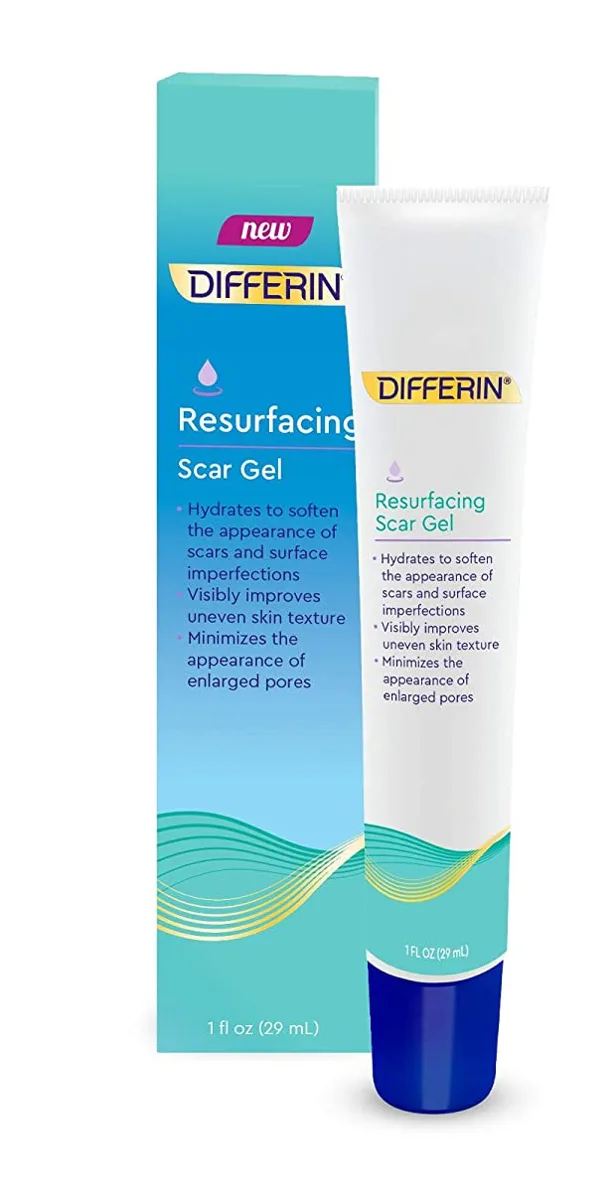
It's a 'scar' treatment from the adapalene brand that pointedly skips retinoids, instead pairing bakuchiol with a complete Centella complex and a repair peptide. That makes it one of the few targeted post-acne-mark products gentle and safe enough for sensitive skin and pregnancy, trading retinoid speed for tolerability.
A surprisingly gentle post-acne-mark treatment from the brand best known for a retinoid — and it deliberately contains none. Bakuchiol, a full Centella complex, and a repair peptide fade discoloration and smooth texture without irritation, making it pregnancy-safe and sensitive-skin friendly. The trade-offs are a steep price for a small tube and slow, subtle results that demand patience.
This gel arrived around 2020 and has accumulated a moderate but still-growing pool of user reviews rather than long-term clinical data on scar outcomes. The assessment here leans on the general evidence for bakuchiol and Centella, an analysis of the full ingredient list, and Differin's track record — while acknowledging that published proof for fading acne marks with this specific combination remains limited.
The case for it
What would change this: A declared concentration would move this to a firmer reading of the dose.
Same rule for everyone. “Unproven” is the verdict on 1,111 of 45,024 concern verdicts across the catalog; rule R9 decided 1,111 of them. Unchanged since September 5, 2026, engine 5.1.1.
Brand or formulator? Disclose a concentration or correct a fact →
The studies behind the evidence row
The case for it
What would change this: A declared concentration would move this to a firmer reading of the dose.
Same rule for everyone. “Promising” is the verdict on 7,858 of 45,024 concern verdicts across the catalog; rule R9p decided 7,858 of them. Unchanged since September 5, 2026, engine 5.1.1.
Brand or formulator? Disclose a concentration or correct a fact →
The studies behind the evidence row
Also listed for Hyperpigmentation, Rough Texture and Dark Spots — the actives here (Bakuchiol, Peptides, Centella Asiatica, Sea Buckthorn) are in our research queue for those concerns; there is no verdict until their evidence rows are written. That is a gap in our table, not a mark against the product.
Where our review and the verdict differ. The review below was written on the formulation and the published trials; the verdicts above apply the stricter standing test in our methodology — an active earns a recommendation only with guideline or regulatory standing for the concern. Where the two disagree, the verdict is DermApproved’s position.
A verdict is DermApproved’s assessment of how well a product’s ingredients fit a concern — never a claim about what the product treats. Evidence dots and collected reviews sit beside it and are never blended in. Rules 0.5.1 · evidence table ev-2026.09-r228 · how we decide
Differin is, for most people, synonymous with one molecule: adapalene, the prescription-strength retinoid that became available over the counter and reshaped how regular people treat acne. So there's a quiet irony in the Resurfacing Scar Gel, a Differin product that contains exactly zero retinoid. That's not an oversight — it's the entire point. This gel is built for the aftermath of acne, the flat red and brown marks and rough patches breakouts leave behind, and it's deliberately formulated to be usable by the people retinoids tend to exclude: those with sensitive, easily irritated skin, and those who are pregnant or nursing.
The active doing the resurfacing here is bakuchiol, the plant-derived compound that has spent the last few years marketed as 'natural retinol.' That comparison oversells it somewhat, but bakuchiol does have a credible, if smaller, body of research suggesting it can nudge cell turnover and improve tone and texture with markedly less irritation than a true retinoid. In a product aimed at already-compromised post-acne skin, that gentleness is the whole value proposition. You get a resurfacing nudge without the redness, flaking, and stinging that make retinoids a tough sell on skin that's still recovering from breakouts.
What impressed me is that Differin didn't stop at bakuchiol. The formula carries a complete Centella asiatica complex — asiaticoside, madecassic acid, and asiatic acid all listed individually — which is the soothing, wound-healing workhorse beloved in K-beauty for calming inflamed, healing skin. There's also tripeptide-1 (marketed as Kollaren), a signaling peptide aimed at the collagen-and-repair side of the equation, plus antioxidant sea buckthorn and rosehip oils and a touch of squalane to keep things comfortable. It's a thoughtfully layered approach: bakuchiol to resurface, Centella to calm and heal, peptide to support repair, oils to soothe. For a drugstore-adjacent treatment, that's a genuinely considered ingredient story.
The texture reflects the heavy silicone presence at the top of the list. Dimethicone and dimethicone crosspolymer give it a silky, almost primer-like slip that spreads thin and dries to a smooth, velvety finish. Some people love this feel; others find silicone-forward products a bit slick or sense they're 'sitting on top' of the skin. There's no sting, no tingle, no peeling — which is reassuring, but also means the first few weeks feel uneventful. You don't get the visceral 'it's working' feedback a retinoid gives you. The resurfacing happens quietly, and you have to trust the process.
And patience is non-negotiable here. Post-acne marks are stubborn; discoloration remodels slowly, on the order of weeks to months, and bakuchiol is a gentle actor, not a fast one. Realistically, you're looking at eight to twelve weeks of consistent twice-daily use before the fading becomes obvious, with softer texture sometimes showing up sooner. Anyone expecting a quick fix will be disappointed and may abandon it before it's had a fair shot. Used faithfully, though, many people do report meaningful fading of those red and brown leftovers.
Now the honest limitations. First, the name oversells the 'scar' angle. This treats post-acne marks and surface texture, not true scars. If you have deep, pitted, atrophic scarring, no topical can fill that in — those are a structural change in the skin that realistically requires in-office procedures, and going in with the right expectation will save you frustration. Second, the silicone-rich base means it isn't fungal-acne safe and won't appeal to anyone avoiding silicones. Third, and most pointedly, the price. At around twenty-seven dollars for a single fluid ounce, this is expensive for what is, by volume, mostly water and silicones carrying a modest concentration of the interesting actives. That's a steep ask for a slow, subtle product.
Which brings me to value, the gel's weakest dimension. The formulation is smart, but a small tube at a premium price, built largely on a silicone base, is a hard sell on cost-per-result — especially when bakuchiol and Centella both appear in many other products. Differin's adapalene credibility, however real, doesn't transfer to this retinoid-free formula, and you shouldn't pay a brand premium expecting it to. Where the price becomes defensible is the specific niche it fills: a gentle, pregnancy-safe, sensitive-skin-friendly resurfacing treatment for post-acne marks. If that describes you and a retinoid is off the table, the math improves, because your alternatives narrow considerably.
So here's the measured take. The Resurfacing Scar Gel is a well-constructed, genuinely gentle treatment that does a real job for a real audience: people fading post-acne discoloration who need to avoid retinoid irritation or who are pregnant. It's let down by an overselling name, a silicone base that won't suit everyone, and a price that asks a lot for slow, understated results. Go in knowing it fades marks rather than erasing scars, commit to the months it needs, and always pair it with daily sunscreen — because every bit of resurfacing you coax out of it can be undone by unprotected sun on healing skin.
The hero actives that drive this product's performance.
| Ingredient | Function | Evidence |
|---|---|---|
| Bakuchiol | The retinol-alternative active driving cell turnover here, chosen so the gel can resurface post-acne marks without the irritation or pregnancy concerns of a retinoid. In this silicone-and-oil base it works gradually and gently, which suits the sensitive, already-irritated skin that breakouts leave behind. | Not yet assessed |
| Centella Asiatica Complex (Asiaticoside, Madecassic Acid, Asiatic Acid) | A full set of Centella's wound-healing actives, included to calm post-acne inflammation and support the skin-repair process that fades discoloration. Paired with the bakuchiol, it's the soothing-and-healing half of a resurface-while-repairing strategy. | Limited for Acne Scarring |
| Tripeptide-1 (Kollaren) | A signaling peptide meant to support the skin's collagen and matrix repair as marks remodel. It's a supporting player to the bakuchiol and Centella, aimed at the textural side of scarring rather than just the color. | Not yet assessed |
| Sea Buckthorn & Rosehip Oils | Antioxidant- and fatty-acid-rich oils that soothe the skin and support barrier comfort during treatment. Alongside squalane, they soften the gel's silicone base so it stays comfortable on the sensitized skin around healing breakouts. | Not yet assessed |
Water, Dimethicone, Dimethicone Crosspolymer, Caprylic/Capric Triglyceride, Bis-PEG-12 Dimethicone, Glyceryl Oleate Citrate, Ethoxydiglycol, Bakuchiol, Dextran, Hippophae Rhamnoides (Sea Buckthorn) Fruit Oil, Hippophae Rhamnoides (Sea Buckthorn) Seed Oil, Asiatic Acid, Asiaticoside, Rosa Rubiginosa Seed Oil, Butylene Glycol, Hydrogenated Ethylhexyl Olivate, Phenoxyethanol, Acrylates/C10-30 Alkyl Acrylate Crosspolymer, Citric Acid, Sodium Hydroxide, Tocopheryl Acetate, Ethylhexylglycerin, Disodium EDTA, Squalane, Madecassic Acid, Tripeptide-1
treatment
AM & PM
Apply to clean skin before heavier creams, focusing on the marks rather than the whole face. Its silicone-rich base spreads thin and sits well under moisturizer; in the morning, always follow with sunscreen since fading marks is undermined by UV exposure.
This is a long-game product. Texture and softness may improve within a couple of weeks, but visible fading of post-acne marks typically takes 8-12 weeks of consistent twice-daily use, in line with how slowly discoloration remodels.
The formulation's logic is sound even where the scar-specific evidence is thin. Bakuchiol is the most interesting active: controlled studies have shown it can improve fine lines, tone, and texture with significantly less irritation than retinol, and it appears to influence some of the same retinoid-like pathways, which is why it's a reasonable choice for resurfacing sensitive, post-acne skin. Its data on fading post-inflammatory marks specifically, however, is more extrapolated than proven. The Centella asiatica triterpenes — asiaticoside, madecassic acid, and asiatic acid — have a stronger and growing body of evidence for promoting wound healing, modulating inflammation, and supporting collagen synthesis, which fits the post-breakout repair goal well. Tripeptide-1 belongs to the signal-peptide class studied for collagen support, though peptide stability and penetration in finished cosmetic formulas are perennial open questions, so its real-world contribution here is uncertain. The sea buckthorn and rosehip oils and tocopheryl acetate provide antioxidant and barrier-soothing benefits with reasonable backing. The crucial scientific caveat is conceptual: this product addresses post-inflammatory erythema and hyperpigmentation plus surface texture, not the dermal volume loss of true atrophic scars, which topicals cannot correct. And because resurfacing actives can leave skin more vulnerable to UV-driven pigmentation, daily sun protection is essential to seeing any benefit.
Within clinical practice, the distinction this product blurs is an important one: post-inflammatory marks (the flat red and brown discoloration after a breakout) respond to topical treatment, while true atrophic acne scars generally require procedures such as microneedling, lasers, or fillers. For the discoloration, gentle actives are routinely favored on sensitive, recently inflamed skin, and bakuchiol is increasingly cited as a tolerable retinol alternative, particularly for patients who are pregnant or retinoid-intolerant. Centella asiatica is widely regarded in clinical and cosmetic dermatology as a credible soothing and barrier-supporting agent for compromised skin. The consistent professional emphasis is on realistic expectations and time — pigment remodels over months, not days — and on rigorous daily sun protection, since UV exposure both darkens existing marks and slows their resolution.
Use it twice daily, morning and night, after cleansing and before heavier moisturizers. Apply a thin layer directly to post-acne marks and rough areas rather than slathering the whole face — a little of this silicone-rich gel covers a lot. Let it settle for a minute, then follow with your moisturizer. In the morning, always layer a broad-spectrum sunscreen on top, since resurfacing actives leave skin more prone to UV-driven darkening and unprotected sun will undo your progress. Give it a full eight to twelve weeks of consistent use before evaluating results, as fading discoloration is inherently slow.
This is where the gel stumbles. At roughly twenty-seven dollars for one fluid ounce, it's costly for a treatment that is, by volume, largely a silicone-and-water base carrying modest amounts of bakuchiol, Centella, and a peptide — ingredients that also appear in plenty of less expensive products. Differin's strong reputation rests on adapalene, which this formula doesn't contain, so the brand premium isn't really earned here. The price becomes more justifiable only for its specific niche: a gentle, fragrance-free, pregnancy-safe option for fading post-acne marks when retinoids are off the table. For that audience the alternatives are fewer, which improves the calculus; for everyone else, the cost-per-result is hard to defend.
People dealing with post-acne marks and rough texture who need a gentle, retinoid-free option — especially those with sensitive skin or who are pregnant or nursing and can't use adapalene. It suits anyone who prioritizes tolerability over speed and is willing to commit to months of consistent use.
Anyone hoping to improve deep, pitted, atrophic scars should skip it, since topicals can't fill structural scarring — those need in-office procedures. It's also a poor fit for people avoiding silicones, those managing fungal acne, and bargain-minded shoppers who'd rather get bakuchiol and Centella in a larger, cheaper product.
A lightweight, silky gel with a slip-forward, almost primer-like feel from the silicones; it spreads thin and dries to a smooth, soft surface.
Fragrance-free; just a faint plant-oil note from the sea buckthorn and rosehip in the base.
Small squeeze tube, sized as a targeted treatment rather than an all-over product.
It applies smooth and silicone-slick with no sting, tingle, or peeling — a deliberate contrast to retinoid treatments. There's no purge to wait out; instead, the first weeks feel uneventful, with the resurfacing working quietly in the background while skin simply feels softer where it's applied.
Roughly 2-3 months when used twice daily on targeted areas; longer if reserved for spot treatment of marks.
All Year
Differin made its name with OTC adapalene, but this gel answers a different question: what to use on the discoloration and rough texture acne leaves behind, for people who can't or won't use a retinoid. It leans on bakuchiol and Centella to offer resurfacing and healing benefits without the irritation that makes retinoids hard for compromised, post-breakout skin.
Differin built its reputation on adapalene, the first OTC prescription-strength retinoid, which lends the brand strong dermatological credibility. This Scar Gel, however, contains no adapalene — it's a separate cosmetic treatment built on bakuchiol and Centella, so the brand's retinoid pedigree doesn't directly transfer to its evidence base.
This gel will erase deep, pitted acne scars.
It targets post-acne marks — the flat red and brown discoloration — and surface texture. True indented or atrophic scars are a structural problem that topicals can't fill; those typically need in-office procedures.
Because it's from Differin, it contains a retinoid.
It contains no adapalene or any retinoid. The active is bakuchiol, a gentler plant-based alternative, which is exactly why this product is considered pregnancy-friendly while Differin's adapalene gel is not.
No. Unlike Differin's adapalene gel, this product contains no retinoid. Its resurfacing active is bakuchiol, a gentler plant-based alternative, which is why it's considered pregnancy-friendly.
No. It targets flat post-acne marks and surface texture, not deep indented scars. True atrophic scarring is a structural change in the skin that requires in-office procedures like microneedling or lasers.
Plan on eight to twelve weeks of consistent twice-daily use before fading becomes obvious, since post-acne discoloration remodels slowly. Surface texture may feel softer somewhat sooner.
Its bakuchiol-and-Centella formula contains no retinoid, so it avoids the main pregnancy concern with acne treatments. As always, anyone pregnant should confirm with their doctor before adding it.
Yes. Its gentle formula layers well with niacinamide or vitamin C and pairs naturally with daily sunscreen, which is essential since resurfacing leaves skin more vulnerable to UV-driven darkening.
At around $27 for one ounce, you're paying a premium for a small, silicone-based tube carrying modest amounts of bakuchiol, Centella, and a peptide. The cost is most justifiable for its gentle, pregnancy-safe niche.
Recurring themes our editors read across retailer reviews of this product — summaries in our words, not quotations, and not a substitute for your own patch test.
Gentle on sensitive, acne-irritated skin
Helps fade red and brown post-acne marks
No retinoid irritation or peeling
Fragrance-free and pregnancy-friendly
Expensive for a small 1 oz tube
Slow, subtle results require patience
Silicone-heavy texture isn't for everyone
Does little for deep, indented scars
Verified answers from our questions library — the nuance a product page cannot carry.