Resurfacing Has an Exchange Rate: Result Scales With Injury, Injury Scales With Downtime
Non-ablative fractional, ablative fractional and fully ablative are not competing products. They are rungs on one ladder, and the only honest consult question is which rung your problem actually requires.
Read the preview
From the DermApproved blog, in Lasers & Energy Devices: resurfacing runs on an exchange rate nobody says out loud. Result scales with injury. Injury scales with how long you look like you had something done. So when a clinic advertises no downtime — they have just told you exactly how much tissue they plan to damage. For the full breakdown, visit dermapproved.com/blog.
One ladder, not a product range
Clinic websites present resurfacing as a menu — a gentle option, an intermediate option, a dramatic option — as though these were different philosophies serving different customers. They are not. They are the same intervention at different intensities, and the variable that changes between them is how much tissue you destroy.
Everything on the ladder works the same way. You injure the epidermis and dermis in a controlled pattern, the wound-healing response produces new collagen as it repairs, and the reorganised tissue sits differently than the scarred or photodamaged tissue it replaced. More injury means a larger remodelling response, which means a bigger change. It also means a longer, uglier, more inconvenient recovery, because you have done more damage and damage takes time to close.
That relationship is not a marketing artefact you can negotiate around. It is the mechanism. Which means the only honest framing of a resurfacing consult is an exchange rate: how many days of looking visibly treated are you willing to spend, and what does that buy?
Three rungs, roughly.
Non-ablative fractional resurfacing heats columns of dermis while leaving the epidermis intact. Recovery is redness and swelling for a few days and a sandpapery, bronzed texture for up to a week. You are presentable quickly.
Ablative fractional resurfacing removes microscopic columns of tissue outright, vaporising them and leaving healthy skin between. Recovery involves genuine oozing and crusting for several days, then persistent redness for weeks. You are not going to work on day three.
Fully ablative resurfacing removes the epidermis across the entire treated area rather than in a pattern. It is the most powerful thing in the category and the least performed today, because recovery means an open wound on your face for a week or more, redness for months, and a real complication profile.
Nothing else about the technology matters as much as which of those three you are actually buying.
What the gap in results actually looks like
The exchange rate is not a metaphor. It has been quantified, at least approximately, and the numbers are worth carrying into a consultation.
A review of fractional laser resurfacing for acne scars in the British Journal of Dermatology summarised the published improvement ranges: ablative fractional photothermolysis produced improvement in the region of 26 to 83 per cent, against roughly 26 to 50 per cent for non-ablative. The ranges overlap at the bottom because the bottom is where poor candidates, wrong settings and inadequate session counts live. It is the ceiling that separates them, and the ceiling is what people are buying when they accept downtime.
Head-to-head work supports the same picture with the trade stated explicitly. A comparison of ablative fractional carbon dioxide against non-ablative fractional erbium-glass in post-acne scarring found the ablative device more effective while the non-ablative device delivered less pain and shorter downtime. That is the entire subject in one sentence.
Which produces the guidance almost nobody gives out loud. If your scarring is mild and largely textural, non-ablative fractional is a reasonable and proportionate choice, and a series of them will get you somewhere. If your scarring is moderate to severe and atrophic, a series of non-ablative sessions is frequently an expensive way to be mildly disappointed — you will spend more in total than a shorter ablative course would have cost, take longer, and land lower. Underbuying is as real an error as overbuying, and it is the more common one because it is the one the marketing encourages.
The corollary deserves stating bluntly: when a clinic advertises a resurfacing treatment with no downtime, they are describing the amount of tissue injured. No downtime and no visible result on any short timescale are the same fact wearing different clothes. That does not make such treatments worthless — several gentle sessions genuinely accumulate — but it does mean the phrase should read as a specification rather than an advantage.
Matching the rung to the problem
Different complaints sit at different heights, and mismatching them is where money goes to die.
Fine textural irregularity, enlarged-appearing pores, mild photodamage and early superficial scarring respond well to non-ablative fractional treatment across a series. This is also the right rung for someone who cannot take time off, since the constraint is real and a treatment you can actually schedule beats a better one you keep postponing.
Atrophic acne scarring is where the ladder genuinely matters, and it matters by scar morphology rather than by severity alone. Rolling and shallow boxcar scars respond to fractional resurfacing because their walls can be remodelled. Deep, narrow icepick scars respond poorly to any resurfacing device, because the laser cannot reach the base of a tract that is deeper than it is wide — those want a different tool entirely, usually punch excision or focal TCA application, often before or alongside resurfacing rather than instead of it. A clinic proposing laser alone for a face full of icepick scarring has not examined the scars properly. The acne scarring pathway sets out which treatment suits which scar type.
Deep static rhytides — the etched lines that remain when the face is at rest, particularly around the mouth — are the classic indication for the top of the ladder, and are where fully ablative resurfacing still has no equal. Nothing gentler produces the same change to perioral lines, and anyone who has been sold six non-ablative sessions for that indication has been sold the wrong thing.
Widespread actinic damage occupies its own category, because there the resurfacing is partly therapeutic rather than cosmetic. Our answer on resurfacing for widespread sun damage covers where that sits.
Take photographs before you start, in fixed lighting, and keep taking them. Resurfacing results accumulate over months as collagen remodels, and the change is gradual enough that your memory of your own face will quietly update to match it — which is how people conclude an expensive course did nothing. Our photo tracker exists for this, and it is the difference between assessing an outcome and guessing at one.
Skin tone changes the settings, not the answer
The dominant risk in resurfacing deeper skin is post-inflammatory hyperpigmentation, and it deserves both a serious treatment and a rebuttal of the reflexive refusal it often produces.
The mechanism is the one that governs pigment everywhere: inflammation activates melanocytes, and a controlled thermal wound is inflammation by design. The complication literature on fractional carbon dioxide resurfacing records post-inflammatory hyperpigmentation as a common, generally self-limited occurrence, and — the operationally useful part — notes it rising with higher treatment densities. Density is the parameter an operator chooses. Fewer microthermal zones per pass, more passes spread over more sessions, and the same total result arrives with a much lower pigment risk and a longer calendar.
That is why the correct answer to "is resurfacing safe for my skin tone" is not yes or no but which device, at what density, over how many sessions, with what pre- and post-treatment plan. Non-ablative fractional resurfacing has been published specifically in Fitzpatrick phototypes IV to VI for acne scarring, which settles the question of whether it can be done. It is done. It is done more conservatively.
The practical checklist for anyone with melanin-rich skin is short and non-negotiable. Ask which device by name, and whether the operator has treated your phototype on it. Insist on a test spot in an inconspicuous area, and wait the full interval before judging it — pigment reactions declare themselves over weeks, not days. Expect a pre-treatment period of strict photoprotection, and expect the clinic to postpone if you arrive tanned. And agree in advance what happens if pigmentation occurs, because it is a manageable complication when someone is managing it and a miserable one when you are left to search for answers.
Our derm visit prep tool covers structuring that conversation, which is a genuinely different skill from having the conversation.
The unglamorous things that change outcomes
Pre- and post-care are where a large share of the variance in results and complications actually lives, and they are the part patients most often treat as optional.
Antiviral prophylaxis is first because it is the one with a hard consequence. Herpes simplex reactivation after ablative resurfacing can produce delayed re-epithelialisation and scarring — turning a cosmetic procedure into a permanent injury. A trial of valacyclovir prophylaxis found no patients developed infection or recurrence on the regimen studied, and consensus guidance advocates routine anti-herpetic prophylaxis for carbon dioxide resurfacing rather than restricting it to people with a known cold-sore history, since a substantial proportion of the population carries the virus without recalling an outbreak. If a clinic performing ablative work does not raise this, raise it yourself. Our answer on antivirals before resurfacing covers the detail.
Stopping the right things beforehand matters too — retinoids, exfoliating acids and anything that has thinned or sensitised the stratum corneum, on the timeline the clinic specifies rather than the one you find online. Our answer on what to stop before a laser or peel sets out the usual intervals.
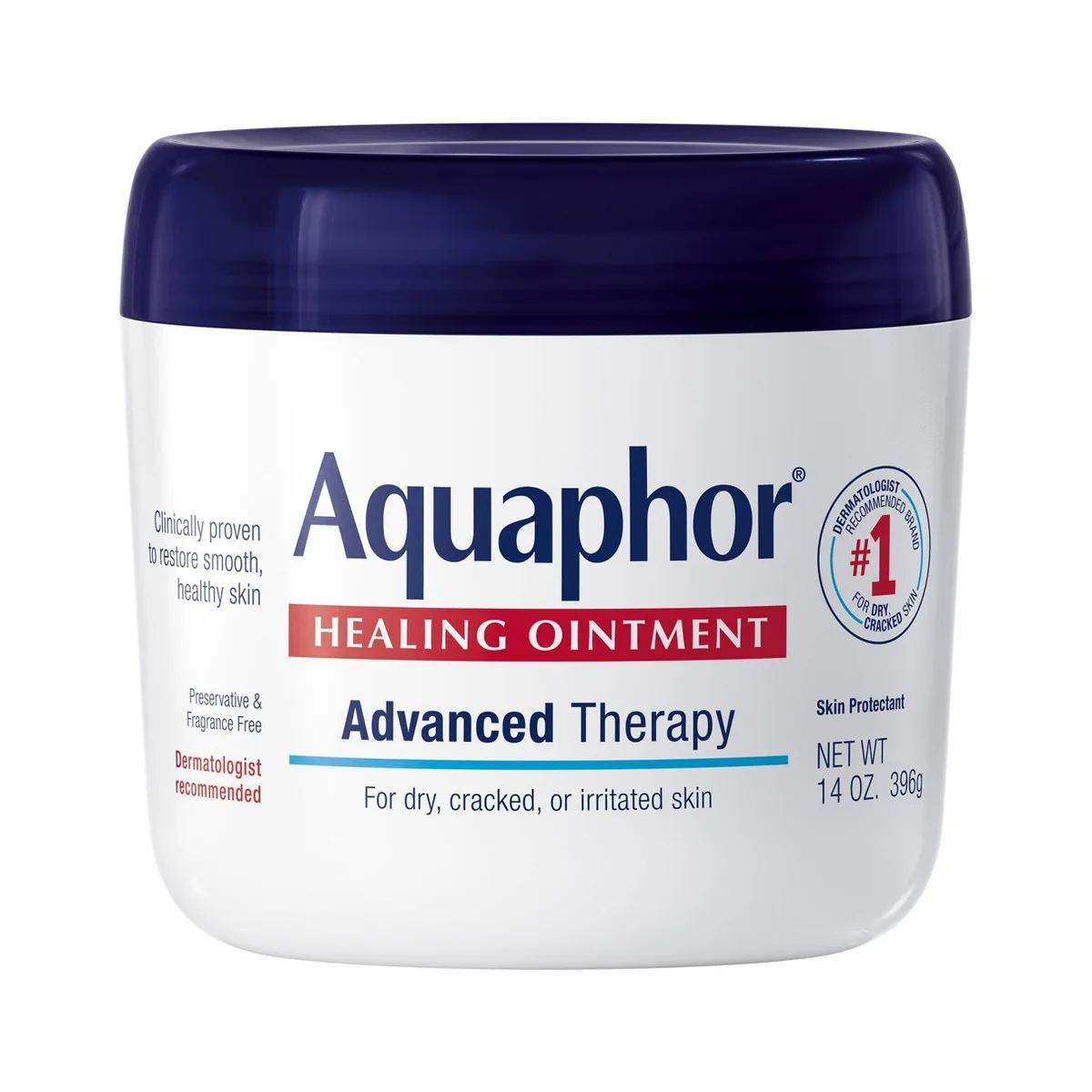
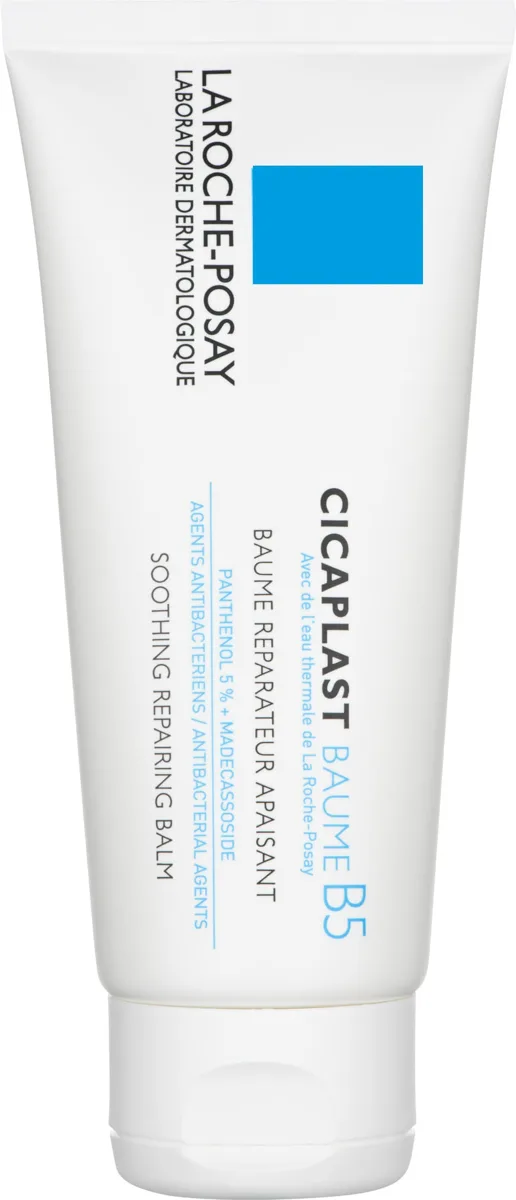
Afterwards, the job is occlusion and restraint. A resurfaced face is a wound, and wounds re-epithelialise fastest under an occlusive layer that keeps them from drying out. Plain petrolatum-based ointment — CeraVe Healing Ointment or Aquaphor Healing Ointment — is the standard for the raw days, applied thickly and often, and it beats anything marketed as a post-procedure serum during that window. As the surface closes, a bland barrier cream such as La Roche-Posay Cicaplast Baume B5, COSRX Skin Barrier Moisturizing Cream or Vanicream Daily Facial Moisturizer takes over. Centella-based options like SKIN1004 Hyalu-Cica Moisture Cream and ROUND LAB Pine Tree Calming Cica Ampoule are reasonable once skin is intact, though nothing in that category outperforms simply leaving the area alone.
Then sun discipline, which is not advice but the single largest determinant of whether you get pigmentation. Freshly resurfaced skin has a new, thin, melanin-poor epidermis and an activated melanocyte population — the worst possible combination to take outdoors. Once the surface will tolerate it, a mineral filter such as Avène Mineral Sunscreen or EltaMD UV Clear goes on daily, and shade and hats do the rest. The interval before you can wear anything at all is the clinic's call. Our answer on downtime after fractional laser and the one on exercising afterwards cover the fortnight most people mismanage.
The position worth taking, since the industry will not: resurfacing is one of the genuinely effective things dermatology can do to a face, and the reason it works is that it hurts. Any marketing that promises the result without the recovery is either describing a weaker treatment or describing something that has not happened yet. Decide how many days you can spend, buy the rung that fits, and be suspicious of anyone selling you the top of the ladder with the downtime of the bottom.
Products mentioned
Independently reviewed and scored — the real products behind this piece.





- Therapy guide Acne scarring Which treatment suits which scar morphology — the examination step clinics skip.
- Question Do I need antiviral tablets before laser if I get cold sores? The prophylaxis question with a hard consequence attached.
- Question What do I need to stop using before a laser or peel? The pre-treatment stop list and its intervals.
- Question How long is the downtime after fractional laser? Realistic recovery timelines by rung.
- Question When can I exercise again after microneedling or laser? The fortnight most people mismanage.
- Question Is resurfacing the whole face ever the answer? Where resurfacing becomes therapeutic rather than cosmetic.
References
- Fractional laser resurfacing for acne scars: a review — British Journal of Dermatology, 2012
- Ablative Fractional 10,600 nm Carbon Dioxide Laser Versus Non-ablative Fractional 1540 nm Erbium-Glass Laser in Egyptian Post-acne Scar patients — Journal of Lasers in Medical Sciences, 2018
- Nonablative Fractional Laser Resurfacing for Acne Scarring in Patients With Fitzpatrick Skin Phototypes IV-VI — Dermatologic Surgery, 2016
- Fractional CO2 Laser Resurfacing Complications — Seminars in Plastic Surgery, 2012
- Valacyclovir prophylaxis for herpes simplex virus infection or infection recurrence following laser skin resurfacing — Dermatologic Surgery, 2002
- Complications of Laser and Energy-Based Procedures in Dermatology: Classification, Management, and Prevention — Journal der Deutschen Dermatologischen Gesellschaft, 2026
Every cited link is verified to resolve to the paper named. Where a source could not be independently confirmed, it is listed without a link rather than pointing you somewhere wrong.
Frequently asked
What is the difference between ablative and non-ablative fractional laser?
Non-ablative heats columns of dermis while leaving the epidermis intact; ablative vaporises microscopic columns of tissue outright. The ablative version produces a larger result and a substantially longer, messier recovery, because the amount of tissue injured is what determines both.
Does 'no downtime' laser actually do anything?
Something, gradually, across a series. But the phrase describes how little tissue was injured, and injury is what drives remodelling — so no downtime and no quickly visible result are the same statement. Treat it as a specification rather than a selling point.
Which laser is right for acne scars?
It depends on scar morphology more than severity. Rolling and shallow boxcar scars respond to fractional resurfacing; deep narrow icepick scars do not, because the beam cannot reach the base of a tract deeper than it is wide. Those need excision or focal chemical treatment alongside.
Can people with darker skin have laser resurfacing?
Yes, with adjusted parameters. Post-inflammatory hyperpigmentation is the dominant risk and rises with treatment density, so the safe approach is lower density across more sessions. Non-ablative fractional resurfacing has published series specifically in Fitzpatrick IV to VI.
Do I need antivirals before laser resurfacing?
For ablative treatment, prophylaxis is advocated routinely rather than only for people with a cold-sore history, because herpes reactivation can cause delayed healing and scarring. A trial of valacyclovir prophylaxis found no infections or recurrences on the regimen tested.
What should I put on my face after resurfacing?
Plain petrolatum ointment, thickly and often, while the surface is raw — occlusion speeds re-epithelialisation and beats anything marketed as a post-procedure treatment. Move to a bland barrier cream as skin closes, and add a mineral sunscreen as soon as the clinic allows it.