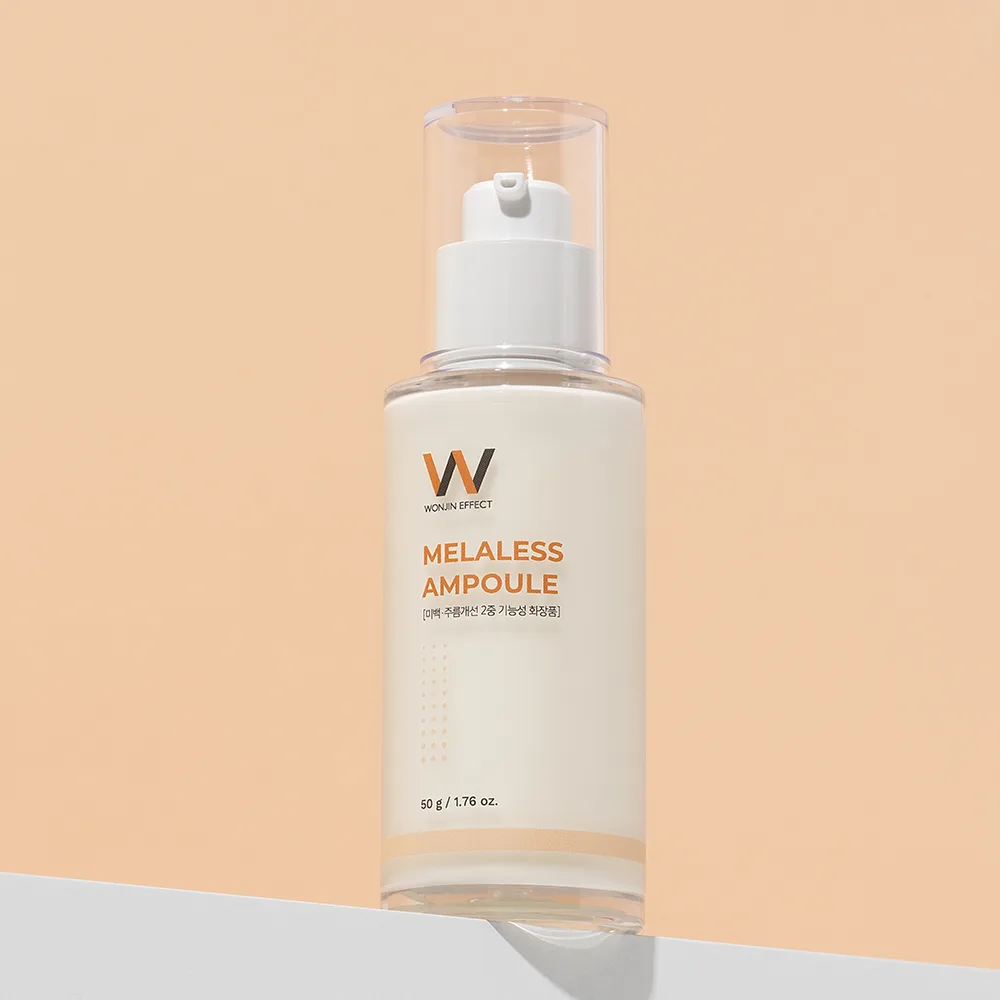
It takes the Melaless line's brightening approach, niacinamide plus tranexamic acid, glutathione and an Ayurvedic-style blend of holy basil, neem and turmeric, and delivers it in a milky, emollient ampoule with squalane and shea for dry skin.
A comforting, milky brightening ampoule that gets its real work from niacinamide, placed high in the list, with tranexamic acid, glutathione and madecassoside as smaller supporting players. It suits dry and normal skin looking for a nourishing spot-care step at a fair $24, but the fragrance and rich esters make it less suitable for sensitive or oily skin.
No verified product-specific review data was available for this ampoule. The assessment is based on the full ingredient list published by Olive Young Global and on evidence for its actives; the brand's clinical trial claims could not be assessed because results are unpublished.
Verdicts
How well it fits each concern
Verdict by concern tap a concern for the case
Promisingfor Dark SpotsIn your profileYou chose · Niacinamide has trial-level evidence for dark spots but no guideline or regulatory standing yet — promising, short of a recommendation; the other actives here are not yet assessed for it.Moderate evidenceStandard tolerabilityNo reviews collected yet
The case for it
Niacinamide has trial-level evidence for this concern but no guideline or regulatory standing yet.
It is plausibly present at a working level, though the concentration is not declared.
The formula carries no trigger this concern is sensitive to, with the cautions noted.
What would change this: A declared concentration would move this to a firmer reading of the dose.
Same rule for everyone. “Promising” is the verdict on 7,858 of 45,024 concern verdicts across the catalog; rule R9p decided 7,858 of them.
As of September 25, 2026, engine 5.1.1.
R9p — 0.5.0: 'Unproven' beside three filled dots read as one question answered twice with opposite words (7,018 rows). The chip measures standing, the dots measure trial volume; where the row carries at least one RCT or a tier-2 source (moderate dots) and the active is present at a working level, the honest word is Promising. Unproven is reserved for plausible-standing rows with limited or weak evidence, or an under-dosed form. Same rank as Unproven — a bet either way; the dots order them. · the full register
Carrying active
Niacinamide
Standing
plausible — trials support it
Form
plausible
Tolerability
standard
Row checked
against its sources on July 17, 2026 (evidence table ev-2026.09-r228)
Good choicefor HyperpigmentationIn your profileYou chose · Niacinamide is a trial-supported active for hyperpigmentation; this ampoule carries it, though the concentration is not declared.Moderate evidenceStandard tolerabilityNo reviews collected yet
The case for it
Niacinamide has trial-supported standing for this concern.
It is plausibly present at a working level, though the concentration is not declared.
The formula carries no trigger this concern is sensitive to, with the cautions noted.
What would change this: A declared concentration would move this to a firmer reading of the dose.
Same rule for everyone. “Good choice” is the verdict on 9,564 of 45,024 concern verdicts across the catalog; rule R5 decided 9,072 of them.
As of September 25, 2026, engine 5.1.1.
Also listed for Dullness — the actives here (Niacinamide, Glutathione, Centella Asiatica, Tranexamic Acid) are in our research queue for that concern; there is no verdict until their evidence rows are written. That is a gap in our table, not a mark against the product.
A verdict is DermApproved’s assessment of how well a product’s ingredients fit a concern — never a claim about what the product treats. Evidence dots and collected reviews sit beside it and are never blended in.
Rules 0.5.1 · evidence table ev-2026.09-r228 · how we decide
Assessment
Pros & Cons
Pros
✓ Niacinamide sits high in the list
✓ Milky, nourishing base suits dry and normal skin
✓ Includes tranexamic acid, glutathione and madecassoside
✓ Absorbs quickly and layers under sunscreen
✓ Korean brightening registration
✓ Fair price at $24 for 50g
Cons
✗ Tranexamic acid and glutathione appear near the end of the list
✗ Contains added fragrance
✗ Rich esters and polysorbates unsuitable for fungal acne
✗ May feel heavy on oily skin
✗ Clinical trial results are not published
Review
Full Review
Wonjin Effect trades on a clinic pedigree. The brand is the retail offshoot of Wonjin Beauty Medical Group, a Seoul aesthetics and plastic surgery clinic, and its packaging and marketing borrow that authority: the Melaless range carries claims of a completed clinical trial for spots and blemishes and a patented whitening ingredient. The Melaless Ampoule, added around 2024 as a serum step beneath the range's cream, invites a simple question. When you read its ingredient list, how clinical is it?
Clinic-derived skincare is a large and growing category in Korea, where dermatology and aesthetics clinics often launch their own retail lines. The appeal is understandable: a product associated with doctors feels more trustworthy than one from a pure marketing brand. But a clinic connection does not in itself make a formula more effective. What matters is the same thing as for any product: which actives are present, at what level, in what base, and whether results have been published. Reading the Melaless Ampoule on those terms gives a clearer picture than the badges on its marketing images.
The answer is: reasonably, in one ingredient. Niacinamide sits sixth, after water, glycereth-26, glycerin, triethylhexanoin and hexanediol. That is a strong position for the most evidence-backed cosmetic brightener available, and it supports the product's Korean functional registration for brightening. Niacinamide reduces the transfer of pigment within the skin, strengthens the barrier and improves dullness, and it does all this with minimal irritation.
The other brightening names are there too, but further down. Tranexamic acid, one of the more exciting spot-fading ingredients of the last decade, appears near the very end, after the botanical extracts. Glutathione and madecassoside are close to it. At these positions, they are best seen as supporting contributors rather than the main event. A long list of plant extracts, holy basil, neem flower and leaf, turmeric, acerola, coralline algae, clubmoss and horsetail, adds antioxidant character with a nod to Ayurvedic tradition.
The base is where the ampoule differs from many brightening serums. It is milky and emollient, built with triethylhexanoin, caprylic/capric triglyceride, squalane, shea butter and octyldodecanol, emulsified with olive-derived emulsifiers and polysorbates, and softened with dimethicone. Glycereth-26, glycerin, betaine and sodium hyaluronate provide hydration, and bisabolol adds a soothing touch. The result feels more like a light lotion than a watery serum, which makes it well suited to dry and normal skin that wants brightening without tightness.
Fragrance is included, which is the main caution for sensitive skin. The polysorbates, triglyceride and esters make it a poor match for fungal-acne-prone skin, and oily skin may find it richer than necessary.
In use, one or two pumps spread easily over the face and absorb within a minute, leaving a soft, cushioned finish that sits comfortably under moisturiser and sunscreen. There is no tingling for most people. As with any brightening product, the visible changes take time. Niacinamide typically shows its effect on dark spots and uneven tone over eight to twelve weeks, and only if sunscreen is used every day, because UV exposure keeps stimulating pigment production.
It helps to understand how the ampoule fits a realistic pigmentation plan. Dark spots from sun damage and post-acne marks fade slowly, and the most effective approach combines several steps: daily broad-spectrum sunscreen to stop new pigment forming, a consistent brightening active like niacinamide or vitamin C, and patience measured in months rather than weeks. For stubborn marks, a dermatologist may add prescription agents or procedures. A product like this sits comfortably in the middle of that plan, as the daily, gentle brightening step, rather than as a stand-alone solution.
The milky texture also has a practical advantage. Many brightening serums are watery and can feel tight on dry skin, which makes people use them less consistently. A cushioned, comfortable ampoule is easier to use twice a day for months, and consistency is exactly what niacinamide needs to show results. For dry skin in particular, that comfort may matter as much as the actives.
It pairs logically with the Melaless Cream, and many people will use them together. It also works alongside a vitamin C serum in the morning or under a richer cream at night. Those using prescription pigment treatments can use it as a supportive, hydrating step, provided the fragrance does not irritate.
It is worth addressing the clinical claims directly. A clinical trial for spots and blemishes may well have been completed, but without published results, the claim cannot be assessed. The ingredient list itself tells a clearer story: a well-placed dose of niacinamide in a comfortable base, with smaller amounts of trendier actives. That is a respectable formula, though not uniquely clinical.
On price, Olive Young Global lists the 50g bottle at $24, which is fair for a niacinamide-led ampoule with a nourishing base and a range of supporting actives. It lasts around two months with twice-daily use.
No verified product-specific review data was found, so this assessment relies on the full ingredient list.
The Melaless Ampoule earns its place as a comfortable, niacinamide-led brightening step for dry and normal skin. Treat the clinic branding as context rather than proof, keep up with sunscreen, and give it two to three months to show what it can do.
Formula
Key Ingredients
The hero actives that drive this product's performance.
Sixth in the list and the basis of the ampoule's Korean brightening registration, niacinamide is the formula's most substantial pigment-fighting active.
Niacinamide is the principal active in this ampoule. Controlled studies of topical niacinamide at two to five percent have shown reductions in hyperpigmentation over four to twelve weeks, attributed to reduced transfer of melanosomes from melanocytes to keratinocytes, along with increased ceramide synthesis and improved barrier function. Tranexamic acid, a plasmin inhibitor, reduces UV-induced melanogenesis signalling; topical formulations at two to five percent have shown benefit for melasma and post-inflammatory hyperpigmentation in small trials, but its late position here suggests a much lower concentration. Glutathione, a tripeptide antioxidant, has been associated with shifting melanin synthesis toward lighter pheomelanin in some studies, though topical evidence is limited. Madecassoside, a centella triterpenoid, supports barrier repair and has anti-inflammatory activity. The botanical extracts, including holy basil, neem, turmeric and acerola, contain phenolic compounds with antioxidant and tyrosinase-modulating activity in vitro, but concentrations are not disclosed. The emollient base of squalane, shea butter, triglycerides and esters reduces transepidermal water loss, and glycerin, glycereth-26 and sodium hyaluronate provide humectancy. Daily broad-spectrum sunscreen is essential, as UV exposure continuously stimulates melanogenesis and can offset topical brightening.
Dermatologist Perspective
Niacinamide is among the most commonly recommended over-the-counter ingredients for dark spots and uneven tone, and a well-dosed, comfortable formula can be a sensible part of a pigmentation routine anchored by daily sunscreen. Clinicians would note that tranexamic acid and glutathione appear at low levels here, so the product should not be relied upon for stubborn melasma, where prescription options and strict photoprotection are the mainstay. The fragrance is worth mentioning to patients with sensitive skin, and those with Malassezia folliculitis may wish to avoid ester- and polysorbate-rich formulas.
Guidance
Usage & Recommendations
How to Use
Morning and evening, after cleansing and toner, dispense one or two pumps and press gently over the face and neck. Allow it to absorb for a minute before applying moisturizer, such as the Melaless Cream, and in the morning finish with a broad-spectrum sunscreen. Use consistently for at least two to three months to judge its effect on dark spots. Scent-sensitive users should test a small area for a couple of days first.
Value Assessment
Olive Young Global lists the 50g bottle at $24, which is fair value for a niacinamide-led brightening ampoule with a nourishing base and several supporting actives. It lasts around two months with twice-daily use. The clinic branding adds perceived value rather than demonstrated extra efficacy, and some of the headline actives are present in small amounts. For dry and normal skin wanting a comfortable brightening serum, it is a reasonable buy.
Who Should Buy
Dry and normal skin concerned with dark spots, dullness or uneven tone, and wanting a nourishing, niacinamide-led ampoule to pair with sunscreen, will find this a good fit.
Who Should Skip
Fragrance-sensitive, oily or fungal-acne-prone skin should look for a lighter, fragrance-free serum, and anyone treating stubborn melasma will need stronger, targeted treatment.
Wonjin Effect built the Melaless range around dark spots and uneven tone, starting with the Melaless Cream. The ampoule, added around 2024, offers a more concentrated-feeling step to use beneath the cream.
About Wonjin Established Brand (5–20 years)
Wonjin Effect is the retail skincare line linked to Seoul's Wonjin Beauty Medical Group, giving it a clinic-derived positioning; products are made by contract manufacturers. The brand cites a completed spot-and-blemish clinical trial for the Melaless range, but results have not been published in a peer-reviewed journal.
Brand founded: 2018 · Product launched: 2024
Myth vs. Reality
Common Myths
Myth
Every ingredient named on a brightening product is present at an effective dose.
Reality
Here niacinamide sits high, but tranexamic acid and glutathione appear near the end of the list.
Myth
A brightening ampoule works without sunscreen.
Reality
UV exposure keeps stimulating pigment; daily sunscreen is essential for any fading to hold.
Myth
Milky ampoules are too heavy for daytime.
Reality
This one absorbs quickly and sits comfortably under sunscreen, though oily skin may prefer less.
FAQ
Frequently Asked Questions
What are the key actives in the Wonjin Melaless Ampoule?
Niacinamide is the most prominent, with tranexamic acid, glutathione, madecassoside and plant extracts including holy basil, neem and turmeric in supporting roles.
How is the Melaless Ampoule different from the Melaless Cream?
The ampoule is a lighter, milky serum step designed to go under the cream; both share the line's niacinamide-led brightening approach.
Does the Melaless Ampoule contain fragrance?
Yes. Because perfume is part of the formula, scent-reactive skin should trial a pump behind the ear before daily use.
How long does the Melaless Ampoule take to fade dark spots?
Niacinamide-based brightening typically needs eight to twelve weeks of consistent use, together with daily sunscreen.
Is the Wonjin Melaless Ampoule good for oily skin?
It is fairly rich, with squalane, shea and esters, so oily skin may prefer a lighter serum.
Is the Melaless Ampoule fungal-acne safe?
No. It contains polysorbates, triglycerides and esters that fungal-acne routines usually avoid.
Reviews
What Reviewers Tend to Say
Recurring themes our editors read across retailer reviews of this product — summaries in our words, not quotations, and not a substitute for your own patch test.
It was invented to stop bleeding during surgery. In 2026 it's in dozens of brightening serums — and the evidence is better than most trend ingredients can claim.
Japan runs a third regulatory tier between cosmetic and pharmaceutical, and once you can see it, the entire J-beauty aisle stops looking modest and starts looking legally precise.
Most heritage claims are unfalsifiable. This one sits on a public regulatory register — which makes it the rare case where you can check what 150 years of institutional research actually bought.
Five brands that own the feed, judged on their ingredient lists rather than their view counts — including the one active all five suddenly added at once, and what that tells you.
Aug 28, 2026· 6 min
Questions people ask about Hyperpigmentation
Verified answers from our questions library — the nuance a product page cannot carry.
Products, answers, therapy guides, tools and articles in one search. Brand names,
slang and abbreviations all work — accutane finds isotretinoin, bacne finds truncal acne.