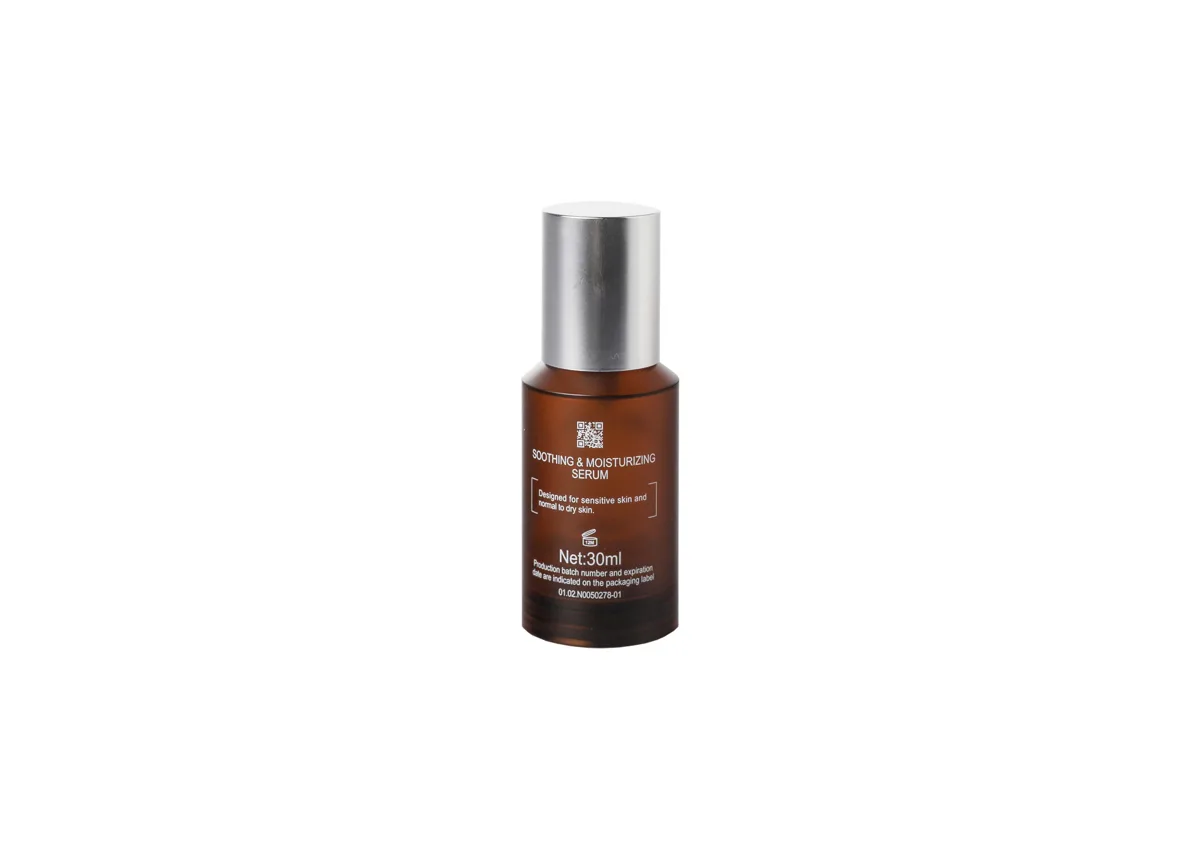
Barrier serums usually pick a lane: humectants and ceramides, or soothing botanicals. This one runs all three and adds ectoin, an extremolyte with independent randomized-trial support in eczema creams, placed sixth on the list. Wrapped in Winona's patented Physalis and purslane soothers and finished with ceramide NP, cholesterol and squalane, it is a sensitive-skin serum with a documented active at its centre, which is rarer than it should be.
A barrier serum with more substance than its gentle name suggests: ectoin with real trial evidence, osmolyte humectants, a ceramide-cholesterol-squalane lipid trio and Winona's patented soothers, in a fragrance-free fluid that reactive skin accepts on day one. The 24-hour barrier claim is marketing, the price is high for 30ml, and neither stops this being one of the better sensitive-skin serums we have seen from any market.
Confidence sits at low because no review count outside China could be verified and because the ectoin evidence, while independent and randomized, comes from eczema creams rather than from this serum, and Winona's own barrier-restoration figures have not been published for outside review. The product has a considerable Chinese sales history that cannot be checked from here, and the brand's English storefront, live since 2025, listed no customer reviews of it in September 2026.
Verdicts
How well it fits each concern
Verdict by concern tap a concern for the case
Good choicefor SensitivityIn your profileYou chose · No fragrance, drying alcohol, declarable allergens or sensitising preservatives in this serum — the profile sensitive skin looks for.Not yet assessedGentleNo reviews collected yet
The case for it
Ectoin has no evidence row yet for this concern — it is in the research queue.
The formula carries none of the triggers this concern is sensitive to.
What would change this: A researched evidence row for the lead active would replace this with a verdict.
Same rule for everyone. “Good choice” is the verdict on 1,938 of 45,024 concern verdicts across the catalog; rule F2 decided 1,938 of them.
As of September 25, 2026, engine 5.1.1.
Good choicefor Compromised Skin BarrierIn your profileYou chose · Ceramides is a reference standard by mechanism for compromised skin barrier; this serum carries it.Moderate evidenceGentleNo reviews collected yet
The case for it
Ceramide NP, Cholesterol & Squalane has trial-supported standing for this concern.
It is plausibly present at a working level, though the concentration is not declared.
The formula carries none of the triggers this concern is sensitive to.
What would change this: A declared concentration would move this to a firmer reading of the dose.
Same rule for everyone. “Good choice” is the verdict on 9,564 of 45,024 concern verdicts across the catalog; rule R5 decided 9,072 of them.
As of September 25, 2026, engine 5.1.1.
R5 — Trial-supported or guideline-supported active, adequately or plausibly dosed. · the full register
Carrying active
Ceramide NP, Cholesterol & Squalane
Standing
supported — its mechanism is established
Form
plausible — studied range 0.5–1%, from the trials on the row; needs leave-on contact; judge it after ~4 weeks
Tolerability
gentle
Row checked
against its sources on July 17, 2026 (evidence table ev-2026.09-r228)
The studies behind the evidence row
Elias PM, Skin Barrier / Coderch et al., ceramides and skin barrier function — ceramides ~50% of SC intercellular lipid mass, essential to the permeability barrier — reference work
Supporting rolefor DehydrationIn your profileYou chose · Nothing here targets dehydration directly; humectant hydration is the recognised companion to treating it, and this serum does that without known triggers.Not yet assessedGentleNo reviews collected yet
The case for it
Ectoin has no evidence row yet for this concern — it is in the research queue.
The formula carries none of the triggers this concern is sensitive to.
What would change this: A researched evidence row for the lead active would replace this with a verdict.
Same rule for everyone. “Supporting role” is the verdict on 8,197 of 45,024 concern verdicts across the catalog; rule R8 decided 4,250 of them.
As of September 25, 2026, engine 5.1.1.
R8 — The category's job (barrier care, humectant hydration, gentle cleansing, photoprotection) is the documented supportive role for this concern. This is the honest verdict for a moisturizer on an acne page. · the full register
Good choicefor DrynessIn your profileYou chose · Ceramides is a reference standard by mechanism for dryness; this serum carries it.Moderate evidenceGentleNo reviews collected yet
The case for it
Ceramide NP, Cholesterol & Squalane has trial-supported standing for this concern.
It is plausibly present at a working level, though the concentration is not declared.
The formula carries none of the triggers this concern is sensitive to.
What would change this: A declared concentration would move this to a firmer reading of the dose.
Same rule for everyone. “Good choice” is the verdict on 9,564 of 45,024 concern verdicts across the catalog; rule R5 decided 9,072 of them.
As of September 25, 2026, engine 5.1.1.
R5 — Trial-supported or guideline-supported active, adequately or plausibly dosed. · the full register
Carrying active
Ceramide NP, Cholesterol & Squalane
Standing
supported — its mechanism is established
Form
plausible
Tolerability
gentle
Row checked
against its sources on July 17, 2026 (evidence table ev-2026.09-r228)
The studies behind the evidence row
Elias PM, Feingold KR (eds), Skin Barrier — stratum corneum ceramides are the principal intercellular lamellar lipid; their depletion is the biochemical signature of dry/xerotic skin — reference work
Promisingfor Post-ProcedureIn your profileYou chose · Ceramides has trial-level evidence for post procedure but no guideline or regulatory standing yet — promising, short of a recommendation; the other actives here are not yet assessed for it.Moderate evidenceGentleNo reviews collected yet
The case for it
Ceramide NP, Cholesterol & Squalane has trial-level evidence for this concern but no guideline or regulatory standing yet.
It is plausibly present at a working level, though the concentration is not declared.
The formula carries none of the triggers this concern is sensitive to.
What would change this: A declared concentration would move this to a firmer reading of the dose.
Same rule for everyone. “Promising” is the verdict on 7,858 of 45,024 concern verdicts across the catalog; rule R9p decided 7,858 of them.
As of September 25, 2026, engine 5.1.1.
R9p — 0.5.0: 'Unproven' beside three filled dots read as one question answered twice with opposite words (7,018 rows). The chip measures standing, the dots measure trial volume; where the row carries at least one RCT or a tier-2 source (moderate dots) and the active is present at a working level, the honest word is Promising. Unproven is reserved for plausible-standing rows with limited or weak evidence, or an under-dosed form. Same rank as Unproven — a bet either way; the dots order them. · the full register
Carrying active
Ceramide NP, Cholesterol & Squalane
Standing
plausible — trials support it
Form
plausible
Tolerability
gentle
Row checked
against its sources on July 17, 2026 (evidence table ev-2026.09-r228)
Promisingfor EczemaIn your profileYou chose · Ceramides has trial-level evidence for eczema but no guideline or regulatory standing yet — promising, short of a recommendation; the other actives here are not yet assessed for it.Moderate evidenceGentleNo reviews collected yet
The case for it
Ceramide NP, Cholesterol & Squalane has trial-level evidence for this concern but no guideline or regulatory standing yet.
It is plausibly present at a working level, though the concentration is not declared.
The formula carries none of the triggers this concern is sensitive to.
What would change this: A declared concentration would move this to a firmer reading of the dose.
Same rule for everyone. “Promising” is the verdict on 7,858 of 45,024 concern verdicts across the catalog; rule R9p decided 7,858 of them.
As of September 25, 2026, engine 5.1.1.
R9p — 0.5.0: 'Unproven' beside three filled dots read as one question answered twice with opposite words (7,018 rows). The chip measures standing, the dots measure trial volume; where the row carries at least one RCT or a tier-2 source (moderate dots) and the active is present at a working level, the honest word is Promising. Unproven is reserved for plausible-standing rows with limited or weak evidence, or an under-dosed form. Same rank as Unproven — a bet either way; the dots order them. · the full register
Carrying active
Ceramide NP, Cholesterol & Squalane
Standing
plausible — trials support it
Form
plausible
Tolerability
gentle
Row checked
against its sources on July 17, 2026 (evidence table ev-2026.09-r228)
Emollients and moisturisers for eczema — Cochrane Database of Systematic Reviews — TIER 1, 77 RCTs / 6603 participants, GRADE; CLASS-level, does not name ceramides (2017), opened July 16, 2026
Also listed for Rosacea — the actives here (Ectoin, Purslane Extract, physalis alkekengi, Ceramides) are in our research queue for that concern; there is no verdict until their evidence rows are written. That is a gap in our table, not a mark against the product.
Where our review and the verdict differ. The review below was written on the formulation and the published trials; the verdicts above apply the stricter standing test in our methodology — an active earns a recommendation only with guideline or regulatory standing for the concern. Where the two disagree, the verdict is DermApproved’s position.
A verdict is DermApproved’s assessment of how well a product’s ingredients fit a concern — never a claim about what the product treats. Evidence dots and collected reviews sit beside it and are never blended in.
Rules 0.5.1 · evidence table ev-2026.09-r228 · how we decide
Assessment
Pros & Cons
Pros
✓ Ectoin placed sixth, an active with randomized-trial support in eczema creams
✓ Ceramide NP, cholesterol and squalane give a genuine lipid component
✓ Inositol, betaine and polyglutamate hydrate from within rather than on the surface
✓ Fragrance-free, alcohol-free, acid-free and free of essential oils
✓ Light satin fluid that layers under cream and buffers retinoids without pilling
✓ Amber vacuum-pump bottle protects the botanicals and doses accurately
✓ Purslane and Physalis calyx soothers calm flushing over two to four weeks
Cons
✗ Forty-nine dollars for 30ml is prestige pricing from a brand still unproven abroad
✗ The 178 percent, 24-hour barrier claim is an in-house figure, not published evidence
✗ Physalis calyx and the minor botanicals rest on brand data alone
✗ Slight silicone glide can feel tacky under a heavy cream
✗ No English-language user feedback yet on the brand's own storefront
Review
Full Review
The front of the box talks about Yunnan botanicals, and the marketing copy talks about a barrier restored by 178 percent in 24 hours. The ingredient list, sixth entry, says ectoin. That is an extremolyte, a small molecule first isolated from bacteria living in Egyptian salt lakes, which protects cells from osmotic and heat stress by organising a shell of water around proteins and membranes. In dermatology it has something Winona's plants do not: randomized, controlled trials in eczema creams. Its placement here, ahead of every humectant except glycerin and ahead of every botanical, is the most interesting decision in the formula, and it is the reason this serum deserves to be taken more seriously than its soft name implies.
Winona's story is by now familiar to readers of this site. Yunnan Botanee launched it in 2008 as a dermatologist-developed brand for sensitive skin, built it through Chinese hospital dermatology departments and pharmacies, and turned purslane and Prinsepia oil, two Yunnan plants, into a national shorthand for calm skin. The Soothing & Moisturizing series is the founding range, and this serum is the light, fast step it added to sit under the cream, built around ectoin and the brand's patented Physalis alkekengi calyx extract. It arrived on the English storefront in 2025 in a 30ml amber vacuum-pump bottle at forty-nine dollars, with a 5ml tube for trial.
The list is worth walking through because almost every entry earns its place. Water, butylene and pentylene glycols, glycerin, and then squalane fifth, which is high for an emollient in a serum and gives the fluid its faint richness. Ectoin sixth. Then inositol and betaine, osmolyte humectants that hold water inside the outer skin layers rather than on top of them, a little dimethicone for glide, two gelling polymers and a hydroxyacetophenone preservative booster. Sodium hyaluronate, then the botanical block: purslane, Physalis calyx, cherimoya fruit, red sage root, Prinsepia oil and a red microalga extract. Then ceramide NP, sodium polyglutamate, cholesterol, a pH adjuster and levulinic acid. There is nothing fragrant, nothing volatile and nothing exfoliating anywhere in it. The lipid trio of ceramide, cholesterol and squalane is the thing most soothing serums leave out, and its inclusion is what makes the moisturizing half of the name honest.
On skin it is a milky, lightly viscous fluid with a silicone glide that thins out fast and sinks in within a minute, leaving a satin cushion that is neither dewy nor tacky. One pump covers the face and neck. It goes under any cream without pilling and, more usefully, under a retinoid as a buffer, which is a role sensitive skin will appreciate on the nights tretinoin or adapalene is otherwise unbearable. The first week brings the comfort: tightness goes, and skin that had been stinging at water stops. The second and third weeks bring the slower change, which is less flushing and less reactivity to things that used to provoke it. That timescale matches what the ectoin trials describe, and it is the timescale to judge the serum on.
The claims deserve a cooler look than the formula. A barrier restored by 178 percent is a number from the brand's own instrument on its own parameter, and barriers do not exceed full repair; the 24-hour framing is a marketing compression of a process that the independent literature puts at days to weeks. Physalis calyx, the brand's patented soother, is a reasonable candidate as an anti-inflammatory, with withanolide-type compounds in the plant, but its clinical evidence is essentially Winona's. Cherimoya, red sage and the microalga extract are pleasant to read and unlikely to matter. None of this undermines the product; it means the serum's credibility rests on ectoin, the lipids and the osmolytes, which is a stronger foundation than most competitors can offer, rather than on the copy.
Price is the honest reservation. Forty-nine dollars for 30ml is prestige territory, and at one pump twice daily the bottle lasts about two months, so roughly twenty-five dollars a month for a serum. The formula justifies more than a drugstore price, with ectoin, ceramide NP and cholesterol all costlier than the usual soothing fare, and the amber vacuum bottle is the right packaging for a formula like this. But the brand's headline figures are self-reported, its English-language reputation is still being built, and its US storefront carried no reviews for the serum in September 2026. A reader paying prestige money is entitled to more than in-house percentages, and Winona has not yet published its data outside China.
So the recommendation is enthusiastic with a footnote. For sensitive, rosacea-prone, eczema-prone or over-exfoliated skin, this is a rare soothing serum with a documented active at its centre, a proper lipid component and no irritant anywhere in it, and it works as well beneath a retinoid as on its own. Buy the 5ml tube to confirm tolerance, then the bottle. Read the ingredient list, not the box, and the 178 percent will not need to be believed for the serum to be worth having.
Formula
Key Ingredients
The hero actives that drive this product's performance.
The quiet star of this list, sixth in and ahead of the humectants. Ectoin is an extremolyte that stabilises cell membranes and holds a hydration shell around proteins, and it has randomized-trial support in eczema creams; here it is what turns a soothing serum from a botanical wish into a barrier product with a documented active.
Not yet assessed
Physalis Alkekengi Calyx Extract
Winter cherry calyx, a Yunnan botanical Winona has patented for sensitive skin and pairs with purslane in this serum as the anti-inflammatory core. The brand credits it with cutting the itch and sting cycle; independent evidence is thin, so it is best read as a plausible steroidal-lactone-bearing soother supporting the ectoin rather than as proven on its own.
The lipid replacement side of the formula: a skin-identical ceramide and cholesterol near the end of the list for barrier structure, plus squalane placed fifth as the main emollient. Together with Prinsepia seed oil they are what the brand's 178 percent barrier-restoration figure refers to, and they give the serum a faint richness unusual in a water-based texture.
Established mechanismfor Compromised Skin Barrier · established mechanism
The brand's two founding Yunnan botanicals: purslane for its trial-supported anti-inflammatory effect on inflamed skin, and Prinsepia oil for linoleic-rich fatty acids that feed ceramide synthesis. In this serum they sit mid-list, after the humectant block, at a placement consistent with a functional dose in a leave-on.
Three osmolyte-style humectants that, with glycerin and hyaluronate, make up the moisturizing half of the name. Inositol and betaine hold water inside the outer skin layers rather than on the surface, which is why the hydration feels deep rather than dewy, and sodium polyglutamate adds a light film that slows its escape.
Not yet assessed
Ingredient standings describe the active at treatment-level doses and
vehicles; this product's own condition grades weigh its actual formula.
Apply it to damp skin after cleansing and toning, morning and evening, before moisturizer. It carries no acids, retinoids or vitamin C and can sit beneath any of them on the nights they are used, and it is a sensible buffer layer under a retinoid for skin that is struggling to tolerate one. Seal it with a cream rather than leaving it as the last step; the ceramide and cholesterol in it are a supplement, not a full lipid layer.
Results Timeline
The osmolyte humectants give a plumped, comfortable feel from the first application and a noticeable drop in tightness within days. Reduced stinging, flushing and reactivity, which is the ectoin and the botanicals working, builds over two to four weeks of twice-daily use, and a barrier that has been damaged by over-exfoliation or a harsh winter typically feels resilient again at around the one-month mark.
Pairs Well With
Barrier creamsCeramide moisturizersRetinoids (as a buffer)Azelaic acid
Ectoin is the ingredient that lifts this serum above its category. A 2014 randomized, comparator-controlled, intra-individual double-blind, multi-centre trial published in Skin Pharmacology and Physiology found an ectoine-containing cream comparable to a hydrocortisone-free reference emollient in reducing signs and symptoms of mild to moderate atopic dermatitis, and a 2023 randomized, observer-blind, vehicle-controlled investigation in Pediatric Dermatology reported that a 1 percent ectoine and 0.1 percent hyaluronic acid medical device improved mild to moderate atopic dermatitis in children versus vehicle. The proposed mechanism, preferential hydration of proteins and membranes that stabilises the barrier and blunts inflammatory signalling, is consistent with the serum's positioning, though the concentration here is undisclosed and the trial products were creams rather than serums. Inositol and betaine are compatible solutes that hold water within the stratum corneum by the same osmolyte logic, and their presence beside ectoin makes the hydration mechanism coherent rather than incidental.
The lipid component follows the barrier-repair literature: ceramide NP and cholesterol are two of the three physiological lipid classes the stratum corneum needs in roughly balanced proportion, and Prinsepia utilis oil and squalane supply fatty acid and emollient support. Quantities are small in a water-based serum, which is why the product is best paired with a cream rather than used alone on very dry skin. Purslane carries the brand's strongest botanical evidence, a 2024 randomized, double-blind, placebo-controlled trial in Explore showing benefit in mild to moderate chronic hand eczema, while Physalis alkekengi calyx extract, cherimoya fruit, Salvia miltiorrhiza root and Porphyridium cruentum microalga have preclinical anti-inflammatory or antioxidant data but no independent clinical trials on skin. Winona's 178 percent barrier-restoration and 24-hour figures come from its own testing and have not been published for external review; they should be read as internal benchmarks rather than as the evidence base, which rests on ectoin, the osmolytes and the lipids.
Sensitive-skin serums rarely get a mention in clinic because most are interchangeable humectant waters, but a formula built on ectoin and physiological lipids is a different proposition. Ectoin has appeared in European emollient guidance for atopic dermatitis on the strength of its trials, and the combination of an osmolyte active with ceramide and cholesterol is the kind of adjunct dermatology practices are comfortable recommending beside prescribed therapy for eczema, rosacea and retinoid-irritated skin. The clinical framing matters: it supports the barrier and reduces reactivity, it does not treat the underlying disease, and flares still need their prescribed anti-inflammatory. The brand's 24-hour restoration figure would be received in clinic with polite scepticism, since barrier recovery measured by transepidermal water loss is a days-to-weeks process; the product does not need the claim to be useful.
Guidance
Usage & Recommendations
How to Use
After cleansing and toning, while the skin is still slightly damp, dispense one pump into the fingertips and press it over the face and neck, letting it sink in for about a minute before the next layer. Use morning and evening. It should be followed by a moisturizer, since its ceramide and cholesterol content supplements rather than replaces a cream's lipid layer. On retinoid nights, apply the serum first and the retinoid over it to buffer irritation, or the reverse if the skin is tolerating the retinoid well. During a flare or after a procedure it can be used more generously and layered twice. Keep the pump closed and the bottle out of direct sun; the amber glass helps but is not a substitute.
Value Assessment
Forty-nine dollars for 30ml sits with prestige and dermatology-brand serums rather than the drugstore, and the formula supports a good part of that: ectoin, ceramide NP and cholesterol are costlier than the glycerin-and-extract base of most soothing serums, the amber vacuum bottle is the appropriate packaging, and Winona is an established dermatology-channel brand rather than a new label. What the price does not yet buy is independent validation; the brand's efficacy percentages are in-house and English-language feedback is close to nil. At one pump twice daily a bottle lasts about two months, so around twenty-five dollars a month, and the 5ml tube at twelve dollars is an expensive per-millilitre but sensible way to test tolerance first. Fair value for reactive skin that has cycled through cheaper serums without relief; a luxury for skin that is merely dry.
Who Should Buy
People with sensitive, rosacea-prone, eczema-prone or over-exfoliated skin who want a soothing serum with a documented active rather than a plant-extract water. Anyone struggling to tolerate a retinoid who needs a buffer layer with real lipids. Readers who prefer fragrance-free, acid-free formulas and are willing to pay prestige prices for a thoughtful list.
Who Should Skip
Anyone whose skin is simply dry rather than reactive, who will get similar hydration from a cheaper humectant serum. People who dislike any silicone glide or who need a serum to be the last step in their routine. Readers who require independently published efficacy data before paying fifty dollars, since Winona's figures are in-house.
Ready to try Winona Soothing & Moisturizing Serum?
A milky-translucent, lightly viscous fluid with a soft silicone glide; it spreads thin, sinks in within a minute and leaves a faint, non-sticky cushion rather than a dewy film.
Scent
Unscented; there is no fragrance in the formula and only a faint, clean raw-material note that vanishes on application.
Packaging
A 30ml amber glass bottle with a brushed-silver cap and a vacuum pump, chosen to protect the formula from light and air and to dose accurately; a 5ml tube is sold for trial. Boxed in FSC-certified card with the full English ingredient list.
Finish
satinlightweightnatural
What to Expect on First Use
The first week is mostly comfort: tightness eases, and skin that has been reacting to everything stops flinching. There is no tingle, no purging and no adjustment period, because nothing in the formula exfoliates or stimulates. The reduction in redness and reactivity arrives more slowly and is the thing worth waiting a month to judge.
How Long It Lasts
About two months at one pump twice daily over the face and neck; the 5ml tube covers roughly a week.
The Soothing & Moisturizing series is Winona's founding range, and for years its centrepiece was a cream. The serum was added to give reactive skin a lighter, faster-absorbing barrier step built around ectoin and the brand's patented Physalis calyx extract, with the amber vacuum bottle a deliberate answer to the instability that plagued earlier sensitive-skin serums. It reached the brand's English storefront in 2025 at forty-nine dollars.
About Winona Established Brand (5–20 years)
Winona is the dermatologist-developed sensitive-skin brand Yunnan Botanee founded in 2008, grown through Chinese hospital dermatology departments and pharmacies into one of the country's biggest skincare names. Its Yunnan botanicals, purslane, Prinsepia and Physalis, have clinical backing mostly in Chinese-language journals; the brand's headline efficacy percentages are in-house and not independently replicated.
Brand founded: 2008
Myth vs. Reality
Common Myths
Myth
A serum can restore the skin barrier by 178 percent in 24 hours.
Reality
That figure is Winona's in-house measurement on a test parameter, not an independent clinical outcome, and a barrier cannot be more than fully restored. What the evidence supports is slower and more modest: ectoin and barrier lipids reduce water loss and irritation over days to weeks, with comfort improving quickly and resilience following.
Myth
Soothing serums for sensitive skin are just water, glycerin and a plant extract.
Reality
Many are, and this one is not. Ectoin, inositol and betaine are functional osmolytes with a mechanism, ceramide NP and cholesterol are skin-identical barrier lipids, and squalane is placed fifth. The botanicals are supporting cast rather than the whole formula.
FAQ
Frequently Asked Questions
What is the key active in the Winona Soothing & Moisturizing Serum?
Ectoin, listed sixth. It is an extremolyte that stabilises cell membranes and binds water around proteins, and ectoin creams have reduced eczema symptoms in randomized trials. The serum backs it with inositol and betaine osmolytes, ceramide NP, cholesterol and squalane for lipids, and Winona's purslane and Physalis calyx soothers.
Can the Winona serum be used under a retinoid?
Yes, and that is one of its most useful roles. Applied to damp skin before a retinoid, its humectants and ceramide-cholesterol lipids act as a buffer that reduces the dryness and stinging retinoids cause on sensitive skin, without interfering with the retinoid's effect.
Is the Winona Soothing & Moisturizing Serum suitable for rosacea or eczema-prone skin?
It was formulated for exactly that reactivity: fragrance-free, alcohol-free, no acids or essential oils, with ectoin, purslane and Physalis to calm inflammation. It is an adjunct rather than a treatment for either condition, and prescribed therapy should continue alongside it.
Does this Winona serum really restore the barrier in 24 hours?
The 24-hour and 178 percent figures are the brand's own test results and have not been independently published. Expect comfort and reduced tightness within days from the humectants and lipids, and a genuinely more resilient barrier over two to four weeks, which is the timescale the independent ectoin evidence supports.
Why is the Winona serum in an amber bottle with a pump?
Amber glass blocks light and the vacuum pump keeps air out, protecting the botanical extracts and lipids from oxidation and making each dose consistent. It also means the formula uses a mild hydroxyacetophenone and levulinic acid preservation system rather than something harsher.
Is the Winona Soothing & Moisturizing Serum safe in pregnancy?
Its list contains no retinoids, salicylic acid, hydroquinone or high-dose essential oils; ectoin, humectants, ceramides, squalane and botanical extracts are all considered low-concern. As with any product in pregnancy, a quick check with a doctor is sensible, but nothing in the formula is a known issue.
Reviews
What Reviewers Tend to Say
Recurring themes our editors read across retailer reviews of this product — summaries in our words, not quotations, and not a substitute for your own patch test.
Common Praise
Stops the stinging within a few days
Light texture that still feels nourishing
Works well as a buffer under retinoids
Amber pump bottle keeps the formula stable
Common Complaints
Expensive for 30ml
Faint silicone slip some find tacky under cream
Barrier claims sound more dramatic than the results
Western sensitive skincare works by subtraction — remove the fragrance, remove the alcohol, shorten the list. Japan's answer adds a designed molecule back in, and one of the two bets has a trial literature.
A wrecked barrier is the most common self-inflicted skin condition and the one with the clearest fix — the difficulty is that the routine which caused it feels productive and the one that repairs it feels like giving up.
Eczema care has quietly split into two worlds: the ceramide-and-occlusion basics that manage most cases, and a new class of drugs rewriting what's possible for severe disease. Knowing which world you're in changes the whole plan.
Jun 5, 2026· 6 min
Questions people ask about sensitive skin
Verified answers from our questions library — the nuance a product page cannot carry.
Products, answers, therapy guides, tools and articles in one search. Brand names,
slang and abbreviations all work — accutane finds isotretinoin, bacne finds truncal acne.