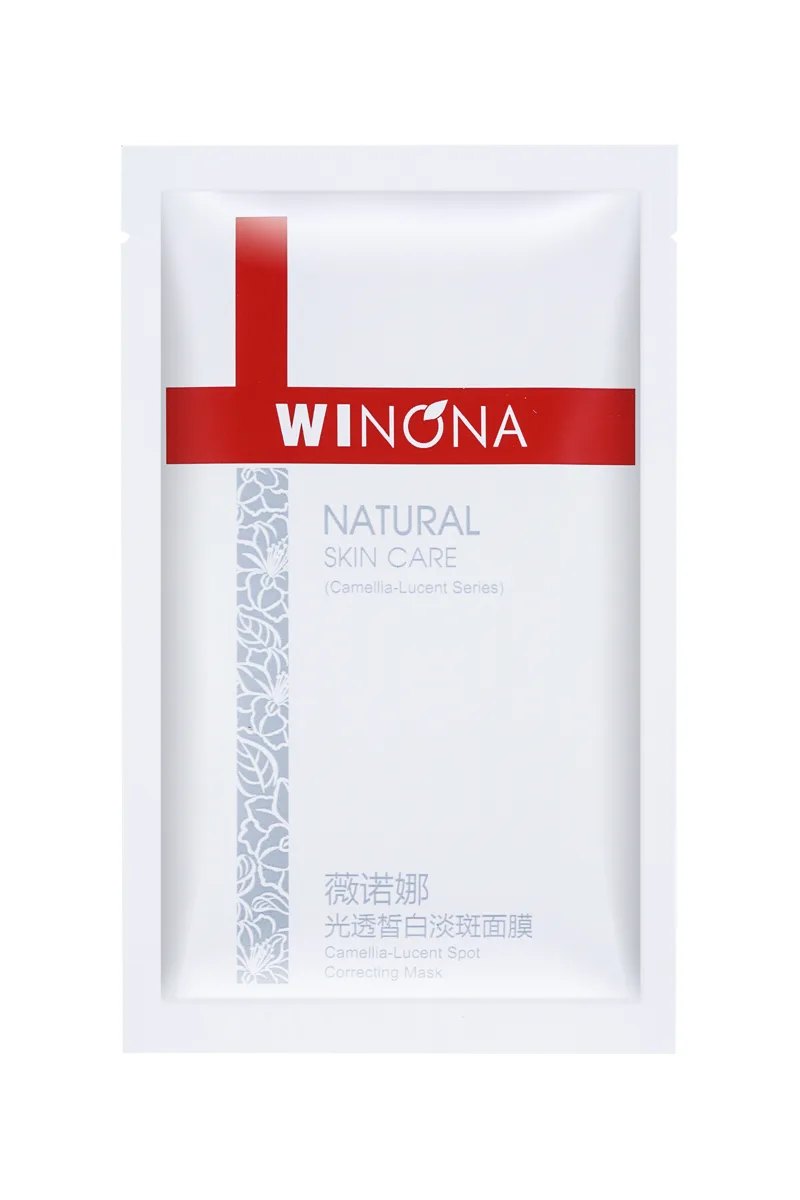
It is a brightening sheet mask designed by a sensitive-skin brand, so where most pigment masks reach for acids, arbutin or high-dose vitamin C, this one relies on niacinamide and acetyl glucosamine surrounded by purslane, centella, calendula, notoginseng saponins and escin. The soothing block is nearly half the formula, and the sheet is sold on the promise that reactive skin can use it without flushing.
A calm, fragrance-free sheet mask that gives sensitive skin a brightening step it can actually tolerate, thanks to a modest dose of niacinamide and acetyl glucosamine wrapped in a large soothing complex. It hydrates well and leaves a genuine next-morning glow, but at over five dollars a sheet it is a supporting act for a pigment routine, not the treatment.
This mask's actives have published evidence as a pair, but not in a sheet-mask format, and Winona's efficacy testing for the product is in-house and not published in English. The English storefront had no reviews for it in September 2026 and the large Chinese feedback base cannot be independently checked from outside, so the assessment leans on the disclosed formula and the brand's clinical track record.
Verdicts
How well it fits each concern
Verdict by concern tap a concern for the case
Good choicefor HyperpigmentationIn your profileYou chose · Niacinamide is a trial-supported active for hyperpigmentation; this sheet mask carries it, though the concentration is not declared.Moderate evidenceGentleNo reviews collected yet
The case for it
Niacinamide has trial-supported standing for this concern.
It is plausibly present at a working level, though the concentration is not declared.
The formula carries none of the triggers this concern is sensitive to.
What would change this: A declared concentration would move this to a firmer reading of the dose.
Same rule for everyone. “Good choice” is the verdict on 9,564 of 45,024 concern verdicts across the catalog; rule R5 decided 9,072 of them.
As of September 25, 2026, engine 5.1.1.
Promisingfor Dark SpotsIn your profileYou chose · Niacinamide has trial-level evidence for dark spots but no guideline or regulatory standing yet — promising, short of a recommendation; the other actives here are not yet assessed for it.Moderate evidenceGentleNo reviews collected yet
The case for it
Niacinamide has trial-level evidence for this concern but no guideline or regulatory standing yet.
It is plausibly present at a working level, though the concentration is not declared.
The formula carries none of the triggers this concern is sensitive to.
What would change this: A declared concentration would move this to a firmer reading of the dose.
Same rule for everyone. “Promising” is the verdict on 7,858 of 45,024 concern verdicts across the catalog; rule R9p decided 7,858 of them.
As of September 25, 2026, engine 5.1.1.
R9p — 0.5.0: 'Unproven' beside three filled dots read as one question answered twice with opposite words (7,018 rows). The chip measures standing, the dots measure trial volume; where the row carries at least one RCT or a tier-2 source (moderate dots) and the active is present at a working level, the honest word is Promising. Unproven is reserved for plausible-standing rows with limited or weak evidence, or an under-dosed form. Same rank as Unproven — a bet either way; the dots order them. · the full register
Carrying active
Niacinamide
Standing
plausible — trials support it
Form
plausible
Tolerability
gentle
Row checked
against its sources on July 17, 2026 (evidence table ev-2026.09-r228)
Promisingfor DullnessIn your profileYou chose · Hyaluronic Acid has trial-level evidence for dullness but no guideline or regulatory standing yet — promising, short of a recommendation; the other actives here are not yet assessed for it.Moderate evidenceGentleNo reviews collected yet
The case for it
Sodium Polyglutamate & Sodium Hyaluronate has trial-level evidence for this concern but no guideline or regulatory standing yet.
It is plausibly present at a working level, though the concentration is not declared.
The formula carries none of the triggers this concern is sensitive to.
What would change this: A declared concentration would move this to a firmer reading of the dose.
Same rule for everyone. “Promising” is the verdict on 7,858 of 45,024 concern verdicts across the catalog; rule R9p decided 7,858 of them.
As of September 25, 2026, engine 5.1.1.
R9p — 0.5.0: 'Unproven' beside three filled dots read as one question answered twice with opposite words (7,018 rows). The chip measures standing, the dots measure trial volume; where the row carries at least one RCT or a tier-2 source (moderate dots) and the active is present at a working level, the honest word is Promising. Unproven is reserved for plausible-standing rows with limited or weak evidence, or an under-dosed form. Same rank as Unproven — a bet either way; the dots order them. · the full register
Carrying active
Sodium Polyglutamate & Sodium Hyaluronate
Standing
plausible — trials support it
Form
plausible
Tolerability
gentle
Row checked
against its sources on July 17, 2026 (evidence table ev-2026.09-r228)
Good choicefor DehydrationIn your profileYou chose · Hyaluronic Acid is a reference standard by mechanism for dehydration; this sheet mask carries it.Moderate evidenceGentleNo reviews collected yet
The case for it
Sodium Polyglutamate & Sodium Hyaluronate has trial-supported standing for this concern.
It is plausibly present at a working level, though the concentration is not declared.
The formula carries none of the triggers this concern is sensitive to.
What would change this: A declared concentration would move this to a firmer reading of the dose.
Same rule for everyone. “Good choice” is the verdict on 9,564 of 45,024 concern verdicts across the catalog; rule R5 decided 9,072 of them.
As of September 25, 2026, engine 5.1.1.
R5 — Trial-supported or guideline-supported active, adequately or plausibly dosed. · the full register
Carrying active
Sodium Polyglutamate & Sodium Hyaluronate
Standing
supported — its mechanism is established
Form
plausible — studied range 0.1%, from the trials on the row; needs leave-on contact; judge it after ~1 weeks
Tolerability
gentle
Row checked
against its sources on July 17, 2026 (evidence table ev-2026.09-r228)
The studies behind the evidence row
Draelos ZD, Cosmetic Dermatology: Products and Procedures — hyaluronic acid classified as a humectant water-binding agent holding many times its weight in water — reference work
Not for thisfor Acne ScarringIn your profileYou chose · The actives here have been researched for acne scarring and the evidence does not support the claim.Not yet assessedGentleNo reviews collected yet
The case for it
Niacinamide has been researched for this concern and the evidence does not support it.
It is plausibly present at a working level, though the concentration is not declared.
The formula carries none of the triggers this concern is sensitive to.
What would change this: A declared concentration would move this to a firmer reading of the dose.
Same rule for everyone. “Not for this” is the verdict on 488 of 45,024 concern verdicts across the catalog; rule R10 decided 488 of them.
As of September 25, 2026, engine 5.1.1.
Good choicefor SensitivityIn your profileYou chose · No fragrance, drying alcohol, declarable allergens or sensitising preservatives in this sheet mask — the profile sensitive skin looks for.Not yet assessedGentleNo reviews collected yet
The case for it
Niacinamide has no evidence row yet for this concern — it is in the research queue.
The formula carries none of the triggers this concern is sensitive to.
What would change this: A researched evidence row for the lead active would replace this with a verdict.
Same rule for everyone. “Good choice” is the verdict on 1,938 of 45,024 concern verdicts across the catalog; rule F2 decided 1,938 of them.
As of September 25, 2026, engine 5.1.1.
As a maskNot judged: what a mask is for — works within its wear time, benefit outlasts the mask, comes off cleanly — cannot yet be measured from the ingredient list (only intensity without injury can).
Where our review and the verdict differ. The review below was written on the formulation and the published trials; the verdicts above apply the stricter standing test in our methodology — an active earns a recommendation only with guideline or regulatory standing for the concern. Where the two disagree, the verdict is DermApproved’s position.
A verdict is DermApproved’s assessment of how well a product’s ingredients fit a concern — never a claim about what the product treats. Evidence dots and collected reviews sit beside it and are never blended in.
Rules 0.5.1 · evidence table ev-2026.09-r228 · how we decide
Assessment
Pros & Cons
Pros
✓ Niacinamide and acetyl glucosamine, a trial-supported pigment pairing, in a sheet format
✓ Unusually large soothing complex: purslane, centella, calendula, escin and notoginseng saponins
✓ Fragrance-free, alcohol-free and acid-free, so reactive skin can use it
✓ Thin, close-fitting sheet with an essence that stays put for the full contact time
✓ Leaves a plump, dewy finish that lasts into the next morning
✓ Essence dries down light rather than tacky thanks to dimethicone and film-formers
✓ Full ingredient list printed on every sachet
Cons
✗ Over five dollars a sheet for a mostly temporary hydration benefit
✗ Brightening actives sit low in the list and get only twenty minutes of contact
✗ Six sheets last barely three weeks at the recommended frequency
✗ Brand copy still mentions arbutin that the current label does not contain
✗ Camellia melanin-inhibition claim is brand-tested, not independently shown
Review
Full Review
The product page for this mask still talks about arbutin. The sachet, which is what actually touches your face, does not list it. That small mismatch turns out to be the most useful way into the product, because the ingredients that are on the label say something clearer about how Winona thinks about brightening than any copy does. The list runs water, pentylene glycol, glycerin, butylene glycol, glycereth-26, dimethicone, a glycerin crosspolymer, betaine, then niacinamide and acetyl glucosamine, then hyaluronate, panthenol, polyglutamate, and after that an unusually long soothing tail: notoginseng saponins, escin, purslane, butcher's broom root, ammonium glycyrrhizate, centella, two camellia extracts, hydrolyzed yeast protein and calendula. That is a sensitive-skin brand's idea of a pigment mask. The brighteners are the mild, well-evidenced pair rather than anything that stings, and nearly half the formula exists to make sure nothing flushes.
Winona earned the right to that approach the slow way. Yunnan Botanee launched the brand in 2008 as a dermatologist-developed line for sensitive skin, built it through Chinese hospital and pharmacy channels, and only later moved into pigmentation with the Camellia-Lucent series, which is the literal translation on this sachet of what the English storefront calls Brightening and Spot-Fading. The mask is the treatment step of that series. It arrived on the brand's English-language site in 2025, which means English-language reviews barely exist yet; the brand's own US store had none for it in September 2026, and the substantial Chinese feedback on the range is hard for an outside reader to audit. That matters for how much weight to put on anyone's testimonials, including the brand's.
In use, it is a well-made sheet. The material is thin and soft, cut close to the face, and it holds a slightly viscous essence rather than a watery soak, so it does not drip or slide during the fifteen to twenty minutes the label asks for. Because the essence contains dimethicone and two film-formers, the leftovers pat in and dry to a light, faintly silky finish instead of the tacky residue some hydrating masks leave. There is no scent, no warmth, no tingle. Skin comes out cooler and visibly plumper, and that dewy, more even look survives into the next morning, which is the polyglutamate holding water at the surface. For a reactive, dehydrated face after a long day or a flight, it does exactly what a good soothing sheet should.
The question is whether it brightens, and the honest answer is: a little, slowly, and only as part of something larger. Niacinamide and acetyl glucosamine are a documented pair, shown in a randomized, vehicle-controlled trial to reduce the appearance of facial hyperpigmentation over eight weeks. But that trial used leave-on moisturizers applied daily. A sheet mask provides twenty minutes of occluded contact two or three times a week, and the two actives sit ninth and tenth on a list that opens with humectants and a silicone. Occlusion helps small water-soluble molecules penetrate, which is a genuine argument for the format, but it cannot make up for the exposure gap. Used alone, this mask will hydrate and calm; it will not clear a scatter of post-acne marks. Used alongside a daily brightening serum and sunscreen, it is a sensible extra, and the soothing block earns its place by damping the low-grade inflammation that feeds those marks in the first place.
The soothing block deserves a closer look because it is where the formula is most distinctive. Purslane is Winona's signature and has small but real trial support for calming inflamed skin. Escin and butcher's broom are vascular tonics borrowed from the leg-vein world, and notoginseng saponins are a classic Chinese-medicine microcirculation ingredient; together they give the mask a redness-calming angle that most brightening sheets lack. Ammonium glycyrrhizate, centella and calendula round it out. None of these will fade pigment, but for the person whose marks sit on a background of flushing, the combination is thoughtful. The camellia flower and leaf extracts, sourced from Yunnan and patented by the brand, are claimed to inhibit melanin; that claim rests on in-house data, and independent evidence supports them only as plausible antioxidants.
Price is where the enthusiasm cools. Thirty-two dollars for six sheets is over five dollars each, and at the recommended cadence a box lasts two to three weeks. That is prestige sheet-mask pricing for a product whose lasting effect is hydration, with brightening as a slow supporting benefit. It is not outrageous for a fragrance-free formula this considered, and a sensitive-skin reader who cannot use acid-based brightening masks has few alternatives at any price. But a resilient-skinned person looking for a visible spot-fading result will do better spending the same money on a leave-on serum.
So the recommendation is narrow and sincere. If your skin flushes at most brightening products and you want a weekly treatment that hydrates, calms and nudges tone in the right direction without any risk of a reaction, this is a well-judged sheet from a brand that knows that customer. If you want a mask that visibly lightens dark spots on its own, this one was never going to be it, and its label tells you so.
Formula
Key Ingredients
The hero actives that drive this product's performance.
Ninth in a list that opens with five humectants and a silicone, so its dose in the 25ml of essence is modest but real. Twenty minutes of occluded contact under the sheet gives it better penetration than a rinse-off would, and it is paired again with acetyl glucosamine, the combination Winona uses throughout this range.
Slows tyrosinase maturation upstream of pigment production, complementing niacinamide's block on pigment transfer. In a sheet mask it benefits from the occlusion more than most actives, since it is a small water-soluble molecule that needs time on hydrated skin.
A traditional Chinese medicine extract, sanqi, that Winona uses for microcirculation and anti-inflammatory support. Its presence beside escin and butcher's broom gives the mask a vascular-calming angle aimed at the redness that often accompanies post-acne marks.
The brand's anti-inflammatory signature, here doing the job of keeping a pigment mask tolerable for reactive skin. It sits alongside centella, calendula and ammonium glycyrrhizate in a soothing block that takes up nearly half the list.
The two film-forming humectants that make the sheet feel plumping and leave skin dewy after removal. Polyglutamate in particular holds water at the surface longer than hyaluronate, which is why the post-mask glow lasts into the next morning.
Established mechanismfor Dehydration · established mechanism
Ingredient standings describe the active at treatment-level doses and
vehicles; this product's own condition grades weigh its actual formula.
Use it on cleansed, toned skin two or three evenings a week, before serum and moisturizer. Leave the sheet on for fifteen to twenty minutes, pat the leftover essence in rather than rinsing, and seal it with a moisturizer. It carries no acids or retinoids, so it can sit in a routine alongside vitamin C, azelaic acid or a retinoid on other nights without spacing.
Results Timeline
The plumped, dewier look after a single sheet is the humectant film and lasts a day or so. Any real change in post-acne marks requires the niacinamide and acetyl glucosamine to build up across a box or two of regular use; at two to three masks a week, expect to judge pigment results at eight to ten weeks, and only if a leave-on brightener and daily sunscreen are also in the routine.
Pairs Well With
Brightening tonersAzelaic acidVitamin C serumsBroad-spectrum sunscreen
Winona Brightening and Spot-Fading Mask (2-3x week)
Azelaic acid serum
Moisturizer
Evidence
Science & Expert Perspective
The Science
The formula's brightening logic rests on the niacinamide plus N-acetyl glucosamine combination, tested by Kimball and colleagues in a 2010 randomized, double-blind, vehicle-controlled trial published in the British Journal of Dermatology, where daily leave-on moisturizers carrying the pair reduced the appearance of facial hyperpigmentation more than vehicle over eight weeks. The two actives complement each other mechanistically, niacinamide reducing melanosome transfer into keratinocytes and N-acetyl glucosamine limiting the glycosylation tyrosinase needs to become active. What the evidence does not cover is this delivery format: a sheet applied two or three times a week for twenty minutes provides a fraction of the cumulative exposure of a daily leave-on, and while occlusion under a sheet improves the penetration of small hydrophilic molecules, no trial has quantified what that buys for pigment outcomes. The mask is therefore best read as an adjunct whose brightening contribution is plausible but unmeasured.
The soothing side has more direct, if smaller, support. A 2024 randomized, double-blind, placebo-controlled trial in Explore found that topical purslane (Portulaca oleracea) improved mild to moderate chronic hand eczema, and a 2025 Frontiers in Pharmacology study reported that aqueous purslane extracts restored barrier function in an atopic dermatitis model, both consistent with its anti-inflammatory role here. Escin and butcher's broom root are established venotonic agents whose topical anti-oedema and capillary-stabilising effects underpin their use in this formula for redness, and notoginseng saponins are a traditional microcirculation remedy with laboratory anti-inflammatory data but no clinical skin trials. The Yunnan camellia extracts are patented by Botanee and their melanin claims are in-house; independent literature supports camellia polyphenols as antioxidants and no further.
Sheet masks occupy an odd place in clinical advice: rarely recommended as treatment, frequently tolerated as comfort, and occasionally useful after procedures for their cooling, hydrating effect. Within that frame, a brightening sheet built without acids, fragrance or alcohol is the kind dermatology practices are comfortable with for patients who have post-inflammatory hyperpigmentation on reactive skin, where irritation is the enemy because it triggers more pigment. The realistic expectation communicated in clinic is that the mask supports a routine rather than treats a condition; the pigment work is done by daily leave-on agents such as niacinamide, azelaic acid, tranexamic acid or a retinoid, and by strict sunscreen use. Melasma in particular should not be self-managed with masks, since it needs assessment and often prescription therapy, and any product that provokes flushing can worsen it.
Guidance
Usage & Recommendations
How to Use
On a clean, toned face in the evening, unfold the sheet, align the eye and mouth openings, and press it flat, smoothing out air pockets so it sits in full contact. Leave it for fifteen to twenty minutes, remove, and pat the remaining essence into the face and neck until it absorbs; do not rinse. Follow with a moisturizer to seal in the humectants, and on nights when you also use a brightening serum, apply that after the mask essence and before the moisturizer. Two or three masks a week is the label's recommendation. In the morning after a mask, sunscreen is non-negotiable if pigment is the goal.
Value Assessment
At thirty-two dollars for six 25ml sheets the per-mask cost is a little over five dollars, which places it with prestige K-beauty and Japanese sheets rather than drugstore multipacks. The formula partly justifies that: a fragrance-free base, two evidence-backed pigment actives and a soothing complex that is broader than almost any competitor's, from an established brand with a dermatology heritage in China. What it does not justify is the expectation of visible spot-fading, which a sheet cannot deliver at this frequency. Only one pack size is sold, so there is no bulk saving; at the recommended cadence a box lasts two to three weeks, roughly fifty dollars a month if used as directed. Fair for a sensitive-skin reader who cannot tolerate acid masks, expensive as a primary brightening step.
Who Should Buy
People with sensitive, redness-prone or dehydrated skin who want a weekly brightening treatment that will not sting, flush or purge. Anyone already running a daily pigment routine who wants a calming, hydrating extra that nudges tone in the same direction. Readers who prefer fragrance-free, acid-free formulas from a brand with a dermatology background.
Who Should Skip
Anyone hoping a mask alone will visibly fade dark spots; the exposure is too brief and the actives too low in the list. Budget-conscious readers, since five dollars a sheet buys mostly a temporary hydration boost. People with melasma should get medical guidance before adding any brightening product.
Ready to try Winona Brightening and Spot-Fading Mask?
A thin, soft cellulose sheet carrying a light, slightly viscous essence that feels like a hydrating serum rather than a watery soak; it leaves a faint film once it dries down.
Scent
Unscented; nothing is added and the raw materials are quiet enough that there is no smell at all on opening the sachet.
Packaging
Six individually sealed foil sachets in a white card box with a red cross-band and a silver camellia motif; the sachet back carries the full ingredient list in Chinese.
Finish
dewyglowylightweight
What to Expect on First Use
The first sheet delivers what most good hydrating masks do: cooler, plumper, more even-looking skin for about a day. There is no tingling or warmth, no purging and nothing to adjust to. Over the first box, the only cumulative change most people notice is that skin stays better hydrated; pigment change, if it comes, lags well behind.
How Long It Lasts
One box of six sheets covers two to three weeks at the brand's recommended two-to-three-times-a-week cadence, or six weeks used weekly.
The Camellia-Lucent (光透皙白) series is Winona's extension from redness and barrier work into pigmentation, built around a patented Yunnan camellia complex and the brand's existing purslane platform. The mask is the weekly-treatment step of that series and appeared on the brand's English storefront in 2025 under the more literal name Brightening and Spot-Fading Mask.
About Winona Established Brand (5–20 years)
Winona is Yunnan Botanee's dermatology-led sensitive-skin brand, founded in 2008 and distributed through Chinese hospitals and pharmacies as well as online. Its purslane and Prinsepia actives carry clinical support mostly in Chinese-language journals, and the brand's own product claims are generated in-house rather than independently replicated.
Brand founded: 2008
Myth vs. Reality
Common Myths
Myth
This mask contains arbutin.
Reality
Older brand copy mentions arbutin, but the current sachet's full ingredient list does not include it. The brightening actives on the label are niacinamide and acetyl glucosamine, with camellia extracts as the botanical support; the label, not the marketing copy, is what goes on your face.
Myth
A weekly sheet mask can fade dark spots on its own.
Reality
Twenty minutes two or three times a week is a small fraction of the exposure a leave-on product gives. The mask can support a routine that already includes a daily brightening serum and sunscreen; used alone, its main lasting effect is hydration.
FAQ
Frequently Asked Questions
Is the Winona Brightening and Spot-Fading Mask the same as the Camellia-Lucent Spot Correcting Mask?
Yes. The Chinese-market sachet is labelled Camellia-Lucent Spot Correcting Mask, a direct rendering of the series name 光透皙白淡斑面膜, while the brand's English storefront calls the same product Brightening and Spot-Fading Mask. The formula and the six-sheet box are identical.
How often can I use the Winona brightening sheet mask?
The label suggests two to three times a week, fifteen to twenty minutes each time. Because it contains no exfoliating acids or retinoids, using it that often is fine for sensitive skin; more than that mainly burns through the box faster without adding much.
Will this Winona mask irritate sensitive or rosacea-prone skin?
It is one of the gentler brightening masks available: fragrance-free, alcohol-free, acid-free, and built with purslane, centella, calendula, escin and glycyrrhizate specifically to calm reactive skin. Anyone with active rosacea flares should still patch-test, but the formula was designed with that reader in mind.
Do I rinse after using the Winona Brightening and Spot-Fading Mask?
No. Remove the sheet after fifteen to twenty minutes and press the remaining essence into the skin, then follow with a moisturizer. The essence contains dimethicone and film-forming humectants, so it dries down to a light, non-sticky finish rather than a tacky residue.
What are the brightening ingredients in this Winona sheet mask?
Niacinamide and acetyl glucosamine, the pairing that carries the published evidence for fading facial hyperpigmentation. They are supported by the brand's Yunnan camellia flower and leaf extracts, notoginseng saponins and a soothing complex; there is no arbutin, kojic acid or hydroquinone in the current formula.
Can this mask be used during pregnancy?
There is nothing in the list that raises a pregnancy flag: niacinamide, acetyl glucosamine, humectants, a silicone and botanical extracts. It contains no retinoids, salicylic acid or hydroquinone. Running any new product past a doctor during pregnancy is sensible, but the formula itself is low-concern.
Reviews
What Reviewers Tend to Say
Recurring themes our editors read across retailer reviews of this product — summaries in our words, not quotations, and not a substitute for your own patch test.
Common Praise
Thin sheet that fits closely and does not slide
No stinging on reactive skin
Skin looks plumper and brighter the next morning
Fragrance-free and unscented
Common Complaints
Spot-fading effect is subtle and slow
Six sheets go quickly at the recommended frequency
Essence quantity is modest compared with drenched K-beauty sheets
It was invented to stop bleeding during surgery. In 2026 it's in dozens of brightening serums — and the evidence is better than most trend ingredients can claim.
It's the benchmark every other brightener is measured against — and the one you can no longer grab off a US drugstore shelf. Here's the clear-eyed version.
Japan runs a third regulatory tier between cosmetic and pharmaceutical, and once you can see it, the entire J-beauty aisle stops looking modest and starts looking legally precise.
Aug 28, 2026· 11 min
Questions people ask about Hyperpigmentation
Verified answers from our questions library — the nuance a product page cannot carry.
Products, answers, therapy guides, tools and articles in one search. Brand names,
slang and abbreviations all work — accutane finds isotretinoin, bacne finds truncal acne.