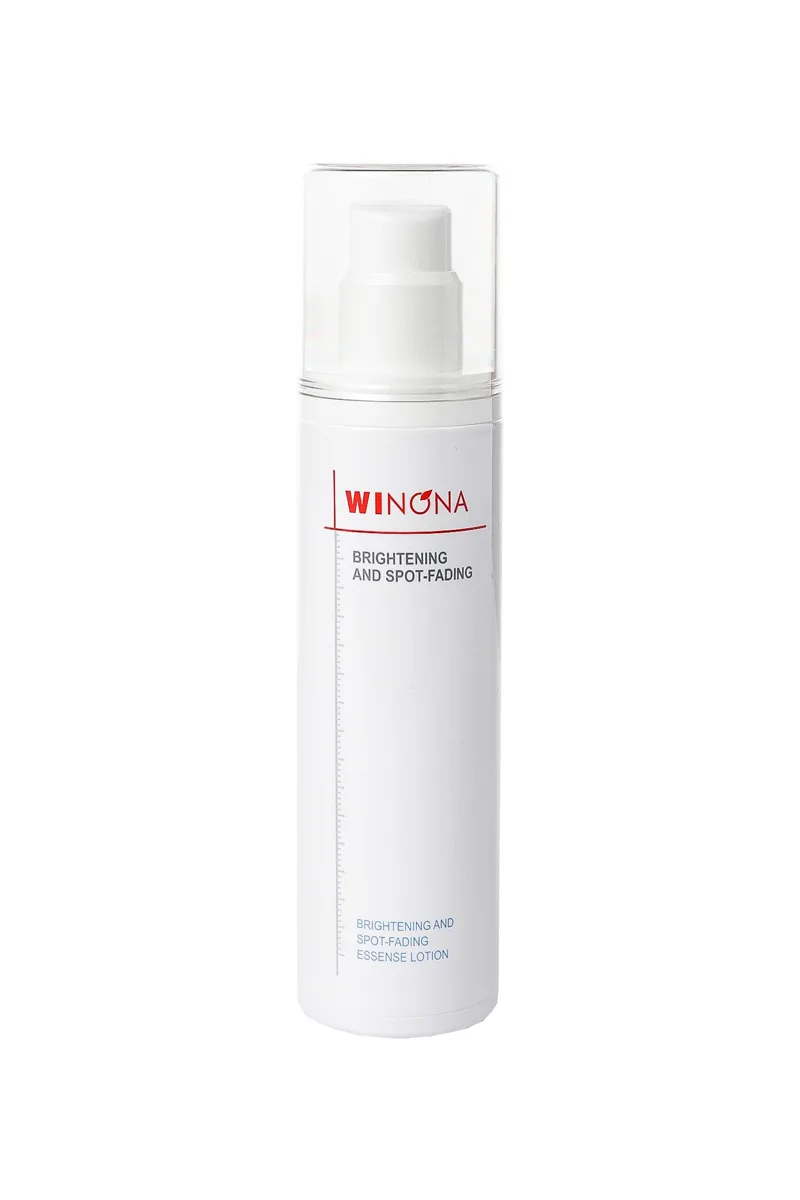
Most brightening toners lean on a single headline active or on exfoliating acids that reactive skin cannot tolerate. This one carries niacinamide and acetyl glucosamine, the specific pair shown to fade facial hyperpigmentation in a controlled trial, high enough in a toner format to matter, and wraps them in purslane, centella and calendula so it is usable by the sensitive skin Winona was built for.
A rare brightening toner that puts its evidence up front: niacinamide and acetyl glucosamine, the pigment pairing with an actual controlled trial behind it, listed high enough to count, in a fragrance-free water that reactive skin can tolerate. It will not replace a dedicated serum for stubborn spots, and the camellia story is brand science, but as a first pigment step for sensitive skin it is quietly well judged.
Confidence here is low because no review count could be confirmed outside China, and because the trial evidence belongs to the two lead actives rather than to this product, and the brand's own efficacy percentages have not been independently replicated. Chinese customer feedback for the brightening range is extensive but not easily audited from outside, and the US storefront had no reviews at the time of writing, so the assessment leans on the disclosed formula and Winona's clinical track record.
Verdicts
How well it fits each concern
Verdict by concern tap a concern for the case
Good choicefor HyperpigmentationIn your profileYou chose · Niacinamide is a trial-supported active for hyperpigmentation; this liquid carries it, though the concentration is not declared.Moderate evidenceGentleNo reviews collected yet
The case for it
Niacinamide has trial-supported standing for this concern.
It is plausibly present at a working level, though the concentration is not declared.
The formula carries none of the triggers this concern is sensitive to.
What would change this: A declared concentration would move this to a firmer reading of the dose.
Same rule for everyone. “Good choice” is the verdict on 9,564 of 45,024 concern verdicts across the catalog; rule R5 decided 9,072 of them.
As of September 25, 2026, engine 5.1.1.
Promisingfor Dark SpotsIn your profileYou chose · Niacinamide has trial-level evidence for dark spots but no guideline or regulatory standing yet — promising, short of a recommendation; the other actives here are not yet assessed for it.Moderate evidenceGentleNo reviews collected yet
The case for it
Niacinamide has trial-level evidence for this concern but no guideline or regulatory standing yet.
It is plausibly present at a working level, though the concentration is not declared.
The formula carries none of the triggers this concern is sensitive to.
What would change this: A declared concentration would move this to a firmer reading of the dose.
Same rule for everyone. “Promising” is the verdict on 7,858 of 45,024 concern verdicts across the catalog; rule R9p decided 7,858 of them.
As of September 25, 2026, engine 5.1.1.
R9p — 0.5.0: 'Unproven' beside three filled dots read as one question answered twice with opposite words (7,018 rows). The chip measures standing, the dots measure trial volume; where the row carries at least one RCT or a tier-2 source (moderate dots) and the active is present at a working level, the honest word is Promising. Unproven is reserved for plausible-standing rows with limited or weak evidence, or an under-dosed form. Same rank as Unproven — a bet either way; the dots order them. · the full register
Carrying active
Niacinamide
Standing
plausible — trials support it
Form
plausible
Tolerability
gentle
Row checked
against its sources on July 17, 2026 (evidence table ev-2026.09-r228)
Not for thisfor Acne ScarringIn your profileYou chose · The actives here have been researched for acne scarring and the evidence does not support the claim.Not yet assessedGentleNo reviews collected yet
The case for it
Niacinamide has been researched for this concern and the evidence does not support it.
It is plausibly present at a working level, though the concentration is not declared.
The formula carries none of the triggers this concern is sensitive to.
What would change this: A declared concentration would move this to a firmer reading of the dose.
Same rule for everyone. “Not for this” is the verdict on 488 of 45,024 concern verdicts across the catalog; rule R10 decided 488 of them.
As of September 25, 2026, engine 5.1.1.
Supporting rolefor DehydrationIn your profileYou chose · Nothing here targets dehydration directly; humectant hydration is the recognised companion to treating it, and this liquid does that without known triggers.Not yet assessedGentleNo reviews collected yet
The case for it
Niacinamide has no evidence row yet for this concern — it is in the research queue.
The formula carries none of the triggers this concern is sensitive to.
What would change this: A researched evidence row for the lead active would replace this with a verdict.
Same rule for everyone. “Supporting role” is the verdict on 8,197 of 45,024 concern verdicts across the catalog; rule R8 decided 4,250 of them.
As of September 25, 2026, engine 5.1.1.
R8 — The category's job (barrier care, humectant hydration, gentle cleansing, photoprotection) is the documented supportive role for this concern. This is the honest verdict for a moisturizer on an acne page. · the full register
Good choicefor SensitivityIn your profileYou chose · No fragrance, drying alcohol, declarable allergens or sensitising preservatives in this liquid — the profile sensitive skin looks for.Not yet assessedGentleNo reviews collected yet
The case for it
Niacinamide has no evidence row yet for this concern — it is in the research queue.
The formula carries none of the triggers this concern is sensitive to.
What would change this: A researched evidence row for the lead active would replace this with a verdict.
Same rule for everyone. “Good choice” is the verdict on 1,938 of 45,024 concern verdicts across the catalog; rule F2 decided 1,938 of them.
As of September 25, 2026, engine 5.1.1.
Also listed for Dullness — the actives here (Niacinamide, Acetyl Glucosamine, Trehalose, Purslane Extract) are in our research queue for that concern; there is no verdict until their evidence rows are written. That is a gap in our table, not a mark against the product.
Does the jobDoes what a toner is for: not alcohol-driven, adds something real. Not measured from the label: restores skin pH, plays well with what follows.
Where our review and the verdict differ. The review below was written on the formulation and the published trials; the verdicts above apply the stricter standing test in our methodology — an active earns a recommendation only with guideline or regulatory standing for the concern. Where the two disagree, the verdict is DermApproved’s position.
A verdict is DermApproved’s assessment of how well a product’s ingredients fit a concern — never a claim about what the product treats. Evidence dots and collected reviews sit beside it and are never blended in.
Rules 0.5.1 · evidence table ev-2026.09-r228 · how we decide
Assessment
Pros & Cons
Pros
✓ Niacinamide and acetyl glucosamine, a trial-tested pigment pairing, listed high for a toner
✓ Fragrance-free, alcohol-free and acid-free, so reactive skin tolerates it
✓ Purslane, centella and calendula calm the inflammation that feeds post-acne marks
✓ Water-thin texture absorbs in seconds and layers under any serum or sunscreen
✓ Short, fully disclosed ingredient list with no essential oils or dyes
✓ Trehalose and sodium polyglutamate give real hydration, not just a wet feeling
✓ Pregnancy-compatible pigment step with no retinoids or hydroquinone
Cons
✗ Toner-level concentrations fade marks slowly compared with a dedicated serum
✗ Camellia complex brightening claims rest entirely on brand-generated data
✗ Pump dispenses more liquid than a toner application needs
✗ Brand's efficacy percentages are in-house, not independently replicated
✗ Little English-language user feedback to corroborate performance yet
Review
Full Review
In 2010 a group of researchers published a trial in the British Journal of Dermatology that tested a fairly unglamorous idea: put niacinamide and N-acetyl glucosamine together in an ordinary leave-on moisturizer and see whether facial hyperpigmentation improved more than with the vehicle alone. It did, measurably, over eight weeks. That paper is why the pairing keeps turning up in serious brightening formulas, and it is the pairing that sits fourth and fifth on the ingredient list of this toner. Winona has not invented anything here. It has taken a documented combination, put it in a water-thin base, and then done what the brand does best, which is surround it with soothers so that the people most likely to have post-inflammatory marks, the ones with reactive skin, can actually use it.
A bit of context on the brand, because it explains the formula. Winona is the sensitive-skin line of Yunnan Botanee, a company that has spent since 2008 working with Chinese dermatologists and selling through hospital and pharmacy channels as much as through Tmall. Its identity is purslane, Prinsepia oil and a refusal to use fragrance in face products. The Brightening and Spot-Fading range came later, once the brand had earned enough trust with redness-prone customers to ask them to try pigment actives, and this essence lotion is the toner step of that range. It landed on the brand's English-language storefront in early 2025, which is why it is only now within reach of readers outside China.
The ingredient list is short and readable. Water, pentylene glycol and butylene glycol as the solvent base, which also do the preservative work in place of a separate preservative system. Then niacinamide and acetyl glucosamine, both ahead of glycerin, which in a toner is a respectable position. A glycerin-based crosspolymer and trehalose add slip and water-binding. Then the soothing block: purslane, butcher's broom root, the two camellia extracts, centella, calendula and escin. Panthenol, sodium polyglutamate, sodium hyaluronate and ammonium glycyrrhizate close it out with a hydrolyzed yeast protein. No alcohol, no fragrance, no acids, no essential oils. The whole thing reads like someone was told to make a brightening water that a rosacea patient could put on.
On skin it behaves like a hydrating toner rather than a treatment. It is water-clear, has a faint humectant slip, and disappears in seconds without the tacky drag some polyglutamate products leave. The pump is generous; two presses is more than a face needs, and the habit worth forming is dispensing into a palm and pressing rather than soaking a cotton pad, which wastes half the bottle. It layers under anything. Because there are no exfoliating acids, it does not need to be spaced away from vitamin C or a retinoid, and it does not pill under sunscreen.
What can you fairly expect from it? Hydration and a marginally more even look within days, which is the humectant and film-former effect and should not be mistaken for pigment change. Genuine lightening of post-acne marks and sun spots takes the eight to twelve weeks the trial evidence suggests, and it takes daily sunscreen, without which none of this matters. Winona quotes its own panel data of a 16.8 percent melanin reduction, plus hydration and soothing improvements. Those numbers came from the brand, not from an independent lab, so they belong in the plausible-but-unverified column. What is independently supported is the mechanism: niacinamide interrupts the transfer of pigment from melanocytes into skin cells, and acetyl glucosamine interferes with the glycosylation step tyrosinase needs to become active, so the two work at different points in the same pathway.
The honest limitation is dose and format. A toner is the lightest leave-on in a routine and, whatever the ordering of the list, the concentrations here are almost certainly below what a dedicated serum carries. Winona itself makes a separate Brightening and Spot-Fading Essence for the serum step and clearly intends this lotion as the supporting act. If your marks are deep, old or melasma-related, this toner alone will underwhelm, and melasma in particular needs medical guidance because it can worsen with any product that provokes irritation. The camellia complex, meanwhile, is patented and Yunnan-sourced and very nicely photographed, and none of that is evidence. Camellia polyphenols are reasonable antioxidants; the leap to melanin inhibition rests on brand testing.
There is also the matter of who can vouch for it. The brand's US store had no reviews at all in September 2026, and the large body of Chinese customer feedback for the brightening line is not something a Western reader can easily audit. That does not make the product suspect, but it does mean the confidence here comes from the disclosed formula and the published science on its two leads, not from a mountain of English-language testimonials.
At thirty-three dollars for 120ml it sits in the middle of the toner market. That is fair for a fragrance-free formula with two evidence-backed pigment actives placed high, and a little steep if what you mostly want is hydration, which cheaper waters deliver. It earns its price for the person it was built for: someone with reactive or redness-prone skin and a scatter of post-blemish marks who has been burned by acid toners and wants a brightening step that will not sting. For that reader this is a sensible, evidence-literate base to build a pigment routine on. For the person with resilient skin and stubborn spots, spend the money on the serum instead.
Formula
Key Ingredients
The hero actives that drive this product's performance.
Sits fourth on the list, ahead of glycerin, which puts it at a meaningful dose for a watery toner. Here it is paired with acetyl glucosamine, the same two-ingredient pigment combination tested in a vehicle-controlled trial, so the toner is built around a documented duo rather than a lone brightener.
An amino sugar that interferes with the glycosylation step tyrosinase needs to mature, so it slows pigment production upstream while the niacinamide beside it blocks pigment transfer downstream. Its high placement, fifth in the list, is unusual for a lotion-weight product.
Winona's house soother, positioned right after the humectants. In a brightening product it does double duty: calming the low-grade inflammation that drives post-acne marks, and buffering any tingle from the pigment actives on reactive skin.
The brand's patented Yunnan camellia complex, sourced from Yunnan-grown plants and claimed to inhibit melanin synthesis. The evidence is brand-generated, so treat it as a plausible polyphenol antioxidant that supports the niacinamide and glucosamine rather than as a proven pigment active in its own right.
The hydration layer that keeps this from feeling like an astringent brightening water: trehalose binds water in the outer skin layers and sodium polyglutamate forms a light film that slows evaporation, so the pigment actives sit on comfortable rather than tight skin.
Not yet assessed
Ingredient standings describe the active at treatment-level doses and
vehicles; this product's own condition grades weigh its actual formula.
Press it into skin straight after cleansing, before any serum, and give it thirty seconds to absorb. It stacks cleanly under vitamin C, azelaic acid or a retinoid at night, and under sunscreen in the morning; there is no exfoliating acid in it, so it does not need to be spaced away from anything.
Results Timeline
Skin feels hydrated and looks slightly more even in tone from the first few uses, which is the humectants and the film-formers at work. Fading of post-acne marks and sun-related spots needs the niacinamide and acetyl glucosamine to accumulate: expect a visible difference at around eight weeks of twice-daily use, with continued improvement to twelve.
Pairs Well With
Vitamin C serumsAzelaic acidTranexamic acid serumsBroad-spectrum sunscreen
The formula's case rests on a specific pairing rather than on any single ingredient. Kimball and colleagues, writing in the British Journal of Dermatology in 2010, ran a randomized, double-blind, vehicle-controlled trial in which facial moisturizers containing niacinamide with N-acetyl glucosamine produced a greater reduction in the appearance of hyperpigmented spots than vehicle over eight weeks, with the combination outperforming either the vehicle or the niacinamide-alone comparisons in the study's image analysis. The mechanistic logic is complementary: niacinamide reduces the transfer of melanosomes from melanocytes to keratinocytes, while N-acetyl glucosamine is a precursor in the glycosylation pathway that tyrosinase needs to fold and activate, so blocking it lowers pigment production upstream. Winona lists both actives ahead of glycerin in a toner base, which is as much as an ingredient list can tell you about dose, and the trial concentrations were within the range a leave-on cosmetic can carry.
The soothing layer has its own, thinner literature. Purslane (Portulaca oleracea) extract, Winona's signature botanical, was tested in a 2024 randomized, placebo-controlled trial in Explore for mild to moderate chronic hand eczema and improved symptom scores, and a 2025 Frontiers in Pharmacology study reported that aqueous purslane extracts restored barrier function in an atopic dermatitis model. Neither is a pigmentation study, but they support the extract's role here, which is to reduce the low-grade inflammation that drives post-inflammatory hyperpigmentation in the first place. The Yunnan camellia complex is patented by Botanee and its melanin-inhibition claim comes from brand testing rather than peer-reviewed work; camellia polyphenols are credible antioxidants, and that is the extent of what independent evidence supports. The 16.8 percent melanin reduction the brand quotes is an in-house panel result and should be read as such.
Clinicians managing post-inflammatory hyperpigmentation in sensitive or darker skin tend to prefer pigment actives that work without provoking irritation, because irritation itself triggers more pigment. Niacinamide and N-acetyl glucosamine fit that brief and are routinely suggested as a first, non-prescription layer before azelaic acid, tranexamic acid or a retinoid is added. A toner carrying both, with no fragrance, alcohol or acids, is the kind of product dermatology clinics are comfortable seeing in a patient's routine, though the usual caveat applies: it is an adjunct, not a treatment for melasma, which needs assessment and often prescription therapy. Practical guidance from the clinic would be to pair it with a broad-spectrum sunscreen every morning, since unprotected UV exposure undoes any brightening step, and to judge results at three months rather than three weeks.
Guidance
Usage & Recommendations
How to Use
After cleansing, morning and evening, dispense one pump into a clean palm and press the liquid over the face and neck, avoiding the eyes, rather than wiping it on with cotton. Wait about thirty seconds for it to absorb before following with a serum. It needs no spacing from vitamin C, azelaic acid or retinoids because it contains no exfoliating acids, and in the morning it should always be followed by a broad-spectrum sunscreen, which is the step that stops marks from re-darkening. Skin prone to marks benefits most from consistent use for at least eight weeks; for a stubborn spot, layer the brand's spot-fading essence or another targeted serum over it.
Value Assessment
Thirty-three dollars for 120ml lands this in the mid-priced toner bracket, above drugstore hydrating waters and well below prestige brightening essences. The formula justifies most of that: two pigment actives with a published trial behind their pairing, placed high in the list, in a fragrance-free base with a proper soothing complex. Winona is an established brand with a dermatology heritage in China, which lends more credibility than a new indie label would command at this price, though its efficacy claims are in-house. Only one size is sold, and at twice-daily use a bottle lasts about three months, so the running cost is around eleven dollars a month. If you want hydration alone, cheaper toners do that; if you want a gentle pigment step for reactive skin, the price is fair.
Who Should Buy
People with sensitive, redness-prone or combination skin who have post-acne marks or mild sun spots and want a brightening step that does not sting. Anyone building a first pigment routine who prefers a fragrance-free, acid-free base under a serum. Readers who want the niacinamide plus acetyl glucosamine pairing in a format that layers under everything.
Who Should Skip
Anyone with deep, long-standing spots or melasma who expects a toner to do the heavy lifting; a serum or medical treatment is the right tool. Those who want a toner primarily for exfoliation or oil control, since there are no acids here. People who need a large body of English-language reviews before trusting a product.
Ready to try Winona Brightening and Spot-Fading Essence Lotion?
Thin, water-clear liquid with the faintest slip from the humectants; it spreads like a hydrating toner and leaves no film.
Scent
None added, and none noticeable beyond a faint raw-material neutrality that disappears on application.
Packaging
A slim white 120ml pump bottle with a clear cap, boxed in FSC-certified card. The pump is convenient for hands but generous for a toner; decanting into a palm and pressing in works better than cotton.
Finish
dewylightweightfast-absorbing
What to Expect on First Use
Nothing dramatic happens in the first two weeks apart from skin feeling better hydrated and marginally more even. No tingling, no purging and no adjustment period are expected because the formula has no acids, retinoids or fragrance; the change worth waiting for is gradual lightening of marks from week six onward.
How Long It Lasts
About three months when pressed onto the face morning and evening, or closer to five months used once daily.
Winona spent its first decade on redness and barrier repair for sensitive skin, then extended into pigmentation with the Brightening and Spot-Fading (光透皙白) range, built on its patented Yunnan camellia complex. The essence lotion is the toner step of that line and reached the brand's English-language storefront in 2025 as Botanee began courting overseas customers.
About Winona Established Brand (5–20 years)
Winona (薇诺娜) is the sensitive-skin brand of Yunnan Botanee, founded in 2008 with a dermatologist-led development model and a hospital and pharmacy channel presence across China. Its Yunnan botanical actives, particularly purslane and Prinsepia utilis oil, are supported by clinical work published mainly in Chinese dermatology journals; independent Western validation of individual products remains limited.
Brand founded: 2008
Myth vs. Reality
Common Myths
Myth
A toner cannot carry enough niacinamide to affect pigmentation.
Reality
Concentration matters more than format. Niacinamide is listed fourth here, ahead of glycerin, which puts it in a meaningful range, and the trial evidence for the niacinamide plus acetyl glucosamine pairing came from leave-on products of ordinary lotion weight.
Myth
Brightening products are automatically too harsh for sensitive skin.
Reality
Harshness comes from acids, high-dose vitamin C or fragrance, none of which are in this formula. Niacinamide and acetyl glucosamine work on pigment signalling rather than by exfoliating, and the purslane and calendula in the formula are there specifically to calm reactive skin.
FAQ
Frequently Asked Questions
Is the Winona Brightening and Spot-Fading Essence Lotion a toner or a serum?
It is the toner step of Winona's brightening line, a thin water applied after cleansing and before serums. Despite the word essence, it is lotion-weight rather than concentrated, which is why the brand pairs it with the separate spot-fading essence for the serum step.
Which ingredients in this Winona lotion actually fade dark spots?
Niacinamide and acetyl glucosamine carry the evidence: together they reduced facial hyperpigmentation in a randomized, vehicle-controlled trial. The camellia, centella and calendula extracts are supporting soothers and antioxidants whose brightening claims come from the brand's own testing.
Can I use the Winona spot-fading lotion if my skin is sensitive or redness-prone?
That is the audience it was built for. The formula is fragrance-free, alcohol-free and acid-free, and it contains purslane, centella and calendula to calm reactivity, so it is one of the gentler ways to introduce pigment actives to easily irritated skin.
How long before the Winona brightening lotion shows results on post-acne marks?
Give it eight weeks of twice-daily use before judging. Hydration and a slight tone-evening show within days, but the niacinamide and acetyl glucosamine need to accumulate before marks visibly lighten, and sunscreen every morning is what keeps them from darkening again.
Does the Winona Brightening and Spot-Fading Essence Lotion contain alcohol or fragrance?
No. The full list runs on pentylene and butylene glycol as solvents and preservative boosters instead of ethanol, and Winona formulates its face products without added fragrance. There are no essential oils or citrus extracts either.
Is it safe to use this Winona lotion while pregnant?
Niacinamide, acetyl glucosamine, humectants and botanical extracts are all considered low-concern in pregnancy, and there are no retinoids, hydroquinone or salicylic acid in the formula. As with any new product in pregnancy, a check with a doctor is sensible, but nothing in this list is a known concern.
Reviews
What Reviewers Tend to Say
Recurring themes our editors read across retailer reviews of this product — summaries in our words, not quotations, and not a substitute for your own patch test.
Common Praise
Weightless water texture that absorbs in seconds
No sting on reactive or post-acne skin
Gradual evening of tone and post-blemish marks
Fragrance-free and alcohol-free
Common Complaints
Spot fading is slow compared with a dedicated serum
Pump bottle dispenses more than a toner needs
Brightening claims feel overstated for a lotion-weight step
It was invented to stop bleeding during surgery. In 2026 it's in dozens of brightening serums — and the evidence is better than most trend ingredients can claim.
It's the benchmark every other brightener is measured against — and the one you can no longer grab off a US drugstore shelf. Here's the clear-eyed version.
Japan runs a third regulatory tier between cosmetic and pharmaceutical, and once you can see it, the entire J-beauty aisle stops looking modest and starts looking legally precise.
Aug 28, 2026· 11 min
Questions people ask about Hyperpigmentation
Verified answers from our questions library — the nuance a product page cannot carry.
Products, answers, therapy guides, tools and articles in one search. Brand names,
slang and abbreviations all work — accutane finds isotretinoin, bacne finds truncal acne.