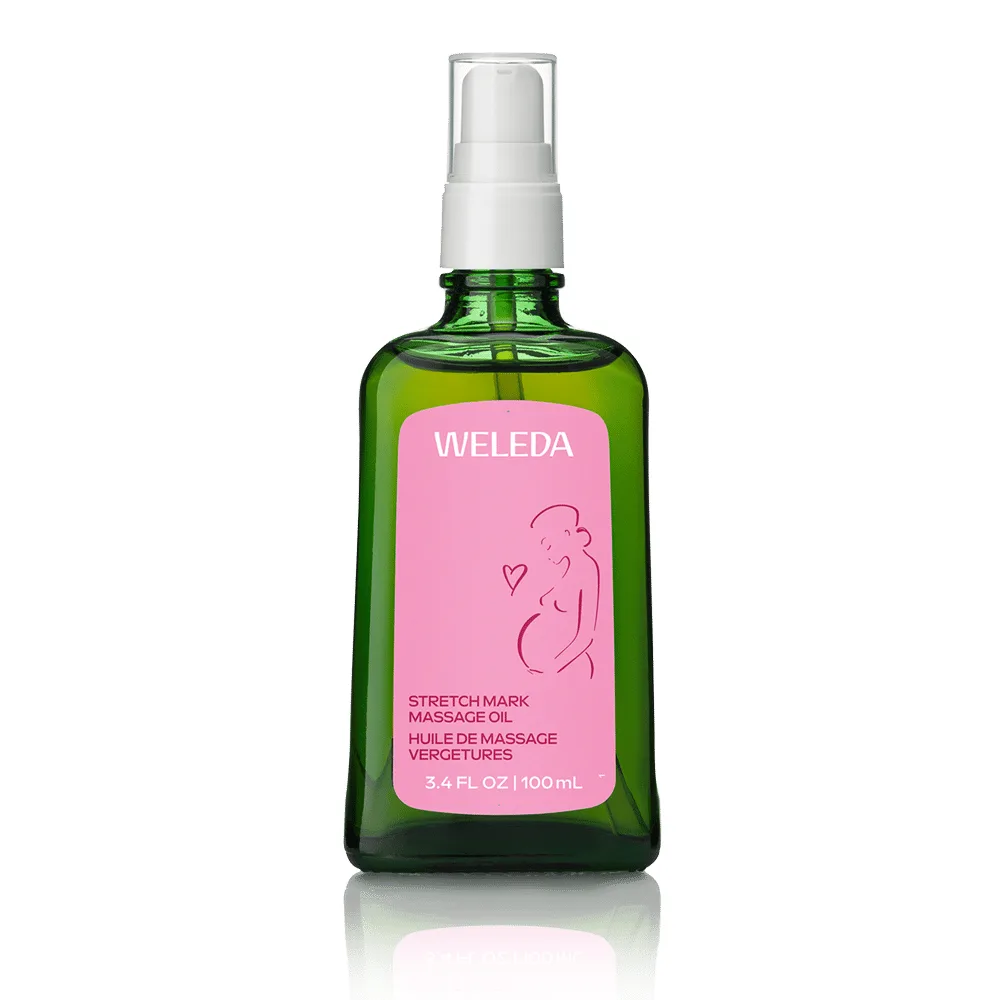
It is a plain, certified-natural almond-jojoba-wheat-germ oil with an arnica accent and one of the most beloved scents in natural skincare, sold by a brand that has been recommended by midwives for a century; what distinguishes it from a bottle of pharmacy almond oil is the jojoba's lightness, the vitamin E, the fragrance and the name, and the last two are what most of the price buys.
body careoilclean beautyParaben FreeCruelty FreeVegan
A lovely almond-jojoba-wheat-germ massage oil with an arnica accent and one of the best scents in natural skincare, which keeps a stretching belly soft and unitchy and has ten thousand happy reviewers. It does not prevent stretch marks, because nothing topical has been shown to, and its twenty-entry essential-oil declaration including camphor and bergamot is a lot to put on pregnancy skin that will soon be against a newborn. Buy it for comfort and the ritual; do not buy it for the promise in the name.
Good choicefor DrynessIn your profileYou chose · Jojoba Oil is a reference standard by mechanism for dryness; this oil carries it high in the ingredient list.Moderate evidenceStandard tolerabilityNo reviews collected yet
The case for it
Simmondsia Chinensis has trial-supported standing for this concern.
It is present at an effective concentration, declared or high in the ingredient list.
The formula carries no trigger this concern is sensitive to, with the cautions noted.
Cautions: fragrance.
Same rule for everyone. “Good choice” is the verdict on 9,564 of 45,024 concern verdicts across the catalog; rule R5 decided 9,072 of them.
As of September 25, 2026, engine 5.1.1.
Also listed for Rough Texture — the actives here (Sweet Almond Oil, Jojoba Oil, Vitamin E, arnica) are in our research queue for that concern; there is no verdict until their evidence rows are written. That is a gap in our table, not a mark against the product.
As a body productNot judged: what a body product is for — real substance, not just slip, realistic to use daily — cannot yet be measured from the ingredient list (only fragrance load can).
A verdict is DermApproved’s assessment of how well a product’s ingredients fit a concern — never a claim about what the product treats. Evidence dots and collected reviews sit beside it and are never blended in.
Rules 0.5.1 · evidence table ev-2026.09-r228 · how we decide
Assessment
Pros & Cons
Pros
✓ Sweet almond, jojoba and wheat germ oils keep stretching skin soft and stop the itch
✓ Jojoba lightens the texture so it absorbs better than pure almond oil
✓ Wheat germ oil supplies natural vitamin E and protects the blend
✓ One of the most admired fragrances in natural skincare
✓ Vegan, alcohol-free and NATRUE-certified
✓ Over ten thousand ratings at 4.6 stars across more than a decade
✓ Glass pump bottle protects the oils and doses easily
Cons
✗ No topical preparation has been shown to prevent stretch marks, and this is no exception
✗ Twenty declared essential-oil entries including camphor and bergamot on pregnancy skin
✗ Scent can be overwhelming or nauseating in early pregnancy
✗ Costs several times a plain almond oil that comforts the skin identically
✗ Wheat germ oil is heavier and can mark clothing and sheets
✗ Arnica and the daisy family are a contact-allergy consideration
Review
Full Review
Start with what the evidence says, because the name on the bottle makes a claim the evidence does not. The Cochrane Collaboration reviewed the randomised trials of topical preparations for preventing stretch marks in pregnancy, oils and creams with almond, olive, cocoa butter, hyaluronic acid and assorted botanicals, and found no good evidence that any of them worked better than placebo or nothing; the trials were few, small and mostly poor, and the marks appeared at about the same rate whatever was rubbed in. Stretch marks are tears in the dermis driven by genetics, hormones and the speed of stretching, and they form below the depth any oil reaches. Weleda's Stretch Mark Massage Oil has ten thousand Amazon reviews, a large share of which credit it with a mark-free pregnancy, and each of those reviewers may well have had the same skin without it. That is not a criticism of the oil. It is the reason to judge it as what it is, which is a massage oil for a stretching body, and on that measure it is very good, better than most of what sits beside it.
The formula is old-fashioned and sound. Sweet almond oil, the emollient European midwives have recommended for bellies for generations, is the first ingredient and most of the bottle; jojoba, second, is a liquid wax close to skin's own sebum that lightens the almond's feel and slows its oxidation; wheat germ oil, third, is one of the richest natural sources of vitamin E, protecting the blend and giving it a slightly heavier, nutty body. Arnica extract, fourth, is Weleda's anthroposophic signature, adding a warming note to the massage and a small sensitiser to the list. Together they spread with a long, slow slip, sink in over several minutes, and leave a stretching abdomen soft, supple and, above all, not itchy, which for anyone in the third trimester is the benefit that matters. The oil is vegan, alcohol-free and NATRUE-certified, which for a Weleda product is a gentler list than usual.
Then there is the scent, which is the reason many people buy it twice. Neroli, rose, lavender, sandalwood, bergamot and bitter orange oils give a warm, sweet floral that reviewers describe as calming, luxurious and unmistakably Weleda, and the daily ritual of massaging a scented oil into a changing body is, for a lot of users, the point of the product. The label tells the other side of the story: after the four base ingredients come twenty entries of fragrance components, the longest allergen declaration in Weleda's range, among them camphor, a mild irritant, and bergamot peel oil, whose furanocoumarins can photosensitise skin unless the oil is bergapten-free, which the label does not say. Pregnancy skin is more reactive, more prone to pigmentation and, on the belly, about to be the surface a newborn's face rests against, and the oil is also recommended for the breasts through nursing. Most users will have no trouble. Anyone with sensitive skin, a fragrance history, or the nausea of early pregnancy, when strong scents turn, should reach for a plain unscented almond or coconut oil, which does the comfort job identically for a third of the price.
That price is the other thing to weigh. At around twenty-four dollars for 100ml, applied two or three times a day over a growing belly, thighs and breasts, a bottle lasts about six weeks, so a full pregnancy and nursing period runs through several. What the money buys over pharmacy almond oil is the jojoba's lightness, the vitamin E, the arnica, the certification, the pump, and the fragrance and name; the last two are most of the difference. Amazon's own pricing sits a little under the brand's, and Walmart and Whole Foods a little over.
The review record is enormous and reads honestly. The itch relief, the softness, the scent and the ritual are praised across a decade; the disappointment, when it comes, is the appearance of stretch marks anyway, a strong or nauseating scent in the first trimester, a generous pump and oil on the sheets. Nobody reports harm, and nobody should expect it from almond, jojoba and wheat germ, which have been on skin for as long as skin has been oiled.
The recommendation, then, separates the two things in the bottle. As a massage oil for dry, itchy, stretching skin, with a scent that makes a daily ritual of it, it is one of the nicest on the natural shelf and worth its price to anyone who loves it. As a stretch-mark preventive it is no better than the evidence allows, which is not at all, and the belly that stays unmarked was probably always going to. Sensitive, fragrance-averse or nauseated users should take the unscented route and lose nothing but the perfume, which was, after all, the part the evidence never covered.
Formula
Key Ingredients
The hero actives that drive this product's performance.
The first ingredient and the bulk of the bottle, organic sweet almond oil is the oleic-rich emollient that gives the massage its slip and the skin its softness; it is the oil midwives have recommended for stretching bellies for generations, and the small clinical literature on almond oil in pregnancy is the closest thing to evidence this product has.
Second on the label, jojoba is a liquid wax ester rather than a true oil, close to skin's own sebum, and it lightens the almond oil's feel, slows its oxidation and helps the blend sink in rather than sit; it is why the oil is less greasy than a pure almond oil would be.
Established mechanismfor Dryness · established mechanism
Third, wheat germ oil is one of the richest natural sources of tocopherols, supplying the vitamin E the label leads with and protecting the almond and jojoba from going rancid; it also brings a heavier, slightly nutty note to the texture and a gluten-related concern that is cosmetic rather than medical.
Not yet assessed
Arnica Montana Flower Extract
Fourth, the anthroposophic signature: an arnica extract with a long traditional record for bruising and a small dose here that adds a warming, circulation-stimulating note to the massage and a minor sensitiser to the list. It is a Weleda ingredient more than a stretch-mark one.
The rest of the label, twenty entries from bergamot, neroli, bitter orange, lavender, rose and sandalwood oils and their declared constituents, giving the oil its celebrated warm floral scent; it is the longest allergen declaration in Weleda's range and includes camphor and a bergamot oil, both worth noting on skin that is stretching, sensitive and about to be near a newborn.
Not yet assessed
Ingredient standings describe the active at treatment-level doses and
vehicles; this product's own condition grades weigh its actual formula.
Massage a few pumps into the belly, hips, thighs, bottom and breasts on damp skin after a shower, in slow circles, two or three times a day; it is a body oil and has no place on the face. If the scent or the arnica is a worry, alternate it with a plain almond or coconut oil, and keep it off the nipples in the final weeks and during breastfeeding.
Results Timeline
Softer, more supple skin immediately and less itch on a stretching belly within days, which is the real, reliable benefit. Whether it prevents stretch marks cannot be promised: the controlled evidence for any topical preparation is weak, and the massage may matter as much as the oil.
The claim in the product's name has been tested and the answer is clear. A 2012 Cochrane systematic review in the Cochrane Database of Systematic Reviews assessed randomised trials of topical preparations for preventing striae gravidarum, covering oils and creams containing sweet almond oil, olive oil, cocoa butter, hyaluronic acid, vitamin E and botanical extracts, and found no statistically significant difference in the development of stretch marks between the preparations and placebo or no treatment, with the trials rated as small and at risk of bias; the reviewers concluded that there was no high-quality evidence to support any topical preparation for prevention. The biology explains the result: striae form when rapid stretching under high cortisol and oestrogen tears the dermal collagen and elastin network, a process that occurs well below the depth to which emollient oils penetrate, and the strongest predictors are family history, maternal age, weight gain and the baby's size. What an oil can do is improve stratum corneum hydration and extensibility, reduce the itch that accompanies stretching, and, through the massage itself, modestly increase local blood flow; a few small studies of almond oil with massage suggest some benefit that may be the massage rather than the oil. On that basis the formula is well chosen. Sweet almond oil is an oleic-rich triglyceride emollient with a long safety record; jojoba is a liquid wax ester that resists oxidation and mimics sebum; wheat germ oil contributes tocopherols at among the highest natural concentrations and a heavier texture; arnica extract adds sesquiterpene lactones with anti-inflammatory activity in vitro and a documented contact-allergy potential. The fragrance is the tolerability question. Twenty declared entries from neroli, rose, lavender, sandalwood, bergamot and bitter orange include several European-labelled allergens, camphor as a mild irritant, and bergamot peel oil, whose bergapten content causes phototoxic reactions unless the oil is furanocoumarin-free; pregnancy increases skin reactivity and pigmentation tendency, and the abdomen and breasts are sites of later infant contact. Systemic absorption of essential-oil components from a body oil on intact skin is low, and no evidence links the product to fetal harm. The science supports this as a comforting emollient massage oil for pregnancy and does not support its stretch-mark prevention claim.
Dermatologists and obstetricians tend to give the same honest answer about stretch-mark oils: nothing applied to the skin has been shown to prevent striae, genetics and the pace of stretching decide most of it, and the reasonable goals of a pregnancy oil are comfort, itch relief and the ritual of caring for a changing body. On those goals a sweet almond, jojoba and wheat germ blend is a sound choice, and clinicians have no objection to its base. The reservations are about the fragrance. Twenty declared essential-oil entries is an unusually heavy load, pregnancy skin is more reactive and more prone to melasma-type pigmentation, bergamot oil can photosensitise, and the belly and breasts will soon be in contact with a newborn's skin and mouth, so the standard advice for anyone with sensitivity, eczema or a fragrance history is an unscented oil or plain emollient, and to keep any scented product off the nipples while nursing. Arnica would be mentioned as a contact allergen for patients sensitive to the daisy family, not as a systemic concern in a topical oil. For patients who love the scent and have resilient skin, it is a pleasant product to use with expectations set at comfort rather than prevention.
Guidance
Usage & Recommendations
How to Use
After a shower or bath, while the skin is still slightly damp, dispense two or three pumps into the palm and massage the oil in slow, light circles over the belly, hips, thighs, bottom and breasts for a few minutes, letting the movement do as much as the oil; repeat two or three times a day from early pregnancy through breastfeeding if wanted. Give it several minutes to absorb before dressing, since the wheat germ oil can mark fabric, and keep it off the nipples in the final weeks and while nursing. Patch test on the inner arm first if skin is sensitive, and switch to an unscented almond or coconut oil if the fragrance turns during the nauseous weeks or if any redness or itching appears. Lock the pump for travel, store the bottle away from heat and sunlight, and use within six months of opening, as the almond and wheat germ oils can go rancid.
Value Assessment
Around twenty-four dollars for 100ml, used two or three times a day over an expanding belly, thighs and breasts, lasts about six weeks, so a pregnancy plus nursing runs to several bottles and well over a hundred dollars. For a certified-natural, vegan oil with jojoba, vitamin E and a celebrated fragrance in a glass pump bottle, the per-bottle price is fair against other branded pregnancy oils and steep against the plain almond oil that provides the same comfort for a few dollars. The premium buys scent, ritual and a trusted name, not any evidence of prevention, which does not exist for any product. Amazon typically sits a little under the brand's price and Walmart and Whole Foods a little over. For someone who values the fragrance and the daily ritual the value is reasonable; for someone who only wants an itch-free belly, the pharmacy almond oil is the better buy.
Who Should Buy
Pregnant and postpartum users with dry, itchy, stretching skin who want a certified-natural, vegan massage oil with a beautiful scent and a daily ritual around it, understand that no oil prevents stretch marks, and enjoy the Weleda pregnancy range for its comfort rather than its promises.
Who Should Skip
Anyone with sensitive, eczema-prone or fragrance-reactive skin, a history of contact allergy to the daisy family, or first-trimester nausea that strong scents worsen, all of whom will do as well with an unscented almond oil, and anyone buying specifically to prevent stretch marks, which the evidence says nothing topical can do.
A medium-weight golden oil that spreads easily with a long slip for massage, sinks in over several minutes thanks to the jojoba, and leaves a soft, faintly glowing finish with a light residue.
Scent
A warm, sweet floral blend of neroli, rose, lavender and sandalwood over a citrus top, one of Weleda's most admired fragrances and, for some in early pregnancy, too much.
Packaging
A 100ml green glass bottle with a lockable white pump and a pink label; the pump gives a generous dose and the glass protects the oils, though it is heavy and the bottle can be knocked over in a bathroom.
Finish
glowyvelvety
What to Expect on First Use
The first massage is the pleasure of a good oil and a good scent: it spreads for a long time, warms slightly from the arnica and camphor, and leaves the belly soft and unitchy for hours. Some notice the wheat-germ heaviness or a lingering residue on clothes. The scent is the first thing most people mention and, in the nausea weeks, occasionally the last.
How Long It Lasts
About six weeks at a few pumps two or three times a day over a growing belly and thighs.
Weleda's pregnancy body oil has been part of its mother-and-baby range for decades, built on the sweet almond oil that European midwives have long recommended for a stretching abdomen and finished with the brand's anthroposophic arnica and a rose-neroli-sandalwood fragrance. It became one of the most-reviewed pregnancy products on Amazon and was repackaged in 2026 with a new pump bottle and label.
About Weleda Legacy Brand (20+ years)
Weleda has produced NATRUE-certified natural skincare and anthroposophic medicines since 1921 and sells one of the oldest pregnancy body-care ranges in the natural category, with this oil on sale in the United States for well over fifteen years. It scents with essential oils, publishes no clinical trials of its own products, and its stretch-mark claims rest on the general emollient literature and decades of midwife recommendation rather than on controlled evidence.
Brand founded: 1921
Myth vs. Reality
Common Myths
Myth
Massaging this oil into the belly prevents stretch marks.
Reality
A Cochrane review of topical preparations for preventing stretch marks in pregnancy found no good evidence that any of them worked better than placebo or no treatment. Stretch marks are largely genetic and hormonal; oils keep the skin comfortable and may help a little through massage, but no bottle can promise prevention.
Myth
A pregnancy oil from a natural brand is automatically fragrance-safe.
Reality
This oil declares twenty essential-oil entries including camphor and bergamot oil. Pregnancy skin is more reactive and more prone to pigmentation, bergamot can photosensitise, and a scented belly will be against a newborn's face; a plain unscented oil is the safer choice for anyone with sensitivities.
Myth
Arnica in a pregnancy oil is a concern for the baby.
Reality
The arnica here is a small extract in a topical oil on intact skin, which is not absorbed in meaningful amounts; oral arnica is the form that carries warnings. The relevant concern with arnica is contact allergy, not systemic effect.
FAQ
Frequently Asked Questions
Does Weleda Stretch Mark Massage Oil actually prevent stretch marks?
Not reliably, and no oil does. A Cochrane review of topical preparations for preventing stretch marks in pregnancy found no good evidence that any worked better than nothing; stretch marks depend mostly on genetics, hormones and how fast the skin stretches. The oil keeps the skin soft and reduces itching, which is real, and many users credit it with a mark-free pregnancy that they may have had anyway.
Is Weleda Stretch Mark Massage Oil safe during pregnancy and breastfeeding?
Its base of sweet almond, jojoba and wheat germ oil is as benign as skincare gets, and Weleda recommends it from the start of pregnancy to the end of breastfeeding. The considerations are the essential oils, which are a sensitisation and, for bergamot, a photosensitivity concern on pregnancy skin, and the scent, which should be kept off the nipples while nursing.
What does Weleda Stretch Mark Massage Oil smell like?
A warm, sweet floral of neroli, rose, lavender and sandalwood over a citrus top, widely described as one of the nicest scents in natural skincare. In the nauseous weeks of early pregnancy a minority find it too strong, and an unscented oil is the fallback then.
How often should I use Weleda Stretch Mark Oil?
Weleda suggests two or three times a day, massaged in circles over the belly, hips, thighs, bottom and breasts from early pregnancy through breastfeeding. Applied to damp skin after a shower it spreads further and absorbs better, and the 100ml bottle lasts about six weeks at that rate.
Is the arnica in Weleda's pregnancy oil a problem?
Topically, on intact skin, arnica extract at this small dose is not absorbed in meaningful amounts and is not the oral form that carries pregnancy warnings. Its relevance is as a contact allergen, so anyone with a known arnica or daisy-family sensitivity should choose another oil.
Will Weleda Stretch Mark Massage Oil stain clothes?
Like any plant oil it can mark fabric if clothing goes on before it has absorbed, and the wheat germ oil is slightly heavier than the rest. Giving it several minutes after massage, or applying before a shower, avoids most marks, and it washes out.
Reviews
What Reviewers Tend to Say
Recurring themes our editors read across retailer reviews of this product — summaries in our words, not quotations, and not a substitute for your own patch test.
Common Praise
Stops the itch of a stretching belly
Beautiful warm floral scent
Absorbs without a heavy greasy film
No new stretch marks in many pregnancies
Trusted natural brand for pregnancy
Common Complaints
Stretch marks appeared anyway for some
Scent too strong or nausea-triggering in early pregnancy
Essential oils are declared by botanical name rather than as fragrance, which is why the most heavily perfumed products in the natural aisle can carry the reassuring word — and why the bottle gets more sensitising the longer you own it.
The fourth most frequent positive patch test in North America is an oxidation product of a molecule that occurs naturally in lavender. Nobody synthesised it into your face cream.
The strongest counterexample to blanket botanical scepticism is also one of the more common contact allergens — and holding both facts at once is the only honest way to read it.
Products, answers, therapy guides, tools and articles in one search. Brand names,
slang and abbreviations all work — accutane finds isotretinoin, bacne finds truncal acne.