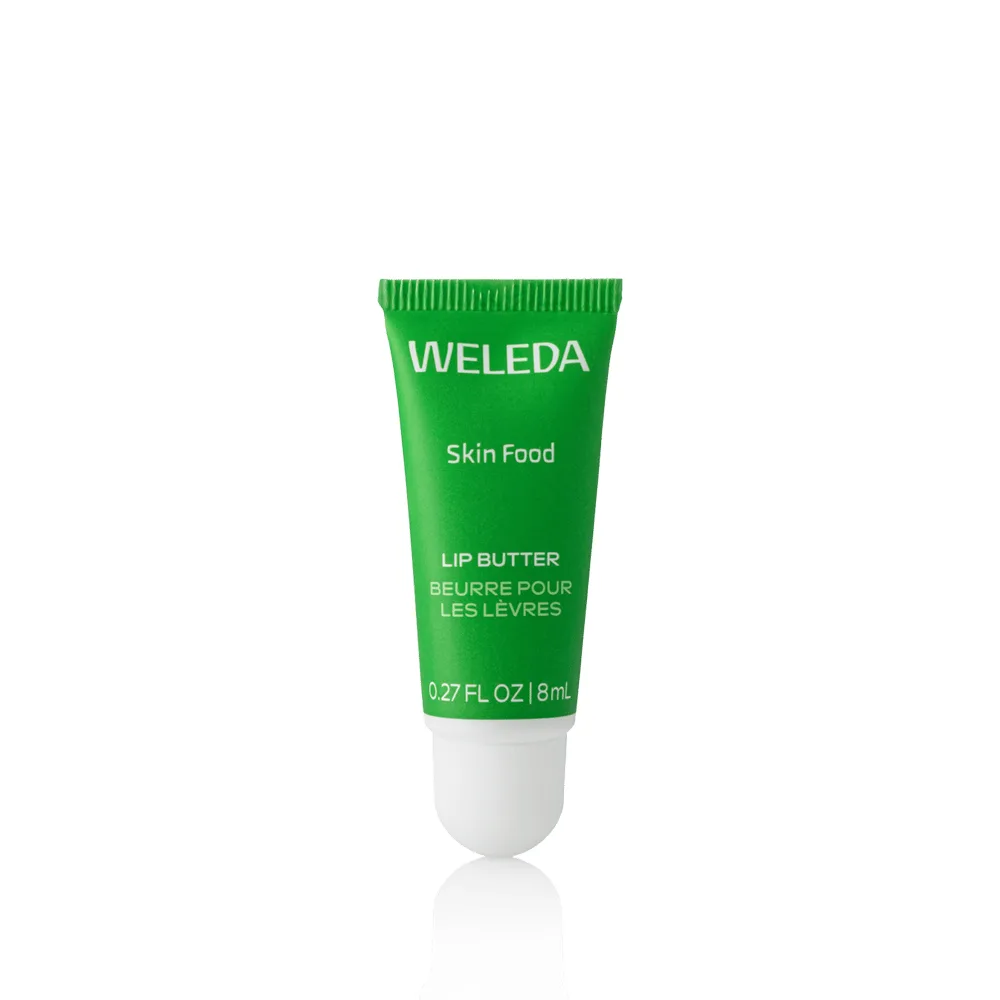
It is the original 1926 Skin Food formula, sunflower oil, lanolin, beeswax and the four botanicals, in an 8ml lip tube, which makes it one of the few lip balms that is a genuine lanolin repair product rather than a petrolatum or wax stick. The fragrance and alcohol that come with the recipe are more consequential on lips than anywhere else Weleda puts them.
The 1926 Skin Food recipe in an 8ml lip tube: sunflower oil, lanolin second, beeswax third, the four botanicals and the scent. That makes it one of the most effective natural repairs for cracked lips on the shelf, glossy, long-wearing and cheap. The essential-oil fragrance, rosemary and alcohol matter more on lips than anywhere else Weleda uses them, and a real minority tingle, burn or peel. Most people will love it; reactive lips should not try it.
Strong choicefor DrynessIn your profileYou chose · Lanolin is an approved or monograph active for dryness; this balm carries it high in the ingredient list.Moderate evidenceStandard tolerabilityNo reviews collected yet
The case for it
Lanolin is a first-line active — approved, monograph-listed or named in current guidelines — for this concern.
It is present at an effective concentration, declared or high in the ingredient list.
The formula carries no trigger this concern is sensitive to, with the cautions noted.
Cautions: fragrance.
Same rule for everyone. “Strong choice” is the verdict on 1,459 of 45,024 concern verdicts across the catalog; rule R2 decided 892 of them.
As of September 25, 2026, engine 5.1.1.
Also listed for Winter Skin and Rough Texture — the actives here (Sunflower Oil, Lanolin, Beeswax, Essential Oils) are in our research queue for those concerns; there is no verdict until their evidence rows are written. That is a gap in our table, not a mark against the product.
As a lip balmNot judged: what a lip balm is for — seals and protects, sun protection where it matters — cannot yet be measured from the ingredient list (only no sting-and-repeat ingredients, low allergen load can).
A verdict is DermApproved’s assessment of how well a product’s ingredients fit a concern — never a claim about what the product treats. Evidence dots and collected reviews sit beside it and are never blended in.
Rules 0.5.1 · evidence table ev-2026.09-r228 · how we decide
Assessment
Pros & Cons
Pros
✓ Lanolin second on the label, the most effective repair occlusive for cracked lips
✓ Sunflower oil and beeswax give a glossy, long-wearing film that survives drinks
✓ Heals winter-cracked lips overnight in the large majority of reviews
✓ The original 1926 Skin Food recipe in a hygienic, pocketable tube
✓ A rice-grain amount is enough, so 8ml lasts two to three months
✓ Nearly nine thousand ratings averaging 4.5 stars over eight years
✓ NATRUE-certified natural and inexpensive
Cons
✗ Essential-oil fragrance with three declared allergens on thin, licked lip skin
✗ A real minority report tingling, burning or peeling, especially on already-cracked lips
✗ Alcohol and rosemary extract add to the irritation risk
✗ Lanolin second on the label is a documented allergen for wool-sensitive users
✗ Strong herbal taste divides users
✗ No SPF, and the tube dispenses more than a lip needs
Review
Full Review
Most lip balms gave up on lanolin years ago. Wool wax is sticky, it is animal-derived, it has an allergy reputation, and petrolatum and plant waxes are cheaper and easier to make pretty, so the balm aisle is now mostly petrolatum sticks and beeswax tubes that coat without repairing. Lanolin is still the best thing there is for a cracked lip, because it does what almost nothing else does: it clings to damaged skin, absorbs water into itself, seals the fissure and stays put through a drink. Weleda's Lip Butter puts it second on the label, exactly where it sits in the original Skin Food, behind organic sunflower oil and ahead of beeswax, and that single fact is the reason nearly nine thousand Amazon reviewers describe cracked lips healed overnight. This is the 1926 balm in a lip tube, and on the thing balms are for, it works better than most of what has replaced it, at a price that undercuts the balms that replaced it.
The formula is short and almost entirely the original. Sunflower oil supplies the liquid phase and its linoleic acid; lanolin and beeswax thicken it into a dense, glossy butter with a clinging film; glycerin adds a little humectancy; wild pansy, rosemary, chamomile and calendula follow as the Skin Food signature; then alcohol, a trace of water, and the essential-oil fragrance with limonene, linalool and geraniol declared. There is no petrolatum, no mineral oil, no synthetic wax and no SPF. Squeezed from the slanted nozzle it is thick and unmistakably lanolin, softening on contact into a rich, wet-look layer that lasts for hours, survives coffee and, applied thickly at night, leaves lips visibly repaired by morning. A rice-grain amount is enough, which the generous tube does not make easy and which most people learn after a few wasted squeezes.
What the original recipe also carries is the original problem, and on lips it is sharper than anywhere else. Lip skin is thin, frequently fissured, and everything applied to it is partly eaten; an essential-oil fragrance with three declared allergens, a rosemary extract and an alcohol preservative are therefore a bigger deal in an 8ml tube than in a jar of body butter. The review record is honest about this. The large majority report only comfort and repair; a real minority, disproportionately people who reached for the balm because their lips were already cracked, describe tingling, burning or peeling within minutes or days, and some stop using it. That is the fragrance and the alcohol on broken skin, occasionally the lanolin or rosemary in someone sensitised to them, and it is not a sign the balm is working. Anyone who feels it should switch to a fragrance-free lanolin or petrolatum balm, which will do the same repair without the sting.
The herbal taste is the other dividing line. The Skin Food scent that people love on their arms is stronger and more present on the mouth, where it is tasted as well as smelled, and reviews are split between those who find it comforting and those who find it medicinal. It fades within a few minutes but it is never absent, and it is the first thing a new user notices.
Smaller notes: the balm is not vegan, with lanolin second and beeswax third, and wool-allergic users should avoid it; it is too heavy and too scented for the face, though a trace on cuticles or the corners of the nose is a good use; the glossy finish provides no sun protection and can, if anything, focus light, so an SPF lip balm belongs over it outdoors; and the tube's nozzle dispenses generously enough that most people waste the first few weeks learning restraint.
Eight years and nearly nine thousand Amazon ratings at 4.5 stars, plus Dermstore, Credo and natural grocers, make the picture complete: heals cracked lips, lasts for hours, glossy without stickiness, strong herbal taste, tingles for some, no SPF. Nothing in the record suggests the formula has changed, which for a product built on a century-old recipe is as it should be.
At around eight dollars for 8ml, and two to three months of use at a trace a few times a day, it costs about three dollars a month, which is cheap for a lanolin balm from a certified-natural heritage brand and roughly what a drugstore stick costs. Amazon, Dermstore, Credo, CVS and the brand's site sit within a dollar, and it appears in most Skin Food gift sets.
The recommendation is warm with one firm caveat. Dry, chapped, winter-cracked lips that tolerate fragrance will find this among the best repair balms available at any price, and the closest thing to the original Skin Food in a pocket. Reactive, eczema-prone, fissured or fragrance-sensitive lips should not test it, because the tingle is real and the plainer lanolin balms fix the same problem without the essential oils.
Formula
Key Ingredients
The hero actives that drive this product's performance.
The first ingredient, organic sunflower oil, supplies the slip and the linoleic acid that keeps lip skin supple; in a formula with almost no water it is the liquid phase that the lanolin and beeswax thicken into a butter, and it is why the balm feels glossy and nourishing rather than waxy.
Second on the label, exactly where it sits in the original Skin Food, wool wax is the ingredient that makes this a genuine repair balm: it clings, seals cracks, holds water and lasts for hours on lips that lick it off. It is the best-evidenced lip-healing occlusive there is, and the reason the tube is not vegan.
Regulator-approvedfor Dryness · established mechanism
Third, giving the butter its structure and a semi-occlusive film that resists wear; with the lanolin it forms the protective layer that survives a coffee, and it adds the faint waxy set that keeps the balm from migrating.
The four Skin Food botanicals at positions five to eight, carried over from 1926; chamomile and calendula bring a mild soothing note to chapped lips, wild pansy the heritage, and rosemary an antioxidant with a small sensitising risk that matters more on lips than on a shin.
The essential-oil blend that gives the balm its herbal-citrus taste and smell, with three allergens declared; on lips, where product is ingested and skin is thin, it is the reason a minority of users report tingling or peeling and the reason fragrance-reactive lips should choose a plainer balm.
Not yet assessed
Ingredient standings describe the active at treatment-level doses and
vehicles; this product's own condition grades weigh its actual formula.
Squeeze a small amount from the tube onto a fingertip or straight from the nozzle and press over the lips as the last step, over or under lip colour, or as a thick overnight layer; a trace can go on cuticles and the corners of the nose. It is too heavy and scented to use as a face balm, and it should stay off the lids.
Results Timeline
Chapped lips feel relieved immediately and look repaired by the next morning after a thick overnight layer. Daily use keeps lips supple through winter; there is nothing in the formula to do more than that, and no SPF.
Lanolin is the reason this balm repairs rather than merely coats. Wool wax is a complex mixture of long-chain esters, sterol esters and free alcohols whose structure allows it to absorb up to twice its weight in water while forming a semi-occlusive, adherent film; clinical studies of highly purified lanolin on cracked nipples and fissured skin show faster healing and reduced pain against comparators, and its use on lips draws on the same properties, adherence to damaged tissue, water retention and durable occlusion. Beeswax adds long-chain esters that set the film and improve wear, and sunflower seed oil, roughly two-thirds linoleic acid, supplies the liquid phase and an essential fatty acid that supports lip barrier lipids, which lack the sebaceous contribution the rest of the face receives. Glycerin contributes a small humectant effect. The four botanicals have in-vitro and traditional anti-inflammatory data; a 2013 rat sunburn model in the Journal of Ethnopharmacology found a Viola tricolor gel reduced inflammation, though no clinical evidence supports an effect at cosmetic doses on lips, and rosemary extract is a minor contact sensitiser. The tolerability issues are concentrated in the last five ingredients. Alcohol, a natural-certification preservative, is a recognised irritant on fissured skin; the essential-oil fragrance declares limonene, linalool and geraniol, three of the European-labelled fragrance allergens, and the lips are a high-risk site for fragrance contact cheilitis because the skin is thin, the product is ingested in small amounts, and cracked lips have an impaired barrier; lanolin itself is a documented, if uncommon, contact allergen, with reactions concentrated in people with pre-existing dermatitis. Those factors explain the minority reports of tingling and peeling, which are irritant or allergic responses rather than evidence of healing. The balm contains no UV filter, and glossy occlusives without filters offer no photoprotection. The science supports the Lip Butter as a highly effective lanolin-based repair balm whose fragrance, alcohol and botanical load make it unsuitable for reactive or fissured lips.
Dermatologists treating chapped lips and cheilitis recommend bland occlusives, petrolatum and purified lanolin above all, applied often and thickly at night, and they spend a good deal of clinic time explaining that the flavoured, scented balms people reach for are frequently the cause of the problem they are meant to fix. This product sits on both sides of that advice. Its base, lanolin second and beeswax third in sunflower oil, is the kind of formula a clinician would endorse for repair; its fragrance, rosemary extract and alcohol are the kind of additions a clinician would warn about, since fragrance contact cheilitis is common, lip skin is thin and partly ingested, and cracked lips absorb irritants readily. For a patient with ordinary dry lips and no fragrance history, it would be considered an effective natural balm; for a patient with recurrent chapping, cheilitis, atopic dermatitis or a history of contact allergy, the recommendation would be plain petrolatum or a fragrance-free lanolin, and this balm would be named as a possible culprit if tingling or peeling had appeared. Lanolin allergy would be mentioned for wool-sensitive patients, and the absence of SPF for anyone outdoors.
Guidance
Usage & Recommendations
How to Use
Squeeze a rice-grain amount from the slanted nozzle onto a clean fingertip or directly onto the lips and press it across both lips, as often as they feel dry through the day; a light squeeze is enough, since the tube gives generously. At night, apply a thicker layer as an overnight repair mask, and once a week smooth it over lips softened by a gentle scrub. A trace works on cuticles and the corners of the nose. Keep it off the eyelids and the face generally, and in sun apply an SPF lip balm over it or instead of it, since it has no filter. If tingling, burning or peeling appears, stop and switch to a fragrance-free balm rather than persisting. Cap the tube after use and store it at room temperature; the lanolin and sunflower oil keep well for a year or more.
Value Assessment
Around eight dollars for 8ml, at a rice-grain amount two or three times a day, lasts two to three months and costs about three dollars a month, which puts it at drugstore-stick pricing for a certified-natural lanolin balm from a century-old brand, and well below designer lip treatments with less effective bases. The value is excellent for anyone whose lips tolerate the fragrance, since the repair it delivers is as good as lanolin balms costing several times more. It is poor value for the reactive minority who will use it twice and stop, and the money is better spent on a fragrance-free lanolin or petrolatum balm in that case. Amazon, Dermstore, Credo, CVS and the brand's site price it within a dollar, and it turns up in most Skin Food gift sets at a lower effective cost.
Who Should Buy
People with dry, chapped or winter-cracked lips who want a genuine lanolin repair balm from a certified-natural brand, enjoy the Skin Food scent and taste, and want the original balm's comfort in a pocketable tube at a low price.
Who Should Skip
Anyone with reactive, fissured, eczema-prone or fragrance-sensitive lips, or a history of cheilitis, for whom the essential oils, rosemary and alcohol are likely triggers, and anyone with a wool or lanolin allergy. Vegans should note the lanolin and beeswax, and anyone outdoors needs SPF this balm does not provide.
A dense, glossy, pale-yellow balm with lanolin's characteristic cling, softening on contact into a rich film that sits on the lips for hours and leaves a wet-look sheen.
Scent
The Skin Food herbal-citrus fragrance, calendula and chamomile with a bright top note, noticeable on the lips and faintly tasted; strong for a lip product.
Packaging
An 8ml green squeeze tube with a slanted plastic applicator nozzle and a white cap; hygienic and pocket-sized, though the tube gives more than a lip needs with a light squeeze.
Finish
glowy
What to Expect on First Use
The first application is unmistakably lanolin: a thick, glossy, clinging layer that feels like a treatment and makes cracked lips feel comforted at once, with a herbal taste that takes a moment to accept. Most people find lips visibly repaired by morning after an overnight layer. A minority, usually those with reactive or already-fissured lips, feel a tingle or a burn within minutes from the essential oils and alcohol, and that group should stop.
How Long It Lasts
Two to three months at two or three applications a day, since a trace is enough.
Weleda launched the Lip Butter in 2018 as the first Skin Food line extension, after decades of customers dabbing the original balm on their lips from the big green tube. It kept the recipe almost intact, changed the format to a slanted-nozzle tube, and it became one of the brand's best-selling and most-reviewed products in the United States, sold everywhere from Credo to CVS.
About Weleda Legacy Brand (20+ years)
Weleda has produced NATRUE-certified natural skincare in Switzerland and Germany since 1921, and Skin Food, its 1926 balm, is the basis of the whole line. The brand preserves with alcohol and scents with essential oils, and publishes no clinical trials; the Lip Butter, launched in 2018, is essentially the original Skin Food recipe in a lip tube and has become one of Weleda's most-reviewed products in the United States.
Brand founded: 1921 · Product launched: 2018
Myth vs. Reality
Common Myths
Myth
A natural lip balm cannot cause the peeling and tingling some people get from conventional ones.
Reality
This balm contains an essential-oil fragrance with three declared allergens, rosemary extract and alcohol, all of which can irritate lip skin, and a minority of reviewers describe exactly that. Lanolin itself is also a recognised allergen. Natural origin does not change the pharmacology.
Myth
Lip balms make lips dependent and chapped.
Reality
Balms do not cause dependence; irritating ingredients in some balms cause a cycle of inflammation and reapplication. Lanolin and beeswax are among the best repair occlusives for lips, and if this balm keeps chapping going, the fragrance or rosemary is the likely reason, not the lanolin.
Myth
Because it is so rich it protects lips from the sun.
Reality
It contains no UV filter. A glossy balm can even focus light on the lips; in sun, an SPF lip balm belongs over or instead of it.
FAQ
Frequently Asked Questions
Is Weleda Skin Food Lip Butter the same as the original Skin Food?
Almost. It uses the same sunflower oil, lanolin, beeswax, glycerin and four botanicals as the 1926 balm, in a lip-sized tube with a nozzle. It drops the almond oil and a couple of minor components of the original, and the fragrance and alcohol remain.
Why does Weleda Lip Butter tingle or burn on some lips?
The formula contains an essential-oil fragrance with limonene, linalool and geraniol declared, rosemary extract and alcohol, and lip skin is thin and frequently fissured; a minority of users react with tingling, burning or peeling, particularly on already-cracked lips. Anyone who feels it should stop and choose a fragrance-free lanolin or petrolatum balm.
Is Weleda Skin Food Lip Butter vegan?
No. Lanolin is the second ingredient and beeswax the third, both animal-derived, though the product is cruelty-free and NATRUE-certified natural. Wool-allergic users should also avoid it.
Does Weleda Skin Food Lip Butter have SPF?
No. It contains no UV filter, and its glossy finish offers no protection; in sun an SPF lip balm should go over it or replace it during the day.
How much Weleda Lip Butter should I use?
A trace; the tube dispenses generously and a rice-grain amount covers both lips. A thicker layer at night works as an overnight repair mask, and the 8ml tube lasts two to three months at a few applications a day.
Can I use Weleda Skin Food Lip Butter on my face or cuticles?
On cuticles and the corners of the nose, yes, a trace works as a spot occlusive. On the face it is too heavy, too scented and contains lanolin and beeswax that can congest, and Weleda's Skin Food Light or face-care creams suit that job.
Reviews
What Reviewers Tend to Say
Recurring themes our editors read across retailer reviews of this product — summaries in our words, not quotations, and not a substitute for your own patch test.
The fourth most frequent positive patch test in North America is an oxidation product of a molecule that occurs naturally in lavender. Nobody synthesised it into your face cream.
Essential oils are declared by botanical name rather than as fragrance, which is why the most heavily perfumed products in the natural aisle can carry the reassuring word — and why the bottle gets more sensitising the longer you own it.
Glycolic gets the hype and the higher numbers. But lactic acid does something glycolic can't — and for a lot of skin, that changes the whole calculation.
Products, answers, therapy guides, tools and articles in one search. Brand names,
slang and abbreviations all work — accutane finds isotretinoin, bacne finds truncal acne.