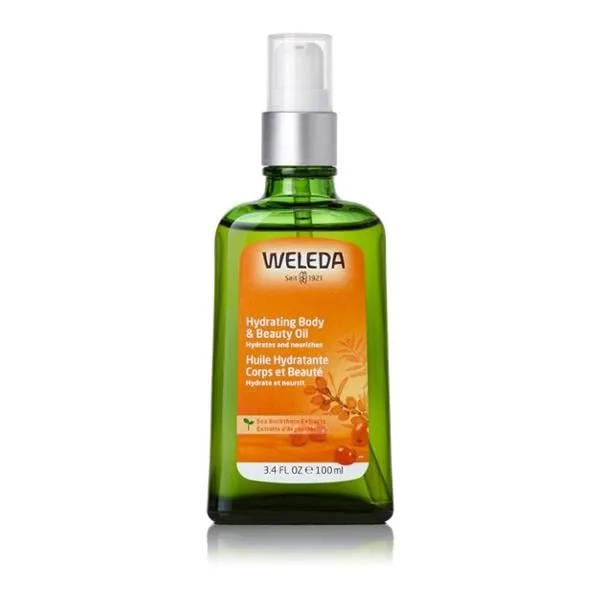
It is about as simple as a body oil gets, two organic oils, an antioxidant extract and a fragrance, with sea buckthorn giving a golden tint and carotenoid antioxidants that most plain oils lack, and it is alcohol-free and vegan, which makes it one of the gentler formulas in Weleda's range apart from its eight-allergen scent.
A four-ingredient sesame and sea buckthorn body oil that leaves dry skin soft and faintly golden, stable, vegan and alcohol-free, with a bright fruity scent that carries eight declared allergens over a lot of skin. It is an honest, pleasant oil and a slightly expensive one for what is mostly organic sesame; the sea buckthorn earns its place with tint and antioxidants rather than any effect the label needs a name for.
Supporting rolefor DrynessIn your profileYou chose · Nothing here targets dryness directly; occlusive emollience is the recognised companion to treating it, and this oil does that without known triggers.Not yet assessedStandard tolerabilityNo reviews collected yet
The case for it
Sesamum Indicum has no evidence row yet for this concern — it is in the research queue.
The formula carries no trigger this concern is sensitive to, with the cautions noted.
Cautions: fragrance.
What would change this: A researched evidence row for the lead active would replace this with a verdict.
Same rule for everyone. “Supporting role” is the verdict on 8,197 of 45,024 concern verdicts across the catalog; rule R8 decided 4,250 of them.
As of September 25, 2026, engine 5.1.1.
R8 — The category's job (barrier care, humectant hydration, gentle cleansing, photoprotection) is the documented supportive role for this concern. This is the honest verdict for a moisturizer on an acne page. · the full register
Also listed for Dullness and Winter Skin — the actives here (Plant & Seed Oils, Sea Buckthorn, Rosemary, Essential Oils) are in our research queue for those concerns; there is no verdict until their evidence rows are written. That is a gap in our table, not a mark against the product.
As a oilNot judged: what a oil is for — fatty-acid profile, seals moisture, resists going rancid — cannot yet be measured from the ingredient list (only pore and malassezia risk can).
A verdict is DermApproved’s assessment of how well a product’s ingredients fit a concern — never a claim about what the product treats. Evidence dots and collected reviews sit beside it and are never blended in.
Rules 0.5.1 · evidence table ev-2026.09-r228 · how we decide
Assessment
Pros & Cons
Pros
✓ Four-ingredient formula: organic sesame and sea buckthorn oils, rosemary and fragrance
✓ Alcohol-free and vegan, gentler than most of Weleda's creams
✓ Sea buckthorn adds palmitoleic acid, carotenoids and a subtle golden glow
✓ Sesame base is stable, balanced and spreads a long way on damp skin
✓ Bright, uplifting citrus-berry scent that many buy it for
✓ NATRUE-certified in a glass pump bottle
✓ Two decades of consistent reviews at 4.5 stars
Cons
✗ Fragrance declares eight allergens over a large, leave-on application area
✗ Mostly sesame oil at a price several times plain sesame oil
✗ Carotenoid tint can transfer to towels and light clothing
✗ Too rich for oily skin or warm weather
✗ Rosemary extract adds a minor sensitiser
✗ Heavy glass bottle and a generous pump
Review
Full Review
The ingredient list on this bottle can be read aloud in a breath: sesame oil, sea buckthorn oil, rosemary extract, fragrance. Everything after that is the fragrance's declared components. In an industry where a body oil routinely carries a dozen oils and a paragraph of extracts, that brevity is almost a statement, and it is the oldest Weleda statement there is, older than the brand's face creams and most of its competitors; the brand has built its oils on organic sesame for a century because sesame is stable, balanced between oleic and linoleic acid, and carries its own antioxidants. The question a four-ingredient bottle raises is a fair one: at twenty-two dollars, what does it offer over the sesame oil that makes up most of it?
The answer is the second ingredient, the scent, and the brand. Sea buckthorn oil, pressed from an orange berry Weleda grows organically in Italy and Germany, is a genuinely interesting oil: unusually rich in palmitoleic acid, a fatty acid found in human sebum, and dense with carotenoids and tocopherols that give it antioxidant activity and its deep orange colour. At second position it is a real share of the bottle rather than a garnish, which is more than can be said for the sea buckthorn in the brand's hand cream, and it is why the oil leaves a faint golden tint on the skin and why the formula stays fresh; rosemary extract, third, is the natural antioxidant preservative that lets Weleda skip alcohol altogether, which makes this one of the gentlest formulas in the range and the one to try first for anyone who has found Weleda's creams stinging. Together the two oils spread with a long, easy slip on damp post-shower skin, absorb over several minutes to a soft satin sheen, and keep dry legs and arms comfortable through a winter day.
What the oil does is what oils do, and the label does not pretend otherwise. It seals water into the skin, so it works best applied to damp skin and does little applied to dry; it softens and adds glow; it does not hydrate in the sense of adding water, and it has no active beyond the carotenoids' antioxidant contribution. The golden tint is surface pigment that washes off and, until the oil has absorbed, can transfer to a white towel or a light sleeve, which is the most practical complaint in the reviews and the easiest to avoid. On oily skin or in summer it is more than most people want, and it belongs to the months when legs are covered and dry.
The fragrance is the one place the simple formula becomes complicated. The essential-oil blend gives a bright, tart, citrusy sea-buckthorn scent that is the product's signature and, for most reviewers, a pleasure; it also declares eight allergens, limonene, linalool, citronellol, benzyl benzoate, benzyl salicylate, geraniol, citral and farnesol, with the rosemary extract alongside. A body oil is spread over a large area and left on for hours, so the exposure is real, and fragrance-sensitive, eczema-prone or reactive skin should choose an unscented oil and lose nothing but the smell. For everyone else the scent is the main reason to buy this bottle rather than a cheaper one, and it is a good enough reason.
Two decades on sale and about fourteen hundred Amazon ratings at 4.5 stars, split across an old listing and a newer one, plus iHerb and the natural grocers, describe the oil consistently: silky skin, a subtle glow, a lovely or a loud scent, a generous pump, a tint on the towels, and a price that people notice. Nothing in that record suggests it does anything other than what two good oils and a perfume should, which is exactly what the label promises.
That price, around twenty-two dollars for 100ml, works out to roughly fifteen dollars a month used daily over the whole body and far less on dry areas only; Amazon's third-party sellers often ask more than the brand, and travel sizes come in sets. Organic sesame oil alone costs a fraction of that, and the premium buys the sea buckthorn, the scent, the certification, the glass pump bottle and the name, which is a fair trade for someone who wants exactly that combination and a poor one for someone who only wants soft skin.
The recommendation is straightforward. Dry or normal skin that likes a natural body oil with a bright fruity scent and a subtle golden glow, applied after a shower in the cooler months, will find this simple, stable, vegan and pleasant, and among the gentler bottles Weleda makes because it has no alcohol. Sensitive or fragrance-averse skin should take an unscented oil, oily skin should take a lotion, and anyone on a budget should remember that most of what is in the bottle is sesame, sold under a nicer name.
Formula
Key Ingredients
The hero actives that drive this product's performance.
The first ingredient and nearly the whole bottle: organic sesame oil, Weleda's traditional base for body oils, with a balanced oleic-linoleic profile and its own sesamol and sesamin antioxidants that make it unusually stable. It spreads a long way, absorbs at a moderate pace and leaves a light sheen, and it is the emollient doing all the work the label credits to sea buckthorn.
Second on a four-ingredient base, the orange berry oil that colours the bottle and gives it its name; rich in palmitoleic acid, carotenoids and tocopherols, it adds an antioxidant note and a faint golden tint to the skin, and at this share it is a real contributor rather than a garnish, though sesame remains the bulk.
Third, a rosemary extract that serves as the natural antioxidant preservative keeping the oils from going rancid; it is the reason the bottle has no alcohol and, as a mild sensitiser, one of the few things in it that reactive skin might notice.
The essential-oil fragrance with limonene, linalool, citronellol, benzyl benzoate, benzyl salicylate, geraniol, citral and farnesol declared, giving the bright, tart, fruity sea-buckthorn scent that reviewers either love or find too much; on a body oil applied over large areas it is the tolerability question.
Smooth a few pumps over damp skin straight after a shower, when it spreads furthest and seals the most water in, and let it absorb for a few minutes before dressing; it can also be added to a bath or used as a massage oil. It is a body oil and too scented and rich for the face. Over a lotion it adds glow; under one it adds nothing.
Results Timeline
Soft, supple, faintly golden skin within minutes and comfort that lasts most of a day on dry skin. There is no cumulative effect beyond keeping skin conditioned; the carotenoid glow is cosmetic and washes off.
A body oil's function is occlusion and emollience, and this formula's two oils are well matched to it. Sesame seed oil is roughly 40 percent oleic and 40 percent linoleic acid, a balance that spreads readily, penetrates the outer stratum corneum moderately and forms a light film that reduces transepidermal water loss, and it carries the lignans sesamol and sesamin, whose antioxidant activity makes it one of the more oxidation-resistant plant oils and a traditional base for massage oils. Sea buckthorn oil is chemically unusual among cosmetic oils: the pulp oil is rich in palmitoleic acid, a monounsaturated fatty acid also found in human sebum and associated in laboratory work with barrier support and wound healing, while both pulp and seed oils are dense in carotenoids and tocopherols that provide antioxidant activity and the characteristic orange colour. Small clinical studies of sea buckthorn oil, mostly oral or in mixed formulations, report improvements in skin hydration and in some inflammatory conditions, but no controlled trial isolates its topical effect at the share used in a body oil, and its measurable contribution here is emollient, antioxidant and cosmetic tint. Rosemary leaf extract supplies carnosic and rosmarinic acids that retard lipid oxidation, serving as the natural preservative in place of ethanol, and is a documented, if uncommon, contact sensitiser. Oils applied to dry skin do not add water and provide occlusion only; applied to damp skin they trap water already present, which is the evidence-based reason for post-shower application. The fragrance is a natural essential-oil blend with eight European-labelled allergens declared, and leave-on application over a large body area increases cumulative exposure, particularly as limonene and linalool oxidise into hydroperoxide allergens during a bottle's life. The oil contains no UV filter and the carotenoids offer no meaningful photoprotection. The science supports this as a stable, effective emollient oil with a modest antioxidant contribution, and identifies the fragrance as its only real tolerability limit.
Dermatologist Perspective
Dermatologists regard plant body oils as pleasant occlusives rather than treatments, with the practical advice that they work on damp skin, that oleic-heavy oils suit intact dry skin better than compromised skin, and that fragrance is the ingredient to avoid on anyone with eczema, sensitivity or a history of contact allergy. This oil's sesame and sea buckthorn base would be viewed as sound for dry, healthy skin, and its lack of alcohol is a point in its favour over the brand's creams. The eight declared fragrance allergens and rosemary extract, applied over a large area and left on, would be the reason a clinician would not recommend it to atopic, sensitive or fragrance-sensitised patients, who have unscented oils that do the same job. Sesame is a recognised though rare contact allergen, worth noting for anyone with a sesame food allergy. The golden tint would be explained as surface carotenoid, not a tanning effect, and patients would be reminded that no body oil provides sun protection. For a patient with ordinary dry skin who enjoys the scent, there is no objection.
Guidance
Usage & Recommendations
How to Use
The best moment is straight out of the shower, skin still damp: dispense two or three pumps into the palm and massage the oil over the body in long strokes, concentrating on shins, arms, elbows and any dry areas, then give it several minutes to absorb before dressing so the golden tint does not transfer to towels or clothing. It can be added to a warm bath, a few pumps under the running water, or used as a massage oil. Use daily in cool or dry weather and as needed in summer; it is not intended for the face. Anyone with fragrance sensitivity should patch test on the inner arm first, and anyone with a sesame allergy should avoid it. Lock the pump for travel, store the bottle away from heat and light, and use within a year of opening.
Value Assessment
Around twenty-two dollars for 100ml, applied daily to the whole body on damp skin, lasts about six weeks and costs near fifteen dollars a month, or a third of that used on dry areas alone; Amazon's third-party sellers often charge more than the brand and travel sets cost more per millilitre. The premium over plain organic sesame oil, which is most of the bottle and a fraction of the price, buys the sea buckthorn's tint and antioxidants, the essential-oil scent, NATRUE certification, the glass pump and the name. That is fair value for someone who wants a scented, certified, golden-glow oil and poor value for someone who wants soft skin and nothing else. The alcohol-free formula and long shelf stability mean a bottle is unlikely to be wasted, which counts for something.
Who Should Buy
People with dry or normal body skin who want a simple, certified-natural, vegan and alcohol-free body oil with a bright fruity scent and a subtle golden glow for the cooler months, and who value a short, recognisable ingredient list from a heritage brand.
Who Should Skip
Sensitive, eczema-prone or fragrance-reactive skin, and anyone with a sesame allergy, for whom an unscented oil is the safer choice, oily skin and hot climates that will find it too rich, and budget buyers who would be equally well served by plain sesame oil at a fraction of the price.
A medium-weight, golden-orange oil with a long slip for massage that sinks in over several minutes, leaving a soft satin sheen and a faint warm tint rather than a slick.
Scent
A bright, tart, fruity essential-oil fragrance built around the sea buckthorn's citrusy note, distinctive and fairly strong, lingering on the skin for a couple of hours.
Packaging
A 100ml green glass bottle with a lockable white pump; the glass protects the oils and the pump doses cleanly if a little generously, and the bottle is heavy for a gym bag. Smaller travel sizes are sold in sets.
Finish
glowysatin
What to Expect on First Use
The first application on damp post-shower skin is the sensory point of the product: a warm, fruity scent, a long, easy massage and skin that dries to a soft golden sheen. The orange tint surprises some, and it can mark a white towel until absorbed. On dry skin the comfort is immediate; on oily or warm-weather skin it is more than most want.
How Long It Lasts
About six weeks of daily full-body use, or three months on dry areas only.
Weleda's sea buckthorn range grew from the brand's cultivation partnerships in Italy and Germany, where the hardy orange berry is grown organically for its oil; the body oil has been in the US line since the early 2000s, was marketed as an anti-oxidant beauty oil in the 2010s and relabelled Hydrating Body Beauty Oil in the brand's later range renovations, keeping the sesame base Weleda has used for its oils for a century.
About Weleda Legacy Brand (20+ years)
Weleda has made NATRUE-certified natural skincare since 1921 and has sold plant-oil body oils, sesame-based and essential-oil scented, for most of that century. It publishes no clinical trials and relies on tradition and consumer feedback; the Sea Buckthorn body oil, on sale in the United States since the early 2000s, was relabelled Hydrating Body Beauty Oil and is one of the simplest formulas the brand makes.
Brand founded: 1921 · Product launched: 2003
Myth vs. Reality
Common Myths
Myth
Sea buckthorn oil is the main ingredient in this body oil.
Reality
Sesame oil is first and makes up most of the bottle; sea buckthorn is second and a real contributor, but a bottle of pure sea buckthorn oil would be far more expensive and far more orange. The tint and the antioxidant story come from a modest share.
Myth
A body oil moisturises better than a lotion.
Reality
Oils seal water in but contain none themselves; applied to dry skin they soften and shine without adding hydration. Applied to damp skin after a shower, or over a lotion, they do their best work, which is why the timing matters more than the oil.
Myth
The golden glow is a self-tanner effect.
Reality
The tint is carotenoid pigment from the sea buckthorn sitting on the surface, which washes off and can transfer to towels; it does not stain or develop and has nothing to do with dihydroxyacetone tanning.
FAQ
Frequently Asked Questions
What is in Weleda Hydrating Body Beauty Oil?
Organic sesame seed oil as the base, organic sea buckthorn oil second, a rosemary extract as natural antioxidant preservative, and an essential-oil fragrance with eight declared allergens. It contains no alcohol, water, emulsifiers or animal ingredients.
Does Weleda sea buckthorn body oil stain skin or clothes?
The carotenoids in sea buckthorn oil give a faint golden tint to the skin that washes off, and the oil can mark white towels and light clothing if they touch the skin before it has absorbed. Giving it several minutes after application avoids most transfer, and it launders out.
Is Weleda Hydrating Body Beauty Oil good for sensitive skin?
The two-oil base is gentle, alcohol-free and vegan, but the fragrance declares eight allergens and rosemary extract is a mild sensitiser, and a body oil is spread over a large area and left on. Fragrance-sensitive or eczema-prone skin should choose an unscented oil.
How should I apply Weleda body oil for best results?
On damp skin straight after a shower, a few pumps massaged over the body and left to absorb for a few minutes before dressing; the water on the skin is what the oil seals in. It can also be added to a bath or used for massage, and it is not intended for the face.
Is the Weleda body oil vegan and alcohol-free?
Yes to both. Unlike most Weleda creams it is preserved with rosemary extract rather than alcohol, and it contains only plant oils and essential oils, so it is NATRUE-certified natural and vegan.
What is the difference between Weleda's Hydrating Body Beauty Oil and its Cellulite Body Oil?
Both are sesame-based; the Cellulite Body Oil swaps sea buckthorn for birch leaf, rosemary and ruscus extracts and a grapefruit-cypress scent, and is sold on firming with massage. The sea buckthorn version is the simpler moisturising oil with a golden tint and no firming claim.
Reviews
What Reviewers Tend to Say
Recurring themes our editors read across retailer reviews of this product — summaries in our words, not quotations, and not a substitute for your own patch test.
Common Praise
Skin feels silky and looks subtly golden
Absorbs without a heavy greasy film
Bright, uplifting citrus-berry scent
Simple, recognisable ingredient list
Lovely after a shower or in a bath
Common Complaints
Scent is strong and can overwhelm
Pricey for sesame oil
Orange tint can transfer to towels and light clothes
Essential oils are declared by botanical name rather than as fragrance, which is why the most heavily perfumed products in the natural aisle can carry the reassuring word — and why the bottle gets more sensitising the longer you own it.
Every word on a plant oil label describes what was left in — including the proteins that sensitise and the compounds that go rancid — and the variable that decided the one head-to-head trial isn't printed anywhere.
The fourth most frequent positive patch test in North America is an oxidation product of a molecule that occurs naturally in lavender. Nobody synthesised it into your face cream.
The strongest counterexample to blanket botanical scepticism is also one of the more common contact allergens — and holding both facts at once is the only honest way to read it.
Products, answers, therapy guides, tools and articles in one search. Brand names,
slang and abbreviations all work — accutane finds isotretinoin, bacne finds truncal acne.