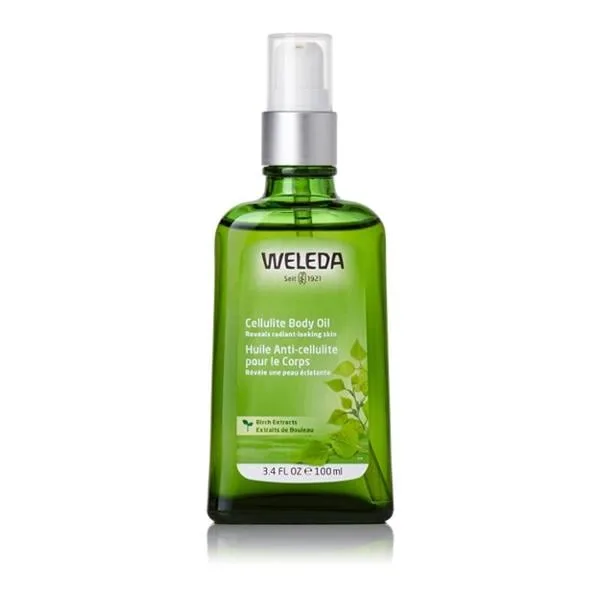
It is a light, well-balanced apricot-jojoba-wheat-germ massage oil with one of the nicest green citrus scents in natural body care and a birch-and-butcher's-broom botanical story that has kept it a bestseller for twenty years; what distinguishes it from a plain body oil is the scent, the ritual the directions build, and a claim the evidence does not support for any product.
A light, well-balanced apricot-jojoba-wheat-germ massage oil with a bright grapefruit-cypress scent that smooths and softens thighs and makes a daily rub a pleasure, carrying birch and butcher's broom extracts and a promise that no topical has been shown to keep. Eight thousand reviewers love the ritual and are split on the dimples, which is the honest result; buy it as a massage oil with a great scent, not as a cellulite treatment.
Good choicefor DrynessIn your profileYou chose · Jojoba Oil is a reference standard by mechanism for dryness; this oil carries it high in the ingredient list.Moderate evidenceStandard tolerabilityNo reviews collected yet
The case for it
Simmondsia Chinensis has trial-supported standing for this concern.
It is present at an effective concentration, declared or high in the ingredient list.
The formula carries no trigger this concern is sensitive to, with the cautions noted.
Cautions: fragrance.
Same rule for everyone. “Good choice” is the verdict on 9,564 of 45,024 concern verdicts across the catalog; rule R5 decided 9,072 of them.
As of September 25, 2026, engine 5.1.1.
Also listed for Rough Texture and Dullness — the actives here (Apricot Kernel Oil, Jojoba Oil, Essential Oils, Birch Sap) are in our research queue for those concerns; there is no verdict until their evidence rows are written. That is a gap in our table, not a mark against the product.
As a oilNot judged: what a oil is for — fatty-acid profile, seals moisture, resists going rancid — cannot yet be measured from the ingredient list (only pore and malassezia risk can).
A verdict is DermApproved’s assessment of how well a product’s ingredients fit a concern — never a claim about what the product treats. Evidence dots and collected reviews sit beside it and are never blended in.
Rules 0.5.1 · evidence table ev-2026.09-r228 · how we decide
Assessment
Pros & Cons
Pros
✓ Apricot, jojoba and wheat germ oils give a long, comfortable slip for massage
✓ Skin is softer, smoother and satin-finished for the day
✓ Bright grapefruit-cypress-rosemary scent that reviewers name as the main pleasure
✓ Alcohol-free, vegan and NATRUE-certified
✓ Turns a daily massage into a pleasant ritual with modest short-term tightening
✓ Twenty years and over eight thousand ratings at 4.4 stars
✓ Glass pump bottle protects the oils
Cons
✗ No topical product has been shown to reduce cellulite, and this is no exception
✗ Birch and butcher's broom are traditional accents with no evidence for fat or drainage
✗ Fragrance placed fourth with five declared allergens over a large leave-on area
✗ Twice-daily directions empty the bottle in four to six weeks
✗ Priced as a treatment for what is a scented massage oil
✗ Effect on skin tone stops when the massage does
Review
Full Review
Cellulite is not a skin problem, which is the first thing to know before buying anything that promises to fix it from the surface. The dimpling on thighs and buttocks comes from fibrous bands, septae, that run from the skin down through the fat and anchor it to the muscle below; as the fat lobules between them push up and the bands hold, the surface puckers. That architecture sits well below the reach of anything applied to the epidermis, and an evidence-based review of cellulite treatments in the American Journal of Clinical Dermatology found no topical cream or oil with convincing controlled evidence of lasting improvement; the treatments with any real data involve cutting the bands or heating the tissue. Weleda's Cellulite Body Oil has been a bestseller for twenty years, and none of that is its fault. It is a massage oil with a botanical story attached to a claim the whole category makes, and it deserves to be judged as the former, which is a fairer contest than the one its name enters it in.
As a massage oil it is well made. Apricot kernel oil, the first ingredient and most of the bottle, is a light, oleic-rich oil that spreads a long way with a fine slip and absorbs at a moderate pace, exactly what a five-minute vigorous massage needs; jojoba, second, lightens it and slows oxidation; wheat germ oil, third, adds vitamin E and a slightly heavier, nourishing body. Then the fragrance, fourth, ahead of the botanicals, a bright, green grapefruit-cypress-rosemary blend that is genuinely one of the most pleasant scents in natural body care and the reason many people buy the bottle twice. Birch leaf, butcher's broom root and rosemary extracts follow, at positions that make them accents rather than doses. There is no alcohol and no water, it is vegan, and it leaves skin smooth, soft and faintly satin for the rest of the day, which is what a body oil should do and what this one does well.
The botanicals carry the marketing and deserve a plain account. Birch is the anthroposophic spring plant, a traditional diuretic tea and a symbol of cleansing and drainage in the tradition Weleda comes from; butcher's broom contains ruscogenins with oral evidence for venous tone and none for anything topical; rosemary adds a mild rubefacient warmth and preserves the oil. None of them changes fat, connective tissue or lymphatic drainage when rubbed on a thigh, and the warm, pink, momentarily tighter skin after a massage is the massage. Weleda's own consumer test found that most participants agreed their skin looked smoother after four weeks, which is what a good emollient plus a daily rub produces and is not a statement about cellulite.
The review record says the same thing with eight and a half thousand voices. Across two decades and a 4.4-star Amazon average, the praise is for the scent, the ritual, softer and smoother skin, a firmer feel after massage and the pleasure of a natural product; the disappointment, stated often and fairly, is that the dimples did not go, that the bottle empties in a month at the directed twice-daily dose, and that the effect stops when the massage does. That split is exactly what the evidence predicts, and the people who keep buying it have made peace with it: they like the oil and the scent, and the ritual makes them feel good about their legs.
The cautions are the usual natural-category ones. The fragrance declares five allergens, limonene, linalool, citronellol, geraniol and citral, and with rosemary and birch extracts alongside it is spread over a lot of skin and left on; fragrance-sensitive and eczema-prone users should take an unscented oil. Birch is a consideration for anyone with a birch-pollen allergy, though topical reactions to the leaf extract are rare. In pregnancy the brand's stretch-mark oil is the intended product and vigorous abdominal massage is not.
At around twenty-four dollars for 100ml, used as directed, the bottle lasts four to six weeks, so a season of daily massage costs sixty to seventy dollars; applied to damp skin it stretches further, and used once a day it lasts twice as long. That is a fair price for a scented, certified-natural massage oil in glass and a poor one for a cellulite cure, which it is not, and Amazon, Target, Walmart and iHerb all sit close to the brand.
The recommendation is warm about the right thing. Anyone who wants a light, vegan, alcohol-free massage oil with an energising scent, and who enjoys a daily few minutes rubbing it into their legs, will find this one of the nicest bottles for the job, with softer, smoother skin as its honest reward. Anyone buying it to remove cellulite should save the money, or spend it on the ritual knowing that the dimples are structural and the oil is a pleasure.
Formula
Key Ingredients
The hero actives that drive this product's performance.
The birch that names the product, listed fifth after the three base oils and the fragrance, an extract of organic birch leaves with flavonoids and a traditional reputation for stimulating circulation and drainage; in an oil it contributes an astringent note and a story, not a measurable effect on fat or connective tissue.
The first ingredient and the bulk of the bottle, a light, oleic-rich kernel oil that spreads a long way with a fine slip and absorbs fairly quickly, chosen for the vigorous massage the directions call for; it is what actually softens and smooths the skin the birch is credited with.
Second and third, jojoba's sebum-like wax ester lightens the apricot and slows its oxidation while wheat germ oil adds vitamin E and a heavier, nourishing note; between them they give the oil a satin finish that lasts a day and the antioxidant protection a fragrance-heavy oil needs.
Established mechanismfor Dryness · established mechanism
Sixth and seventh, two extracts with vascular folklore: butcher's broom's ruscogenins have oral evidence for venous tone and none topical for cellulite, and rosemary adds a mild rubefacient warmth, an antioxidant that preserves the oil, and a small sensitiser. They are the circulation half of the marketing.
The essential-oil fragrance placed fourth, ahead of every botanical the label advertises, with five allergens declared; it gives the bright grapefruit-cypress-rosemary scent that reviewers name as the product's chief pleasure and the reason fragrance-sensitive skin should look elsewhere.
Not yet assessed
Ingredient standings describe the active at treatment-level doses and
vehicles; this product's own condition grades weigh its actual formula.
Massage a few pumps vigorously into damp thighs, hips, bottom and upper arms in circular strokes after a shower, twice a day for at least a month as the brand directs; the massage is the part that does anything. It sits over or instead of a body lotion, has no place on the face, and pairs well with a dry-brushing habit if that is already in place.
Results Timeline
Smoother, softer, faintly glowing skin within minutes, and a temporary tightened look from vigorous massage that fades within hours. Weleda's own four-week consumer test reports smoother-looking thighs; any real change in cellulite's dimpling is not something an oil can produce, and the review record's split on this point reflects that.
The claim on the bottle has been reviewed and the ingredients are best understood in light of it. An evidence-based review of cellulite published in the American Journal of Clinical Dermatology in 2015 examined the available treatments and found that topical agents, including caffeine, retinoids and botanical preparations, lacked convincing evidence of lasting benefit in controlled trials, with any improvement small and transient; the interventions with the best evidence were procedural, subcision to release the fibrous septae and energy-based devices, and even those were modest. The anatomy explains why: cellulite results from fibrous septae anchoring the dermis to deeper fascia while fat lobules herniate between them, a structure at a depth that leave-on emollients cannot reach. Within that limit, the oil's base is well designed for its actual function, massage. Apricot kernel oil is a light, oleic-rich triglyceride oil with good spreadability and moderate absorption; jojoba is a liquid wax ester that resists oxidation and mimics sebum; wheat germ oil is a dense source of tocopherols that protect the blend and contribute a heavier feel. Massage itself has small, short-lived effects on skin tone through increased local blood flow and transient oedema that can smooth surface texture for hours, which is the plausible source of the tightened look reviewers report. The botanicals are traditional rather than evidenced for this use: birch leaf extract contains flavonoids and is used orally as a diuretic in European herbal medicine; butcher's broom root contains ruscogenins with clinical evidence for venous insufficiency when taken orally and none for topical effects on subcutaneous fat; rosemary extract supplies carnosic and rosmarinic acids that preserve the oil and produce a mild rubefacient warmth. The fragrance, fourth on the label, is a natural essential-oil blend with five European-labelled allergens declared, a meaningful leave-on exposure across thighs and hips, and limonene and linalool oxidise into more allergenic hydroperoxides during the bottle's life. Birch pollen allergy rarely cross-reacts with topical birch leaf extract but is worth noting. The science supports this as a pleasant, effective emollient massage oil with transient tone effects from the massage, and does not support any effect on cellulite.
Dermatologists give a consistent answer on cellulite creams and oils: none has convincing evidence of lasting improvement, cellulite is a normal structural feature of most adult women's skin rather than a disorder, and the treatments with any data are procedural and modest. A patient asking about this oil would be told that it is a good emollient massage oil, that vigorous massage can smooth the skin's surface for a few hours, that the birch and butcher's broom are traditional rather than active, and that any decision to buy it should rest on enjoying the product rather than on expecting the dimples to change. The clinical reservations are the ones common to Weleda's body range: a fragrance with five declared allergens plus rosemary and birch extracts applied over a large area daily is a real sensitisation exposure for patients with eczema, sensitive skin or a history of contact allergy, who would be directed to an unscented oil, and birch-allergic patients would be advised to patch test. For pregnant patients the brand's own stretch-mark oil is the appropriate product and vigorous abdominal massage is discouraged. For a healthy adult who likes the scent and the ritual, there is no objection.
Guidance
Usage & Recommendations
How to Use
After a shower, while the skin is still damp, dispense two or three pumps into the palm and massage the oil vigorously into the thighs, hips, bottom and upper arms in firm circular strokes for several minutes, working towards the heart; the massage is the part that produces any visible tightening and the oil is what makes it comfortable. Weleda suggests twice daily for at least four weeks, and once a day is enough if the bottle is to last. Let it absorb for a few minutes before dressing. It is not intended for the face, and during pregnancy the brand's stretch-mark oil is the appropriate product. Anyone with fragrance sensitivity, eczema or a birch allergy should patch test on the inner arm first. Lock the pump for travel, store away from heat and sunlight, and use within a year of opening.
Value Assessment
Around twenty-four dollars for 100ml, used as Weleda directs at a few pumps twice a day over thighs, hips and bottom, lasts four to six weeks, so a season's routine costs sixty to seventy dollars; used once a day on damp skin it lasts twice as long. For a certified-natural, vegan, alcohol-free massage oil with a distinctive essential-oil scent in a glass pump bottle, the price is fair and in line with the brand's other body oils. For a cellulite treatment it is money spent on a promise the evidence does not support, and the plain apricot or jojoba oil that would give the same massage costs a fraction. Amazon, Target, Walmart and iHerb price it within a couple of dollars of the brand. The value is real for anyone who enjoys the product as a massage oil and nil for anyone who does not see the dimples change, which is most people.
Who Should Buy
People who want a light, vegan, alcohol-free, certified-natural massage oil with an energising grapefruit-cypress scent for a daily body-care ritual, enjoy softer and smoother skin as its reward, and understand that the cellulite on the label is a promise no oil can keep.
Who Should Skip
Anyone buying it to reduce cellulite, which the evidence says no topical does, anyone with sensitive, eczema-prone or fragrance-reactive skin or a birch allergy, for whom an unscented oil is the safer massage medium, and pregnant users, who should use the brand's stretch-mark oil instead.
A light, pale-yellow oil with a long slip suited to massage, absorbing over several minutes to a soft satin finish that leaves skin smooth to the touch with only a faint sheen.
Scent
A bright, green, energising blend of grapefruit, cypress and rosemary from essential oils, fresh and fairly strong on application and fading over an hour or two.
Packaging
A 100ml green glass bottle with a lockable white pump and a birch-leaf label; the pump gives a generous dose that the twice-daily massage directions run through quickly, and the glass is heavy for travel.
Finish
satinglowy
What to Expect on First Use
The first massage is invigorating: the scent is sharp and green, the oil slips for a long time, and the vigorous circular strokes the directions call for leave thighs warm, pink and temporarily tighter-looking, which most people read as the oil working. Skin is noticeably softer by the next day. Whether the dimples change is the question the second month answers, and for most it answers no.
How Long It Lasts
About four to six weeks at the twice-daily thigh-and-hip massage Weleda recommends.
Weleda's Birch Cellulite Oil dates from the mid-2000s, built on the anthroposophic tradition of birch as a spring cleansing and drainage plant, and it became one of the brand's best-selling body products in the United States on the strength of its scent and its massage ritual. It was relabelled Cellulite Body Oil in later range renovations and its formula, apricot, jojoba, wheat germ, birch, butcher's broom and rosemary, has stayed constant.
About Weleda Legacy Brand (20+ years)
Weleda has produced NATRUE-certified natural skincare since 1921 and has sold its Birch Cellulite Oil in the United States for around two decades, making it one of the brand's oldest and most-reviewed body products. The brand publishes no clinical trials; its cellulite claim rests on an in-house consumer test and on the traditional use of birch, rosemary and butcher's broom, not on controlled evidence, which for cellulite topicals is thin across the whole category.
Brand founded: 1921 · Product launched: 2004
Myth vs. Reality
Common Myths
Myth
Massaging a birch oil into the thighs reduces cellulite.
Reality
Cellulite is a structural feature of the fibrous bands that tether skin to the fat beneath it, and an evidence-based review in the American Journal of Clinical Dermatology found no topical product with convincing controlled evidence of lasting improvement. Oils smooth and hydrate the surface and massage causes a temporary plumping; the dimples themselves are unchanged.
Myth
Birch and butcher's broom in an oil improve circulation and drain the fat.
Reality
Butcher's broom has oral evidence for venous tone and birch leaf is a traditional diuretic tea; neither has evidence for changing subcutaneous fat when rubbed on skin. The warmth and pinkness after massage come from the rubbing, not the botanicals.
Myth
If it does not remove cellulite it does nothing.
Reality
It softens and smooths skin, adds a satin glow, and turns a daily massage into a pleasant ritual with a scent people genuinely enjoy; those are real benefits, and the massage itself has modest short-term effects on skin tone. It is a good massage oil sold under the wrong promise.
FAQ
Frequently Asked Questions
Does Weleda Cellulite Body Oil actually reduce cellulite?
Not in any lasting, measurable way, and no topical does; an evidence-based review of cellulite treatments found no cream or oil with convincing controlled evidence. What the oil does is soften and smooth skin, and the vigorous massage Weleda directs gives a temporary tightening. Reviewers who see smoother thighs are describing that, and many say honestly that the dimples stayed.
What is in Weleda Cellulite Body Oil?
Organic apricot kernel oil as the base, jojoba and wheat germ oils, an essential-oil fragrance with five declared allergens, then extracts of organic birch leaf, butcher's broom root and rosemary. It contains no alcohol, water or animal ingredients and is NATRUE-certified and vegan.
How do I use Weleda Cellulite Body Oil for best results?
Weleda's directions are twice daily for at least four weeks, a few pumps massaged vigorously in circular movements into damp thighs, hips, bottom and upper arms for several minutes after a shower. The massage is the active part, and the oil is what makes it comfortable and pleasant.
Is Weleda Cellulite Body Oil safe during pregnancy?
Its plant-oil base is benign and it contains no alcohol or retinoid; the considerations are the essential-oil fragrance and the birch and rosemary extracts on more reactive pregnancy skin, and the vigorous abdominal massage the brand does not recommend during pregnancy. Weleda's Stretch Mark Massage Oil is the product it makes for that purpose.
Why does the Weleda cellulite oil bottle run out so fast?
Because the directions call for a few pumps twice a day over thighs, hips and bottom, and a lockable pump gives a generous dose; at that rate 100ml lasts four to six weeks. Applying to damp skin after a shower stretches it further, since the oil spreads more easily.
What does Weleda Cellulite Body Oil smell like?
A bright, green, energising blend of grapefruit, cypress and rosemary essential oils, fresh and fairly strong for an hour or two after application. It is the feature reviewers praise most, and the feature fragrance-sensitive users should note, since five allergens are declared.
Reviews
What Reviewers Tend to Say
Recurring themes our editors read across retailer reviews of this product — summaries in our words, not quotations, and not a substitute for your own patch test.
The fourth most frequent positive patch test in North America is an oxidation product of a molecule that occurs naturally in lavender. Nobody synthesised it into your face cream.
Essential oils are declared by botanical name rather than as fragrance, which is why the most heavily perfumed products in the natural aisle can carry the reassuring word — and why the bottle gets more sensitising the longer you own it.
Glycolic gets the hype and the higher numbers. But lactic acid does something glycolic can't — and for a lot of skin, that changes the whole calculation.
Products, answers, therapy guides, tools and articles in one search. Brand names,
slang and abbreviations all work — accutane finds isotretinoin, bacne finds truncal acne.