Retinal vs Retinol: Is the 'Faster' Retinoid Actually Worth the Premium?
One is a single conversion step from prescription retinoic acid. The marketing turns that into '11x stronger.' The evidence tells a subtler — and more useful — story.
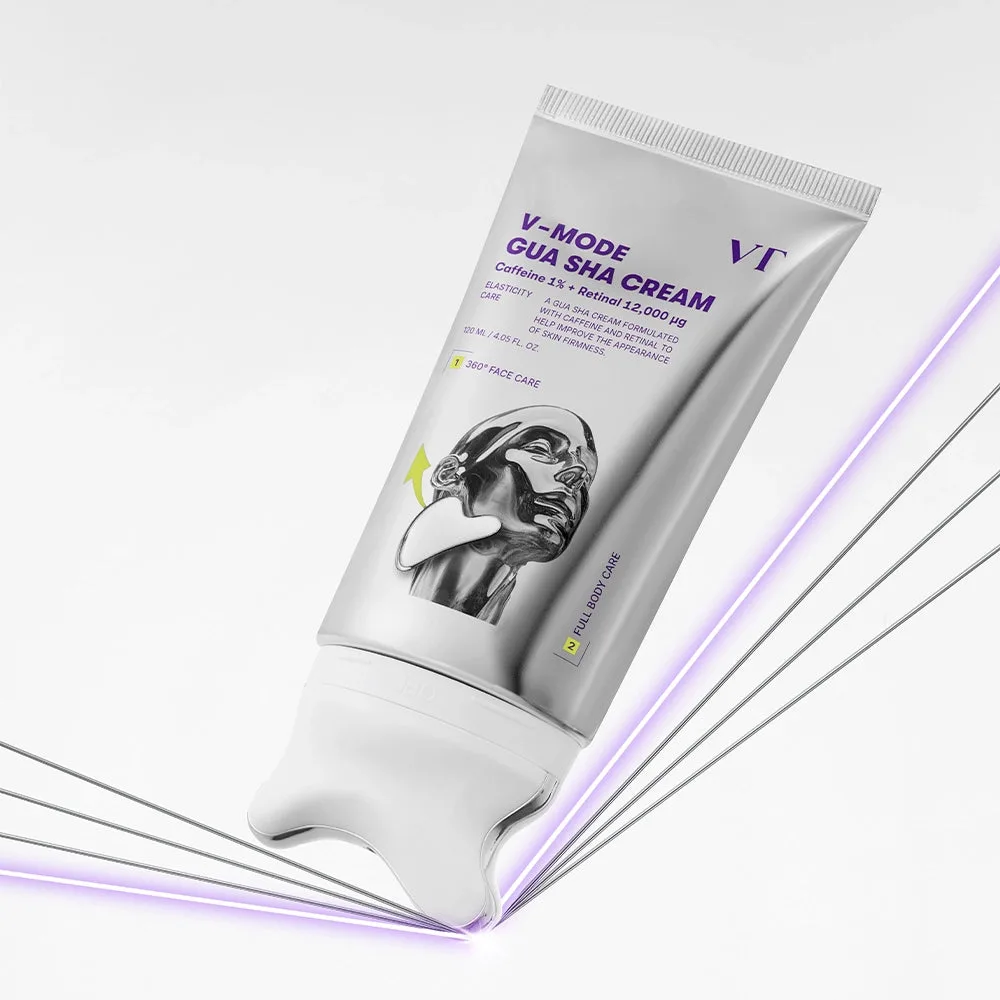
It is a massage cream with the gua sha moulded into the tube, a curved V-shaped edge at the base that draws along the jaw, neck or limbs while the shea, sunflower and cocoa base keeps its slip for the whole session, and it carries a declared one percent caffeine with escin for a genuine short-term de-puffing effect. The retinal in the name is a nominal 0.01 percent and the seven collagens, ten hyaluronic acids and nine peptides are the brand's usual furniture; the tool-and-slip combination is the actual idea.
A rich, fragrance-free massage cream with the gua sha moulded into the tube and a declared one percent caffeine that genuinely de-puffs for an hour or two, which is a coherent little product. The retinal on the front is a nominal 0.01 percent, the seven collagens, ten hyaluronic acids and nine peptides are label furniture, the lifting is the massage rather than the cream, and it is too heavy for oily faces.
Five weeks after its 10 August 2026 listing on VT's global store, no reviews of the V-Mode cream could be verified and the brand has published no testing, so this assessment rests on the disclosed seventy-six-ingredient list, the well-studied short-term behaviour of topical caffeine and the plain mechanics of a massage cream rather than on any record of use. Whether the built-in edge holds up to daily use and how the rich base suits different faces over a month are what early buyers will establish.
The case for it
What would change this: A declared concentration would move this to a firmer reading of the dose.
Same rule for everyone. “Supporting role” is the verdict on 8,197 of 45,024 concern verdicts across the catalog; rule R8 decided 4,250 of them. As of September 25, 2026, engine 5.1.1.
Brand or formulator? Disclose a concentration or correct a fact →
The case for it
What would change this: A declared concentration would move this to a firmer reading of the dose.
Same rule for everyone. “Good choice” is the verdict on 9,564 of 45,024 concern verdicts across the catalog; rule R5 decided 9,072 of them. As of September 25, 2026, engine 5.1.1.
Brand or formulator? Disclose a concentration or correct a fact →
The studies behind the evidence row
Does the jobDoes what a moisturizer is for: draws in water, softens and smooths.
A verdict is DermApproved’s assessment of how well a product’s ingredients fit a concern — never a claim about what the product treats. Evidence dots and collected reviews sit beside it and are never blended in. Rules 0.5.1 · evidence table ev-2026.09-r228 · how we decide
The tube is the product. Turn it over and the base is a broad, curved, V-shaped edge, moulded to be drawn up the jaw, along the cheekbone or over a calf, so that the cream and the gua sha arrive together and the ritual needs nothing else. It is a genuinely clever bit of packaging, and it tells you how to read everything inside: VT's V-Mode is a massage cream, and the test of a massage cream is whether it glides for long enough, feels good, leaves the skin in good shape and does something visible for the effort. On those terms it is well made. The claims printed beside the tool, caffeine one percent, retinal twelve thousand micrograms, nine peptides and seven collagens for structural support, need to be read against what a massage cream can and cannot do.
The glide is the base, and the base is honest. Sunflower seed oil is second, shea butter sixth, macadamia tenth and cocoa butter thirty-fourth, with glycereth-26, caprylic triglyceride and polyglyceryl emulsifiers building a thick, ivory, velvety cream that spreads slowly and keeps its slip for the five to ten minutes an upward massage takes before it starts to absorb. On legs, arms and the neck that weight is exactly right. On the face it is a rich night cream, soft and faintly buttery once it sinks in, and on an oily or acne-prone face it will show as shine by morning, with shea, cocoa butter and soybean oil among the ingredients most often linked to congestion. There is no fragrance, no essential oil and no alcohol, which is a relief in a category that usually smells like a spa.
The visible effect is the caffeine and the massage. Caffeine is ninth at a declared one percent, high for a leave-on, and it does what caffeine does topically: constricts small vessels and draws a little fluid out of tissue, so that a puffy morning face or a swollen ankle looks tighter for an hour or two after the cream has been worked in. Escin, the horse-chestnut saponin at thirty-third, is a rational partner with its own evidence for swelling, and the coffee, green tea and yerba mate extracts further down are more caffeine in trace amounts. Add ten minutes of upward strokes with the tube's edge, which moves lymph regardless of what cream is used, and the lifted, sculpted look on the label is real, temporary and entirely explicable. It resets overnight. That is not a failure; it is what gua sha has always been, and the cream makes the ritual pleasant and effective for its hour.
The retinal is the claim that needs the most correcting. Twelve thousand micrograms sounds substantial and is twelve milligrams, which in a 120 ml tube is roughly 0.01 percent retinaldehyde, a fifth of the brand's own 0.025 percent beginner cream and far below any concentration with evidence for collagen or texture change. It is encapsulated with phosphatidylcholine and sucrose distearate like the rest of VT's retinal range, and its practical effect is to put retinoid caution on a product that cannot deliver retinoid results: sunscreen the next morning, a pause in pregnancy and breastfeeding, and no sharing a night with a real retinoid, an acid or a spicule essence, because even a nominal retinal stacked on those is an irritation without a payoff. Niacinamide at seventh is the one ingredient with a plausible slow benefit for tone and barrier if the cream is used nightly on the face, and it is the least advertised.
Below that runs VT's furniture. Hydrolysed elastin and seven collagen forms, from hydrolysed collagen to collagen amino acids, sit as film formers and humectants that leave the tightened feel after the massage and do nothing to the elastin or collagen in the dermis; ten hyaluronic acid forms add a modest multi-weight humectant layer; nine peptides occupy the last nine positions of a seventy-six-ingredient list. The structural-support language on the tube describes the names of these ingredients rather than anything they do at trace levels, and a buyer who reads the tube as a slip cream with caffeine and ignores the rest will have the right expectations. Two things the front does not say matter more: Brazil nut oil at thirty-ninth and macadamia and soybean oils make this a product for people without tree-nut or soy allergies, and the collagens make it a product vegan buyers will pass on.
At thirty-four dollars for 120 ml on the brand's global store, a nightly face-and-neck massage gets one to two months from the tube and a full face-and-body habit closer to three weeks, which makes it reasonable for a face ritual and expensive as a body cream; separate gua sha tools and plain massage creams together cost about the same and last longer, and what the V-Mode adds is the convenience of one object and VT's twelve years of competent formulating. It launched on 10 August 2026, has an Amazon listing and, at the time of writing, no reviews anywhere that could be verified, and the brand publishes no testing on it; caffeine's short-term effect and the behaviour of a slip cream are predictable enough that neither gap changes the reading.
As a massage cream with the tool built in, it is a pleasure to use and does its temporary job well. As a firming, lifting, retinal treatment, it is a label. Buy it for the ten minutes and the hour that follows, keep it off an oily face, check the nut oils, and let the collagens and peptides stay on the tube where they belong.
The hero actives that drive this product's performance.
| Ingredient | Function | Evidence |
|---|---|---|
| Caffeine 1% (1%) | Ninth on the list at a declared one percent, the working ingredient of the de-puffing claim: caffeine constricts small vessels and mildly draws fluid from tissue, and one percent is at the upper end of what leave-on creams use, so massaged into a puffy morning face or a swollen ankle it can produce a visible, temporary tightening over an hour or two. It does not reduce fat, and the coffee, green tea and yerba mate extracts further down are more of the same in trace amounts. | Not yet assessed |
| Retinal (Retinaldehyde) 12,000 mcg (0.01%) | Thirtieth, at a declared 12,000 micrograms per 120 ml tube, which works out to roughly 0.01 percent, a fifth of the brand's own starter retinal cream and a level that in a face-and-body massage cream is nominal; encapsulated with phosphatidylcholine and sucrose distearate as in the rest of VT's retinal range, it lets the label say retinal and asks the buyer to treat sunscreen and pregnancy with retinoid caution, while contributing little that could be measured. | Not yet assessed |
| Sunflower Seed Oil, Shea Butter, Macadamia Oil and Cocoa Butter | Sunflower oil second, shea butter sixth, macadamia tenth and cocoa butter thirty-fourth, the emollient body of a rich massage cream whose real job is glide: a gua sha or hand massage needs slip that lasts several minutes without absorbing, and this lipid base provides it while leaving the skin soft rather than greasy once it finally sinks in. On the face this is a heavy cream; on legs, arms and neck it is exactly the weight a massage wants. | Established mechanism for Dryness · established mechanism |
| Escin and Hydrolyzed Elastin | Escin at thirty-third, the horse-chestnut saponin with oral and topical evidence for reducing swelling and supporting vein tone, a rational partner for caffeine in a de-puffing massage cream even at a low position; hydrolysed elastin at forty-first is a film-former that leaves a tightened feel and does nothing to the elastin in the dermis, and is here for the firming story. | Not yet assessed |
| Nine-Peptide, Seven-Collagen and Ten-Hyaluronic Complex | The last thirty positions of a seventy-six-ingredient list: seven collagen forms including soluble collagen and collagen amino acids, ten hyaluronic acid forms and nine peptides from copper tripeptide-1 to palmitoyl tetrapeptide-7, VT's house roster at trace level to underwrite the label's structural-support language; in a massage cream the collagens add a little film and humectancy and the peptides add nothing measurable. | No qualifying study for Aging |
Ingredient standings describe the active at treatment-level doses and vehicles; this product's own condition grades weigh its actual formula.
Water, Helianthus Annuus (Sunflower) Seed Oil, Glycereth-26, Caprylic/Capric Triglyceride, Butylene Glycol, Butyrospermum Parkii (Shea) Butter, Niacinamide, Polyglyceryl-6 Stearate, Caffeine, Macadamia Ternifolia Seed Oil, 1,2-Hexanediol, Hydroxyacetophenone, Propanediol, Acrylates/C10-30 Alkyl Acrylate Crosspolymer, Polyglyceryl-3 Distearate, Hydroxyethyl Acrylate/Sodium Acryloyldimethyl Taurate Copolymer, Polyglyceryl-6 Behenate, Tromethamine, Glycerin, Allantoin, Cetearyl Alcohol, Tocopheryl Acetate, Adenosine, Sodium Hyaluronate, Phosphatidylcholine, Sorbitan Isostearate, Polysorbate 60, Glyceryl Stearate Citrate, Disodium EDTA, Retinal, Sucrose Distearate, Potassium Phosphate, Escin, Theobroma Cacao (Cocoa) Seed Butter, Madecassoside, Glycine Soja (Soybean) Oil, Camellia Sinensis Seed Oil, Argania Spinosa Kernel Oil, Bertholletia Excelsa Seed Oil, Centella Asiatica Extract, Hydrolyzed Elastin, Garcinia Cambogia Fruit Extract, Coffea Arabica (Coffee) Seed Extract, Cucurbita Pepo (Pumpkin) Fruit Extract, Camellia Sinensis Leaf Extract, Inonotus Obliquus (Mushroom) Extract, Ilex Paraguariensis Leaf Extract, Hydrolyzed Collagen, Dimethylsilanol Hyaluronate, Hyaluronic Acid, Hydrolyzed Sodium Hyaluronate, Hydrolyzed Hyaluronic Acid, Potassium Hyaluronate, Collagen Extract, Hydroxypropyltrimonium Hyaluronate, Sodium Hyaluronate Crosspolymer, Sodium Hyaluronate Dimethylsilanol, Ethylhexylglycerin, Sodium Acetylated Hyaluronate, Tocopherol, Zinc Hydrolyzed Collagen, Sodium Soy Hydrolyzed Collagen, Soluble Collagen, Collagen, Collagen Amino Acids, Copper Tripeptide-1, Acetyl Octapeptide-3, Acetyl Hexapeptide-8, Tripeptide-1, Tripeptide-2, Tripeptide-3, Palmitoyl Tripeptide-1, Palmitoyl Pentapeptide-4, Palmitoyl Tetrapeptide-7
moisturizer
PM
Evening, as the last leave-on step on the face or on its own on the body: a generous amount spread over the jaw, cheeks and neck or over legs and arms, then worked upward and outward with the tube's shaped edge or a gua sha tool for five to ten minutes while the cream still has slip, and left on. On the face it replaces the night moisturiser rather than layering over one, and it should not share a night with a retinoid, acid or spicule essence because of its own nominal retinal. Oily and acne-prone faces should keep it to the neck and body, and Brazil nut allergy is a reason to skip it.
A visibly less puffy, slightly tighter-looking face or limb for an hour or two after a massage, which is the one percent caffeine and the massage itself moving fluid; softer, more hydrated skin from the shea, sunflower and cocoa base from the first use. Nothing structural changes over weeks, since the retinal is at a fifth of a starter-cream level and the collagens and peptides are trace, so the lifting and sculpting on the label is the temporary effect of lymphatic massage with a good slip cream, and it resets every day.
The two things this cream can be expected to do have reasonable evidence, and the two things its label leads with do not. Topical caffeine is well studied as a molecule: it penetrates the stratum corneum readily, which is why it is used as a reference compound in skin-penetration research, and a 2023 study in the International Journal of Pharmaceutics measured caffeine delivery from commercial eye creams and from formulations optimised on solubility parameters, confirming that the amount reaching the skin depends heavily on the vehicle and that well-designed emollient creams deliver it effectively. Once in the tissue, caffeine constricts small blood vessels and has a mild diuretic-like effect on interstitial fluid, which produces the temporary reduction in puffiness seen in eye creams and, at one percent in a massage cream, a visible but short-lived tightening of a swollen face or limb; there is no evidence that it reduces subcutaneous fat or changes contour beyond the hours the effect lasts. Escin, the saponin from horse chestnut, has trial evidence in oral and topical forms for reducing oedema and supporting venous tone, and it is a sensible companion to caffeine even at the low position it holds here. Massage itself is the other proven element: manual lymphatic drainage and upward stroking move interstitial fluid and produce the immediate de-puffed, lifted look that gua sha users report, independent of what is on the skin, so the cream's role is to provide safe, lasting slip, which its sunflower, shea and cocoa base does. The retinal claim fails on dose. Retinaldehyde has strong clinical support at 0.05 percent, where a 1998 study in the Journal of the American Academy of Dermatology found it comparable to retinoic acid for wrinkle depth and roughness, and it retains activity at 0.025 percent; twelve milligrams in a 120 ml tube is roughly 0.01 percent, below any level that has been shown to remodel skin, and no study has tested retinaldehyde as a massage-cream ingredient. Collagen and hydrolysed elastin do not penetrate the stratum corneum and act as surface films, hyaluronic acid forms are humectants whose combined contribution at trace positions is small, and the nine peptides have no evidence in this format. Two safety points follow from the list rather than the label: even nominal retinal warrants sun protection and avoidance in pregnancy, and Brazil nut, macadamia and soybean oils are relevant for people with tree-nut or soy allergy. Nothing has been published on this formulation.
Gua sha and facial massage sit in clinical conversation as harmless, pleasant practices with a temporary effect on puffiness and no effect on skin structure, and a cream that supplies safe slip and a working dose of caffeine is a reasonable accessory to them; the cautions raised in practice concern the technique more than the product, since aggressive scraping can bruise, provoke rosacea flushing or spread active acne, and anyone with rosacea, inflammatory acne, a recent procedure or fragile capillaries would be advised to massage gently or not at all. On the formula, a dermatologist would note that a retinal content of roughly 0.01 percent is too low to expect any retinoid benefit but still puts the product in the category to avoid during pregnancy and breastfeeding and to pair with daily sunscreen, that the collagen, elastin and peptide content has no bearing on the dermis, and that the rich butter base is a congestion risk on acne-prone faces and better suited to the neck and body. The nut and soy oils are relevant for allergic patients. Patients asking about firming sagging skin would be pointed to retinoids at working strength, sun protection and, where wanted, in-office energy-based treatments rather than to a massage cream.
In the evening, after cleansing and any serum, squeeze a generous amount of cream onto the jaw, cheeks and neck, or onto the legs, arms or any area to be worked, and spread it so the skin is well coated. Hold the tube by the cap end and draw its curved V-shaped base upward and outward along the jawline, up the cheekbones, down the sides of the neck and, on the body, from the ankle toward the knee, using light to moderate pressure for five to ten minutes while the cream keeps its glide; a separate gua sha tool works the same way. Leave the cream on as the final step. Use it on the face on nights without a retinoid, acid or spicule essence, wear sunscreen the next morning, keep it to the neck and body on oily or acne-prone faces, and wash the tube's edge after each use.
Thirty-four dollars on the brand's global store for 120 ml puts the V-Mode in line with mid-range Korean face creams and above most body massage creams, and how the money works out depends on use: a nightly face-and-neck ritual gets one to two months from the tube, a face-and-body habit closer to three weeks. The built-in gua sha edge is the real value, replacing a separate tool for people who want one object, and the formula underneath is a well-made, fragrance-free slip cream with a working dose of caffeine and VT's decade of competent formulating behind it. The retinal, collagens, hyaluronic acids and peptides that fill the label and presumably the price add nothing a user could measure, and a plain caffeine body cream plus a stone gua sha would deliver the same hour of de-puffing for less over time. Fair value as a face ritual, poor value as a body cream, and no value as a firming treatment.
People with normal or dry skin who enjoy a nightly facial or body massage and want the tool and the cream in one fragrance-free tube, with a real caffeine dose for the temporary de-puffing the ritual gives. It suits gua sha regulars, anyone who wakes puffy, and body-massage users who value a slip that lasts and skin left soft afterwards.
The retinal, nominal as it is, rules it out in pregnancy, breastfeeding and while trying to conceive. Oily and acne-prone faces, rosacea-prone or fragile-capillary skin that scraping can flush or bruise, and people with tree-nut or soy allergies. Vegan buyers, given the seven collagens, and anyone expecting the retinal, collagens or peptides to firm or lift skin beyond the hour the massage lasts.
Ready to try VT Cosmetics V-Mode Gua Sha Cream?
Buy at Amazon ♥A thick, ivory, velvety cream that spreads with a slow, cushioned glide and keeps its slip for several minutes of massage before it begins to absorb, finishing soft and faintly buttery on the body and noticeably rich on the face.
Unfragranced, with a mild natural butteriness from the shea and cocoa that fades as it absorbs.
A flat, silver-grey 120 ml tube with a broad, curved, V-shaped edge moulded into the base that serves as the gua sha applicator, printed V-Mode Gua Sha Cream, Caffeine 1% + Retinal 12,000 mcg and a line drawing of a face being contoured, with purple accents and the VT logo; the tube is squeezed from the cap end and the curved base is drawn along the jaw or limb.
The first evening is a small ritual rather than a skincare step: a generous squeeze, five to ten minutes of drawing the tube's curved edge upward along the jaw, cheekbones and neck or up the calves, a slip that lasts the whole time, and afterwards a face or limb that looks slightly less puffy and feels very soft and a little tight from the film formers. By morning the de-puffing has reset and the skin is simply well moisturised; on an oily face the richness shows as shine by then. Nothing progresses over the following weeks beyond the daily reset.
About one to two months with a nightly face-and-neck massage; three weeks or so if used on legs and arms as well.
All Year
Gua sha moved from traditional Chinese practice into mainstream Western and Korean skincare in the late 2010s, and the tools have mostly been sold separately from the creams that make them glide; VT's V-Mode, launched on its global store in August 2026, folds the tool into the tube and markets the pairing for face and body sculpting with caffeine and a token retinal. It borrows the ten-hyaluronic, seven-collagen, nine-peptide roster from the brand's serums and creams, and it is one of a handful of VT products in 2026 to declare its caffeine percentage on the front.
Founded in Seoul in 2014 and known worldwide for its Reedle Shot spicule essences, VT Cosmetics sells in USD through its own global store and Amazon and discloses full ingredient lists; this caffeine-and-retinal massage cream with a built-in gua sha applicator reached the global store on 10 August 2026 as one of the brand's newest launches, with no published testing and, so far, no verifiable reviews.
The retinal in the V-Mode cream firms and lifts the skin over time.
Twelve thousand micrograms in a 120 ml tube is about 0.01 percent retinaldehyde, a fifth of the brand's own beginner cream and far below any level with evidence for collagen or texture change; it is enough to warrant retinoid caution about sun and pregnancy and not enough to firm anything. The lifted look is the massage moving fluid and the film formers tightening as they dry, and it resets by morning.
Seven types of collagen and nine peptides rebuild skin structure from a massage cream.
Collagen is too large to enter skin and sits here as surface film and humectant; the nine peptides occupy the last nine positions of a seventy-six-ingredient list at trace levels with no evidence in a massage cream. The structural-support language on the label describes the ingredients' names, not anything they do at these amounts.
Squeeze a generous amount onto the jaw, cheeks and neck or onto legs and arms, then draw the curved V-shaped edge of the tube, or a separate gua sha tool, upward and outward for five to ten minutes while the cream keeps its slip, and leave it on. Evening use suits the face best because the cream is rich; on the body it works at any time.
Temporarily; the one percent caffeine and escin, and above all the upward massage, move fluid and leave the face looking less puffy and a little tighter for an hour or two, and the film formers add a tightened feel. Nothing structural changes, the retinal is nominal, and the effect resets by the next morning.
The tube declares 12,000 micrograms in 120 ml, which is roughly 0.01 percent retinaldehyde, a fifth of VT's own 0.025 starter cream and far below any level with evidence for firming. It is enough to warrant daily sunscreen and avoidance in pregnancy, and not enough to expect retinoid results.
Better kept to the neck and body; the shea, sunflower, cocoa butter and soybean oil base is rich enough to leave an oily face shiny by morning and includes ingredients often linked to congestion. On limbs and the neck the weight is an advantage for massage.
It contains retinaldehyde, even at a nominal level, and the usual advice is to avoid all topical retinoids while pregnant, trying to conceive or breastfeeding; a plain caffeine or plant-oil massage cream gives the same slip and de-puffing without the question.
Yes to both; Brazil nut seed oil sits at thirty-ninth, macadamia at tenth and soybean at thirty-sixth, so tree-nut and soy allergies matter, and seven collagen forms including soluble collagen make it unsuitable for vegan buyers. None of this is flagged on the front of the tube.
Recurring themes our editors read across retailer reviews of this product — summaries in our words, not quotations, and not a substitute for your own patch test.
Long-lasting slip for a face or body massage
Temporary de-puffing from the caffeine
Shaped tube edge doubles as a gua sha
Fragrance-free rich cream
No reviews yet, five weeks after launch
Retinal at a nominal 0.01 percent
Too heavy for oily faces
Collagen and peptide tail is decoration