

'Climate-Adaptive' Skincare: Real Material Science, or a Weather App on the Label?
2026's buzziest formulation claim promises creams that read the room and adjust. There's a sliver of genuine science under the slogan — and a lot of slogan.
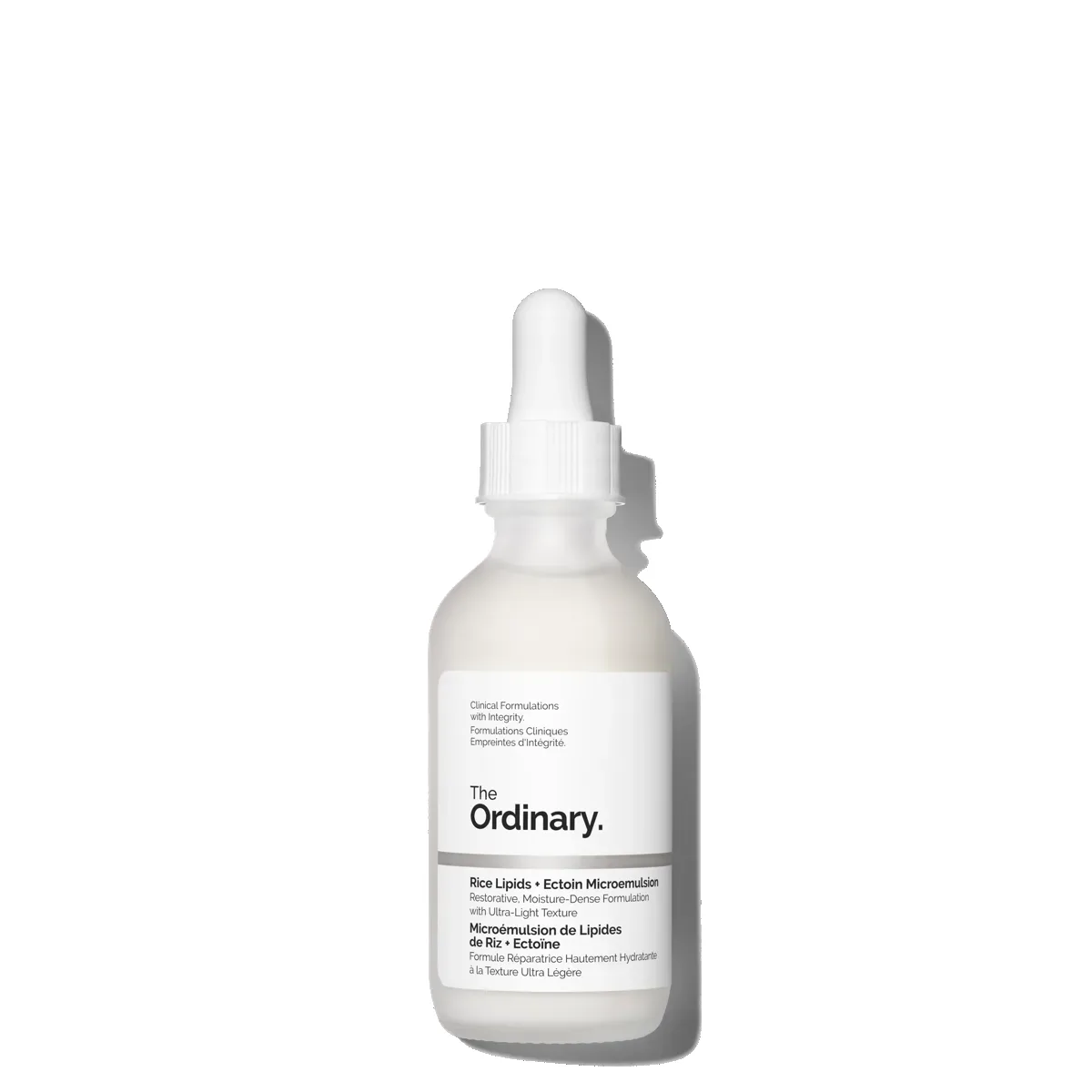
Ectoin is one of the most well-documented osmoprotectant skincare actives — published clinical literature supports its anti-inflammatory, barrier-supporting, and anti-pollution effects at concentrations of 0.5-3%. Most products that include ectoin do so at 0.5-1% as a marketing inclusion at premium prices. The Ordinary's 2% concentration at $13 is exceptional — meaningful clinical-grade ectoin chemistry at drugstore pricing. The combination with rice-lipid ceramide chemistry and the multi-amino-acid NMF complex is genuinely depth-rich for the price.
The Ordinary's January 2026 launch — 2% ectoin (a documented osmoprotectant active rarely at this concentration at accessible pricing) plus rice-derived ceramide chemistry plus a 9-amino-acid NMF complex, all in an ultra-lightweight microemulsion at $13 for 60ml. Among the strongest sensitive-skin moisturizer values in the global market.
The Rice Lipids + Ectoin Microemulsion launched January 23, 2026 — limited cumulative review data at this stage (approximately 500 cumulative reviews across English-language platforms in the first few months). The score draws on the well-documented chemistry of each component (extensive published literature on ectoin, rice lipids, NMF amino acid complex) and The Ordinary's broader brand reformulation track record. Expect this assessment to gain confidence as long-term review data accumulates.
The case for it
What would change this: A researched evidence row for the lead active would replace this with a verdict.
Same rule for everyone. “Good choice” is the verdict on 1,938 of 45,024 concern verdicts across the catalog; rule F2 decided 1,938 of them. Unchanged since September 5, 2026, engine 5.1.1.
Brand or formulator? Disclose a concentration or correct a fact →
The case for it
What would change this: A researched evidence row for the lead active would replace this with a verdict.
Same rule for everyone. “Supporting role” is the verdict on 8,197 of 45,024 concern verdicts across the catalog; rule R8 decided 4,250 of them. Unchanged since September 5, 2026, engine 5.1.1.
Brand or formulator? Disclose a concentration or correct a fact →
The case for it
What would change this: A researched evidence row for the lead active would replace this with a verdict.
Same rule for everyone. “Supporting role” is the verdict on 8,197 of 45,024 concern verdicts across the catalog; rule R8 decided 4,250 of them. Unchanged since September 5, 2026, engine 5.1.1.
Brand or formulator? Disclose a concentration or correct a fact →
The case for it
Same rule for everyone. “Good choice” is the verdict on 9,564 of 45,024 concern verdicts across the catalog; rule R5 decided 9,072 of them. Unchanged since September 5, 2026, engine 5.1.1.
Brand or formulator? Disclose a concentration or correct a fact →
The studies behind the evidence row
The case for it
What would change this: A researched evidence row for the lead active would replace this with a verdict.
Same rule for everyone. “Supporting role” is the verdict on 8,197 of 45,024 concern verdicts across the catalog; rule R8 decided 4,250 of them. Unchanged since September 5, 2026, engine 5.1.1.
Brand or formulator? Disclose a concentration or correct a fact →
Falls shortJudged as a moisturizer, it comes up short on: seals moisture in, supplies barrier lipids.
A verdict is DermApproved’s assessment of how well a product’s ingredients fit a concern — never a claim about what the product treats. Evidence dots and collected reviews sit beside it and are never blended in. Rules 0.5.1 · evidence table ev-2026.09-r228 · how we decide
Drop the ingredient list of a thirteen-dollar moisturizer next to that of a prestige serum and you would normally expect the cheaper one to read thin. This one does the opposite, and the headline reason is ectoin at two percent, a concentration usually reserved for premium skincare priced three to five times higher, packed here into an ultra-lightweight microemulsion that costs about as much as a sandwich. The Ordinary built its reputation on stripping marketing markup out of clinically meaningful chemistry, and after years of single-active simplicity the brand has been moving toward more complex multi-active formulas. This January 2026 launch is among the densest moisturizers it has ever produced, and the value is the kind that makes you double-check the price tag.
Ectoin deserves the marquee position it gets here, because unlike a lot of hyped actives it is genuinely well studied. It is a cyclic amino acid first identified in halophilic bacteria, the extremophile microorganisms that survive in brutally high-salinity environments, where it functions as an osmoprotectant, accumulating inside cells to stabilize proteins against osmotic stress without disrupting normal metabolism. The published literature on topical ectoin documents anti-inflammatory effects through stabilization of membrane proteins, barrier support through organization of the stratum corneum lipid bilayer, and anti-pollution effects through prevention of pollution-driven oxidative damage. The clinically relevant range sits roughly between half a percent and three percent, and most products that include ectoin do so at the lower end as more of a label flourish than a working dose. At two percent, The Ordinary is squarely in the meaningful range, which is exactly the kind of quietly substantive decision that earns the brand its following.
The second pillar is rice lipid chemistry. Oryza sativa lipids sit second in the INCI, the lipid fraction drawn from rice bran that contains phytoceramides, phytosterols, omega fatty acids, and tocotrienols, a composition that mimics the natural lipid matrix of the stratum corneum and provides a botanical route to barrier support alongside the ectoin. Jojoba seed oil rides high in the list as an additional barrier-mimetic emollient, and together these lipids are what let the microemulsion function as a genuine leave-on moisturizer despite its featherlight texture. The third pillar is a comprehensive natural moisturizing factor complex, nine amino acids and PCA stacked together to recreate the small-molecule humectant system the skin makes for itself through filaggrin breakdown. Topical NMF-mimicking formulas are credible humectant strategies, especially for skin with reduced endogenous NMF, and assembling nine amino acids plus PCA is unusually thorough for a moisturizer at this price point.
The supporting cast extends the same rigor. Five sugar and sugar-alcohol humectants, xylitol, fructose, glucose, maltose, and trehalose, stack for diverse water-binding across molecular weights, with trehalose in particular carrying documented anti-inflammatory and barrier-supporting properties beyond simple humectancy. Glycerin, betaine, and pentylene glycol add further humectant chemistry, while allantoin and urea contribute skin conditioning. Hydrogenated lecithin supplies the phospholipid emulsification that creates the microemulsion itself, and the smaller droplet size of a microemulsion is part of why the texture ends up so light and why active penetration improves.
In use, the experience is satisfyingly understated. The milky microemulsion flows easily and absorbs in thirty to sixty seconds with no film and no scent bloom, since it is genuinely fragrance-free. Skin feels calmer and more comfortable almost immediately, with the ectoin's soothing contribution documented at this concentration, and for reactive or rosacea-prone skin the cumulative comfort improvements build over roughly four to six weeks of consistent use. It is the rare moisturizer that does meaningful work while making almost no sensory fuss.
A few caveats are mild and predictable. The jojoba oil means it is not fungal-acne safe, so anyone managing malassezia-driven breakouts should look elsewhere. The lightweight texture is a strength for most skin but may not be enough on its own for very dry skin in harsh winter conditions, where layering an occlusive on top would help. The sixty-milliliter bottle is small for users who apply generously or buy multiples, though a larger 120ml size at $22.50 exists for the budget-minded. And as a January 2026 launch, the cumulative real-world review data is still thin, which is why the data confidence here is medium rather than high; the scoring leans on the strength of the formulation chemistry and the documented evidence behind ectoin rather than years of user feedback. Early distribution was also Sephora-exclusive, which limited availability outside that channel at launch, so depending on where you shop you may find it easier to track down some months on as it rolls out more widely. As with any very new product, the prudent move is to patch test first if your skin is reactive, since the long tail of user experience that surfaces rare sensitivities simply has not accumulated yet.
None of that undercuts what this is. At thirteen dollars for sixty milliliters, with clinical-grade ectoin, rice-derived ceramide chemistry, a nine-amino-acid NMF complex, and a multi-sugar humectant stack, it stands among the strongest sensitive-skin moisturizer values on the global market right now. For sensitive, dry, normal, or combination skin that wants serious barrier-supporting chemistry without paying a prestige premium or wearing a heavy cream, this is an easy, enthusiastic recommendation. Very dry winter skin should treat it as a hydrating layer under something richer, and fungal-acne sufferers should pass, but for nearly everyone else this is The Ordinary doing exactly what it does best, only with more depth than usual.
The hero actives that drive this product's performance.
| Ingredient | Function | Evidence |
|---|---|---|
| Ectoin (2% — Osmoprotectant) (2%) | The formula's headline active — a microorganism-derived cyclic amino acid that functions as an osmoprotectant, stabilizing the skin's water-retention chemistry and supporting barrier integrity under environmental stress. Documented anti-inflammatory and anti-irritation effects through stabilization of skin membrane proteins. | Not yet assessed |
| Oryza Sativa (Rice) Lipids | Sits second in the INCI as the primary emollient — rice-derived lipid fraction containing ceramides, sterols, and fatty acids that mimic stratum corneum natural lipid composition. The rice ceramide chemistry is the formula's barrier-supporting anchor alongside the ectoin. | Not yet assessed |
| Natural Moisturizing Factor Amino Acid Complex (Serine + Alanine + Glycine + Glutamic Acid + Lysine + Threonine + Arginine + Proline + PCA) | Nine amino acids and PCA stacked together to mimic the skin's natural moisturizing factor (NMF) — the small-molecule humectants that occur naturally in healthy stratum corneum. The deep NMF-mimicking approach is more thorough than typical drugstore moisturizers and reflects The Ordinary's broader formulation rigor at accessible pricing. | Not yet assessed |
| Multi-Sugar Humectant Stack (Xylitol + Fructose + Glucose + Maltose + Trehalose) | Five sugar and sugar-alcohol humectants stacked together — the multi-sugar approach mimics the natural skin humectant chemistry and provides comprehensive water-binding alongside the glycerin and amino acid chassis. | Not yet assessed |
| Hydrogenated Lecithin + Jojoba Seed Oil | Phospholipid emulsifier (hydrogenated lecithin) plus barrier-mimetic emollient (jojoba oil) provide the lightweight microemulsion texture and the barrier-supporting lipid contribution. The microemulsion delivery format is designed for improved active penetration vs. standard emulsion alternatives. | Established mechanism for Dryness · established mechanism |
Ingredient standings describe the active at treatment-level doses and vehicles; this product's own condition grades weigh its actual formula.
Water, Oryza Sativa (Rice) Lipids, Simmondsia Chinensis (Jojoba) Seed Oil, Ectoin, Hydrogenated Lecithin, Propanediol, Glycerin, Rhus Succedanea Fruit Wax, Glyceryl Glucoside, Sodium Hyaluronate, Allantoin, Urea, Serine, Alanine, Glycine, Glutamic Acid, Lysine HCl, Threonine, Arginine, Proline, PCA, Sodium PCA, Xylitylglucoside, Anhydroxylitol, Xylitol, Fructose, Glucose, Maltose, Trehalose, Betaine, Pentylene Glycol, Polyglyceryl-10 Laurate, Hydroxyacetophenone, Tocopherol, Sodium Chloride, Sodium Lactate, Sodium Citrate, Citric Acid, Sodium Hydroxide, Isoceteth-20, Trisodium Ethylenediamine Disuccinate, 1,2-Hexanediol, Ethylhexylglycerin, Phenoxyethanol, Chlorphenesin
moisturizer
AM & PM
Apply after serums and before SPF (in the morning) or as the final step in evening routines. The ultra-lightweight microemulsion texture absorbs cleanly in 30-60 seconds without leaving a film. For very dry skin, layer with a richer occlusive moisturizer (CeraVe Moisturizing Cream, Vaseline) on top.
Immediate hydration and skin-soothing benefits — the ectoin contribution to anti-inflammatory and barrier-supporting effects is documented at this concentration. Cumulative skin-comfort improvements build over 4-6 weeks of consistent use.
Ectoin (2-methyl-1,4,5,6-tetrahydropyrimidine-4-carboxylic acid) is one of the better-studied osmoprotectant ingredients in topical skincare. The molecule was first identified in halophilic bacteria in the 1980s, where it functions as a compatible solute — accumulating in cellular cytoplasm to stabilize protein structures against osmotic stress without interfering with cellular metabolism. The published clinical literature on topical ectoin documents multiple mechanisms: anti-inflammatory pathway modulation through preservation of cellular membrane proteins under stress, barrier-supporting effects through stabilization of stratum corneum lipid bilayer organization, anti-pollution effects through prevention of pollution-induced oxidative damage, and modest UV-related protective effects when paired with sunscreen.
The Ordinary's 2% concentration is in the documented clinical effective range. Lower concentrations (0.5-1%) are common in prestige skincare formulations where ectoin functions more as a marketing ingredient than as a clinical active; concentrations of 2-3% reach the documented threshold for meaningful clinical effects. The 2% inclusion at $13 is unusually accessible for this active concentration.
Rice lipids (Oryza sativa) refer to the lipid fraction extracted from rice bran. The composition includes phytoceramides, phytosterols, omega-fatty acids, and tocotrienols. The published cosmetic literature on rice lipids supports barrier-mimetic effects through composition similar to stratum corneum natural lipid matrix. The contribution complements the ectoin osmoprotectant chemistry by providing structural lipid support alongside the active-driven stabilization.
The nine-amino-acid complex mimics natural moisturizing factor (NMF) chemistry. NMF is composed of free amino acids, lactate, urea, sodium PCA, and other small-molecule humectants generated by filaggrin breakdown during keratinization. The Ordinary's formula includes the major amino acid species plus PCA, sodium PCA, urea, lactate — essentially a complete NMF-mimicking chassis. The published research treats topical NMF-mimetic formulations as credible humectant strategies, particularly for skin with reduced endogenous NMF.
Hydrogenated lecithin provides the phospholipid emulsification that produces the microemulsion format. Microemulsions have smaller droplet size than standard emulsions (typically <100nm versus >1µm), which is documented to improve active penetration and produce the ultra-lightweight texture characteristic of microemulsion moisturizers.
The multi-sugar humectant stack (xylitol + fructose + glucose + maltose + trehalose) provides additional water-binding through diverse molecular weights and hydroxyl group densities. Trehalose specifically has documented anti-inflammatory and barrier-supporting effects beyond pure humectant action.
Dermatologists familiar with ectoin's clinical literature generally appreciate the formulation rigor in The Ordinary's January 2026 launch — 2% ectoin is in the documented effective range and the supporting cast (rice lipids, NMF amino acid complex, multi-sugar humectants) is genuinely thorough. For patients with sensitive skin, rosacea, atopic-dermatitis-prone barriers, or chronic environmental-stress concerns (pollution exposure, climate-stressed skin), this is a credible recommendation that doesn't require prestige-pricing investment. The standard caveats are the jojoba oil for fungal-acne-managed patients and the lightweight texture being potentially insufficient as a standalone moisturizer for very dry winter skin. The fragrance-free, alcohol-free formulation makes this one of the safer broad-applicability sensitive-skin moisturizer recommendations available at the price tier.
Apply after cleansing and serums, before SPF in the morning or as the final step in evening routines. Dispense a pea-sized to dime-sized portion onto clean palms and spread evenly across face and neck. The ultra-lightweight microemulsion absorbs in 30-60 seconds without leaving a film. For very dry skin, layer with a richer occlusive moisturizer on top; for combination-to-oily skin, can function as the sole moisturizer. Suitable for both morning and evening use; safe for daily indefinite use.
At $13 for 60ml ($22.50 for 120ml) through The Ordinary's direct distribution and Sephora, this is among the strongest sensitive-skin moisturizer values in the global market. Comparable ectoin moisturizers from prestige brands run $30-60 for similar size — The Ordinary's brand model strips out marketing markup and prestige distribution costs to deliver clinical-grade active chemistry at radically lower prices. The 60ml bottle stretches 2-3 months at twice-daily use, putting the per-month cost at $5-7. For users wanting the ectoin + rice lipids + NMF chemistry combination, no competing product in the global market matches this value proposition.
Sensitive, dry, normal, or combination skin users wanting clinical-grade ectoin chemistry plus barrier-supporting rice ceramide chemistry plus comprehensive NMF amino acid complex at accessible pricing. Best for users with rosacea-flared or chronic-irritation-prone skin and those committed to consistent twice-daily use over 4-6 weeks.
Users actively managing fungal acne (the jojoba oil isn't safe), users with very dry winter skin who need richer occlusive moisturizers as standalone (use this layered under a richer cream), and users who specifically want simpler hydration without active chemistry (The Ordinary's NMF + HA is the simpler basic alternative).
Ready to try The Ordinary Rice-Lipids + Ectoin Microemulsion?
Buy at Amazon ♥Ultra-lightweight milky microemulsion that flows easily and absorbs in 30-60 seconds — visibly different from typical emulsion moisturizers.
Genuinely fragrance-free.
Clear plastic pump bottle with The Ordinary's signature minimalist white label — the brand's standard packaging language.
First-use impression is the unusually lightweight, almost watery texture for a moisturizer with this much ingredient density. The microemulsion absorbs cleanly without leaving a film or sticky residue. Skin feels noticeably calmer and more comfortable immediately, with the ectoin's osmoprotectant chemistry beginning to take effect within the first 24 hours of consistent use.
Roughly 2-3 months applied morning and night face application for the 60ml bottle; 4-5 months for the 120ml.
All Year
The Ordinary launched the Rice Lipids + Ectoin Microemulsion on January 23, 2026 as the brand's first major moisturizer launch in the sensitive-skin space. The product represents Deciem's continued evolution toward more complex multi-active formulations (vs. the brand's original single-active simplicity) while maintaining the accessible pricing that defines The Ordinary's brand identity. Initial launch demand was strong, with Sephora exclusive launch driving early visibility.
The Ordinary is Deciem's flagship brand, launched in 2013 around the proposition that single-active skincare formulations could be delivered at radically lower prices than the prestige market by skipping marketing markup. The Rice Lipids + Ectoin Microemulsion is the brand's January 2026 launch — a sensitive-skin-focused ultra-lightweight moisturizer that pairs rice-derived ceramide chemistry with 2% ectoin (a documented osmoprotectant active) at the brand's signature accessible pricing.
Ectoin is just an obscure microbial ingredient with limited evidence.
Ectoin has extensive published clinical literature dating back to the 1980s when it was first characterized in extreme-environment microorganisms (halophilic bacteria). The documented effects on barrier protection, anti-inflammatory pathway modulation, and anti-pollution chemistry are well-established. The Ordinary's 2% concentration is in the documented effective range — meaningfully more than typical 'ectoin marketing' inclusions at 0.5-1%.
Rice lipids and rice-derived ingredients are basically the same as rice extract — marketing differentiation only.
Rice lipids specifically refer to the lipid fraction extracted from rice bran — containing ceramides, phytosterols, fatty acids, and tocotrienols at concentrations meaningfully higher than whole rice extract delivers. The Ordinary's rice lipids sit second in the INCI at significant concentration, providing real ceramide-mimetic chemistry rather than marketing language.
Ectoin is a cyclic amino acid produced by extreme-environment microorganisms (originally identified in halophilic bacteria) that functions as an osmoprotectant — protecting cellular structures from osmotic stress and environmental damage. Topical ectoin has documented anti-inflammatory, barrier-supporting, and anti-pollution effects at concentrations of 0.5-3%. The Ordinary's 2% concentration is in the documented effective range.
NMF + HA is The Ordinary's classic basic moisturizer — focused on humectant NMF chemistry plus hyaluronic acid in a cream chassis. Rice Lipids + Ectoin Microemulsion adds the 2% ectoin osmoprotectant active, rice-derived ceramide chemistry, and a more extensive amino acid NMF complex — all in an ultra-lightweight microemulsion texture rather than a cream. The new product is the more sophisticated sensitive-skin option; NMF + HA remains the better basic hydration value.
Yes — the formula contains no retinoids, salicylates, or pregnancy-restricted ingredients. Ectoin, rice lipids, amino acids, jojoba oil, and the supporting cast are all considered pregnancy-safe at cosmetic concentrations. The fragrance-free formulation is a plus for pregnancy-sensitive skin.
For sensitive skin and normal-to-combination users, the microemulsion can function as a standalone moisturizer — the ingredient density supports comprehensive hydration despite the lightweight texture. For very dry skin or winter use, layering with a richer occlusive moisturizer (CeraVe Moisturizing Cream, Vaseline) provides additional moisture-sealing. The lightweight format makes it well-suited to layering with other products.
The jojoba oil component is on the Malassezia-feeding list, making this not fungal-acne-safe. For users actively managing fungal acne, The Ordinary's Natural Moisturizing Factors + HA may be the safer choice. The rice lipids themselves are generally fungal-acne-neutral; jojoba is the specific concern.
The Ordinary's brand model is built on radically lower pricing through accessible distribution, minimalist packaging, and direct-to-consumer focus. Most ectoin moisturizers from prestige brands ($30-60+) reflect marketing markup and prestige distribution costs rather than meaningfully different ectoin chemistry. The Ordinary's 2% ectoin concentration is in the same effective range as more expensive alternatives.
Recurring themes our editors read across retailer reviews of this product — summaries in our words, not quotations, and not a substitute for your own patch test.
2% ectoin at $13 is exceptional value
Ultra-lightweight microemulsion absorbs cleanly
Genuinely calming for reactive and rosacea-prone skin
Multi-amino-acid NMF complex is unusually thorough at this price
Pairs cleanly with The Ordinary's broader routine
Jojoba oil isn't fungal-acne-safe
Lightweight texture may be insufficient as standalone moisturizer for very dry skin
60ml is small for the price-conscious users buying multiple bottles
Limited initial availability due to launch demand
Verified answers from our questions library — the nuance a product page cannot carry.