Hyaluronic Acid Gets the Ad Budget. Glycerin Does the Work.
The cheapest humectant on the ingredient list is also the best-studied, the most reliable in dry air, and the one your favorite moisturizer is quietly built around.
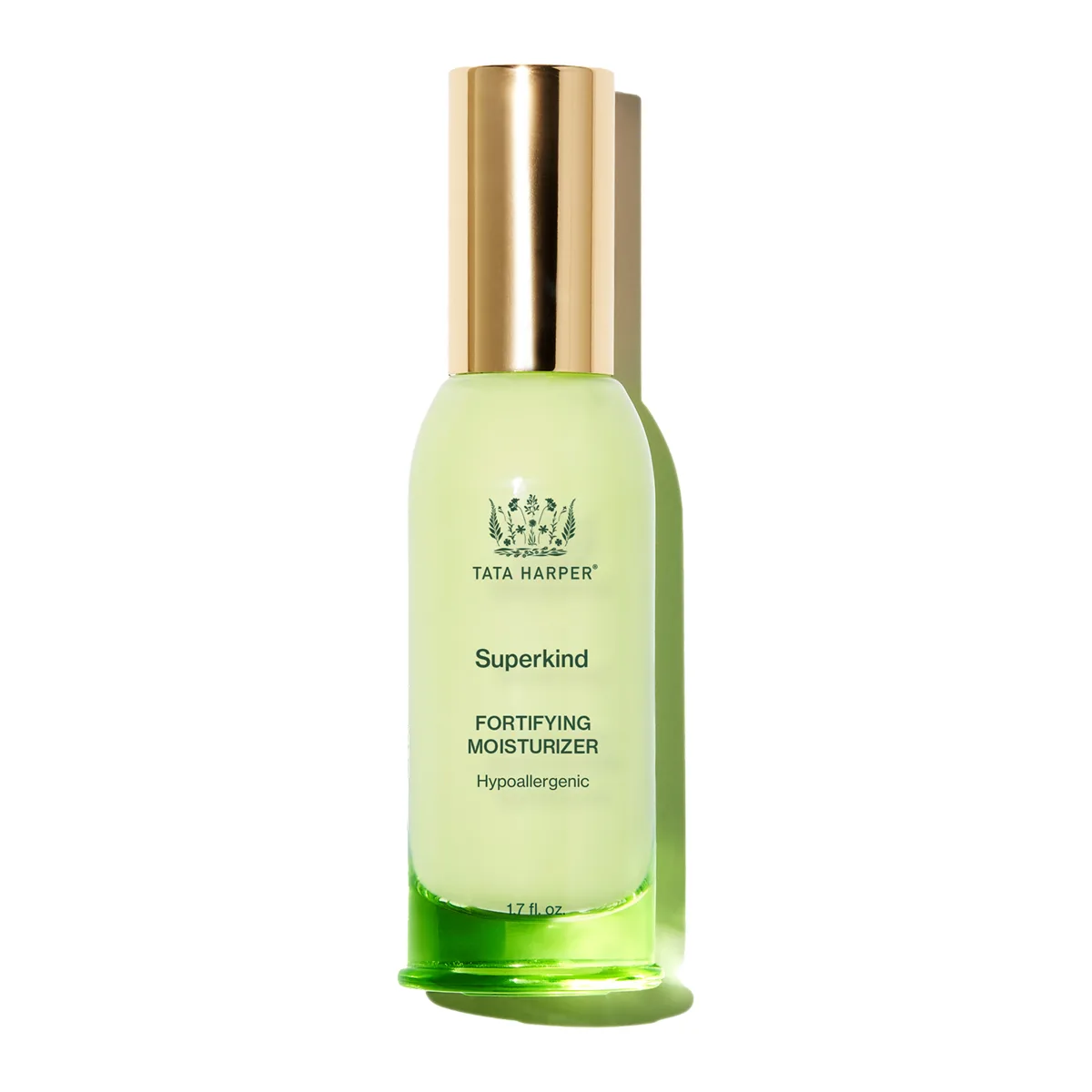
It is Superkind's original daily moisturiser, a fragrance-free cream built on safflower oleosomes, a glycerin-diglycerin-hyaluronate humectant set and squalane, with a resurrection-plant extract and an acid-lake microalga framed as an Extremophile Endurance Technology that filters allergens. The oleosome delivery and the omissions are real; the allergen shield is a sentence.
A silky, light, genuinely fragrance-free daily cream, built on safflower oleosomes, a deep humectant set and squalane, that finally gave Tata Harper's sensitive-skinned customers a moisturiser they could wear every morning under sunscreen. It has no ceramide, its own customers found it too light for winter, and the Extremophile Endurance Technology that filters allergens is a sentence about two extracts with supplier data. $148 for 50 mL buys the brand, the certificate and the omission of everything that used to sting; the cream itself would be fair at a third.
Roughly 255 brand-site reviews and a spring 2023 launch give this moisturiser a moderate record, and the brand publishes no trial to support its allergen-shield claim. The assessment leans on the formulation, the oleosome delivery's published cosmetic-science data and the tolerability feedback; the extremophile extracts remain unmeasured.
The case for it
What would change this: Removing the trigger named above would let the actives be judged on their own.
Same rule for everyone. “Avoid” is the verdict on 1,909 of 45,024 concern verdicts across the catalog; rule F1 decided 605 of them. As of September 25, 2026, engine 5.1.1.
Brand or formulator? Disclose a concentration or correct a fact →
The case for it
Cautions: fragrance.
Same rule for everyone. “Good choice” is the verdict on 9,564 of 45,024 concern verdicts across the catalog; rule R5 decided 9,072 of them. As of September 25, 2026, engine 5.1.1.
Brand or formulator? Disclose a concentration or correct a fact →
The studies behind the evidence row
The case for it
Same rule for everyone. “Good choice” is the verdict on 9,564 of 45,024 concern verdicts across the catalog; rule R5 decided 9,072 of them. As of September 25, 2026, engine 5.1.1.
Brand or formulator? Disclose a concentration or correct a fact →
The studies behind the evidence row
The case for it
What would change this: Removing the trigger named above would let the actives be judged on their own.
Same rule for everyone. “Avoid” is the verdict on 1,909 of 45,024 concern verdicts across the catalog; rule R1 decided 1,304 of them. As of September 25, 2026, engine 5.1.1.
Brand or formulator? Disclose a concentration or correct a fact →
Does the jobDoes what a moisturizer is for: draws in water, softens and smooths.
A verdict is DermApproved’s assessment of how well a product’s ingredients fit a concern — never a claim about what the product treats. Evidence dots and collected reviews sit beside it and are never blended in. Rules 0.5.1 · evidence table ev-2026.09-r228 · how we decide
The label of the Superkind Fortifying Moisturizer says it is equipped with an Extremophile Endurance Technology that can filter allergens, and the first ingredient on the same label is calendula juice, an Asteraceae botanical that dermatology's patch-test literature lists as a contact sensitiser, with a second calendula extract and chamomile further down. That is not a scandal; the concentrations are modest and most people will never react. It is simply the clearest illustration of how this cream works: the omissions do the job, the language sells it, and the two occasionally get in each other's way. Strip the language and what remains is a good, light, fragrance-free daily moisturiser that Tata Harper's sensitive-skinned customers waited thirteen years for.
The formula has one genuinely interesting idea and several sound ones. The interesting one is safflower oleosomes at third position: intact oil bodies harvested from the seed, each a droplet of safflower oil wrapped in its own phospholipid-and-protein membrane with the seed's tocopherol inside, which break open as the cream is rubbed in and release their oil where it lands. It is why the cream spreads into a silky slip on contact and sinks in so cleanly, and it is a delivery system worth the name. The sound ideas are a humectant set of propanediol, glycerin, diglycerin and sodium hyaluronate that keeps skin comfortable through the day; a light lipid base of shea butter ethyl esters, sunflower, squalane, shea, maracuja and safflower oils; centella and magnolia bark as calmers; and a natural-origin preservative system that lets it carry COSMOS certification. The texture is the best in the line, a lotion-cream that spreads from a pump, settles to a satin, non-greasy finish within a minute and sits under sunscreen and makeup without pilling. The 255-odd reviews on the brand's site at a 4.7 average say what the texture predicts: comfortable, unscented, calming, and a relief to people who had stung through the brand's other creams. It is also the Superkind product that behaves best under makeup, because the oleosome oil is released in a thin, even layer rather than sitting on top as a film, and foundation applied ten minutes later neither slides nor catches.
The technology is the two extremophiles. Selaginella lepidophylla at tenth is the resurrection plant, a desert moss that revives from years of desiccation, and its extract supplies trehalose and polysaccharides with laboratory data on water retention; Chlamydomonas acidophila at nineteenth is a microalga from acid lakes with antioxidant data. Both are reasonable humectant and antioxidant materials. The claim that they filter allergens and shield skin from environmental aggressors is a supplier sentence that describes the organisms' own habitats; no cosmetic film selectively filters allergens, and what any emollient does is reduce barrier permeability, which is a property of moisturisers generally and not a technology. The idea that an organism's endurance transfers to a face by applying its extract is a metaphor the label presents as a mechanism, and it is worth saying plainly because the brand makes it the headline.
Two limits are real. The cream is light: on normal, combination and mildly dry sensitive skin it is a year-round daily moisturiser, but on dry skin in winter it is gone by afternoon, and the brand's own customers said so loudly enough that the richer Calming Crème followed nine months after launch. And there is no ceramide, cholesterol or sterol on the list; the barrier support is hydration and light occlusion, which supports a healthy barrier and does not rebuild a damaged one. For skin mid-flare it is the wrong Superkind product.
The price is the review's argument. One hundred and forty-eight dollars for 50 mL is $2.96 per millilitre, and one to two pumps twice daily lasts about two and a half months, so a year runs past $700 for a fragrance-free hydrating lotion-cream without ceramides. Clinical brands sell comparable fragrance-free daily creams, several with ceramides, for a tenth of that. What the premium buys is COSMOS Natural certification, 61 percent organic content, the Vermont farm, the pregnancy endorsement, the oleosome texture and, for a Tata Harper customer with sensitive skin, the first daily cream from the brand that does not hurt. The 10 mL travel size at $27 is the sensible way to find out whether the texture is worth that to you.
So: if you love Tata Harper and your skin has never let you wear it by day, this is the cream to buy, and its texture is genuinely lovely under sunscreen. If you have normal, combination or mildly dry sensitive skin and no attachment to the brand, a fragrance-free daily cream from a clinical range does the same job with more barrier lipids for far less. If your skin is dry or flaring, buy the Calming Crème instead. And if the allergen filter is why you are here, read the first ingredient again.
The hero actives that drive this product's performance.
| Ingredient | Function | Evidence |
|---|---|---|
| Carthamus Tinctorius (Safflower) Oleosomes | Third, the intact oil bodies from safflower seed that carry their own tocopherol and release oil as they break on the skin; they give the cream its silky, self-emulsifying spread and much of its emollience, and they are the most technically interesting thing in the formula. | Not yet assessed |
| Selaginella Lepidophylla Extract | Tenth, the resurrection-plant extract that the label's Extremophile Endurance Technology rests on, a source of trehalose and polysaccharides with laboratory data on water retention; the allergen-filtering claim attached to it is a supplier statement with no clinical basis in this cream. | Not yet assessed |
| Diglycerin | Seventh, the glycerin dimer that with glycerin sixth, propanediol and sodium hyaluronate makes the cream's humectant set, holding water in the upper skin for longer than glycerin alone; this group is where the hydration claim is actually earned. | Established mechanism for Dryness · established mechanism |
| Squalane | Twelfth, the least reactive emollient in cosmetics, joining shea butter ethyl esters, sunflower, shea and maracuja oils in a lipid base that is lighter than the Calming Crème's; it is what lets the cream sit under sunscreen on normal and combination skin. | Established mechanism for Dryness · established mechanism |
| Chlamydomonas Acidophila Extract | Nineteenth, the acid-lake microalga that is the second half of the extremophile story, an antioxidant algal extract with supplier data; the idea that it shields skin from stressors describes the alga's own habitat rather than any measured effect on a face. | Not yet assessed |
| Calendula Officinalis Flower/Leaf/Stem Juice | The first ingredient, the botanical juice standing in for the water phase across Superkind, with a second calendula extract and chamomile lower down; a traditional soother and an Asteraceae contact sensitiser in a cream for reactive skin, the one caution the hypoallergenic label does not address. | Not yet assessed |
Ingredient standings describe the active at treatment-level doses and vehicles; this product's own condition grades weigh its actual formula.
Calendula Officinalis Flower/Leaf/Stem Juice, Shea Butter Ethyl Esters, Carthamus Tinctorius (Safflower) Oleosomes, Aqua/Water/Eau, Propanediol, Glycerin, Diglycerin, Helianthus Annuus (Sunflower) Seed Oil, Cetearyl Olivate, Selaginella Lepidophylla Extract, Sorbitan Olivate, Squalane, Butyrospermum Parkii (Shea) Butter, Passiflora Edulis Seed Oil, Sodium Hyaluronate, Carthamus Tinctorius (Safflower) Seed Oil, Morus Alba (Mulberry) Leaf Extract, Ophiopogon Japonicus Root Extract, Chlamydomonas Acidophila Extract, Centella Asiatica Extract, Magnolia Officinalis Bark Extract, Oenothera Biennis (Evening Primrose) Oil, Opuntia Ficus Indica, Pyrus Malus (Apple) Seed Oil, Ricinus Communis (Castor) Seed Oil, Vitis Vinifera (Grape) Seed Oil, Borago Officinalis (Borage) Leaf Extract, Calendula Officinalis (Calendula) Flower Extract, Chamomilla Recutita (Matricaria) Flower Extract, Lavandula Angustifolia (Lavender) Extract, Medicago Sativa (Alfalfa) Extract, Glyceryl Caprylate, Myrica Cerifera Fruit Wax, Cetyl Palmitate, Sclerotium Gum, Phenethyl Alcohol, Sodium Levulinate, Sorbitan Palmitate, Lactic Acid, Sodium Anisate, Maltodextrin
moisturizer
AM & PM
One or two pumps over serum morning and night, under sunscreen by day; on dry skin in winter it wants the Bio-Shield oil or a richer cream over it, and on reactive skin it buffers a retinoid well because it carries no acids or fragrance.
Immediate comfort and a soft, hydrated feel that lasts the day on normal and combination skin, from the humectant-and-oleosome base. Reactivity settles over two to four weeks if fragrance and essential oils were the trigger. The allergen-filtering and defending claims have no measurable timeline because they have no measurement.
The cream works through humectancy, light occlusion and an unusual lipid delivery, and the evidence for each is sound in general even though the product has not been trialled. Glycerin and diglycerin are reference humectants; propanediol improves their spread and penetration; sodium hyaluronate holds surface water; together they raise stratum corneum hydration for hours, which is the comfort the reviews describe. Safflower oleosomes are intact seed oil bodies, roughly a micron across, in which safflower oil rich in linoleic acid is enclosed by a phospholipid monolayer and oleosin proteins; on rubbing, the membranes rupture and release oil and its native tocopherol at the skin surface, a delivery mechanism with published cosmetic-science data on improved emolliency and reduced need for added emulsifiers. Shea butter ethyl esters, squalane, sunflower, shea and maracuja oils form a light occlusive film that reduces transepidermal water loss. Centella asiatica extract has clinical data on barrier hydration and wound healing; magnolia bark provides magnolol and honokiol with laboratory anti-inflammatory activity. The exclusion of fragrance, essential oils, denatured alcohol and acids removes the commonest triggers of stinging and contact allergy in sensitive skin, which is the most evidence-based property of the formula. There is no ceramide, cholesterol or plant sterol, so the cream hydrates and protects rather than replenishing lamellar lipids.
The extremophile tier is unproven. Selaginella lepidophylla extract, the resurrection plant, contains trehalose and polysaccharides with in-vitro data on water retention and protection of cells from desiccation; Chlamydomonas acidophila extract is an acid-tolerant microalga with in-vitro antioxidant data. Neither has a clinical trial in a topical product, and the claim that they filter allergens or shield skin from environmental aggressors has no mechanism: no cosmetic film selectively excludes allergens, and any reduction in irritant penetration is a general property of emollient films. Morus alba leaf, Opuntia ficus-indica and Ophiopogon japonicus extracts are trace antioxidant and humectant botanicals. Lactic acid is a pH adjuster at trace level.
Tolerability is strong with one footnote. Calendula officinalis, present as the first ingredient and again as an extract, and Chamomilla recutita are Asteraceae botanicals with documented contact sensitisation and cross-reactivity in ragweed-allergic patients; hypoallergenic is an unregulated term that does not address them. Shea butter carries a low comedogenic rating. Pregnant and breastfeeding users have nothing on this list to avoid.
Clinically this is a well-tolerated, fragrance-free daily emollient with a strong humectant component and a light lipid film, and it would be regarded as a reasonable everyday moisturiser for sensitive, rosacea-prone or mildly dry skin and a good buffer under or between retinoid applications. Dermatologists would note the absence of ceramides, cholesterol or sterols and would not recommend it as a barrier-repair product for eczema or a genuinely disrupted barrier, where the standard advice is a ceramide-containing cream; they would also note, as the brand's own customers did, that it is too light for dry skin in winter. The allergen-filtering and environmental-shielding claims would be given no weight, since no topical film selectively filters allergens and the reduction in irritant penetration that any emollient provides is not a technology. The single caution would be calendula and chamomile, Asteraceae sensitisers that merit a patch test in ragweed-allergic patients regardless of the hypoallergenic label. There is no medical reason to prefer it to a fragrance-free daily cream at a fraction of the price; there is a reasonable one for a patient who wants to remain within this brand.
After cleansing and any serum, morning and night, dispense one or two pumps and massage the cream over the face and neck; the oleosomes break into a slip as it is rubbed, so work it in rather than patting, and let it settle a minute before sunscreen in the morning. On dry skin in winter, layer the Bio-Shield oil or a richer cream over it, or switch to the Calming Crème until the season turns. On retinoid nights it goes over the retinoid as a buffer, and on the nights between it is the whole routine after cleansing. Skin with a ragweed, chrysanthemum or calendula allergy should patch test on the jawline for several days, since calendula is the first ingredient. Keep the green glass pump bottle out of sun and use within twelve months of opening; the natural-origin preservative system is milder than a conventional one.
At $148 for 50 mL, $2.96 per millilitre, the Fortifying Moisturizer is priced far above the fragrance-free daily creams it competes with on function, and one to two pumps twice daily lasts about two and a half months, putting a year past $700. Its evidence-based content, a deep humectant set, light plant lipids, centella and magnolia, is matched by clinical-brand creams at a tenth of the price, most of them with ceramides this one lacks; the oleosome delivery is a genuine texture advantage, and the extremophile extracts are trace-level and unproven, so they cannot be priced. The premium buys COSMOS Natural certification, 61 percent organic content, the Vermont farm, the pregnancy endorsement and, for a sensitive-skinned Tata Harper customer, the first daily cream from the brand that can be worn under sunscreen without stinging. As a brand-loyal purchase it is coherent, and the 10 mL travel size at $27 is the honest first buy; on evidence per dollar it is among the weakest buys in its class.
People with sensitive, rosacea-prone, normal, combination or mildly dry skin who want a silky, genuinely fragrance-free daily moisturiser that sits under sunscreen and buffers a retinoid, who are loyal to Tata Harper or want its natural-origin certification, and who understand the price buys the brand and the omissions rather than a formula unavailable for less.
Dry or flaring skin, for which the brand's own Calming Crème or a ceramide cream is the right product; anyone expecting barrier repair, which a cream without ceramides, cholesterol or sterols does not deliver; buyers drawn by the allergen-filtering claim, which has no basis; people with a ragweed or calendula allergy; and value-minded shoppers, for whom fragrance-free daily creams with ceramides exist at a tenth of the price.
Ready to try Tata Harper Superkind Fortifying Moisturizer?
Buy at Amazon ♥A light, silky lotion-cream that breaks into a slip on contact as the oleosomes release their oil, spreads thin from a pump and settles to a soft, satin, non-greasy finish within a minute.
None; no fragrance or essential oils, and only a faint raw-material note from the calendula base that disappears on application.
A 50 mL pale-green glass bottle with a tall gold-toned cap over a pump, hygienic and tinted against light; a 10 mL travel size is also sold.
The first pump spreads into a silky slip and disappears, leaving skin soft and comfortable with no sting and no scent, which for a sensitive-skinned Tata Harper customer is the whole event. Over the first weeks reactivity eases; dry skin notices by afternoon in winter that it wants something richer on top, which is why the brand added the Calming Crème.
About two and a half months at one to two pumps twice daily.
All Year
The Fortifying Moisturizer launched in April 2023 as the daily cream of Superkind, the range Tata Harper built after years of hearing that its essential-oil formulas stung the mature, sensitive customers they were sold to. It was designed light enough for year-round use on reactive skin, and within nine months its customers had asked for something heavier, which became the Calming Crème; this remains the line's everyday, under-sunscreen moisturiser.
Tata Harper has formulated on its Vermont farm since 2010 under a hundred-percent natural-origin rule; Superkind, launched in 2023, is its fragrance-free, essential-oil-free range for sensitive skin, and this moisturiser was the line's original daily cream. The brand publishes no clinical trial of it, and its allergen-filtering claim rests on supplier data for two extremophile extracts.
A moisturiser can filter allergens out of the environment before they reach the skin.
No cosmetic film selectively filters airborne allergens; what any emollient does is reduce barrier permeability so that irritants penetrate less, which is a general property of a good moisturiser rather than a technology. The resurrection-plant and microalga extracts here are humectant and antioxidant materials with supplier data, and the shielding claim is language.
Hypoallergenic means a product has been shown not to cause allergic reactions.
Hypoallergenic is an unregulated term in the United States and carries no testing requirement. This cream avoids fragrance, essential oils and common allergens, which is meaningful, and it leads with calendula juice and includes chamomile, both Asteraceae sensitisers, which the term does not disclose.
Yes: no fragrance, no essential oils and no declared allergens, which sets it apart from every Tata Harper moisturiser outside the Superkind line. It smells faintly of raw materials for a moment and then of nothing.
The Calming Crème. The Fortifying Moisturizer is a light, silky daily cream suited to normal, combination and mildly dry sensitive skin, and its own customers found it too light for winter, which is why the brand added the richer Calming Crème nine months later. Dry or flaring skin should start there.
Two extracts: Selaginella lepidophylla, the resurrection plant, a source of trehalose and polysaccharides that hold water, and Chlamydomonas acidophila, an antioxidant microalga from acid lakes. Both have supplier data on hydration and oxidative stress; the claim that they filter allergens has no clinical basis.
No. Its barrier support comes from safflower oleosomes, shea butter ethyl esters, squalane, sunflower and maracuja oils and a deep humectant set, which hydrate and reduce water loss; there is no ceramide, cholesterol or sterol on the list, so it supports a healthy barrier rather than rebuilding a damaged one.
Yes, and well: it has no acids, no fragrance and a silky emollient base, so it serves as the buffer over tretinoin or the moisturiser on the nights between. Very dry skin on tretinoin will want the Calming Crème or an oil over it in the first weeks.
It is lighter than most of the brand's creams and sits well on combination skin, but shea butter, sunflower and castor oils make it more than oily skin needs, and breakout-prone faces should note the shea. Normal to dry sensitive skin is its home.
Recurring themes our editors read across retailer reviews of this product — summaries in our words, not quotations, and not a substitute for your own patch test.
Silky texture that sits well under sunscreen and makeup
Calms reactive skin without stinging
Unscented and lightweight
Very expensive for a daily moisturiser
Not rich enough for dry skin in winter
Subtle results beyond hydration