You Can Mix L-Ascorbic Acid at Home. Keeping It Alive Is the Hard Part.
The one home formulation with a genuinely coherent case, taken apart on its own terms: the pH window, the oxidation clock, and what a browning serum has actually become.
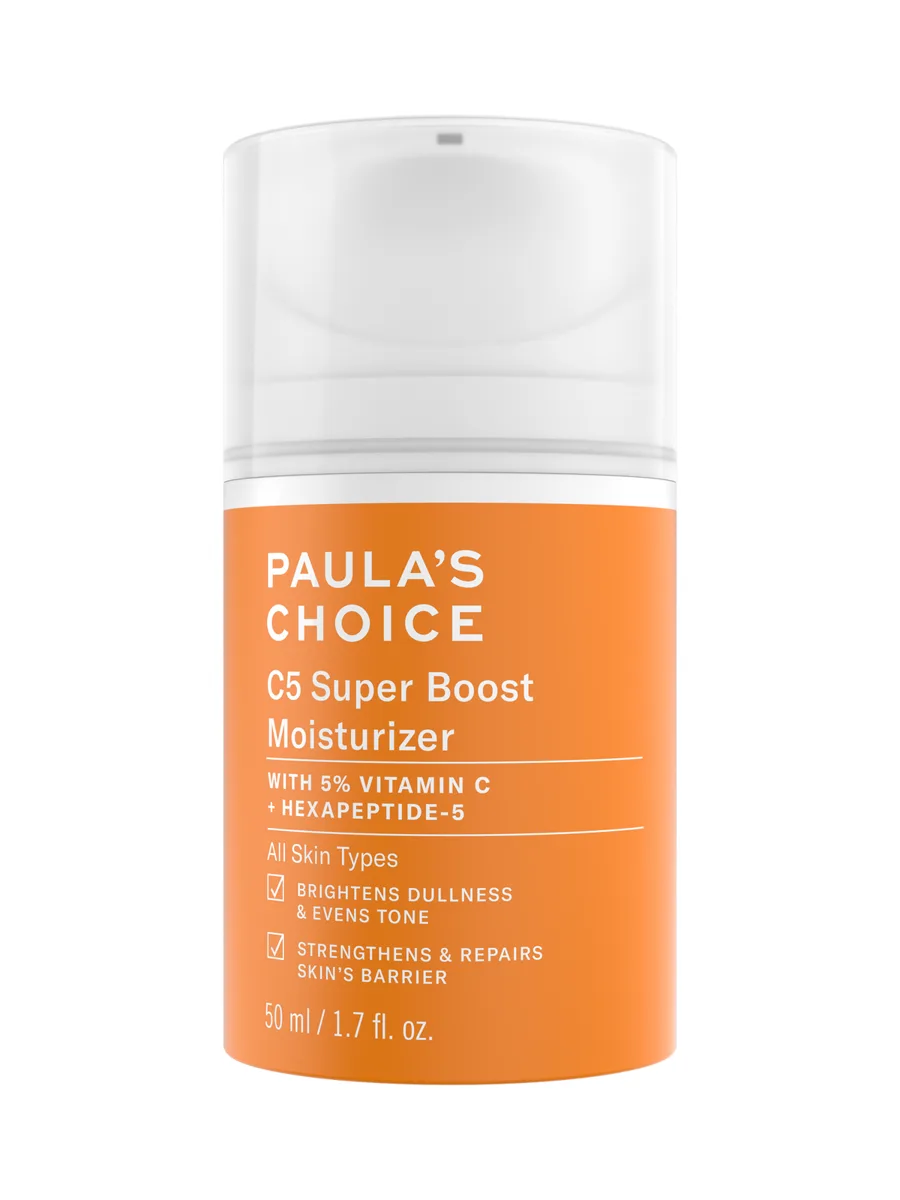
Most vitamin C moisturisers either bury a token dose of a derivative or try to stabilise L-ascorbic acid in a cream and fail within months. This one declares 5 percent split across two derivatives chosen for different penetration speeds, stabilises them with acetyl zingerone — an ingredient with published data on protecting vitamin C from oxidation — and vitamin E, and wraps them in a fragrance-free, squalane-based gel-cream that most skin types can wear under sunscreen. It is a genuinely convenient way to get a daily vitamin C dose without a separate serum.
A light, fragrance-free gel-cream that solves the vitamin C moisturiser problem properly: a declared 5 percent split across two gentle derivatives, stabilised with acetyl zingerone and vitamin E, in a squalane base that most skin types can wear under sunscreen. It brightens slowly and reliably and never stings. Dry skin will want more in winter, and forty-nine dollars is a real price — but as a daily vitamin C driver it earns it.
The case for it
What would change this: Guideline or regulatory standing for the active on this concern would move this from a promising bet to a recommendation.
Same rule for everyone. “Promising” is the verdict on 7,858 of 45,024 concern verdicts across the catalog; rule R9p decided 7,858 of them. As of September 25, 2026, engine 5.1.1.
Brand or formulator? Disclose a concentration or correct a fact →
The studies behind the evidence row
The case for it
What would change this: Guideline or regulatory standing for the active on this concern would move this from a promising bet to a recommendation.
Same rule for everyone. “Promising” is the verdict on 7,858 of 45,024 concern verdicts across the catalog; rule R9p decided 7,858 of them. As of September 25, 2026, engine 5.1.1.
Brand or formulator? Disclose a concentration or correct a fact →
The studies behind the evidence row
The case for it
What would change this: Trial evidence for the active on this concern would move this from a bet to a recommendation.
Same rule for everyone. “Supporting role” is the verdict on 8,197 of 45,024 concern verdicts across the catalog; rule R8a decided 1,489 of them. As of September 25, 2026, engine 5.1.1.
Brand or formulator? Disclose a concentration or correct a fact →
The studies behind the evidence row
The case for it
What would change this: A researched evidence row for the lead active would replace this with a verdict.
Same rule for everyone. “Supporting role” is the verdict on 8,197 of 45,024 concern verdicts across the catalog; rule R8 decided 4,250 of them. As of September 25, 2026, engine 5.1.1.
Brand or formulator? Disclose a concentration or correct a fact →
The case for it
What would change this: Guideline or regulatory standing for the active on this concern would move this from a promising bet to a recommendation.
Same rule for everyone. “Promising” is the verdict on 7,858 of 45,024 concern verdicts across the catalog; rule R9p decided 7,858 of them. As of September 25, 2026, engine 5.1.1.
Brand or formulator? Disclose a concentration or correct a fact →
The studies behind the evidence row
Also listed for Dullness — the actives here (Vitamin C, Squalane, Acetyl Zingerone, Polyglutamic Acid) are in our research queue for that concern; there is no verdict until their evidence rows are written. That is a gap in our table, not a mark against the product.
Does the jobDoes what a moisturizer is for: draws in water, softens and smooths.
A verdict is DermApproved’s assessment of how well a product’s ingredients fit a concern — never a claim about what the product treats. Evidence dots and collected reviews sit beside it and are never blended in. Rules 0.5.1 · evidence table ev-2026.09-r228 · how we decide
Vitamin C moisturisers have a dirty secret, which is that most of them stop being vitamin C moisturisers a few weeks after opening. Ascorbic acid oxidises in water; its derivatives are better but not immune; and a cream, unlike a low-pH serum in a dark dropper, is a warm, watery, oxygen-rich place to keep an antioxidant. The brands that solve this do it with chemistry, and the chemistry in this bottle is worth understanding because it is the reason the product works. Paula's Choice's C5 Super Boost Moisturizer uses two vitamin C derivatives — 3-O-ethyl ascorbic acid at 3 percent, third on the list, and ascorbyl glucoside at 2 percent — and in its 2024 reformulation added acetyl zingerone, a ginger-derived antioxidant with published data showing it protects vitamin C derivatives from oxidative degradation. Tocopherol, rice bran, sunflower and rosemary extracts and a hindered-phenol stabiliser back it up. That is why a vitamin C cream in an airless pump can carry a twelve-month period-after-opening with a straight face.
The rest of the formula is a well-judged light moisturiser. Dicaprylyl carbonate, a dry, silky emollient, sits second; squalane, watermelon seed oil and a little cocoa butter give the gel-cream its hydration and its 24-hour claim without weight; dimethicone adds slip; sodium hyaluronate, polyglutamic acid and a bacillus ferment provide the humectant pull. The reformulation also added a signal hexapeptide, which is the basis of the new 'firms' language and should be read as a supporting player. There is no fragrance, no alcohol, no essential oil, and the pH sits between 5 and 6.5 — the range where these derivatives are stable and the skin is comfortable. The one non-vegan note is a beeswax derivative; the one flag for very sensitive skin is a trace of rosemary extract.
In use it is the sort of moisturiser that disappears into a routine. It is a pale gel-cream with a light, dry-touch slip that sinks in within a minute and leaves skin soft, hydrated and faintly satin, with no film for sunscreen to slide on. It does not sting, tingle or flush — the great practical advantage of derivatives over L-ascorbic acid — and rosacea-prone reviewers report using it without incident. Normal, combination and oily skin can wear it morning and night year-round. Sensitive skin generally tolerates it. Dry skin is the honest exception: in summer it is fine, but from autumn onward dry-skinned reviewers consistently say it needs a richer cream on top or an oil mixed in, and the brand's own description as a 'lightweight gel' is fair warning.
The results are the results of a derivative vitamin C, which is to say gradual. Hydration and a mild glow are immediate. Brighter, more even tone and softened dark spots arrive over six to twelve weeks of twice-daily use — slower than the brand's 15 percent L-ascorbic booster, and reviewers who compare the two say so — but the cream's advantage is consistency: people actually use it every day for months, because it never irritates and never needs a separate step. The firming from the peptide is subtle and shows up, if at all, over two or three months. The daily antioxidant protection, which is the quiet main event of any vitamin C product, does not show up in a mirror at all.
The reformulation is worth a word for buyers reading older reviews. The pre-2024 version carried a similar vitamin C dose but a different stabilisation system and no peptide, and reviews from that era describe a slightly different texture and, occasionally, a tube that had lost its potency. The current formula is the more robust of the two, and the current Amazon listing dates from the relaunch — a thousand-odd ratings at a 4.4 average, and a 4.5 across a couple of hundred on the brand's site.
Forty-nine dollars for 50ml on the brand's site is the objection, and it is a fair one for a moisturiser; Amazon typically matches rather than undercuts. A pump does the face, so twice-daily use lasts about three months and once-daily closer to five, which puts the monthly cost between ten and sixteen dollars. What the money buys is a two-in-one — a stable, declared-dose vitamin C and a competent daily moisturiser — from a brand with thirty years of vitamin C expertise and ingredient transparency, and for anyone who would otherwise buy a separate serum and cream, the arithmetic can work out. For anyone who only needs a moisturiser, it is a premium for an ingredient they did not ask for.
For normal, combination and oily skin that wants daily vitamin C brightening and antioxidant protection folded into a moisturiser it can wear under sunscreen — and for sensitive or rosacea-prone skin that has been burned by L-ascorbic acid serums — this is one of the better vitamin C creams available and an easy recommendation. For dry skin in winter, for anyone chasing fast pigment correction, and for anyone who finds forty-nine dollars steep for a moisturiser, the brand's own range offers a richer cream and a stronger booster that may fit better.
The hero actives that drive this product's performance.
| Ingredient | Function | Evidence |
|---|---|---|
| 3-O-Ethyl Ascorbic Acid 3% + Ascorbyl Glucoside 2% (5%) | The declared 5 percent is split between two stable derivatives — ethyl ascorbic acid third on the list at 3 percent, ascorbyl glucoside seventh at 2 percent — rather than the L-ascorbic acid that would sting and oxidise in a moisturiser at pH 5 to 6.5. Ethyl ascorbic acid is the more skin-penetrant of the two, glucoside the slower-release; splitting the dose is how the brand gets brightening into a daily cream without the irritation of a serum. | Limited for Hyperpigmentation |
| Acetyl Zingerone | A synthetic ginger-derived antioxidant added in the 2024 reformulation, sitting mid-list right after tocopherol — the ingredient that turns this from a vitamin C cream into a vitamin C cream that stays potent. Acetyl zingerone has been shown to stabilise vitamin C derivatives against oxidation and to have its own photoprotective activity, which is why it appears in the brand's newer vitamin C products. | Not yet assessed |
| Squalane + Watermelon Seed Oil + Cocoa Seed Butter | A light emollient trio in the top twelve — squalane for slip, watermelon seed oil for a dry-touch linoleic layer, cocoa butter for a little body — that gives the gel-cream its 24-hour hydration claim without making it heavy. Dicaprylyl carbonate second on the list is the dry, silky emollient that keeps the whole thing feeling like a gel rather than a cream. | Not yet assessed |
| Polyglutamic Acid + Acetyl sh-Hexapeptide-5 Amide Acetate | The hydration and firming gestures: polyglutamic acid, a humectant that holds more water than hyaluronic acid, near the end of the list alongside sodium hyaluronate and a bacillus ferment, and a signal hexapeptide added in the reformulation. Both are trace-dosed; they support the brightening story rather than drive it, and the peptide is the reason the brand now says 'firms'. | Not yet assessed |
| Rice Bran Extract + Tocopherol + Sunflower Seed Extract + Rosemary | The antioxidant support layer around the vitamin C — vitamin E to regenerate it, rice bran for ferulic-type phenolics, sunflower and rosemary extracts, plus a hindered-phenol stabiliser (pentaerythrityl tetra-di-t-butyl hydroxyhydrocinnamate) that protects the plant oils. Together with the acetyl zingerone they are why a vitamin C moisturiser in a pump can carry a twelve-month period-after-opening. | Limited for Aging |
Ingredient standings describe the active at treatment-level doses and vehicles; this product's own condition grades weigh its actual formula.
Water (Aqua), Dicaprylyl Carbonate, 3-O-Ethyl Ascorbic Acid, Dimethicone, Butylene Glycol, Polyglyceryl-6 Distearate, Ascorbyl Glucoside, Hydroxyethyl Acrylate/Sodium Acryloyldimethyl Taurate Copolymer, Squalane, Citrullus Lanatus (Watermelon) Seed Oil, Hydrogenated Lecithin, Theobroma Cacao (Cocoa) Seed Butter, Polyglyceryl-6 Polyricinoleate, Hydrogenated Phosphatidylcholine, Pentaerythrityl Tetra-di-t-butyl Hydroxyhydrocinnamate, Sodium Hyaluronate, Oryza Sativa (Rice) Bran Extract, Propanediol, Jojoba Esters, Tocopherol, Acetyl Zingerone, Caprylyl Glycol, Cetyl Alcohol, Polyglyceryl-3 Beeswax, Helianthus Annuus (Sunflower) Seed Extract, Ethylhexylglycerin, Hexylene Glycol, Acetyl sh-Hexapeptide-5 Amide Acetate, Sodium Phytate, Polysorbate 60, Sorbitan Isostearate, Lecithin, Rosmarinus Officinalis (Rosemary) Leaf Extract, Glycine Soja (Soybean) Oil, Lysolecithin, Bacillus Ferment, Citric Acid, Polyglutamic Acid, Beta-Sitosterol, Phytic Acid, Squalene, Phenoxyethanol, Sodium Benzoate, Potassium Sorbate, Sodium Hydroxide
moisturizer
AM & PM
Use it as your moisturiser, morning or night, over serums and boosters; in the morning it sits cleanly under sunscreen after a minute. It contains no acids or retinoids, so it pairs with either without conflict — vitamin C derivatives at this pH do not clash with niacinamide or with a retinol at night. Dry skin in winter will want a richer cream on top or a facial oil mixed in.
Hydrated, smoother-looking skin from the first application, and a mild glow within a week. Visible brightening and fading of dark spots from the 5 percent vitamin C derivatives takes six to twelve weeks of daily use, and the firming from the peptide is subtle and arrives over two to three months; the brand's 24-hour hydration claim comes from its own instrumental test.
The evidence for this cream is really evidence about vitamin C derivatives and about keeping them intact. A 2022 review in the Journal of Cosmetic Dermatology surveyed topical vitamin C derivatives and their efficacy and concluded that while L-ascorbic acid remains the best-studied form, several derivatives — ascorbyl glucoside and 3-O-ethyl ascorbic acid among them — show meaningful skin penetration, conversion to ascorbic acid and brightening or antioxidant effects in clinical and ex vivo work, with far better stability and tolerability. That is the trade this cream makes: a lower effective dose of ascorbic acid at the skin than a 15 percent serum delivers, in exchange for a formula that does not sting, does not need a low pH, and remains active for the life of the bottle. The split between the faster-penetrating ethyl ascorbic acid and the slower-release glucoside is a reasonable way to spread that dose across the day.
The stabiliser is the more novel science. Acetyl zingerone was characterised in a 2023 Antioxidants paper as a photostable, multifunctional skincare ingredient with antioxidant, anti-inflammatory and DNA-protective activity that combats features of both intrinsic and extrinsic skin ageing. More directly relevant, a 2024 prospective randomized double-blind study in the Journal of Cosmetic Dermatology compared a vitamin C derivative serum with and without acetyl zingerone on facial photoaging and found the combination outperformed the derivative alone — consistent with the earlier laboratory finding that acetyl zingerone protects vitamin C derivatives from oxidative breakdown. That study used a different derivative and a serum vehicle, so the transfer to this cream is by mechanism rather than by direct trial, but it is the right mechanism for the problem a vitamin C moisturiser has.
The hydration and firming claims rest on conventional ingredients: squalane and plant oils as emollients, hyaluronate, polyglutamic acid and a ferment as humectants, and a signal hexapeptide with the usual small manufacturer-sponsored studies behind it. The brand's 24-hour hydration figure comes from its own instrumental testing and has not been independently published.
Vitamin C derivatives in a daily moisturiser are a pragmatic recommendation for patients who want antioxidant protection and gradual brightening but cannot tolerate, or will not consistently use, a low-pH L-ascorbic acid serum — and adherence usually matters more than potency in cosmetic pigment care. This formula is well suited to that role: fragrance-free, non-acidic, stabilised, and light enough to sit under sunscreen, which is the product that does most of the real work against photoaging and hyperpigmentation. It is a reasonable morning layer for patients on a night-time retinoid or azelaic acid regimen and does not interfere with either. The counselling points are about expectations and skin type. Derivative vitamin C at 5 percent produces slow, modest improvement in dullness and mild discolouration over months; established melasma or post-inflammatory hyperpigmentation should be treated with evidence-based agents such as azelaic acid, tranexamic acid or prescription therapy, with this cream as an adjunct. Patients with xerosis or eczema-prone skin will find it under-moisturising in winter and should layer an emollient over it. The beeswax derivative and rosemary extract are worth noting in patients with those specific allergies, though contact reactions to this formula are uncommon.
Use it as your moisturiser once or twice a day. After cleansing, toning and any serum, booster or treatment — let those absorb first — press out one pump from the airless bottle and smooth it over the face and neck with fingertips; it spreads generously, so a single pump usually suffices. In the morning, wait a minute for it to set, then apply broad-spectrum SPF 30 or higher, which vitamin C supports but never replaces. At night it can go over a retinol or azelaic acid without conflict. Dry skin in cooler months should layer a richer cream on top or mix in a drop of facial oil. Do not expect visible brightening for six to twelve weeks. Keep the pump capped and out of direct sunlight, and use within twelve months of opening.
Forty-nine dollars for 50ml on the brand's site is a premium price for a moisturiser, and Amazon typically matches it rather than discounting; a 15ml travel size exists for trialling. A pump covers the face, so twice-daily use lasts around three months and once-daily closer to five, putting the monthly cost between roughly ten and sixteen dollars. The value case depends on what it replaces: for someone who would otherwise buy both a vitamin C serum and a daytime moisturiser, a stable, declared-dose two-in-one from a brand with thirty years of vitamin C expertise and consistently positive reviews is reasonable value. For someone who only wants a moisturiser, or who has dry skin and will need a second cream anyway, the vitamin C premium is money spent on an ingredient they did not need in this step. Fair value for its target skin and use; the brand's cheaper plain moisturisers and stronger C15 booster bracket it for everyone else.
Normal, combination and oily skin that wants daily vitamin C brightening and antioxidant protection built into a light moisturiser it can wear under sunscreen, and sensitive or rosacea-prone skin that cannot tolerate L-ascorbic acid serums. It suits people who value a stable, declared dose and a simpler routine over maximum potency.
Dry skin in cold weather, which will find it under-moisturising on its own, and anyone chasing fast correction of stubborn dark spots or melasma, who needs a stronger vitamin C or a dedicated pigment treatment. Fungal-acne-prone skin should weigh the cocoa butter and esters, and anyone who only wants a moisturiser is paying for an ingredient they did not ask for.
Ready to try Paula's Choice C5 Super Boost Moisturizer?
Buy at Amazon ♥A pale, silky gel-cream that spreads with a light, dry-touch slip from the dicaprylyl carbonate and squalane, sinks in within a minute, and leaves a soft, hydrated, almost matte-satin finish with no residue.
Fragrance-free; a faint, clean, slightly buttery note from the cocoa butter and watermelon seed oil that does not linger.
A 50ml orange airless pump bottle with a clear overcap that shields the vitamin C derivatives and acetyl zingerone from light and air and doses cleanly; a 15ml travel size is also sold.
The first application is unremarkable in the best way — a light gel-cream that absorbs fast, feels hydrating rather than heavy, and does not sting or tingle the way L-ascorbic acid serums can. There is no purge and no adjustment period; the brightening is a slow six-to-twelve-week story, and dry skin may notice within a week that it wants something richer on top.
About three months used morning and night with a pump for the face; four to five months if used once a day.
spring summer
Paula's Choice built its vitamin C reputation on the C15 Super Booster, a 15 percent L-ascorbic acid serum, and the C5 Super Boost Moisturizer arrived around 2020 as the gentler, lower-dose entry point for people who found the booster too strong or too fiddly. In 2024 the brand reformulated it, replacing the original stabilisation approach with acetyl zingerone, adding a signal peptide and polyglutamic acid, and re-registering the claims around 24-hour hydration and firming — which is why older reviews describe a slightly different texture and why the current Amazon listing dates from that relaunch.
Paula's Choice, founded in 1995 by consumer advocate Paula Begoun, publishes ingredient rationales for every fragrance-free formula and has sold vitamin C products since its C15 booster made the ingredient a category. The C5 Super Boost Moisturizer joined the range around 2020 and was reformulated in 2024 with acetyl zingerone and a peptide; the brand cites a 24-hour hydration test and ingredient-level trials rather than a full clinical study on the cream.
Five percent vitamin C in a moisturiser is too weak to do anything.
The comparison to a 15 or 20 percent L-ascorbic acid serum is misleading, because these are derivatives with different chemistry. Three percent ethyl ascorbic acid plus 2 percent ascorbyl glucoside, applied twice daily in a stable base, delivers a steady dose that clinical work on the derivatives supports for gradual brightening — slower than a strong serum, but far more tolerable and consistent over months.
Vitamin C and niacinamide cancel each other out, so this cannot be layered with a niacinamide booster.
That concern dates from decades-old studies of pure ascorbic acid and niacin under conditions that do not occur in a modern formula. The vitamin C derivatives here at pH 5 to 6.5 are stable alongside niacinamide, and Paula's Choice itself recommends layering the two.
Two derivatives, not L-ascorbic acid: 3 percent 3-O-ethyl ascorbic acid and 2 percent ascorbyl glucoside, for a declared total of 5 percent. Both are stable at the cream's pH of roughly 5 to 6.5 and do not sting, which is why it can be a daily moisturiser rather than a low-pH serum.
For maintenance brightening and daily antioxidant protection, it is enough for most people, used twice a day. For stubborn dark spots or faster results, the brand positions its C15 Super Booster as the stronger step — you can use the booster underneath and this cream on top.
Yes to both. It contains no acids or retinoids itself, and the vitamin C derivatives do not conflict with a retinol at night or a salicylic acid exfoliant in the morning. Apply the treatment first, let it absorb, then the moisturiser.
Usually not on its own in cold weather. It is a light gel-cream built for normal, combination and oily skin, and dry-skinned reviewers consistently say they need a richer cream on top in winter. It works well for dry skin in summer or as a daytime layer under a heavier night cream.
Yes, in 2024. The current version adds acetyl zingerone to stabilise the vitamin C, a signal hexapeptide and polyglutamic acid, and carries new 24-hour hydration and firming claims. Older reviews describe the previous formula, which had a similar vitamin C dose but a different stabilisation system.
No — it contains polyglyceryl-3 beeswax, a beeswax derivative, so it is not vegan, though it is cruelty-free like the rest of the brand's range. It is also fragrance-free and paraben-free.
Recurring themes our editors read across retailer reviews of this product — summaries in our words, not quotations, and not a substitute for your own patch test.
Light, non-greasy gel-cream that layers well under sunscreen
No stinging or irritation, even for rosacea-prone users
Visibly brighter tone and faded dark spots after a couple of months
Convenient two-in-one for vitamin C and moisturiser
Not hydrating enough for dry skin, especially in winter
Forty-nine dollars is expensive for a moisturiser
Brightening is gradual and subtle compared with a serum
Pump can dispense unevenly as it runs low