Hyaluronic Acid Can Actually Dehydrate Your Skin (Here's When)
The internet's favorite hydrator has a counterintuitive dark side — in dry air, a humectant with nothing to seal it can pull water out of your skin instead of into it.
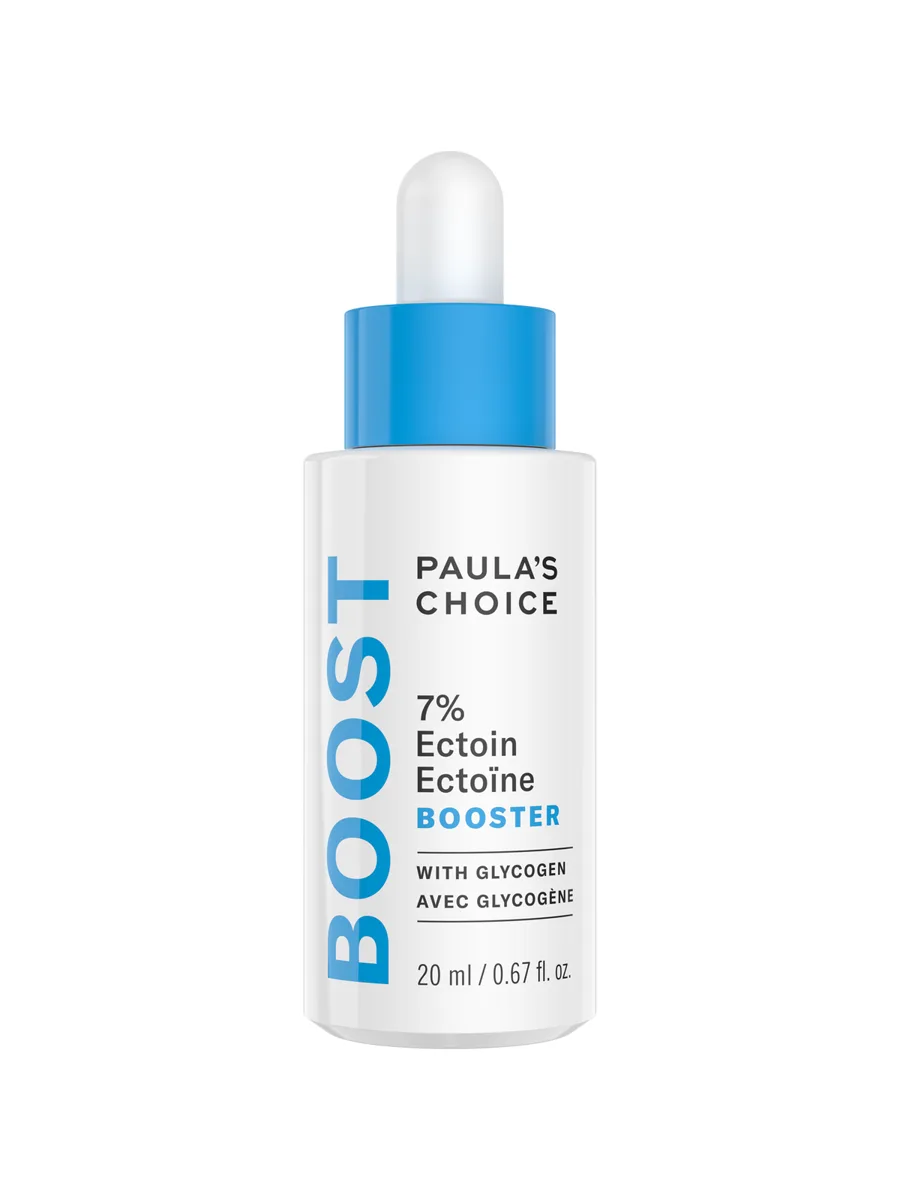
Seven percent ectoin — the highest concentration in a mainstream serum at launch — carried not in a watery gel but in a milky water-in-oil emulsion built from light esters, squalane and jojoba, so the water-ordering molecule arrives with the lipids a damaged barrier actually needs. Most ectoin products dose it at a fraction of a percent as a supporting act; this one makes it the headline and declares the number.
The highest-dose ectoin serum in mainstream skincare, and — more importantly — one of the best-built: a milky emulsion of light esters, squalane and jojoba that carries 7 percent of a water-ordering molecule to the barrier with nothing irritating anywhere in the list. It calms retinoid-raw and over-exfoliated skin within a minute and is safe on any face. Ectoin's case is promising rather than proven, the seven-day repair figure is the brand's, and forty-four dollars for 20 mL is a lot — but for compromised skin it is one of the more sensible premiums going.
This serum has been on sale for about a year under two names, with 385 brand-site reviews at 4.6 stars, retailer listings and a NewBeauty 2026 award, which is a solid early record for tolerability and satisfaction. The seven-day barrier-repair figure comes from Paula's Choice's own unpublished instrumental testing, and ectoin's strongest evidence is in medical emollients rather than cosmetic serums, so this assessment relies on the fully published formula, the dermatological literature on ectoin, and consistent user feedback rather than on independent trials of the product itself.
The case for it
What would change this: A researched evidence row for the lead active would replace this with a verdict.
Same rule for everyone. “Supporting role” is the verdict on 8,197 of 45,024 concern verdicts across the catalog; rule R8 decided 4,250 of them. As of September 25, 2026, engine 5.1.1.
Brand or formulator? Disclose a concentration or correct a fact →
The case for it
What would change this: A declared concentration would move this to a firmer reading of the dose.
Same rule for everyone. “Good choice” is the verdict on 9,564 of 45,024 concern verdicts across the catalog; rule R5 decided 9,072 of them. As of September 25, 2026, engine 5.1.1.
Brand or formulator? Disclose a concentration or correct a fact →
The studies behind the evidence row
The case for it
What would change this: A researched evidence row for the lead active would replace this with a verdict.
Same rule for everyone. “Good choice” is the verdict on 1,938 of 45,024 concern verdicts across the catalog; rule F2 decided 1,938 of them. As of September 25, 2026, engine 5.1.1.
Brand or formulator? Disclose a concentration or correct a fact →
The case for it
What would change this: A declared concentration would move this to a firmer reading of the dose.
Same rule for everyone. “Good choice” is the verdict on 9,564 of 45,024 concern verdicts across the catalog; rule R5 decided 9,072 of them. As of September 25, 2026, engine 5.1.1.
Brand or formulator? Disclose a concentration or correct a fact →
The studies behind the evidence row
The case for it
What would change this: A declared concentration would move this to a firmer reading of the dose.
Same rule for everyone. “Not for this” is the verdict on 488 of 45,024 concern verdicts across the catalog; rule R10 decided 488 of them. As of September 25, 2026, engine 5.1.1.
Brand or formulator? Disclose a concentration or correct a fact →
Where our review and the verdict differ. The review below was written on the formulation and the published trials; the verdicts above apply the stricter standing test in our methodology — an active earns a recommendation only with guideline or regulatory standing for the concern. Where the two disagree, the verdict is DermApproved’s position.
A verdict is DermApproved’s assessment of how well a product’s ingredients fit a concern — never a claim about what the product treats. Evidence dots and collected reviews sit beside it and are never blended in. Rules 0.5.1 · evidence table ev-2026.09-r228 · how we decide
Ectoin was not designed for faces. It is an extremolyte, a small molecule that bacteria living in Egyptian salt flats make in bulk to survive being dried, heated and irradiated, and it works by organising the water around a cell's proteins and lipids into an ordered shell that keeps them from denaturing when everything else goes wrong. German dermatology borrowed it two decades ago for eczema and irritated-skin creams at 1 to 7 percent, cosmetics borrowed it back at a tenth of that as a supporting act, and in 2025 it became the ingredient of the year. Paula's Choice's contribution to that year was to put it second in the list at a declared 7 percent — the top of the studied range and, at launch, the highest concentration in a mainstream product — and to call the result a booster. In 2026 the brand renamed it the 7% Ectoin + Hyaluronic Acid Milky Hydrating Serum, which is longer but more honest, because almost nobody was mixing it into anything. They were using it as the serum it is.
The number is the headline, but the emulsion is the achievement. A watery 7 percent ectoin solution would be a humectant gel with a famous name; this is a milky water-in-oil emulsion built from four light, dry-feeling esters — triethylhexanoin, diisopropyl adipate, isoamyl laurate, dicaprylyl carbonate — with squalane tenth and jojoba fifteenth as the skin-identical lipids, hydrogenated olive unsaponifiables for barrier support further down, and polyglyceryl emulsifiers holding it together. That structure matters because a damaged barrier is short of lipids as well as water, and ectoin's water-ordering shell is more useful when it forms around lipids that have been replaced. The formula delivers both in one step. Sodium hyaluronate sits sixteenth, marketed as a seven-weight complex, and pairs sensibly with the ectoin — one draws water, the other holds it in place — and glycogen, twentieth, is the third name on the label and the least consequential, a humectant with supplier data on barrier metabolism and not much else. There is no fragrance, no essential oil, no alcohol, no silicone and no dye; the preservative is hydroxyacetophenone with hexanediol. A very reactive face could read the list to the end and find nothing to object to.
What the serum does on the skin is what the emulsion predicts. It spreads with almost no drag, feels cool for a moment, and sets to a dewy, soft finish inside a minute — fast enough to go straight under sunscreen without pilling and light enough that combination and normal skin often need nothing over it. On tight, stinging, retinoid-flaky or freshly over-exfoliated skin the sting stops within that same minute, which is the moment most users become converts. Over the following days the flaking settles and the skin stops reacting to the weather, which is where the brand's claim — barrier visibly repaired in seven days, by its own instrumental testing — lands. That testing is unpublished, but the claim is consistent with what the dermatological literature on ectoin creams shows: reduced water loss, faster recovery from irritant damage, less erythema, on timescales of one to two weeks. The honest framing is that ectoin has good evidence as a barrier-supporting, anti-irritant molecule in medical creams and promising, thinner evidence as a cosmetic active at these doses, and that this formula is built well enough to give it the best chance.
Who it suits is nearly everyone, which is unusual. Dry, sensitive, rosacea-prone, post-procedure, retinoid-using and acid-using skin are the obvious audience; oily skin tolerates the ester film better than a cream and often uses it as its only hydration step. Very dry skin in winter is the one group that will want a cream over it, because 20 mL of a light emulsion is not an occlusive. It pairs with anything — it is, in effect, the product one reaches for on the nights the other products have gone too far.
The record after a year is strong: 385 reviews at 4.6 stars on the brand's site, Dermstore and Sephora listings, a NewBeauty 2026 award under the old name, and a consistent tone — calms instantly, doubles as a moisturiser, tolerated by the most reactive skin, expensive, confusing rename. That last point is fair. A product that changed its name mid-life while keeping its formula, and that is still shelved under boosters on the brand's site while being called a serum, has not made its own case as clearly as its ingredient list does.
Then the price, which is the only real argument against it. Forty-four dollars for 20 mL is serum money for a bottle that, at three or four drops twice a day, lasts six to eight weeks; a 10 mL trial size at half the price exists and is the sensible first purchase. Ectoin is a genuinely expensive fermentation-derived ingredient and 7 percent of it is a lot per bottle, so the cost is not arbitrary, and the brand's declared-dose positioning is a real service in a category where most ectoin products name the ingredient and hide the number. But it is still a premium, and a buyer whose skin is not compromised — who wants a nice hydrating serum rather than a barrier rescue — is paying for a molecule they do not particularly need at a dose that does not particularly matter to them.
For the skin that does need it, though, this is one of the more defensible premiums in the category: a survival molecule at its studied ceiling, in an emulsion that supplies the lipids to go with it, from a brand that prints the percentage on the box and leaves the irritants out. It will not transform a healthy face. It will make a damaged one stop hurting in a minute and start behaving in a week, and that is worth knowing the price of.
The hero actives that drive this product's performance.
| Ingredient | Function | Evidence |
|---|---|---|
| Ectoin 7% (7%) | Second in the list at a declared 7 percent — several times the 0.5 to 2 percent most ectoin serums carry and, at launch, the highest concentration in a mainstream product. Ectoin is an extremolyte, a small molecule that desert bacteria make to survive drying and heat, and on skin it orders water molecules into a protective shell around proteins and lipids; the clinical work behind it, mostly in eczema and barrier-damage models, used 1 to 7 percent, so this dose sits at the top of the studied range rather than beyond it. | Not yet assessed |
| Emollient ester blend (triethylhexanoin, diisopropyl adipate, isoamyl laurate, dicaprylyl carbonate) | Fourth to seventh — four light, dry-feeling esters that make this a water-in-oil 'milky' emulsion rather than a watery serum. They carry the ectoin into a lipid film, give the fast, non-greasy absorption the brand advertises, and are why the product replaces both a hydrating serum and a light moisturiser for many users. | Not yet assessed |
| Squalane and Jojoba Seed Oil | Tenth and fifteenth, the two skin-identical lipids in the emulsion — squalane mirrors a component of human sebum, jojoba mirrors its wax esters — and they supply the barrier-supporting oil phase that an ectoin-only serum would lack. Together with the hydrogenated olive unsaponifiables further down, they are the 'repair' half of the barrier claim. | Established mechanism for Dryness · established mechanism |
| Sodium Hyaluronate (multi-weight complex) | Sixteenth, and marketed as seven hyaluronic acid molecules of varying weights though listed as a single INCI name. It supplies the surface humectant film that works alongside ectoin's water-ordering effect — a sensible pairing, since ectoin holds water in place and hyaluronate draws it — but its placement suggests a supporting role behind the ectoin and the esters. | Established mechanism for Dehydration · established mechanism |
| Glycogen | Twentieth, the third named hero — a branched glucose polymer that functions as a humectant and, in supplier studies, as a signal that supports the skin's own energy metabolism and barrier lipid production. Its evidence is thin and its dose is small; it is the ingredient that lets the label say 'ectoin, hyaluronic acid and glycogen' and is the least consequential of the three. | Not yet assessed |
Ingredient standings describe the active at treatment-level doses and vehicles; this product's own condition grades weigh its actual formula.
Aqua/Water/Eau, Ectoin, Isopentyldiol, Triethylhexanoin, Diisopropyl Adipate, Isoamyl Laurate, Dicaprylyl Carbonate, Undecane, Polyglyceryl-4 Oleate, Squalane, Tridecane, Polyglyceryl-6 Oleate, Polyhydroxystearic Acid, 1,2-Hexanediol, Simmondsia Chinensis (Jojoba) Seed Oil, Sodium Hyaluronate, Caprylic/Capric Triglyceride, Tocopherol, Hydroxyacetophenone, Glycogen, Coco-Caprylate/Caprate, Hydrogenated Olive Oil Unsaponifiables, Sodium Phytate, Citric Acid, Stearalkonium Hectorite, Polyglyceryl-3 Diisostearate, Polyglyceryl-3 Polyricinoleate
serum
AM & PM
It behaves as a serum and a light moisturiser at once, so on combination skin it can be the whole post-toner step, and on dry skin it goes under a cream. Apply to slightly damp skin, press rather than rub — the milky texture spreads far — and let it settle for a minute before sunscreen. It layers over retinoids and acids without stinging and is a natural choice on the nights those actives leave skin tight.
Tightness and stinging ease within minutes of application, and skin looks dewier from the first use, which is the ester-and-squalane film. The brand's instrumental testing claims measurable barrier repair in seven days, and users on retinoids or after procedures tend to report calmer, less flaky skin within the first week; a general improvement in resilience to weather and actives is the longer-term expectation, over four to six weeks.
Ectoin (1,4,5,6-tetrahydro-2-methyl-4-pyrimidinecarboxylic acid) is a compatible solute produced by halophilic bacteria, and its mechanism is physical rather than pharmacological: it is preferentially excluded from the surface of proteins and lipid membranes, which drives water molecules into an ordered hydration shell around them — the 'preferential hydration' effect — stabilising their structure against dehydration, heat and osmotic stress. In skin research this translates into several measured effects: reduced transepidermal water loss, protection of Langerhans cells and keratinocytes from UVA-induced damage, reduced expression of inflammatory mediators after irritant challenge, and stabilisation of the lipid bilayers of the stratum corneum. Clinical studies of ectoin-containing dermatological creams, typically at 1 to 7 percent, have reported improvements in eczema severity, itch and barrier function comparable in some trials to low-potency topical steroids, and faster recovery of experimentally damaged skin. The 7 percent used here is at the ceiling of that studied range and well within ectoin's safety profile, which is excellent; it is a non-irritating osmolyte rather than an active with a therapeutic window.
The qualification is that most of that evidence comes from medical emollient formulations rather than cosmetic serums, and that cosmetic ectoin studies are largely supplier-sponsored with small panels. The brand's seven-day barrier-repair claim, based on its own instrumental testing, is consistent with the literature's timescales but is not independently published.
The vehicle contributes evidence of its own. Squalane and jojoba oil are well-characterised skin-identical emollients; hydrogenated olive oil unsaponifiables are a source of squalene and phytosterols with supplier data on barrier lipid support; and the light ester blend forms a semi-occlusive film that reduces water loss while allowing rapid absorption. Water-in-oil emulsions of this type are the format in which barrier-repair ingredients perform best, because they deliver lipid and water together. Sodium hyaluronate provides conventional surface humectancy; multi-weight complexes have modest evidence of deeper or more durable hydration than single-weight forms. Glycogen has laboratory data as a humectant and as a metabolic signal in keratinocytes and no clinical evidence of consequence at cosmetic doses.
Ectoin is one of the few trend ingredients of recent years that dermatologists have been comfortable endorsing, because it arrived with a medical track record: ectoin-based emollients have been used in Europe for eczema, contact dermatitis and post-procedure care for two decades, and their anti-irritant and barrier-supporting effects are documented in controlled studies. A cosmetic serum at 7 percent in a lipid-rich emulsion would be regarded as a legitimate barrier-support product, useful for patients on retinoids or benzoyl peroxide, after chemical peels or laser, in rosacea, and in the dry, reactive skin that tolerates little else — with the fragrance-free, alcohol-free formula strengthening the case. Clinicians would be measured about the specific 'repair in 7 days' figure, which is the brand's own, and would note that a serum is not a replacement for a prescription anti-inflammatory in active eczema or for a proper occlusive in severe dryness. As an adjunct and a rescue step, however, it is the kind of product a clinic would be glad to name.
After cleansing and toning, while the skin is still slightly damp, dispense three or four drops into the palm and press the milky serum over the face and neck rather than rubbing — it spreads a long way and sinks in within a minute. In the morning follow with sunscreen once it has set; combination and normal skin often need no separate moisturiser, while dry skin should layer a cream over it, especially in winter. At night it goes over or between retinoids and exfoliating acids and is at its most useful on the nights those actives leave skin tight or flaky. It can be used twice daily indefinitely, or kept as a targeted rescue step after procedures, sunburn or over-exfoliation. Store the dropper bottle away from heat.
Forty-four dollars for 20 mL is a premium serum price and works out at six to eight weeks of twice-daily use at three or four drops; the 10 mL trial at roughly half the price is the sensible first purchase. Against other ectoin serums the cost reflects a genuinely expensive ingredient at a genuinely high dose, and against the brand's own hydrating serums it reflects the ectoin premium and the declared-percentage positioning, which is a real service in a category that usually hides the number. Paula's Choice's established, evidence-minded reputation and the emulsion's build quality justify part of the price; the unpublished seven-day claim and ectoin's still-developing cosmetic evidence temper the rest. Fair for compromised, reactive or retinoid-stressed skin that will use it every day; a luxury for healthy skin that simply wants hydration.
People whose barrier is under strain — from retinoids, acids, benzoyl peroxide, procedures, rosacea, eczema-prone dryness or simply reactive skin — and who want a fragrance-free serum that stops stinging fast and supports recovery over the following week. It also suits anyone who wants a single hydrating step that behaves like a light moisturiser and sits cleanly under sunscreen.
Healthy, resilient skin that simply wants a hydrating serum and does not need a barrier rescue, for whom the ectoin premium buys little; very dry skin expecting a serum to replace a cream in winter; and anyone who wants published, independent proof of the seven-day claim before spending forty-four dollars on 20 mL. The trial size exists for the undecided.
Ready to try Paula's Choice 7% Ectoin + Hyaluronic Acid Milky Hydrating Serum?
Buy at Amazon ♥A thin, opaque, milk-like emulsion that spreads with almost no drag, feels cool for a moment and sinks in to a soft, dewy finish within a minute
None — fragrance-free and essential-oil-free, with a faint clean ester note from the bottle that does not carry to the skin
A 20 mL frosted glass dropper bottle in the brand's white-and-teal livery, plus a 10 mL trial size; the dropper is precise but generous, and the bottle is small enough that the price per millilitre is hard to ignore
The first application on tight, stinging or retinoid-flaky skin is the reason the product has a following: the sting stops within a minute, the surface looks dewy rather than wet, and it sets fast enough to go straight under sunscreen. There is nothing to adjust to and nothing that purges. The only early lesson is dose — three or four drops cover the face, and the dropper offers more.
About six to eight weeks at four drops twice daily; closer to three months used once a day or as a targeted rescue step
All Year
Ectoin moved from German dermatological creams into mainstream skincare through 2024 and 2025, and Paula's Choice's September 2025 launch of the 7% Ectoin Booster staked out the top of the concentration range as the trend peaked. The product won a NewBeauty 2026 award under that name and was renamed the 7% Ectoin + Hyaluronic Acid Milky Hydrating Serum in 2026 to move it out of the brand's mix-in Booster category and into serums, where most people had been using it anyway.
Paula's Choice, founded in 1995 by Paula Begoun and owned by Unilever since 2021, has three decades of fragrance-free, fully disclosed formulation behind it and a habit of declaring active percentages that most brands avoid. This serum launched in September 2025 as the 7% Ectoin Booster and was renamed in 2026; its 'clinically proven in 7 days' claim rests on the brand's own instrumental testing rather than a published trial.
Ectoin is just another hyaluronic acid — a humectant by a different name.
Hyaluronic acid draws and holds water on the surface; ectoin is an extremolyte that organises water molecules into a protective shell around the skin's own proteins and lipids, stabilising them against heat, dryness and UV stress. They are complementary — which is why this serum pairs them — but the mechanisms and the evidence bases are different.
Seven percent is a dangerously high dose of an active.
Ectoin is not an acid or a retinoid; it is a non-irritating osmolyte with an excellent safety profile, and the dermatological creams it was studied in used up to 7 percent. The high number here is about maximising a gentle molecule, not about potency in the sense that applies to exfoliants.
Yes — same formula, new name. It launched in September 2025 as the 7% Ectoin Booster, won a NewBeauty 2026 award under that name, and was renamed in 2026 to reflect that most people use it as a standalone serum rather than mixing it into other products.
Ectoin is an extremolyte that organises water into a protective shell around the skin's proteins and lipids, reducing water loss and stabilising the barrier against heat, dryness and UV stress. At 7 percent it sits at the top of the range used in the dermatological creams where it was studied, mostly for eczema and irritated skin.
On combination and normal skin, often yes — the milky emulsion carries squalane, jojoba and light esters and sets to a dewy finish that is enough on its own. Dry skin and cold weather will still want a cream over it.
It is one of its best uses. Applied over a retinoid or on the nights between, it eases the tightness and flaking within minutes and, per the brand's testing, supports barrier recovery over the following days. It contains nothing that conflicts with retinoids or acids.
It contains no fragrance, essential oils, alcohol, silicone or dyes and is preserved with hydroxyacetophenone and hexanediol; ectoin itself is a non-irritating osmolyte. It is among the safest choices for reactive, rosacea-prone or post-procedure skin.
Ectoin is a costly fermentation-derived ingredient, and 7 percent of it is a large amount per bottle; the brand also charges for its declared-dose positioning. A 10 mL trial size exists, and used at three or four drops the bottle lasts six to eight weeks — still a premium per millilitre against most hydrating serums.
Recurring themes our editors read across retailer reviews of this product — summaries in our words, not quotations, and not a substitute for your own patch test.
Calms stinging, retinoid-raw or over-exfoliated skin almost immediately
Milky texture that absorbs fast and doubles as a light moisturiser
Fragrance-free and tolerated by the most reactive skin
Makeup and sunscreen sit smoothly over it
Expensive for a 20 mL bottle
Not enough moisture alone for very dry skin in winter
Confusing rename from Booster to Serum
Dropper dispenses more than needed