


You Can Mix L-Ascorbic Acid at Home. Keeping It Alive Is the Hard Part.
The one home formulation with a genuinely coherent case, taken apart on its own terms: the pH window, the oxidation clock, and what a browning serum has actually become.
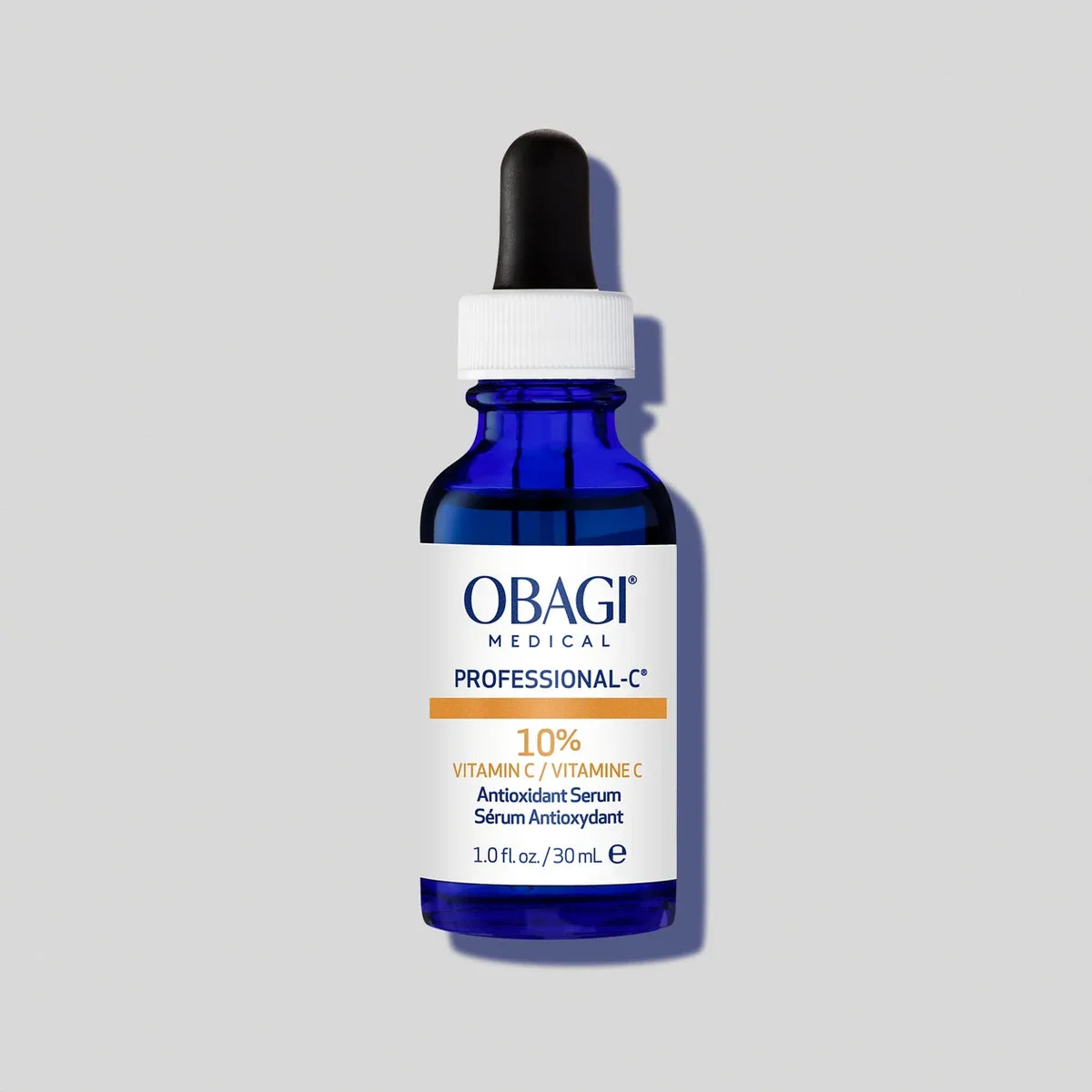
One of the most minimalist vitamin C serums on the market — just 5 ingredients total. The ultra-simple formula minimizes variables for patients who react to complex multi-active serums, making it a diagnostic tool as much as a treatment: if your skin cannot tolerate this, it truly cannot tolerate topical vitamin C.
An ultra-minimalist 5-ingredient vitamin C serum designed as the gentle on-ramp for sensitive skin. Effective at providing baseline antioxidant protection, but the lack of supporting ingredients and high retail price make it hard to recommend over more complete formulations.
The case for it
What would change this: Guideline or regulatory standing for the active on this concern would move this from a promising bet to a recommendation.
Same rule for everyone. “Promising” is the verdict on 7,858 of 45,024 concern verdicts across the catalog; rule R9p decided 7,858 of them. Unchanged since September 5, 2026, engine 5.1.1.
Brand or formulator? Disclose a concentration or correct a fact →
The studies behind the evidence row
The case for it
What would change this: Guideline or regulatory standing for the active on this concern would move this from a promising bet to a recommendation.
Same rule for everyone. “Promising” is the verdict on 7,858 of 45,024 concern verdicts across the catalog; rule R9p decided 7,858 of them. Unchanged since September 5, 2026, engine 5.1.1.
Brand or formulator? Disclose a concentration or correct a fact →
The studies behind the evidence row
The case for it
What would change this: Guideline or regulatory standing for the active on this concern would move this from a promising bet to a recommendation.
Same rule for everyone. “Promising” is the verdict on 7,858 of 45,024 concern verdicts across the catalog; rule R9p decided 7,858 of them. Unchanged since September 5, 2026, engine 5.1.1.
Brand or formulator? Disclose a concentration or correct a fact →
The studies behind the evidence row
Also listed for Dullness — the actives here (Propylene Glycol, Vitamin C) are in our research queue for that concern; there is no verdict until their evidence rows are written. That is a gap in our table, not a mark against the product.
Where our review and the verdict differ. The review below was written on the formulation and the published trials; the verdicts above apply the stricter standing test in our methodology — an active earns a recommendation only with guideline or regulatory standing for the concern. Where the two disagree, the verdict is DermApproved’s position.
A verdict is DermApproved’s assessment of how well a product’s ingredients fit a concern — never a claim about what the product treats. Evidence dots and collected reviews sit beside it and are never blended in. Rules 0.5.1 · evidence table ev-2026.09-r228 · how we decide
There is a tidy little marketing maxim that less is more, and the skincare world loves to repeat it. Obagi's Professional-C Serum 10% is the rare product that quietly disproves it, because here less doesn't mean elegant restraint so much as the absence of the very ingredients that make topical vitamin C worth using. Five ingredients, total. Read the label and you'll find water, propylene glycol, propylene carbonate, L-ascorbic acid, and fragrance. That's the whole story, and whether it's a feature or a shortcoming depends entirely on what your skin can handle.
The line has been a fixture of Obagi's physician-channel catalog since 2008, sold in three concentration tiers so a dermatologist can dial intensity to the patient sitting in the chair. The 10% is the entry rung, built deliberately for dry and sensitive skin that bristles at higher doses. At a moment when brands compete to advertise the steepest L-ascorbic acid percentage they can stabilize, choosing a conservative 10% is a defensible decision. Pure ascorbic acid is the most exhaustively researched form of topical vitamin C, with solid evidence behind its antioxidant, photoprotective, and collagen-supporting roles, and a foundational body of work has shown meaningful protection across the 10 to 20 percent range, with tissue saturation peaking around 15. So 10% sits inside the effective window — it simply parks below the point where the molecule does its best work, by design, to keep stinging and redness off the table.
The propylene glycol earns its place at the top of the list. It's the vehicle and the penetration enhancer, ferrying the ascorbic acid through the stratum corneum while pulling a little humectant moisture along the way, and it's largely responsible for the serum's thin, fast-sinking feel. Propylene carbonate rounds things out as a solvent that helps keep the notoriously temperamental vitamin C stable in the bottle. The texture that results is liquid-like with a faint viscosity, spreading easily and disappearing in a minute or two with only a whisper of tackiness that fades fast. It layers cleanly under sunscreen, which is exactly where a morning antioxidant belongs.
What the formula skips is the whole point of the critique. The single most influential development in vitamin C formulation over the last two decades has been the demonstration that pairing vitamin C with vitamin E and ferulic acid roughly doubles its photoprotective punch — the synergy that now anchors nearly every premium C serum on the market. This serum predates that paradigm and was never reworked to adopt it. There's no ferulic acid to extend stability and protection, no vitamin E to regenerate the C and broaden the antioxidant net, and nothing to counter the mild drying tendency ascorbic acid can carry. You get a single antioxidant working solo, when the science strongly favors a team.
The fragrance deserves a raised eyebrow too. This is a product expressly marketed to dry, reactive, sensitive complexions, and yet it contains added fragrance — exactly the kind of gratuitous sensitizer that population tends to be told to avoid. It's light and inoffensive, but its presence here feels like a formulation habit that hasn't been questioned in fifteen years.
There's also nothing in the bottle to hydrate. Ascorbic acid can be mildly drying on its own, and a more thoughtful formula would fold in a humectant or two to offset that and keep dry skin comfortable through daily use. Here the propylene glycol provides a small amount of moisture-drawing benefit, but it's incidental rather than a deliberate hydrating layer. For the dry skin this 10% is supposedly built for, that omission is a little baffling — you may find yourself needing to follow it promptly with a moisturizer to avoid any tightness, which is fine in practice but underscores how stripped-back the formula really is. Minimalism is a virtue when every ingredient earns its place; it's a liability when the missing pieces are the ones that would have rounded out the experience.
What the 10% actually does, used faithfully every morning, is provide steady, unglamorous antioxidant defense that compounds over time. Nothing visible happens on day one; the protection is the point and it's invisible. Subtle brightening and a lift in luminosity can surface around the two-to-four-week mark, and more convincing improvement in tone evenness and the look of fine lines generally takes eight to twelve weeks of consistency. That gentle arc is precisely the appeal for skin that can't tolerate stronger formulas — a serum you can actually wear daily without barrier disruption will, over months, outperform a potent one you abandon after a week of irritation.
Value is where the math gets awkward. At its $115 retail price for a single ounce, this is a tough sell for a five-ingredient serum that omits the supporting cast more complete formulations include at the same price or less. The track record counts for something — over a decade of use in dermatology offices is real-world validation, and the roughly 4.1 average across the few hundred reviews available reflects a product that quietly does its modest job. But a proven, plain delivery system for a conservative dose of vitamin C is still a plain delivery system, and the price asks you to pay a clinical premium for minimalism.
The honest place this lands is narrow but legitimate. If your skin has genuinely struggled with vitamin C — stinging, flushing, peeling at higher strengths — the 10% is a sensible on-ramp, and it doubles as a kind of tolerance test: if you can't get along with this stripped-down version, topical vitamin C may simply not be for you. If your skin is robust, or you want visible brightening and the fuller photoprotective benefit, a ferulic-stabilized formula will serve you better for the money. Think of this as the cautious first step on the vitamin C ladder, not the rung you want to stay on.
The hero actives that drive this product's performance.
| Ingredient | Function | Evidence |
|---|---|---|
| L-Ascorbic Acid (10%) (10%) | Pure vitamin C at a conservative concentration designed for sensitive and dry skin types. At 10%, it provides meaningful antioxidant protection and gradual brightening with lower irritation risk than higher concentrations. In this minimalist formula, the L-ascorbic acid works without competing actives, relying on the propylene glycol vehicle for enhanced penetration. | Limited for Sun Damage |
| Propylene Glycol | Listed first — the primary vehicle and penetration enhancer in this formula. Propylene glycol facilitates L-ascorbic acid absorption through the stratum corneum while also providing humectant moisture-drawing properties. Its high concentration creates a lightweight, easily absorbed serum base. | Not yet assessed |
Ingredient standings describe the active at treatment-level doses and vehicles; this product's own condition grades weigh its actual formula.
Propylene Glycol, Water (Aqua), Propylene Carbonate, L-Ascorbic Acid, Fragrance.
serum
AM
Apply to clean, dry skin every morning before moisturizer and sunscreen. Allow 1-2 minutes for absorption. Always follow with broad-spectrum SPF 30+ — vitamin C enhances but does not replace sun protection.
Gradual antioxidant protection begins immediately but is not visible. Subtle brightening and improved luminosity may become apparent within 2-4 weeks. More noticeable improvement in tone evenness and fine lines requires 8-12 weeks of daily use.
L-ascorbic acid is the most extensively studied form of topical vitamin C, with robust evidence for antioxidant, photoprotective, and collagen-stimulating effects. A foundational study by Pinnell et al. published in Dermatologic Surgery (2001) demonstrated that L-ascorbic acid at 10-20% provides significant photoprotection, with maximal tissue saturation occurring at approximately 15%. The 10% concentration in this serum falls within the effective range but below the optimal saturation point.
The absence of ferulic acid and vitamin E is the formula's most significant scientific limitation. A landmark study by Lin et al. published in the Journal of Investigative Dermatology (2005) established that combining vitamins C and E with ferulic acid doubled the photoprotective capacity of vitamin C alone, increasing it from four-fold to eight-fold protection against UV-induced erythema. This finding has driven the CE Ferulic paradigm that now defines premium vitamin C formulation.
Propylene glycol's role as a penetration enhancer for L-ascorbic acid has been documented in research published in the International Journal of Pharmaceutics, demonstrating improved transdermal delivery of hydrophilic compounds when formulated in propylene glycol vehicles.
Dermatologists often use the Professional-C 10% as a starting point for patients new to topical vitamin C, particularly those with dry, sensitive, or rosacea-prone skin. Practitioners often point out that while the 10% concentration provides antioxidant defense, it is below the 15% threshold where research shows maximal skin absorption. Many dermatologists recommend starting here for 4-6 weeks, then stepping up to the 15% if tolerated, viewing the 10% as a diagnostic tool for vitamin C tolerance rather than a long-term treatment endpoint.
Apply 5-7 drops to clean, dry face and neck every morning. Spread quickly and evenly, avoiding the eye area. Allow 1-2 minutes for absorption before applying moisturizer and broad-spectrum SPF 30+. Use within 3-4 months of opening and discard if the serum turns dark orange or brown.
At the retail price of $115 for 1 oz, this is exceptionally expensive for a 5-ingredient vitamin C serum without ferulic acid, vitamin E, or other supporting actives. Sale prices around $60 bring it closer to fair value. Competing products from SkinCeuticals, Drunk Elephant, and Timeless offer more complete antioxidant formulations at comparable or lower prices. The Obagi name and physician-channel distribution account for most of the premium.
This serum is specifically designed for people with dry or sensitive skin who want to begin incorporating vitamin C but have been unable to tolerate higher-concentration serums. Also useful as a stepping stone — start here and move to 15% or 20% once tolerance is established.
Anyone with normal or resilient skin should start with the 15% or 20% for better results. Budget-conscious shoppers will find more sophisticated formulations at lower prices. Those seeking maximum brightening or anti-aging effects need higher concentrations and supporting antioxidants.
Thin, liquid-like consistency with slight viscosity from the propylene glycol base. Absorbs within 1-2 minutes leaving a very slight tackiness that quickly dissipates.
Light, subtle fragrance. Not strong but noticeable upon application.
Dark amber glass bottle with dropper to protect light-sensitive vitamin C. Dropper allows precise dosing.
Very gentle on first use — no stinging or warmth that higher-concentration vitamin C serums produce. Slight tackiness on application that resolves quickly. No adjustment period needed for most users.
2-3 months with daily morning use
All Year
The Professional-C line represents Obagi's approach to clinical vitamin C — offering three concentration tiers (10%, 15%, 20%) to allow dermatologists to customize the treatment intensity to each patient's skin tolerance. The 10% sits at the entry level, designed as the starting point before patients step up to higher concentrations.
Obagi Medical was founded in 1988 by board-certified dermatologist Dr. Zein Obagi. The Professional-C line has been a staple in dermatology offices for over a decade, representing Obagi's approach to clinical-grade antioxidant protection.
A simpler ingredient list always means a better product.
While fewer ingredients reduce irritation variables, this formula lacks the synergistic antioxidant network (ferulic acid, vitamin E) that research has shown doubles the photoprotective capacity of vitamin C. Simplicity is only an advantage when every necessary ingredient is present.
Yes, though results are more gradual and subtle than higher concentrations. Research shows L-ascorbic acid at 10% provides meaningful antioxidant protection. Brightening and tone improvements typically become visible after 8-12 weeks of daily use. This concentration is designed for skin that cannot tolerate 15-20%.
If you have dry, sensitive, or reactive skin, start with the 10%. If your skin is normal-to-oily and not particularly sensitive, you can likely start with the 15% — the concentration most research identifies as optimal for L-ascorbic acid efficacy.
The minimalist formula is intentional — it reduces the number of potential irritants and allergens, making it suitable for sensitive skin. However, it also means the formula lacks supporting antioxidants like ferulic acid and vitamin E that would enhance the vitamin C's photoprotective and anti-aging effects.
Store in a cool, dark place away from direct sunlight and heat. The amber glass bottle provides UV protection, but L-ascorbic acid is inherently unstable. Use within 3-4 months of opening. If the serum turns dark orange or brown, it has oxidized and should be replaced.
Yes, but separate them — use vitamin C in the morning for antioxidant protection and retinol at night for cell turnover. Using both in the same application can cause irritation and reduce the effectiveness of each.
Recurring themes our editors read across retailer reviews of this product — summaries in our words, not quotations, and not a substitute for your own patch test.
Gentle enough for sensitive skin without stinging
Lightweight texture absorbs quickly
Gradually improves skin brightness and tone
Very simple formula lacks supporting antioxidants
Overpriced for a 5-ingredient product
Contains fragrance despite targeting sensitive skin
Some users see minimal results at 10% concentration
Verified answers from our questions library — the nuance a product page cannot carry.