


The Truth About Pore Strips, Pore Vacuums, and 'Shrinking' Your Pores
You cannot shrink a pore. But you can change how visible it is — and almost everything sold to 'minimize' pores is pulling the wrong lever.

Most toners are mostly water with a humectant or two. This one lists bifida and galactomyces ferments as its first two ingredients, ahead of water, and stacks niacinamide, bakuchiol, kojic acid, a ceramide and squalane on top. It is effectively a ferment treatment essence wearing a milky-toner texture — far more active than the step it occupies.
A milky toner that is really a ferment treatment essence in disguise — bifida and galactomyces ferments lead the formula, with niacinamide, bakuchiol, kojic acid, a ceramide and squalane stacked on top, all fragrance-free. It hydrates lightly and works on texture and tone over time. Strong value; just read the Zero Pore name with healthy skepticism.
This emulsion belongs to a new Numbuzin sub-line with little independent feedback so far. Expect the score to firm up as reviews accumulate.
The case for it
What would change this: A declared concentration would move this to a firmer reading of the dose.
Same rule for everyone. “Promising” is the verdict on 7,858 of 45,024 concern verdicts across the catalog; rule R9p decided 7,858 of them. Unchanged since September 5, 2026, engine 5.1.1.
Brand or formulator? Disclose a concentration or correct a fact →
The studies behind the evidence row
The case for it
What would change this: A declared concentration would move this to a firmer reading of the dose.
Same rule for everyone. “Good choice” is the verdict on 9,564 of 45,024 concern verdicts across the catalog; rule R5 decided 9,072 of them. Unchanged since September 5, 2026, engine 5.1.1.
Brand or formulator? Disclose a concentration or correct a fact →
The studies behind the evidence row
The case for it
What would change this: A researched evidence row for the lead active would replace this with a verdict.
Same rule for everyone. “Supporting role” is the verdict on 8,197 of 45,024 concern verdicts across the catalog; rule R8 decided 4,250 of them. Unchanged since September 5, 2026, engine 5.1.1.
Brand or formulator? Disclose a concentration or correct a fact →
Also listed for Rough Texture and Dullness — the actives here (Galactomyces (Pitera) are in our research queue for those concerns; there is no verdict until their evidence rows are written. That is a gap in our table, not a mark against the product.
Does the jobDoes what a toner is for: not alcohol-driven, adds something real. Not measured from the label: restores skin pH, plays well with what follows.
A verdict is DermApproved’s assessment of how well a product’s ingredients fit a concern — never a claim about what the product treats. Evidence dots and collected reviews sit beside it and are never blended in. Rules 0.5.1 · evidence table ev-2026.09-r228 · how we decide
The toner step gets dismissed as optional filler more readily than almost anything else in a routine — a refreshing splash, a habit inherited from the astringent toners of decades past, something you could skip without consequence. This Numbuzin toner quietly argues otherwise, and it makes the argument in the most direct way available: by leading its ingredient list with bifida and galactomyces ferments, ahead of water. When the first two ingredients are ferments rather than the usual watery base, you are no longer holding a toner in the old sense. You are holding a ferment treatment essence that happens to wear a milky-toner texture.
That distinction shapes everything about how the product behaves. The bifida ferment lysate and galactomyces ferment filtrate form the conditioning and brightening backbone, and onto that foundation Numbuzin stacks an unusually loaded set of actives for the step. Niacinamide sits high on the list and does the core, most evidence-backed work — refining how pores look, evening tone, reinforcing the barrier. Bakuchiol, a plant-derived retinol alternative, gets real contact time as a leave-on toner ingredient, gently nudging skin renewal without retinol's irritation, which is precisely why this stays usable both morning and night. Kojic acid sits low in the formula and functions as a supporting brightening touch rather than a treatment dose, attacking uneven tone from a different angle than niacinamide. A ceramide paired with cholesterol and fatty acids gives the toner its milky body and ensures all those actives sit on a supported barrier rather than a stressed one, while squalane cushions the blend and contributes to the soft finish.
Texturally it splits the difference between a watery toner and a lotion — a lightweight milky emulsion with a little more substance than a splash, yet thinner than anything you would call a moisturizer. It spreads softly, sinks in fast, and dries down to a smooth, satin, non-tacky finish. Neither the bakuchiol nor the kojic acid produces any sting; skin simply feels conditioned and prepped for the next step. On the sensory front, no fragrance has been added, leaving only a faint neutral note that clears within moments — useful, since fragrance is one of the more common triggers for the very reactive skin a gentle treatment toner tends to attract. The 'Light' designation in the name is doing honest work — this is the lower-weight option in the Bifida Bakuchiol sub-line, made for people who want the treatment actives without a rich finish.
A few counterpoints are worth stating plainly. The light hydration is exactly that — light — and very dry skin in a harsh winter will need more layered on top; this is a prep-and-treat step, not a moisturizer. Kojic acid, gentle as it is at this low placement, is a possible sensitizer for genuinely reactive skin, so a patch test is sensible before daily use. The formula is also not fungal-acne safe, owing to the fatty acids and esters, which matters if you are managing that specific condition. The biggest asterisk, though, is the name itself: 'Zero Pore' is marketing, not biology. No toner closes pores. What this one genuinely does is refine how pores look over time by smoothing texture and supporting clearer skin — a real but cosmetic and gradual improvement, never an actual shrinking.
Where this lands in a routine follows a quiet logic of its own. Because the bakuchiol works gently and the kojic acid sits at a supporting dose, the toner is mild enough to use under almost anything — it does not pick fights with a vitamin C serum, a separate retinol or an exfoliating acid the way a more aggressive treatment toner might. That makes it an unusually safe addition to an existing routine — you are layering in extra ferment-and-niacinamide work without having to rebalance everything else around a new irritant.
For roughly $21 you get a generous 200 mL bottle, and the value reads strong, especially given how much active ingredient is packed into a step most products treat as throwaway. Numbuzin, launched in 2019 by former Amorepacific staff and a 2022 Olive Young Awards winner, builds concept-driven numbered lines, and its No. 3 range targets pores and texture specifically. This Milky Toner Light is a recent addition to that range, so the review pool stays small — somewhere near 240 ratings averaging 4.4 stars — but the early read is consistent: it hydrates without stickiness, skin feels smoother within days, and it reads far more like a treatment essence than a basic toner. Used consistently, it functions less like a toner and more like an early treatment layer, doing quiet work on texture and tone while it preps the skin for whatever serum follows. For anyone who abandoned the toner step on the grounds that it felt pointless, this is a fair case for filling that slot again — this time with something that genuinely pulls its weight rather than just wetting the face.
The hero actives that drive this product's performance.
| Ingredient | Function | Evidence |
|---|---|---|
| Bifida & Galactomyces Ferment Complex | Bifida ferment lysate and galactomyces ferment filtrate are the first two ingredients here, ahead of water — so this is less a watery toner than a ferment essence with a milky finish. They carry the conditioning and brightening backbone of the formula, with niacinamide and bakuchiol layered on top. | Not yet assessed |
| Niacinamide | Sits high on the list and does the core pore-and-tone work — refining the look of pores, evening tone and reinforcing the barrier. It is the most evidence-backed of the toner's brightening actives and pairs with kojic acid for a layered approach to dullness. | Emerging for Hyperpigmentation |
| Bakuchiol | A plant-derived retinol alternative that, as a leave-on toner ingredient, has real contact time to nudge skin renewal and support smoother texture — gently, without retinol's irritation, which keeps the toner usable morning and night. | Not yet assessed |
| Kojic Acid | A tyrosinase-inhibiting brightening agent that targets uneven tone and dark spots from a different angle than niacinamide — it sits low in the formula, so its role here is a gentle, supporting brightening touch rather than a treatment dose. | Limited for Hyperpigmentation |
| Ceramide NP | Paired with cholesterol and fatty acids, this barrier ceramide is what gives the toner its milky texture and ensures the bakuchiol and kojic acid sit on a supported, not stripped, barrier. | Not yet assessed |
| Squalane | A lightweight, skin-identical emollient that cushions the active blend and contributes to the soft milky finish, leaving skin smooth rather than tacky after application. | Not yet assessed |
Ingredient standings describe the active at treatment-level doses and vehicles; this product's own condition grades weigh its actual formula.
Bifida Ferment Lysate, Galactomyces Ferment Filtrate, Water, Butylene Glycol, Diglycerin, Niacinamide, Pentylene Glycol, 1,2-Hexanediol, Glycerin, Dipropylene Glycol, Methylpropanediol, Raffinose, Sodium Hyaluronate, Synthetic Wax, Propanediol, Squalane, Adenosine, Hydrogenated Lecithin, Allantoin, Polyglyceryl-10 Stearate, Disodium EDTA, Panthenol, Dipotassium Glycyrrhizate, Caramel, Coptis Japonica Extract, Ceramide NP, Cholesterol, Cynanchum Atratum Extract, Stearic Acid, Ethylhexylglycerin, Palmitic Acid, Althaea Rosea Flower Extract, Kojic Acid, Tocopherol, Isopentyldiol, Bakuchiol, Hydroxyethylcellulose, Xanthan Gum, Trifolium Pratense (Clover) Flower Extract, Ethylhexyl Palmitate, Cetyl Ethylhexanoate, Polyglyceryl-10 Oleate, Hyaluronic Acid, Hydrolyzed Hyaluronic Acid
toner
AM & PM
Use after cleansing as your toner step, before serums. Pat a few drops over the face with your hands, or apply with a cotton pad. The milky texture provides light hydration, so dry skin can layer it two or three times; follow with serum and moisturizer.
Immediate: skin feels softened, hydrated and comfortable. Smoother texture and a slightly more refined look to pores typically build over 3-4 weeks of twice-daily use; brightening from niacinamide and kojic acid is gradual over 6-8 weeks.
What makes this toner unusual is less any single active than the order of its ingredient list. Bifida ferment lysate and galactomyces ferment filtrate appear ahead of water, which means the ferment content is substantial rather than decorative. Fermented filtrates of this kind have been studied for conditioning and brightening-supportive effects and are a long-standing feature of K-beauty essence formulating, though the strength of clinical evidence varies by ferment and preparation — the realistic framing is promising rather than definitively proven. The actives stacked on top span a wider range of evidence. Niacinamide is the most robustly supported: research has documented its ability to improve the appearance of enlarged pores, even skin tone and support barrier function, which is why its high placement here matters. Bakuchiol has promising evidence as a retinol-functional-alternative; studies comparing topical bakuchiol with retinol have reported comparable improvements in some signs of photoaging with less irritation, and as a leave-on toner ingredient it has the contact time to act gently on texture.
Kojic acid is a tyrosinase inhibitor with evidence for reducing hyperpigmentation, but its low placement in this formula means it functions as a supporting brightening note rather than a treatment-strength agent — a useful distinction, since kojic acid is also the formula's flagged potential irritant. The ceramide-cholesterol-fatty-acid trio reflects established barrier-lipid science: these lipid classes restore barrier structure most effectively when applied together in a balanced ratio, and here that trio also accounts for the milky texture. Where the evidence draws a firm line is the pore claim. Pore size is determined largely by genetics, sebum output and cumulative sun damage; no topical, including this one, physically closes pores. The supportable claim is that smoothing texture and supporting clearer skin can make pores appear less prominent over weeks of use. No product-specific clinical trials are available; this assessment rests on the evidence base for the individual actives and how they are layered.
Modern treatment toners are generally viewed in dermatology as a reasonable, low-risk way to add hydration and mild actives to a routine, a clear improvement over the alcohol-heavy astringent toners of the past, which clinicians broadly discourage. Niacinamide is well regarded as an evidence-supported, gentle ingredient for tone and the appearance of pores, and bakuchiol is increasingly recognized as a credible, lower-irritation alternative to retinol. Fermentation-derived ingredients are viewed as promising but less rigorously established. On pore size, clinical consensus is firm: pore diameter is largely genetic and influenced by sebum and photoaging, and topical products can improve the appearance of pores by smoothing texture and clearing debris but cannot physically shrink them. Dermatologists also commonly note that kojic acid, while effective for pigmentation, is a recognized potential sensitizer, and advise patch testing for reactive skin. The standard clinical framing for a product like this is that it is a sound, gentle treatment-and-hydration step, best paired with daily sunscreen, since the brightening actives depend on UV protection to show results.
After cleansing, dispense a few drops into your palms and pat the milky emulsion across the face, or sweep it on with a cotton pad if you prefer the light tidying that gives. Apply it before serums, as your toner step. Dry skin can layer it two or three times for a more cushioned feel, since the hydration is deliberately light. Follow with a treatment serum and then a moisturizer to seal everything in — this toner does not replace that final step. It is gentle enough for both morning and night use; if you are new to bakuchiol or kojic acid, or your skin runs reactive, patch test first and ease into daily use. In the morning, always finish with sunscreen.
At around $21 for 200 mL, this toner is strong value — a generous bottle that lasts two to three months of twice-daily use, working out to a low per-application cost for a formula carrying ferments, niacinamide, bakuchiol, kojic acid, a ceramide and squalane. That ingredient depth genuinely exceeds what most toners at this price offer; many comparable treatment toners cost the same or more for thinner formulas. There is no alternative size, but 200 mL is ample. The value case is strongest for those who will use it as a true treatment step rather than an afterthought — bought and used that way, it effectively folds light hydration and a mild texture-and-tone treatment into one inexpensive step. Numbuzin's established reputation for well-formulated, concept-driven products supports the spend.
People who have been treating the toner step as skippable and want to convert it into something that actually works on texture and tone — the ferment base with niacinamide and bakuchiol does real, gentle treatment work. The light milky finish suits combination, normal and oily skin particularly well, and the fragrance-free formula keeps it workable for most sensitive skin.
Very dry skin in cold climates will find the light hydration insufficient on its own and should layer it under a richer moisturizer. Reactive skin should patch test because of the kojic acid, and anyone who needs a strictly fungal-acne-safe routine should look elsewhere.
Ready to try Numbuzin No. 3 Bifida Bakuchiol Zero Pore Milky Toner Light?
Buy at Amazon ♥A lightweight milky emulsion — thinner than a lotion but with more body than a watery toner. It spreads easily, absorbs quickly, and leaves a soft, smooth, non-tacky finish.
No added fragrance; a faint neutral note lifts away within moments.
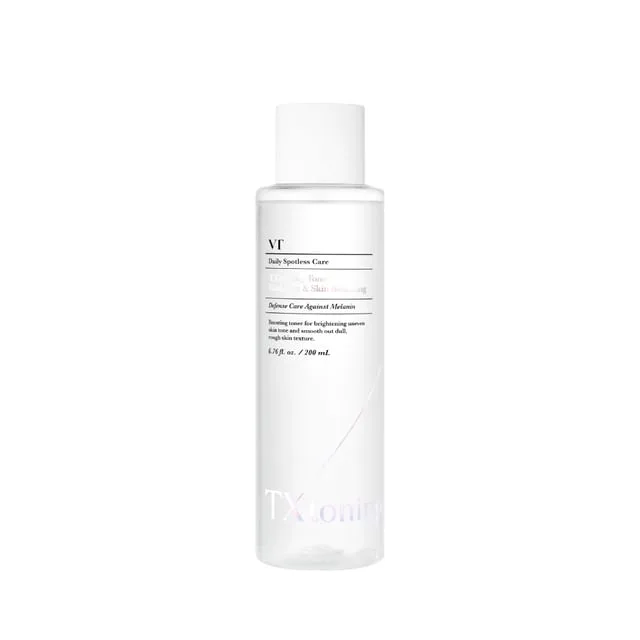
Tall 200 mL bottle in Numbuzin's clean, minimalist design. Practical for a daily toner step; the generous size lasts well, though a pump or precise opening would help control the milky pour.
First use feels like a light, milky hydration step — it spreads softly, sinks in fast, and leaves skin smooth and comfortable rather than wet or sticky. Neither the bakuchiol nor the kojic acid produces any sting. Skin simply feels conditioned and prepped for the next step.
Roughly 10-12 weeks at morning-and-night use
All Year
Numbuzin's No. 3 range targets pores and texture, and this Milky Toner Light extends the Bifida Bakuchiol sub-line into the toner step. The 'Light' designation positions it as the lower-weight option for those who want the treatment actives without a rich finish, hydrating and prepping skin while contributing to the line's pore-refining goal.
Numbuzin, founded in 2019 by the Korean startup Benow, was built by former Amorepacific staff and took top honors at the 2022 Olive Young Awards. Its numbered ranges each target a concern, with No. 3 focused on texture and pores.
A toner is just a refreshing splash and an optional step.
Old-style astringent toners earned that reputation, but modern treatment toners like this one carry meaningful actives — here, ferments, niacinamide, bakuchiol and a ceramide. Used consistently, it is a genuine treatment-and-hydration step, not a skippable splash of water.
The Zero Pore name means this toner will shrink your pores.
Pore size is largely genetic and shaped by oil production and sun damage; no toner closes pores. What this one does is help refine how pores look over time, by smoothing texture and supporting clearer skin with niacinamide and bakuchiol. The improvement is real but cosmetic and gradual.
A milky toner has a light, slightly creamy emulsion texture rather than a watery one, so it provides a touch more hydration and a soft finish. This one goes further than most — it is ferment-led and packed with actives, functioning as a hydrating treatment-toner step rather than a simple watery splash.
It can help refine how pores look over time. Niacinamide and bakuchiol smooth texture and support clearer skin, which makes pores appear less prominent. It will not physically shrink pores — nothing topical does — but with consistent use the look of pores and texture tends to improve.
It indicates the lower-weight version in the range — a milky toner with a lighter, faster-absorbing finish. It delivers the same treatment actives, ferments, niacinamide and bakuchiol among them, in a texture suited to normal, combination and oily skin or warmer weather, rather than a richer feel.
Yes. It is fragrance-free and uses bakuchiol rather than retinol, so it is gentle enough for twice-daily use. Apply it after cleansing and before serums. In the morning, always follow your routine with sunscreen, since brightening actives like niacinamide and kojic acid work best alongside UV protection.
It is fragrance-free and contains soothing allantoin, panthenol, licorice and a ceramide, which makes it reasonably gentle. However, it does contain kojic acid, which can be a sensitizer for some people, so reactive skin should patch test before regular use.
Recurring themes our editors read across retailer reviews of this product — summaries in our words, not quotations, and not a substitute for your own patch test.
Soft milky texture that hydrates without any sticky residue
Skin feels smoother and more comfortable after a few days
Fragrance-free and gentle enough for most skin types
Reads more like a treatment essence than a basic toner
Light hydration alone is not enough for very dry skin in winter
Zero Pore name overstates what a toner can achieve
Contains kojic acid, a possible sensitizer for reactive skin
Not fungal-acne safe, owing to fatty acids and esters
Verified answers from our questions library — the nuance a product page cannot carry.