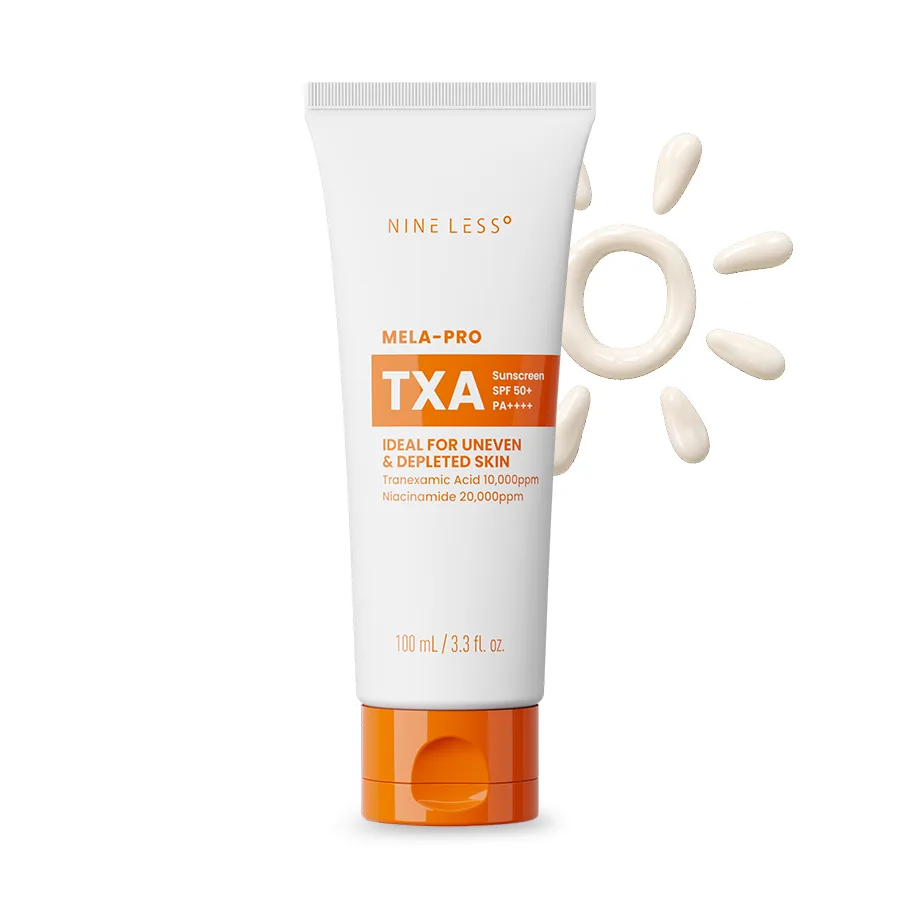
The 2026 renewal replaced the original's titanium dioxide, octinoxate and Tinosorb S with an avobenzone, homosalate, octocrylene and octisalate system — filters permitted in US sunscreens — removed the fragrance, and doubled niacinamide to 2% alongside 1% tranexamic acid.
A well-priced, fragrance-free daily sunscreen that pairs SPF50+ PA++++ protection with a declared 2% niacinamide and 1% tranexamic acid — a sensible combination for anyone fighting dark spots. The 2026 renewal traded modern triazine filters for a conventional avobenzone-salicylate system, which works well but is less elegant, and older reviews describe a different product. As a clear, affordable daily SPF with brightening extras, it's a strong buy.
Reformulated in 2026, this sunscreen's current version has very little independent feedback, and most existing reviews refer to the earlier formula. We have assessed it on the official renewed ingredient list, its declared concentrations and the established performance of its filters.
Verdicts
How well it fits each concern
Verdict by concern tap a concern for the case
Full protectionfor Sun DamageIn your profileYou chose · Broad-spectrum SPF 50 with avobenzone: the protection sun damage calls for.Moderate evidenceGentleNo reviews collected yet
The case for it
Homosalate & Ethylhexyl Salicylate is a first-line active — approved, monograph-listed or named in current guidelines — for this concern.
It is plausibly present at a working level, though the concentration is not declared.
The formula carries none of the triggers this concern is sensitive to.
What would change this: A declared concentration would move this to a firmer reading of the dose.
Same rule for everyone. “Full protection” is the verdict on 2,288 of 45,024 concern verdicts across the catalog; rule P1 decided 2,232 of them.
As of September 25, 2026, engine 5.1.1.
P1 — Photoprotection standing is regulatory (M020 / Annex VI filters; 21 CFR 201.327 attaches the early-skin-aging claim to tested broad-spectrum SPF 15+). SPF 30 is the AAD daily-use bar. · the full register
Carrying active
Homosalate & Ethylhexyl Salicylate
Standing
first line — a regulator recognises it for this use; trials support it · per 21 CFR § 352.10 Sunscreen active ingredients (US FDA — 21 CFR Part 352 (Sunscreen Drug Products for Over-the-Counter Human Use), via Cornell Legal Information Institute; part heading marked [STAYED INDEFINITELY], effective date stayed at 66 FR 67485), opened September 1, 2026
Form
plausible — studied range up to 15%, from the OTC monograph or label; needs leave-on contact
Tolerability
gentle
Row checked
against its sources on September 1, 2026 (evidence table ev-2026.09-r228)
21 CFR § 352.10 Sunscreen active ingredients — US FDA — 21 CFR Part 352 (Sunscreen Drug Products for Over-the-Counter Human Use), via Cornell Legal Information Institute; part heading marked [STAYED INDEFINITELY], effective date stayed at 66 FR 67485, opened September 1, 2026
Full protectionfor HyperpigmentationIn your profileYou chose · Broad-spectrum SPF 50 with avobenzone: the protection hyperpigmentation calls for.Moderate evidenceGentleNo reviews collected yet
The case for it
Niacinamide has trial-supported standing for this concern.
It is present at an effective concentration, declared or high in the ingredient list.
The formula carries none of the triggers this concern is sensitive to.
Same rule for everyone. “Full protection” is the verdict on 2,288 of 45,024 concern verdicts across the catalog; rule P1 decided 2,232 of them.
As of September 25, 2026, engine 5.1.1.
P1 — Photoprotection standing is regulatory (M020 / Annex VI filters; 21 CFR 201.327 attaches the early-skin-aging claim to tested broad-spectrum SPF 15+). SPF 30 is the AAD daily-use bar. · the full register
Carrying active
Niacinamide
Standing
supported — trials support it
Form
adequate (declared 2%) — studied range 2–5%, from the trials on the row; needs leave-on contact; judge it after ~8 weeks
Tolerability
gentle
Row checked
against its sources on July 17, 2026 (evidence table ev-2026.09-r228)
Full protectionfor Dark SpotsIn your profileYou chose · Broad-spectrum SPF 50 with avobenzone: the protection dark spots calls for.Moderate evidenceGentleNo reviews collected yet
The case for it
Niacinamide has early or mechanistic evidence for this concern, not trial-backed standing.
It is present at an effective concentration, declared or high in the ingredient list.
The formula carries none of the triggers this concern is sensitive to.
What would change this: Trial evidence for the active on this concern would move this from a bet to a recommendation.
Same rule for everyone. “Full protection” is the verdict on 2,288 of 45,024 concern verdicts across the catalog; rule P1 decided 2,232 of them.
As of September 25, 2026, engine 5.1.1.
P1 — Photoprotection standing is regulatory (M020 / Annex VI filters; 21 CFR 201.327 attaches the early-skin-aging claim to tested broad-spectrum SPF 15+). SPF 30 is the AAD daily-use bar. · the full register
Carrying active
Niacinamide
Standing
plausible — trials support it
Form
adequate (declared 2%)
Tolerability
gentle
Row checked
against its sources on July 17, 2026 (evidence table ev-2026.09-r228)
Basic protectionfor MelasmaIn your profileYou chose · Broad-spectrum SPF 50, but no iron oxides — melasma is worsened by visible light, which UV filters alone do not block.Strong evidenceGentleNo reviews collected yet
The case for it
Tranexamic Acid has trial-supported standing for this concern.
It is present below the studied range.
The formula carries none of the triggers this concern is sensitive to.
What would change this: A concentration inside the studied range would raise this a step.
Same rule for everyone. “Basic protection” is the verdict on 175 of 45,024 concern verdicts across the catalog; rule P3 decided 68 of them.
As of September 25, 2026, engine 5.1.1.
Does the jobDoes what a sunscreen is for: UVA coverage, kind to the skin wearing it. Not measured from the label: pleasant enough to actually use.
A verdict is DermApproved’s assessment of how well a product’s ingredients fit a concern — never a claim about what the product treats. Evidence dots and collected reviews sit beside it and are never blended in.
Rules 0.5.1 · evidence table ev-2026.09-r228 · how we decide
Assessment
Pros & Cons
Pros
✓ SPF50+ PA++++ with a proven avobenzone-based filter system
✓ Declared 1% tranexamic acid and 2% niacinamide for tone
✓ Fragrance-free, alcohol-free and oil-free renewed formula
✓ Clear finish with no white cast on any skin tone
✗ Renewal replaced modern Tinosorb S with older filter chemistry
✗ Untinted, so no visible-light protection for melasma
✗ Octocrylene and avobenzone can irritate a minority
✗ Chemical filters may sting if they reach the eyes
✗ Few reviews of the new formula so far
Review
Full Review
If you look up this sunscreen online, you will find two different ingredient lists, and both are accurate. The earlier version, sold as the MELA-PRO Tranexamic Acid Sun Screen from 2024, used titanium dioxide, octinoxate and Tinosorb S, contained fragrance and carried 1 percent each of tranexamic acid and niacinamide in a rigid bottle. In 2026, Nineless renamed it the MELA-PRO TXA Sun Screen and changed almost everything: a new soft tube, a new texture, doubled niacinamide and, most significantly, an entirely new set of UV filters. This review covers the renewed version, and the difference matters because much of the feedback you will read describes the old one.
The new filter system will be familiar to American shoppers. Homosalate, octocrylene, ethylhexyl salicylate (octisalate) and butyl methoxydibenzoylmethane (avobenzone) are the four filters found in many US sunscreens, all permitted under the FDA's over-the-counter rules. Ethylhexyl methoxycrylene, a photostabiliser, sits alongside them. Avobenzone provides the long-UVA protection behind the PA++++ rating, but it breaks down in sunlight on its own; octocrylene and ethylhexyl methoxycrylene are there to keep it stable. The salicylates add UVB protection and help dissolve the other filters. It is a proven, effective combination, even if it lacks the newer triazine filters used in many Korean and European sunscreens — including the Tinosorb S the old version contained.
The switch has practical upsides. Without titanium dioxide, the renewed formula dries completely clear, with no white cast on any skin tone. The texture is a light, fluid lotion that spreads quickly and sets to a non-greasy finish, which makes it pleasant enough to use generously — and generous application is what determines how much protection you actually get. The fragrance has also gone, a clear improvement for sensitive skin and for a product worn every day. The switch to a soft squeeze tube sounds trivial, but it is part of the same logic. The old rigid bottle made it awkward to dispense a measured amount and easy to under-apply; a tube lets you squeeze out a consistent line of product along two fingers, which is one of the simplest ways to make sure you are using enough. Small packaging changes like this often do more for real-world protection than an extra filter would. Pairing it with a morning routine that already contains a vitamin C or niacinamide serum is also straightforward, since the lotion layers over serums without pilling, and it sits comfortably under makeup once it has set.
The brightening story is where Nineless's MELA-PRO line earns its name. The tube declares tranexamic acid at 10,000 parts per million, or 1 percent, and niacinamide at 20,000 ppm, or 2 percent — double the previous amount. Tranexamic acid has growing evidence for improving the look of melasma and post-inflammatory hyperpigmentation, though most topical studies use 2 to 5 percent. Niacinamide at 2 percent is within the range shown to help even tone. In a sunscreen, where contact time is all day, these are useful additions. But it is worth being clear about which ingredient matters most for dark spots: the sunscreen itself. UV exposure is the main driver of new pigment, and a broad-spectrum SPF used every day does more to prevent and fade marks than any brightening active.
For people with melasma specifically, there is one limitation. The renewed formula is clear and untinted, so it does not block visible light, which is increasingly recognised as a contributor to melasma. Those patients may want a tinted sunscreen with iron oxides, either instead of this one or layered over it.
The chemical filters in this formula are well tolerated by most people, but octocrylene and avobenzone can occasionally cause irritation or allergic reactions, and like most chemical sunscreens it can sting if it runs into the eyes. The absence of fragrance, alcohol and oils helps, and the formula is suitable for people prone to fungal acne. Those who prefer mineral filters, including some during pregnancy, should look elsewhere.
Value is excellent. At twenty-four dollars for 100ml on Nineless's own store, it costs less per millilitre than many 50ml sunscreens, and the tube is suitable for face and body. With the recommended quarter-teaspoon for the face each day, plus extra for the neck, a tube lasts about a month — which is exactly how quickly a sunscreen should be used.
Nineless is a young brand, and this formula is new. There is no independent SPF testing in the public domain, and because the renewal is so recent, there are few reviews that describe it specifically. That is a reason for mild caution, not concern; the filter combination is a well-established one.
Who should buy it? People with normal, combination or oily skin — and many with dry or sensitive skin — who want a clear, fragrance-free daily sunscreen with brightening extras, especially those working on dark spots or uneven tone. Used every morning and reapplied outdoors, it offers solid protection at a very fair price. Just make sure you know which version you are reading about: the tube with the soft orange cap is the one reviewed here.
Formula
Key Ingredients
The hero actives that drive this product's performance.
The first UV filter in the renewed formula, joined by octisalate; together these salicylates supply much of the UVB protection and help dissolve the avobenzone.
Regulator-approvedfor Sun Damage · limited certainty
The formula's main long-UVA filter, supporting the PA++++ claim; it is kept stable by octocrylene and ethylhexyl methoxycrylene rather than by the Tinosorb S of the old version.
Regulator-approvedfor Sun Damage · emerging certainty
Apply as the final skincare step, using a quarter-teaspoon for the face and extra for neck and body; let it set for a couple of minutes before makeup and reapply every two hours outdoors.
Results Timeline
UV protection begins as soon as a full layer is applied. Brightening from niacinamide and tranexamic acid builds gradually over six to twelve weeks of consistent daily use.
Pairs Well With
Vitamin C serumNiacinamide or azelaic acid serumLightweight moisturizer
The renewed formula uses four UV filters permitted under the US over-the-counter sunscreen monograph. Avobenzone (butyl methoxydibenzoylmethane) is one of the most effective long-UVA absorbers, peaking around 357 nm, but it photodegrades significantly when used alone. Octocrylene and ethylhexyl methoxycrylene stabilise it by quenching its excited state, allowing it to maintain protection through sun exposure. Homosalate and octisalate (ethylhexyl salicylate) are UVB absorbers that also act as solvents for avobenzone. Together these provide broad-spectrum coverage; the PA++++ rating corresponds to a UVA protection factor (PPD) of at least 16.
Achieving the labelled SPF requires application at about 2 mg/cm², roughly a quarter-teaspoon for the face. Most people apply less, and protection falls accordingly, so a light texture that encourages generous use is a practical advantage.
Niacinamide at a declared 2% has robust evidence for improving hyperpigmentation over several weeks by reducing melanosome transfer to keratinocytes. Tranexamic acid, a plasmin inhibitor, reduces the interaction between melanocytes and keratinocytes and has been studied topically for melasma, mostly at 2 to 5%, with promising results. At 1% in a leave-on sunscreen, its contribution is supportive. The most important factor in managing hyperpigmentation remains consistent broad-spectrum UV protection.
Visible light, particularly blue light, can worsen pigmentation in melasma and in darker skin types; untinted chemical sunscreens do not block it, whereas iron-oxide tinted formulations do.
Octocrylene is an occasional contact and photocontact allergen, especially in people sensitised to ketoprofen, and can degrade to benzophenone over time. Homosalate concentration is restricted in some jurisdictions; the brand does not disclose filter percentages.
Dermatologist Perspective
Daily broad-spectrum sunscreen is the cornerstone of treatment for hyperpigmentation, and clinicians often find that patients use products more consistently when they are pleasant, affordable and cosmetically invisible. This renewed formula meets those criteria, and adding niacinamide and tranexamic acid is a reasonable supportive measure. For patients with melasma, many dermatologists recommend tinted sunscreens containing iron oxides for visible-light protection, which this untinted formula does not provide. Octocrylene and avobenzone are generally well tolerated but occasionally cause allergic or photoallergic reactions; patients with a history of sunscreen reactions may do better with mineral filters. As always, generous application and reapplication every two hours outdoors matter more than the specific filter set.
Guidance
Usage & Recommendations
How to Use
As the last step of your morning skincare, squeeze out about a quarter-teaspoon for the face and a similar amount for the neck and ears. Spread evenly and let it set for two minutes before applying makeup. For the body, use a generous amount on all exposed skin. Reapply every two hours outdoors and after swimming, sweating or towel-drying. Avoid getting it into the eyes. Remove at night with your usual cleanser, or an oil cleanser first if you have applied several layers.
Value Assessment
At $24 for 100ml on Nineless's official store, this is very good value — a large, face-and-body tube of fragrance-free SPF50+ PA++++ with declared niacinamide and tranexamic acid, costing less per millilitre than many smaller sunscreens. A tube lasts about a month with proper daily use on the face and neck. The value is slightly tempered by the lack of independent testing and the recent reformulation, but the filter system is well established and the price is fair.
Who Should Buy
People with most skin types who want a clear, fragrance-free daily SPF50+ with brightening extras for dark spots and uneven tone, at a good price. It also suits those who want one sunscreen for face and body.
Who Should Skip
People who react to chemical filters such as octocrylene or avobenzone, or who prefer mineral-only sunscreens, should look elsewhere. Those with melasma may want a tinted sunscreen for visible-light protection.
Ready to try Nineless [MELA-PRO] TXA Sun Screen SPF50+ PA++++?
A light, fluid lotion that spreads quickly and sets to a clear, non-greasy finish with no white cast.
Scent
Fragrance-free in the renewed formula, with only a faint sunscreen-filter note.
Packaging
A white 100ml soft squeeze tube with an orange flip cap, replacing the earlier rigid bottle; the label states 10,000 ppm TXA and 20,000 ppm niacinamide.
Finish
invisiblenon-greasy
What to Expect on First Use
Goes on easily and sets clear within a couple of minutes. Chemical filters can sting if they migrate into the eyes, particularly when sweating.
How Long It Lasts
About one month of daily full-face-and-neck use, longer if used on the face only.
Nineless first sold the MELA-PRO Tranexamic Acid Sun Screen in 2024 as the sun-protection step of its brightening line. In 2026 it was renamed MELA-PRO TXA Sun Screen and reformulated for a lighter, clearer finish in a soft tube.
About Nineless Emerging Brand (2–5 years)
Nineless is a young Korean brand founded around 2022 that prints active concentrations on its packaging. This renewed sunscreen's SPF50+ PA++++ rating comes from the brand's own testing; no independent published results are available.
Brand founded: 2022 · Product launched: 2026
Myth vs. Reality
Common Myths
Myth
Tranexamic acid in a sunscreen will erase dark spots on its own.
Reality
At 1% it can support gradual brightening, but the biggest benefit is preventing new pigment through daily UV protection.
Myth
Older reviews describe this sunscreen accurately.
Reality
The 2026 renewal changed the entire filter system and removed fragrance, so reviews of the earlier formula may not apply.
Myth
Chemical sunscreens aren't suitable for hyperpigmentation.
Reality
Broad-spectrum chemical sunscreens protect well against UV-driven pigment. People with melasma may additionally benefit from a tinted product that blocks visible light.
FAQ
Frequently Asked Questions
What changed in the Nineless MELA-PRO TXA Sun Screen renewal?
The 2026 version switched to avobenzone, homosalate, octocrylene and octisalate filters, removed fragrance, moved to a soft tube, and increased niacinamide to 2% alongside 1% tranexamic acid.
How much tranexamic acid and niacinamide are in the Nineless sunscreen?
The tube states 10,000 ppm (1%) tranexamic acid and 20,000 ppm (2%) niacinamide.
Does the MELA-PRO TXA Sun Screen leave a white cast?
No. The renewed formula uses only chemical filters and dries clear on all skin tones.
Is the Nineless MELA-PRO sunscreen fragrance-free?
Yes, the renewed formula contains no added fragrance, unlike the earlier version.
Can I use the Nineless TXA sunscreen on my body?
Yes. The 100ml tube is designed for face and body, and the fluid texture spreads easily over larger areas.
Is the MELA-PRO TXA sunscreen suitable during pregnancy?
It uses chemical filters such as homosalate and avobenzone. Many people use them in pregnancy, but some prefer mineral sunscreens; discuss with your clinician.
Reviews
What Reviewers Tend to Say
Recurring themes our editors read across retailer reviews of this product — summaries in our words, not quotations, and not a substitute for your own patch test.
It was invented to stop bleeding during surgery. In 2026 it's in dozens of brightening serums — and the evidence is better than most trend ingredients can claim.
Japan runs a third regulatory tier between cosmetic and pharmaceutical, and once you can see it, the entire J-beauty aisle stops looking modest and starts looking legally precise.
Most heritage claims are unfalsifiable. This one sits on a public regulatory register — which makes it the rare case where you can check what 150 years of institutional research actually bought.
Products, answers, therapy guides, tools and articles in one search. Brand names,
slang and abbreviations all work — accutane finds isotretinoin, bacne finds truncal acne.