Octocrylene and Homosalate: The Filters America Is Stuck With
The critics are right about the data gap, and they are right that it took two decades to move. What follows from that is not the conclusion most people draw.
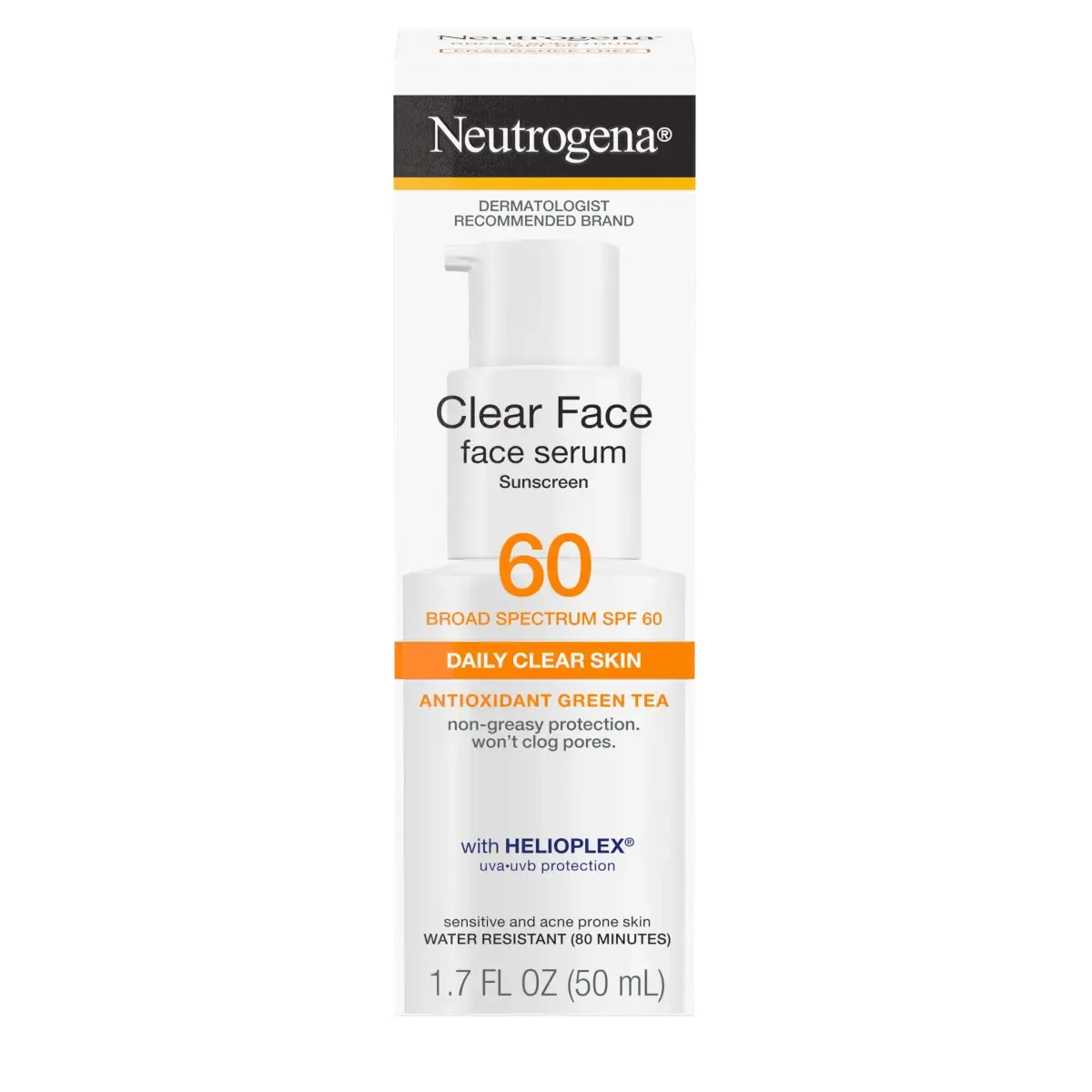
Most high-SPF face sunscreens aimed at acne-prone skin are matte, drying and a little chalky; this one is a soft, oil-free fluid with glycerin and a light silicone that reads as skincare rather than sunblock, in a pump rather than a squeeze tube. The filter package is the serious part: four organic actives near their US maximums, with butyloctyl salicylate as a solvent and unofficial SPF booster, which is how a serum-weight emulsion reaches a 60 label.
A light, oil-free SPF 60 fluid in a pump that acne-prone skin can wear every morning without paying for it in spots, with four organic filters near their US ceilings doing the real work and a green tea headline doing almost none. Good for combination and breakout-prone faces that want one comfortable step; sensitive eyes, reactive skin and anyone wary of homosalate should choose a mineral instead.
Between the brand site and Walmart there are fewer than four hundred reviews to draw on, and a noticeable share came through a free-sample programme, so the tolerability pattern on acne-prone skin is credible but the rating is warmer than an organic average would be. Beyond that the read leans on the declared filter percentages, the known behaviour of the Helioplex avobenzone-octocrylene system, and three seasons of retail presence; Amazon's larger review base could not be counted here.
The case for it
Same rule for everyone. “Full protection” is the verdict on 2,288 of 45,024 concern verdicts across the catalog; rule P1 decided 2,232 of them. As of September 25, 2026, engine 5.1.1.
Brand or formulator? Disclose a concentration or correct a fact →
The studies behind the evidence row
The case for it
Cautions: fungal-acne triggers.
What would change this: A researched evidence row for the lead active would replace this with a verdict.
Same rule for everyone. “Supporting role” is the verdict on 8,197 of 45,024 concern verdicts across the catalog; rule R8 decided 4,250 of them. As of September 25, 2026, engine 5.1.1.
Brand or formulator? Disclose a concentration or correct a fact →
The case for it
What would change this: A researched evidence row for the lead active would replace this with a verdict.
Same rule for everyone. “Full protection” is the verdict on 2,288 of 45,024 concern verdicts across the catalog; rule P1 decided 2,232 of them. As of September 25, 2026, engine 5.1.1.
Brand or formulator? Disclose a concentration or correct a fact →
The case for it
What would change this: A researched evidence row for the lead active would replace this with a verdict.
Same rule for everyone. “Full protection” is the verdict on 2,288 of 45,024 concern verdicts across the catalog; rule P1 decided 2,232 of them. As of September 25, 2026, engine 5.1.1.
Brand or formulator? Disclose a concentration or correct a fact →
Does the jobDoes what a sunscreen is for: UVA coverage, kind to the skin wearing it. Not measured from the label: pleasant enough to actually use.
A verdict is DermApproved’s assessment of how well a product’s ingredients fit a concern — never a claim about what the product treats. Evidence dots and collected reviews sit beside it and are never blended in. Rules 0.5.1 · evidence table ev-2026.09-r228 · how we decide
Green tea is the second-biggest word on this bottle and the seventeenth of nineteen inactive ingredients on the back, tucked in behind the preservatives and the vitamin E. That gap between the front label and the ingredient list is the most honest place to start with Neutrogena's Clear Face Serum Sunscreen, because everything that actually matters about the product has nothing to do with tea. It is a fluid, oil-free, fragrance-free SPF 60 for skin that breaks out, delivered from a pump instead of the squeeze tube the Clear Face line has used since the 2000s, and judged on that description rather than the botanical garnish it is a genuinely useful sunscreen.
The protection is Neutrogena's standard heavy artillery. Avobenzone at 3 percent handles long-wave UVA and is kept alive by 10 percent octocrylene, the stabilising pairing the brand has marketed as Helioplex for nearly two decades. Homosalate at 13.5 percent and octisalate at 5 percent carry the UVB load. Add them up and organic filters make up nearly a third of the formula by weight, which is how a lotion this thin earns a 60 on the label. The clever part is one line down: butyloctyl salicylate, second only to water in the list, a salicylate ester that dissolves the avobenzone and octocrylene into a light oil phase and absorbs a little UVB of its own along the way. It is not counted as an active in the US, but it is the reason the serum can feel thin while carrying that much filter.
On the skin it does what the word serum promises and no more. It comes out white, spreads like a thin milk, and turns clear within a minute, settling to a soft, faintly dewy finish that reviewers repeatedly describe as replacing their moisturiser. Glycerin, a light dimethicone and glyceryl stearate give it that slip; there is no powder in it to pull the finish matte, so oily skin gets comfort rather than shine control. Foundation goes over it well once it has set, and a pump makes the dose consistent in a way a tube never does. The acne-prone reviewers, who are the whole point of the Clear Face line, are the most consistent voice in the roughly three hundred and seventy reviews on the brand site and Walmart: no new breakouts, no congestion, worn daily from the first week. That is the product's real credential, and it is earned.
The complaints are the ones organic filters always generate, plus one about the dose. Several reviewers describe their eyes streaming after the serum migrated up with sweat, which is octocrylene and avobenzone doing what they do on the ocular surface; a fluid travels more easily than a cream, so the fix is to stop a centimetre below the lash line and use a mineral stick above it. Applied at the full quarter-teaspoon the label assumes, some people find it greasy, and applied over a toner or serum that has not dried it pills, because the triacontanyl PVP film that gives it 80-minute water resistance grabs whatever is still wet underneath. None of these is unusual. All of them are worth knowing before the first morning.
A reader who distrusts sunscreen marketing has two fair objections here, and both deserve a straight answer. The first is the green tea, and the answer is that its position in the list makes it an accent, not a second line of defence; there is real photoprotection research behind topical green tea polyphenols at meaningful doses, and no evidence that this is one of them. The second is the filters. Oxybenzone-free is printed on the bottle, and it is true, but the four filters that remain all crossed the FDA's systemic-absorption threshold in the agency's 2020 JAMA trial and have not yet cleared the data request that followed. Homosalate here is at 13.5 percent, nearly double the 7.34 percent the European Union has allowed on the face since 2022. Absorption is not harm, and the sun is a proven carcinogen while these filters are not, so wearing this daily is the right call for anyone who will not wear a mineral. But it is a stronger position to state that plainly than to let oxybenzone-free imply the debate is over.
There is one more thing to say about the reviews, in the spirit of not being managed by them. A visible share of the five-star write-ups on the brand site and Walmart are flagged as collected through a sampling programme, where the product arrived free in exchange for a write-up. That does not make them false, and the unflagged reviews say much the same, but it does mean the 4.6 average is a warmer number than a purely organic one would be, and the honest count of independent opinion is smaller than the total suggests.
Price is where the enthusiasm cools. Neutrogena's own site does not list one, and the retail spread runs from the mid-teens to twenty dollars for 1.7 ounces, with Walmart at just under twenty as this is written. For a daily face user at the right dose that is a bottle every six weeks or so, which puts it well above the brand's classic Clear Face lotion per ounce and in the range where a pump and a nicer texture are what you are paying for. It is not unreasonable for what it does; it is simply not the bargain the Neutrogena name suggests.
So the recommendation is specific. If you have combination or breakout-prone skin, want an SPF 60 that feels like a light moisturiser, and have been burned by sunscreens that congest, this is a sound daily pick and the pump alone will make you use it more consistently. If your eyes water at chemical filters, your skin is reactive or eczema-prone, or you would rather stay under the European homosalate limit, look to a zinc oxide formula. And ignore the tea; the sunscreen underneath it is the reason to buy.
The hero actives that drive this product's performance.
| Ingredient | Function | Evidence |
|---|---|---|
| Avobenzone 3% (3%) | Supplies all of the long-wave UVA coverage in this serum, and because it photodegrades quickly on its own it is chaperoned here by 10 percent octocrylene, the stabiliser pairing Neutrogena sells as Helioplex; the butyloctyl salicylate second in the inactive list helps by dissolving the avobenzone fully so it does not crystallise out of the emulsion. | Regulator-approved for Sun Damage · emerging certainty |
| Homosalate 13.5% (13.5%) | The main UVB absorber, dosed just under the US 15 percent ceiling and well above the 7.34 percent the EU now permits on the face, which is what carries a fluid serum to an SPF 60 label with octisalate as its junior partner. | Regulator-approved for Sun Damage · limited certainty |
| Octocrylene 10% (10%) | A UVB filter working mainly as avobenzone's bodyguard, absorbing the excited-state energy that would otherwise destroy it; it is also the ingredient most likely to be behind the eye-stinging some reviewers report, and the one that slowly degrades into benzophenone as the bottle ages. | Regulator-approved for Sun Damage · limited certainty |
| Butyloctyl Salicylate | The second ingredient after water and the quiet SPF booster of the formula: a salicylate ester that is not counted as an active in the US but absorbs some UVB itself, and that dissolves the avobenzone and octocrylene into a light, spreadable oil phase so the serum can feel thin while carrying a heavy filter load. | Not yet assessed |
| Bisabolol | A chamomile-derived soother placed mid-list to take the edge off four organic filters on breakout-prone skin, which is the Clear Face line's audience; it is a sensible inclusion rather than a headline one. | Not yet assessed |
| Camellia Sinensis Leaf Extract | The green tea on the front of the bottle sits third from the bottom of the list, behind the preservatives and the vitamin E; topical green tea polyphenols have real photoprotective data at meaningful doses, but at this position it is a marketing accent to the filters rather than a second line of defence. | Not yet assessed |
Ingredient standings describe the active at treatment-level doses and vehicles; this product's own condition grades weigh its actual formula.
Active Ingredients: Avobenzone 3%, Homosalate 13.5%, Octisalate 5%, Octocrylene 10%. Inactive Ingredients: Water, Butyloctyl Salicylate, Glycerin, Silica, Triacontanyl PVP, Trilaureth-4 Phosphate, Aluminum Starch Octenylsuccinate, Phenoxyethanol, Dimethicone, Hydroxyacetophenone, Sodium Acryloyldimethyltaurate/VP Crosspolymer, Bisabolol, Glyceryl Stearate, Chlorphenesin, Disodium EDTA, Tocopheryl Acetate, Camellia Sinensis Leaf Extract, Butylene Glycol, Sodium Hydroxide
sunscreen
AM
Treat it as the last skincare step and the first makeup step: one or two pumps after a serum has absorbed, then foundation once the film feels dry, which takes a few minutes. Skip a separate moisturiser on combination skin, since the glycerin and dimethicone here do enough, and keep the pump well away from the eye line to avoid the stinging that organic filters cause when they migrate.
UV protection begins as soon as the film has set, roughly fifteen minutes after application. The soft, primed feel is immediate; fewer new dark spots and less redness from daily sun are cumulative benefits that show over months of consistent use rather than from any single bottle.
The formulation question this serum answers is how to carry more than 30 percent organic filter in an emulsion that feels like a serum, and the answer is solvent choice. Avobenzone and octocrylene are crystalline or viscous solids that need an oil phase to dissolve in; here that phase is built on butyloctyl salicylate, a salicylate ester with a low viscosity and enough UVB absorbance of its own to raise the measured SPF above what the four labelled actives would give alone. The result is a low-viscosity oil-in-water emulsion, thickened by sodium acryloyldimethyltaurate/VP crosspolymer rather than waxes, that spreads into an even film, which matters because film uniformity is one of the largest sources of real-world SPF loss.
Avobenzone's instability is the other engineering problem. It absorbs UVA-1 out to 400 nm but loses much of that absorbance within an hour of sun unless a triplet quencher is present; octocrylene at 10 percent is that quencher, and the pairing is well characterised in the photostability literature. Aluminum starch octenylsuccinate and silica absorb excess oil at the surface and are why the finish is soft rather than slick despite the solvent load.
The safety evidence cuts both ways and should be read that way. In the FDA's randomized trial published in JAMA in 2020, avobenzone, homosalate, octisalate and octocrylene all produced plasma concentrations above the 0.5 ng/mL threshold that triggers further toxicology work, after four days of maximal application; the authors were explicit that this did not establish harm, and the sun's carcinogenicity is not in doubt. The FDA has since asked manufacturers for that data rather than confirming the filters as generally recognised as safe and effective, and the EU lowered homosalate to 7.34 percent in face products in 2022 on endocrine grounds. Green tea, finally, has legitimate photoprotection science: a 2001 study in the Journal of the American Academy of Dermatology showed topical green tea polyphenols reduced UV-induced erythema and DNA damage in human skin. The relevant caveat is dose, since those effects were seen at concentrations far above what a bottom-of-list extract can supply.
For patients being treated for acne, the sunscreen conversation is usually about compliance rather than chemistry: retinoids and benzoyl peroxide make skin photosensitive, and the patient who finds every sunscreen greasy or pore-clogging simply stops wearing one. Fluid, oil-free organic-filter formulas like this are commonly suggested in that setting precisely because they are tolerated, and a high SPF matters more than usual when post-inflammatory marks are the thing the patient most wants to avoid. Clinical guidance also tends to warn that the same lightness invites under-dosing, so the counselling point is the full quarter-teaspoon for the face and a reapplication at midday. Practitioners who see rosacea or eczema alongside acne generally steer those patients toward zinc oxide instead, given octocrylene's growing profile as a contact allergen, and the eye-stinging that fluid chemical sunscreens produce is a frequent reason patients abandon them, addressed with a mineral stick around the orbit. Pregnancy remains a case-by-case call in the absence of filter-specific data.
One to two pumps for the face and neck is roughly the quarter-teaspoon the label assumes; dispense onto the fingertips, dot it across the face and smooth outward, stopping about a centimetre below the lower lash line so the filters do not travel into the eyes. Anything underneath, whether a vitamin C serum or a hydrating layer, should be fully dry first or the film will pill. Give it a few minutes to turn clear before makeup. Reapply every two hours in direct sun and after eighty minutes of swimming or sweating. In the evening a cleansing balm or micellar water breaks the water-resistant film before the regular cleanser.
Retail sits between the mid-teens and twenty dollars for a 1.7 oz pump with no larger size, and Walmart was at just under twenty when this was written. Per ounce that is around three times the price of the brand's own Clear Face lotion, so the premium buys a pump, a lighter emulsion and a nicer morning experience rather than more protection. Judged against prestige SPF serums it is cheap; judged against the drugstore shelf it is one of the pricier options and the bottle empties in six weeks or so at the correct dose. It is worth it for someone who has struggled to find a high-SPF sunscreen their acne-prone skin tolerates, and hard to justify for someone who is happy in a lotion.
Combination, oily and breakout-prone skin looking for a high-SPF morning step that feels like a light moisturiser and will not congest, and anyone on an acne retinoid or benzoyl peroxide who needs a sunscreen they will actually keep wearing. The pump and fragrance-free formula also suit people who find tubes messy or scents intolerable.
Eyes that water at chemical filters, reactive or eczema-prone skin, and anyone who wants to stay within the European homosalate limit or avoid octocrylene should go to a zinc oxide formula. So should people expecting a treatment serum; the green tea here is decorative, and a matte-finish seeker will find the dewy set unwelcome.
Ready to try Neutrogena Clear Face Serum Sunscreen SPF 60?
Buy at Amazon ♥A white, fluid lotion-serum that spreads like a thin milk, turns clear as it is worked in and settles to a soft, slightly dewy finish rather than the powdery dryness of a matte sunscreen.
Nothing added; a few reviewers pick up a faint sunscreen smell from the filters that fades within minutes.
A 1.7 oz airless-style pump bottle, which keeps the dose consistent and the filters out of the light and air; it is the packaging reviewers single out most, though the pump is easy to over-press.
Goes on white, disappears within a minute, and feels closer to a light moisturiser than to a serum, which surprises people who expected something watery. The main first-week lessons are to let anything underneath dry fully before pumping, or it will pill, and to keep it off the lash line, since the filters can make eyes stream if they travel there. No purging or adjustment; breakout-prone reviewers report being able to wear it daily from the start.
About six weeks of daily face use at the right dose, or two to three months if it is worn on office days and skipped indoors.
All Year
Neutrogena's Clear Face lotion has been the drugstore default for breakout-prone sun protection since the 2000s, but its 3 oz squeeze bottle and body-lotion feel were built for a beach day, not a skincare routine. The serum format arrived in 2023 alongside a wave of SPF serums across the brand, adding a pump, a lighter emulsion and a green tea headline to bring the line into the morning-routine era.
Founded in 1930, Neutrogena is the mass-market sun-care brand most often named in US dermatologist surveys, with decades of published photostability and SPF work behind its Helioplex filter systems. The Clear Face sub-line for breakout-prone skin dates to the 2000s; this serum format joined it in 2023.
Because it is called a serum with green tea, it is a treatment product with a bit of SPF added.
It is a sunscreen first and only. The four filters make up over thirty percent of the formula by weight, while the green tea extract is the third-last ingredient. The word serum here describes a lighter texture and a pump, not a treatment dose of anything.
Oil-free and non-comedogenic on the label mean it cannot cause breakouts.
Non-comedogenic is a manufacturer's test claim with no regulatory definition, and it does not cover every trigger. The formula avoids heavy oils and waxes, which is why acne-prone reviewers tolerate it well, but organic filters and film formers can still congest some skin, and stinging from the filters is a separate issue the label does not address.
Oxybenzone-free means the filters have been cleared of the safety questions raised about chemical sunscreens.
Oxybenzone is out, but avobenzone, homosalate, octisalate and octocrylene all reached measurable blood levels in the FDA's 2020 absorption trial and remain under the agency's data request. That does not mean they harm anyone; it means the question is open, which is different from settled.
It is one of the better-tolerated high-SPF options for acne-prone skin: oil-free, no heavy waxes, fragrance-free, and reviewers who break out from most sunscreens report wearing it daily without new spots. It carries four organic filters, though, so anyone whose skin congests from film-forming sunscreens should still patch-test along the jaw for a week.
Organic filters such as octocrylene and avobenzone migrate with sweat and oil and irritate the eye surface, and a fluid serum travels more easily than a thick cream. Stop the application about a centimetre below the lower lash line and switch to a mineral stick for the eye area if the watering continues.
The label does not say, but the position tells you: Camellia sinensis leaf extract is the seventeenth of nineteen inactive ingredients, behind the preservatives. Topical green tea polyphenols have genuine photoprotective research behind them at meaningful concentrations, which this is unlikely to be. Treat it as a pleasant extra, not a reason to buy.
On combination and oily skin, yes; the glycerin, dimethicone and glyceryl stearate give it enough slip and hydration that many reviewers wear it as their morning moisturiser. Dry skin will want a light hydrating layer underneath, fully absorbed before the sunscreen goes on so it does not pill.
Yes, it is labelled water resistant for 80 minutes, which the triacontanyl PVP film former provides. That also means it does not rinse off cleanly with water alone at night; a cleansing balm or micellar water first, then your usual cleanser, removes it fully.
It contains no oxybenzone, but homosalate at 13.5 percent and octocrylene at 10 percent were both shown to be absorbed into the bloodstream in the FDA's 2020 trial and have no pregnancy-specific safety data. Many obstetric dermatologists suggest a zinc oxide sunscreen for the duration instead; it is worth a conversation with your own clinician.
Recurring themes our editors read across retailer reviews of this product — summaries in our words, not quotations, and not a substitute for your own patch test.
Melts in with no white cast and works as a makeup base
Does not trigger breakouts on acne-prone skin
Pump bottle is cleaner and easier to dose than a tube
Fragrance-free and comfortable enough to replace a moisturiser
Stings and waters the eyes if it migrates
Feels greasy at the full recommended dose
Pills over toner or serum that has not dried
Small 1.7 oz pump for the price