Cutting the Leaf Yourself Gets You a Latex Problem the Bottle Already Solved
Aloe has the best clinical case of any kitchen remedy — and the fresh-leaf version puts a manual processing step between you and the part that works.
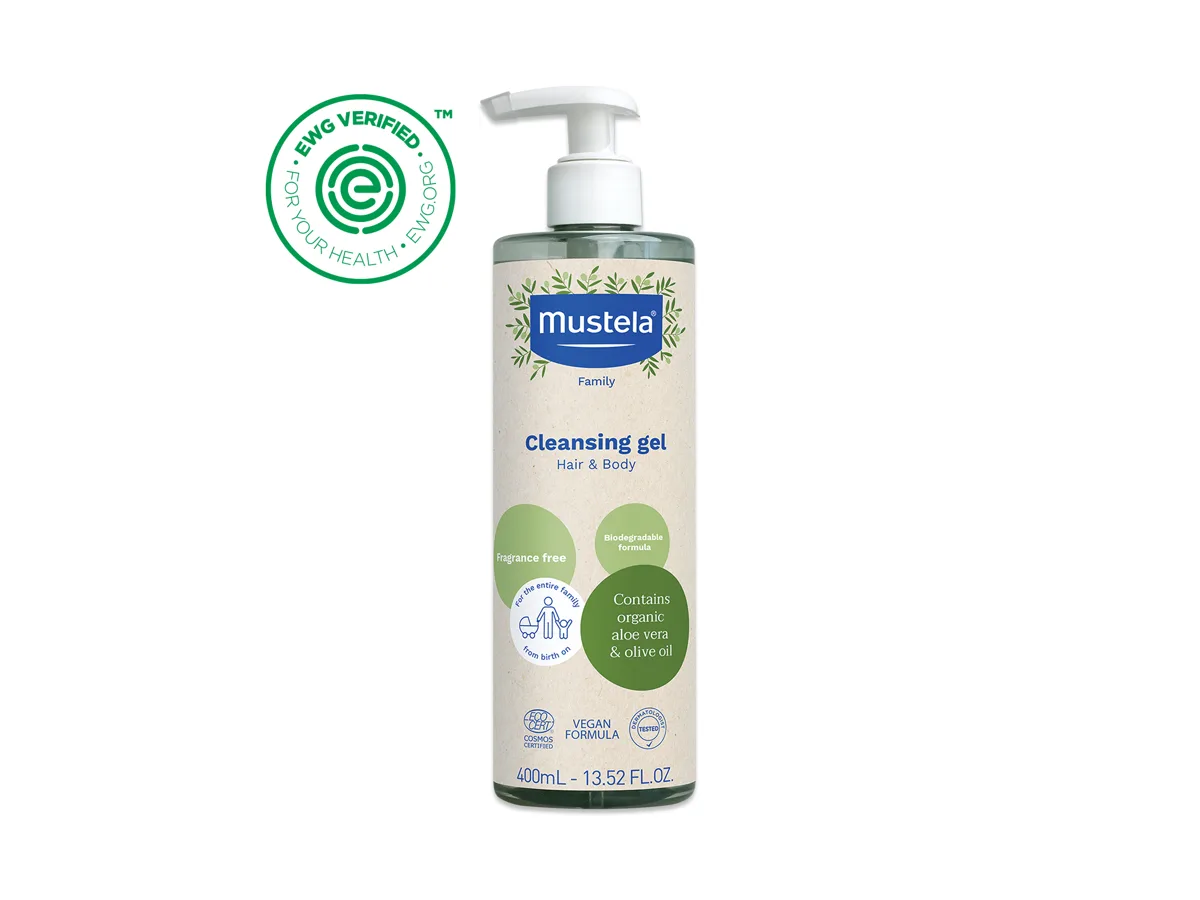
Where Mustela's other fragrance-free wash uses a single glucoside and barely foams, this one layers five sulfate-free surfactants — glucoside, betaine, amphoacetate and two glutamates — so it lathers like a proper wash while staying in the very-mild tier, in a 400 mL pump with a refill pouch and no fragrance. It is the brand's best all-rounder for a household with a baby, a sensitive parent and one bathroom. The organic certification is real and the olive oil is a trace; neither is why it works.
The best all-rounder in Mustela's range and a genuinely good cleanser by any standard: five sulfate-free surfactants from the mildest classes, layered so it lathers like a real wash without stripping, no fragrance, glycerin left behind, in a 400 mL pump with a refill pouch. It suits newborns, eczema-prone children and reactive adults from one bottle. The organic seal is real and the olive oil is a trace — neither is the reason to buy it, and the surfactant design is.
Just over seventy ratings on Mustela's US store across six years, all telling the same story about gentleness, is a consistent but not large record for a wash marketed to every age. The surfactant classes it uses are among the best characterised in cleansing chemistry, and the assessment rests on that, on the ingredient order and on the brand's pediatric formulation history, with the reviews serving as confirmation rather than evidence.
The case for it
What would change this: A researched evidence row for the lead active would replace this with a verdict.
Same rule for everyone. “Good choice” is the verdict on 1,938 of 45,024 concern verdicts across the catalog; rule F2 decided 1,938 of them. As of September 25, 2026, engine 5.1.1.
Brand or formulator? Disclose a concentration or correct a fact →
The case for it
What would change this: The same active in a leave-on form would be judged on its evidence rather than its contact time.
Same rule for everyone. “Supporting role” is the verdict on 8,197 of 45,024 concern verdicts across the catalog; rule R6 decided 2,017 of them. As of September 25, 2026, engine 5.1.1.
Brand or formulator? Disclose a concentration or correct a fact →
The studies behind the evidence row
Does the jobDoes what a cleanser is for: surfactant mildness, rinses clean without stripping. Not measured from the label: pH match to skin.
A verdict is DermApproved’s assessment of how well a product’s ingredients fit a concern — never a claim about what the product treats. Evidence dots and collected reviews sit beside it and are never blended in. Rules 0.5.1 · evidence table ev-2026.09-r228 · how we decide
The name tells you about the olive oil and the organic certification, and the bottle tells you about the aloe, and none of those is why this wash is good. The reason is buried in the middle of a twelve-item ingredient list: lauryl glucoside, cocamidopropyl betaine, disodium cocoamphodiacetate, disodium cocoyl glutamate, sodium cocoyl glutamate. Five surfactants, no sulfate, every one of them in the mild-to-very-mild tier, layered so that together they foam like a proper wash while no single one is present at a level that could bother a newborn. That's the product. Everything else on the label is a story told to sell it, and it happens to be a story attached to one of the better cleansers in the pharmacy.
Mustela launched its Organic range in 2020 as a fragrance-free, Ecocert-and-Cosmebio-certified line for the whole family, built on an aloe base with olive oil as the botanical and refill pouches to cut the plastic. The company behind it, Laboratoires Expanscience, has been formulating for infant skin since 1950 and knows its way around a surfactant blend better than most of the brands now selling 'clean' baby washes on Instagram. The cleansing gel is the range's anchor and, six years on, one of the brand's best-sellers in the US, largely because it's the Mustela wash that parents end up using on themselves.
Start with the surfactants, because they deserve it. Lauryl glucoside leads: a non-ionic sugar surfactant, mild and decent at foaming. Cocamidopropyl betaine follows, the amphoteric that appears in nearly every gentle wash for the way it packs into micelles and lowers the irritation of whatever it's paired with. Disodium cocoamphodiacetate is another amphoteric, the workhorse of tear-free baby shampoos for decades. Then two amino-acid surfactants, disodium and sodium cocoyl glutamate, which are about as gentle as anionic cleansers get and add creaminess to the foam. The genius of a five-way blend like this — and it is a well-established piece of formulation science, not a Mustela invention — is that mixed surfactant systems are milder than any of their components alone: the different head groups crowd into shared micelles, the concentration of free surfactant monomer that actually contacts the skin drops, and you get lather without the lipid stripping that a single anionic surfactant at the same total dose would cause. Compare it with Mustela's other fragrance-free wash, the Soothing gel, which uses one glucoside and barely foams: this one solves that problem without giving up the mildness.
Glycerin sits fourth, high enough that some stays behind after the rinse and skin doesn't tighten. Organic aloe juice takes water's place at the top, which is where most of the formula's organic percentage comes from; it adds a little slip and humectancy and a lot of certification arithmetic. Citric acid holds the pH near skin's, and sodium benzoate with potassium sorbate — the food-grade pair — preserve it, so the wash is free of phenoxyethanol as well as parabens and fragrance. And last, after the preservatives, comes the organic olive fruit oil the bottle is named for: a trace, carried away by the surfactants along with everything else, present for the label and the seal. If anything that's the safest place for it, since leave-on olive oil has been associated with weaker barrier function in infant-skin studies and this wash never leaves it on.
In the bathroom it earns its reputation. A small pump lathers a whole baby's hair and body into a soft, fine-bubbled, creamy foam — noticeably more foam than sulfate-free washes usually manage — and rinses clean without a slippery residue or a squeak. Nothing stings if it reaches the eyes. Skin comes out soft and smelling of nothing. A reactive baby who reddened after baths with a scented wash usually stops reddening within a bath or two, and the family's dry-skinned or eczema-prone members find it doesn't work against the emollient they put on afterwards. Adults use it as a body wash and a face wash for rosacea-prone or barrier-damaged skin, and it's mild enough for that while still cleaning properly; it won't take off a full face of sunscreen and makeup unaided, but that's not its job. The thicker gel can make the pump sluggish, which is the one recurring packaging grumble.
The skeptical points are about the marketing, not the formula. The organic certification governs sourcing and processing, not mildness — a certified-organic wash built on a harsher surfactant would be no gentler, and this blend would be just as gentle without the seal. The olive oil and aloe are, respectively, a trace and a diluent, and neither is 'nourishing' anything in a rinse-off. And the 'whole family' pitch, while true, is also a way to sell a baby-priced product to adults who could buy a mild sulfate-free wash for less. None of this makes the gel worse; it's a very good wash sold on its least important attributes.
On price, twenty and a half dollars for 400 mL is about $1.50 an ounce, with the refill pouch fifty cents cheaper and the bottle kept — reasonable for a pharmacy-brand baby wash and good for one this well designed, especially when it replaces three separate products in a family bathroom. A baby alone gets three or four months from a bottle; a family sharing it, six to eight weeks, after which the refill economics kick in. The review record is seventy-odd ratings on the US store over six years, consistently about gentleness and sensitive skin, which is exactly what the list predicts.
So here's the recommendation without the packaging copy: if you want one fragrance-free, sulfate-free wash that lathers properly, suits a newborn, an eczema-prone toddler and a sensitive parent, and comes in a refillable pump, this is the Mustela to buy and one of the best options in the category. Buy it for the five surfactants. The olive oil is decoration, the organic seal is a nice extra, and the aloe is mostly water with a better name.
The hero actives that drive this product's performance.
| Ingredient | Function | Evidence |
|---|---|---|
| Lauryl Glucoside + Cocamidopropyl Betaine + Disodium Cocoamphodiacetate + Cocoyl Glutamates | A five-surfactant system with no sulfate of any kind: a glucoside leads, an amphoteric betaine and an amphoacetate soften it, and two amino-acid glutamates finish it. Every one of these is in the mild-to-very-mild tier, and layering them lets the wash foam properly — unlike the brand's single-glucoside Soothing gel — while extracting less skin lipid than any anionic-led blend. This surfactant architecture, not the organic seal, is why the gel suits newborns and adults alike. | Not yet assessed |
| Aloe Barbadensis Leaf Juice (organic) | Organic aloe juice replaces plain water as the base, which is where most of the formula's 'organic' percentage comes from; it adds a little humectancy and polysaccharide slip to the lather, and while its soothing reputation outruns the evidence in a rinse-off, using it as the diluent is harmless and gives the wash a softer feel than a water base. | Not yet assessed |
| Glycerin | Fourth on the list, high enough that a fraction stays on the skin after rinsing and keeps a baby's — or a parent's — skin from feeling tight; with the mild surfactant blend it's the reason this wash can be used every day on the whole family without a moisturiser feeling mandatory afterwards. | Established mechanism for Dryness · established mechanism |
| Olea Europaea (Olive) Fruit Oil (organic) | The olive oil in the name is the last ingredient in the list — a trace of organic lipid that the surfactants carry away with everything else. Its role is the label and the certification arithmetic, not the skin; and since olive oil as a leave-on has been linked to weakened infant barrier function, its trace presence in a rinse-off is, if anything, the safest place for it. | Not yet assessed |
| Sodium Benzoate + Potassium Sorbate + Citric Acid | The food-grade preservative pair, held effective by citric acid at a skin-friendly pH — the same system across Mustela's fragrance-free products, chosen so the wash stays free of phenoxyethanol, parabens and formaldehyde releasers while still being safe to keep in a warm bathroom for months. | Not yet assessed |
Ingredient standings describe the active at treatment-level doses and vehicles; this product's own condition grades weigh its actual formula.
Aloe Barbadensis (Aloe Vera) Leaf Juice, Water, Lauryl Glucoside, Glycerin, Cocamidopropyl Betaine, Disodium Cocoamphodiacetate, Citric Acid, Disodium Cocoyl Glutamate, Sodium Benzoate, Potassium Sorbate, Sodium Cocoyl Glutamate, Olea Europaea (Olive) Fruit Oil
cleanser
AM & PM
One bottle for everyone in the bathroom — a small amount lathers a baby's hair and body, a larger one washes an adult, and it doubles as a gentle face wash for reactive skin. Rinse well and moisturise damp skin afterwards on dry or eczema-prone areas. Buy the refill pouch once the pump bottle is empty rather than a new bottle; it's cheaper and the point of the packaging. Keeps its mildness at any frequency, so daily baths are fine.
Immediate and steady: skin and hair come out of the first wash clean, soft and unscented, with none of the tightness a sulfate wash leaves. Over weeks the benefit is negative space — no post-bath redness on a sensitive baby, no dry-scalp flakes from a harsh shampoo, no need to switch products when the family shares the bottle. Nothing accumulates, and nothing needs to.
The science here is surfactant science, and the formula is a clean example of how modern mild cleansers are built. Skin irritation from washing tracks with how much surfactant monomer is free in solution to bind and denature stratum corneum proteins and extract intercellular lipid; the two levers a formulator has are the intrinsic mildness of each surfactant and the mixing of several with different head groups so that they co-assemble into mixed micelles, lowering the free-monomer concentration below what any component alone would give at the same total dose. This gel pulls both levers. Lauryl glucoside is a non-ionic alkyl polyglucoside, among the mildest foaming surfactants known; cocamidopropyl betaine and disodium cocoamphodiacetate are amphoterics whose zwitterionic character reduces protein binding and which are the classic partners for tear-free formulations; disodium and sodium cocoyl glutamate are acyl amino-acid anionics with irritation scores near the bottom of the anionic class and a creamy foam profile. The absence of any sulfate — including the milder ethoxylated ones the brand uses in its scented gels — removes the class most implicated in barrier-lipid extraction. Glycerin at fourth position deposits partially during rinsing and measurably reduces post-wash transepidermal water loss relative to a glycerin-free control. Organic aloe barbadensis leaf juice as the base contributes polysaccharides that add slip and modest humectancy; its anti-inflammatory reputation rests on leave-on and oral data and is not expected to translate in a rinse-off. Olea europaea fruit oil at last position is present at trace level and is removed with the lather; this is worth noting because leave-on olive oil, with its high oleic-to-linoleic ratio, has been associated in infant studies with reduced barrier integrity, a concern that does not apply to a rinse-off trace. The preservative system — sodium benzoate and potassium sorbate, active in the acidic range set by citric acid — avoids phenoxyethanol, parabens and formaldehyde releasers. The absence of fragrance is the formula's most evidence-backed attribute for its population, since fragrance mix is the leading cosmetic contact allergen in children and pediatric-dermatology guidance recommends fragrance-free cleansers for infants, particularly those with atopic risk. Ecocert and Cosmebio certification attests to ingredient origin and processing restrictions and carries no implication about skin tolerance. The brand reports pediatric and dermatological testing under its own protocols; no independent trial has been published.
When clinicians describe the cleanser they want a family to use — for a newborn, for a child with atopic dermatitis, for an adult with rosacea or a compromised barrier — the description is essentially this product: fragrance-free, sulfate-free, a mixed mild surfactant system that lathers enough to be used properly, a pH close to skin's, and a glycerin content that leaves the skin no tighter than water would. The practical value of one bottle that serves the whole household is real; families with a sensitive baby often end up buying three different 'gentle' washes and this replaces them. A dermatologist would add the usual footnotes. The organic certification says nothing about tolerance and shouldn't be read as an additional safety margin; the olive oil in the name is a trace in a rinse-off and neither helps nor, as leave-on olive oil can on infant skin, harms; and no wash treats eczema — the emollient applied within minutes of the bath is the intervention, and this cleanser's job is not to undermine it. For an adult using it on the face, it's mild enough for daily use on reactive skin but will not remove a full application of sunscreen without help. Within those limits it's an easy product to recommend across ages.
For a baby: wet the hair and body in a short, lukewarm bath, pump a small amount — one press is enough for a newborn, two for a toddler — into wet hands, lather over the body and then the scalp with fingertips, and rinse thoroughly, tipping the head so the foam runs away from the eyes. Pat dry and apply an emollient within a few minutes if the skin is dry or eczema-prone. For adults: use as a body wash in the shower, or as a face wash on reactive skin, massaging a small amount over damp skin and rinsing; pair it with a separate cleanser or an oil first if you need to remove sunscreen or makeup. It's mild enough for daily use at any age. When the bottle empties, pour in the refill pouch rather than buying a new bottle. If the pump slows, rinse the nozzle under warm water — the gel is thick enough to clog it.
Twenty and a half dollars for a 400 mL pump comes to about $1.50 per fluid ounce, with the 400 mL refill pouch at $20 and the bottle kept — mid-range for a pharmacy-brand baby wash and good value for one built this carefully, especially when it replaces a baby wash, a sensitive-adult body wash and a gentle face wash in one bathroom. A baby alone gets three to four months from a bottle; a sharing family six to eight weeks, at which point the refill economics take over and the per-ounce cost drops below most of the brand's smaller bottles. Mustela's seventy-five years of pediatric formulation and its Ecocert and Cosmebio certification underwrite the price without inflating it. The up-front cost is the only real barrier, and the case for it is straightforward: it's the one Mustela wash you won't need to buy a second wash alongside.
Any household that wants one fragrance-free, sulfate-free wash for everybody — a newborn, an eczema-prone child, a parent with sensitive or rosacea-prone skin — and that values a proper lather over the water-like feel of single-surfactant 'gentle' gels. It's the natural choice for families already in Mustela's Organic range and the best starting point for anyone new to the brand with a reactive baby.
Parents who want the classic scented Mustela bath experience — this smells of nothing, deliberately. Anyone buying it specifically for the olive oil or the organic seal should know those are the least significant things about it, and adults needing a cleanser that removes heavy makeup or sunscreen on its own will find it too mild for that task.
Ready to try Mustela Organic Cleansing Gel with Olive Oil and Aloe?
Buy at Amazon ♥A clear, medium-thin gel that builds a soft, creamy, fine-bubbled lather — more foam than most sulfate-free washes manage — and rinses clean without a slippery residue.
None. No fragrance and no masking scent; a faint, clean, neutral smell from the surfactants and aloe that vanishes on rinsing.
A 400 mL pump bottle in the Organic range's green-and-cream livery, sold alongside a 400 mL refill pouch; the bottle is recyclable and designed to be kept and refilled rather than replaced.
The first bath is reassuringly ordinary: a small pump foams enough for a whole baby, hair rinses soft, nothing stings, and skin comes out clean without that squeaky tightness. Adults using it in the shower notice it's milder than their usual wash and lathers better than the 'gentle' washes they've tried before. A reactive baby who reddened with a scented gel usually stops reddening within a bath or two, which is the product's whole promise fulfilled quietly.
Three to four months for a baby alone from the 400 mL pump; six to eight weeks if the whole family shares it, after which the refill pouch takes over.
All Year
Mustela launched its Organic range in 2020 as certified-organic, fragrance-free products for the whole family, built on an aloe base with olive oil as the signature botanical and packaged with refill pouches to cut plastic. The cleansing gel is the range's anchor product and has become one of the brand's best-sellers in the US, partly because it's the Mustela wash that works for parents as well as babies.
Mustela is the pediatric skincare brand of Laboratoires Expanscience, a family-owned French pharmaceutical company that has formulated for infant skin since 1950 and sells through pharmacies in Europe and the US. Its Organic range, launched in 2020, is certified by Ecocert and Cosmebio and tested under pediatric and dermatological supervision; the company publishes laboratory work on its actives but independent trials of individual washes are not available. The brand is B Corp certified.
The organic certification is what makes this wash gentler than the ordinary baby washes.
Ecocert and Cosmebio certification governs where ingredients come from and how they're processed — organic farming, restricted synthetics — not how mild the finished product is on skin. What makes this gel gentle is its surfactant design: five sulfate-free cleansers from the mildest classes, layered so they foam without any one of them being present at a harsh level, plus no fragrance. A certified-organic wash built on a harsher surfactant would be no kinder to a baby, and a non-certified wash with this blend would be just as gentle. Buy it for the chemistry; the seal is a bonus.
The olive oil and aloe nourish and protect baby skin during the wash.
Olive oil is the last ingredient in the list, a trace that the surfactants rinse away with everything else, and aloe juice is mostly there as the base liquid. Neither does anything measurable in a product that's on the skin for seconds. That's fine — and in olive oil's case slightly reassuring, since leave-on olive oil has been associated with weaker barrier function in infant studies. The skin-friendly work here is done by what the wash doesn't do: no stripping, no fragrance, glycerin left behind.
Both. There's no parfum and no masking scent, and the five surfactants — lauryl glucoside, cocamidopropyl betaine, disodium cocoamphodiacetate and two cocoyl glutamates — contain no sulfate of any kind. It's the mildest lathering wash in the brand's range.
Yes, and many families buy it for that reason — it's marketed for the whole family and works as a body wash, a gentle shampoo and a face wash for reactive adult skin. It won't strip a sensitive adult the way a sulfate wash does, though it's not designed to remove heavy makeup or sunscreen on its own.
It's one of the two Mustela washes suited to eczema-prone skin, alongside the Soothing Cleansing Gel. It's fragrance-free, sulfate-free and rinses without tightness, so it doesn't work against the emollient applied after the bath. It doesn't treat eczema — no wash does — but it stays out of the way.
Not really. It's the last ingredient on the list, a trace that rinses away with the lather; its job is the name on the bottle and the organic-content calculation. The wash's gentleness comes from its surfactant blend and glycerin, not from the oil.
The gel comes in a 400 mL pump bottle, and a 400 mL refill pouch is sold separately for slightly less; you pour the pouch into the empty bottle. It cuts plastic and brings the per-refill price down, and it's how the brand intends the product to be bought after the first bottle.
Both are fragrance-free. The Soothing gel uses a single mild glucoside and barely foams, and it's aimed at very reactive baby skin; the Organic gel uses five sulfate-free surfactants, lathers properly, comes in a bigger pump with a refill, and suits the whole family. For most households with a sensitive baby, the Organic gel is the more practical choice.
Recurring themes our editors read across retailer reviews of this product — summaries in our words, not quotations, and not a substitute for your own patch test.
Gentle on sensitive and eczema-prone skin
Works for the whole family
Fragrance-free with a real lather
Refill pouch cuts waste and cost
Plain, slightly 'nothing' feel
Pump can clog with the thicker gel
Pricey up front before the refill
Olive oil in the name is barely there