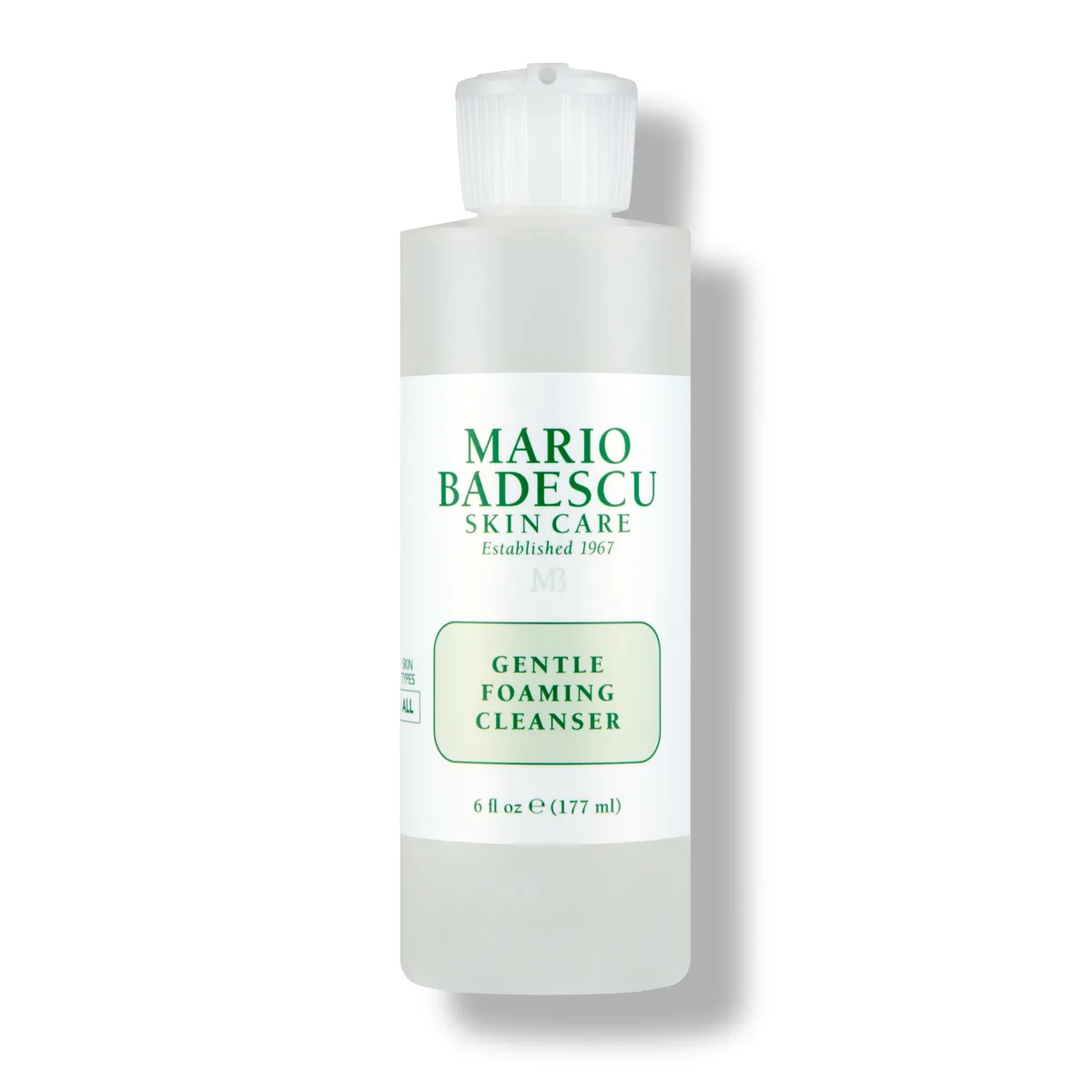
Within the brand's cleanser range it is the outlier: an amino-acid glycinate and a coco-betaine over glycerin and aloe, with no sulfate, alcohol, fragrance, paraben, formaldehyde releaser or dye, in a formula that reads as if it were written this decade because it was. The kombucha-type black tea ferment and the flower extracts are the label's on-trend garnish; the surfactant system is the substance, and it is a good one.
A modern amino-acid foaming cleanser, sodium lauroyl glycinate and coco-betaine over glycerin and aloe, that is fragrance-free, sulfate-free, paraben-free and dye-free and rinses clean without tightness. The black tea ferment and flower extracts are decoration in a rinse-off and BHT is the one ingredient to note; otherwise this is the best cleanser in the brand's range and a genuinely good one on any shelf, at under three dollars an ounce.
Nearly three hundred brand-site reviews and retailer feedback describe the foam and the non-stripping rinse reliably, and the surfactant chemistry is well characterised; the brand has published no testing, the pH is unpublished, and the ferment's brightening claim has no support beyond the ingredient's name.
Verdicts
How well it fits each concern
Verdict by concern tap a concern for the case
Supporting rolefor Excess OilinessIn your profileYou chose · Nothing here targets excess oiliness directly; sebum removal without stripping is the recognised companion to treating it, and this foam does that without known triggers.Not yet assessedGentleNo reviews collected yet
The case for it
Sodium Lauroyl Glycinate has no evidence row yet for this concern — it is in the research queue.
The formula carries none of the triggers this concern is sensitive to.
What would change this: A researched evidence row for the lead active would replace this with a verdict.
Same rule for everyone. “Supporting role” is the verdict on 8,197 of 45,024 concern verdicts across the catalog; rule R8 decided 4,250 of them.
As of September 25, 2026, engine 5.1.1.
R8 — The category's job (barrier care, humectant hydration, gentle cleansing, photoprotection) is the documented supportive role for this concern. This is the honest verdict for a moisturizer on an acne page. · the full register
Supporting rolefor DehydrationIn your profileYou chose · Rinse-off foam: Glycerin gets seconds of contact, so this supports a routine for dehydration rather than treating it.Moderate evidenceGentleNo reviews collected yet
The case for it
Glycerin has trial-supported standing for this concern.
It is in a rinse-off product, so it gets seconds of contact rather than the leave-on exposure the evidence assumes.
The formula carries none of the triggers this concern is sensitive to.
What would change this: The same active in a leave-on form would be judged on its evidence rather than its contact time.
Same rule for everyone. “Supporting role” is the verdict on 8,197 of 45,024 concern verdicts across the catalog; rule R6 decided 2,017 of them.
As of September 25, 2026, engine 5.1.1.
R6 — Contact time cannot deliver a leave-on claim; the product is judged on its job (cleansing without aggravating). Explicit exceptions (BPO wash, SA cleanser, medicated shampoos) never reach this rule because their rows set rinse_off_ok. · the full register
Carrying active
Glycerin
Standing
supported — its mechanism is established
Form
contact limited — studied range 20%, from the trials on the row; needs leave-on contact; judge it after ~1 weeks
Tolerability
gentle
Row checked
against its sources on July 17, 2026 (evidence table ev-2026.09-r228)
The studies behind the evidence row
USP glycerin monograph / Fluhr et al., glycerol and the skin (review) — glycerin is the reference humectant, drawing and holding water in the stratum corneum — reference work
Good choicefor SensitivityIn your profileYou chose · No fragrance, drying alcohol, declarable allergens or sensitising preservatives in this foam — the profile sensitive skin looks for.Not yet assessedGentleNo reviews collected yet
The case for it
Sodium Lauroyl Glycinate has no evidence row yet for this concern — it is in the research queue.
The formula carries none of the triggers this concern is sensitive to.
What would change this: A researched evidence row for the lead active would replace this with a verdict.
Same rule for everyone. “Good choice” is the verdict on 1,938 of 45,024 concern verdicts across the catalog; rule F2 decided 1,938 of them.
As of September 25, 2026, engine 5.1.1.
Does the jobDoes what a cleanser is for: surfactant mildness, rinses clean without stripping. Not measured from the label: pH match to skin.
A verdict is DermApproved’s assessment of how well a product’s ingredients fit a concern — never a claim about what the product treats. Evidence dots and collected reviews sit beside it and are never blended in.
Rules 0.5.1 · evidence table ev-2026.09-r228 · how we decide
Assessment
Pros & Cons
Pros
✓ Sodium lauroyl glycinate and coco-betaine, a genuinely mild amino-acid surfactant pairing
✓ Fragrance-free, sulfate-free, alcohol-free, paraben-free and dye-free
✓ Glycerin, aloe and propylene glycol leave skin soft rather than tight
✓ Creamy foam that rinses in seconds with no residue
✓ Sits under retinoids and acids without adding stripping
✓ Fungal-acne safe and suitable for reactive skin
✓ Under three dollars an ounce, lasting about three months
Cons
✗ Black tea ferment and flower extracts do nothing measurable in a rinse-off
✗ BHT in the tail is an occasional sensitiser
✗ Does not remove heavy or waterproof makeup on its own
✗ Flip cap pours out more than a wash needs
✗ Chamomile is a minor note for the ragweed-allergic
✗ Travel size is poor value per ounce
Review
Full Review
No sulfate, no alcohol, no fragrance, no parabens, no formaldehyde releaser, no dyes. For a cleanser from a brand whose acne wash leads with sodium laureth sulfate and isopropyl alcohol and whose cleansing milk is preserved with diazolidinyl urea, that list of absences is the news about the Gentle Foaming Cleanser, and the ingredient list that remains is the proof that the brand can write a modern label when it decides to. Water, coco-betaine, sodium lauroyl glycinate, glycerin, an acrylate thickener, aloe juice, phenoxyethanol, propylene glycol, a fermented black tea extract, BHT, ethylhexylglycerin, chamomile and evening primrose flower extracts, and three food-grade preservative acids. Sixteen ingredients, and the two that clean are the two a formulator would choose today.
Those two are the point. Sodium lauroyl glycinate is an amino-acid surfactant, a glycine derivative that cleans with a creamy foam and interacts far less with skin proteins and lipids than a sulfate does; coco-betaine is the amphoteric co-surfactant that builds the lather and softens the glycinate further, and it is a plain betaine rather than the cocamidopropyl betaine whose manufacturing impurities drive its allergy record. Behind them sit glycerin fourth, aloe sixth and propylene glycol eighth, a humectant trio that leaves a thin film after rinsing and turns a mild wash into a comfortable one. The result in the hand is a clear gel that foams into a soft, medium-density lather, spreads without dragging, and rinses in seconds to skin that feels clean and cushioned rather than squeaky. It takes off everyday sunscreen and light makeup on its own; heavy or waterproof makeup wants an oil or balm first, as with any mild wash, and the brand's own cleansing oil is a sensible partner.
The nearly three hundred brand-site reviews and larger retailer record say what a formula like this should produce: cleans thoroughly, no tightness, no scent, no sting, gentle enough twice a day on reactive skin. The complaints are the honest ones, that it does not remove a full face of makeup alone and that the flip cap pours out more than a wash needs. Nothing in the record suggests the cleanser fails at what it sets out to do, and the skin types that struggle with the rest of the range, sensitive, rosacea-prone, retinoid-stripped, are the ones that praise it most.
The garnish deserves a plain reading. The Saccharomyces, Xylinum and black tea ferment ninth is a kombucha-type extract with antioxidant compounds in the laboratory and a brightening claim on the brand's page; in a rinse-off that is on the skin for under a minute it does nothing measurable, and the brightness the brand describes is the look of skin that has been cleaned without being stripped. Chamomile and evening primrose flower extracts twelfth and thirteenth are the calming botanicals at trace doses, and the calm comes from what the formula leaves out rather than what they put in. BHT tenth is an antioxidant preserving the extracts, an occasional sensitiser, and the one ingredient on this label a very reactive user would pause over; chamomile is an Asteraceae plant and a note for the ragweed-allergic. That is the complete list of reservations, and it is short.
It is worth pausing on why this cleanser matters beyond its own bottle. A brand with a large, loyal customer base that mostly buys its salon-era formulas has, in this one product, shown that it can formulate to a contemporary standard, sulfate-free, fragrance-free, amino-acid based, cleanly preserved, at a drugstore price; that makes the parabens, dyes and formaldehyde releasers elsewhere in the range look less like a limit of skill and more like a decision about heritage. A customer who likes the brand and has reactive skin now has somewhere to start, and a reviewer has a benchmark for what the rest of the line could be.
On price, sixteen dollars for six ounces is under three dollars an ounce, which sits in the middle of the sulfate-free market and well below the amino-acid cleansers from clean-beauty and Korean brands that made the category, with a formula that gives up nothing to them in surfactant choice or humectant load. A small bead per wash stretches the bottle to about three months twice a day, so the daily cost is small; the two-ounce travel size at nine dollars is poor value beyond a trial. A drugstore amino-acid gel does the same job for a little less, and this does it with a cleaner tail than most of them.
So the recommendation is straightforward and, for this brand, unusual. For normal, combination, oily and sensitive skin that wants a twice-daily foaming wash that cleans properly without stripping, sits under retinoids and acids without adding irritation and carries nothing to react to beyond a trace of BHT, this is a very good cleanser at a fair price, and the one to buy from the range. Dry skin can use it in the morning and after an oil at night. The only people it will disappoint are those who expect the ferment to brighten anything, or who wanted a single wash to take off waterproof makeup, and both should adjust their expectations rather than their cleanser.
Formula
Key Ingredients
The hero actives that drive this product's performance.
Third on the list, an amino-acid surfactant that cleans with a soft, creamy foam and far less protein stripping than a sulfate; paired with the coco-betaine above it, it is why this wash rinses clean without the squeak of the brand's acne cleanser.
Second, an amphoteric co-surfactant that builds the lather and softens the glycinate, the classic mild-cleanser pairing; a betaine rather than a cocamidopropyl betaine, so it sidesteps the impurity-driven allergy of its better-known cousin.
Fourth, with aloe juice sixth and propylene glycol eighth, the humectant trio that leaves skin soft rather than tight after rinsing, the difference between a mild cleanser and a merely inoffensive one.
Established mechanismfor Dehydration · established mechanism
Ninth, the kombucha-type ferment the brand credits with a brightening effect; a trendy antioxidant extract at a modest position in a product rinsed off within a minute, contributing the label story rather than a result.
Twelfth, with evening primrose flower extract behind it, the calming botanical pair at trace doses in a rinse-off; a name on the label, though the absence of fragrance and sulfates does the actual calming.
Not yet assessed
Ingredient standings describe the active at treatment-level doses and
vehicles; this product's own condition grades weigh its actual formula.
A morning wash on its own and the second step after an oil or balm on sunscreen and makeup days; it rinses clean enough to go straight to toner or serum, and it sits well under retinoids and acids because it adds no stripping of its own.
Results Timeline
Skin feels clean and soft from the first wash with no tightness. It does nothing beyond that over time, since a rinse-off cleanser's work ends at the sink; what users notice within a week is that a face washed twice a day no longer feels stripped, which matters most for anyone on a retinoid or an acid.
The evidence for this cleanser is the evidence for mild surfactant chemistry, and the formula follows it closely. The 2004 Dermatologic Therapy review of cleansers and the skin barrier describes the mechanism by which anionic sulfates strip: they bind stratum corneum proteins and remove intercellular lipids, raising transepidermal water loss and producing the tightness and, over time, the dryness and reactivity that follow strong washes. Amino-acid surfactants such as acyl glycinates interact far less with skin proteins, and pairing one with an amphoteric betaine reduces the irritation potential of both while preserving foam and cleaning power; that is exactly the construction here, with sodium lauroyl glycinate and coco-betaine leading and no sulfate present. Glycerin, aloe polysaccharides and propylene glycol deposit in part during washing and offset the water loss surfactants provoke, which is the mechanism behind the cushioned after-feel. The skin surface sits below pH 5 on average, per the 2006 International Journal of Cosmetic Science analysis, and amino-acid systems buffered with citric acid can be formulated near that range; the brand does not publish the value.
The botanicals have no evidence at their positions and contact time. Fermented tea extracts contain polyphenols and organic acids with antioxidant activity in vitro, and chamomile and evening primrose have anti-inflammatory data at meaningful leave-on concentrations; none of it applies to trace doses in a product rinsed within a minute, and the brand's brightening claim rests on the ferment's name. BHT is a synthetic antioxidant with an infrequent contact-allergy record, the only component here with meaningful sensitisation potential, and coco-betaine, unlike cocamidopropyl betaine, is largely free of the amidoamine and dimethylaminopropylamine impurities that drive the latter's patch-test positives.
Clinical guidance on cleansing has converged on a simple rule, the mildest wash that removes what needs removing, because barrier damage from cleansing is cumulative and undermines every treatment layered on top; an amino-acid foaming cleanser with a betaine co-surfactant, humectants and no fragrance or sulfate fits that rule as well as any product at its price, and dermatologists would regard it as appropriate for twice-daily use on almost every skin type, including sensitive, rosacea-prone and retinoid-treated faces. The reservations are minor: BHT is an infrequent sensitiser worth noting for patients with a broad contact-allergy history, chamomile is a note for the ragweed-allergic, and the brightening claim for the ferment would be set aside as marketing. For patients who wear sunscreen or makeup, the standard advice to double-cleanse with an oil first applies. Within the brand's range this is the cleanser a clinician would point to for nearly every patient, and the one that makes the rest of the range's cleansers harder to recommend.
Guidance
Usage & Recommendations
How to Use
Wet the face with lukewarm water, squeeze a small bead into damp hands, work it into a creamy foam and massage over the face and neck for thirty to sixty seconds, including the hairline and jaw where sunscreen collects. Rinse thoroughly and pat dry. In the morning it is enough on its own; in the evening on sunscreen or makeup days, use it as the second step after an oil or balm cleanser has broken down the heavy layer. Follow within a minute with toner or serum while the skin is still slightly damp. It can be used twice daily from the start, under retinoids and acids, with no adjustment period.
Value Assessment
Sixteen dollars for six ounces is under three dollars an ounce, mid-market for a sulfate-free cleanser and well below the amino-acid washes from clean-beauty and Korean brands that pioneered the category, with a formula that matches them in surfactant choice and humectant load; a small bead per wash gives about three months of twice-daily use, so the daily cost is small. The two-ounce travel size at nine dollars is more than double the price per ounce and only makes sense as a trial. The ingredients are inexpensive and well chosen, and the premium over a drugstore amino-acid gel buys a cleaner preservative tail and the brand's name. For the skin types the rest of the range excludes, it is the best value in the line.
Who Should Buy
Normal, combination, oily and sensitive skin looking for a gentle twice-daily foaming cleanser that removes everyday sunscreen and light makeup without tightness, anyone on a retinoid or acid who needs a wash that adds no irritation, and Mario Badescu customers who want the cleanest cleanser in the range. It suits people who like a real lather but not a sulfate.
Who Should Skip
Anyone expecting a single wash to remove waterproof or heavy makeup, who will need an oil or balm first; the rare user sensitised to BHT; the ragweed-allergic cautious about chamomile; and anyone buying it for the black tea ferment to brighten anything, which a rinse-off cannot do.
Ready to try Mario Badescu Gentle Foaming Cleanser?
A clear gel poured from the flip cap that works into a soft, creamy, medium-density foam with water, spreads without dragging and rinses in seconds to clean, comfortable, non-tight skin.
Scent
Unfragranced; a faint clean, slightly herbal note from the chamomile and ferment that is gone on rinsing.
Packaging
A tall frosted translucent bottle showing the clear gel, with a ribbed white flip-top cap and the brand's green-on-white label, 6 fl oz, with a 2 fl oz travel size sold separately; the flip cap pours generously and a small bead is enough.
Finish
non-greasylightweight
What to Expect on First Use
A quiet, pleasant first wash: a creamy foam, no scent, no sting, and skin that feels clean and cushioned rather than squeaky. There is nothing to purge or adjust to; the only adjustment is for people who equate clean with tight and may briefly feel it is not doing enough, and for makeup wearers who learn to pair it with an oil first.
How Long It Lasts
About three months of twice-daily use at a small bead per wash.
Mario Badescu's cleansers were salon-era sulfate washes and tissue-off milks for decades, and the Gentle Foaming Cleanser was the brand's answer to a generation of customers who read labels and wanted a sulfate-free, fragrance-free wash without leaving the range. Built on modern amino-acid surfactants with a fermented black tea extract for a wellness note, it has become one of the brand's best-selling cleansers and the one its own staff recommend for sensitive skin.
About Mario Badescu Legacy Brand (20+ years)
Mario Badescu has sold salon-derived skincare from New York since 1967 and is stocked by Ulta, Nordstrom and its own store. The Gentle Foaming Cleanser is one of its newer-generation formulas and a best-seller in the cleanser range; the brand publishes no clinical testing, and its standing rests on retail longevity and a large review base.
Brand founded: 1967
Myth vs. Reality
Common Myths
Myth
The fermented black tea extract brightens the skin.
Reality
A kombucha-type ferment has antioxidant compounds in the laboratory, and it is on the skin for under a minute here before being rinsed away; the brightening the brand describes is the look of skin that has been cleaned without being stripped. What matters in the bottle is the surfactant system and the humectants.
Myth
A foaming cleanser is always harsher than a milk or a gel.
Reality
Foam is a property of the surfactant, not a measure of its harshness; an amino-acid glycinate with a betaine foams well and strips far less than a sulfate that foams the same. This is one of the milder washes on a drugstore shelf despite the lather, and gentler than several of the brand's non-foaming cleansers.
FAQ
Frequently Asked Questions
Is the Mario Badescu Gentle Foaming Cleanser sulfate-free?
Yes. It cleans with sodium lauroyl glycinate, an amino-acid surfactant, and coco-betaine, with no sulfates, alcohol, fragrance, parabens, formaldehyde releasers or dyes. It is the cleanest cleanser formula in the brand's range.
Is the Mario Badescu Gentle Foaming Cleanser good for sensitive skin?
Yes, it is one of the better drugstore choices: fragrance-free, sulfate-free and built on glycerin and aloe. BHT in the preservative tail is the only ingredient a very sensitive user might note, and chamomile matters only to the ragweed-allergic.
Will the Mario Badescu Gentle Foaming Cleanser remove makeup?
It removes light makeup and everyday sunscreen on its own; for heavy, long-wear or waterproof makeup it works best as the second step after an oil or balm cleanser.
Can I use the Mario Badescu Gentle Foaming Cleanser with retinol or acids?
Yes, and it is a good choice alongside them, because it adds no stripping of its own; a mild amino-acid wash is exactly what a face on a retinoid or an acid wants.
What does the fermented black tea in the Mario Badescu Gentle Foaming Cleanser do?
In a rinse-off, nothing measurable. The kombucha-type ferment has antioxidant compounds in the laboratory and is on the skin for under a minute here; the brightening the brand describes is skin that has been cleaned without being stripped.
What sizes does the Mario Badescu Gentle Foaming Cleanser come in?
A 6-ounce flip-top bottle at $16 and a 2-ounce travel size at $9. The larger bottle is far better value per ounce and lasts about three months of twice-daily use.
Reviews
What Reviewers Tend to Say
Recurring themes our editors read across retailer reviews of this product — summaries in our words, not quotations, and not a substitute for your own patch test.
Common Praise
Cleans thoroughly without tightness
Creamy foam, no scent, no sting
Gentle enough for twice-daily use on reactive skin
The burn trials are real and the skeptics who dismiss aloe as folklore are wrong — but the same substance has delayed healing in other wounds, and none of it says anything about what a soothing gel does to intact skin.
Chamomile's active fraction inhibits the same inflammatory pathways a steroid does, at a fraction of the strength — and the version that works best is grubbed out of Brazilian cerrado, while the synthetic substitute is half inactive by construction.
The cheapest humectant on the ingredient list is also the best-studied, the most reliable in dry air, and the one your favorite moisturizer is quietly built around.
Jan 21, 2026· 6 min
Questions people ask about sensitive skin
Verified answers from our questions library — the nuance a product page cannot carry.
Products, answers, therapy guides, tools and articles in one search. Brand names,
slang and abbreviations all work — accutane finds isotretinoin, bacne finds truncal acne.