


Drugstore vs Prestige: When the Formula Is Basically the Same
Best-selling moisturizers span a 9,400% price range, and the premium tracks marketing language far more reliably than anything you can measure on your skin.
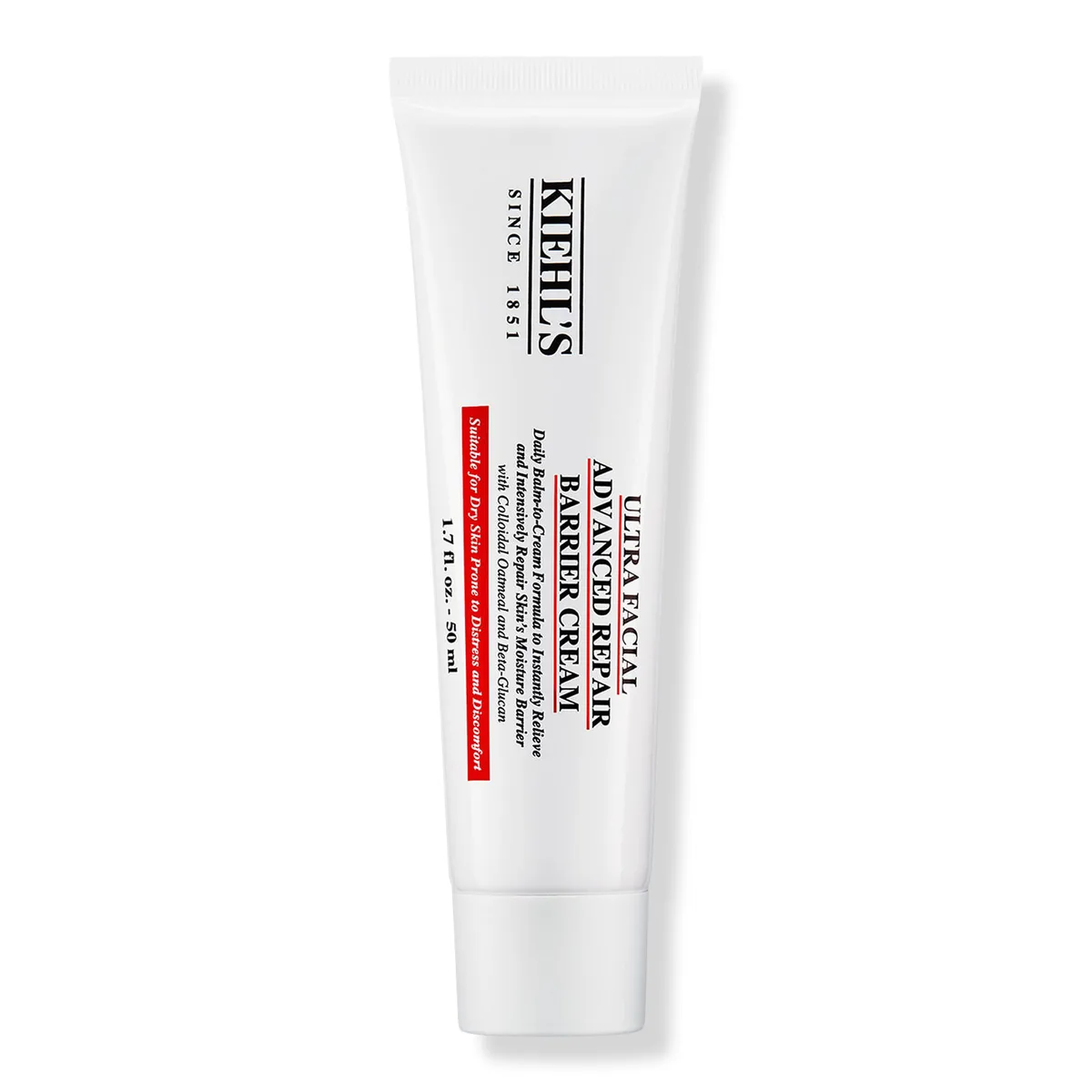
The formula pairs ceramide NP with a genuinely soothing supporting cast — colloidal oatmeal, beta-glucan, niacinamide, allantoin, and a marine ferment — in a fragrance-free base, and it is marketed under Kiehl's 'Advanced Barrier Technology' branding. What is honestly distinctive is the brand and the apothecary heritage rather than the formula itself, which is an excellent but fundamentally conventional barrier cream.
A genuinely well-formulated, fragrance-free barrier cream — ceramide NP, niacinamide, colloidal oatmeal, and beta-glucan all do real work, and it is exceptionally gentle and calming. The formula earns praise; the price does not. At $48 for 50ml, you pay a prestige premium for a barrier story sold far more cheaply elsewhere.
Note: This cream launched in 2024, and our assessment blends ingredient analysis with a solid body of early real-world feedback. Expect this assessment to evolve as longer-term user data accumulates.
The case for it
Same rule for everyone. “Good choice” is the verdict on 9,564 of 45,024 concern verdicts across the catalog; rule R5 decided 9,072 of them. Unchanged since September 5, 2026, engine 5.1.1.
Brand or formulator? Disclose a concentration or correct a fact →
The studies behind the evidence row
The case for it
What would change this: A declared concentration would move this to a firmer reading of the dose.
Same rule for everyone. “Good choice” is the verdict on 9,564 of 45,024 concern verdicts across the catalog; rule R5 decided 9,072 of them. Unchanged since September 5, 2026, engine 5.1.1.
Brand or formulator? Disclose a concentration or correct a fact →
The studies behind the evidence row
The case for it
What would change this: A researched evidence row for the lead active would replace this with a verdict.
Same rule for everyone. “Good choice” is the verdict on 1,938 of 45,024 concern verdicts across the catalog; rule F2 decided 1,938 of them. Unchanged since September 5, 2026, engine 5.1.1.
Brand or formulator? Disclose a concentration or correct a fact →
The case for it
What would change this: A concentration inside the studied range would raise this a step.
Same rule for everyone. “Good choice” is the verdict on 9,564 of 45,024 concern verdicts across the catalog; rule R4 decided 84 of them. Unchanged since September 5, 2026, engine 5.1.1.
Brand or formulator? Disclose a concentration or correct a fact →
The studies behind the evidence row
Does the jobDoes what a moisturizer is for: draws in water, softens and smooths.
A verdict is DermApproved’s assessment of how well a product’s ingredients fit a concern — never a claim about what the product treats. Evidence dots and collected reviews sit beside it and are never blended in. Rules 0.5.1 · evidence table ev-2026.09-r228 · how we decide
This is a genuinely good barrier cream — which makes the real question not whether it works, but whether it works $48-worth. Let us be fair to the Kiehl's Ultra Facial Advanced Repair Barrier Cream from the very outset, because it honestly deserves it. There is no formulation failure to expose here, no hidden flaw waiting to be uncovered, no gap between the claim on the jar and the reality in the routine. It does what a barrier cream should do, and it does it well. The skepticism running through this review is not about performance at all. It is about price, and about a question worth asking of any prestige product on a department-store shelf: are you paying for the ingredients inside, or for the name printed on the outside?
The formula itself is a textbook example of a barrier cream done right. At the centre of the repair claim sits ceramide NP, a skin-identical lipid that supplements the ceramides your barrier is naturally built from, working with the formula's fatty alcohols and lecithin to patch the lipid matrix and slow water loss. Niacinamide, positioned seventh on the ingredient list — a meaningful placement, not a token one — reinforces the barrier by boosting the skin's own ceramide synthesis, and it helps calm the redness that dryness tends to bring along with it. Then comes a genuinely well-chosen soothing supporting cast: colloidal oatmeal, one of the more rigorously studied anti-itch ingredients in all of skincare; beta-glucan, a hydrating and calming polysaccharide; allantoin; adenosine; and a marine ferment. There is no added fragrance, which is the right call for the dry, reactive skin this is built for. Every ingredient here genuinely earns its place in the list.
On the face it is a rich but cushiony cream that spreads smoothly and absorbs faster than its richness would lead you to expect, leaving a soft, comfortable, non-greasy finish behind. It carries no scent and does not sting. Dry, irritated skin feels more comfortable straight away, and dryness-related redness begins to settle within the first week of use. Users consistently report that it calms reactive skin, that it makes a reliable buffer over retinoids or exfoliants, and that it feels comfortable rather than heavy on the face. Judged purely as a piece of skincare, it performs exactly as it should.
Precision matters about what the prestige price is and is not buying, because that is the whole question with a product like this. There is no secret ingredient — that much is plain. There is no higher concentration of anything meaningful, and no delivery system unavailable elsewhere. What the money buys is the Kiehl's experience: the apothecary-styled stores, the generous sample culture, the heritage that stretches back to 1851, and the simple, non-trivial pleasure some people take in using a product from a brand they trust and enjoy. For a certain shopper, that experience has genuine value, and there is no need to be cynical about it. The point of this review is only to separate the two things clearly, so the decision is an informed one: you are paying for a brand you like wrapped around a barrier cream that is very good and entirely conventional.
Here is where honesty has to do some real work. The cream's effectiveness is genuine and fully explained by established science — but none of that science is exclusive to Kiehl's. Ceramide NP, niacinamide, colloidal oatmeal and beta-glucan are well-characterized, widely used and inexpensive to source. The formulation approach — supplement the barrier lipids, support them with soothing actives, keep the whole thing fragrance-free — is the standard, sound template for a barrier cream, one used right across the price spectrum from drugstore to prestige. The 50ml jar is also a modest size for the money. And a fair number of the reviews say exactly this, in their own words: effective, but not meaningfully different from ceramide creams that cost a fraction as much.
So the value verdict is the crux of the whole review. At forty-eight dollars for 50ml, you are paying a department-store premium for a barrier story that is available far more cheaply elsewhere. Kiehl's began life in 1851 as a single New York apothecary and now operates, under L'Oreal ownership, as a prestige brand — the heritage is real, and L'Oreal's research resources are real, but this particular cream is an excellent, fundamentally conventional formula rather than any kind of scientific leap forward. If you value the Kiehl's brand and the experience that comes with it, and you can comfortably afford the price, you will not be disappointed; the product genuinely works, and for dry, sensitive, reactive or barrier-compromised skin it is a soothing, dependable moisturizer, especially used alongside retinoids or exfoliants. But if your priority is the best barrier repair your money can buy, the honest answer is that the formula does not justify the prestige markup. It earns its review on performance. It does not quite earn its price tag.
The hero actives that drive this product's performance.
| Ingredient | Function | Evidence |
|---|---|---|
| Ceramide NP | A skin-identical barrier lipid and the centerpiece of the cream's barrier-repair claim. It supplements the ceramides the skin's own barrier is built from, working with the formula's fatty alcohols and lecithin to patch the lipid matrix and reduce water loss — the core mechanism behind any genuine barrier cream. | Established mechanism for Compromised Skin Barrier · established mechanism |
| Niacinamide | Positioned seventh on the INCI, a meaningful placement, niacinamide reinforces the barrier by boosting the skin's own ceramide synthesis and reducing transepidermal water loss. It also helps calm the redness that dryness and a compromised barrier produce. | Established mechanism for Compromised Skin Barrier · established mechanism |
| Beta-Glucan | A soothing, deeply hydrating polysaccharide that calms irritation and supports skin recovery. In a cream aimed at dry, sensitive, reactive skin, it adds a layer of comfort and helps quiet the inflammation that travels with a damaged barrier. | Not yet assessed |
| Colloidal Oatmeal | A recognized skin-soothing ingredient with anti-itch and anti-inflammatory properties, used here to calm sensitive, irritated skin. It is one of the more evidence-backed soothing agents for dry and reactive skin, supporting the cream's relief-focused positioning. | Regulator-approved for Eczema · limited certainty |
| Adenosine | A well-studied skin-conditioning and anti-wrinkle active. In this barrier cream it plays a supporting role, contributing a smoothing benefit alongside the formula's main job of repairing and protecting the barrier. | Not yet assessed |
| Allantoin | A gentle, well-tolerated calming and skin-conditioning agent. It works with the colloidal oatmeal and beta-glucan to keep the cream soothing on reactive, compromised skin. | Not yet assessed |
Ingredient standings describe the active at treatment-level doses and vehicles; this product's own condition grades weigh its actual formula.
Aqua/Water, Butylene Glycol, Glycerin, Caprylic/Capric Triglyceride, Behenyl Alcohol, Pentylene Glycol, Niacinamide, Dicaprylyl Carbonate, Cetearyl Alcohol, Trehalose, Sucrose Polystearate, C12-16 Alcohols, Acrylates/C10-30 Alkyl Acrylate Crosspolymer, Tromethamine, Tocopherol, Hydroxyethyl Acrylate/Sodium Acryloyldimethyl Taurate Copolymer, Ceramide NP, Allantoin, Hydrogenated Polyisobutene, Palmitic Acid, Hydrogenated Lecithin, Carbomer, Beta-Glucan, Ethylhexylglycerin, Adenosine, Caprylyl Glycol, Pseudoalteromonas Ferment Extract, Sorbitan Isostearate, Cetyl Palmitate, Cynanchum Atratum Extract, Colloidal Oatmeal, Sorbitan Olivate, Sorbitan Palmitate, C14-22 Alcohols, C12-20 Alkyl Glucoside, Salicylic Acid, Sodium Hydroxide
moisturizer
AM & PM
Apply as the moisturizer step, after serums and treatments, morning and night. Its texture is rich enough to use alone on dry skin and light enough to layer under sunscreen and makeup. It pairs well after potentially irritating actives like retinoids or exfoliants, where the ceramides and colloidal oatmeal help buffer the irritation.
Skin feels comfortably hydrated and calmer immediately on application. Visible reduction in dryness-related redness and a stronger, less reactive barrier typically build over one to three weeks of consistent use.
The cream's barrier-repair premise is well grounded in established dermatological science. The stratum corneum's permeability barrier depends on an ordered matrix of intercellular lipids — ceramides, cholesterol and free fatty acids — and depletion of these lipids underlies the dryness, tightness and reactivity of a compromised barrier. Supplying ceramides topically, as this cream does with ceramide NP, is a well-supported approach to barrier repair, and research consistently associates ceramide-containing moisturizers with reduced transepidermal water loss and improved barrier function. Niacinamide is among the most evidence-backed barrier ingredients, with documented effects on increasing the skin's own synthesis of ceramides and free fatty acids.
The soothing components are likewise well supported. Colloidal oatmeal is recognized as a skin protectant, with a substantial evidence base for relieving itch and irritation, owing in part to its avenanthramide content; it is one of the more rigorously studied soothing ingredients in skincare. Beta-glucan has supporting evidence as a hydrating and soothing polysaccharide, and allantoin and adenosine have documented skin-conditioning and, for adenosine, anti-wrinkle effects.
The scientifically honest point is not that any of this is doubtful — it is well-founded. It is that none of it is exclusive. These ingredients are well-characterized, widely used and inexpensive to source, and the formulation approach — supplement barrier lipids, support with soothing actives, keep it fragrance-free — is the standard, sound template for a barrier cream, used across the entire price spectrum. The salicylic acid at the very end of the list is present in a trace amount, functioning in formulation rather than as an active exfoliant. The cream's efficacy is real and explained by established science; its premium price is not explained by superior or unique ingredients.
Barrier-repair moisturizers built on ceramides and niacinamide are firmly within mainstream dermatological recommendation for dry, sensitive, and barrier-compromised skin, and a fragrance-free formula containing colloidal oatmeal — an ingredient dermatologists frequently cite for soothing itch and irritation — aligns closely with standard clinical advice. By formulation, this is exactly the kind of cream a dermatologist might describe as a sound choice for a compromised barrier. Clinical guidance, however, also consistently emphasizes that effective barrier repair does not require a premium product: the key ingredients are inexpensive and widely available, and dermatologists often note that affordable ceramide-based creams perform comparably to prestige ones. The cream is best understood, in clinical terms, as a genuinely effective barrier moisturizer whose price reflects brand positioning rather than therapeutic superiority. As a moisturizer it supports, but does not replace, medical management of conditions like eczema.
Slot it in as the moisturizer step, after cleansing, toner, serums and any treatments, morning and night. A modest amount spreads easily across the whole face. It is rich enough to wear alone on dry skin and light enough to layer under sunscreen and makeup. It is particularly useful applied over retinoids or exfoliants, where the ceramides and colloidal oatmeal help buffer irritation. During the day, always follow it with sunscreen — a barrier cream supports the skin but does not protect it from UV.
Value is this cream's clear weakness. At $48 for 50ml, it is priced firmly in prestige territory, and a 50ml jar lasts two to three months of twice-daily use. The formula is genuinely good — but that is precisely the problem for its value case, because the ingredients responsible for that quality (ceramides, niacinamide, colloidal oatmeal, beta-glucan, fatty lipids) are well-established, inexpensive, and found in barrier creams across every price tier, including drugstore options at roughly a third of the cost. You are paying a substantial premium for the Kiehl's name, the apothecary heritage, the packaging, and the department-store experience. For buyers who value those things, the premium can be worth it; for buyers focused on what their skin barrier actually receives per dollar, the same benefit is available for considerably less. The cream is not overpriced for what it is — a prestige product — but it is overpriced for what it does relative to the alternatives.
Dry, sensitive, reactive or barrier-compromised skin looking for a genuinely effective, gentle, fragrance-free barrier cream — from people who value the Kiehl's brand and heritage and can comfortably afford the premium — is the honest audience. It also makes a soothing companion for anyone using retinoids or exfoliants who needs a moisturizer to buffer them.
Value-focused shoppers should skip it — the same barrier-repair benefit is available in far less expensive ceramide creams. Anyone who buys on formula rather than brand will find the premium hard to justify. Fungal-acne-prone users should also be cautious, as the formula is not malassezia-safe.
Ready to try Kiehl's Ultra Facial Advanced Repair Barrier Cream?
Buy at Amazon ♥A rich but cushiony cream that spreads smoothly and absorbs faster than its richness suggests, leaving a soft, comfortable, non-greasy finish
Effectively scentless — labeled fragrance and essential-oil free
A 50ml jar in Kiehl's signature apothecary-style packaging. The jar feels substantial and on-brand, though a jar is less hygienic and air-protective than a tube or pump.
Expect a rich, cushiony cream that sinks in more quickly than it looks like it will, leaving skin soft and calm. There is nothing to smell, and nothing to sting. Dry, irritated, reactive skin feels immediately more comfortable, and dryness-related redness begins to settle within the first week of use.
Two to three months of consistent use should empty it morning and evening facial use
All Year
Kiehl's began in 1851 as a single New York apothecary and grew, under L'Oréal ownership, into a global prestige skincare brand. The Ultra Facial line is its bestselling franchise, and this Advanced Repair Barrier Cream extends it into the barrier-repair category that became a defining skincare focus in the 2020s — a category where ceramide-based 'barrier' creams now span every price point from drugstore to prestige.
Kiehl's was founded in 1851 as a New York apothecary and is now a prestige skincare brand owned by L'Oréal. Its long heritage and L'Oréal's research resources give it genuine credibility, though it operates as a prestige cosmetic brand rather than a clinically-focused dermatological one, and its products are priced at a department-store premium.
A premium price means a barrier cream must contain superior or rarer ingredients.
The ingredients that genuinely repair the skin barrier — ceramides, niacinamide, colloidal oatmeal, fatty alcohols, beta-glucan — are well-established and widely available, and they appear in barrier creams at every price point. A higher price often reflects brand, packaging, and retail positioning more than ingredient superiority.
'Advanced Barrier Technology' describes a unique, proprietary breakthrough.
The phrase is marketing language for a sound but conventional approach — supplementing the skin's barrier lipids and supporting them with soothing actives. The technology is real in the sense that it works; it is not unique in the sense that many barrier creams do the same thing.
It is a barrier-repair moisturizer for dry, sensitive, and reactive skin. It hydrates and reinforces the skin barrier with ceramide NP, niacinamide, and fatty lipids, and soothes irritation and dryness-related redness with colloidal oatmeal, beta-glucan, and allantoin. It leaves skin calmer, more comfortable, and less reactive.
The formula is genuinely good — well-chosen, effective barrier and soothing ingredients in a fragrance-free base. But at $48 for 50ml it is expensive, and the ingredients doing the work are widely available in barrier creams at much lower prices. You are paying a prestige premium for the brand and heritage as much as for the formula.
Yes. It is fragrance-free and built on soothing, well-tolerated ingredients including colloidal oatmeal — a recognized skin protectant for itch and irritation — plus beta-glucan, allantoin, and ceramides. It is a sound choice for sensitive, reactive, and dryness-irritated skin, though it is a moisturizer rather than a treatment for diagnosed eczema.
Yes, and it pairs well with it. The ceramides and colloidal oatmeal help buffer the dryness, flaking, and redness that retinoids and exfoliating acids can cause. Apply your retinoid first, then this cream as the soothing moisturizer step on top.
No. It is formulated without added fragrance or essential oils, which makes it a sound choice for sensitive and reactive skin, where fragrance is a common irritant.
Honestly, not dramatically. It uses the same core barrier ingredients — ceramides, niacinamide, colloidal oatmeal, fatty lipids — found in barrier creams across all price points, and adds a marine ferment and a pleasant texture. The main differences are the brand, the packaging, and the price, rather than a fundamentally superior formula.
Recurring themes our editors read across retailer reviews of this product — summaries in our words, not quotations, and not a substitute for your own patch test.
Noticeably calms dry, irritated, reactive skin
Rich but fast-absorbing — comfortable, not heavy
Fragrance-free formula suits sensitive skin
Soothes redness caused by dryness
Works well as a buffer after retinoids or exfoliants
Expensive for the formula — comparable barrier creams cost far less
50ml is a modest size at this price
Effective but not meaningfully different from cheaper ceramide creams
Premium positioning outpaces what the ingredients deliver
Verified answers from our questions library — the nuance a product page cannot carry.