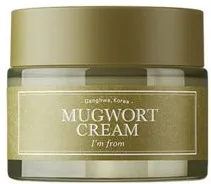
A cult K-beauty calming cream that puts its money where its label is: 73.55% Artemisia princeps extract, disclosed right on the packaging. The multi-active soothing layer and polyglutamic acid make it a genuinely comfortable daily moisturizer for sensitive and barrier-stressed skin. Ragweed-allergic users should steer clear, and the calming payoff is real but subtle.
Good choicefor SensitivityIn your profileYou chose · No fragrance, drying alcohol, declarable allergens or sensitising preservatives in this cream — the profile sensitive skin looks for.Not yet assessedGentleNo reviews collected yet
The case for it
Artemisia Princeps has no evidence row yet for this concern — it is in the research queue.
The formula carries none of the triggers this concern is sensitive to.
What would change this: A researched evidence row for the lead active would replace this with a verdict.
Same rule for everyone. “Good choice” is the verdict on 1,938 of 45,024 concern verdicts across the catalog; rule F2 decided 1,938 of them.
Unchanged since September 5, 2026, engine 5.1.1.
Supporting rolefor Compromised Skin BarrierIn your profileYou chose · Nothing here targets compromised skin barrier directly; barrier lipids and occlusion is the recognised companion to treating it, and this cream does that without known triggers.Not yet assessedGentleNo reviews collected yet
The case for it
Artemisia Princeps has no evidence row yet for this concern — it is in the research queue.
The formula carries none of the triggers this concern is sensitive to.
What would change this: A researched evidence row for the lead active would replace this with a verdict.
Same rule for everyone. “Supporting role” is the verdict on 8,197 of 45,024 concern verdicts across the catalog; rule R8 decided 4,250 of them.
Unchanged since September 5, 2026, engine 5.1.1.
R8 — The category's job (barrier care, humectant hydration, gentle cleansing, photoprotection) is the documented supportive role for this concern. This is the honest verdict for a moisturizer on an acne page. · the full register
Good choicefor DehydrationIn your profileYou chose · Panthenol (Vitamin B5) is a reference standard by mechanism for dehydration; this cream carries it.Moderate evidenceGentleNo reviews collected yet
The case for it
Panthenol + Allantoin + Dipotassium Glycyrrhizate has trial-supported standing for this concern.
It is plausibly present at a working level, though the concentration is not declared.
The formula carries none of the triggers this concern is sensitive to.
What would change this: A declared concentration would move this to a firmer reading of the dose.
Same rule for everyone. “Good choice” is the verdict on 9,564 of 45,024 concern verdicts across the catalog; rule R5 decided 9,072 of them.
Unchanged since September 5, 2026, engine 5.1.1.
R5 — Trial-supported or guideline-supported active, adequately or plausibly dosed. · the full register
Carrying active
Panthenol + Allantoin + Dipotassium Glycyrrhizate
Standing
supported — its mechanism is established
Form
plausible — studied range 2.5%, from the trials on the row; needs leave-on contact
Tolerability
gentle
Row checked
against its sources on July 17, 2026 (evidence table ev-2026.09-r228)
The studies behind the evidence row
Cosmetic Ingredient Review assessment of panthenol / dexpanthenol — humectant and moisturizer that raises stratum-corneum water content — reference work
Does the jobDoes what a moisturizer is for: draws in water, softens and smooths.
A verdict is DermApproved’s assessment of how well a product’s ingredients fit a concern — never a claim about what the product treats. Evidence dots and collected reviews sit beside it and are never blended in.
Rules 0.5.1 · evidence table ev-2026.09-r228 · how we decide
Assessment
Pros & Cons
Pros
✓ Discloses an exact 73.55% mugwort extract concentration on packaging
✓ Satin non-greasy finish with a pleasant cooling sensation
✓ Genuinely calming and comfortable for sensitive, barrier-stressed skin
✓ Fragrance-free formulation with no added perfume
✓ Vegan and cruelty-free with a years-long K-beauty track record
✓ Works across normal, combination, dry, and even oily skin
Cons
✗ Mugwort cross-reacts with ragweed and daisy-family allergies
✗ Contains soybean ferment, a concern for soy-allergic users
✗ Calming effect is subtle rather than dramatically visible
✗ Faint herbal mugwort scent may not suit all preferences
✗ Trace Artemisia oil makes it not fungal-acne safe
✗ Jar packaging exposes the formula to air and fingers
Review
Full Review
Most skincare brands treat ingredient concentrations like state secrets. They will tell you a product is "powered by" mugwort or "infused with" centella, and leave you to guess whether that means a meaningful dose or a marketing-grade splash. I'm From does something refreshingly different with this cream: it prints the number. 73.55% Artemisia princeps extract. Not 70-something, not "high concentration" — a specific, oddly precise figure that signals the brand actually measured it and is willing to be held to it. That precision is the whole personality of this product, and it is worth dwelling on, because it tells you what you are buying.
Artemisia princeps is Korean mugwort, a botanical with a long history in East Asian traditional skincare for soothing irritated, itchy, and reactive skin. The modern interest in it centers on a group of flavonoid compounds — eupatilin and jaceosidin chief among them — that have shown anti-inflammatory and antioxidant activity in laboratory and animal research. When mugwort sits at the very top of an INCI list at over 73%, you are getting a formula whose dominant character is that extract rather than a water-and-glycerin base wearing a mugwort hat. The texture reflects this: a medium-weight cream with a faint green tint and a light, genuinely herbal scent that comes from the plant itself rather than added fragrance. It is fragrance-free in the meaningful sense — no perfume — but it does smell mildly of mugwort, and that is a feature, not a flaw, for the people who seek this out.
Where the formula gets clever is in what surrounds the headline ingredient. This isn't a one-note product. Panthenol contributes barrier support and humectancy, allantoin adds gentle soothing and skin-conditioning activity, and dipotassium glycyrrhizate — a licorice-root derivative — brings its own anti-inflammatory contribution. Boswellia serrata resin extract layers in further calming activity. Then there is polyglutamic acid, a plant-derived humectant peptide that has been shown to bind water with impressive efficiency; some research suggests it holds several times more moisture than hyaluronic acid and may help slow the breakdown of skin's own hyaluronic acid. Shea butter, sitting eighth on the list, supplies the emollient richness that keeps the cream feeling cushioned rather than thin. The result is a moisturizer that approaches sensitive skin from multiple angles at once: calm the inflammation, support the barrier, hold onto water, soften the surface.
In use, it absorbs to a satin, non-greasy finish with a slight cooling sensation that flushed or reactive skin tends to appreciate. The medium-weight texture carries a faint green tint from the extract itself, and it sinks in within a minute or two without leaving a film. It works across normal, combination, dry, and sensitive skin, and even oily skin can use it, though oilier types may find it on the richer side and might prefer it as a nighttime-only step. The calming effect is immediate in the sense that skin feels more comfortable within minutes, but here is the honest part: the benefits are subtle rather than dramatic. If you are expecting a redness-erasing miracle, you will be disappointed. What this cream does well is steady the baseline — fewer reactive days, a more comfortable skin feel, a gentle buffer when your routine includes something more demanding like a retinoid. Several reviewers note exactly this gap between expectation and experience, and it is fair.
The one genuine caution is allergenic, not formulary. Mugwort belongs to the Asteraceae (Compositae) family, which includes ragweed, and there is well-documented cross-reactivity between the two. If you have a ragweed allergy or react to chamomile, marigold, and other daisy-family botanicals, this cream is a real risk and should be patch-tested at minimum, or avoided entirely. The formula also contains a small amount of soybean ferment, relevant to soy-allergic users, and a trace of Artemisia vulgaris oil, which is why it is flagged as not fungal-acne safe. None of these disqualify the product for most people, but they are worth knowing before you commit.
I'm From has been making this cream since around 2018, and it has been a steady K-beauty favorite for years — thousands of reviews, an established place on curated K-beauty retailers, a brand founded in 2015 that has built genuine credibility around its single-hero-ingredient philosophy. That track record matters: this is not a hype launch you are gambling on. A cream that has held its place for the better part of a decade, through the relentless churn of trending K-beauty products, has earned its standing on performance rather than novelty — and that longevity is itself a quiet endorsement. At $30 for 50ml it sits in the mid-tier of K-beauty pricing, neither a bargain nor a splurge, and the vegan, cruelty-free, fragrance-free formulation is honest about what it is. If your skin runs reactive and you want a calming daily moisturizer with real formulation substance behind the botanical story — and you are not in the daisy-allergy camp — this earns its cult status. It will not transform your skin overnight, but it will treat it kindly, and the label will tell you the truth about what is inside.
Formula
Key Ingredients
The hero actives that drive this product's performance.
First-position ingredient at exceptional 73.55% concentration — Artemisia princeps (Korean mugwort) provides anti-inflammatory, antioxidant, and antibacterial activity through eupatilin and related sesquiterpene lactones. The brand's highest-concentration single-ingredient formulation.
Multi-ingredient soothing complex — panthenol for barrier support, allantoin for keratolytic and soothing activity, dipotassium glycyrrhizate (licorice-derived) for anti-inflammatory effects.
Established mechanismfor Dehydration · established mechanism
The case for this cream rests on Artemisia princeps and the way the formula stacks supporting actives around it. Mugwort's relevant compounds are flavonoids — eupatilin and jaceosidin most prominently — which have demonstrated anti-inflammatory activity in laboratory settings, partly through inhibition of NF-kB signaling and nitric oxide production. A 2016 study published in Mediators of Inflammation found that Artemisia leaf extract reduced contact dermatitis markers in both in vitro and in vivo mouse models, supporting its use for irritated, reactive skin. More directly relevant to a moisturizer, a 2017 study in the International Journal of Molecular Sciences showed that antioxidant Artemisia princeps extract upregulated filaggrin and loricrin — two proteins central to skin barrier integrity — via the AHR/OVOL1 pathway in keratinocytes, which suggests a barrier-supportive mechanism beyond simple soothing. What makes this formula more than a single-ingredient bet is the way it pairs that botanical with better-established actives: panthenol and allantoin both have substantial literature for barrier support and skin conditioning, and dipotassium glycyrrhizate (a licorice derivative) is a recognized anti-inflammatory. The polyglutamic acid is the quieter standout — a microbially produced biopolymer whose humectant performance has been characterized in cosmetic research, with reports of water-retention capacity exceeding hyaluronic acid and possible inhibition of hyaluronidase, the enzyme that degrades skin's own hyaluronic acid. The synergy here is layered rather than singular: mugwort and licorice address inflammation through different pathways, panthenol and allantoin rebuild the surface, and polyglutamic acid keeps the whole system hydrated. It is worth noting that much of the mugwort research is preclinical, so the evidence level is best described as promising rather than definitively established for this specific cosmetic application.
Dermatologists generally view mugwort-based products as a reasonable option for soothing reactive or mildly inflamed skin, while noting that the strongest evidence remains preclinical. Clinicians frequently emphasize that for sensitive-skin patients, the supporting cast of a formula matters as much as the headline botanical — and the inclusion of well-studied panthenol, allantoin, and licorice-derived dipotassium glycyrrhizate here is consistent with what is commonly recommended for barrier support. The most important clinical caution dermatologists raise about Artemisia products is allergenic cross-reactivity: because mugwort is in the same plant family as ragweed, patients with known ragweed or composite-family allergies are routinely advised to patch-test or avoid these formulas. Dermatologists also note that calming products like this are best understood as supportive rather than corrective — useful for buffering a routine and steadying a reactive baseline, but not a substitute for targeted treatment of conditions such as rosacea or eczema, which warrant individualized clinical management.
Guidance
Usage & Recommendations
How to Use
Apply twice daily as the moisturizer step, after cleansing, toner, and any treatment serums. Use a modest amount and press it gently into the skin rather than rubbing — it absorbs to a satin finish within a minute or two. In the morning, always follow with a broad-spectrum sunscreen; in the evening, it works well layered over a treatment serum or as a buffering moisturizer on nights you use a retinoid. Because mugwort is a composite-family botanical, patch-test on the inner forearm for several days before full-face use, especially if you have any ragweed or daisy-family allergy. Use clean fingers or a small spatula when scooping from the jar to limit contamination.
Value Assessment
At $30 for 50ml, the Mugwort Cream sits comfortably in the middle of the K-beauty pricing range — more than a drugstore moisturizer, less than a luxury cream. It is the only size offered, so there is no larger-format value play to consider. What you are paying for is genuine formulation substance: a disclosed high-concentration hero ingredient, a multi-active soothing layer, and polyglutamic acid, none of which are trace inclusions. Compared with vaguer "mugwort" products that bury the extract far down the list, this earns its price through transparency and ingredient investment. It is not a bargain, but it is honest value — you can see exactly what your money bought, printed on the jar. For a brand with an established track record rather than hype-driven pricing, that makes it a fair, defensible purchase.
Who Should Buy
This is a strong pick for anyone with normal, combination, dry, or sensitive skin who wants a calming daily moisturizer with real formulation substance behind the botanical story. It suits people whose skin runs reactive, who appreciate ingredient transparency, and who want a fragrance-free, vegan option with a proven K-beauty track record rather than an untested launch.
Who Should Skip
Anyone with a ragweed allergy or sensitivity to daisy-family plants should avoid this entirely, as mugwort cross-reacts. Soy-allergic users should also be cautious given the soybean ferment. Those who want dramatic, fast redness reduction will find the calming effect too subtle, and strict fungal-acne avoiders should skip it due to the trace Artemisia oil.
I'm From's Mugwort line launched around 2018 building on Korean traditional use of Artemisia princeps for skin soothing.
About I'm From Established Brand (5–20 years)
I'm From's Mugwort Cream features 73.55% Artemisia princeps (mugwort) extract — the brand's high-concentration single-ingredient signature philosophy. Mugwort is a traditional Korean skincare ingredient with anti-inflammatory and antioxidant activity.
Brand founded: 2015 · Product launched: 2018
Myth vs. Reality
Common Myths
Myth
Mugwort and CICA (Centella) are the same.
Reality
Different botanicals — mugwort (Artemisia princeps) provides eupatilin sesquiterpene lactones; Centella asiatica provides asiaticoside and madecassoside triterpenes. Both are K-beauty soothing ingredients with different mechanisms.
FAQ
Frequently Asked Questions
What does mugwort do for skin?
Artemisia princeps provides eupatilin and other sesquiterpene lactones with documented anti-inflammatory, antioxidant, and antibacterial activity. Traditional Korean skincare use for soothing.
Is it good for ragweed allergies?
No — Artemisia (mugwort) is in the Asteraceae/Compositae family with documented cross-reactivity to ragweed. Ragweed-allergic users should avoid.
Can Mugwort Cream be used while pregnant?
Mugwort traditionally avoided in pregnancy (oral consumption can stimulate uterine contractions). Topical safety is less defined. Confirm with OB.
How does it compare to Centella cream?
Different K-beauty soothing botanicals — mugwort vs Centella asiatica. Both effective for sensitive skin via different active compounds.
Does the Mugwort Cream contain any animal-derived ingredients?
Yes.
What's polyglutamic acid?
Plant-derived peptide with strong humectant activity — research suggests several times more moisture-binding capacity than hyaluronic acid.
Where can I buy Mugwort Cream?
Soko Glam, YesStyle, Amazon, Stylevana.
Reviews
What Reviewers Tend to Say
Recurring themes our editors read across retailer reviews of this product — summaries in our words, not quotations, and not a substitute for your own patch test.
The headline number that fuels every polyglutamic acid launch is real. Whether it means better-hydrated skin than a good hyaluronic acid serum is a much more interesting question.
It's in half your products and headlines none of them. Provitamin B5 has the kind of boring, decades-deep barrier and wound-healing evidence that flashier actives can only envy.
The poreless, lit-from-within look is part real barrier health and part genetics, lighting, and a good primer — and chasing it literally can wreck the very skin you're trying to perfect.
Products, answers, therapy guides, tools and articles in one search. Brand names,
slang and abbreviations all work — accutane finds isotretinoin, bacne finds truncal acne.