


You Can Mix L-Ascorbic Acid at Home. Keeping It Alive Is the Hard Part.
The one home formulation with a genuinely coherent case, taken apart on its own terms: the pH window, the oxidation clock, and what a browning serum has actually become.
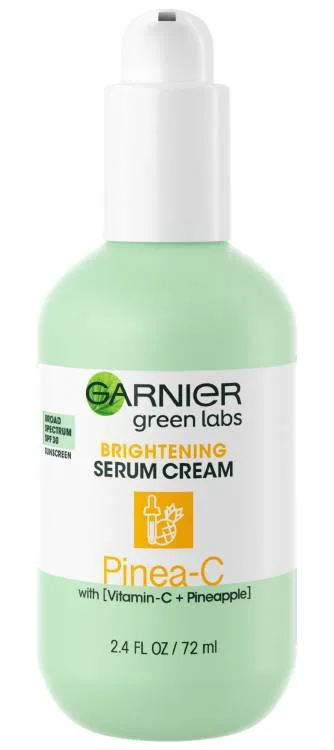
Garnier Green Labs Pinea-C is one of the few drugstore SPF moisturizers that combines phenylethyl resorcinol (a research-supported brightening active) with vitamin C ester and pineapple extract in a single 3-in-1 formula. Most drugstore SPF creams provide UV protection plus basic hydration; this adds genuine brightening actives. The clean-beauty positioning is part marketing but the formulation backs the claims reasonably.
One of the more thoughtful drugstore SPF moisturizers in the brightening category — combines phenylethyl resorcinol (a research-supported tyrosinase inhibitor) with vitamin C ester and pineapple extract under SPF 30 chemical UV protection. For shoppers wanting brightening-plus-sunscreen at drugstore pricing, this is one of the better-formulated options. Fragrance and chemical filters limit pregnancy and sensitive-skin appropriateness.
The case for it
What would change this: A declared concentration would move this to a firmer reading of the dose.
Same rule for everyone. “Full protection” is the verdict on 2,288 of 45,024 concern verdicts across the catalog; rule P1 decided 2,232 of them. Unchanged since September 5, 2026, engine 5.1.1.
Brand or formulator? Disclose a concentration or correct a fact →
The studies behind the evidence row
The case for it
Cautions: known irritants.
What would change this: A declared concentration would move this to a firmer reading of the dose.
Same rule for everyone. “Full protection” is the verdict on 2,288 of 45,024 concern verdicts across the catalog; rule P1 decided 2,232 of them. Unchanged since September 5, 2026, engine 5.1.1.
Brand or formulator? Disclose a concentration or correct a fact →
The studies behind the evidence row
The case for it
What would change this: A declared concentration would move this to a firmer reading of the dose.
Same rule for everyone. “Promising” is the verdict on 7,858 of 45,024 concern verdicts across the catalog; rule R9p decided 7,858 of them. Unchanged since September 5, 2026, engine 5.1.1.
Brand or formulator? Disclose a concentration or correct a fact →
The studies behind the evidence row
The case for it
What would change this: A declared concentration would move this to a firmer reading of the dose.
Same rule for everyone. “Full protection” is the verdict on 2,288 of 45,024 concern verdicts across the catalog; rule P1 decided 2,232 of them. Unchanged since September 5, 2026, engine 5.1.1.
Brand or formulator? Disclose a concentration or correct a fact →
The studies behind the evidence row
Does the jobDoes what a SPF moisturizer is for: UVA coverage, holds up in sunlight. Not measured from the label: wearable all day.
Where our review and the verdict differ. The review below was written on the formulation and the published trials; the verdicts above apply the stricter standing test in our methodology — an active earns a recommendation only with guideline or regulatory standing for the concern. Where the two disagree, the verdict is DermApproved’s position.
A verdict is DermApproved’s assessment of how well a product’s ingredients fit a concern — never a claim about what the product treats. Evidence dots and collected reviews sit beside it and are never blended in. Rules 0.5.1 · evidence table ev-2026.09-r228 · how we decide
Garnier's Green Labs Pinea-C Brightening Serum Cream SPF 30 occupies an interesting middle ground in the drugstore skincare market. Most affordable SPF moisturizers pick a lane — basic hydration plus sun protection, or anti-aging plus sun protection — and the brightening category at drugstore pricing has historically been served by toner-style products or wash-off cleansers rather than leave-on SPF moisturizers. Garnier addressed that gap when it launched the Green Labs Pinea-C line in 2021, and the choice that actually distinguishes the formula is one ingredient most shoppers have never heard of.
That ingredient is phenylethyl resorcinol, sold under trade names including Symwhite and Pretiglow. It's a tyrosinase inhibitor with documented research support, and studies have shown it can be more effective than equivalent concentrations of hydroquinone at inhibiting melanin synthesis — a meaningful claim, since hydroquinone is the gold-standard depigmenting active in dermatology. The concentration here isn't disclosed, but its position in the ingredient list (around 17th) suggests a supportive rather than treatment-strength dose. Even at supportive levels, finding it in a sub-$20 SPF moisturizer is genuinely unusual, and it's the single best reason to take this product seriously.
The 'Pinea-C' branding refers to the second active pair: pineapple (Ananas sativus) fruit extract for mild exfoliation and brightening, and ascorbyl glucoside, a stable vitamin C derivative, for antioxidant and supportive tyrosinase inhibition. Pineapple extract contains bromelain and fruit acids with mild exfoliating activity, while ascorbyl glucoside converts to L-ascorbic acid in the skin to provide vitamin C benefits at gentler magnitude than serum-strength formulations. Together they create a multi-mechanism approach: phenylethyl resorcinol and vitamin C inhibit new melanin production while pineapple extract gently sloughs surface pigmented cells. That layering of mechanisms — block, antioxidant, exfoliate — is the coherent idea underneath the marketing, and it's more thought than most 3-in-1 products bother with.
The exfoliating side has quiet reinforcements further down the list. Papain, a fruit enzyme, adds a second gentle keratolytic pathway, and capryloyl salicylic acid — a lipid-soluble BHA derivative — appears near the end, hinting at trace surface-smoothing support. Neither is present at a level that will resurface skin on its own, but they nudge the finish toward the smoother, more even canvas the brightening actives are meant to reveal. It's the kind of stacking that reads as deliberate rather than accidental.
The UV protection comes from a standard US-approved chemical filter system: avobenzone at 3% for UVA1, homosalate at 5% and octisalate at 5% for UVB, and octocrylene at 7.2% for additional UVB coverage plus avobenzone photostabilization. This produces SPF 30 broad-spectrum protection — adequate for daily wear, though not as photostable or UVA-comprehensive as some European-formulated alternatives. The base handles hydration through glycerin at second position and sodium hyaluronate at a supporting concentration, dimethicone offers slip and a smoothing finish, and tocopherol adds vitamin E antioxidant defense.
The wear in actual use is what the marketing claims. The product dispenses from a metered pump as a light, slightly creamy serum-cream — thinner than a typical SPF moisturizer, closer to a cushion serum. It spreads easily across face and neck and absorbs within 60 to 90 seconds into a satin, natural finish. No white cast. Skin feels lightly hydrated and looks visibly brighter immediately from the formula's optical effect, and a faint fruity note from the pineapple sits under the light fragrance. Foundation applies cleanly over the finish without pilling.
Setting expectations on the brightening is important, because this is where disappointment usually creeps in. The optical brightness is instant; the actual work on pigment is not. Phenylethyl resorcinol and the vitamin C ester build their effect over four to eight weeks of consistent daily use, and even then the magnitude is modest — this is a maintenance-and-support product, not a treatment serum. Used alongside a dedicated brightening serum it earns its keep; used alone against stubborn hyperpigmentation, it will underwhelm anyone expecting dramatic fading. The two related myths worth heading off are that a drugstore SPF cream can't offer real brightening (this one does, just gently) and that a 3-in-1 is inherently inferior to three separate steps (it isn't, if the actives are coherent and it's the routine you'll actually keep).
Where the formula has limits worth naming: the chemical filter system isn't pregnancy-preferred for cautious patients, who are typically steered toward mineral filters, so the pregnancy status here is genuinely uncertain rather than a clear yes. The fragrance content excludes it from strict fragrance-free routines and may bother sensitive or rosacea-prone skin. Octocrylene is restricted in some marine-protected areas. And SPF 30 is fine for ordinary daily wear but not for prolonged outdoor exposure, where a higher, water-resistant SPF serves better — this one isn't water-resistant. It's also not fungal-acne safe, a caveat for anyone managing Malassezia.
Value is the strongest selling point. At $15.99 for 2.4 fl oz — roughly $6.67 per ounce — the per-ounce cost is among the lowest you'll find for a moisturizer carrying genuine brightening actives, and it undercuts premium brightening sunscreens many times its price while delivering real, research-supported ingredients rather than a marketing story. Its roughly 1,800 reviews averaging 4.3 across major drugstores back that up, with praise clustering on the brightening, the lightweight wear under makeup, and the value, and complaints clustering on the fragrance, the chemical filters, and the modest SPF.
For the specific use case — shoppers with hyperpigmentation, dullness, or uneven tone who want a single AM step that hydrates, protects, and supports brightening — this is one of the more sensible drugstore choices on the shelf. For users prioritizing maximum sun protection, pregnancy-preferred formulations, or fragrance-free routines, other options will serve better. But for what it sets out to do, at what it costs, it delivers more than it has any right to.
The hero actives that drive this product's performance.
| Ingredient | Function | Evidence |
|---|---|---|
| UV Filter System (Avobenzone, Homosalate, Octisalate, Octocrylene) | Standard US-approved chemical UV filter system: avobenzone for UVA1, homosalate and octisalate for UVB, octocrylene for additional UVB and avobenzone photostabilization. Delivers SPF 30 broad-spectrum protection — adequate but not exceptional compared to European-formulated alternatives. | Regulator-approved for Sun Damage · limited certainty |
| Phenylethyl Resorcinol (Symwhite) | A tyrosinase inhibitor with documented depigmenting activity in research literature — research suggests it can be more effective than vitamin C derivatives at melanin synthesis inhibition. Its position in the ingredient list (around 17th) suggests modest concentration; cumulative effects develop over weeks. | Not yet assessed |
| Ascorbyl Glucoside (Vitamin C) | Stable water-soluble vitamin C derivative that converts to active L-ascorbic acid in skin — provides antioxidant defense and supports the brightening positioning alongside phenylethyl resorcinol. Less potent than L-ascorbic acid but more stable in sunscreen formulations. | Limited for Sun Damage |
| Pineapple Fruit Extract (Ananas Sativus) | Contains bromelain and fruit acids with mild exfoliating and brightening properties. The 'Pinea-C' name references this ingredient pairing with vitamin C. At cosmetic concentrations the exfoliating effect is gentle but the brightening claim is supported. | Not yet assessed |
| Sodium Hyaluronate + Glycerin | Glycerin at second position as primary humectant; sodium hyaluronate supports it. The 3-in-1 positioning relies on these humectants providing serum-level hydration alongside the sunscreen and cream functions. | Plausible mechanism for Dullness |
Ingredient standings describe the active at treatment-level doses and vehicles; this product's own condition grades weigh its actual formula.
Active Ingredients: Avobenzone 3.0%, Homosalate 5.0%, Octisalate 5.0%, Octocrylene 7.2%. Inactive Ingredients: Water, Glycerin, Dimethicone, PEG-100 Stearate, Glyceryl Stearate, Silica, Ananas Sativus (Pineapple) Fruit Extract, Dicaprylyl Carbonate, Tocopherol, Ascorbyl Glucoside, Sodium Hyaluronate, Sodium Hydroxide, Stearic Acid, Phenoxyethanol, Steareth-100, Phenylethyl Resorcinol, PEG-32, Palmitic Acid, Ammonium Polyacryloyldimethyl Taurate, Dimethicone/Vinyl Dimethicone Crosspolymer, Xanthan Gum, Propanediol, Capryloyl Salicylic Acid, Caprylyl Glycol, Papain, Myristic Acid, Disodium EDTA, Fragrance.
moisturizer
AM
Apply as the moisturizer-plus-SPF step in AM routine. Use a generous quarter-teaspoon for face and neck. The 3-in-1 positioning means many users skip a separate moisturizer underneath. Allow 15 minutes before sun exposure. Reapply every 2 hours if outdoors.
Immediate hydration and SPF protection. Brightening from phenylethyl resorcinol and vitamin C ester develops over 4-8 weeks of consistent daily use. Long-term photoaging prevention with continuous SPF application.
The phenylethyl resorcinol in this formula is the most distinctive supporting active. Research dating to the 2000s has demonstrated that phenylethyl resorcinol inhibits tyrosinase (the rate-limiting enzyme in melanin synthesis) more effectively than equivalent concentrations of hydroquinone in some studies. A 2010 study in the International Journal of Cosmetic Science examined phenylethyl resorcinol's pigment-modulating effects and found measurable reductions in melanin synthesis at concentrations of 0.5-1%. At the supportive concentration likely present in this drugstore formulation, the effects are smaller but mechanistically real. Ascorbyl glucoside research is well-established as a stable vitamin C derivative. Topical ascorbyl glucoside converts to L-ascorbic acid through skin enzymes, providing antioxidant activity, mild tyrosinase inhibition, and supportive collagen synthesis. Effects are modest compared to L-ascorbic acid serums but appropriate for daily SPF moisturizer integration. The chemical filter system relies on FDA-approved active ingredients with extensive safety and efficacy data. The combination of avobenzone for UVA1, homosalate and octisalate for UVB, and octocrylene for additional UVB plus avobenzone photostabilization is a standard US-approved approach to SPF 30 broad-spectrum protection. Octocrylene's role in stabilizing avobenzone is particularly important — without photostabilizer support, avobenzone degrades rapidly in sunlight, reducing the formula's UVA protection over wear time. The pineapple (Ananas sativus) fruit extract research is more emerging. The extract contains bromelain (a protease enzyme) and fruit acids that provide mild exfoliation. Papain in the inactive list provides additional fruit enzyme activity. Together they contribute modest surface exfoliation that supports the brightening positioning. The architecture is layered: chemical UV filters for protection, phenylethyl resorcinol plus ascorbyl glucoside for active tyrosinase inhibition, pineapple extract plus papain for gentle surface exfoliation, glycerin and sodium hyaluronate for hydration, vitamin E for antioxidant support. For a drugstore SPF moisturizer, this is genuinely sophisticated.
Dermatologists familiar with phenylethyl resorcinol often recommend Garnier Green Labs Pinea-C as a budget-friendly brightening SPF for patients managing hyperpigmentation or melasma alongside prescription treatments. The phenylethyl resorcinol active is the distinguishing feature — most drugstore SPF moisturizers don't include this ingredient. Dermatologists typically pair the product with treatment serums (tranexamic acid, hydroquinone if prescribed, alpha arbutin) for stronger brightening effects. For pregnancy patients, dermatologists direct to mineral-only alternatives. For sensitive skin or rosacea, the fragrance content may be problematic — fragrance-free alternatives like EltaMD UV Physical are preferred.
Apply a generous quarter-teaspoon (nickel-sized amount) to face and neck as the moisturizer-plus-SPF step in your AM routine, after cleansing and any treatment serums. The 3-in-1 positioning means many users skip a separate moisturizer underneath. Allow 60-90 seconds for the product to settle into the skin before applying foundation. Allow 15 minutes before sun exposure for full SPF protection. Reapply every 2 hours if outdoors. For midday touch-ups over makeup, use a separate powder or stick SPF.
At $15.99 for 2.4 fl oz (roughly $6.67/oz), Garnier Green Labs Pinea-C offers excellent per-ounce value for clinical-grade SPF moisturizer with brightening actives. Direct competitors (CeraVe AM Facial SPF 30 at $16 for 2.5 oz, Aveeno Positively Radiant Daily Moisturizer SPF 30 at $15 for 2.5 oz) span similar pricing but lack phenylethyl resorcinol. Compared to premium brightening sunscreens (Murad Environmental Shield Essential-C Day Moisture SPF 30 at $52 for 1.7 oz), Garnier is a fraction of the cost with comparable brightening activity. For shoppers prioritizing brightening focus and drugstore pricing, value is genuinely strong.
This SPF moisturizer suits anyone with hyperpigmentation, dullness, or uneven tone concerns who wants a single AM step with sun protection and brightening at drugstore pricing. It's well-matched to combination, normal, and dry skin types. The phenylethyl resorcinol active makes it particularly appropriate for melasma management routines paired with prescription treatments. The per-ounce value makes it appropriate for long-term daily use without breaking budget.
Look elsewhere if you're pregnancy-cautious about chemical UV filters (EltaMD UV Physical or other mineral options are alternatives); if you need fragrance-free formulations; if you're traveling to reef-restricted areas; if you have sensitive or rosacea-prone skin; or if you specifically need SPF 50+ for outdoor activity. CeraVe AM SPF 30 is a fragrance-free drugstore alternative without the brightening actives.
Ready to try Garnier SkinActive Green Labs Pinea-C Brightening Serum Cream SPF 30?
Buy at Amazon ♥Lightweight, slightly creamy serum-cream with a fast-absorbing finish — thinner than typical SPF moisturizers, closer to a cushion serum
Light fresh fragrance
Pump bottle with metered dispensing.
Dispenses as a light serum-cream. Spreads easily and absorbs within 60-90 seconds into a satin natural finish. No white cast. Skin feels lightly hydrated and brighter immediately from the optical effect. The pineapple extract gives a faint fruity scent. Foundation applies cleanly on top.
2-3 months with daily use to the face
All Year
Garnier launched the Green Labs line in 2021 as the brand's clean-beauty-positioned skincare family, marketed as 'effective green skincare solutions' with simplified ingredient lists and recyclable packaging. The Pinea-C Brightening Serum Cream was the line's flagship product, combining hyperpigmentation-targeted actives with SPF protection in a single 3-in-1 formula designed to simplify AM routines.
Garnier was founded in 1904 in France. The Green Labs Pinea-C line launched in 2021 as the brand's clean-beauty-positioned brightening family, marketed as a 3-in-1 serum-plus-cream-plus-SPF. Sold at major drugstores at sub-$20 pricing.
Drugstore SPF moisturizers can't provide real brightening.
Phenylethyl resorcinol in this formula is a research-supported tyrosinase inhibitor that's been studied for hyperpigmentation management. Combined with vitamin C ester and pineapple extract, the formulation provides genuine brightening support — though at lower magnitude than treatment-strength serums. The drugstore positioning doesn't preclude real ingredient choices.
3-in-1 products are inherently inferior to using separate serum, moisturizer, and sunscreen.
For users with simple routines or budget constraints, 3-in-1 products that pack genuine actives into a single step can be more effective than poorly-tolerated multi-step routines that get skipped. The 3-in-1 design works best when the ingredient choices are coherent — which this product mostly accomplishes.
Pinea-C is Garnier's branded name for the formula's two key brightening actives: pineapple (Ananas sativus) fruit extract for mild exfoliation and brightening, and ascorbyl glucoside (a stable vitamin C derivative) for antioxidant and tyrosinase-inhibiting brightening support.
SPF 30 blocks roughly 97% of UVB radiation, while SPF 50 blocks roughly 98%. The marginal difference is small. SPF 30 is generally considered adequate for ordinary daily wear with shade-seeking and reapplication. For prolonged outdoor exposure, higher SPF or dedicated sport sunscreens are preferred.
The formula contains avobenzone, octocrylene, and other chemical UV filters. Pregnancy-cautious dermatologists typically recommend pure-mineral sunscreens during pregnancy. For pregnancy-safe alternatives, EltaMD UV Physical or other mineral-only SPF moisturizers are preferred. Always confirm with your OB.
Phenylethyl resorcinol (sold under names like Symwhite or Pretiglow) has research-supported tyrosinase-inhibiting activity. Studies have shown it can be more effective than equivalent concentrations of hydroquinone in melanin synthesis inhibition. At the cosmetic concentrations used in this formula, expect modest improvement in hyperpigmentation over 8-12 weeks of consistent daily use, especially when paired with treatment serums.
No — the formula contains octocrylene and avobenzone which are restricted in some marine-protected areas. For reef-safe sun protection in restricted areas, use a pure-mineral sunscreen alternative.
The fragrance content is mild but present. For most users it's not problematic. For sensitive, rosacea-prone, or fragrance-allergic skin, the fragrance may cause issues. The Ordinary or CeraVe AM SPF 30 are fragrance-free alternatives.
Compared to CeraVe AM Facial Moisturizing Lotion SPF 30 ($16, niacinamide and ceramides, no brightening actives), Garnier offers more brightening-focused formulation. Compared to L'Oreal Revitalift Triple Power Day Cream SPF 30 ($25, retinol but not brightening), Garnier is brighter-focused. Garnier's phenylethyl resorcinol plus vitamin C ester combination is distinctive at this price point.
Recurring themes our editors read across retailer reviews of this product — summaries in our words, not quotations, and not a substitute for your own patch test.
Genuine brightening from phenylethyl resorcinol
3-in-1 simplifies AM routine
Lightweight texture under makeup
Affordable for the active ingredients included
Vitamin C ester pairing supports brightening
Contains fragrance and octocrylene
Chemical filters not pregnancy-preferred
Effects subtle without consistent use
SPF 30 may not be high enough for serious sun protection
Not water-resistant
Verified answers from our questions library — the nuance a product page cannot carry.