




Niacinamide vs Vitamin C: You're Asking the Wrong Question
They brighten through completely different machinery — which is exactly why the 'pick one' framing is a trap.
The combination of acetyl glucosamine for gentle chemical exfoliation with saw palmetto for sebum regulation was an unusually targeted approach to pore concerns — attacking the problem from both the surface (cell turnover) and the source (oil production). Most pore products rely purely on silicone blurring or harsh acids; Idealist attempted a more nuanced, multi-mechanism strategy.
A cleverly formulated pore treatment that combined acetyl glucosamine, saw palmetto, and silicone blurring into a three-pronged approach to enlarged pores — now discontinued, leaving its devoted following to mourn what was one of the more scientifically thoughtful pore products in prestige beauty.
Listed for Large Pores, Rough Texture, Dullness and Excess Oiliness — the actives here (Acetyl Glucosamine, Matrixyl Peptides, Vitamin C, Botanical Extracts) are in our research queue for those concerns; there is no verdict until their evidence rows are written. That is a gap in our table, not a mark against the product.
A verdict is DermApproved’s assessment of how well a product’s ingredients fit a concern — never a claim about what the product treats. Evidence dots and collected reviews sit beside it and are never blended in. Rules 0.5.1 · evidence table ev-2026.09-r228 · how we decide
There is a particular cruelty in the beauty industry's discontinuation cycle. A product earns a following over years — sometimes decades — of quiet, consistent performance. It becomes someone's holy grail, the one product they never have to think about because it simply works. And then, one day, without ceremony or adequate replacement, it vanishes from the shelves. The Estée Lauder Idealist Pore Minimizing Skin Refinisher, launched in 2007 and discontinued sometime in the early 2020s, is a case study in this phenomenon.
The formula was, by pore-product standards, genuinely smart. While most products in the category rely on either harsh acids to strip the pore lining or silicone slip to blur the surface, Idealist attempted something more nuanced: a three-mechanism approach that addressed pore concerns from the surface, the lining, and the source simultaneously. Acetyl glucosamine, estimated at 2-3% concentration, provided gentle exfoliation — promoting the shedding of dead skin cells that accumulate in and around pore openings without the irritation or sensitivity associated with AHAs or BHAs. Saw palmetto fruit extract targeted sebum production at the androgen-receptor level, theoretically reducing the excess oil that stretches pores over time. And a silicone backbone — cyclopentasiloxane, dimethicone, polysilicone-11, phenyl trimethicone — delivered the immediate gratification of a smooth, soft-focus finish that filled in textural irregularities on contact.
The experience of using Idealist was distinctive. The first pump dispensed a silky, almost weightless serum that glided into skin with the frictionless ease of a high-end primer. Pores appeared to vanish — not permanently, not structurally, but visually, in the way that a quality primer fills in texture and creates a smooth canvas. Under foundation, it was exceptional. On bare skin, it gave the complexion a soft, refined quality that looked like good genes rather than good product.
With consistent use over several weeks, the active ingredients added genuine value beyond the cosmetic blurring. Acetyl glucosamine's exfoliating action kept pore openings clearer, reducing the accumulation of dead cells and sebum that makes pores look larger than they are. A 2007 study in the Journal of Cosmetic Dermatology confirmed that topical N-acetyl glucosamine at 2% reduces facial hyperpigmentation — relevant for the post-inflammatory darkening that often accompanies enlarged pores in oily and combination skin. The saw palmetto extract addressed oil production from the source, with a 2007 study in the same journal showing a saw palmetto-containing formulation reduced sebum by 20% after four weeks.
But Idealist was not without significant flaws, and understanding them helps explain both why it was discontinued and why you should think carefully before hoarding leftover stock from Amazon resellers.
The fragrance situation was concerning. Limonene, linalool, lavender extract, grapefruit extract, and methyldihydrojasmonate created a pleasant floral scent but also introduced multiple known sensitizers into a product applied twice daily to the face. Limonene and linalool oxidize on air exposure, becoming increasingly irritating over time — particularly problematic in an opened bottle sitting on a bathroom shelf. For a product targeting oily and combination skin, which often overlaps with sensitivity and acne-proneness, this was a formulation choice that prioritized sensory appeal over skin safety.
The comedogenic ingredients added further irony. A pore minimizing product containing wheat germ extract (high comedogenic potential), laminaria extract (algae flagged for pore-clogging), and isohexadecane asked its users to accept potential pore-clogging agents in a formula designed to address exactly that concern. For many users, the acetyl glucosamine and saw palmetto outweighed these risks. For some, particularly those with acne-prone skin, the formula created the very problems it promised to solve.
At approximately $72 for 50 mL at its last retail price — now inflated to $94-108 on secondary markets — the value proposition was always stretched. The silicone base that provided the immediate visual improvement is functionally identical to what a $15 primer delivers. The active ingredients, while genuinely interesting, were present at uncertain concentrations (magnesium ascorbyl phosphate was estimated at just 0.05-0.15%, too low for significant clinical benefit). You were paying prestige prices for a sophisticated concept executed with moderate ingredient commitment.
The discontinuation itself tells a story about market evolution. Pore products in 2026 increasingly rely on niacinamide, salicylic acid, and retinoids — ingredients with deeper evidence bases and broader skin benefits. The acetyl glucosamine and saw palmetto approach, while clever, perhaps lacked the marketing simplicity and the clinical backing needed to compete in a market where consumers now read INCI lists and expect published studies behind every claim.
For those who loved Idealist, the loss is real. It was a product that filled a specific niche with quiet competence — the daily pore treatment that doubled as a primer, that felt luxurious without trying too hard, that delivered visible results within a month and maintained them with continued use. The beauty industry moves on quickly from its discontinued. The people who relied on them do not.
The hero actives that drive this product's performance.
| Ingredient | Function | Evidence |
|---|---|---|
| Acetyl Glucosamine (~2.3-2.8%) | The formula's primary active — an amino sugar that promotes gentle exfoliation by accelerating the natural shedding of dead skin cells that accumulate in and around pores. Also inhibits melanin synthesis to address post-inflammatory hyperpigmentation around enlarged pores. At the estimated 2-3% concentration in this silicone-heavy vehicle, it delivers a slow-release refinement effect. | Not yet assessed |
| Saw Palmetto Fruit Extract | A botanical anti-androgen that targets the root cause of enlarged pores in oily skin — excess sebum production. By modulating 5-alpha reductase activity, saw palmetto helps regulate oil output at the follicular level, addressing pore size from the inside rather than just blurring the surface appearance. | Not yet assessed |
| Magnesium Ascorbyl Phosphate (~0.05-0.15%) | A stable vitamin C derivative present at a low estimated concentration. Provides mild antioxidant protection and supports collagen synthesis around pore walls. However, at the estimated concentration, its contribution to visible brightening or pore structural support is likely modest. | Not yet assessed |
| Palmitoyl Oligopeptide | A signal peptide that stimulates collagen production to improve the structural integrity of skin around pores. As pore 'walls' are supported by collagen and elastin, this peptide theoretically tightens the pore structure from within — a longer-term approach that complements the immediate blurring effect of the silicone base. | Not yet assessed |
Water/Aqua/Eau, Cyclopentasiloxane, Dimethicone, Polysilicone-11, Acetyl Glucosamine, Sodium Lactobionate, Morus Nigra (Mulberry) Root Extract, Yeast Extract/Faex/Extrait De Levure, Serenoa Serrulata (Saw Palmetto) Fruit Extract, Triticum Vulgare (Wheat) Germ Extract, Vitis Vinifera (Grape) Fruit Extract, Scutellaria Baicalensis Extract, Castanea Sativa (Chestnut) Seed Extract, Camellia Sinensis (Green Tea) Leaf Extract, Hordeum Vulgare (Barley) Extract/Extrait D'Orge, Lavandula Angustifolia (Lavender), Amorphophallus Konjac Root Powder, Caffeine, Laminaria Saccharina Extract, Tocopheryl Acetate, Salvia Sclarea (Clary) Extract, Sodium Hyaluronate, Coriandrum Sativum (Coriander), Citrus Grandis (Grapefruit California), Cholesterol, Glycerin, Ethylhexylglycerin, Squalane, Polyethylene, Isopentyldiol, Phenyl Trimethicone, Isohexadecane, Polysorbate 20, Pantethine, Methyldihydrojasmonate, Acrylamide/Sodium Acryloyldimethyltaurate Copolymer, Ammonium Acryloyldimethyltaurate/VP Copolymer, Polysorbate 80, PEG-8, Ethyl 2,2-Dimethylhydrocinnamal, Phospholipids, Palmitoyl Oligopeptide, Butylene Glycol, Magnesium Ascorbyl Phosphate, Glyceryl Polymethacrylate, Sodium Glycyrrhetinate, Nordihydroguaiaretic Acid, Chlorphenesin, Phenoxyethanol, Limonene, Linalool, Iron Oxides (CI 77491, CI 77492, CI 77499), Mica, Titanium Dioxide (CI 77891)
treatment
AM & PM
Apply a pea-sized amount to clean skin, focusing on areas with visible pores (nose, cheeks, forehead). Can be used under moisturizer and sunscreen. The silicone-heavy base creates a smooth, blurred finish that doubles as a primer. Apply before foundation for the best pore-minimizing visual effect.
Immediate pore-blurring and skin-smoothing effect from the silicone base. Visible pore size reduction noticeable after 2-4 weeks of consistent use as acetyl glucosamine and saw palmetto begin working on cell turnover and sebum regulation. Full texture refinement over 6-8 weeks.
The formula's primary active, acetyl glucosamine, has a solid evidence base for skin refinement. Bissett et al. published multiple studies in the Journal of Cosmetic Dermatology (2006, 2007) demonstrating that topical N-acetyl glucosamine at 2% reduces facial hyperpigmentation and promotes cell turnover. A 2014 study by Kimball et al. in the Journal of the American Academy of Dermatology further showed synergistic effects when NAG is combined with niacinamide — an ingredient not present in this formula, but the research validates NAG's mechanism of action.
Saw palmetto's sebum-regulating effects were documented by Dobrev in a 2007 Journal of Cosmetic Dermatology study, where a saw palmetto-containing formulation reduced casual sebum level by 20% and oily spots by 42% after four weeks. Saw palmetto works by inhibiting 5-alpha reductase, the enzyme that converts testosterone to the more potent dihydrotestosterone — a mechanism that directly addresses the hormonal driver of excess sebum production and consequent pore enlargement.
Magnesium ascorbyl phosphate, the stable vitamin C derivative, was studied by Kameyama et al. in the Journal of the American Academy of Dermatology (1996), demonstrating suppression of melanin formation via tyrosinase inhibition. Lee et al. (2015, International Journal of Molecular Sciences) showed anti-inflammatory effects and sebum oxidation prevention. However, the estimated concentration in this formula (0.05-0.15% per third-party analysis) is well below the levels used in clinical studies, raising questions about its functional contribution.
The silicone base (cyclopentasiloxane, dimethicone) provides the immediate visual pore-blurring effect. While not a treatment mechanism per se, the optical correction creates the perception of smaller pores through physical filling of textural irregularities — a cosmetic effect that, unlike the actives, requires no absorption time and works from the first application.
Dermatologists recognize acetyl glucosamine as a gentler alternative to AHAs and BHAs for skin refinement, particularly in patients who cannot tolerate acid exfoliation. Clinical dermatologists commonly find that saw palmetto's anti-androgen mechanism provides a unique approach to sebum control that complements conventional pore treatments. However, dermatologists also point out that the formula's fragrance allergens (limonene, linalool, lavender) and comedogenic botanicals create unnecessary risks in a product targeting skin types often predisposed to sensitivity and breakouts. With the product now discontinued, dermatologists typically redirect patients toward niacinamide or salicylic acid-based treatments with stronger evidence bases.
Apply one to two pumps to clean skin, focusing on areas with visible pores — typically the nose, inner cheeks, and forehead. Can be used morning and evening before moisturizer. For maximum pore-blurring effect, apply as the final step before foundation. Allow 30 seconds to absorb before layering other products. A little goes a long way — excessive application can create a heavy silicone buildup.
At its last retail price of approximately $72 for 50 mL ($42 per ounce), Idealist was typical of prestige treatments. Secondary market prices have inflated to $94-108, which is difficult to justify for a discontinued product with uncertain shelf life remaining. The 30 mL size was a more accessible entry at approximately $50. The core value proposition — acetyl glucosamine and saw palmetto in a silicone-primer vehicle — was genuinely differentiated, but the active ingredient concentrations did not always match the prestige pricing. For those seeking a replacement, the component benefits are available at lower price points through separate products.
Combination and oily skin types whose primary concern is enlarged pores and rough texture, who are not sensitive to fragrance ingredients, and who can still find authentic stock at a reasonable price. Those who value a product that doubles as both a pore treatment and a makeup primer.
Anyone with fragrance sensitivity or reactive skin, acne-prone skin that reacts to comedogenic botanicals, those unwilling to pay inflated secondary market prices for a discontinued product, and consumers who prefer products backed by currently available clinical support and brand warranty.
Ready to try Estée Lauder Idealist Pore Minimizing Skin Refinisher?
Buy at Amazon ♥Lightweight, silky serum with a velvety, almost primer-like slip thanks to the cyclopentasiloxane and dimethicone base. Glides onto skin and fills in pores immediately. Not heavy or greasy — absorbs to a smooth, soft-focus finish.
Light floral fragrance from limonene, linalool, lavender, and methyldihydrojasmonate. Pleasant and not overpowering for most users, but present enough to notice on application.
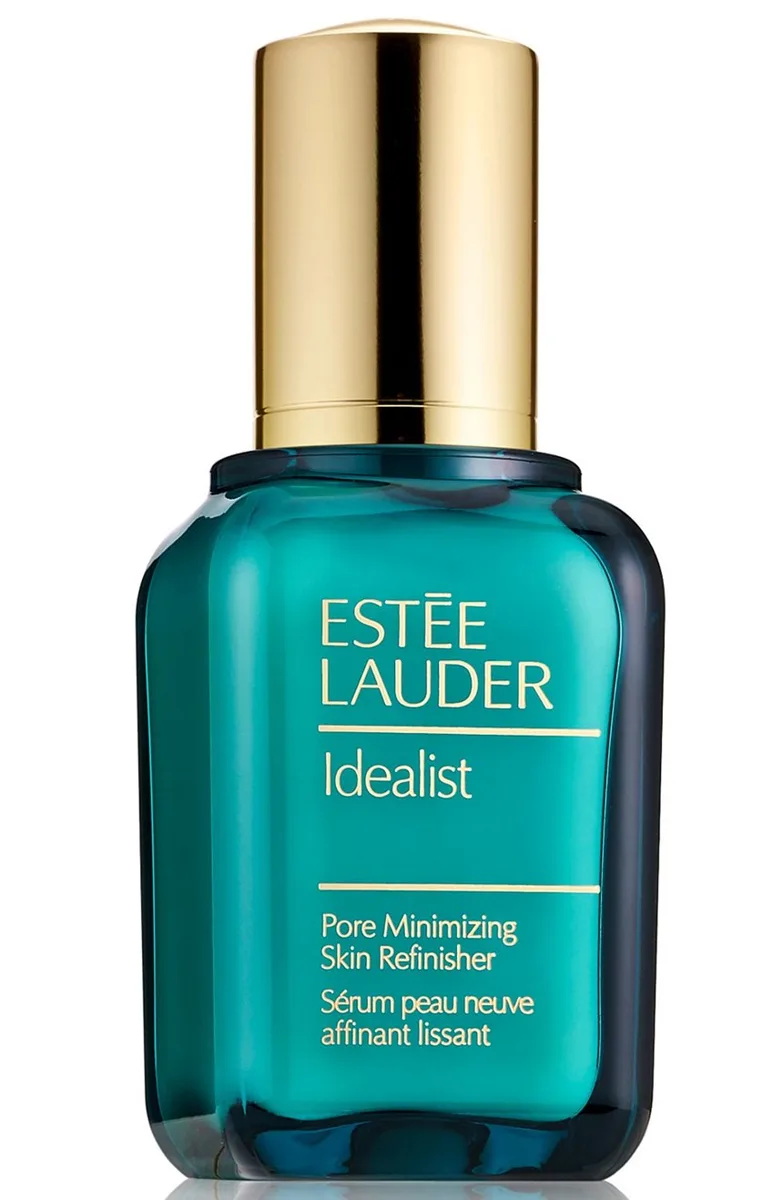
Plastic pump bottle in Estée Lauder's blue-toned design. The pump dispenses controlled amounts and is hygienic. Travel-friendly size available at 30 mL.
The first pump delivers a silky, almost invisible serum that glides into pores and immediately creates a blurred, soft-focus finish. Skin looks smoother and more refined within seconds — this is largely the silicone base filling in textural irregularities. The lightly floral scent is noticeable but fades within minutes. True pore minimizing effects from the actives take weeks to materialize.
2-3 months with twice-a-day use full-face application; 8-12 months with targeted T-zone use
All Year
The Idealist line launched in 2000 as Estée Lauder's entry into the texture-refinement category, with the Pore Minimizing Skin Refinisher debuting in 2007 as the franchise's pore-focused specialist. It built a devoted following over nearly two decades before Estée Lauder quietly discontinued it, leaving its loyal user base scrambling to find alternatives or hoarding remaining stock from secondary markets.
Estée Lauder was founded in 1946 and is one of the most recognized prestige beauty companies globally. The Idealist Pore Minimizing Skin Refinisher, launched in 2007 as part of the Idealist line, has been officially discontinued by the brand. It remains available only through secondary markets and existing inventory.
Pore minimizing products permanently shrink pores
Pore size is largely genetically determined and cannot be permanently changed by any topical product. Products like Idealist work by reducing sebum accumulation that stretches pores, promoting cell turnover to keep pore openings clear, and using silicones to create an optical blurring effect. The results are real but temporary — they require ongoing use to maintain.
Silicone-based products clog pores and make them worse
Dimethicone and cyclopentasiloxane are non-comedogenic and do not penetrate pores. They sit on the skin surface creating a smooth film that optically minimizes pore appearance. The comedogenic risk in this formula comes from other ingredients (wheat germ extract, laminaria extract), not the silicones themselves.
Yes — Estée Lauder has officially discontinued the Idealist Pore Minimizing Skin Refinisher. It is no longer available through authorized retailers. Remaining stock can sometimes be found through secondary markets like Amazon third-party sellers, but authenticity and freshness cannot be guaranteed. If you are looking for alternatives, products containing niacinamide, salicylic acid, or acetyl glucosamine target similar pore concerns.
The formula combined three approaches to pore concerns: acetyl glucosamine for gentle chemical exfoliation and cell turnover, saw palmetto extract for sebum regulation at the follicular level, and a silicone base (cyclopentasiloxane and dimethicone) for immediate optical pore-blurring. This multi-mechanism approach addressed both the appearance and the underlying causes of enlarged pores.
Look for products combining gentle exfoliation with sebum control. Serums containing niacinamide (which pairs synergistically with acetyl glucosamine), salicylic acid (BHA for pore clearing), or retinoids (for cell turnover and collagen support) target similar concerns through different mechanisms. A silicone-based primer can replicate the immediate pore-blurring effect.
Yes — the silicone-heavy base (cyclopentasiloxane, dimethicone, polysilicone-11, phenyl trimethicone) creates a smooth, soft-focus finish that fills in pore texture and provides an excellent canvas for foundation. Many long-term users report using it primarily as a primer that also delivers pore-treatment benefits with continued use.
Only through secondary markets — Amazon third-party sellers, eBay, and some discount beauty retailers may still carry remaining stock. However, since the product is discontinued, there is no way to verify batch freshness or authenticity through these channels. The PAO is approximately 12 months after opening, and skincare products degrade over time even when sealed.
Recurring themes our editors read across retailer reviews of this product — summaries in our words, not quotations, and not a substitute for your own patch test.
Visibly minimizes pore appearance with consistent use
Silky smooth texture creates an immediately refined skin surface
Works excellently as a makeup primer for pore-blurring effect
Lightweight and non-greasy despite the silicone-heavy formula
Years of loyal use — many consider it a holy grail pore product
Addresses texture and pore concerns simultaneously
Officially discontinued by Estée Lauder leaving loyal users without their staple
Premium price for a product heavily reliant on silicone blurring rather than true pore treatment
Fragrance components cause irritation for sensitive skin types
Contains comedogenic ingredients that can cause breakouts in acne-prone skin
Results diminish quickly when use is stopped suggesting cosmetic rather than structural improvement