


Shea Butter Is Doing a Different Job Than You Think
It is sold as deeply nourishing. What it measurably does is seal — and the difference decides whether you should apply it to damp skin or not at all.
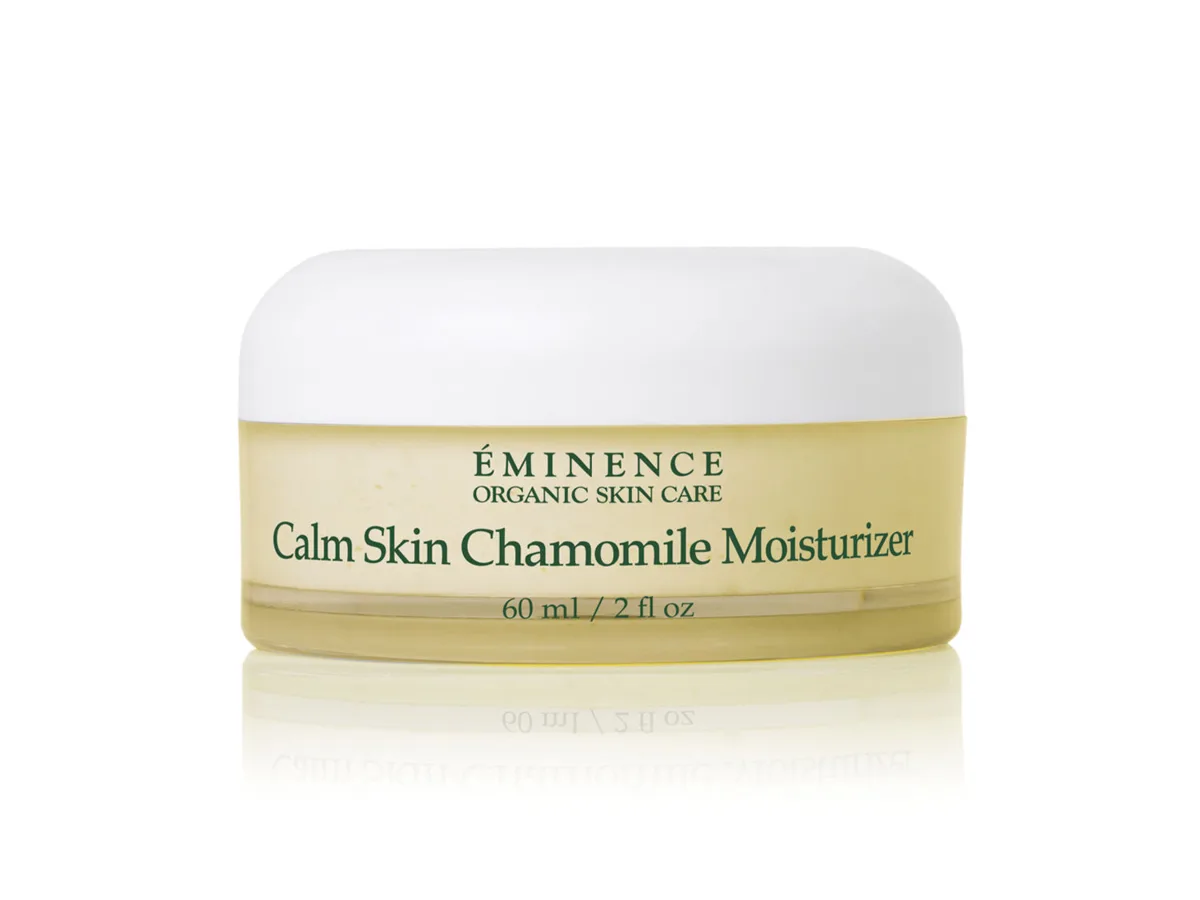
Where modern dermatologist-developed 'calm' moisturizers strip down to ceramides and a short INCI list, this one takes the opposite position: a dense botanical apothecary of chamomile, calendula, evening primrose, grape seed, and herbal extracts positioned as calming through plant synergy. It's a spa aesthetic in a jar, and its identity is tied to that philosophy rather than to any single modern active.
A rich, botanically dense spa cream that feels beautiful and smells like a massage room, but whose calming positioning contradicts a long list of essential oils and plant extracts that can actually provoke the reactive skin it markets to. Best for normal, non-reactive skin that wants a herbal ritual, not for true rosacea or sensitized barriers.
The case for it
What would change this: A declared concentration would move this to a firmer reading of the dose.
Same rule for everyone. “Good choice” is the verdict on 9,564 of 45,024 concern verdicts across the catalog; rule R5 decided 9,072 of them. Unchanged since September 5, 2026, engine 5.1.1.
Brand or formulator? Disclose a concentration or correct a fact →
The studies behind the evidence row
Also listed for Dullness — the actives here (Chamomile Extract, Calendula Extract, Evening Primrose Oil, Shea Butter) are in our research queue for that concern; there is no verdict until their evidence rows are written. That is a gap in our table, not a mark against the product.
Does the jobDoes what a moisturizer is for: draws in water, softens and smooths.
A verdict is DermApproved’s assessment of how well a product’s ingredients fit a concern — never a claim about what the product treats. Evidence dots and collected reviews sit beside it and are never blended in. Rules 0.5.1 · evidence table ev-2026.09-r228 · how we decide
The Eminence Calm Skin Chamomile Moisturizer is one of those products where the brand philosophy and the ingredient list are speaking two different languages, and the review has to try to reconcile them honestly. On the marketing side, this is a cream for sensitive, rosacea-prone, reactive skin — a calming herbal apothecary designed to soothe flushing and redness through whole-plant botanical synergy. On the ingredient side, the formula contains lavender flower extract, jasmine flower extract, lemon peel extract, rosemary leaf extract, arnica flower oil, witch hazel, benzyl alcohol, and salicylic acid. Several of those are in the top ten most common sensitizers on the European allergen watchlist. That's not a small disconnect.
This isn't a hit job — Eminence has been making skincare in Hungary since 1958, its products are widely used in licensed aesthetician offices, and the brand has a real following among people who genuinely love its aesthetic. The cream itself is luxuriously textured: shea butter, sunflower oil, jojoba, and evening primrose give it a cushioned, slip-rich finish that feels expensive going on. The herbal scent is unmistakable — walk into any spa in the world and you'll recognize the genre immediately. As a piece of sensory ritual, this moisturizer delivers. If you love the experience of a botanical facial, this is what one smells like in jar form. The credentials that matter to its core buyer are all present: vegan, cruelty-free, organically sourced, and a glass jar with a traditional spa-shelf gravity — though that jar means finger-scooping twice daily for the two to three months it lasts, so clean hands are part of the deal. Its natural season is fall and winter, when the shea-rich cushioning stops being optional.
The honest problem is that the product's target audience — people who want to calm reactive, rosacea-prone, or barrier-compromised skin — is the audience least able to tolerate what's in the jar. Contact dermatologists have written extensively about the high sensitization rates of lavender, citrus peels, and Asteraceae-family botanicals (which includes chamomile and calendula). For people whose skin is behaving well and who want a pleasant herbal moisturizer, those ingredients usually won't cause problems. For people whose skin is flushing, stinging, or reacting — the exact population the label is written for — those same ingredients can make things worse, sometimes dramatically.
The chamomile itself has real soothing credentials. Bisabolol and chamazulene, the anti-inflammatory compounds chamomile is prized for, have topical data supporting their ability to calm flushing and minor irritation. Calendula has a similar herbal pedigree, and evening primrose oil genuinely supports the barrier through its GLA content. If this product were primarily those three ingredients plus a simple emulsion base, it would be a much easier recommendation for sensitive skin. What undermines it is everything else in the jar — the dozens of additional extracts, most present in small quantities but collectively creating a sensitization risk that's hard to justify for a product sold as a rosacea soother.
Price is the other honest pain point. At roughly $58 for 2 ounces, this lands firmly in prestige territory. You're paying for the brand history, the hand-blended spa aesthetic, the organic sourcing, and the aesthetician-trade credibility. What you're not paying for, necessarily, is a formulation that outperforms simpler ceramide creams on the actual biological job of soothing inflamed skin. Modern dermatologist-developed 'calm' moisturizers have largely moved in the opposite direction — shorter INCI lists, ceramide-cholesterol-fatty acid physiologic blends, minimal fragrance, no essential oils. They don't smell as pretty, but they don't provoke as often, either. Pregnancy deserves its own line of fine print: alongside the trace salicylic acid, the list includes arnica and St. John's Wort — herbals with enough theoretical baggage that expectant users should run this jar past their own clinician rather than assume the word 'organic' settles the question.
The right way to think about this cream is as a premium botanical moisturizer for well-behaved skin. If your skin is normal, slightly dry, and not prone to reacting, you can enjoy the herbal ritual without worrying much about the sensitizer list. You'll get a luxurious sensory experience and a well-hydrated finish, and the chamomile and calendula will do their gentle soothing work. If your skin is truly reactive, read the label twice, do a patch test on the inner arm for five to seven days before putting it on your face, and consider whether the ritual is worth the risk. A boring ceramide cream from a pharmacy brand will almost certainly be a better calmer for the condition the name is promising to address.
It's a beautiful product doing the wrong job for the wrong audience, and those are frustratingly hard reviews to write honestly without sounding dismissive of a brand with a real and devoted following. The kindest version of the truth is this: buy it for the experience, not the clinical calming, and keep a simpler moisturizer on hand for the days your skin is actually angry. The six hundred reviews averaging 4.3 stars document both sides of that truce: loyalists praising the luxurious feel, the herbal scent, and the at-home spa ritual in almost devotional terms, while the dissenting minority reports precisely the essential-oil irritation this review predicts — a split that has less to do with product quality than with which skin walked into the spa.
The hero actives that drive this product's performance.
| Ingredient | Function | Evidence |
|---|---|---|
| Chamomile Extract and Flower | Chamomile contains bisabolol and chamazulene, two compounds with topical anti-inflammatory and soothing activity that can calm flushing and reactivity. In this moisturizer, chamomile is paired with calendula and evening primrose oil so the soothing effect comes from a broader botanical blend rather than one hero ingredient. | Not yet assessed |
| Calendula Oil and Extract | Calendula has been used for centuries for skin soothing and has some supporting topical data for reducing minor irritation and supporting wound-adjacent skin. In this formula it reinforces the chamomile's soothing angle and contributes the marigold-yellow herbal notes that characterize the brand's aesthetic. | Not yet assessed |
| Evening Primrose Oil | A source of gamma-linolenic acid (GLA), which supports skin barrier integrity and has some topical data for reducing redness and itch in reactive skin. Here it's one of several oils doing the emollient heavy lifting alongside sunflower, jojoba, and pumpkin seed oils. | Not yet assessed |
| Shea Butter and Caprylic/Capric Triglyceride | The richness and slip of this cream come from shea butter paired with fractionated coconut oil (caprylic/capric triglyceride). Together they give the moisturizer its balm-adjacent cushioning finish without the waxy heaviness of pure butters. | Established mechanism for Dryness · established mechanism |
| Ubiquinone (Coenzyme Q10) and Thioctic Acid (Alpha Lipoic Acid) | Part of the brand's proprietary Biocomplex2 antioxidant blend. These two work together to scavenge free radicals and support mitochondrial function in skin cells, positioned here as the anti-aging layer beneath the primary soothing story. | Not yet assessed |
Ingredient standings describe the active at treatment-level doses and vehicles; this product's own condition grades weigh its actual formula.
Organic Phytonutrient Blend (Stone Crop Juice, Aloe Juice, Lemon Peel Extract, Bearberry Extract, Jasmine Flower Extract, Lavender Flower Extract, Calendula Officinalis Flower Extract, Rice Extract, Green Tea Leaf Extract, Rosemary Leaf Extract, Soybean Germ Extract, Chlorophyll), Vegetable Glycerin, Hawthorn Berry Juice, Seabuckthorn Berry Juice, Chamomile Flower Extract, Grape Seed Extract, Comfrey Leaf Extract, Chickweed Extract, Rosehip Seed Extract, Calendula Officinalis Flower, Arnica Montana Flower Oil, Sunflower Seed Oil, Pumpkin Seed Oil, Sesame Oil, Safflower Oil, Jojoba Seed Oil, Evening Primrose Oil, Vegetable Heptyl Glucoside, Glyceryl Stearate Citrate, Cetearyl Alcohol, Glyceryl Caprylate, Corn Germ Oil, Caprylic/Capric Triglyceride, Shea Butter, Coco-Caprylate/Caprate, Calendula Officinalis Flower Oil, Chamomile Extract, Provitamin B5, Ivy Extract, Witch Hazel Extract, Arnica Montana Flower Extract, St. John's Wort Extract, Horse Chestnut Seed Extract, Grape Leaf Extract, Tara Tree Gum, Vitamin E, Benzyl Alcohol, Dehydroacetic Acid, Xanthan Gum, Salicylic Acid, Sodium Benzoate, Potassium Sorbate, Vitamin C Ester, Soy Lecithin, Biocomplex2 (Euterpe Oleracea, Citrus Limon, Malpighia Glabra, Emblica Officinalis, Adansonia Digitata, Myrciaria Dubia, Daucus Carota Sativa, Cocos Nucifera Water, Lycium Barbarum, Tapioca Starch, Thioctic Acid, Ubiquinone)
moisturizer
AM & PM
Apply after serums and essences. If using vitamin C or retinoid serums, layer them first and let them absorb before following with this cream. The botanical oils can interact with very active routines, so patch-test before full-face use if your routine includes retinoids or acids.
Immediate: softer, more cushioned skin. 1-2 weeks: improved hydration for non-reactive skin types. 4-8 weeks: subtle evening of tone with consistent use — though users with true rosacea or sensitivity may instead experience worsening redness from the essential oils and plant extracts.
The core scientific argument for this cream rests on a handful of reasonably well-studied soothing botanicals. Chamomile (Matricaria) contains bisabolol and chamazulene, two compounds with documented topical anti-inflammatory activity in small clinical studies — they can reduce minor redness and calm reactive flushing when delivered at functional concentrations. Calendula officinalis has a longer tradition-of-use history and some topical evidence for mild wound-adjacent soothing, though the clinical trials are small and variable. Evening primrose oil is genuinely supported as a source of gamma-linolenic acid (GLA), which has topical and oral data for improving barrier function and reducing atopic dermatitis symptoms in some populations. Where the scientific story gets complicated is everything else on the ingredient list. Lavender oil, jasmine extract, lemon peel, and Asteraceae-family botanicals like arnica are among the most commonly cited sensitizers in contact dermatitis research, particularly in leave-on products used daily. The European Scientific Committee on Consumer Safety has repeatedly flagged several of these compounds for their allergenic potential, and published patch-test studies consistently identify them as triggers in rosacea and atopic patients. The Biocomplex2 blend (CoQ10, alpha lipoic acid, acai, camu camu, and several tropical fruit extracts) contributes antioxidant support with less robust independent clinical evidence — the individual components are well-studied, but the proprietary blend as formulated here hasn't been tested in published peer-reviewed trials. Taken together, this formula is a legitimate botanical moisturizer with real soothing agents, but its clinical calming potential is undercut by the presence of well-documented sensitizers that can provoke the exact patient population the product is marketed to.
Dermatologists tend to have reservations about this product's marketing positioning. Working dermatologists typically recommend against fragranced, essential-oil-containing, multi-botanical moisturizers for patients with rosacea, eczema, or barrier compromise — precisely the patients the 'Calm Skin' line is marketed toward. The recommendation for those conditions is almost always a short-INCI, ceramide-based moisturizer without essential oils or fragrant plant extracts. That said, dermatologists recognize that there is a real patient population who enjoy spa-aesthetic skincare, tolerate botanicals well, and benefit from a pleasant sensory ritual as part of self-care. For those patients, this cream is a reasonable luxury choice. The clinical caveat is specifically about patients with active rosacea, eczema, or contact-dermatitis history, who should typically be steered toward simpler formulations.
After cleansing and any water-based serums or essences, dispense a pea-sized amount onto fingertips and massage gently into face and neck using upward strokes. Use morning and night if tolerated. Before committing, patch test on the inner forearm for 5-7 days — apply once daily and watch for redness, stinging, or bumps. If using alongside a retinoid or active acid serum, apply those first and let them absorb fully. Store the jar in a cool, dark cabinet to slow oxidation of the botanical oils, and use within 12 months of opening.
At roughly $58 for 2 ounces, this cream prices itself at prestige spa-skincare levels. The value case rests on the botanical density, the spa aesthetic, the brand's aesthetician-trade positioning, and the cruelty-free, vegan credentials. What you're not paying for is clinical superiority over cheaper short-INCI ceramide moisturizers — for pure soothing of reactive skin, drugstore ceramide creams are often more effective and far less likely to provoke. For someone who values the experience, the brand, and the organic sourcing, the price is defensible. For someone optimizing for clinical calming efficiency, the price is hard to justify against modern dermatologist-developed alternatives.
Shoppers with normal or dry, non-reactive skin who love the spa-botanical aesthetic and want a luxurious herbal moisturizer for an at-home ritual. A good fit for Eminence loyalists, people who tolerate essential oils without issue, and anyone who values cruelty-free, vegan, organic sourcing in a premium cream.
Anyone with active rosacea, eczema, sensitive or reactive skin, or a history of contact dermatitis to fragranced skincare. This one is also wrong for you if you're optimizing for clinical calming efficiency — a simpler ceramide cream from a pharmacy brand will usually do a better job of the specific condition this name promises to address.
Ready to try Eminence Organic Skin Care Calm Skin Chamomile Moisturizer?
Buy at Amazon ♥Rich, silky cream with a cushioned herbal feel
Distinctly herbal — chamomile, calendula, and faint lavender
Glass jar with screw lid and outer cardboard box — traditional spa aesthetic
First use delivers a clearly fragrant herbal moment and a cushioned finish. If your skin is truly reactive, pay close attention over the first 1-2 weeks — the essential oils and plant extracts can be unexpectedly provocative on skin that looks calm at baseline.
Roughly 2-3 months applied morning and evening to face and neck
fall winter
Eminence launched in Hungary in 1958 and has carried its Eastern European herbal apothecary traditions into spa and aesthetician markets worldwide. The Calm Skin line was built around the brand's philosophy that soothing sensitive skin should come from whole-plant botanical blends rather than minimalist science — a position that divides dermatologists and loyalists cleanly.
Eminence was founded in Hungary in 1958 and is one of the oldest spa-trade organic skincare brands in circulation. Its products are widely used in licensed aesthetician offices and its formulas are botanically dense, though much of the evidence for its herbal actives comes from tradition-of-use rather than clinical trials.
Because this cream is marketed as calming, it's safe for rosacea and sensitive skin.
The formula contains lavender, jasmine, lemon peel, rosemary, witch hazel, and benzyl alcohol — all known sensitizers that can actually provoke rosacea and sensitive skin. A genuinely calming moisturizer for reactive skin should not contain these ingredients at all.
Botanical and 'natural' ingredients are automatically gentler than synthetic ones.
Essential oils and plant extracts are among the most common causes of allergic contact dermatitis on skin. Natural provenance has no relationship to tolerability. Ceramides, glycerin, and dimethicone — all synthesized or refined — are typically better tolerated on reactive skin than herbal apothecary blends.
Despite the calming positioning, this formula contains lavender, jasmine, lemon peel, witch hazel, and other fragrant plant extracts that are common triggers for rosacea flares. Patch test carefully before committing. For reliably rosacea-safe hydration, a short-INCI ceramide cream without essential oils is a safer bet.
Yes — the formula contains no animal-derived ingredients, and Eminence is cruelty-free. The product was named Best Vegan Face Moisturizer at MadameNoire's Melanin Awards in 2019.
Strongly herbal. Chamomile and calendula dominate with a faint lavender backdrop. If you love walking into a spa, you'll probably love this. If fragranced skincare gives you headaches, it's not for you.
Yes, but layer carefully — apply your retinol or vitamin C first and let it fully absorb before following with this cream. The botanical oils can interact with very active routines, and the combination may increase sensitization risk for reactive skin.
A short-INCI ceramide moisturizer is the safer choice for truly reactive skin. This cream's calming reputation comes from the chamomile and calendula, but those benefits are offset by a long list of other fragrant botanicals. For skin that's calm but dry and prefers a spa-like ritual, this is a defensible pick; for skin that reacts frequently, start with a simpler formula.
A glass jar with a screw lid exposes the botanical oils and vitamin C ester to air and light each time you open it, accelerating oxidation. Store the jar upright in a cool, dark cabinet to slow degradation, and use within 12 months of opening.
Recurring themes our editors read across retailer reviews of this product — summaries in our words, not quotations, and not a substitute for your own patch test.
Rich, luxurious feel
Calming herbal scent
Pleasant spa experience at home
Cruelty-free and vegan
Essential oils irritate some sensitive users
Expensive for 2 oz size
Long ingredient list is a sensitization risk
Herbal scent is polarizing