Hyaluronic Acid Can Actually Dehydrate Your Skin (Here's When)
The internet's favorite hydrator has a counterintuitive dark side — in dry air, a humectant with nothing to seal it can pull water out of your skin instead of into it.
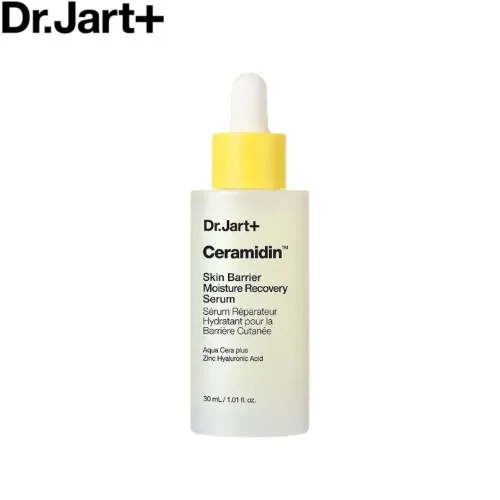
Rather than the five-ceramide cocktail the rest of the Ceramidin line advertises, this serum concentrates on one ceramide, NP, dosed high, and pairs it with zinc-complexed hyaluronic acid, a variant that is still rare outside Korea. It also uses a yeast-fermented sophorolipid as its emulsifier, giving it a lighter, cleaner-feeling emulsion than the cetyl-heavy bases most ceramide serums rely on.
A lighter, cleaner-feeling take on Dr. Jart+'s barrier franchise that swaps the five-ceramide roll call for one ceramide dosed properly and a zinc-bound hyaluronic acid with genuine soothing intent. It is fragrance-free, gentle, and layers beautifully. The price for 30 mL and the fact that you still have to import it are the honest reasons to pause.
This serum has been on sale for well under a year and only in Korea, so the ingredient list here is drawn from Korean retailer disclosures rather than a US label, and the review volume behind the user-experience notes is small. The barrier science is solid for the ceramide and lipid components; how much the zinc-hyaluronate pairing adds on intact skin is not yet shown by independent data.
The case for it
Same rule for everyone. “Good choice” is the verdict on 9,564 of 45,024 concern verdicts across the catalog; rule R5 decided 9,072 of them. As of September 25, 2026, engine 5.1.1.
Brand or formulator? Disclose a concentration or correct a fact →
The studies behind the evidence row
The case for it
What would change this: A declared concentration would move this to a firmer reading of the dose.
Same rule for everyone. “Good choice” is the verdict on 9,564 of 45,024 concern verdicts across the catalog; rule R5 decided 9,072 of them. As of September 25, 2026, engine 5.1.1.
Brand or formulator? Disclose a concentration or correct a fact →
The studies behind the evidence row
The case for it
Same rule for everyone. “Good choice” is the verdict on 9,564 of 45,024 concern verdicts across the catalog; rule R5 decided 9,072 of them. As of September 25, 2026, engine 5.1.1.
Brand or formulator? Disclose a concentration or correct a fact →
The studies behind the evidence row
The case for it
What would change this: A researched evidence row for the lead active would replace this with a verdict.
Same rule for everyone. “Good choice” is the verdict on 1,938 of 45,024 concern verdicts across the catalog; rule F2 decided 1,938 of them. As of September 25, 2026, engine 5.1.1.
Brand or formulator? Disclose a concentration or correct a fact →
A verdict is DermApproved’s assessment of how well a product’s ingredients fit a concern — never a claim about what the product treats. Evidence dots and collected reviews sit beside it and are never blended in. Rules 0.5.1 · evidence table ev-2026.09-r228 · how we decide
Dr. Jart+ shot the launch film for this serum at a gas station, and for once the metaphor is the right one: it is a refuel for a barrier running on empty, not a rebuild. The Ceramidin Skin Barrier Moisture Recovery Serum arrived in Korea in January 2026 as an Olive Young exclusive, the first proper serum in the Ceramidin line since the original oil-laced version from the 2010s, and it marks a quiet change of philosophy for a franchise that has spent a decade advertising how many ceramides it can fit on a label. This one lists a single ceramide. It puts it eighth in the ingredient list. And it pairs it with something most Western shoppers will not have seen before: hyaluronic acid bound to zinc.
The formula architecture is worth slowing down on because it is cleverer than the marketing lets on. The base is a humectant stack, glycerin plus four glycols, then ceramide NP arrives before the oil, before the emulsifiers, before anything else structural. For a serum that is mostly water, that position implies a real dose rather than the trace amounts that let a brand print 'ceramide' on the front. Ceramide NP is the most abundant ceramide class in the human stratum corneum, and there is a respectable argument that a single skin-identical ceramide at a meaningful concentration does more than five at homeopathic ones. The lipid phase is completed by macadamia seed oil, a palmitoleic-acid-rich oil that supplies the fatty-acid leg of the barrier triad, and by hydrogenated lecithin, whose phospholipids help the whole thing organize into the layered, lamellar structure that lets ceramides integrate into skin rather than sit on it. The emulsifier is the unexpected detail: a sophorolipid made by fermenting Candida bombicola yeast on rapeseed methyl ester. Sophorolipids are biosurfactants with a gentle profile and a mild reputation for being kind to the skin's own microbiome, and using one here is part of why the serum feels lighter and less waxy than the cetyl-alcohol-heavy emulsions that ceramide products usually need.
Then there is the zinc hydrolyzed hyaluronate, the 'Zinc Hyaluronic Acid' in bold on the bottle. It is low-molecular-weight hyaluronic acid complexed with zinc ions, and the pitch is that you get the water-binding of the hyaluronate with the calming, slightly astringent, wound-supporting behaviour zinc brings. Zinc-hyaluronate combinations have a history in dermatological wound gels, where the combination has shown faster re-epithelialization than either component alone in small studies, and Korean formulators have been quietly moving the concept into cosmetics for a few years. Whether the cosmetic dose does anything zinc-specific on intact skin is not established; what is clear is that it is a well-tolerated humectant that does not sting on a compromised barrier, which is the one thing a barrier serum absolutely must get right.
In use, the texture is the selling point. It pours as a pale yellow, faintly milky fluid with more slip than a water serum and none of the tack of a hyaluronic gel. It spreads thin, sinks in within a minute, and leaves skin feeling soft and slightly cushioned without any film for a moisturizer or sunscreen to fight with. On freshly exfoliated skin, the kind that flinches at toner, it goes on silent. There is no fragrance, which is a meaningful break from the original Ceramidin Serum that carried bergamot, geranium and sage oils and gave a generation of sensitive-skinned buyers a reason to skip the line. The trade-off for that lightness is coverage: on very dry skin in a cold, dry winter this is a layer, not a solution, and it wants the Ceramidin cream or something equally occlusive over it. Dr. Jart+ says as much in the directions.
The yellow tint deserves a sentence, because it is the one design decision here that a formulation purist would reverse. It comes from Yellow 4, a cosmetic dye, and it exists so the serum matches the Ceramidin brand color. Tartrazine sensitivity is uncommon but real, and putting a dye in a product aimed explicitly at reactive skin is a branding choice made over a formulation one. It will not matter to most people. It is still the ingredient to check if your skin has a history of reacting to colorants.
The bigger practical issue is access and price. At launch this is an Olive Young exclusive, which means a US buyer is importing through Olive Young Global or a reseller and paying somewhere in the forty-to-fifty-dollar range for 30 mL, before shipping. For a serum you are meant to use twice a day, 30 mL is about six weeks, and the per-month cost lands in the territory of prestige serums with far longer track records. Dr. Jart+ has had a Sephora presence since 2011 and Estée Lauder's distribution behind it since 2019, so a US listing is likely, and the price may well settle lower when it does, as the brand's Korean launch pricing usually does. Until then, the value equation is a premium price for a formula that is well built but not doing anything a good ceramide cream and a plain hyaluronic serum could not approximate.
Where it earns its place is on skin that is currently unhappy. If your barrier is stripped from an over-enthusiastic acid phase, a retinoid ramp, a winter of indoor heating or a round of in-office treatments, this is the kind of serum that lets you keep a routine going without adding to the damage. It buffers retinoids well, it sits under sunscreen without pilling, and it does not ask you to give anything up. If your skin is already comfortable and you want a barrier serum for maintenance, the cost and the import hassle tilt the decision toward waiting for a US release or reaching for the toner and cream in the same line that you can buy at Sephora today.
The brand has more than a decade of feedback on Ceramidin emulsions, and that history is the main reason to trust a six-month-old product this much: Dr. Jart+ knows how to make a ceramide formula that sensitive skin tolerates. What it has not yet done is publish anything beyond consumer-perception testing on this serum specifically, so the barrier-strengthening claims rest on the ingredients rather than on data about this bottle. That is normal for a Korean cosmetic launch and it is worth knowing.
The hero actives that drive this product's performance.
| Ingredient | Function | Evidence |
|---|---|---|
| Ceramide NP | The single ceramide in this serum, sitting unusually high in the list at eighth position, which for a water-based serum suggests a meaningful dose rather than a label claim. It is delivered in a lamellar emulsion built on hydrogenated lecithin and sucrose distearate, the kind of structure that helps a ceramide slot into the skin's own lipid layers rather than sit on top. | Established mechanism for Dryness · established mechanism |
| Zinc Hydrolyzed Hyaluronate | The 'Zinc Hyaluronic Acid' printed on the bottle: low-molecular-weight hyaluronic acid complexed with zinc, positioned as the serum's deep-hydration and soothing engine. The zinc pairing is meant to add a calming, mildly astringent note to a humectant that would otherwise just pull water, which is why Dr. Jart+ markets this at tight, flaky, irritated skin. | Established mechanism for Dehydration · established mechanism |
| Macadamia Ternifolia Seed Oil | A palmitoleic-acid-rich plant oil that supplies the fatty-acid leg of the barrier lipid triad alongside the ceramide and the lecithin's phospholipids. It is what gives this otherwise watery serum a faint cushion on the skin and keeps it from feeling like a plain hyaluronic layer. | Not yet assessed |
| Hydrogenated Lecithin | The phospholipid backbone of the serum's lamellar emulsion, working with sucrose distearate and a yeast-derived sophorolipid to hold the macadamia oil and ceramide in a layered structure that mirrors the skin's own lipid bilayers. It is a large part of why the serum stays light while still carrying lipids. | Not yet assessed |
| Tocopherol | Vitamin E protecting the macadamia oil from oxidation and adding a modest antioxidant contribution of its own. In a ceramide serum aimed at compromised skin its more important job is stability, keeping the lipid phase fresh across the bottle's life. | Not yet assessed |
Ingredient standings describe the active at treatment-level doses and vehicles; this product's own condition grades weigh its actual formula.
Water, Glycerin, Butylene Glycol, Dipropylene Glycol, Methyl Gluceth-20, Propanediol, Methylpropanediol, Ceramide NP, Zinc Hydrolyzed Hyaluronate, Macadamia Ternifolia Seed Oil, Ethylhexylglycerin, Tocopherol, Polyglyceryl-10 Stearate, Sucrose Distearate, Sodium Stearoyl Glutamate, Glyceryl Stearate, Polyacrylate Crosspolymer-6, Cetearyl Alcohol, Hydrogenated Lecithin, Candida Bombicola/Glucose/Methyl Rapeseedate Ferment, Sodium Polyacryloyldimethyl Taurate, 1,2-Hexanediol, Sodium Phytate, Yellow 4 (CI 19140)
serum
AM & PM
Goes on damp skin straight after toner and before any heavier cream; it plays well under retinoids and acids as a buffer layer, and under sunscreen without pilling as long as it has a minute to set. Skip layering it over an oil, since the emulsion needs bare skin to spread thinly.
The tight, drawn feeling eases on first application and skin looks more plumped within the hour. Flakiness and rough patches typically soften across the first one to two weeks; a more resilient barrier that tolerates actives better is a four-to-eight-week outcome with twice-daily use.
The case for a ceramide-forward serum on damaged skin rests on decades of work showing that the stratum corneum's intercellular lipids, roughly equal parts ceramides, cholesterol and free fatty acids, are depleted and disorganized in dry, eczema-prone and over-treated skin, and that supplying skin-identical lipids in a form that can integrate into those layers helps restore water retention. Ceramide NP, the class this serum leads with, is the most abundant ceramide in healthy human stratum corneum and the one most often shown to fall in barrier-compromised states. What distinguishes this formula from a simple 'ceramide in water' serum is the delivery structure: hydrogenated lecithin and a sophorolipid emulsifier build a lamellar, liquid-crystal-type emulsion, and formulation research has repeatedly found that ceramides delivered in lamellar or liposomal systems penetrate and organize better than the same ceramide dispersed in a conventional oil-in-water cream. Macadamia seed oil supplies palmitoleic and oleic acids, rounding out the fatty-acid component that ceramide-only products tend to omit.
The zinc hydrolyzed hyaluronate is the less settled part. Zinc-hyaluronate complexes have a clinical history in wound care, where topical zinc hyaluronate gels have been reported to speed re-epithelialization of chronic wounds and burns compared with hyaluronate alone, with the proposed mechanism being zinc's role as a cofactor for the metalloproteinases and DNA-repair enzymes involved in epithelial regeneration. Extending that to intact but irritated facial skin at cosmetic concentrations is a reasonable hypothesis rather than a demonstrated effect; independent trials of zinc-complexed hyaluronic acid in leave-on cosmetics are scarce, and Dr. Jart+ has released consumer-perception figures rather than instrumented barrier data for this serum. The honest reading is that the ceramide and lipid architecture is well grounded, the hyaluronate will hydrate as hyaluronates do, and the zinc pairing is a plausible bonus whose specific contribution has not yet been isolated. No study references are cited here because no peer-reviewed trial of this formula, or of zinc hydrolyzed hyaluronate in a comparable leave-on cosmetic, could be verified this session.
In clinical practice, a ceramide-dominant, fragrance-free serum is a reasonable adjunct for patients whose barrier has been compromised by retinoid initiation, over-exfoliation, or seasonal xerosis, and the ingredient profile here fits that use: skin-identical ceramide NP, a fatty-acid source, a humectant and no fragrance or denatured alcohol. Dermatologists generally frame products like this as supportive rather than corrective; a serum can reduce transepidermal water loss and improve comfort, but a true barrier repair strategy still means pulling back the offending active, adding an occlusive at night and giving the skin time. Two cautions come up in clinic. Patients prone to Malassezia folliculitis may find plant-oil-containing serums worsen their bumps, and the Yellow 4 colorant, while rarely problematic, is one dye a patient with a documented tartrazine or azo-dye sensitivity should avoid. For most people with dry, reactive or recently irritated skin this formula is a low-risk addition, and the fact that it is unfragranced is what clinicians will like most about it.
After cleansing and toner, while skin is still slightly damp, dispense two to three drops into the palm and press across the face, then pat until it disappears, which takes under a minute. Use it morning and night. In the morning follow with sunscreen, letting the serum set first so it does not pill. At night, on dry or compromised skin, seal it with the Ceramidin cream or another ceramide moisturizer; on combination skin a light gel may be enough. If you use a retinoid or an acid, apply this serum first as a buffer and the active over it. It can extend to the neck and around the eyes, avoiding the lash line. Store it out of direct sun to protect the plant oil.
Somewhere between forty and fifty dollars for 30 mL, before international shipping, is prestige pricing for a serum whose job is barrier support, and it is roughly twice the per-millilitre cost of the Ceramidin Serum Toner in the same line. What you are paying for is a thoughtfully structured emulsion, a well-placed ceramide, a fragrance-free formula and a novel hyaluronate, delivered by a brand with a decade of tolerance data on sensitive skin. That is more substance than many serums at this price offer, but the format works against it: 30 mL lasts about six weeks at the recommended twice-daily use, so the monthly cost is high for a maintenance product. The Korean shelf price is lower than the cross-border list, and Dr. Jart+ launches usually land at Sephora within a year at a settled US price, so anyone not in urgent barrier trouble is better off waiting. No larger size exists yet.
People with dry, sensitive or recently irritated skin who want a light, fragrance-free ceramide step that sits under everything else, especially anyone ramping up a retinoid or recovering from over-exfoliation. Fans of the Ceramidin cream who want a lighter daytime layer, and K-beauty shoppers who already order from Olive Young, will get the most out of it.
Anyone whose skin is comfortable and just wants maintenance, since the import cost and 30 mL size make it an expensive habit for a supportive product. Fungal-acne-prone skin should avoid the plant oil and fatty esters, and people with a known azo-dye sensitivity should note the Yellow 4.
Ready to try Dr. Jart+ Ceramidin Skin Barrier Moisture Recovery Serum?
Buy at Amazon ♥A pale yellow, milky-translucent fluid that is thinner than a lotion but has more slip than a water serum; it spreads in a thin sheet and leaves a barely-there softness rather than a film.
Unfragranced; a faint neutral note from the plant oil and emulsifiers that disappears within seconds.
A frosted glass dropper bottle with the Ceramidin yellow collar and cap, 30 mL, with the label carrying 'Aqua Cera plus Zinc Hyaluronic Acid' as the formula's callout.
Skin feels quenched and less tight on first use, with no tingle, warmth or stinging even on freshly exfoliated skin. Over the first week expect flaky patches to smooth and makeup to sit better; there is no adjustment period or purging, since there are no exfoliants or actives to trigger one.
Roughly five to seven weeks at two to three drops twice daily on the face alone; stretching to the neck brings it closer to a month.
All Year
Dr. Jart+ launched Ceramidin in 2013 as a Korean answer to prescription-adjacent barrier creams, and it grew into the brand's biggest franchise after the 2019 Estée Lauder acquisition. The Moisture Recovery Serum arrived in January 2026 as an Olive Young exclusive with a 'gas station' campaign film about refuelling parched skin, the first true serum in the line since the original Ceramidin Serum and a sign the franchise is being rebuilt around lighter textures.
Dr. Jart+ was founded in Seoul in 2004 by Chin Wook Lee with a dermatologist partner, popularized BB cream in the West, and has been owned by Estée Lauder since 2019. Its Ceramidin franchise dates to 2013 and has accumulated over a decade of retail feedback, though the brand publishes consumer-perception studies rather than peer-reviewed trials on its specific products.
More ceramide types on the label always means a better barrier serum.
Ceramide NP is the most abundant ceramide class in human skin, and a single well-dosed ceramide in a lamellar emulsion can do more than five listed at trace levels. This formula's choice to lead with NP high in the list is a defensible one.
Hyaluronic acid serums dry skin out by pulling water from deeper layers.
That concern applies to high-molecular-weight HA used alone in very dry air. Here the hydrolyzed hyaluronate is wrapped in glycerin, a ceramide and a plant oil that slow evaporation, and the brand's own directions have it followed by a cream.
The yellow color means the formula is loaded with active ingredients.
The tint comes from Yellow 4, a cosmetic dye, and is there to match the Ceramidin brand color. It says nothing about potency, and it is the one ingredient in the list a highly reactive person might prefer to avoid.
The Serum Toner is a 150 mL milky toner meant to prep skin and carry the five-ceramide blend, while the Moisture Recovery Serum is a concentrated 30 mL treatment step built around ceramide NP and zinc hydrolyzed hyaluronate. They are designed to stack, toner first, with the serum adding the deeper hydration hit.
As of its launch it is an Olive Young exclusive in Korea and ships internationally through Olive Young Global and K-beauty resellers; Sephora and drjart.com have not listed it. Dr. Jart+ typically brings Korean launches stateside within a year, so a US listing is plausible but not confirmed.
Probably not the best choice. It contains macadamia seed oil and several fatty esters that can feed Malassezia in people prone to fungal acne, even though it is otherwise mild. Those with that history should look at an oil-free ceramide option instead.
No fragrance and no drying alcohol appear in the ingredient list, which is a change from the original Ceramidin Serum that carried essential oils. The only cosmetic additive of note is Yellow 4, the dye that gives it the pale yellow tint.
Yes, and it is a sensible pairing. Applying this serum first puts a ceramide and hyaluronate layer under the retinoid, which tends to reduce the dryness and peeling that come with retinol adjustment without meaningfully blunting its effect.
It refers to zinc hydrolyzed hyaluronate, a low-molecular-weight hyaluronic acid bound to zinc ions. The idea is to combine hyaluronic acid's water-binding with zinc's soothing effect on irritated skin; the concept has laboratory support but few independent clinical trials so far.
Recurring themes our editors read across retailer reviews of this product — summaries in our words, not quotations, and not a substitute for your own patch test.
Sinks in fast for a barrier serum and doesn't feel filmy
Takes the sting out of skin that reacts to everything
Layers cleanly under the Ceramidin cream
No fragrance, unlike older Ceramidin serums
30 mL feels small for a serum meant for twice-daily use
Not yet available at US retailers
Tinted yellow with a dye some would rather not see
Too light on its own for very dry skin in winter