


Testosterone Reliably Causes Acne. The Counselling Almost Never Mentions It.
The timeline is predictable enough to plan around — which is exactly why starting the treatment after the breakout is the wrong order.
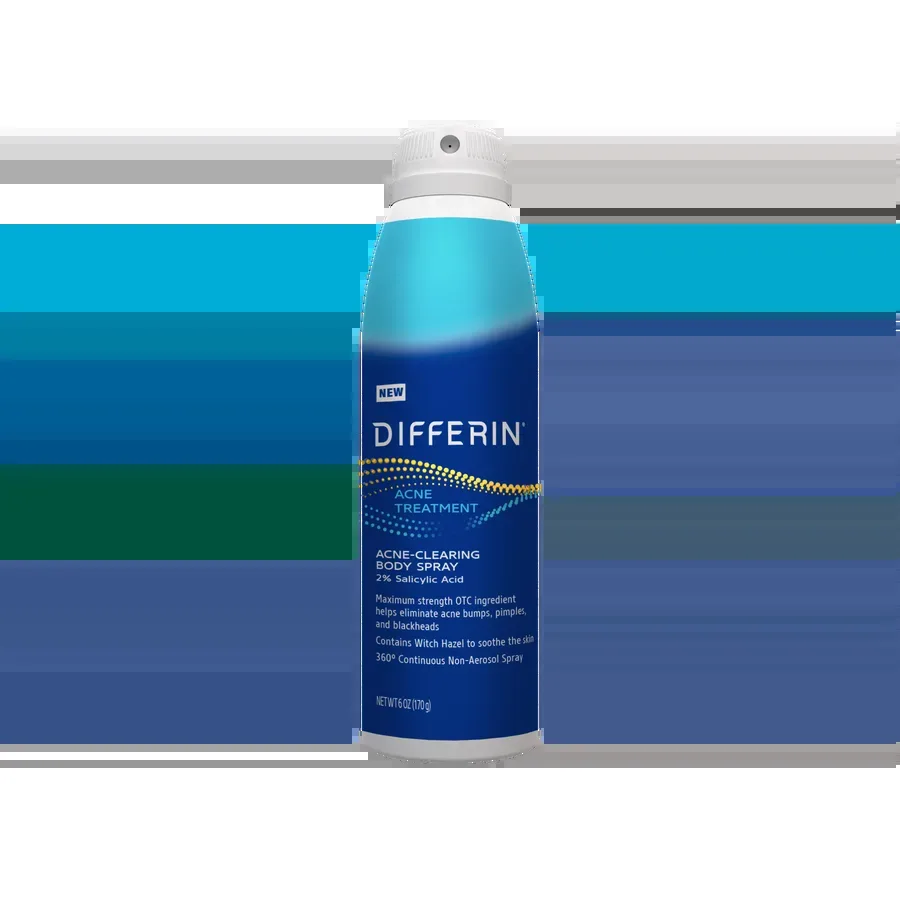
This is one of the few body-specific acne treatments from a dermatologist-developed brand that addresses the unique challenge of truncal acne: accessibility. The 360-degree spray format lets users treat their own back without contortions or assistance. The triple-acid approach — 2% salicylic acid, 3% glycolic acid, and 2.5% witch hazel — delivers more exfoliating power than single-acid body treatments, calibrated for the thicker, more resilient skin of the torso.
A genuinely innovative solution to one of skincare's most frustrating accessibility problems — reaching your own back with acne treatment. The triple-acid formula is aggressive but effective for body skin, and the spray format actually works. The alcohol base is a real trade-off, but for body acne sufferers tired of awkward contortions, this earns its spot.
Note: This spray launched in mid-2022 and our assessment is based on moderate real-world data from approximately 280 user reviews. The individual active ingredients are well-studied, but the specific triple-acid spray combination has limited independent evaluation.
The case for it
Cautions: known irritants; fungal-acne triggers.
Same rule for everyone. “Strong choice” is the verdict on 1,459 of 45,024 concern verdicts across the catalog; rule R2 decided 892 of them. Unchanged since September 5, 2026, engine 5.1.1.
Brand or formulator? Disclose a concentration or correct a fact →
The studies behind the evidence row
The case for it
Cautions: fungal-acne triggers.
What would change this: A concentration inside the studied range would raise this a step.
Same rule for everyone. “Unproven” is the verdict on 1,111 of 45,024 concern verdicts across the catalog; rule R9 decided 1,111 of them. Unchanged since September 5, 2026, engine 5.1.1.
Brand or formulator? Disclose a concentration or correct a fact →
The studies behind the evidence row
The case for it
Cautions: fungal-acne triggers.
Same rule for everyone. “Strong choice” is the verdict on 1,459 of 45,024 concern verdicts across the catalog; rule R2 decided 892 of them. Unchanged since September 5, 2026, engine 5.1.1.
Brand or formulator? Disclose a concentration or correct a fact →
The studies behind the evidence row
The case for it
Cautions: drying alcohol.
What would change this: Trial evidence for the active on this concern would move this from a bet to a recommendation.
Same rule for everyone. “Unproven” is the verdict on 1,111 of 45,024 concern verdicts across the catalog; rule R9 decided 1,111 of them. Unchanged since September 5, 2026, engine 5.1.1.
Brand or formulator? Disclose a concentration or correct a fact →
The studies behind the evidence row
A verdict is DermApproved’s assessment of how well a product’s ingredients fit a concern — never a claim about what the product treats. Evidence dots and collected reviews sit beside it and are never blended in. Rules 0.5.1 · evidence table ev-2026.09-r228 · how we decide
Body acne occupies a strange position in skincare culture. Millions of people deal with it — breakouts across the back, chest and shoulders that shape confidence, clothing choices and comfort. Yet the treatment market has mostly ignored it, offering face products with a vague 'you can use this on the body too' shrug. Differin's Acne-Clearing Body Spray is one of the rare products designed around the practical reality of body acne: you cannot easily treat what you cannot easily reach.
The 360-degree continuous spray is the genuine innovation. Creams, gels and lotions all demand direct manual application, which has meant back acne treatment historically required Olympic flexibility, a cooperative partner, or improvised long-handled contraptions. The spray removes that barrier. Hold the can over your shoulder, press, and a fine mist lands across the area without any precision on your part. It is a delivery-system solution to what was always a delivery-system problem, and it is faintly absurd that it took until 2022 for someone to build it.
Differin — made by Galderma, the dermatology company behind the landmark OTC adapalene gel — brings real clinical credibility to a category otherwise dominated by body washes carrying trace actives down the drain. The formula reflects that seriousness: 2% salicylic acid, 3% glycolic acid and 2.5% witch hazel water. This is not a gentle daily prevention product. It is an active treatment calibrated for the thicker, more resilient skin of the torso, where the pores are larger and the sebaceous glands considerably busier than anything on your face.
The pharmacology is coherent. Salicylic acid at 2% — the maximum OTC concentration — is oil-soluble, so it moves into the lipid-rich follicle and dissolves the plug of sebum and dead cells that becomes a lesion. Glycolic acid at 3% works on the other side of the problem, clearing the surface layer that traps oil beneath it, and being the smallest AHA molecule it penetrates efficiently at a concentration well below peeling grade. Witch hazel's tannins add astringency and temporary tightening. Three mechanisms, three angles, all of them defensible.
The vehicle is where the honest trade-offs start. Alcohol denat. sits second on the list. It is the reason the mist dries in thirty to sixty seconds and lets you pull a shirt on immediately instead of standing damp and clammy for ten minutes. A water-based spray would be functionally unusable in a morning routine. The alcohol is solving a real problem.
It also costs something. Denatured alcohol disrupts the barrier and accelerates water loss, and while body skin absorbs that better than facial skin would, the effect compounds across weeks — especially with two acids exfoliating at the same time. People in dry climates, or anyone jumping straight to the three-times-daily maximum, tend to hit noticeable dryness and peeling by week two or three. Start once daily. Give it a week. Increase only if your skin is genuinely fine, and if dryness creeps outward, put an oil-free moisturizer on the surrounding untreated skin rather than abandoning the treatment. The polysorbate 20 and ammonium hydroxide round out an otherwise stripped-back list, and the formula is at least fragrance-free — a sensible decision in a product already asking a lot of the skin.
The smell, though, is intense. The alcohol-and-acid combination produces a sharp chemical hit during spraying, strong enough that ventilation is a reasonable idea. It fades within a couple of minutes and leaves nothing detectable on the skin, but the moment of application is not pleasant. This is a functional treatment, not a self-care ritual, and it does not pretend otherwise.
Results, for those who tolerate it, look promising. Early feedback — roughly 280 reviews since the mid-2022 launch, so read it as directional rather than definitive — points to visible improvement in one to two weeks and meaningful clearing by week four to six. The BHA-plus-AHA pairing appears to address both the lesions present and the conditions that generate the next ones. Post-inflammatory marks take longer, eight to twelve weeks, with the glycolic acid doing that fading slowly.
The nozzle draws mixed reports. Some find it genuinely omnidirectional; others say it favours a narrower range and needs positioning. Having someone confirm your coverage for the first few applications is a cheap way to learn the technique, and there are scattered reports of defective spray mechanisms worth knowing about before you buy.
Twenty dollars for six ounces is fair. A can runs two to three months at once-daily use — seven to ten dollars a month, which compares well against a graveyard of body washes that never worked. It is also, usefully, fungal-acne safe and pregnancy-safe, which widens the door.
One thing worth saying plainly, because it lingers under this whole category: truncal acne is not a hygiene failure. It is hormonal, genetic and sebaceous, and scrubbing harder makes it worse. This spray works because it addresses the actual mechanism, not because it gets you cleaner. For oily-skinned people with persistent back and chest breakouts who have exhausted the gentle options, it is a legitimately new tool — demanding, a little harsh, and finally within arm's reach.
The hero actives that drive this product's performance.
| Ingredient | Function | Evidence |
|---|---|---|
| Salicylic Acid (2%) | The primary OTC acne-fighting active at maximum allowed concentration. As a BHA, its oil-soluble nature allows it to penetrate into clogged pores on the thicker body skin — chest, back, and shoulders — where body acne predominantly forms. The spray delivery system distributes it evenly across hard-to-reach areas. | Regulator-approved for Acne · emerging certainty |
| Glycolic Acid (3%) | An AHA that complements the salicylic acid with water-soluble surface exfoliation. While the salicylic acid works inside pores, glycolic acid addresses the dead cell buildup on the skin surface that traps sebum underneath. This dual-acid strategy is more aggressive than either acid alone but more effective on the thicker, more resilient skin of the body. | Limited for Acne |
| Hamamelis Virginiana (Witch Hazel) Water (2.5%) | Provides astringent activity that helps control the surface oil production on acne-prone body areas. The tannins in witch hazel temporarily tighten pore openings, creating a triple-mechanism approach alongside the BHA and AHA: pore clearing, surface exfoliation, and oil control. | Not yet assessed |
Ingredient standings describe the active at treatment-level doses and vehicles; this product's own condition grades weigh its actual formula.
Active: Salicylic Acid 2%. Inactive: Water, Alcohol Denat., Glycolic Acid, Hamamelis Virginiana (Witch Hazel) Water, Polysorbate 20, Ammonium Hydroxide, Disodium EDTA
treatment
AM & PM
Spray onto clean, dry skin on the chest, back, and shoulders. Allow to dry completely before dressing. Can be used 1-3 times daily depending on tolerance. Follow with a body moisturizer on surrounding untreated areas if experiencing dryness.
Drying and surface oil reduction within minutes of first application. Visible clearing of existing body breakouts within 1-2 weeks. Significant improvement in body acne frequency and severity after 4-6 weeks of consistent use. Post-inflammatory marks may take 8-12 weeks to fade.
The dual-acid approach in this formula combines the complementary mechanisms of BHA (salicylic acid) and AHA (glycolic acid) for more comprehensive acne treatment than either acid alone. Salicylic acid's lipophilic nature allows penetration into the lipid-rich environment of sebaceous follicles, where it dissolves the corneocyte accumulation that forms microcomedones. A 2020 multicenter study published in the Journal of the European Academy of Dermatology and Venereology confirmed that salicylic acid-based regimens significantly reduce both non-inflammatory and inflammatory acne lesions.
Glycolic acid contributes water-soluble exfoliation of the stratum corneum surface. As the smallest AHA molecule, glycolic acid has superior skin penetration characteristics. Research reported in Dermatologic Surgery demonstrated that glycolic acid at concentrations between 2-10% effectively reduces epidermal thickening and comedone formation. In this formula, the 3% concentration provides meaningful surface exfoliation without approaching the peeling-grade concentrations used in chemical peels.
The combination of BHA and AHA addresses body acne from two directions: salicylic acid works within pores to clear existing congestion, while glycolic acid clears the surface cell buildup that traps sebum and creates new comedones. A comprehensive review published in the Journal of Clinical and Aesthetic Dermatology concluded that combination acid approaches demonstrate superior efficacy for acne treatment compared to single-acid monotherapy.
Truncal acne presents unique challenges compared to facial acne — the skin is thicker, the pores are larger, and the sebaceous glands are more active in the chest and back. These anatomical differences justify the more aggressive triple-acid approach used in this formula, which would be unnecessarily harsh on thinner facial skin.
Dermatologists recognize truncal acne as an undertreated condition that often requires more aggressive topical therapy than facial acne due to the thicker epidermis and more active sebaceous glands on the chest and back. Dermatology guidance holds that the combination of BHA and AHA in this spray aligns with evidence-based approaches to comedonal body acne, and the spray delivery system solves the practical barrier that has historically limited treatment compliance for back acne. The primary concern raised by dermatologists is the high alcohol content and its potential for barrier disruption with daily use — clinicians typically advise starting with once-daily application and monitoring for excessive dryness before increasing frequency.
Shake well before use. Hold the can 4-6 inches from the skin. Spray a thin, even layer over clean, dry skin on the chest, back, shoulders, or other acne-prone body areas. Allow to dry completely (approximately 60 seconds) before dressing. Start with once-daily application to assess tolerance. If well-tolerated after one week, increase to twice daily as needed. Use up to three times daily maximum. If excessive dryness or irritation occurs, reduce to once daily or every other day. Apply an oil-free body moisturizer to surrounding untreated areas if dryness spreads.
At $19.99 for 6 ounces, this represents solid value for a specialized body acne treatment from a dermatologist-developed brand. The single-size offering means no economy option, but the spray format is efficient and a single can lasts two to three months with daily use. The per-month cost of approximately $7-10 is competitive with body acne washes that require larger quantities per use. The genuine Galderma/Differin provenance adds credibility that justifies the price over generic body acne sprays.
Anyone with recurring body acne — particularly back and chest breakouts — who has struggled with the accessibility challenge of treating hard-to-reach areas. Ideal for oily-skinned individuals whose body acne has not responded adequately to body washes alone and who need a targeted, leave-on treatment. Athletes and those who sweat frequently can benefit from the quick-drying, residue-free format.
Anyone with dry, sensitive, or eczema-prone body skin — the alcohol and dual-acid combination will exacerbate these conditions. Those with mild body acne may find this overly aggressive — start with a salicylic acid body wash first. Anyone sensitive to strong chemical scents during application should be aware of the alcohol smell.
Ready to try Differin Acne-Clearing Body Spray?
Buy at Amazon ♥Super-fine mist spray that dries quickly to an invisible, non-sticky finish. Liquid is thin and watery. Feels cooling on initial application due to the alcohol base.
No added fragrance, but has a noticeable alcohol and chemical scent from the denatured alcohol and acids. The smell is strong during spraying and dissipates within 1-2 minutes as the product dries.
Aerosol-style spray can with a 360-degree twist-lock nozzle designed for application from any angle. Aimed at solving the accessibility problem of treating back acne without needing another person's help.
The first spray delivers a fine, cool mist with a noticeable alcohol scent. Dries within 30-60 seconds to an invisible finish. Some users experience mild stinging or tingling from the acid combination, especially on active breakouts. The spray coverage is reasonably even but some users find the nozzle less 360-degree capable than marketed. Start with once-daily application to assess skin tolerance before increasing frequency.
2-3 months with once-daily application to affected body areas
All Year
Body acne is one of dermatology's most undertreated conditions — affecting millions but lacking the product innovation that facial acne receives. Differin, having established credibility with its landmark OTC adapalene gel, leveraged that reputation to enter the body acne space with a product designed around the practical challenge that makes body acne so persistent: you can't easily reach your own back. The spray format was the solution, and the triple-acid formula was calibrated for body skin that can handle more aggressive treatment than the face.
Differin is manufactured by Galderma, a global dermatology company founded in 1981 as a joint venture. The brand achieved landmark status when its adapalene gel became the first prescription-strength retinoid approved for OTC sale in 2016, based on 20 years of clinical safety data and 40 million prescriptions worldwide.
Body acne is caused by poor hygiene
Truncal acne, like facial acne, is driven by hormones, genetics, and the overproduction of sebum — not by being dirty. Excessive washing can actually worsen body acne by disrupting the skin barrier. This spray works by addressing the actual causes: clearing clogged pores (salicylic acid), removing dead cell buildup (glycolic acid), and controlling surface oil (witch hazel).
Face acne products can be used on the body
While some facial actives work on the body, body skin is thicker and more resilient, often requiring higher concentrations or multi-acid approaches. This spray's combination of 2% salicylic acid and 3% glycolic acid is more aggressive than most facial products — appropriate for body skin but too harsh for the face.
No — this formula is specifically designed for body skin, which is thicker and more resilient than facial skin. The combination of 2% salicylic acid, 3% glycolic acid, and denatured alcohol as the second ingredient would be too aggressive for most facial skin. Use Differin's facial products for face acne.
Start with once daily to assess your skin's tolerance. The triple-acid formula can cause dryness and irritation, especially in the first two weeks. If well-tolerated, you can increase to twice daily. The maximum recommended frequency is three times daily, but most users achieve good results with once or twice daily application.
You can use the adapalene gel on your face and the body spray on your body as part of the same routine. However, avoid using both on the same body area simultaneously — the combination of a retinoid with dual-acid exfoliation would be too irritating for most skin. If you want to use adapalene on body acne, alternate it with the body spray on different days.
Many users report visible improvement in back acne within 1-2 weeks, with significant clearing by 4-6 weeks. The spray format addresses the key challenge of back acne treatment — reaching the affected area without help. Results are best when combined with a gentle body wash and consistent daily application.
The noticeable scent comes from the denatured alcohol, which is the second ingredient. The alcohol serves as the fast-drying vehicle that makes the spray practical — it dries within 60 seconds so you can dress immediately. The scent dissipates within 1-2 minutes. If the smell bothers you, spray in a ventilated area and wait briefly before moving to an enclosed space.
Recurring themes our editors read across retailer reviews of this product — summaries in our words, not quotations, and not a substitute for your own patch test.
Effectively treats hard-to-reach back and chest acne
Lightweight, fast-drying formula leaves no residue
360-degree spray works from multiple angles
Visible clearing of breakouts within days for some users
Combines three active exfoliants in one convenient product
Strong alcohol/chemical smell — users recommend ventilation while spraying
Spray nozzle can be difficult to aim precisely for back application
Denatured alcohol is drying, especially with repeated daily use
Can cause irritation and stinging on sensitive areas
Some reports of defective spray mechanisms
Verified answers from our questions library — the nuance a product page cannot carry.