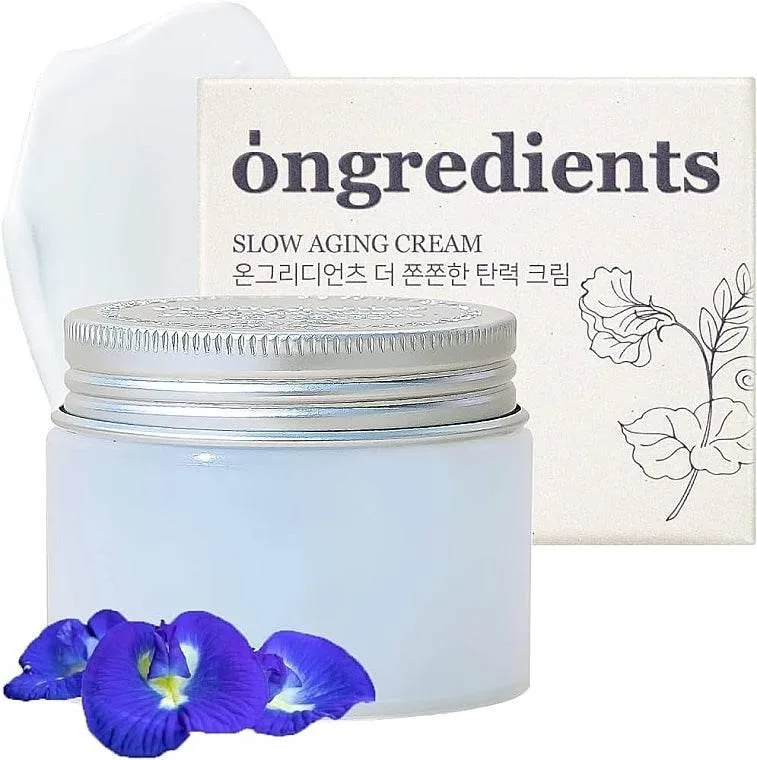
This is the mid-tier expression of Decorté's 40-year liposome technology lineage — the same phospholipid delivery system as the flagship AQ Meliority cream but at a third of the price and with a simpler botanical profile. For dry, mature skin that wants genuine J-beauty craft without the top-shelf luxury markup, this is arguably the more sensible pick in the entire Decorté line.
A decade-old J-beauty night cream that still earns its place in dry-skin routines. The liposome delivery system is real, the lipid-focused formulation is sensibly built, and the texture is genuinely luxurious. Alcohol, fragrance, and a botanical-heavy INCI keep it from being a universal recommendation, but for dry mature skin it's one of the better value picks in the Decorté lineup.
Good choicefor DrynessIn your profileYou chose · Squalane is a reference standard by mechanism for dryness; this cream carries it high in the ingredient list.Moderate evidenceStandard tolerabilityNo reviews collected yet
The case for it
Squalane has trial-supported standing for this concern.
It is present at an effective concentration, declared or high in the ingredient list.
The formula carries no trigger this concern is sensitive to, with the cautions noted.
Cautions: fragrance.
Same rule for everyone. “Good choice” is the verdict on 9,564 of 45,024 concern verdicts across the catalog; rule R5 decided 9,072 of them.
Unchanged since September 5, 2026, engine 5.1.1.
Supporting rolefor DehydrationIn your profileYou chose · Nothing here targets dehydration directly; humectant hydration is the recognised companion to treating it, and this cream does that without known triggers.Not yet assessedStandard tolerabilityNo reviews collected yet
The case for it
Squalane has no evidence row yet for this concern — it is in the research queue.
The formula carries no trigger this concern is sensitive to, with the cautions noted.
What would change this: A researched evidence row for the lead active would replace this with a verdict.
Same rule for everyone. “Supporting role” is the verdict on 8,197 of 45,024 concern verdicts across the catalog; rule R8 decided 4,250 of them.
Unchanged since September 5, 2026, engine 5.1.1.
R8 — The category's job (barrier care, humectant hydration, gentle cleansing, photoprotection) is the documented supportive role for this concern. This is the honest verdict for a moisturizer on an acne page. · the full register
Supporting rolefor AgingIn your profileYou chose · Nothing here targets aging directly; hydration and barrier support is the recognised companion to treating it, and this cream does that without known triggers.Not yet assessedStandard tolerabilityNo reviews collected yet
The case for it
Squalane has no evidence row yet for this concern — it is in the research queue.
The formula carries no trigger this concern is sensitive to, with the cautions noted.
What would change this: A researched evidence row for the lead active would replace this with a verdict.
Same rule for everyone. “Supporting role” is the verdict on 8,197 of 45,024 concern verdicts across the catalog; rule R8 decided 4,250 of them.
Unchanged since September 5, 2026, engine 5.1.1.
R8 — The category's job (barrier care, humectant hydration, gentle cleansing, photoprotection) is the documented supportive role for this concern. This is the honest verdict for a moisturizer on an acne page. · the full register
Also listed for Dullness — the actives here (Squalane, Phospholipids, Royal Jelly, Cholesterol) are in our research queue for that concern; there is no verdict until their evidence rows are written. That is a gap in our table, not a mark against the product.
Does the jobDoes what a moisturizer is for: draws in water, softens and smooths.
A verdict is DermApproved’s assessment of how well a product’s ingredients fit a concern — never a claim about what the product treats. Evidence dots and collected reviews sit beside it and are never blended in.
Rules 0.5.1 · evidence table ev-2026.09-r228 · how we decide
Assessment
Pros & Cons
Pros
✓ Genuine liposome-plus-lipid-repair chemistry from a 40-year research lineage
✓ Rich but non-greasy texture ideal for dry mature skin
✓ Squalane and lecithin at meaningful positions on the INCI
✓ Noticeable overnight plumping and softening from first use
✓ Significantly cheaper than the AQ Meliority flagship with similar base technology
✓ Decade-long track record with strong @cosme community validation
Cons
✗ Contains alcohol and fragrance, disqualifying it for sensitive or rosacea skin
✗ Methylparaben preservative bothers buyers avoiding parabens on principle
✗ Botanical extract list is more narrative than clinically substantive
✗ Too rich for most users to wear comfortably during the day
✗ Does not contain peptides or retinoids — purely a lipid/hydration play
Review
Full Review
Walk into a Japanese department store beauty counter and ask the Decorté associate which cream they actually use at home, and there's a reasonable chance they'll point to this one. It's not the flagship. It's not the cream you buy when you want to signal luxury. It's the cream you buy when you already trust Decorté's liposome technology from experience, you have dry or mature skin that needs real work, and you don't want to pay six hundred dollars to get the top-of-range version. The Moisture Liposome Cream has been quietly sold through J-beauty channels for over a decade and has developed a loyal following in @cosme communities and among department store regulars who've tried the full Decorté range and settled here.
The formulation is straightforward in a way that luxury skincare often isn't. Squalane and hydrogenated lecithin sit near the top of the INCI, which means the two most important ingredients for the cream's texture and delivery system are present in meaningful amounts. Cholesterol — a legitimate stratum corneum repair ingredient — appears in the second tier. A small blend of Japanese botanical extracts (akebia, asparagus, fagus bud, impatiens, grape leaf, royal jelly) rounds out the signature Decorté narrative. The preservative system uses methylparaben and phenoxyethanol, which will bother some buyers on principle but is genuinely one of the better-studied preservative combinations in cosmetic chemistry.
On the skin, the texture is where the cream earns its reputation. It's rich — clearly designed for dry or mature skin rather than the universal moisturizer category — but it softens on contact and absorbs within about a minute, leaving behind a cushiony, slightly dewy finish that reads as elegant rather than greasy. The Decorté fragrance is present and polite, the floral-powdery note that any Japanese beauty counter shopper will recognize. For dry cheeks that wake up tight in the morning or mature skin that's been losing its comfort factor with age, the first application registers immediately and the improvement compounds over two to three weeks of nightly use.
Where the cream shines is as a night-only product for dry skin. The texture is a little too rich for most people's daytime needs and can feel heavy under sunscreen or makeup. Used in the evening, the lipid-focused formula gets time to integrate with the skin's own barrier matrix and deliver the phospholipid-encapsulated actives without being disturbed. Over a full bottle — roughly three to four months of nightly use — the improvement to dry, rough, or mildly barrier-compromised skin is usually meaningful enough that repurchase becomes tempting, despite the price.
Now the honest assessment of the ingredient story. Compared to the flagship AQ Meliority cream, this formula doesn't have Matrixyl, doesn't have adenosine, doesn't have the long list of exotic Japanese extracts. What it has is the core liposome-plus-lipid-repair story done cleanly, without the active-ingredient theatrics of the top-tier line. Against Western barrier-repair creams like SkinCeuticals Triple Lipid or Dr. Jart Ceramidin, the comparison is closer than the price would suggest, and honestly either of those Western products would likely out-perform this on pure ceramide delivery. What Decorté offers that they don't is the specific sensory signature and the 40-year liposome technology lineage — a softer, more narrative kind of value that matters more to some buyers than others.
A few honest cautions. The alcohol content is moderate and sits below the main emollients on the INCI, so for most skin types it's not going to cause problems — but it's enough to disqualify the cream for rosacea, perioral dermatitis, or genuinely alcohol-reactive skin. The fragrance is the other obvious consideration; it's present, it's not subtle, and if you've had reactions to Japanese luxury floral fragrances in the past, this one is on-brand for the category. And the parabens, while clinically fine, will matter to anyone who's decided to avoid them for personal reasons. None of these are deal-breakers for most buyers, but they're worth naming honestly.
Value is where the cream earns one of its strongest arguments. At around $120 for 50g, this lands at roughly a fifth of the AQ Meliority flagship and half the price of many Western luxury barrier creams. A jar lasts three to four months with disciplined nightly use, putting the monthly cost around $30 to $40 — meaningful but defensible for dry mature skin that needs real lipid repair work. Compared against buying the AQ Meliority cream for what you're probably actually using it for, this is the smarter call. Compared against a $40 ceramide cream from The Ordinary or Paula's Choice, it's a sensory upgrade with marginal clinical improvement.
The recommendation is narrower than for the Liposome Advanced Repair Serum from the same brand. This cream is really for dry and mature skin that wants a rich night treatment with legitimate lipid-repair chemistry, who values the J-beauty sensory experience, and who can tolerate alcohol and fragrance in their routine. If any of those three things don't describe you, look elsewhere. If all three do, this is one of the quieter smart buys in the Decorté catalog, and the decade-long track record behind it is a real point in its favor.
Formula
Key Ingredients
The hero actives that drive this product's performance.
The phospholipid backbone of Decorté's signature liposome delivery system, present in meaningful position on the INCI and responsible for the cream's ability to integrate with the skin's own lipid matrix rather than sitting on top.
Sits high on the list as the primary emollient, providing the weightless lipid cushion that makes this cream feel richer than its weight would suggest — a key part of the J-beauty sensory signature.
Established mechanismfor Dryness · established mechanism
Works alongside the phospholipids and squalane to reconstruct the natural stratum corneum lipid ratio, which is one of the more evidence-based approaches to barrier repair in cosmetic formulations.
A traditional J-beauty active that contributes amino acids and a narrative of revitalization — works alongside the botanical extracts here more as a signature touch than a proven clinical workhorse.
The blend of akebia, asparagus, fagus bud, impatiens and grape leaf extracts is Decorté's trademark polyphenol-and-peptide narrative — present at cosmetic concentrations and meant to support the hydration and antioxidant story alongside the main lipid actives.
Not yet assessed
Ingredient standings describe the active at treatment-level doses and
vehicles; this product's own condition grades weigh its actual formula.
Best as a night cream after serum and any targeted treatments. The rich texture can feel heavy under makeup, so most users prefer a lighter AM moisturizer and save this for evening.
Results Timeline
Immediate softness and plumped feel. Within 2-3 weeks of nightly use, dry patches and rough texture visibly improve. Full barrier and hydration benefits typically show by 6-8 weeks.
The science case for this cream rests on two pillars: liposome delivery and stratum corneum lipid supplementation. Liposome delivery has been studied in cosmetic chemistry since the 1980s and the core principle — phospholipid bilayers forming microcapsules that integrate with skin lipids — is well-documented. Decorté's specific implementation has been refined over four decades and the liposome particle size range they document is consistent with penetration effectiveness into the upper stratum corneum.
The lipid replacement story is more clinically grounded. Research on topical ceramide-cholesterol-fatty acid mixtures has shown that applying these lipids in the correct ratios can restore barrier function in aged, atopic, and compromised skin. A 2002 study in the Journal of Investigative Dermatology and subsequent follow-up work demonstrated that the specific ratio of these components matters — a cream providing cholesterol and phospholipids (which convert to natural fatty acids and ceramide-like components in the stratum corneum) is doing real barrier repair work, not just sitting on the skin.
The formulation's reliance on squalane is also well-supported. Squalane research in cosmetic chemistry has consistently shown it's an excellent emollient that mimics the skin's natural sebum lipid profile without the oxidative instability of squalene. Its position high on this cream's INCI means it's carrying meaningful emollient load rather than being a token inclusion.
The botanical extract complex is where the science gets thinner. Individual extracts like grape leaf have some polyphenol and antioxidant literature, but the specific Japanese plants featured here — akebia, asparagus, fagus bud, impatiens — are in the territory where brand narrative outruns independent research. They may contribute supporting benefit, but the load-bearing actives are the lipids and the liposome delivery system, not the plants.
Dermatologist Perspective
Dermatologists assessing lipid-replacement creams generally look for three things: appropriate ceramide or cholesterol content, a delivery system that puts the lipids where they need to go, and a formulation free of ingredients that undermine barrier function. This cream checks the first two boxes reasonably well and the third with some caveats around alcohol and fragrance. Most dermatologists frequently recommend lipid-based night creams for dry, mature, or compromised skin because the mechanism of stratum corneum lipid supplementation has a robust evidence base. For appropriate patients — dry, mature, non-sensitive — this cream is a reasonable choice and the J-beauty liposome technology has genuine credibility. For rosacea, eczema, or very sensitive patients, fragrance-free and alcohol-free alternatives from dermatologist-developed brands are typically the better first choice.
Guidance
Usage & Recommendations
How to Use
As the final step in your evening routine, take a pearl-sized amount on fingertips and warm slightly before pressing onto clean skin. Apply after serum and any targeted treatments like retinoids. Use upward, outward motions across face and neck. The cream is rich enough that you shouldn't need to layer anything over it unless your skin is exceptionally dry or you live in a harsh winter climate. Avoid applying directly on broken skin or active breakouts — the richness can be too occlusive for inflamed areas. Most users get the best results using it nightly for at least three weeks before deciding whether to continue.
Value Assessment
At around $120 for 50g, the Moisture Liposome Cream sits in the mid-luxury tier — below the top Japanese prestige shelf but well above drugstore and mid-market options. A jar lasts three to four months with disciplined nightly application, putting monthly cost between $30 and $40. Compared to the $620 AQ Meliority cream from the same brand, this is overwhelmingly the smarter pick if you're buying Decorté for the liposome technology and lipid chemistry rather than for the botanical extract theater. Compared to Western luxury barrier creams like SkinCeuticals Triple Lipid ($134) or Dr. Jart Ceramidin ($52), the pricing is competitive. Against cheaper cream-based ceramide options in the $30-60 range, the value proposition gets harder to defend purely on clinical grounds, though the sensory upgrade is real.
Who Should Buy
People with dry, mature, or barrier-compromised skin who want a legitimate J-beauty night cream with real liposome and lipid-repair chemistry and can tolerate fragrance and alcohol in their routine. Ideal as a middle-ground luxury pick for someone who's tried and liked Decorté's technology but isn't ready to commit to the AQ Meliority price point.
Who Should Skip
Skip if you have sensitive, reactive, rosacea, or oily skin. It is similarly a skip if you're paraben-avoidant on principle, or if you're shopping purely on clinical efficacy per dollar — cheaper ceramide-and-peptide creams will deliver comparable measurable results.
Rich, silky cream that softens on contact and absorbs within a minute
Scent
Signature Decorté floral-powdery fragrance
Packaging
White glass jar with gold-accented lid — traditional luxury J-beauty
Finish
velvetydewynon-greasy
What to Expect on First Use
The cream feels immediately luxurious on application — rich but not heavy, with a noticeable signature fragrance. Most users report plumper, softer skin by the next morning, especially on dry areas like cheeks and around the eyes. No purging or tingling expected.
Decorté's Moisture Liposome line launched as the brand's bridge between the original 1984 Liposome Serum and the newer Liposome Advanced products. The Moisture Cream has been quietly sold through Japanese beauty counters for over a decade and is frequently cited by @cosme community members as a legacy night cream pick when newer Western creams fail to deliver for dry, mature skin.
About Decorté Legacy Brand (20+ years)
Decorté's Moisture Liposome Cream is a direct descendant of the brand's 1984 liposome technology launch. While it sits below the AQ Meliority tier in price, it shares the same multi-layer phospholipid delivery system and has been a quiet Japanese staple for dry, mature skin for over a decade.
Brand founded: 1970 · Product launched: 2015
Myth vs. Reality
Common Myths
Myth
A cream with alcohol in it is automatically drying
Reality
The alcohol here is below the main emollient load (squalane, lecithin, triethylhexanoin) and functions as a penetration enhancer, not a primary solvent. For most skin types the net effect is neutral, though it can matter for genuinely sensitive types.
Myth
Parabens in skincare are dangerous
Reality
Methylparaben at cosmetic concentrations is one of the most well-studied preservatives in skincare and has a strong safety profile. If you want to avoid it for personal reasons, that's fine — but it's not a functional reason to skip this cream if it works otherwise.
FAQ
Frequently Asked Questions
How does this compare to the AQ Meliority cream from the same brand?
Both use Decorté's liposome technology, but the AQ Meliority version adds Matrixyl, adenosine, and a much longer Japanese botanical extract list for triple the price. For pure barrier repair and hydration on dry mature skin, the Moisture Liposome Cream delivers a large fraction of the benefit at a fraction of the cost.
Is this a day cream or night cream?
It's marketed for both but most users prefer it as a night cream because the rich texture can feel too occlusive under makeup. At night, the liposome delivery system has more time to work without being disturbed.
Will the alcohol in this formula dry out my skin?
Unlikely — the alcohol here sits below the main emollients on the INCI and is primarily a penetration enhancer rather than a drying solvent. The overall formula is firmly on the hydrating side. That said, if you have sensitive or alcohol-reactive skin, it's worth patch-testing.
Does it contain parabens?
Yes, methylparaben is used as a preservative. Methylparaben has one of the strongest safety profiles among cosmetic preservatives and is permitted in every major regulatory market. If you're preservative-avoidant for personal reasons, there are paraben-free alternatives in the same price tier.
Is the Moisture Liposome Cream worth the money?
If you have dry, mature skin and want a legacy J-beauty night cream with real liposome technology, it's reasonably priced for the tier. If you're shopping purely on clinical efficacy per dollar, a well-chosen $50 ceramide-and-peptide cream will get you most of the same benefit.
Can I use it around the eyes?
The cream is generally gentle enough for the outer eye area, but Decorté also makes a dedicated Liposome Eye Cream for more targeted delivery. If you have very reactive eye skin, stick with the dedicated eye product.
Reviews
What Reviewers Tend to Say
Recurring themes our editors read across retailer reviews of this product — summaries in our words, not quotations, and not a substitute for your own patch test.
Common Praise
silky rich texture
excellent for dry skin
noticeably plumps skin overnight
signature luxurious scent
Common Complaints
contains alcohol and fragrance
expensive for the active ingredient profile
parabens in formula bother some users
Notable Endorsements
longtime cult product in Japanese beauty mediafeatured in @cosme rankings for night creams
The burn trials are real and the skeptics who dismiss aloe as folklore are wrong — but the same substance has delayed healing in other wounds, and none of it says anything about what a soothing gel does to intact skin.
Picking one skin state and selling through hospital dermatology departments is a genuinely smart strategy. Whether the house botanical earns its billing is a separate question, and the answer is not the one either side wants.
That headline is the story every brand tells about trehalose. It is also, as of a 2017 paper in Molecular Cell, not quite true — which turns out to be the most interesting thing about the ingredient.
Products, answers, therapy guides, tools and articles in one search. Brand names,
slang and abbreviations all work — accutane finds isotretinoin, bacne finds truncal acne.