Nail Strengtheners Sell Hardness. Your Nails Are Failing From Dryness.
Cross-linking a brittle nail plate makes it harder — and a harder brittle nail snaps rather than bends, which is the exact opposite of what the bottle promised.
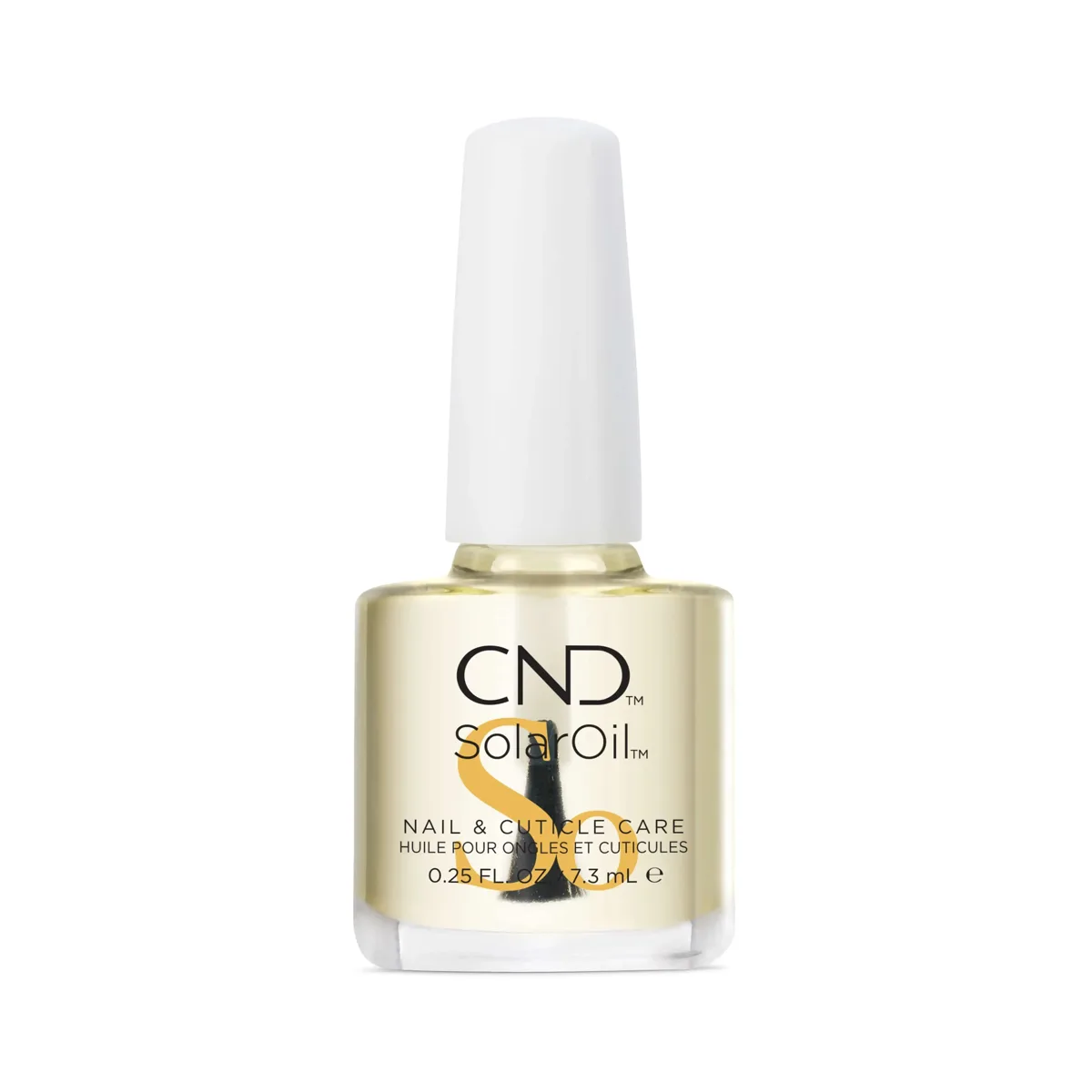
Most cuticle oils are a botanical oil chosen for how it sounds. This one was formulated around a specific physical argument — that jojoba's wax-ester structure and vitamin E's small molecular size let them travel into the nail plate rather than resting on it — and it has had forty-plus years of salon use to test that argument in the least forgiving environment there is, on nails wrecked by acrylics and gels.
Four plant oils and a fragrance, formulated in 1981 and still the bottle salons hand you on the way out — because jojoba and vitamin E are two of the very few cosmetic ingredients with a plausible route into the nail plate itself. It costs more than its ingredient deck justifies and the almond base excludes nut allergies, but as a daily habit it earns its keep.
The case for it
Cautions: fragrance.
What would change this: A declared concentration would move this to a firmer reading of the dose.
Same rule for everyone. “Good choice” is the verdict on 9,564 of 45,024 concern verdicts across the catalog; rule R5 decided 9,072 of them. Unchanged since September 5, 2026, engine 5.1.1.
Brand or formulator? Disclose a concentration or correct a fact →
The studies behind the evidence row
A verdict is DermApproved’s assessment of how well a product’s ingredients fit a concern — never a claim about what the product treats. Evidence dots and collected reviews sit beside it and are never blended in. Rules 0.5.1 · evidence table ev-2026.09-r228 · how we decide
A dentist invented this company. Stuart Nordstrom spent his days working with acrylic monomers in mouths, noticed the same chemistry could build a nail, and in 1979 turned that observation into Creative Nail Design in San Diego. Two years later came the oil, and the logic behind it was corrective rather than cosmetic: the enhancements the company had just popularised left natural nails stiff, dry and prone to cracking, and someone needed to sell the antidote. Forty-five years later, most of what CND launched in that era is gone and this small golden bottle is still on every salon counter in the country. That kind of survival is worth understanding.
The ingredient list takes about four seconds to read. Sweet almond oil, jojoba, rice bran oil, fragrance, vitamin E. That is the whole thing, and the brevity is not laziness — each of those four oils is doing something a formulator could defend. Sweet almond makes up the bulk and provides the immediate softening, spreading thin and light rather than sitting in a puddle on the skin. Rice bran oil is the quiet workhorse, unusually resistant to oxidation thanks to its tocotrienol and oryzanol content, which is how a preservative-free blend of unsaturated oils survives months on a shelf in a warm salon. Vitamin E adds antioxidant protection to the blend itself and, being a relatively small molecule, has a shot at travelling somewhere useful.
But the ingredient that explains the product is jojoba, and the reason is a technicality most marketing never bothers with: jojoba is not an oil. It is a liquid wax ester, structurally different from the triglycerides that make up almond, olive, coconut and every other bottle in the aisle. Its molecules are long and slim rather than bulky and branched, and that shape is what allows them to work between the compressed keratin layers of the nail plate rather than resting on the surface. This is the entire argument for the formula, and it is a genuinely reasonable one — the nail plate is famously hostile to almost everything applied to it, and the short list of things that make any headway is dominated by small, lean molecules.
Where honesty is required: that argument comes overwhelmingly from research conducted by and for the nail trade, much of it associated with CND's own scientists, rather than from independent peer-reviewed dermatology. The broader academic literature on getting anything through a nail plate is a literature of frustration — the plate behaves like a dense, water-loving membrane that resists exactly the lipophilic compounds we keep trying to push into it, and the pharmaceutical answers have involved keratolytics, solvents and UV-cured films rather than oils. So the sensible position is that jojoba is the most plausible oil for the job, the mechanism is coherent, and nobody has proven the amount that arrives is enough to matter. What is not in dispute is the effect on the skin around the nail, which is immediate, obvious and the reason most people repurchase.
Using it is almost comically undemanding. One drop per nail, massaged into the fold and under the free edge with the opposite thumb, and you are done in under a minute for both hands. It sinks in fast, leaves no lasting slick, and smells faintly of warm almond in a way that reads as salon rather than perfume. Overapplication is the only real mistake available — this is thin enough that a heavy hand just makes your phone slippery. The one hard rule is that oil and polish are enemies: anything you apply before a manicure will undermine adhesion, so this belongs to the days between, or to the skin around a cured surface.
The results follow a predictable shape. Cuticles feel different instantly, which is the oil film and nothing more. Around the two-week mark the genuine change shows up as fewer hangnails and less of that ragged peeling skin at the sides of the nail, which is the sort of improvement you notice by its absence. Any effect on the plate's flexibility takes a month or more and is subtle even then — peeling nails become slightly less prone to delaminating, breaks happen at longer lengths. And all of it is maintenance. Stop for two weeks and you are back where you started, because nothing here changes how your nails are made, only how they behave once made.
The money question is the interesting one. Fifteen dollars for fifteen millilitres of four commodity plant oils is, by any raw-materials logic, a markup with a straight face. You can buy pure jojoba for less and get the single most important mechanism unaccompanied. What the extra buys is a blend that spreads better than jojoba alone, oxidative stability that means it will not turn on you, a pen format that makes daily use realistic, and a track record on damaged nails that no cheaper bottle can claim. Spread across the four to six months a small bottle lasts, it is a few dollars a month for a habit that genuinely improves how hands look.
Two groups should walk past. Anyone with a tree nut allergy — sweet almond leads the list, and this is not a formula to gamble on. And anyone whose skin reacts to fragrance, since the parfum here is a real inclusion rather than a trace, sitting on skin that is torn more often than not. For everyone else, this is one of the few salon staples that deserves its reputation, and about the only forty-five-year-old formula in beauty still worth buying at full price.
The hero actives that drive this product's performance.
| Ingredient | Function | Evidence |
|---|---|---|
| Sweet Almond Oil (Prunus Amygdalus Dulcis) | The bulk of the bottle and the reason it spreads so thinly over a nail fold without pooling — a light, high-oleic oil that softens the skin around the plate quickly, doing the immediate comfort work while the jojoba behind it handles the slower job. | Not yet assessed |
| Jojoba Oil (Simmondsia Chinensis) | The ingredient this formula is actually built around: technically a liquid wax ester rather than a triglyceride, with long slim molecules that slip between the keratin layers of the plate itself instead of sitting on top the way heavier plant oils do. | Established mechanism for Dryness · established mechanism |
| Rice Bran Oil (Oryza Sativa) | A light, oxidation-resistant oil rich in tocotrienols and oryzanol that keeps a fragranced, preservative-free blend of unsaturated oils from going rancid on a salon shelf, while adding to the emollient load without thickening the texture. | Not yet assessed |
| Vitamin E (Tocopheryl Acetate) | Last on the list and doing double duty — an antioxidant that protects the oil blend itself, and a small enough molecule to migrate into the upper nail layers alongside the jojoba rather than staying stranded on the surface. | Not yet assessed |
Ingredient standings describe the active at treatment-level doses and vehicles; this product's own condition grades weigh its actual formula.
Prunus Amygdalus Dulcis (Sweet Almond) Oil, Simmondsia Chinensis (Jojoba) Seed Oil, Oryza Sativa (Rice) Bran Oil, Parfum (Fragrance), Tocopheryl Acetate
treatment
AM & PM
This is a finishing step, not a base — apply it after hand cream and after any polish has fully cured, never before. If you use a penetrating nail treatment on the plate, run that first and let it dry completely, then bring the oil in around the perimeter so it is not sitting between the treatment and the keratin.
Cuticles look and feel softer within a minute of massaging it in. Fewer hangnails and less peeling around the nail fold show up over one to two weeks of daily use, and any flexibility gain in the plate itself takes a month or more of consistent application — with the caveat that the benefit fades once you stop.
The interesting question is not whether these oils condition skin — they plainly do — but whether anything reaches the nail plate, and here the academic literature is a useful corrective to salon confidence. Murdan's review of topical nail drug delivery in the International Journal of Pharmaceutics laid out why the plate is such a difficult target: it behaves less like a lipid-rich stratum corneum and more like a dense hydrophilic gel membrane, roughly a hundred times thicker than skin's outer layer, cross-linked by disulphide bonds and far more permeable to water and small hydrophilic molecules than to the lipophilic compounds cosmetic chemistry usually reaches for. That is why pharmaceutical approaches to nail delivery have leaned on keratolytics such as urea, solvent penetration enhancers, and film-forming lacquers rather than on oils. Against that backdrop, the case for this particular blend is structural rather than clinical. Jojoba is a liquid wax ester rather than a triglyceride, and its long unbranched molecules are geometrically better suited to slipping between keratin layers than the bulky, branched triglycerides in almond or rice bran oil; tocopheryl acetate is likewise small enough to migrate into superficial layers, where the trade research suggests it concentrates near the surface rather than travelling deep. None of that has been demonstrated in a controlled dermatological trial, and it would be overreaching to claim otherwise. Where the evidence is solid is one layer out: on the proximal nail fold and the skin at the free edge, emollient oils reduce transepidermal water loss, keep periungual skin pliable, and cut down the splitting and hangnail formation that lead to torn cuticles and, occasionally, to paronychia. That effect is real, fast and the honest basis for buying it.
In clinical practice, cuticle oils occupy a modest but genuinely useful position: they are recommended less as a treatment than as a way of interrupting a cycle. Dry, split periungual skin invites picking and tearing, torn skin breaches the seal the cuticle forms against the nail matrix, and a breached seal is the common precursor to paronychia — the painful bacterial inflammation of the nail fold that fills a fair share of nail-related appointments. Keeping that skin supple is preventive care, and clinicians tend to be indifferent about which emollient does it. The advice that accompanies it is more specific: stop cutting or aggressively pushing back the cuticle itself, since it is functional tissue rather than debris. Where nail plates are brittle and splitting into layers, standard guidance pairs regular emollient use with reduced water and solvent exposure and, in persistent cases, evaluation for iron deficiency or thyroid dysfunction — because a nail that keeps breaking despite good topical care is often reporting something happening further upstream.
Work on clean, dry, polish-free nails, or on the surrounding skin only if you are wearing colour. Place a single drop at the base of each nail, then massage it into the cuticle line, the side walls and under the free edge with the pad of the opposite thumb for a few seconds per finger. Both hands should take under a minute. Once daily is the baseline and twice is better if you wash your hands constantly or work with solvents; night application is the most effective single moment, since nothing rubs it off. Never apply before polish, gel or enhancement services — allow a full day if you can. Keep the cap tight and store away from heat to protect the unsaturated oils.
Fifteen dollars for half an ounce is unapologetic markup on four commodity oils, and anyone who buys jojoba by the bottle will find that funny. The counterargument holds up better than expected: one drop per nail means the small bottle covers four to six months of daily use, which lands it around three dollars a month, and the larger sizes drop the per-millilitre cost substantially if you know you will keep using it. What the premium actually buys is blending — spreadability the single oil lacks, oxidative stability from the rice bran fraction, and pen formats that make the habit survivable — plus a salon track record on the most abused nails in circulation. It is not the cheapest route to the mechanism, and it does not pretend to be. For anyone maintaining enhancements, where the alternative is repairing cracked nails, it is comfortably worth it.
Anyone wearing gel, acrylic or dip enhancements, where daily oil is the difference between nails that survive removal and nails that come off in layers. It also suits chronic hand-washers, anyone with peeling nail plates or perpetual hangnails, and people who want one bottle that will still be doing its job in six months.
Tree nut allergies rule this out outright — sweet almond oil is the first ingredient, and there are jojoba-only alternatives that carry none of that risk. Anyone with fragrance-triggered hand dermatitis should also pass, and pure budget shoppers can get most of the mechanism from plain jojoba for a fraction of the price.
Ready to try CND SolarOil?
Buy at Amazon ♥A thin golden oil that runs freely off the brush and disappears into the skin under a few seconds of massage rather than sitting on top
Warm and softly sweet — a light almond-vanilla character that reads as salon rather than perfume counter
Sold across five sizes from a pocket brush pen to a 4 oz salon bottle; the small screw-cap bottles come with a brush in the lid that is neat in principle and drippy in a handbag
The first thing most people notice is how little of it they need — a single drop per nail, worked into the fold with a thumb, is genuinely enough, and overapplying just leaves hands slippery for ten minutes. There is no tingle, no warmth, nothing to adjust to. Cuticles feel supple immediately; the more interesting change, less ragged skin around the nail, arrives quietly over a couple of weeks.
4 to 6 months of daily use on all ten fingers from the 0.5 oz bottle
All Year
CND began in 1979 when a San Diego dentist adapted the acrylic chemistry of his own trade into the first professional nail monomer. SolarOil followed in 1981 as the companion piece: enhancements made nails hard and inflexible, so the company built an oil intended to restore some pliability to the plate and the skin around it. It has outlived nearly every product the brand launched alongside it.
Creative Nail Design was started in San Diego in 1979 by Dr. Stuart Nordstrom, a dentist who applied acrylic chemistry from his own field to nail enhancements, and the company went on to build the professional education infrastructure much of the American nail industry still runs on. Its research investment is real but largely in-house and trade-directed rather than published in peer-reviewed dermatology, which is the normal shape of evidence in salon-professional nail care.
Nails need to breathe, so oil suffocates them.
The nail plate is dead keratin with no blood supply and no gas exchange to interrupt — everything living sits under it, fed from below. What the plate does exchange is water, and it does so readily, which is precisely why a light oil that slows that loss is useful rather than harmful.
Any plant oil will do the same job for a fraction of the price.
For the skin around the nail, largely true — occlusion is occlusion. For the plate itself the picture is different, because it behaves as a dense, water-loving barrier that most bulky triglyceride oils cannot get into. Jojoba's slim wax-ester molecules are among the few that make any headway, which is why this formula leans on them.
Cuticle oil makes nails grow faster.
Growth rate is set at the matrix under the skin and driven by health, age and genetics, not by anything applied on top. What oil changes is breakage — flexible nails snap less, so they reach a longer length before something takes them back, which reads as faster growth and is not.
Enhancements leave the natural plate stiff and dehydrated, and inflexible nails crack at the stress points where product meets nail. Daily oil restores some pliability to the plate and keeps the surrounding skin from splitting where the enhancement edge sits — which is also, conveniently, what keeps a manicure looking intact for its third week.
No — oil on the plate is the enemy of polish adhesion, and applying it beforehand is a reliable way to get chipping within days. Use it on bare nails between manicures, or apply it only after polish has fully cured and stay on the skin of the fold rather than the surface.
Honestly, that depends on what you value. Pure jojoba delivers most of the same mechanism for less money, and if fragrance bothers you it is the better buy. What you pay extra for here is the blend's spreadability, the rice bran oil keeping it stable, the pen formats, and four decades of salon results behind it.
One drop per nail, no more. This is thin enough that overapplying leaves your hands slippery without improving anything, and the small bottle should last several months of daily use across all ten fingers. Massaging it in for a few seconds matters more than the volume you start with.
Yes, and it matters — sweet almond oil is the first and largest ingredient, and almonds are a tree nut. Anyone with a tree nut allergy should treat this as off-limits and look for a jojoba-only alternative, since jojoba is a desert shrub seed and shares none of that allergenic profile.
It can genuinely help. Peeling usually starts when the plate's layers dry out and delaminate, and the jojoba-vitamin E pairing is aimed exactly at getting lubrication between those layers. Give it a month of daily use, and expect improvement rather than a cure — habitual water and solvent exposure will keep undoing the work.
The brush pen if you want the habit to stick, since a pocketable format is what turns cuticle oil from a good intention into a daily one. The larger bottles are cheaper per millilitre and better on a bedside table, though the brush-in-cap design is prone to dripping if it travels.
Recurring themes our editors read across retailer reviews of this product — summaries in our words, not quotations, and not a substitute for your own patch test.
Cuticles soften within seconds and stay that way
A single drop covers a whole nail, so bottles last
Absorbs without leaving hands slick
Pen and mini sizes make daily use practical
Expensive for what is essentially four plant oils
Fragrance is noticeable and not to everyone's taste
Dropper bottles are messy compared with the pens
Sweet almond base rules it out for tree nut allergies