Hyaluronic Acid Can Actually Dehydrate Your Skin (Here's When)
The internet's favorite hydrator has a counterintuitive dark side — in dry air, a humectant with nothing to seal it can pull water out of your skin instead of into it.
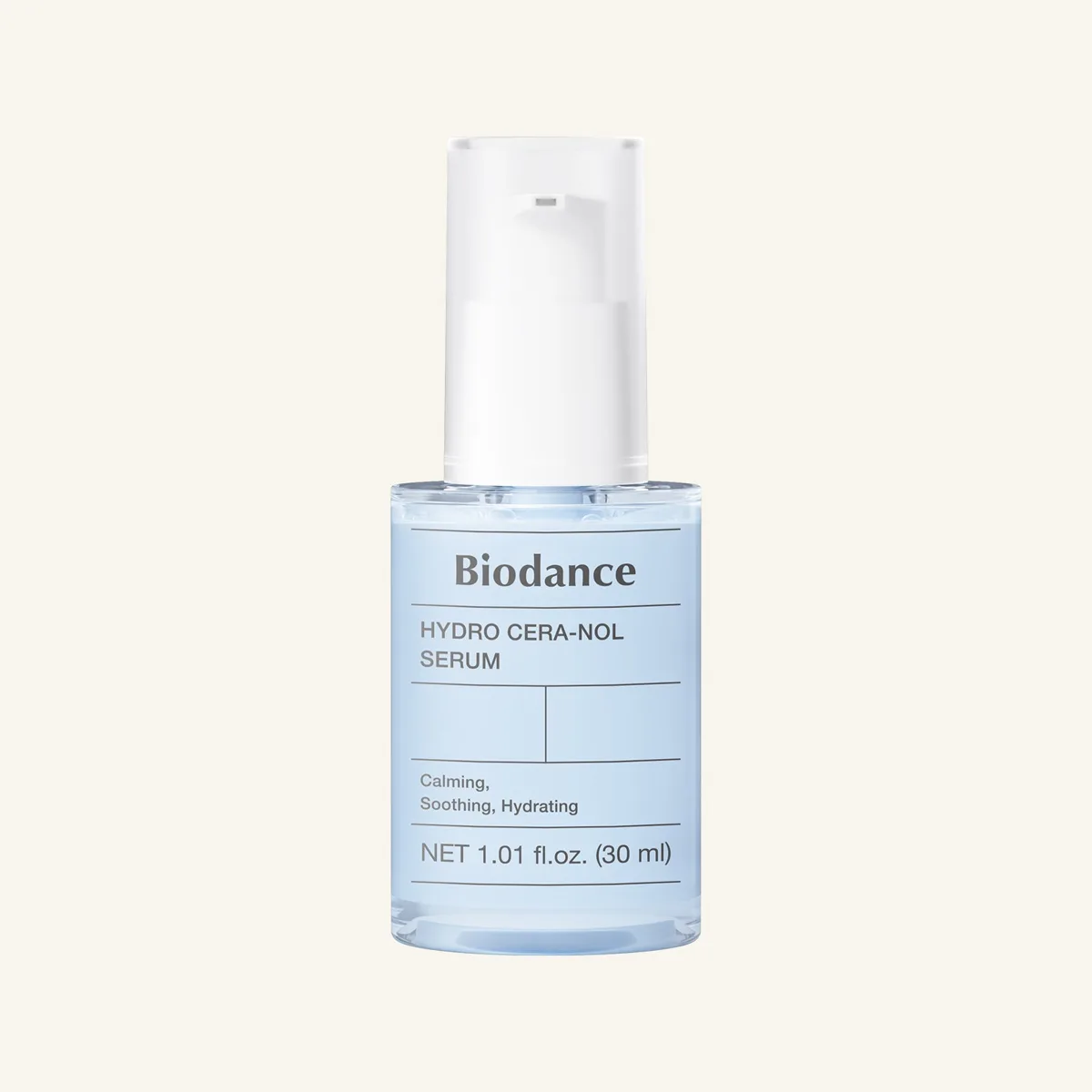
Most ceramide serums are water gels that list ceramides for the label and cannot actually dissolve them. Biodance built this one as a light lamellar emulsion, olivate esters, lecithin, cholesterol and phytosphingosine around five ceramides, and then moved panthenol up to fourth and niacinamide to sixth, so it supplies barrier lipids and prompts the skin to make its own at the same time. It is the Cera-nol mask's daily counterpart and, on the ingredient order alone, the better-constructed of the two.
The most quietly competent product Biodance has made: a fragrance-free barrier serum with panthenol fourth, niacinamide sixth and five ceramides in a base that can actually carry them. It has no data of its own and it is not oil-free whatever the reviews say, but for skin that stings after washing it does what it promises within a week, at a fair price.
Launched in August 2025, this serum has under a year of use behind it and Biodance publishes no test results for it, not even the consumer-panel figures it prints for its masks. Everything in this assessment is drawn from the independent literature on panthenol, niacinamide and ceramides applied to the disclosed formula and from a few hundred early retailer reviews.
The case for it
Same rule for everyone. “Good choice” is the verdict on 9,564 of 45,024 concern verdicts across the catalog; rule R5 decided 9,072 of them. As of September 25, 2026, engine 5.1.1.
Brand or formulator? Disclose a concentration or correct a fact →
The studies behind the evidence row
The case for it
What would change this: A researched evidence row for the lead active would replace this with a verdict.
Same rule for everyone. “Good choice” is the verdict on 1,938 of 45,024 concern verdicts across the catalog; rule F2 decided 1,938 of them. As of September 25, 2026, engine 5.1.1.
Brand or formulator? Disclose a concentration or correct a fact →
The case for it
Same rule for everyone. “Good choice” is the verdict on 9,564 of 45,024 concern verdicts across the catalog; rule R5 decided 9,072 of them. As of September 25, 2026, engine 5.1.1.
Brand or formulator? Disclose a concentration or correct a fact →
The studies behind the evidence row
The case for it
What would change this: A declared concentration would move this to a firmer reading of the dose.
Same rule for everyone. “Good choice” is the verdict on 9,564 of 45,024 concern verdicts across the catalog; rule R5 decided 9,072 of them. As of September 25, 2026, engine 5.1.1.
Brand or formulator? Disclose a concentration or correct a fact →
The studies behind the evidence row
A verdict is DermApproved’s assessment of how well a product’s ingredients fit a concern — never a claim about what the product treats. Evidence dots and collected reviews sit beside it and are never blended in. Rules 0.5.1 · evidence table ev-2026.09-r228 · how we decide
Put the two Cera-nol ingredient lists side by side and something interesting happens. In the mask, the product that made the name, panthenol sits tenth, behind the gelling gums and a preservative. In the serum, it sits fourth, behind only water and two humectant glycols. Niacinamide, fifth in the mask, is sixth here, but the base around it has changed from a water gel to a light emulsion with olivate esters, lecithin and cholesterol, the kind of matrix that can dissolve a ceramide rather than merely list one. Nobody at Biodance announced a reformulation, because there was none; this is a new product. But the serum reads like the version of Cera-nol the brand would have made first if it had started from the chemistry rather than from the hydrogel, and that is a good sign for a company whose reputation was built on a viral format rather than on formulation.
The formula deserves a closer look because its virtues are structural rather than showy. Panthenol at fourth position means a genuinely meaningful dose of pro-vitamin B5, the ingredient with the best evidence for reducing transepidermal water loss and calming barrier-damaged skin. Niacinamide at sixth means the serum prompts the skin to make its own ceramides while the five it applies, NP, NS, AP, AS and EOP, arrive in the last third of the list with cholesterol and phytosphingosine, a nod to the physiological lipid ratio. The choice of lipids is thoughtful: caprylic triglyceride and olivate esters for slip, echium seed oil for its stearidonic and gamma-linolenic acids, sunflower unsaponifiables for their own barrier data, and a perilla seed extract. Allantoin and balloon vine, a botanical from the European eczema-cream tradition, handle itch. Two light silicones keep the whole thing from pilling under sunscreen. Seven hyaluronates are scattered through the tail, as they are across the brand's range, more for the label than for effect.
In use it is the least dramatic Biodance product and the most useful. The serum is milky, cool and quick, absorbing in about thirty seconds to a velvety finish with no tack, and its first job, on a face that stings after cleansing, is done almost immediately: the sting stops. Over the first week that tightness stops returning, over two the rough, flaky patches that a stripped barrier throws up begin to smooth, and by about four weeks users with chronic redness describe it as visibly calmer. That timeline fits the ingredients: panthenol and the humectants act at once, the lipids and niacinamide take weeks. It makes an excellent buffer under a retinoid, a hydrating primer under makeup, and, for oily skin in summer, a moisturiser in its own right.
Two honest corrections are owed. The first is to the reviews rather than the brand: this serum is not oil-free. It contains a triglyceride, a seed oil, plant unsaponifiables and silicones, all light and none greasy, which is presumably why the phrase keeps appearing, but anyone avoiding oils, and anyone with fungal-acne-prone skin, should read the list rather than the write-ups. The second is to the brand: Biodance publishes nothing for this serum beyond its blanket hypoallergenic claim. No instrumental test, no consumer panel, not even the survey percentages it prints for the masks. The score here rests on the literature for panthenol, niacinamide and ceramides applied to a well-ordered list, which is a reasonable basis for a barrier serum built from such well-studied parts, and a thinner one than a year-old product from a young brand ideally deserves.
That youth is worth keeping in view. Biodance was founded in 2018, its serums arrived only in August 2025, and the review base for this one is in the hundreds across Olive Young, Cult Beauty and the K-beauty specialists rather than the tens of thousands its collagen mask commands. It is also worth saying that none of that makes the serum risky. Fragrance-free, alcohol-free, free of essential oils and common sensitisers, it is about as safe a choice as a leave-on can be for reactive skin, and the ingredients that make it work have decades of independent evidence behind them even if this particular bottle has none.
On price, 21.90 dollars for 30ml is mid-range for a Korean serum and inexpensive next to Western barrier serums with similar ceramide sets, and because it can replace a moisturiser on oily skin and a separate soothing step on sensitive skin, the effective cost is better than the sticker. The bottle's only real fault is size: three pumps twice a day empties it in five weeks, and two pumps is plenty.
The recommendation is straightforward. If your skin stings, flakes or flushes because its barrier is worn down, from over-exfoliation, a retinoid, winter or simply temperament, this is a well-made daily fix that works within a week and keeps working. If you are very dry, put a ceramide cream over it. If you are looking for the excitement of the viral mask, this is not that, and it is better for it.
The hero actives that drive this product's performance.
| Ingredient | Function | Evidence |
|---|---|---|
| Panthenol | Fourth on the list, behind only water and two humectant glycols, which makes this serum unusually panthenol-forward; the mask version places it tenth. At that level pro-vitamin B5 is doing the heavy lifting the Cera-nol name promises, drawing water into the stratum corneum and easing the sting of a compromised barrier within the first applications, well before any ceramide effect could show. | Established mechanism for Dehydration · established mechanism |
| Ceramide NP | First of the five ceramides, NP, NS, AP, AS and EOP, which arrive with cholesterol and phytosphingosine in the last third of the list. They are carried in a lightly emulsified base of olivate esters, lecithin and caprylic triglyceride that can actually dissolve them, which matters more than their rank: ceramides in a water-only gel are inert, while in this lamellar-style emulsion they can integrate into the skin's lipid layers over weeks of daily use. | Established mechanism for Compromised Skin Barrier · established mechanism |
| Niacinamide | Sixth in the formula and the ingredient that turns a soothing serum into a barrier-building one, since niacinamide increases the skin's own synthesis of ceramides and other lipids with daily use. Paired with the applied ceramides below it, the serum works both ends of the problem, supplying lipids now and prompting the skin to make its own. | Established mechanism for Compromised Skin Barrier · established mechanism |
| Echium Plantagineum Seed Oil | A small but pointed lipid choice: echium oil is one of the few plant oils rich in stearidonic and gamma-linolenic acids, the omega fatty acids most associated with calming reactive skin. Alongside sunflower unsaponifiables and perilla seed extract, it forms the anti-redness half of the lipid phase and is why the serum reads as calming rather than merely moisturising. | Not yet assessed |
| Cardiospermum Halicacabum Extract | Balloon vine, a traditional anti-itch botanical better known in European eczema creams, tucked in beside allantoin to round out the soothing stack. It signals that the serum was designed for skin that stings and itches, not just skin that feels dry, though at this position it is a supporting note. | Not yet assessed |
Ingredient standings describe the active at treatment-level doses and vehicles; this product's own condition grades weigh its actual formula.
Water, Propanediol, Glycerin, Panthenol, Butylene Glycol, Niacinamide, 1,2-Hexanediol, Pentylene Glycol, Caprylic/Capric Triglyceride, Vinyl Dimethicone, Cetearyl Olivate, Sodium Polyacryloyldimethyl Taurate, Sorbitan Olivate, Diphenylsiloxy Phenyl Trimethicone, Ammonium Polyacryloyldimethyl Taurate, Xanthan Gum, Ethylhexylglycerin, Octyldodecanol, Adenosine, Disodium EDTA, Citric Acid, Allantoin, Echium Plantagineum Seed Oil, Hydrogenated Lecithin, Cetearyl Alcohol, t-Butyl Alcohol, Stearic Acid, Perilla Ocymoides Seed Extract, Helianthus Annuus (Sunflower) Seed Oil Unsaponifiables, Cardiospermum Halicacabum Flower/Leaf/Vine Extract, Sodium Hyaluronate, Ceramide NP, Tocopherol, Ceramide NS, Cholesterol, Hydroxypropyltrimonium Hyaluronate, Phytosphingosine, Ceramide AP, Ceramide AS, Hydrolyzed Hyaluronic Acid, Sodium Acetylated Hyaluronate, Hyaluronic Acid, Hydrolyzed Sodium Hyaluronate, Sodium Hyaluronate Crosspolymer, Potassium Hyaluronate, Ceramide EOP
serum
AM & PM
Apply after toner and before moisturiser; on a stinging or retinoid-irritated face it also works as the buffer layer beneath the active. It layers cleanly under sunscreen and makeup thanks to the light silicone content and does not pill. Oily skin can wear it alone at night in warm months, since the emulsion is light enough to double as a moisturiser.
Cooling and a drop in post-cleansing tightness on first use, with stinging noticeably reduced within the first week. Rough, flaky patches soften over two weeks. The niacinamide-and-ceramide barrier work shows as steadier, less reactive skin around week four; users with chronic redness report it settling by then. Effects persist only with continued use.
This serum is built almost entirely from ingredients with a mature evidence base, and its order of ingredients lets that evidence apply. Panthenol's barrier effect was shown in Gehring and Gloor's randomized, double-blind, placebo-controlled study in Arzneimittel-Forschung in 2000, in which seven days of topical dexpanthenol improved stratum corneum hydration and reduced transepidermal water loss relative to vehicle (https://pubmed.ncbi.nlm.nih.gov/10965426/), and Ebner and colleagues' 2002 review in the American Journal of Clinical Dermatology surveyed its wider use as a moisturiser and in barrier and wound recovery (https://pubmed.ncbi.nlm.nih.gov/12113650/); at fourth position in this formula, panthenol is present at a level where those findings are relevant. For the ceramides, a 2019 split-site, double-blind randomized study in Dermatologic Therapy by Lueangarun and colleagues found that a moisturiser containing ceramides 1, 3 and 6-II, the older names for EOP, NP and AP, increased hydration and improved TEWL and skin pH within 24 hours and more so after 28 days of twice-daily use in older adults with dry skin, compared with a hydrophilic cream (https://pubmed.ncbi.nlm.nih.gov/31585489/), and a 2021 qualitative review in the Journal of Dermatology concluded that ceramide-containing formulations improve water retention and barrier function in dry and atopic skin across a dozen reports (https://pubmed.ncbi.nlm.nih.gov/34596254/). Those results came from creams richer in ceramides than this serum, whose five ceramides sit in the last third of the list; what makes the comparison reasonable is the base, an emulsion of olivate esters, lecithin, cholesterol and phytosphingosine that can solubilise ceramides, unlike the water gels in which they are often listed for show. Niacinamide's ability to increase epidermal ceramide and free-fatty-acid synthesis and reduce TEWL with daily use is well documented, and at sixth position it plausibly contributes to the four-week improvement users describe. Echium oil, rich in stearidonic and gamma-linolenic acids, and sunflower unsaponifiables have smaller literatures supporting anti-inflammatory and barrier effects; balloon vine extract's anti-itch reputation rests on traditional use and a few small trials in eczema products. Biodance has published no study of this serum, so the case for it is inferential: sound ingredients, in sensible amounts, in a base that lets them work.
This is the sort of serum a dermatology practice is happy to see on a patient's shelf, because its ingredient logic mirrors what clinicians recommend for barrier repair: a fragrance-free, non-sensitising vehicle carrying panthenol, niacinamide and physiological lipids, applied daily. The typical guidance around such products is to use them as a buffer during retinoid initiation, as a maintenance step for skin prone to stinging and flushing, and as the treatment layer beneath a ceramide cream when the skin is very dry, since a light emulsion alone will not close a badly disrupted barrier. Two clinical notes apply. Patients with confirmed rosacea should not expect the serum to manage the condition, though it may make the skin more comfortable; and patients with Malassezia-driven folliculitis are usually advised to be cautious with the triglyceride and plant oils it contains. The absence of product-specific data would not concern most clinicians given how well studied the components are.
After cleansing and toning, dispense two pumps, three if the face is very dry or you are covering the neck, and spread it in gentle circles until the milky texture disappears, about thirty seconds. Follow with moisturiser, and in the morning with sunscreen; on oily skin in warm weather it can be the last step at night. When starting or buffering a retinoid, apply the serum first, wait a minute, then the retinoid. It can be layered a second time on stinging or flaking patches. Keep the pump bottle out of direct sun and use it within a year of opening.
At 21.90 dollars for 30ml the serum is priced like a mid-tier Korean active and undercuts Western barrier serums with comparable five-ceramide sets by a wide margin, and because it can stand in for a moisturiser on oily skin or a separate soothing step on sensitive skin, it often replaces a product rather than adding one. Consumption is the weak point: at the brand's three-pump suggestion twice daily the bottle lasts about five weeks, while two pumps once or twice a day stretches it toward ten. For a barrier serum from an emerging brand with no test data of its own, the price is fair because the ingredients that justify it are so well studied; a premium would be harder to defend. No larger size exists.
Anyone whose skin stings after washing, flakes from a retinoid or over-exfoliation, or flushes at the slightest provocation, and anyone who wants a daily, fragrance-free barrier serum that plays nicely under everything else. It suits the full run of skin types from oily to dry, with the dry end adding a cream on top.
Fungal-acne-prone skin, given the triglyceride and plant oils, and strict oil-avoiders who have been told it is oil-free. Very dry skin looking for a single rich product should choose a ceramide cream instead, and anyone who wants a product with its own published data will find the cupboard bare for now.
A milky, lightweight lotion-serum that spreads with a cool slip and sinks in within half a minute to a velvety, faintly cushioned finish with no tack.
Completely fragrance-free, with no detectable smell from the base.
A 30ml frosted-glass pump bottle in the pale blue livery shared with the Cera-nol mask; the pump doses evenly and keeps air off the emulsion. Three pumps a use makes it a five-to-six-week bottle.
The first application is a small relief for a face that stings after washing: a cool, milky layer that settles the sensation almost immediately and leaves a soft finish rather than a film. There is no tingling, no fragrance and no purging. Over the first week the post-cleanse tightness stops recurring; over two, flaky patches smooth out.
Five to six weeks at the recommended two to three pumps twice daily; closer to ten weeks if used once a day as the morning buffer under sunscreen.
All Year
Biodance's August 2025 serum launch turned each Real Deep Mask hero complex into a product for the other six days of the week, and Hydro Cera-nol, the ceramide-and-panthenol pairing the brand had trademarked for its barrier mask, was the obvious candidate for a daily serum. The formulation borrows the mask's five-ceramide set but rebuilds the base as an emulsion, with omega-rich echium oil and balloon vine borrowed from the European eczema-care tradition.
Biodance is a Seoul hydrogel-mask specialist founded in 2018 that expanded into daily serums in 2025. The Cera-nol complex it trademarks is a ceramide-and-panthenol pairing built from ingredients with decades of independent barrier research, but the brand publishes no clinical or instrumental data for this serum, only the hypoallergenic and irritant-free claims it applies across the range.
The Cera-nol serum is oil-free, as some reviews claim.
It contains caprylic/capric triglyceride, echium seed oil, sunflower unsaponifiables and two silicones. They are light and non-greasy, which is why it feels oil-free, but oil-avoiding and fungal-acne-prone users should read the list rather than the reviews.
A serum with five ceramides can replace a moisturiser on dry skin.
The ceramides are present at signalling levels in a light emulsion. On very dry skin the serum works as the treatment layer beneath a proper ceramide cream; only oily and combination skin can reasonably wear it alone.
The mask is a weekly overnight hydrogel; the serum is the same ceramide-and-panthenol idea in a daily leave-on emulsion that absorbs in thirty seconds. The serum actually places panthenol and niacinamide higher in its list, so for ongoing barrier repair it is the more useful of the two, with the mask as an occasional boost.
No. Despite reviews describing it that way, the formula contains caprylic/capric triglyceride, echium seed oil, sunflower unsaponifiables and two silicones. They keep the texture light and non-greasy, but it is a lightly emulsified serum, not an oil-free gel.
Yes, and buffering is one of its best uses. Apply the serum first, let it absorb, then the retinoid; the panthenol, niacinamide and ceramides reduce the dryness and stinging that retinoids cause without interfering with them.
For redness that comes from a weakened barrier, yes. Panthenol, allantoin, balloon vine extract and the omega-rich echium oil calm reactive skin, and users with chronic redness commonly report it settling over about four weeks. It is not a treatment for rosacea, which needs its own management.
Generally, yes. It is fragrance-free, light and non-comedogenic in feel, and oily skin can use it alone at night. The caveat is fungal-acne-prone skin, since the triglyceride and plant oils are the kind of lipids that condition can react to.
Two pumps covers the face; Biodance suggests two to three and allows extra layers for very dry skin. Used at three pumps twice daily the 30ml bottle lasts about five weeks, so most people settle on two pumps once or twice a day.
Recurring themes our editors read across retailer reviews of this product — summaries in our words, not quotations, and not a substitute for your own patch test.
Stinging after cleansing disappears within days
Cooling, milky texture that absorbs without residue
Works as a hydrating primer under makeup
Chronic redness visibly calmer by week four
Marketed as oil-free although it contains plant oils and silicones
Not rich enough to replace a cream on very dry skin
Small 30ml bottle at three pumps a use
Newer product with little track record