



Hyaluronic Acid Can Actually Dehydrate Your Skin (Here's When)
The internet's favorite hydrator has a counterintuitive dark side — in dry air, a humectant with nothing to seal it can pull water out of your skin instead of into it.
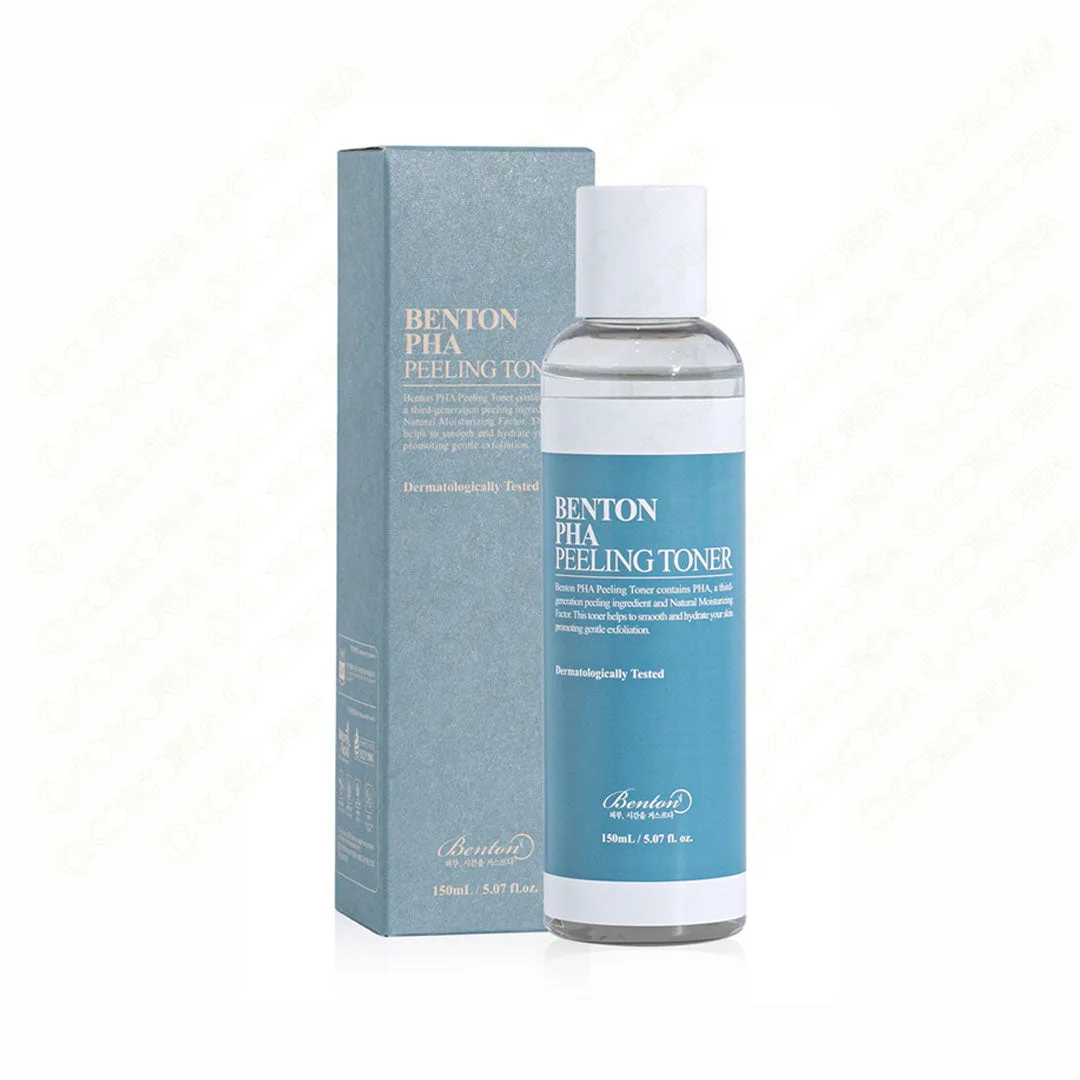
It's a leave-on daily exfoliating toner built on the mildest hydroxy acid — 3% lactobionic acid PHA — rather than a stinging AHA, and it surrounds that acid with NMF hydration, ceramide, and a cornflower-and-licorice soothing base. The result is a chemical exfoliant gentle enough for sensitive skin to use every day, which most exfoliating toners can't claim.
A daily leave-on exfoliating toner built on 3% lactobionic acid — the gentlest hydroxy acid — and wrapped in NMF hydration, ceramide, and a cornflower-and-licorice soothing base. It resurfaces and hydrates at once, with no sting and little sun-sensitivity, making it one of the rare exfoliating toners sensitive skin can use every day. The trade-off is mildness: it's steady maintenance, not a fast fix for stubborn texture, at a slightly premium price.
Since its roughly 2019 launch, the toner has gathered a moderate base of consistently positive reviews across Amazon and K-beauty retailers — enough to gauge its gentle, hydrating-exfoliant performance, but short of the large-scale feedback that would warrant top-tier confidence. The score also weighs the well-rationalized PHA-and-barrier formulation and Benton's established record alongside that user feedback.
The case for it
What would change this: A declared concentration would move this to a firmer reading of the dose.
Same rule for everyone. “Good choice” is the verdict on 9,564 of 45,024 concern verdicts across the catalog; rule R5 decided 9,072 of them. Unchanged since September 5, 2026, engine 5.1.1.
Brand or formulator? Disclose a concentration or correct a fact →
The studies behind the evidence row
The case for it
What would change this: A researched evidence row for the lead active would replace this with a verdict.
Same rule for everyone. “Good choice” is the verdict on 1,938 of 45,024 concern verdicts across the catalog; rule F2 decided 1,938 of them. Unchanged since September 5, 2026, engine 5.1.1.
Brand or formulator? Disclose a concentration or correct a fact →
The case for it
What would change this: A declared concentration would move this to a firmer reading of the dose.
Same rule for everyone. “Good choice” is the verdict on 9,564 of 45,024 concern verdicts across the catalog; rule R5 decided 9,072 of them. Unchanged since September 5, 2026, engine 5.1.1.
Brand or formulator? Disclose a concentration or correct a fact →
The studies behind the evidence row
The case for it
What would change this: A declared concentration would move this to a firmer reading of the dose.
Same rule for everyone. “Good choice” is the verdict on 9,564 of 45,024 concern verdicts across the catalog; rule R5 decided 9,072 of them. Unchanged since September 5, 2026, engine 5.1.1.
Brand or formulator? Disclose a concentration or correct a fact →
The studies behind the evidence row
Also listed for Rough Texture and Dullness — the actives here (Ceramides, Lactobionic Acid, Botanical Extracts, Sodium PCA) are in our research queue for those concerns; there is no verdict until their evidence rows are written. That is a gap in our table, not a mark against the product.
Does the jobDoes what a toner is for: not alcohol-driven, adds something real. Not measured from the label: restores skin pH, plays well with what follows.
A verdict is DermApproved’s assessment of how well a product’s ingredients fit a concern — never a claim about what the product treats. Evidence dots and collected reviews sit beside it and are never blended in. Rules 0.5.1 · evidence table ev-2026.09-r228 · how we decide
Somewhere along the way, a lot of us absorbed the idea that a chemical exfoliant should announce itself — a little tingle, a faint warmth, a sense that something is happening. That belief is wrong, and Benton's PHA Peeling Toner is a clean rebuttal to it. The tingle you feel from a glycolic toner isn't efficacy; it's your nerves reacting to a small acid molecule penetrating quickly. Lactobionic acid, the polyhydroxy acid this toner is built on, has a much larger molecule that works more slowly and stays nearer the surface, so it exfoliates without setting off that nerve response. The practical upshot is a leave-on acid that feels like a plain hydrating toner going on, yet still does the resurfacing work underneath. Gentle and effective, here, are not in tension.
The formula is disclosed at 3% lactobionic acid, a meaningful but mild dose, and what surrounds it is as important as the acid itself. Cornflower water — Centaurea cyanus — stands in for most of the plain water as the second ingredient, bringing a traditionally calming floral base. Sodium PCA, a component of the skin's own natural moisturizing factor, joins glycerin and sodium hyaluronate to keep the toner firmly hydrating, replacing the moisture that exfoliation tends to cost. And a barrier-and-soothing layer — ceramide NP, chrysanthemum extract, licorice-derived dipotassium glycyrrhizate, and allantoin — defends the skin the PHA acts on. This is the architecture of an exfoliant designed not to strip: acid in the middle, hydration and barrier support on every side.
Because PHA is also a humectant, the toner does something most exfoliants can't — it hydrates while it resurfaces, rather than trading one for the other. On the skin, it's a thin, water-clear liquid with a faint slip that sweeps on weightlessly and absorbs in seconds, leaving a smooth, lightly hydrated finish with no sticky residue. There's no warmth, no sting, no acid bite, and crucially no flaking or purge as skin adjusts. It genuinely feels like a good hydrating toner that happens to exfoliate, which is exactly the design intent.
That mildness is what unlocks the toner's real selling point: daily use, even on skin that can't normally tolerate acids. Most exfoliating toners are a two-or-three-times-a-week proposition because daily use would over-exfoliate; this one is built to be used every day, and most skin — including sensitive and even mildly barrier-compromised skin — can do so without irritation. The results follow that gentle cadence. Within a few days skin feels smoother and looks slightly brighter; over two to four weeks of consistent use, texture, dullness, and rough patches improve gradually as the daily PHA keeps dead-cell buildup in check. It's a slower, steadier curve than a strong AHA delivers, but it arrives without the irritation tax. PHAs also cause markedly less photosensitivity than AHAs, which is part of why daily use is realistic — though sunscreen remains essential, as it is with any routine.
Its weak points are the flip side of that gentleness. This is maintenance-grade exfoliation, and if your concern is deep or stubborn texture, heavy congestion, persistent blackheads, or active acne, a mild leave-on PHA may not be enough — a stronger AHA or BHA with a lower pH will do more, and you might use one alongside this rather than relying on it alone. There's also no dramatic single-use payoff; anyone hoping to see a visible change overnight will be underwhelmed. And the format is humble — a plain bottle with a pour opening that dispenses the watery liquid a little imprecisely, where a flip-cap would spill less. None of these undercut what the toner does well, but they define who it's for.
The one genuine hesitation is price. At around twenty-six dollars for 150ml, this sits at the premium end of exfoliating toners, and a daily-use bottle lasts roughly two to three months, so it's a recurring cost. You're paying for the gentle PHA approach, the NMF hydration, and the barrier ingredients — a more thoughtful formula than many cheaper exfoliating toners that lean on harsher acids with less support — but it is not a budget pick. Whether the premium is worth it depends on how much you value daily, low-irritation exfoliation that won't push your skin into the over-exfoliation spiral that stronger acids invite.
The recommendation: if you have sensitive, dry, normal, or combination skin and want a leave-on exfoliant you can genuinely use every day to keep texture smooth and skin bright — without stinging, flaking, or barrier damage — this is one of the best-suited toners for the job, and the hydration-plus-exfoliation combination is its real strength. If you need fast, heavy-duty resurfacing or congestion control, treat it as a gentle complement to a stronger acid rather than a replacement. Don't wait for it to bite. That it doesn't is the entire point.
The hero actives that drive this product's performance.
| Ingredient | Function | Evidence |
|---|---|---|
| PHA (Lactobionic Acid, 3%) (3%) | The leave-on exfoliating active, disclosed at 3% — a meaningful but gentle dose of a third-generation polyhydroxy acid. Its larger molecule exfoliates the surface slowly with far less stinging and sun-sensitivity than an AHA, and because it's a humectant too, it hydrates while it resurfaces. This is what makes the toner a genuine daily chemical exfoliant rather than a rinse-off gimmick. | Not yet assessed |
| NMF Hydration (Sodium PCA + Sodium Hyaluronate) | Sodium PCA — a component of the skin's own natural moisturizing factor — plus glycerin and sodium hyaluronate keep the toner firmly hydrating as it exfoliates, replacing the moisture exfoliation can cost and ensuring skin is left dewy rather than tight. | Established mechanism for Dehydration · established mechanism |
| Cornflower Water (Centaurea Cyanus) | Stands in for most of the plain water as the second ingredient, bringing a soothing, traditionally calming floral water base that complements the chrysanthemum and licorice extracts — part of why this exfoliating toner reads as gentle rather than astringent. | Not yet assessed |
| Ceramide NP + Soothing Complex (Chrysanthemum, Licorice, Allantoin) | Ceramide NP plus chrysanthemum, licorice-derived dipotassium glycyrrhizate, and allantoin defend and calm the barrier the PHA acts on — the deliberate buffer that lets this be a leave-on acid suitable for sensitive skin instead of a stripping one. | Established mechanism for Dryness · established mechanism |
Ingredient standings describe the active at treatment-level doses and vehicles; this product's own condition grades weigh its actual formula.
Purified Water, Centaurea Cyanus Flower Water, Pentylene Glycol, Lactobionic Acid (3%), Glycerin, Sodium PCA, Propanediol, Chrysanthemum Morifolium Flower Extract, Oleanolic Acid, Sodium Hyaluronate, Sodium Gluconate, Dipotassium Glycyrrhizate, Enantia Chlorantha Bark Extract, Ceramide NP, Allantoin, Butylene Glycol, Caprylic/Capric Triglyceride, Hydrogenated Lecithin, Phytosteryl/Octyldodecyl Lauroyl Glutamate
treatment
AM & PM
Sweep or pat on after cleansing as a leave-on exfoliating step, before serums and moisturizer. Because PHA is mild, it can be used daily by most skin and layered with hydrating serums; introduce it gradually if you also use other acids or retinoids, and follow daytime use with sunscreen.
Skin feels smoother and looks slightly brighter within a few days. Over 2-4 weeks of regular use, texture, dullness, and rough patches improve gradually as the daily PHA keeps dead-cell buildup down — a slower, steadier curve than a strong AHA, with far less irritation.
The toner's design rests on a sound and increasingly well-documented premise: polyhydroxy acids exfoliate like alpha-hydroxy acids but more gently. Lactobionic acid, the PHA here at a disclosed 3%, has a substantially larger molecular structure than glycolic acid, which limits its penetration depth and slows its action — the basis for the consistent finding that PHAs produce less stinging, erythema, and photosensitivity than AHAs while still promoting surface exfoliation and smoother texture. Lactobionic acid is additionally a strong humectant and has antioxidant metal-chelating properties, which is why a leave-on PHA can hydrate as it resurfaces rather than drying the skin. The clinical evidence base for PHAs is younger and thinner than the decades behind glycolic acid, so the honest framing is 'promising and well-rationalized' rather than 'extensively proven.'
The supporting formula is on firmer ground. Sodium PCA is a genuine component of the skin's natural moisturizing factor with established humectant credentials, and glycerin and sodium hyaluronate add well-documented hydration. Ceramide NP carries robust evidence for barrier support — a logical inclusion in a leave-on exfoliant, since maintaining barrier lipids offsets the disruption exfoliation causes. Dipotassium glycyrrhizate (licorice-derived) and allantoin have reasonable support as soothing, anti-irritant agents, while the cornflower water base contributes a traditionally calming but less rigorously studied botanical element. The coherent synthesis is that this is a thoughtfully buffered daily exfoliant: a gentle, humectant acid delivering real but gradual surface exfoliation, paired with genuinely protective hydration and barrier ingredients — effective as low-irritation maintenance, while not a substitute for a stronger acid when significant resurfacing is the goal.
Polyhydroxy acids are widely characterized in clinical discussion as the gentlest class of chemical exfoliants, frequently suggested for patients with sensitive, dry, or rosacea-prone skin who cannot tolerate glycolic or salicylic acid, given their larger molecule size and reduced irritation and photosensitivity. A leave-on 3% PHA toner is generally regarded as suitable for daily use in such patients, with the standard advice to ease in gradually and pair it with sunscreen. The inclusion of ceramide, sodium PCA, and soothing botanicals aligns with clinical guidance to support the barrier during any exfoliating regimen. The usual caveat is that PHA's gentleness comes with slower, subtler results, so patients with significant acne, marked photoaging, or stubborn texture are typically directed toward stronger acids or prescription agents, sometimes using a PHA toner as a complementary maintenance step. The fragrance-free formulation is a clinical plus for reactive skin.
After cleansing, sweep the toner over the face with a cotton pad or press it in with your hands as a leave-on exfoliating step, before serums and moisturizer. Use it once daily to start — every other day if your skin is new to acids or very reactive — and build to daily as tolerated, which most skin can. Follow with hydrating serums and moisturizer; in the daytime, always finish with sunscreen. Introduce it gradually if you also use other acids or retinoids, and avoid stacking it with a strong AHA or BHA in the same routine to keep irritation low. A little covers the face, so you don't need to saturate a pad.
At around $26 for 150ml, this is a premium exfoliating toner, and as a daily-use product a bottle lasts roughly two to three months, making it a recurring expense. The price buys a genuinely gentle PHA approach with NMF hydration, ceramide, and soothing botanicals — a more considered formula than many cheaper exfoliating toners that rely on harsher acids with less barrier support, so you're paying for thoughtful formulation rather than markup alone. There's only one size, so no bulk discount, and budget-focused shoppers can find capable AHA or BHA toners for less, albeit usually less gentle. For sensitive skin specifically, the ability to exfoliate daily without irritation is worth a premium that harsher, cheaper options can't match. Reasonable value for the niche it serves, less compelling purely on price.
Sensitive, dry, normal, or combination skin wanting a leave-on exfoliant gentle enough for daily use that smooths texture and brightens while hydrating rather than stripping. It's an excellent fit for reactive or barrier-prone skin that finds AHAs and BHAs too harsh, and for anyone who wants to fold exfoliation into their routine every day without risking over-exfoliation.
For stubborn texture, heavy congestion, persistent blackheads, or active acne, reach for a stronger AHA or BHA instead — this gentle PHA toner won't be enough on its own. Budget-focused shoppers may balk at the premium price, and anyone wanting fast, visible resurfacing rather than slow maintenance will likely find PHA's gentle action underwhelming on its own.
A thin, water-clear liquid with a faint slip from the humectants — it sweeps on weightlessly, absorbs quickly, and leaves a smooth, lightly hydrated finish with no sticky residue or acid tingle.
Fragrance-free, with only a faint clean floral-water note from the cornflower base that disappears on contact.
A 150ml plastic bottle with a simple pour opening; functional, though a flip-cap would dispense the watery liquid with less spillage.
Unlike a strong AHA, this gives no warmth or tingle on application — it feels like a hydrating toner that happens to exfoliate. Skin looks a touch smoother within days, with no flaking or purge. The PHA's mildness means most people can move to daily use quickly, though starting every other day is sensible if your skin is new to acids.
About 2-3 months with daily use; longer if used every other day or only at night.
All Year
Benton extended its gentle-skincare philosophy into daily chemical exfoliation with this toner, choosing PHA — the largest-molecule, lowest-irritation hydroxy acid — so that even reactive skin could exfoliate regularly. It's the leave-on, everyday counterpart to the brand's rinse-off PHA peeling gel, aimed at consistent maintenance rather than occasional deep exfoliation.
Benton, founded in 2011, built its reputation on gentle, transparent Korean skincare, and its PHA line brings that approach to chemical exfoliation by choosing the mildest hydroxy acid over harsher AHAs. This leave-on peeling toner has been on the market since around 2019 with a steady base of reviews, reflecting the brand's established, fragrance-free formulating style.
An exfoliating toner has to sting or tingle to be working.
That tingle is irritation, not efficacy. PHA's larger molecule exfoliates the surface gradually without the nerve stimulation that makes AHAs sting, so this toner can resurface effectively while feeling like a plain hydrating toner. Gentle and effective aren't opposites here.
PHA toners make your skin sun-sensitive like other acids.
PHAs are documented to cause notably less photosensitivity than AHAs, which is part of their appeal. Daily sunscreen is still essential — as it is with any routine — but this toner doesn't carry the same heightened sun-sensitivity warning that a strong glycolic acid does.
The toner is a leave-on daily exfoliant with 3% lactobionic acid that you sweep on and leave to work, while the gel is a rinse-off gommage you use two to three times a week with a physical cellulose element. The toner suits steady daily maintenance; the gel is for occasional, more tactile exfoliation.
Yes — PHA is the mildest hydroxy acid and this 3% leave-on formula includes ceramide, NMF hydration, and soothing extracts, so most skin tolerates daily use. If your skin is new to acids or very reactive, start every other day and build up, but daily use is the intended cadence for steady results.
PHAs cause markedly less photosensitivity than AHAs like glycolic acid, so this toner doesn't carry the same heightened sun-sensitivity concern. Daily sunscreen is still essential with any exfoliating routine, but the PHA itself is one of the gentler acids in that respect.
For gradual smoothing of texture, dullness, and rough patches it works well with consistent daily use, and its hydration keeps skin comfortable. It's milder and slower than a strong AHA, though, so deep or stubborn texture and heavy congestion may need a stronger exfoliant alongside it.
It's designed for it — PHA's low-irritation profile plus a cornflower-and-licorice soothing base, ceramide, and hyaluronic acid make it one of the gentler leave-on exfoliants available, and it's fragrance-free. Patch test and ease in, but sensitive and even barrier-compromised skin often tolerate it well.
Use it right after cleansing as a leave-on exfoliating step, before serums and moisturizer, morning or night. It layers well with hydrating serums; just introduce it gradually if you also use other acids or retinoids, and always follow daytime use with sunscreen.
Recurring themes our editors read across retailer reviews of this product — summaries in our words, not quotations, and not a substitute for your own patch test.
Exfoliates without stinging or drying
Genuinely usable daily, even on sensitive skin
Hydrating rather than stripping
Fragrance-free and gentle on the barrier
Gentler and slower than an AHA for stubborn texture
Premium price for the category
Not strong enough for heavy congestion
No dramatic single-use result
Verified answers from our questions library — the nuance a product page cannot carry.