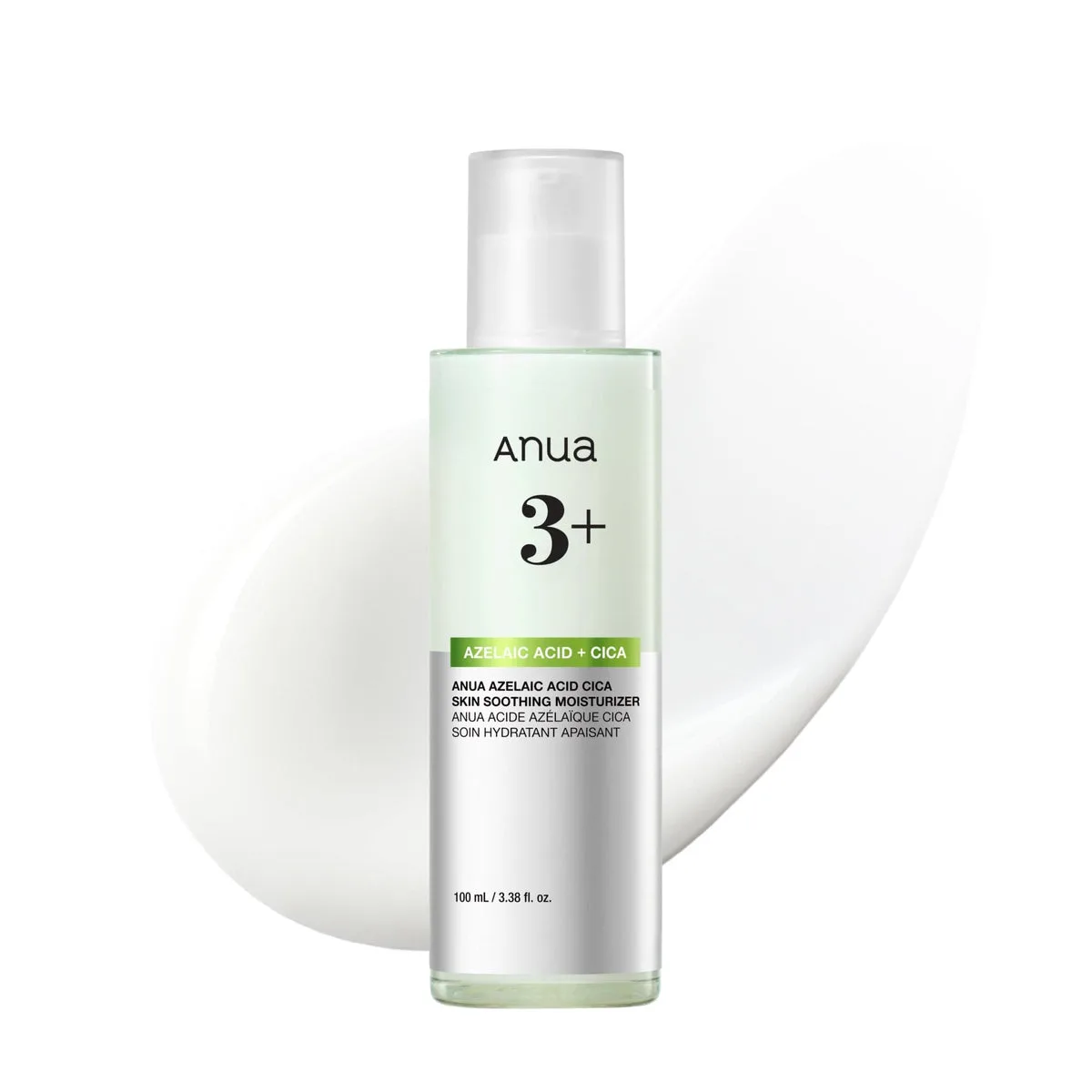
This moisturizer combines azelaic acid with a comprehensive seven-ingredient centella asiatica complex — a pairing that addresses both the inflammatory and cosmetic aspects of acne and rosacea simultaneously. The glycerin-free formula is notable for users who find glycerin triggers breakouts, and the cyclodextrin-enhanced azelaic acid delivery system aims to improve penetration at the lower 3% concentration.
A well-intentioned cica-azelaic acid moisturizer undercut by an internal contradiction: it markets itself for sensitive, redness-prone skin while containing four essential oils and multiple fragrance allergens. The 3% azelaic acid with cyclodextrin delivery and seven-ingredient centella complex show formulation ambition, but the fragrance load means this is best suited for non-fragrance-sensitive skin that wants gentle actives.
This cream launched in 2025 with fewer than 100 independent reviews available. Our scoring is primarily based on ingredient analysis, formulation assessment, and the brand's growing track record. Treat the score as provisional until independent data catches up.
Verdicts
How well it fits each concern
Verdict by concern tap a concern for the case
Good choicefor AcneIn your profileYou chose · Azelaic Acid is an approved or monograph active for acne, but this cream carries it at 3% — below the 10% the evidence and approvals rest on.Moderate evidenceStandard tolerability1 reviews collected
The case for it
Azelaic Acid is a first-line active — approved, monograph-listed or named in current guidelines — for this concern.
It is present below the studied range.
The formula carries no trigger this concern is sensitive to, with the cautions noted.
Cautions: fragrance; fungal-acne triggers.
What would change this: A concentration inside the studied range would raise this a step.
Same rule for everyone. “Good choice” is the verdict on 9,564 of 45,024 concern verdicts across the catalog; rule R4 decided 84 of them.
Unchanged since September 5, 2026, engine 5.1.1.
R4 — Right molecule, weak dose: still a reasonable choice, not the strong one. · the full register
Carrying active
Azelaic Acid
Standing
first line — a regulator recognises it for this use; trials support it · per AZELEX® (azelaic acid cream) 20% (US Food and Drug Administration prescribing information, via DailyMed (National Library of Medicine)), opened July 27, 2026
Form
sub threshold (declared 3%) — studied range 10%, from the OTC monograph or label; needs leave-on contact; judge it after ~12 weeks
Tolerability
standard — fragrance load, fungal triggers
Row checked
against its sources on July 27, 2026 (evidence table ev-2026.09-r228)
Avoidfor RosaceaIn your profileYou chose · This formula carries fragrance — a known trigger for rosacea — so it is not a fit however good its actives are.Strong evidenceCarries a trigger1 reviews collected
The case for it
Azelaic Acid is a first-line active — approved, monograph-listed or named in current guidelines — for this concern.
It is present below the studied range.
The formula carries a known trigger for this concern, which decides the verdict before any efficacy question.
Cautions: a declarable fragrance allergen; a photosensitising active — use sun protection.
What would change this: Removing the trigger named above would let the actives be judged on their own.
Same rule for everyone. “Avoid” is the verdict on 1,909 of 45,024 concern verdicts across the catalog; rule R1 decided 1,304 of them.
Unchanged since September 5, 2026, engine 5.1.1.
R1 — Safety outranks praise (MASTER-PLAN §1.7). A condition-weighted trigger (multiplier ≥ 2 in condition-fit-matrix) decides the verdict before any efficacy question. · the full register
Carrying active
Azelaic Acid
Standing
first line — a regulator recognises it for this use; trials support it · per FINACEA® (azelaic acid) Gel, 15% (US Food and Drug Administration prescribing information, via DailyMed (National Library of Medicine)), opened July 27, 2026
Form
sub threshold (declared 3%) — studied range 15%, from the row's cited source; needs leave-on contact; judge it after ~12 weeks
Tolerability
harsh — fragrance load
Row checked
against its sources on July 27, 2026 (evidence table ev-2026.09-r228)
Supporting rolefor HyperpigmentationIn your profileYou chose · Azelaic Acid is a first-line active in current guidelines for hyperpigmentation, but this cream carries it below the studied range — a supporting role at best.Moderate evidenceStandard tolerability1 reviews collected
The case for it
Azelaic Acid has trial-supported standing for this concern.
It is present below the studied range.
The formula carries no trigger this concern is sensitive to, with the cautions noted.
Cautions: a photosensitising active — use sun protection.
What would change this: A concentration inside the studied range would raise this a step.
Same rule for everyone. “Supporting role” is the verdict on 8,197 of 45,024 concern verdicts across the catalog; rule R7 decided 258 of them.
Unchanged since September 5, 2026, engine 5.1.1.
R7 — A supported active under-dosed cannot be recommended for the concern; if the category has a supportive job it may still help alongside treatment. · the full register
Unprovenfor Dark SpotsIn your profileYou chose · Azelaic Acid has early or mechanistic evidence for dark spots — a reasonable bet, not a recommendation; the other actives here are not yet assessed for it.Moderate evidenceStandard tolerability1 reviews collected
The case for it
Azelaic Acid has early or mechanistic evidence for this concern, not trial-backed standing.
It is present below the studied range.
The formula carries no trigger this concern is sensitive to, with the cautions noted.
Cautions: a photosensitising active — use sun protection.
What would change this: A concentration inside the studied range would raise this a step.
Same rule for everyone. “Unproven” is the verdict on 1,111 of 45,024 concern verdicts across the catalog; rule R9 decided 1,111 of them.
Unchanged since September 5, 2026, engine 5.1.1.
R9 — Plausible-tier actives alone do not earn a recommendation, and 'not for this' would overstate the case against them. 'Unproven' with the evidence dots lets the reader judge the bet (added 0.2.0 after the first shadow run put a 10% niacinamide serum at 'not for this' for hyperpigmentation). 0.5.0: the closing clause reads the other heroes — "nothing else here addresses it" only when every other active has a researched 'none' row; "not yet assessed" when that is the truth. Rows whose dots read moderate or better now reach R9p first. · the full register
Carrying active
Azelaic Acid
Standing
plausible — trials support it
Form
sub threshold (declared 3%) — studied range 10%, from the OTC monograph or label; needs leave-on contact; judge it after ~12 weeks
Tolerability
standard — photosensitization
Row checked
against its sources on July 17, 2026 (evidence table ev-2026.09-r228)
Promisingfor DullnessIn your profileYou chose · Hyaluronic Acid has trial-level evidence for dullness but no guideline or regulatory standing yet — promising, short of a recommendation; the other actives here are not yet assessed for it.Moderate evidenceStandard tolerability1 reviews collected
The case for it
Multiple Hyaluronic Acid Forms has trial-level evidence for this concern but no guideline or regulatory standing yet.
It is plausibly present at a working level, though the concentration is not declared.
The formula carries no trigger this concern is sensitive to, with the cautions noted.
What would change this: A declared concentration would move this to a firmer reading of the dose.
Same rule for everyone. “Promising” is the verdict on 7,858 of 45,024 concern verdicts across the catalog; rule R9p decided 7,858 of them.
Unchanged since September 5, 2026, engine 5.1.1.
R9p — 0.5.0: 'Unproven' beside three filled dots read as one question answered twice with opposite words (7,018 rows). The chip measures standing, the dots measure trial volume; where the row carries at least one RCT or a tier-2 source (moderate dots) and the active is present at a working level, the honest word is Promising. Unproven is reserved for plausible-standing rows with limited or weak evidence, or an under-dosed form. Same rank as Unproven — a bet either way; the dots order them. · the full register
Carrying active
Multiple Hyaluronic Acid Forms
Standing
plausible — trials support it
Form
plausible
Tolerability
standard
Row checked
against its sources on July 17, 2026 (evidence table ev-2026.09-r228)
Does the jobDoes what a moisturizer is for: draws in water, softens and smooths.
A verdict is DermApproved’s assessment of how well a product’s ingredients fit a concern — never a claim about what the product treats. Evidence dots and collected reviews sit beside it and are never blended in.
Rules 0.5.1 · evidence table ev-2026.09-r228 · how we decide
Assessment
Pros & Cons
Pros
✓ Cyclodextrin-enhanced azelaic acid delivery improves bioavailability at 3% concentration
✓ Glycerin-free formula accommodates users who break out from glycerin
✓ Lightweight cream absorbs in seconds with zero stickiness or greasiness
✓ Squalane-based emollient system provides non-comedogenic moisture
✓ Layers cleanly under sunscreen and makeup without pilling
✓ Fair price at $19 for the formulation complexity and active ingredient count
Cons
✗ Contains four essential oils and four fragrance allergens in a product marketed for sensitive skin
✗ Bergamot oil has phototoxic potential — concerning for a daytime moisturizer
✗ 3% azelaic acid is modest compared to prescription-strength 15-20% formulations
✗ Very new product with limited independent reviews and real-world data
✗ Some misleading fragrance-free marketing claims on certain retail platforms
Review
Full Review
There is a particular kind of frustration reserved for skincare products that are almost excellent. The Anua Azelaic Acid Cica Skin Soothing Moisturizer has the bones of a genuinely smart formula — azelaic acid in a cyclodextrin delivery vehicle, seven centella-derived actives, a glycerin-free base that sidesteps a common breakout trigger — and then it adds four essential oils and their associated fragrance allergens to a product explicitly designed for irritated, sensitive skin. It is the skincare equivalent of building a beautiful house and installing the front door backwards.
Start with what works, because a great deal does. The 3% azelaic acid is paired with hydroxypropyl cyclodextrin, a molecular encapsulation agent that forms a ring-shaped cage around the acid molecule. This is not a decorative label claim: cyclodextrin inclusion complexes genuinely improve the solubility and bioavailability of poorly water-soluble actives, and azelaic acid is notoriously one of those. At 3% you are well below the 15–20% prescription range, but the delivery system makes a defensible case for better efficacy per percentage point than the number alone suggests.
The centella complex is comprehensive in a way most cica products never bother to be. Rather than dropping in a generic extract and calling it a day, Anua includes seven distinct centella components: whole plant extract, leaf extract, root extract, and all four isolated triterpenes — madecassoside, asiaticoside, asiatic acid and madecassic acid. Each triterpene works slightly differently, from collagen stimulation to anti-inflammatory signalling, and the research suggests the four together outperform any one alone. That is genuine formulation thinking, not marketing arithmetic.
Squalane sits third on the list, which implies a meaningful concentration and was a smart pick for the emollient base — lightweight, non-comedogenic, close enough to the skin's own lipids to integrate rather than sit on top. The absence of glycerin is deliberate and unusual. Glycerin is the default humectant in nearly every moisturizer on earth, but a subset of acne-prone people find it contributes to congestion, and Anua has clearly built this for them. Nine forms of hyaluronic acid carry the hydration instead, including a zinc hydrolyzed hyaluronate that adds a little sebum-regulating and antimicrobial benefit on the side, plus erythritol for extra water-binding. The emulsifiers are olive-derived, and totarol — an antibacterial from the totara tree with real in-vitro activity against acne bacteria — rounds out the treatment side.
The texture delivers on the promise. This is a light cream that absorbs in seconds to a barely-there satin finish, with no stickiness and no grease. It layers cleanly under sunscreen and makeup, which matters for something you will apply twice a day, and it does not pill. The application experience is genuinely pleasant — smooth, quick, unobtrusive.
And then the essential oils. Rosemary leaf, bergamot fruit, geranium flower and grapefruit peel oils appear in the second half of the list, trailed by the EU-mandated allergen declarations: limonene, citronellol, geraniol, linalool. Bergamot is the one that stings, because it carries furanocoumarins with phototoxic potential — an unfortunate choice in a product many people will wear during daylight hours. The concentrations are almost certainly low, given where they sit on the list, and most users will notice nothing at all. But for a product positioning itself as a soothing treatment for sensitive, redness-prone skin, any essential oil is a philosophical error before it is a practical one.
It matters because of who is buying. The target audience — people managing rosacea, acne, and the pigment left behind by both — is disproportionately likely to have skin that reacts badly to fragrance. A formula that calms with one hand and provokes with the other creates a gamble for precisely the people it set out to help, and the gamble was entirely avoidable. The silicone and ester content also puts it outside a Malassezia-avoidant routine, which is worth knowing if fungal folliculitis is what you are actually treating.
Anua is still finding its footing in the actives space. Founded in 2020, it rocketed to prominence on a heartleaf cleansing oil and has been expanding into treatment categories at speed. This line represents an ambitious jump from single-hero products into multi-active formulation, and the ambition shows in every structural choice — the cyclodextrin, the seven-form centella, the glycerin-free architecture. The execution is about eighty percent of the way there.
For anyone without fragrance sensitivity, this offers a genuinely interesting route to daily azelaic acid. Just calibrate the timeline: 3% works gradually. This is a marathon runner, not a sprinter, and you should expect subtle redness reduction and brightening across eight to twelve weeks of consistent use rather than anything dramatic. Sunscreen every morning is non-negotiable, both for the pigment work and because of the bergamot.
Nineteen dollars for 100ml is fair for what is in the tube, and the formulation complexity reflects real R&D rather than a relabelled base. The review base is still tiny — fewer than a hundred independent voices — so read early enthusiasm as encouraging rather than established. Whether the investment was well-directed, given the door they installed backwards, is a question each buyer will have to answer with their own face.
Formula
Key Ingredients
The hero actives that drive this product's performance.
A dicarboxylic acid at 3% OTC concentration that targets redness, post-inflammatory hyperpigmentation, and mild acne. In this formula, azelaic acid is solubilized using hydroxypropyl cyclodextrin — a molecular encapsulation system that improves the acid's bioavailability and skin penetration despite the modest concentration.
Seven centella-derived ingredients — whole extract, leaf extract, root extract, madecassoside, asiaticoside, asiatic acid, and madecassic acid — provide comprehensive centella coverage. The isolated triterpenes (madecassoside and asiaticoside) promote collagen synthesis and wound healing, while the whole extracts deliver the full phytochemical profile for anti-inflammatory support alongside the azelaic acid.
Listed third in the INCI, indicating a meaningful concentration. Provides lightweight, non-comedogenic emolliency that helps buffer the potential drying effects of azelaic acid while maintaining the cream's fast-absorbing, non-greasy texture.
Nine forms of hyaluronic acid including zinc hydrolyzed hyaluronate and dimethylsilanol hyaluronate provide multi-layer hydration. The zinc-HA complex adds antimicrobial and sebum-regulating properties relevant to acne-prone skin, while the silanol forms improve HA's adherence to skin.
Plausible mechanismfor Dullness
Totarol
A natural antibacterial and antioxidant extracted from the totara tree. In this soothing moisturizer, totarol complements the anti-acne action of azelaic acid by inhibiting Cutibacterium acnes growth without the irritation potential of conventional antimicrobials.
Not yet assessed
Ingredient standings describe the active at treatment-level doses and
vehicles; this product's own condition grades weigh its actual formula.
Apply as the moisturizer step after serums and treatments. Can be layered over other actives like niacinamide or vitamin C serums. In the AM, follow with sunscreen — especially important given the presence of photosensitizing bergamot oil in the formula.
Results Timeline
Immediate: skin feels moisturized and calm after application. 2-4 weeks: mild improvement in redness and skin texture. 8-12 weeks: noticeable reduction in post-inflammatory hyperpigmentation and acne marks with consistent use. Note that 3% azelaic acid works more gradually than prescription-strength formulations.
Azelaic acid is one of the most well-studied topical actives for inflammatory skin conditions. A 2019 systematic review published in the Journal of Drugs in Dermatology confirmed azelaic acid's efficacy across acne, rosacea, and hyperpigmentation, with most clinical evidence at 15-20% concentrations. At 3%, this moisturizer sits below the clinically validated range, but the cyclodextrin delivery system may partially bridge this gap.
Hydroxypropyl cyclodextrin forms inclusion complexes — ring-shaped molecular cages that encapsulate guest molecules like azelaic acid. A clinical trial reported in the European Journal of Pharmaceutics and Biopharmaceutics has demonstrated that cyclodextrin complexation can improve the aqueous solubility of poorly soluble drugs by 10-100 fold, and several studies have shown enhanced skin penetration of azelaic acid when delivered in cyclodextrin complexes compared to conventional formulations.
The four isolated centella triterpenes each contribute distinct mechanisms: madecassoside and asiaticoside are glycosides that promote type I collagen synthesis, while asiatic acid and madecassic acid are free triterpenes with direct anti-inflammatory activity through inhibition of NF-κB signaling. A 2012 study in the International Journal of Molecular Sciences confirmed that the combination of all four triterpenes showed superior wound healing activity compared to any single triterpene alone, supporting the multi-extract approach in this formula.
Totarol, extracted from the heartwood of Podocarpus totara, has demonstrated antibacterial activity against Propionibacterium acnes (now Cutibacterium acnes) in vitro, with some studies suggesting comparable efficacy to benzoyl peroxide at certain concentrations without the associated dryness and irritation.
Dermatologists recognize azelaic acid as a versatile active with anti-inflammatory, antimicrobial, and anti-tyrosinase properties, making it one of the few ingredients effective across acne, rosacea, and hyperpigmentation. Skin-care clinicians typically prescribe azelaic acid at 15-20% concentrations for clinical efficacy. A 3% OTC formulation can provide maintenance benefits and may be suitable for patients who find higher concentrations irritating. However, dermatologists would likely flag the essential oil content — particularly bergamot with its phototoxic potential — as an unnecessary addition to a product intended for reactive skin. The centella complex is a well-regarded complementary ingredient in dermatological practice, frequently recommended for post-procedure recovery and general barrier support.
Guidance
Usage & Recommendations
How to Use
Apply a pea-to-nickel-sized amount to clean, dry skin after serums and treatments. Spread evenly across the face and neck, avoiding the eye area. Use morning and evening. In the AM, always follow with broad-spectrum sunscreen — particularly important because this formula contains bergamot oil, which has phototoxic potential. Allow the cream to absorb fully before applying sunscreen or makeup. Can be layered over niacinamide, vitamin C, or retinol products.
Value Assessment
At $19 for 100ml, this moisturizer prices itself competitively within the K-beauty treatment moisturizer category. The cyclodextrin delivery system, seven-form centella complex, and nine hyaluronic acid variants represent genuine formulation investment that justifies the price. However, the 3% azelaic acid concentration means users seeking significant clinical results may eventually need to supplement with or graduate to a higher-concentration product. Only one size is available. For an emerging brand with limited clinical validation of its specific products, the price-to-proven-efficacy ratio is acceptable but not exceptional.
Who Should Buy
Users with combination or normal skin dealing with mild acne, post-inflammatory hyperpigmentation, or redness who want a lightweight daily moisturizer with gentle treatment benefits. Also a good fit for those who break out from glycerin-based moisturizers.
Who Should Skip
Anyone with fragrance sensitivities or highly reactive skin should avoid this despite the 'soothing' positioning — the essential oils and fragrance allergens may trigger irritation. Those seeking prescription-strength azelaic acid results will find the 3% concentration insufficient for their needs.
Ready to try Anua Azelaic Acid Cica Skin Soothing Moisturizer?
Lightweight cream with a gel-cream consistency that absorbs quickly into skin. Smooth, non-sticky application.
Scent
Mild herbal-citrus scent from the essential oil blend (rosemary, bergamot, geranium, grapefruit). Not marketed as fragrance-free despite some retailer descriptions suggesting otherwise.
Packaging
Minimalist tube in Anua's characteristic teal-green color scheme used across their azelaic acid range. Clean design with outer cardboard box. 100ml squeeze tube with screw cap.
Finish
non-greasylightweightsatin
What to Expect on First Use
On first application, the cream spreads easily and absorbs within seconds, leaving a lightweight, non-greasy film. No tingling or stinging sensation from the 3% azelaic acid. Those sensitive to essential oils may detect a mild herbal-citrus scent. No purging or adjustment period expected at this concentration.
How Long It Lasts
2-3 months applied morning and evening facial application
Anua expanded beyond its heartleaf hero line in 2025 with a full azelaic acid range targeting redness-prone and acne-susceptible skin. This moisturizer anchors the line as the hydration step, designed to deliver azelaic acid's brightening and anti-inflammatory benefits in a format gentle enough for twice-daily use.
About Anua Established Brand (5–20 years)
Anua launched in 2020 as a South Korean skincare brand that gained global recognition through its viral Heartleaf Pore Control Cleansing Oil. The brand has expanded rapidly into actives-focused products including this azelaic acid line, but has limited independent clinical validation and a short track record compared to established K-beauty brands.
Brand founded: 2019 · Product launched: 2025
Myth vs. Reality
Common Myths
Myth
3% azelaic acid is too low to do anything meaningful for skin.
Reality
While prescription-strength azelaic acid (15-20%) has more clinical evidence, OTC concentrations of 3-10% can still provide anti-inflammatory and mild brightening benefits with consistent use. The cyclodextrin delivery system in this formula may also improve the effective concentration at the skin surface.
Myth
Products labeled for sensitive skin are always free of fragrance allergens.
Reality
This moisturizer contains four essential oils and four EU-designated fragrance allergens (limonene, citronellol, geraniol, linalool). While it may be marketed as suitable for sensitive skin, individuals with fragrance sensitivities should be aware of these ingredients.
FAQ
Frequently Asked Questions
How much azelaic acid is in the Anua Cica Soothing Moisturizer?
This moisturizer contains 3% azelaic acid, which is an OTC cosmetic concentration. It's lower than prescription-strength formulations (15-20% in Finacea or Azelex), but the formula uses hydroxypropyl cyclodextrin to encapsulate the azelaic acid and improve its delivery to the skin.
Is the Anua Azelaic Acid Cica Moisturizer fragrance-free?
No. Despite some marketing materials suggesting it's fragrance-free, this product contains rosemary leaf oil, bergamot fruit oil, geranium flower oil, and grapefruit peel oil, along with fragrance allergens limonene, citronellol, geraniol, and linalool. If you have fragrance sensitivities, this is worth noting.
Can I use this moisturizer with retinol?
Yes, this moisturizer can be used alongside retinol. The 3% azelaic acid is mild enough to layer with retinoids, and the centella asiatica complex may actually help soothe retinol-induced irritation. Apply retinol first, allow it to absorb, then follow with this moisturizer.
Is the Anua Azelaic Acid Moisturizer safe during pregnancy?
Azelaic acid is FDA pregnancy category B and considered safe during pregnancy. However, this specific formula contains bergamot oil and other essential oils that some practitioners advise avoiding. Consult your healthcare provider for personalized guidance.
Does this moisturizer help with rosacea redness?
The azelaic acid and centella asiatica combination targets redness from both angles — azelaic acid reduces inflammation and inhibits abnormal melanin production, while the seven centella-derived ingredients provide anti-inflammatory and healing support. At 3%, results will be more gradual than prescription azelaic acid.
Reviews
What Reviewers Tend to Say
Recurring themes our editors read across retailer reviews of this product — summaries in our words, not quotations, and not a substitute for your own patch test.
Common Praise
Lightweight texture absorbs quickly without stickiness
Effective at visibly calming redness and irritation
Non-greasy finish that works well under makeup
Does not pill when layered with other products
Glycerin-free formula works for those sensitive to glycerin
Common Complaints
Contains essential oils despite being marketed for sensitive skin
3% azelaic acid is a low concentration compared to prescription options
Very limited independent reviews available for such a new product
Some users in the azelaic acid line have experienced breakouts
Cosmax and Kolmar Korea develop and manufacture for thousands of competing brands at every price tier. Knowing that reframes what a brand is actually selling you — and it is not the thing most dupe posts assume.
One quietly brilliant ingredient treats acne, rosacea, and dark spots — and you can buy it two ways. Whether the stronger version earns the appointment depends entirely on what you're treating.
The bulbous nose everyone thinks they can read is a late structural stage of an inflammatory disease — and the reading itself is why men arrive years too late to prevent it.
Aug 28, 2026· 8 min
Questions people ask about Acne
Verified answers from our questions library — the nuance a product page cannot carry.
Products, answers, therapy guides, tools and articles in one search. Brand names,
slang and abbreviations all work — accutane finds isotretinoin, bacne finds truncal acne.