Can You Actually Shrink Your Pores? The Honest Answer
Pore size is mostly genetic and you can't permanently shrink it — but you can dramatically change how visible pores look, and the products that do it aren't the ones labeled 'pore-minimizing.'
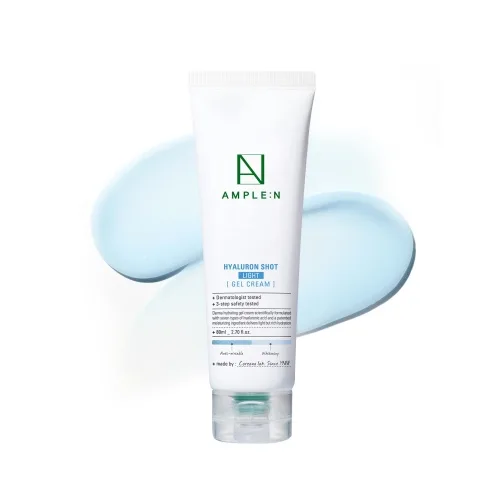
Where most light gel creams are a single hyaluronate in a carbomer gel, this one stacks seven hyaluronic acid forms of different weights and charges, puts niacinamide sixth on the list, adds the xylitol complex the whole line is built on and colours it with guaiazulene from chamomile. It is a silicone-gel texture engineered by a manufacturer that has been making Korean moisturisers since 1988, sold at a drugstore price.
One of the better light gel creams to come out of Korea's contract-manufacturing world, and it shows: a cool blue silicone gel with niacinamide sixth, seven hyaluronate forms doing seven slightly different jobs, a xylitol complex, and calming panthenol and allantoin, all fragrance-free and cheap. Oily and combination skin will be very happy. Dry skin will be polite and move on, and everyone will have to hunt for stock.
The score here rests more on the formula than on the crowd: a long, fully disclosed ingredient list with niacinamide and the humectant system at readable positions, Coreana's own irritation testing, and a large body of Korean-language reviews that could not be counted for this assessment, against English-language stockists that are mostly sold out. Concentrations are not stated, so the niacinamide dose and the hyaluronate contributions are inferred from list order rather than measured.
The case for it
Same rule for everyone. “Good choice” is the verdict on 9,564 of 45,024 concern verdicts across the catalog; rule R5 decided 9,072 of them. As of September 25, 2026, engine 5.1.1.
Brand or formulator? Disclose a concentration or correct a fact →
The studies behind the evidence row
The case for it
Cautions: fungal-acne triggers.
What would change this: A declared concentration would move this to a firmer reading of the dose.
Same rule for everyone. “Promising” is the verdict on 7,858 of 45,024 concern verdicts across the catalog; rule R9p decided 7,858 of them. As of September 25, 2026, engine 5.1.1.
Brand or formulator? Disclose a concentration or correct a fact →
The studies behind the evidence row
The case for it
What would change this: A researched evidence row for the lead active would replace this with a verdict.
Same rule for everyone. “Good choice” is the verdict on 1,938 of 45,024 concern verdicts across the catalog; rule F2 decided 1,938 of them. As of September 25, 2026, engine 5.1.1.
Brand or formulator? Disclose a concentration or correct a fact →
Does the jobDoes what a moisturizer is for: draws in water, softens and smooths.
A verdict is DermApproved’s assessment of how well a product’s ingredients fit a concern — never a claim about what the product treats. Evidence dots and collected reviews sit beside it and are never blended in. Rules 0.5.1 · evidence table ev-2026.09-r228 · how we decide
Count the hyaluronates. Sodium hyaluronate at sixteenth, hyaluronic acid at eighteenth, then in the back half hydroxypropyltrimonium hyaluronate, hydrolyzed hyaluronic acid, sodium acetylated hyaluronate, sodium hyaluronate crosspolymer and potassium hyaluronate. Seven, as the tub promises. The lazy reading is that seven is a marketing number, and it partly is. The better reading is that these are seven different molecules and only a formulator who cares would bother: the crosspolymer to hold water on the surface, the cationic hyaluronate to cling to skin's negative charge and survive a rinse, the acetylated version to resist washing off, the hydrolyzed fraction small enough to get into the upper layers, and three plain salts of varying weight to fill in between. That is not a gimmick. It is the fingerprint of Coreana, the manufacturer behind Ample:N, which has been building moisturisers in its own institute since 1988 and knows the difference between a hyaluronic acid and a hyaluronic acid system.
The rest of the list confirms the impression. Water, then cyclohexasiloxane, a volatile silicone that gives the cool, silky glide and evaporates, then polyglycerin-3 and glycerin for the actual humectant heavy lifting. Niacinamide is sixth, which in a moisturiser this light is a genuine dose rather than a mention, and it is the reason this gel does something for oily skin beyond hydrating it. Propanediol, glycereth-26 and panthenol follow, then a phenyl trimethicone for a soft-focus finish, adenosine for the functional wrinkle claim, and allantoin, arginine and the mallow and cornflower extracts that make up the brand's blue calming complex. Sodium guaiazulene sulfonate, the azulene salt from chamomile, gives the gel its pale blue colour and a little anti-inflammatory support. The xylitol trio that runs through the whole Hyaluron Shot line, xylitylglucoside, anhydroxylitol and xylitol, sits mid-list, and there is a modest lipid gesture in squalane and a trace of ceramide NP. Nothing on the list smells, stings or exfoliates.
On the face it is the texture that sells it. The gel is a wobbling, pale blue cushion in a frosted tub, cool on the fingers, and it turns to silk the moment it touches skin. A pea-sized amount covers the whole face, spreads without drag, and disappears inside a minute into a velvety, non-greasy finish that leaves oily and combination skin feeling hydrated and comfortable without a hint of shine. There is no tack, no film to speak of and no scent. Reviewers on Korean platforms, where the product has a substantial following, keep coming back to the same three words: light, cool, no breakouts. That is the right summary. Used twice a day for a month on combination skin, the dehydrated patches around the nose and mouth settle and the T-zone stays about where it was, which is exactly what a niacinamide gel with a decent humectant system should do.
The limits are honest and predictable. This is a gel built on water, a volatile silicone and sugars, with squalane and ceramide as the only lipids of note, and dry skin finds that out by the second morning. In winter even combination skin may want a richer cream over it. The silicone-and-acrylate film also has the habit of the type: rub a silicone-heavy sunscreen over it too soon and the two layers roll into flakes, which is a technique problem, use less and wait a minute, rather than a formula fault. Under a mineral or water-based sunscreen the issue mostly disappears, and it never shows up at night. The tub is generous at 80 ml but it is a tub, and the spatula gets lost, so fingers and hygiene become the routine. And hydrogenated lecithin at twentieth is the one ingredient that fungal-acne-prone skin should notice, since Malassezia is fond of phospholipids; for everyone else it is an innocuous emulsifier.
The frustrating part, as with much of this line, is finding it. YesStyle lists the gel as no longer available, the US reseller that carried it has sold out, and it has no listing on Amazon under its own name, which leaves Korean cross-border shops and the hope that Coreana's overseas distribution swings back toward the moisturisers. When it was on shelves it sold for around $16 for 80 ml, which for a fragrance-free, niacinamide-forward gel with a hyaluronate system this considered is a drugstore price for a mid-tier formula. A 30 ml travel size exists and is easier to find, though it is worse value.
So the recommendation is enthusiastic within its lane. Oily, combination and normal skin, and sensitive skin that dislikes fragrance and heaviness, will find this one of the more satisfying light gels at any price, and a particularly good plain moisturiser to sit over a retinoid or acid. Dry skin should go to the line's richer Hyaluron Shot Cream or elsewhere. And anyone who has read this far and is still counting hyaluronates should stop at seven and start looking for stock.
The hero actives that drive this product's performance.
| Ingredient | Function | Evidence |
|---|---|---|
| Sodium Hyaluronate, Hyaluronic Acid, Hydroxypropyltrimonium Hyaluronate, Hydrolyzed Hyaluronic Acid, Sodium Acetylated Hyaluronate, Sodium Hyaluronate Crosspolymer, Potassium Hyaluronate | Seven hyaluronate forms scattered from sixteenth to the tail, the 'seven hyaluronic acids' on the tube: a surface-holding crosspolymer, a cationic hyaluronate that clings to skin, an acetylated version that resists washing off, a hydrolyzed fraction that penetrates, and three plain salts. Individually each is a trace; together they are a deliberately layered humectant system that gives a very light gel a longer-lasting plumpness than glycerin alone would. | Established mechanism for Dehydration · established mechanism |
| Niacinamide | Sixth on the list, ahead of the glycols and panthenol, which is a real dose in a moisturiser this light; it does the barrier and sebum-regulating work that makes the gel suit oily and combination skin rather than just hydrate it, and with the adenosine below it gives the tube its wrinkle-and-brightening functional claim under Korean cosmetic rules. | Limited for Excess Oiliness |
| Xylitylglucoside, Anhydroxylitol, Xylitol | The patented xylitol complex that runs through the whole Hyaluron Shot line, a trio of sugar-derived humectants with data for stimulating the skin's own hyaluronic acid and ceramide production over weeks; here they sit mid-to-late list, behind the seven hyaluronates they are meant to complement, so their contribution is supporting rather than lead. | Not yet assessed |
| Panthenol and Allantoin | Ninth and twelfth, a soothing pair placed high enough to count, so a gel built for oily and combination skin does not sting on the days that skin is also over-exfoliated; they are joined by the mallow and cornflower extracts that make up the brand's blue calming complex. | Established mechanism for Dehydration · established mechanism |
| Sodium Guaiazulene Sulfonate | The chamomile-derived azulene salt that colours the gel its pale blue and adds a mild anti-inflammatory note; it is the ingredient behind the 'blue chamomile' claim, present in the second half of the list at the level a colourant-plus-soother is usually dosed. | Not yet assessed |
| Squalane and Ceramide NP | The only meaningful lipids in an otherwise water-and-silicone gel, squalane at twenty-seventh and ceramide NP at twenty-first, enough to take the edge off the dryness a pure humectant gel can leave on combination skin, not enough to make this a barrier cream for dry skin. | Not yet assessed |
Ingredient standings describe the active at treatment-level doses and vehicles; this product's own condition grades weigh its actual formula.
Water, Cyclohexasiloxane, Polyglycerin-3, Glycerin, 1,2-Hexanediol, Niacinamide, Propanediol, Glycereth-26, Panthenol, Diphenylsiloxy Phenyl Trimethicone, Adenosine, Allantoin, Arginine, Malva Sylvestris (Mallow) Flower/Leaf/Stem Extract, Centaurea Cyanus Flower Extract, Sodium Hyaluronate, Gardenia Florida Flower Extract, Hyaluronic Acid, Enantia Chlorantha Bark Extract, Hydrogenated Lecithin, Ceramide NP, Ammonium Acryloyldimethyltaurate/VP Copolymer, Diphenylsiloxy Phenyl Trimethicone, Hydroxyethyl Acrylate/Sodium Acryloyldimethyl Taurate Copolymer, Inulin Lauryl Carbamate, Acrylates/C10-30 Alkyl Acrylate Crosspolymer, Squalane, Dimethicone/Phenyl Vinyl Dimethicone Crosspolymer, Dextrin, Glucosylrutin, Trehalose, Saccharide Isomerate, Butylene Glycol, Xylitylglucoside, Anhydroxylitol, Sodium Guaiazulene Sulfonate, Hydroxypropyltrimonium Hyaluronate, Xylitol, Octyldodecanol, Hydrolyzed Hyaluronic Acid, Sodium Acetylated Hyaluronate, Sodium Hyaluronate Crosspolymer, Potassium Hyaluronate, Caprylyl Glycol, Oleanolic Acid, Disodium EDTA
moisturizer
AM & PM
Last step at night and under sunscreen in the morning, over a serum or ampoule while the skin is still slightly damp; the silicone-gel texture spreads far, so a pea-sized amount covers the face, and a second thin layer is better than one thick one on the driest days.
Immediately: a cool, quick-absorbing layer that leaves the face plump and soft with a smooth, non-greasy finish that lasts most of a day on oily skin. Four to eight weeks: the niacinamide and xylitol complex earn their keep with slightly steadier oil production and fewer dehydrated patches on combination skin; dry skin will still need a richer cream by week one.
This gel is built on two well-supported pillars and one interesting supporting claim. The first pillar is niacinamide, present at sixth position. Topical niacinamide has an unusually deep clinical literature for a cosmetic ingredient: controlled trials at two to five percent show reductions in sebum excretion, improvements in barrier function measured as lower transepidermal water loss, and increases in stratum corneum ceramide synthesis over eight to twelve weeks, which is the mechanism by which a humectant gel can plausibly leave oily skin less shiny and better hydrated at the same time. Its listing ahead of propanediol and panthenol here is consistent with a concentration in that range, though Coreana does not state it.
The second pillar is the humectant system. Glycerin and polyglycerin-3 sit third and fourth and remain the humectants with the strongest evidence for raising stratum corneum water content and improving barrier function with repeated use. The seven hyaluronate forms add a layered effect that the molecular-weight literature supports in principle: high-molecular-weight and crosslinked hyaluronates form a water-holding film on the surface, lower-weight and hydrolyzed fractions penetrate the upper stratum corneum and produce a longer-lasting hydration increase, and cationic hyaluronates such as hydroxypropyltrimonium hyaluronate show substantially higher skin retention after rinsing than the plain sodium salt. Each form here is present at a low level, so the system is a refinement of the glycerin base rather than a replacement for it, but it is a refinement with a mechanism behind it.
The supporting claim is the xylitol complex, xylitylglucoside, anhydroxylitol and xylitol, a patented humectant blend with published in-vitro and small in-vivo data showing increased hyaluronic acid and ceramide synthesis in skin and a sustained hydration effect over several weeks; it is promising rather than established, and it sits mid-list here. Panthenol and allantoin carry solid soothing and hydration records at the positions they occupy. Sodium guaiazulene sulfonate, the water-soluble chamomile azulene, has modest anti-inflammatory data and is mainly the colourant. Adenosine has small trials for fine-line improvement and is present for the Korean functional claim. Squalane and ceramide NP have strong barrier evidence at meaningful doses, which their positions here do not reach. The silicones are inert texture agents with no comedogenicity concern. Overall, a formula whose main claims rest on well-documented ingredients at credible positions, with the sophisticated hyaluronate layering as a bonus rather than the foundation.
In practice, patients with oily or acne-prone skin are often told to moisturise and then handed nothing they are willing to use, and a fragrance-free silicone gel with niacinamide near the top of the list is close to the profile clinicians describe for that gap. The absence of fragrance, alcohol and acids makes it a reasonable plain moisturiser alongside topical retinoids, benzoyl peroxide or adapalene, where the usual counsel is a bland, non-comedogenic product to buffer dryness and irritation, and the niacinamide adds a modest, evidence-supported benefit for sebum and barrier. Clinicians would not expect the seven hyaluronate forms to matter much beyond a well-made humectant gel, and would point dry or eczema-prone patients toward something with a real lipid content, since squalane and ceramide here are minor. The hydrogenated lecithin is the one component worth mentioning to patients with Malassezia folliculitis. For everyone else it is a low-risk, sensible moisturiser of the kind dermatology generally has no objection to, subject to the practical problem of obtaining it.
Morning and evening, after cleansing, toner and any serum or ampoule, scoop a pea-sized amount with the spatula or a clean fingertip and dot it on the forehead, cheeks, nose and chin. Spread outward in light strokes; the gel glides far, so resist adding more until the first layer has gone, and apply a second thin layer only on drier areas. Wait a full minute before sunscreen in the morning and pat the sunscreen on rather than rubbing, to keep the two silicone films from rolling. At night it can be the last step for oily and combination skin; drier skin can seal it with a few drops of facial oil or a richer cream. Close the tub tightly and keep it out of the shower steam. Suitable for daily use around retinoids and acids as the plain moisturising step.
At the roughly $16 it sold for in the US, 80 ml of a fragrance-free, niacinamide-forward gel with a layered hyaluronate system, a xylitol complex and calming extracts is plainly good value; equivalent light gels from Western clinical brands run two to three times the price for half the volume, and few of them list niacinamide as high. A pea-sized amount covers the face, so a tub lasts around three months twice daily, which brings the monthly cost to a few dollars. The 30 ml size that turns up more often at resellers is markedly worse value per millilitre and is best treated as a trial. The formula's ceiling is its lightness, which makes it a poor buy for dry skin at any price, and its floor is availability, since a bargain that cannot be found is not one. When it can be, it is among the strongest value propositions in the gel-cream category.
Oily, combination and normal skin that wants a cool, fragrance-free, non-greasy moisturiser with real niacinamide and a hydration system that outlasts a basic gel, including sensitive skin that tolerates silicones and anyone needing a plain buffer for a retinoid or acid routine. Also a good summer swap for people who find the line's richer cream heavy.
Dry, dehydrated-and-dry or eczema-prone skin will find the lipid content too thin and should use a richer cream. Fungal-acne-prone skin should patch test because of the hydrogenated lecithin, silicone-averse users will dislike the base, and anyone who needs a moisturiser they can reliably repurchase should note how hard this is to find outside Korea.
Ready to try Ample:N Hyaluron Shot Light Gel Cream?
Buy at Amazon ♥A pale blue, bouncy gel cream with a cool, silicone-slip glide that spreads thin and disappears within a minute into a smooth, velvety, non-greasy finish, leaving skin cushioned rather than dewy-wet.
None at all; a faintly cool, clean impression from the silicones and nothing botanical.
A squat, frosted 80 ml tub in the Hyaluron Shot line's blue-and-white livery with a screw lid and a small spatula, generous for the price but a tub all the same, which means fingers or the spatula and some care about contamination.
The first scoop is the pleasure of the product: a cool, wobbling blue gel that turns to silk on the fingers, spreads across the whole face from a pea-sized amount, and vanishes without a trace of tack. Oily and combination skin feel hydrated and matte-comfortable within minutes, and there is no sting, purge or adjustment period. Dry skin discovers by the second morning that it wants something richer on top, and anyone layering it under a silicone-heavy sunscreen learns to use less and wait a minute.
About three months used twice daily on the face, longer for a single daily application.
spring summer
Coreana's Hyaluron Shot line began in 2017 with an ampoule and a rich cream, and the Light Gel Cream followed a few years later as the answer for the oily and combination customers who loved the ampoule but found the cream too heavy in summer. It borrowed the line's xylitol complex and blue calming extracts, rebuilt the base as a silicone gel, and became one of the line's better-reviewed products on Korean platforms before its overseas distribution thinned.
Ample:N is the ampoule line of Coreana Cosmetics, a Korean manufacturer with an in-house research institute since 1988 and a long contract-formulation history, which is why a 2017 brand ships with mature texture work. It publishes full ingredient lists and runs its own dermatologist-supervised irritation panels; no independent clinical studies of individual Ample:N products have been published.
Seven types of hyaluronic acid hydrate seven times as well as one.
The different forms do different jobs: large and crosslinked hyaluronates hold water on the surface, cationic and acetylated forms cling to skin longer, and hydrolyzed fractions penetrate a little. That layering gives a more even, longer-lasting hydration than a single form, but it is a refinement rather than a multiplication, and the glycerin and polyglycerin near the top of the list are still doing most of the humectant work.
A gel cream with silicones will clog pores on oily skin.
Cyclohexasiloxane and the phenyl trimethicone here are volatile or large, non-occlusive silicones that give slip and evaporate or sit lightly on the surface; they are among the least comedogenic texture ingredients available. The formula's only ingredient with a real congestion record is hydrogenated lecithin, and that matters for fungal acne rather than ordinary blackheads.
They are separate products, not a rename. The Light Gel Cream is an 80 ml silicone-based gel for oily and combination skin, pale blue, with niacinamide sixth and seven hyaluronate forms. The Hyaluron Shot Cream is a 60 ml emollient cream with a heavier oil-and-ester base for normal to dry skin. Pick by skin type and season.
It is built for it. The base is water, a volatile silicone and polyglycerin rather than oils, the finish is velvety and non-greasy, and niacinamide sits high enough to help regulate sebum over weeks. The only lipids are a little squalane and a trace of ceramide NP, so it hydrates without adding shine.
No. It contains no perfume and no essential oils, and it has no scent beyond a faintly clean, cool impression from the silicones. The blue colour comes from sodium guaiazulene sulfonate, a chamomile-derived azulene, not from a dye or a fragrance.
Mostly but not entirely. It is oil-free apart from squalane, which Malassezia cannot use, but it contains hydrogenated lecithin, a phospholipid that fungal-acne-prone skin often reacts to. Anyone with confirmed Malassezia folliculitis should patch test or choose a lecithin-free gel.
Yes, and it is a good partner for them. It carries no acids, alcohol or fragrance, its niacinamide and panthenol help buffer irritation, and the light silicone gel does not trap a retinoid against the skin the way a heavy occlusive can. Apply it after the treatment step, once that has absorbed.
Its film is silicone and acrylate polymer, and so are most sunscreen films; two of those layers rubbed together can roll up. Use a pea-sized amount, wait a full minute for it to set, then pat the sunscreen on rather than massaging it. Under a mineral or water-based sunscreen the problem largely disappears.
Recurring themes our editors read across retailer reviews of this product — summaries in our words, not quotations, and not a substitute for your own patch test.
Cool, silky gel that sinks in without any stickiness
Hydrates oily skin without breakouts or shine
Fragrance-free and calm on sensitive, over-exfoliated skin
Pale blue tint and cushiony texture feel more expensive than the price
Not enough for dry skin, especially in winter
Silicone feel and occasional pilling under sunscreen
Tub packaging rather than a pump
Hard to find in stock outside Korea