Four Kitchen Masks, Graded: One Is a Drug, One Stains, Two Are Just Nice
The blanket dismissal of DIY masks is lazy, because these four grade completely differently once you look at what is actually in them and at what dose.
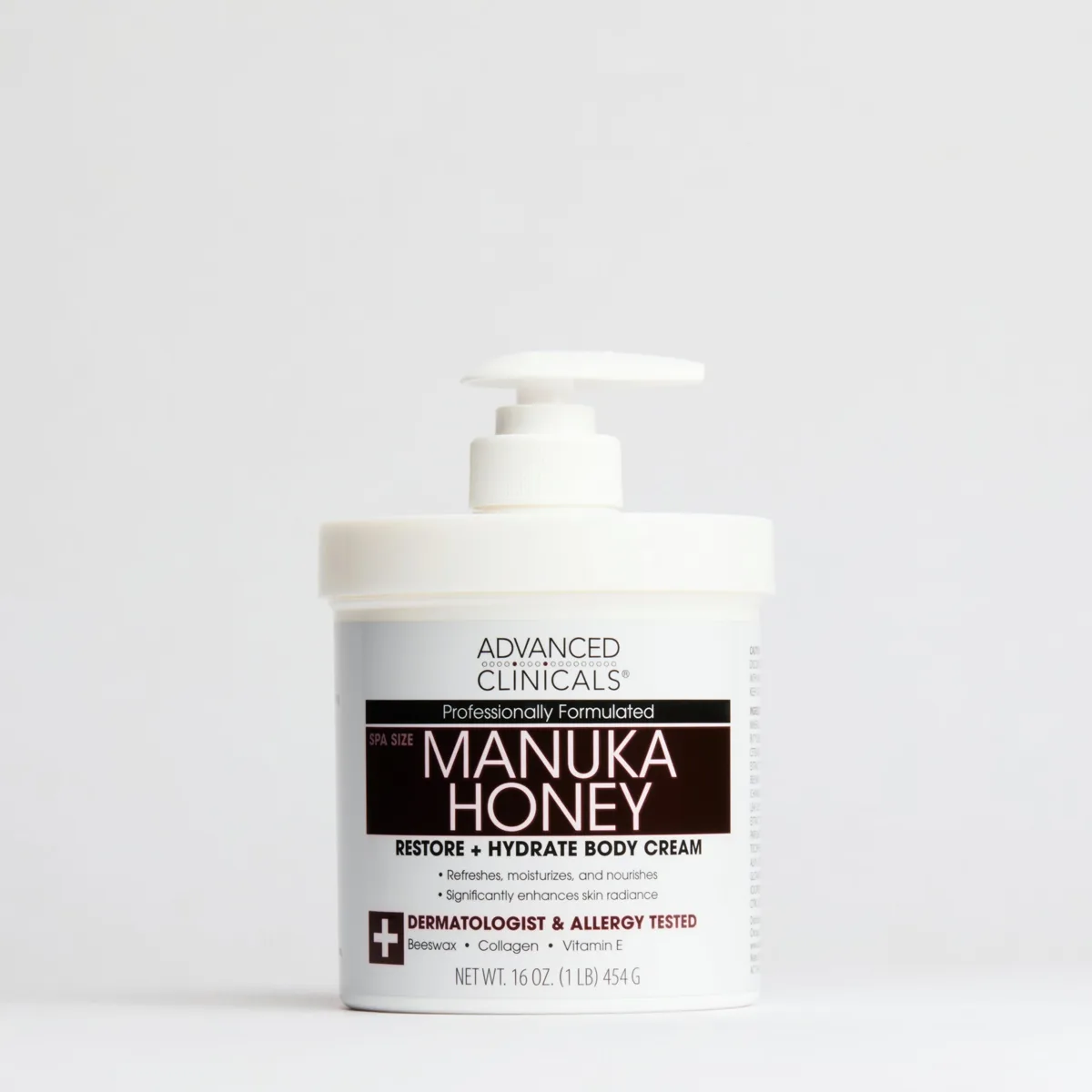
Among the brand's shared-base body creams this is the one built for genuinely dry skin: honey extract is placed tenth, immediately after the emollients, beeswax adds a second occlusive on top of the mineral oil, and soluble collagen gives a surface-smoothing film. It is the closest thing in the range to a balm, sold by the pound for sixteen dollars, and its near-five-star review average reflects that it does the job it claims.
The heavy-duty jar in the Advanced Clinicals range and the best-reviewed of them, with honey placed high, beeswax doubling the occlusive seal and a base that rescues cracked winter skin for sixteen dollars a pound. The honey is not identified as manuka, the collagen is surface decoration, and the fragrance, rose, chamomile and iodopropynyl butylcarbamate rule it out for sensitive skin. For tolerant dry skin in a cold month, it is the one to buy.
The case for it
Cautions: fragrance.
Same rule for everyone. “Strong choice” is the verdict on 1,459 of 45,024 concern verdicts across the catalog; rule R2 decided 892 of them. As of September 25, 2026, engine 5.1.1.
Brand or formulator? Disclose a concentration or correct a fact →
The studies behind the evidence row
The case for it
Same rule for everyone. “Good choice” is the verdict on 9,564 of 45,024 concern verdicts across the catalog; rule R5 decided 9,072 of them. As of September 25, 2026, engine 5.1.1.
Brand or formulator? Disclose a concentration or correct a fact →
The studies behind the evidence row
Also listed for Winter Skin and Rough Texture — the actives here (Mineral Oil, Glycerin, Honey, Hydrolyzed Collagen) are in our research queue for those concerns; there is no verdict until their evidence rows are written. That is a gap in our table, not a mark against the product.
As a body productNot judged: what a body product is for — real substance, not just slip, realistic to use daily — cannot yet be measured from the ingredient list (only fragrance load can).
A verdict is DermApproved’s assessment of how well a product’s ingredients fit a concern — never a claim about what the product treats. Evidence dots and collected reviews sit beside it and are never blended in. Rules 0.5.1 · evidence table ev-2026.09-r228 · how we decide
Of the six body creams Advanced Clinicals sells by the pound, this one has the highest Amazon rating by a clear margin, 4.8 stars across nearly five thousand reviews, and the ingredient that earns it is not the honey on the lid. It is beeswax, at twelfth on the list, which turns the brand's standard mineral-oil-and-glycerin base into something closer to a balm. That second occlusive is why reviewers talk about cracked heels, winter knuckles and elbows that finally stopped catching on sweaters, and why this jar, rather than the aloe or rose or coconut versions, is the one people re-buy for the cold months.
The brand's story explains the format. Advanced Clinicals, founded in 2004 and formulated in the Midwest, made its name on sixteen-ounce jars named for a single hero ingredient and sold at off-price stores and on Amazon. The honey jar arrived around 2018 with the tagline for extremely dry, aging skin, and it has kept that position ever since. Like its siblings it runs on water, mineral oil, cetearyl alcohol, isopropyl myristate, butylene glycol, glyceryl stearate, glycerin, an emulsifier and a triglyceride. Then, in this jar, come the distinguishing additions: honey extract at tenth, soluble collagen, beeswax, chamomile, aloe, green tea, rose extract, a parfum, and a preservative system that includes iodopropynyl butylcarbamate.
The base is what dermatology would recommend for dry body skin, and the evidence is deep. Mineral oil is an inert, refined occlusive whose long safety record was reviewed in the International Journal of Cosmetic Science in 2012, non-comedogenic and among the least irritating emollients available. Glycerin is the model humectant, and a 2025 review in the International Journal of Dermatology on the mechanisms of basic emollients for xerosis explains why humectant plus occlusive is the most effective moisturizer design there is. Beeswax adds a second, longer-lasting seal on top of the mineral oil, which is the difference between a cream that keeps skin comfortable for a day and one that keeps it comfortable into the next morning. Honey contributes sugars that bind water alongside the glycerin, and a 2024 review in the International Journal of Dermatology on honey therapies for skin disorders describes its humectant and soothing properties fairly, while making clear that the antibacterial and wound-healing effects that made manuka famous belong to concentrated medical-grade honey, not to a diluted extract in a moisturizer. The label, notably, says honey extract and never says manuka.
In use the difference from the lighter jars is immediate. The cream is denser and faintly waxy, takes a moment longer to work in, and settles into a soft, protective, cushioned finish that does not feel greasy once it has absorbed. On hands and feet at night, under cotton gloves or socks, it does the job a proper balm does, and cracked heels start to soften within a week. The scent is a gentle honey-floral with a rose note, pleasant to most people and fading within an hour or two. The collagen, eleventh on the list, is a large protein that stays on the surface and gives the skin a smoothed, softened feel while the cream is on; that is the entire basis for the plumping language, and it is a pleasant surface effect rather than anything structural.
The reservations concern the people it was, on paper, made for. Skin dry enough to crack is often skin with a compromised barrier, and the ingredients most likely to trouble a compromised barrier are all here: a parfum, rose and chamomile extracts, and iodopropynyl butylcarbamate, a preservative that appears in patch-test series with a small but real sensitisation rate documented in a 2019 Contact Dermatitis study of consecutive patients. None of these is a problem for the majority; the near-five-star rating makes that plain. But a reader with eczema, a history of fragrance or preservative allergy, or a chrysanthemum-family sensitivity would be better served by a fragrance-free emollient, and the honey framing should not persuade them otherwise. The jar is also not vegan, with honey, beeswax and collagen all animal-derived, and the isopropyl myristate at fourth makes it a poor choice for acne-prone backs and chests.
Sixteen dollars for sixteen ounces is about a dollar an ounce, cheaper than nearly any balm-weight body cream in a pharmacy, and the jar lasts three to four months of daily use or half a year on hands and feet alone. There is no smaller size, which is the one real inconvenience of trying it. For dry, tolerant skin facing a winter, that is very good value from an established brand that has been selling this exact product for years.
The recommendation is warm with a clear boundary. If your body skin is dry to the point of cracking, you tolerate light fragrance, and you want a rich, sealing cream by the pound, this is the jar in the Advanced Clinicals range to buy, and its reviewers have it right. If your skin is eczema-prone, fragrance-reactive or acne-prone, or if you are vegan, the honey name is a distraction and the ingredient list tells you to look elsewhere.
The hero actives that drive this product's performance.
| Ingredient | Function | Evidence |
|---|---|---|
| Honey Extract | Tenth on the list, the first ingredient after the emollient base, which is the strongest placement any hero gets in this brand's body range. Honey is a natural humectant with sugars that bind water and a mild soothing reputation; here it works alongside the glycerin to hold moisture under the mineral oil seal, and it gives the cream a faint sweetness. Whether it is specifically manuka is not stated on the label. | Not yet assessed |
| Mineral Oil & Beeswax | Mineral oil second and beeswax twelfth form a double occlusive layer, which is why this jar reads as the richest and most protective of the brand's body creams. Beeswax adds a slight waxy body and a longer-lasting seal, useful on very dry hands, heels and elbows, and it is the reason the cream feels more like a balm than its siblings do. | Regulator-approved for Dryness · established mechanism |
| Glycerin | Seventh, the primary humectant, pairing with the honey sugars to draw water into the outer skin while the mineral oil and beeswax keep it there. That humectant-plus-occlusive combination is the working mechanism of the whole jar. | Established mechanism for Dryness · established mechanism |
| Soluble Collagen | Eleventh, a large protein that cannot enter the skin and instead forms a light, water-holding film on the surface that gives an immediate smoothed, softened feel. It is the ingredient behind the label's plumping language, and its effect is cosmetic and surface-level rather than structural. | Not yet assessed |
| Anthemis Nobilis (Chamomile) Flower Extract | Thirteenth, a soothing botanical with bisabolol and flavonoid content that supports the cream's positioning for extremely dry, uncomfortable skin. At this level its contribution is modest, and for anyone allergic to the daisy family it is a caution rather than a comfort. | Not yet assessed |
Ingredient standings describe the active at treatment-level doses and vehicles; this product's own condition grades weigh its actual formula.
Aqua/Water/Eau, Mineral Oil/Huile Minérale, Cetearyl Alcohol, Isopropyl Myristate, Butylene Glycol, Glyceryl Stearate SE, Glycerin, Ceteareth-20, Caprylic/Capric Triglyceride, Honey Extract/Extrait De Miel, Soluble Collagen, Beeswax/Cire D'Abeille, Anthemis Nobilis (Chamomile) Flower Extract, Aloe Barbadensis Leaf Juice Powder, Camellia Sinensis Leaf Extract, Rosa Damascena Flower Extract, Parfum/Fragrance, Phenoxyethanol, Tocopherol, Caprylyl Glycol, Acrylates/C10-30 Alkyl Acrylate Crosspolymer, Tetrasodium Glutamate Diacetate, Sodium Hydroxide, Iodopropynyl Butylcarbamate, 1,2-Hexanediol, Citric Acid, Sodium Citrate, Sodium Benzoate
moisturizer
AM & PM
Best applied to damp skin straight after a shower, and thick enough to serve as a night-time hand and foot cream under cotton gloves or socks. It sits over urea or lactic acid lotions on rough areas without conflict. Keep it off the face and off acne-prone chest and back; the isopropyl myristate and beeswax make it too heavy there.
Immediate relief of tightness and a soft, slightly waxy comfort that outlasts the brand's lighter jars, often into the next morning on hands and feet. Cracked heels and rough elbows improve visibly over one to two weeks of nightly use. There is no benefit beyond maintained hydration; the collagen's smoothing is a surface effect that lasts as long as the cream does.
The cream's effectiveness on very dry skin rests on a double occlusive over a humectant core, and each element is well studied. Mineral oil, its second ingredient, was reviewed by Rawlings and Lombard in the International Journal of Cosmetic Science in 2012 as a chemically inert, non-comedogenic, non-sensitising occlusive that reduces transepidermal water loss with a tolerance record superior to many plant oils. Beeswax, twelfth, adds a semi-solid wax layer that persists on the skin longer than a fluid oil, which is the mechanistic reason this jar outlasts the brand's lighter creams on hands and heels. Glycerin, seventh, is the reference humectant, and a 2025 review in the International Journal of Dermatology of the mechanisms behind basic emollients for xerosis cutis sets out why binding water in the stratum corneum with a humectant while an occlusive retards its evaporation restores hydration and barrier function more effectively than either alone. Honey extract at tenth contributes additional humectant sugars; a 2024 review in the International Journal of Dermatology of honey therapies for dermatological disorders supports honey's moisturizing and soothing properties while attributing its antimicrobial and wound-healing effects to concentrated medical-grade honey, which a diluted extract in a cosmetic cream is not.
The remaining label ingredients are cosmetic in effect. Soluble collagen is a large protein that cannot penetrate intact skin and instead forms a surface film that binds water and gives a temporary smoothing sensation, which is the entire basis of any plumping claim. Chamomile flower extract carries bisabolol and flavonoids with mild anti-inflammatory activity at higher concentrations than a thirteenth-place listing implies, and it is also a recognised allergen for people sensitised to the Asteraceae family. The preservative iodopropynyl butylcarbamate has a documented, if modest, sensitisation rate; a 2019 study in Contact Dermatitis of consecutive patch-tested patients over seven years recorded positive reactions to it in a small percentage, which, together with the parfum and the rose extract, is the basis for cautioning eczema-prone and fragrance-sensitive users despite the otherwise barrier-friendly base.
For severely dry body skin, cracked heels and winter hands, the clinical advice is to move from lotions to ointments or balm-weight creams and to apply them to damp skin, ideally under occlusion overnight. A mineral oil and beeswax cream fits that advice closely and is the kind of product routinely suggested for xerosis in patients without atopic disease. The distinction clinicians draw is between skin that is dry and skin that is dry because its barrier is compromised: for the latter, the fragrance, the rose and chamomile extracts and the iodopropynyl butylcarbamate in this jar are the sort of additions that prolong a flare, and a fragrance-free, preservative-minimal emollient would be preferred. The honey framing would be set aside gently; medical honey has a real place in wound care, but a diluted extract in a cosmetic cream is a humectant, not a therapy. For truncal acne, the isopropyl myristate would be mentioned.
Apply to damp skin after a shower or bath, scooping with clean, dry fingers and massaging a modest amount into the body until the waxy slip settles into a soft, protective finish; it takes a little longer to work in than a lotion. For cracked heels, rough elbows and dry hands, apply a thicker layer at night and cover with cotton socks or gloves, and use it over a urea cream on the thickest areas for a faster result. Keep it off the face and away from acne-prone chest and back. In warm weather or on normal skin, a lighter cream may be more comfortable; this jar earns its place in cold, dry months. Keep water out of the jar and the lid closed to protect a pound of cream over the months it will last.
About a dollar an ounce for a balm-weight body cream is a rare price, and against pharmacy balms and body butters that cost two to four times as much per ounce the value is plain. Advanced Clinicals is a long-established mass-market brand rather than an unknown, and its years of selling this exact jar, with a near-five-star record, are a reasonable substitute for the product testing it does not do. The premium a buyer might imagine paying for manuka honey and collagen is not really being charged, since the label lists ordinary honey extract and the collagen is a surface film; what the money buys is a very good occlusive base in quantity. No smaller size is sold, so a first purchase is a pound. Excellent value for tolerant dry skin; wasted on skin that reacts to fragrance or preservatives.
People with very dry, rough or cracking body skin, especially on hands, feet and elbows, who want a rich, sealing cream by the pound at a drugstore price. Anyone who found the brand's lighter jars insufficient in winter. Readers who tolerate light fragrance and want the best-reviewed product in the range.
Vegans, since honey, beeswax and collagen are all animal-derived. People with eczema, fragrance allergy, chamomile or daisy-family sensitivity, or a known reaction to iodopropynyl butylcarbamate. Anyone with oily skin, body acne or a preference for light creams in warm weather.
Ready to try Advanced Clinicals Manuka Honey Body Cream?
Buy at Amazon ♥A dense, ivory cream with a faint waxy body from the beeswax that softens on contact, spreads with a little more effort than the brand's lighter jars, and settles over a couple of minutes into a soft, protective, slightly cushioned finish.
A gentle, sweet honey-and-floral fragrance with a rose note, noticeable on application and fading within an hour or two; there is added parfum as well as the rose and chamomile extracts.
The brand's sixteen-ounce wide-mouth white jar with a screw lid; no smaller size is currently listed on the brand's site, so trying it means buying a pound.
The first application makes clear this is the heavy-duty jar: it takes a moment longer to work in than the aloe or rose versions, leaves a faint protective feel, and dry skin stays comfortable well into the next day. Cracked heels and knuckles start to soften within a few nights. Anyone sensitive to fragrance or to the preservative iodopropynyl butylcarbamate may notice itching in the first week; most users notice nothing but relief.
Three to four months of daily full-body use; six months or more used mainly on hands, feet and elbows.
fall winter
The Manuka Honey jar was one of the earliest entries in Advanced Clinicals' sixteen-ounce body range, launched around 2018 with the tagline for extremely dry, aging skin, and it became the brand's best-reviewed body cream on Amazon. It borrows the manuka name from the New Zealand honey known for wound care, though the label lists only honey extract without specifying the source.
Advanced Clinicals is a value brand from the US Midwest, founded in 2004 and known for sixteen-ounce single-ingredient body creams sold at off-price retailers, Walmart and Amazon. Two decades of high-volume sales stand in for research: the brand publishes no trials and discloses no concentrations, so each jar is assessed on its ingredient list and its review base.
The cream contains medical-grade manuka honey with antibacterial power.
The label lists honey extract, not manuka honey or any grade, at tenth place in a mineral-oil cream. Honey's documented wound-healing and antibacterial effects come from concentrated medical-grade honey applied directly; a diluted extract in a body moisturizer contributes humectancy and a little soothing, not antimicrobial action.
Collagen in a body cream rebuilds the skin's own collagen.
Soluble collagen is far too large to pass through the skin. It sits on the surface as a water-binding film that makes skin feel smoother and softer while the cream is on, which is a pleasant effect and an entirely superficial one.
The ingredient list says only honey extract, with no manuka designation, grade or origin, and the brand does not disclose the source. The manuka name is marketing; the cream's performance comes from its mineral oil, beeswax and glycerin base with honey as a humectant, not from any special antibacterial honey.
The occlusive, humectant-rich base is the right structure for eczema-prone skin, but the formula also carries parfum, rose and chamomile extracts and the preservative iodopropynyl butylcarbamate, all of which appear on patch-test allergen lists. People with eczema should prefer a fragrance-free emollient or patch-test this one carefully first.
Yes, and it is one of the most common reasons people buy it. The beeswax and mineral oil seal moisture into thick, dry skin, and nightly use under socks softens cracked heels within a week or two. Pairing it over a urea foot cream speeds the result.
No. It contains honey extract, beeswax and soluble collagen, all animal-derived. The brand states it does not test on animals, but this particular jar is not suitable for vegans; the aloe, coconut, green coffee and rose jars in the same range are.
Parfum is listed seventeenth, along with rose and chamomile extracts, giving the cream a light honey-floral scent that most reviewers enjoy. It is a design choice rather than a necessity, and it is the main reason the jar is not ideal for fragrance-sensitive skin despite its otherwise soothing base.
It is not intended for the face. Isopropyl myristate sits fourth, beeswax and fragrance follow, and the whole formula is heavy enough to clog facial pores. Keep it for the body, hands and feet.
Recurring themes our editors read across retailer reviews of this product — summaries in our words, not quotations, and not a substitute for your own patch test.
Rescues cracked heels and winter hands
Rich without feeling greasy once absorbed
Light, pleasant honey-floral scent
A jar lasts for months
Fragrance is present despite the honey positioning
Too heavy for warm weather or oily skin
Contains a preservative some react to
Wide jar is unhygienic