The Eye Cream Question: Real Science, or Moisturizer in a Smaller, Pricier Jar?
The eye-area aisle sells the idea that your under-eyes need their own branch of dermatology. Sometimes that's true. A lot of the time you're paying for the jar.
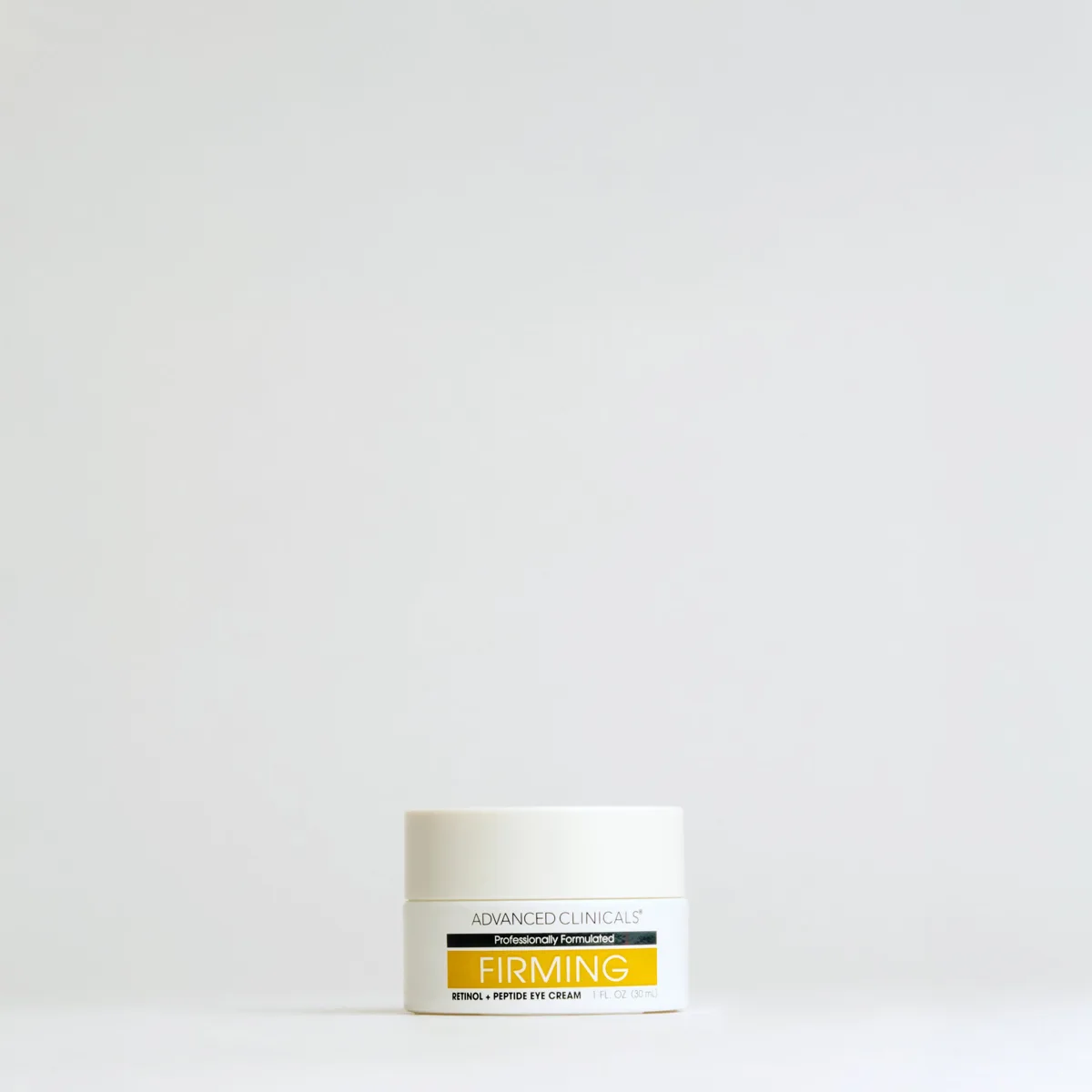
Retinol eye creams at this price usually mean retinol at the tail of the list in a thin lotion. This one places encapsulated retinol twelfth in a dense shea-and-coconut cream, puts caffeine ninth for morning-after de-puffing, and adds the Matrixyl 3000 peptide pair, all fragrance-free in a light-protecting tube, at fifteen dollars. It is designed as the night half of a matched pair with the brand's vitamin C eye cream.
A sensible starter retinol eye cream: an undisclosed but eye-appropriate dose of encapsulated retinol cushioned in shea and coconut, the Matrixyl 3000 peptides behind it and caffeine unusually high for a night product, fragrance-free, in a tube, for fifteen dollars. Too rich for oily eyes, too new to have a record, and no percentage on the label, but the construction is sound and the price is honest.
Five months on the market and around a hundred Amazon ratings are not enough to establish reliable patterns for this cream, and Advanced Clinicals publishes no testing of its own products or the retinol percentage it uses. This assessment therefore rests on the published ingredient order and on independent trials of retinol, caffeine and the peptide pair rather than on measured results from the product itself.
The case for it
What would change this: A declared concentration would move this to a firmer reading of the dose.
Same rule for everyone. “Good choice” is the verdict on 9,564 of 45,024 concern verdicts across the catalog; rule R5 decided 9,072 of them. As of September 25, 2026, engine 5.1.1.
Brand or formulator? Disclose a concentration or correct a fact →
The studies behind the evidence row
The case for it
Same rule for everyone. “Good choice” is the verdict on 9,564 of 45,024 concern verdicts across the catalog; rule R5 decided 9,072 of them. As of September 25, 2026, engine 5.1.1.
Brand or formulator? Disclose a concentration or correct a fact →
The studies behind the evidence row
The case for it
What would change this: A declared concentration would move this to a firmer reading of the dose.
Same rule for everyone. “Supporting role” is the verdict on 8,197 of 45,024 concern verdicts across the catalog; rule R8a decided 1,489 of them. As of September 25, 2026, engine 5.1.1.
Brand or formulator? Disclose a concentration or correct a fact →
The studies behind the evidence row
Also listed for Rough Texture — the actives here (Shea Butter, Caffeine, Retinol, Growth Factors (EGF) are in our research queue for that concern; there is no verdict until their evidence rows are written. That is a gap in our table, not a mark against the product.
Does the jobDoes what a eye cream is for: safe for eye skin, targets a real eye concern. Not measured from the label: hydrates without heaviness, stays where it's put.
A verdict is DermApproved’s assessment of how well a product’s ingredients fit a concern — never a claim about what the product treats. Evidence dots and collected reviews sit beside it and are never blended in. Rules 0.5.1 · evidence table ev-2026.09-r228 · how we decide
The ingredient list of a cheap retinol eye cream is usually a small tragedy: retinol at the very end, after the preservatives, in a thin lotion that could not carry it anyway. This one's list is different enough to be worth reading in full. Retinol is twelfth, after a dense emollient base and a hyaluronate, and it is preceded by caffeine at ninth, which is higher than caffeine appears in either of the brand's caffeine-branded eye serums. Behind the retinol come a plant-expressed peptide and the palmitoyl tripeptide-1 and tetrapeptide-7 pair sold as Matrixyl 3000. For fifteen dollars from a value brand, that is a considered order rather than a decorative one.
Advanced Clinicals is a Midwest-based brand founded in 2004 and best known for sixteen-ounce jars of retinol and collagen cream at off-price stores and on Amazon. Its products have historically been big and generic, and its eye serums, launched in 2021, were oversized gels with actives sprinkled through them. In April 2025 the brand released a matched pair of one-ounce eye creams, a brightening vitamin C cream for the morning and this firming retinol cream for the night, and each label tells you not to layer it with the other. That is a small thing, but it is routine design, and it is not what this brand used to do.
The base is a rich, waxy emulsion of cetyl alcohol, glycerin, a triglyceride, coconut oil, glyceryl stearate, shea butter and stearic acid, with carnauba wax and sunflower oil lower down. That is a lot of cushion, and it is the point: retinol on periorbital skin needs a vehicle that slows its release and offsets its dryness, and the brand's mention of encapsulation, together with the polysorbates and carnauba further down the list, is consistent with a coated retinol dispersed in a fatty cream. The dose is undisclosed. The evidence for retinol itself is not in doubt; a 2007 randomized, vehicle-controlled study in Archives of Dermatology found that 0.4 percent retinol applied three times a week improved fine wrinkles in naturally aged skin over 24 weeks, with increased glycosaminoglycan and collagen production, and a 2009 vehicle-controlled Japanese study found similar improvement in photoaged facial skin. Whether this cream carries enough retinol to reproduce those results is the open question, and the honest answer is that its placement suggests a starter dose, which is appropriate for the eye area and slow to show.
In use it feels like an eye balm. The cream is thick and ivory, warms on the fingertip, and settles to a cushioned, faintly occlusive finish that dry and normal under-eye skin will enjoy immediately. The caffeine earns its high placement: reviewers consistently report less morning puffiness within the first week, which is not a retinol effect and is a nice one to have from a night cream. The tube helps too, keeping light and air off a molecule that degrades in both, and dosing a pea-sized amount without the over-pumping the brand's serums suffer from. Over the first month, the emollients smooth crepey texture and a minority of users see mild flaking at the outer corners as the retinol takes hold, which is the signal to use it on alternate nights rather than to abandon it. The peptides are the patient part of the formula: Matrixyl 3000 has supplier studies on wrinkle depth and a plausible collagen-signalling mechanism, and it provides a second, gentler route to firming that does not depend on the retinol dose.
The limits are the ones the base implies. Coconut oil fifth on the list makes this a poor choice for oily skin or anyone who forms milia under the eyes, and the density means a pea-sized amount for both eyes is the correct dose, with anything more pilling under a morning routine. The plant-expressed peptide, sh-polypeptide-47, is supplier-backed rather than independently tested and should be read as a flourish. Retinol excludes the pregnant and breastfeeding, for whom the brand's vitamin C twin is the sensible alternative. And the product is five months old with around a hundred Amazon ratings, so the four-star early impression is exactly that.
The absence of a stated percentage is the recurring complaint about this brand, and it applies here. A reader who wants to know they are getting 0.1 or 0.3 percent will have to pay three or four times as much for a brand that says so. What this cream offers instead is a well-ordered list, a proper vehicle, no fragrance, a light-protecting tube and a price that makes a six-month retinol trial around the eyes a fifteen-dollar decision. For dry and normal skin new to retinoids, that is a good deal. For oily eye areas, sensitive skin or anyone who needs numbers, look elsewhere. Used nightly with sunscreen in the morning and its vitamin C sibling in the same routine, this is the more capable half of the pair, and a real improvement on the gel serums it replaces.
The hero actives that drive this product's performance.
| Ingredient | Function | Evidence |
|---|---|---|
| Retinol (encapsulated) | Twelfth on the list, after caffeine and the hyaluronate, in a rich shea-and-coconut base, with the brand describing it as encapsulated for slower release. The dose is undisclosed and the placement suggests a low, eye-appropriate level, which is the right call for periorbital skin; the carnauba wax and polysorbates further down are consistent with an encapsulation carrier. | Emerging for Aging |
| Palmitoyl Tripeptide-1 & Palmitoyl Tetrapeptide-7 | The pairing sold commercially as Matrixyl 3000, a collagen-signalling duo with supplier studies on wrinkle depth, listed fourteenth and fifteenth just behind the retinol. In this cream they are the daytime-safe half of the firming claim, working through a different route from the retinol so that the two do not simply duplicate each other. | Not yet assessed |
| Caffeine | Ninth, ahead of the retinol, which is an unusually high caffeine placement for a night cream and gives the formula a de-puffing effect that carries into the morning. It also makes the cream a reasonable pick for people whose main complaint is morning swelling rather than lines. | Limited for Dark Circles |
| Nicotiana Benthamiana Hexapeptide-40 sh-Polypeptide-47 | A plant-expressed growth-factor-mimicking peptide shared with the brand's brightening eye cream, listed thirteenth. Its firming claim rests on supplier data alone, so it is best treated as a modern flourish rather than a proven active, though it does signal a more current approach than the brand's older formulas. | Limited for Aging |
| Butyrospermum Parkii (Shea) Butter & Cocos Nucifera (Coconut) Oil | The emollient base that buffers the retinol: shea, coconut oil, a triglyceride and fatty alcohols form a dense cream that cushions thin under-eye skin and slows the retinoid's dryness. The same coconut-forward richness is what makes it unsuitable for oily or milia-prone eye areas. | Established mechanism for Dryness · established mechanism |
Ingredient standings describe the active at treatment-level doses and vehicles; this product's own condition grades weigh its actual formula.
Aqua/Water/Eau, Cetyl Alcohol, Glycerin, Caprylic/Capric Triglyceride, Cocos Nucifera (Coconut) Oil, Glyceryl Stearate, Butyrospermum Parkii (Shea) Butter, Stearic Acid, Caffeine, Dimethicone, Sodium Hyaluronate, Retinol, Nicotiana Benthamiana Hexapeptide-40 sh-Polypeptide-47, Palmitoyl Tripeptide-1, Palmitoyl Tetrapeptide-7, Humulus Lupulus (Hops) Extract, Haematococcus Pluvialis Extract, Glycyrrhiza Glabra (Licorice) Root Extract, Tocopherol, Cetearyl Phosphate, Oryza Sativa (Rice) Bran Extract, Helianthus Annuus (Sunflower) Extract, Rosmarinus Officinalis (Rosemary) Leaf Extract, Helianthus Annuus (Sunflower) Seed Oil, Copernicia Cerifera (Carnauba) Wax, Phenoxyethanol, Caprylyl Glycol, Hydroxyethyl Acrylate/Sodium Acryloyldimethyl Taurate Copolymer, Sodium Hydroxide, Cyamopsis Tetragonoloba (Guar) Gum, Isohexadecane, Ethylhexylglycerin, Hexylene Glycol, Tetrasodium Glutamate Diacetate, Polysorbate 60, Sorbitan Isostearate, Butylene Glycol, Pentylene Glycol, Polysorbate 20, Propanediol, 1,2-Hexanediol, Carbomer, Sodium Lactate, Disodium Cocoamphodipropionate, Xanthan Gum, Ethyl Ferulate
treatment
PM
Night only, a pea-sized amount for both eyes after cleansing and any serum, kept below the lash line. It is rich enough to be the last step around the eyes. The brand advises against pairing it with its vitamin C eye cream in the same application, and the sensible routine is this at night and a vitamin C or plain moisturizer in the morning under sunscreen. Start every other night for two weeks, and keep exfoliating acids off the eye area on the nights it is used.
The caffeine and emollients make the eye area look smoother and less puffy from the first night, and that is what the first two weeks deliver. Retinol works on a longer clock: fine lines and crepiness soften gradually from about week eight, with the fuller effect at three to six months of consistent use, and mild dryness or flaking in the first weeks is the retinol adjusting rather than a sign to stop.
Retinol is the best-evidenced over-the-counter ingredient for fine lines, including around the eyes, and the studies are worth citing precisely. Kafi and colleagues, in a 2007 randomized, double-blind, vehicle-controlled trial in Archives of Dermatology, applied 0.4 percent retinol lotion to one arm of elderly subjects up to three times a week for 24 weeks and found significant improvement in fine wrinkling compared with vehicle, alongside increased glycosaminoglycan expression and procollagen I production in biopsies. Kikuchi and colleagues reported in a 2009 vehicle-controlled, double-blind study in the Journal of Dermatological Treatment that topical retinol improved photoaged facial skin in middle-aged Japanese women. Both used defined concentrations; this cream discloses none, and its twelfth-place retinol in a rich base is consistent with a low, encapsulated dose suited to periorbital skin, which the literature would predict to act slowly and with less irritation than the trial concentrations.
The peptide pair, palmitoyl tripeptide-1 and palmitoyl tetrapeptide-7, is the combination marketed as Matrixyl 3000, whose supplier studies report reductions in wrinkle depth and improved skin tone over two to three months via matrikine signalling that stimulates fibroblast collagen and hyaluronic acid synthesis; independent peer-reviewed trials are sparse, so the evidence is promising rather than established. Caffeine's de-puffing effect, through superficial vasoconstriction and reduced tissue fluid, is described in the 2013 Skin Pharmacology and Physiology review by Herman and Herman and is the mechanism behind the morning-after improvement users report. The plant-expressed sh-polypeptide-47 is a growth-factor mimetic with supplier data only. The vehicle deserves a note of its own: rich emollients such as shea butter and coconut oil are known to reduce retinoid-induced dryness and improve tolerance, which is the formulation logic here, while the same coconut placement makes the cream a milia risk for susceptible users.
Retinoids remain the first topical suggestion in most consultations about periorbital fine lines, with the standard advice being a low concentration, a cushioning vehicle, night-time use, a slow ramp and morning sunscreen. A low-dose encapsulated retinol in a rich emollient cream, used on alternate nights to start, fits that guidance closely and is the sort of product clinicians are content to see a patient try before a prescription retinoid. The practical flags raised in clinic would be three: the undisclosed percentage, which makes it hard to compare with a known-strength product; the coconut-forward base, a recognised contributor to periorbital milia in susceptible people; and the contraindication in pregnancy and breastfeeding, which applies to all topical retinoids as a precaution. Patients with eyelid eczema or rosacea would usually be steered toward a retinoid-free eye cream until the skin is calm.
At night, after cleansing and any serum, squeeze out a pea-sized amount for both eyes, warm it between the ring fingers and press it along the orbital bone from the inner corner outward, staying below the lash line and off the lid. Let it sit as the final step around the eyes; a separate face moisturizer can go on the rest of the face. Begin with every other night for the first two weeks, then nightly if there is no flaking or stinging, and drop back to alternate nights if there is. Keep exfoliating acids and benzoyl peroxide off the eye area on nights it is used. In the morning, use a retinoid-free eye cream, ideally vitamin C, and always sunscreen, since retinol makes skin more sun-sensitive. Skip it entirely during pregnancy or breastfeeding.
Fifteen dollars for a one-ounce retinol eye cream with peptides, caffeine, a proper vehicle and no fragrance is drugstore money for a mid-market construction. The saving comes at the cost of information: dermatology brands charging three to five times as much typically state the retinol percentage and sometimes carry product-level testing, and this brand does neither. Advanced Clinicals is an established name with two decades of sales rather than a newcomer, so the price reflects a value business model rather than a shortcut. The tube lasts around three months nightly and longer on alternate nights, which makes a full six-month retinol trial around the eyes cost roughly thirty dollars. For dry and normal skin new to retinoids, that is good value; for anyone who needs a stated strength or has an oily eye area, it is the wrong product at any price.
People with dry, normal or combination skin who want a first retinol eye cream that is well buffered, fragrance-free and cheap enough to commit to for six months. Anyone whose under-eye complaint is a mix of early lines and morning puffiness, since the caffeine handles the latter quickly. Readers pairing it with the brand's vitamin C eye cream for a simple AM/PM routine.
Pregnant or breastfeeding readers, for whom any retinoid is off the table. Anyone with an oily eye area, milia, eyelid eczema or active rosacea. People who need a stated retinol percentage, or who want a product with more than a few months of user history behind it.
Ready to try Advanced Clinicals Firming Retinol + Peptides Eye Cream?
Buy at Amazon ♥A thick, ivory cream with a waxy density from the shea, coconut and carnauba that warms and spreads with a fingertip, settling to a soft, cushioned, slightly occlusive finish.
No added fragrance; a faint fatty, waxy note from the base that disappears within a minute.
A 1 fl oz white squeeze tube with a fine nozzle, which keeps air and light off the retinol better than the brand's pump bottles and doses a pea-sized amount cleanly.
The first fortnight feels like using a rich eye balm: smoother, better-hydrated skin and less morning puffiness from the caffeine. A minority notice mild dryness or a hint of flaking at the outer corners in weeks two to four, which is the retinol settling in and eases with alternate-night use. Any firming from the retinol and peptides is a matter of months.
Roughly three months at a pea-sized amount every night, or four to five months on alternate nights.
All Year
Advanced Clinicals introduced two purpose-built eye creams in April 2025 to replace its reliance on oversized gel serums for eye care: a vitamin C and caffeine cream for the morning and this retinol and peptide cream for the night. The pair share a base and a plant-expressed peptide, and each tube advises against layering with the other, a rare piece of routine design from a value brand.
A US value brand since 2004, Advanced Clinicals formulates in-house in the Midwest and sells through Amazon, Walmart and off-price stores at drugstore prices. Its twenty-year sales history is its credential; the brand discloses no active concentrations and publishes no clinical testing of its products, so each formula must be read on its ingredient list.
Retinol should never be used around the eyes.
The eye area is where fine lines show first and where retinoids have some of their best-documented effects; the caution is about dose and vehicle, not the ingredient. A low, encapsulated retinol in a rich emollient base, used at night and kept off the lid, is the standard way to bring retinoid benefits to periorbital skin.
Peptides in the same cream make the retinol unnecessary, or vice versa.
They work by different routes: retinol acts on cell turnover and collagen gene expression, while the palmitoyl peptides act as signalling fragments that nudge fibroblasts. Having both is complementary rather than redundant, and it lets the cream deliver some firming benefit even if the retinol dose is low.
The brand does not disclose the percentage. Retinol sits twelfth on the list, behind the emollients, caffeine and hyaluronate, and is described as encapsulated, which together suggest a low, eye-appropriate dose. That is the right level for periorbital skin but it means results will be gradual.
Most people can after a two-week ramp on alternate nights. The shea and coconut base buffers the retinol well, and irritation is mild and uncommon in early feedback; if the outer corners flake or sting, drop back to every other night rather than stopping altogether.
No. Topical retinoids, including retinol, are generally advised against during pregnancy and breastfeeding as a precaution. The brand's companion Brightening Vitamin C + Caffeine Eye Cream contains no retinoid and is the safer choice for that period.
The brand sells this as the night half of a pair with its vitamin C eye cream and wants them used at different times. There is no dangerous interaction; the practical reasons are that two rich creams stacked around the eye invite milia and pilling, and that keeping vitamin C for the morning and retinol for the night gives each its best conditions.
Yes, more than most night creams, because caffeine is ninth on the list, ahead of the retinol. Users commonly report less morning puffiness within the first week, well before any firming from the retinol and peptides appears.
It is a poor fit. Coconut oil is the fifth ingredient and shea butter the seventh, and the cream is dense and slightly occlusive; oily skin and anyone prone to milia under the eyes will do better with a lighter retinol product.
Recurring themes our editors read across retailer reviews of this product — summaries in our words, not quotations, and not a substitute for your own patch test.
Rich but not greasy on dry under-eyes
Gentle for a retinol product
Less puffiness in the morning
Fragrance-free and affordable
Retinol strength not stated
Too heavy for oily skin
Mild flaking in the first weeks
Results are slow to show