




Hyaluronic Acid Gets the Ad Budget. Glycerin Does the Work.
The cheapest humectant on the ingredient list is also the best-studied, the most reliable in dry air, and the one your favorite moisturizer is quietly built around.
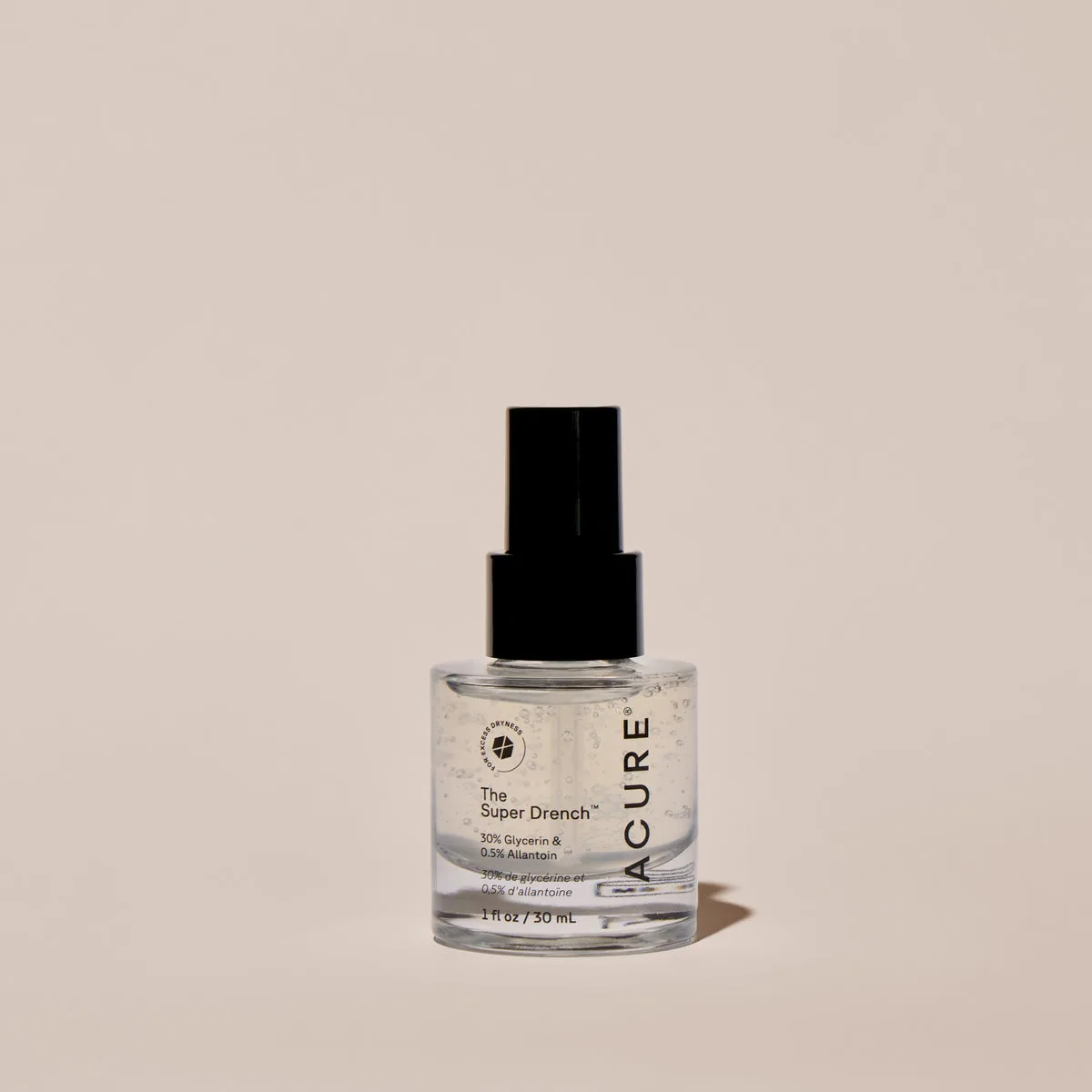
Most hydrating serums hint at glycerin somewhere mid-list; this one builds the entire formula around a declared 30% glycerin base and then stacks polyglutamic acid, niacinamide, and a touch of ceramide NP on top. It is less a multi-tasker and more a single-minded moisture-delivery vehicle aimed squarely at skin that feels parched and tight.
A single-minded moisture bomb built on a declared 30% glycerin base, then reinforced with polyglutamic acid, niacinamide, and a whisper of ceramide. It delivers fast, obvious plumping for tight, dehydrated skin, and stays fragrance-free and gentle. The catch is a small bottle and the need to seal it well, but as a focused dryness rescue it does its one job convincingly.
Launched in 2026 with only a small cluster of early reviews, this serum is scored chiefly on the merits of its formulation — a 30% glycerin base reinforced with polyglutamic acid, niacinamide, and ceramide NP — and on Acure's general approach, rather than on a substantial body of user experience. Its long-term performance and consistency across many skin types remain to be seen.
The case for it
Same rule for everyone. “Good choice” is the verdict on 9,564 of 45,024 concern verdicts across the catalog; rule R5 decided 9,072 of them. Unchanged since September 5, 2026, engine 5.1.1.
Brand or formulator? Disclose a concentration or correct a fact →
The studies behind the evidence row
The case for it
Same rule for everyone. “Good choice” is the verdict on 9,564 of 45,024 concern verdicts across the catalog; rule R5 decided 9,072 of them. Unchanged since September 5, 2026, engine 5.1.1.
Brand or formulator? Disclose a concentration or correct a fact →
The studies behind the evidence row
The case for it
Same rule for everyone. “Good choice” is the verdict on 9,564 of 45,024 concern verdicts across the catalog; rule R5 decided 9,072 of them. Unchanged since September 5, 2026, engine 5.1.1.
Brand or formulator? Disclose a concentration or correct a fact →
The studies behind the evidence row
The case for it
What would change this: Guideline or regulatory standing for the active on this concern would move this from a promising bet to a recommendation.
Same rule for everyone. “Promising” is the verdict on 7,858 of 45,024 concern verdicts across the catalog; rule R9p decided 7,858 of them. Unchanged since September 5, 2026, engine 5.1.1.
Brand or formulator? Disclose a concentration or correct a fact →
The studies behind the evidence row
A verdict is DermApproved’s assessment of how well a product’s ingredients fit a concern — never a claim about what the product treats. Evidence dots and collected reviews sit beside it and are never blended in. Rules 0.5.1 · evidence table ev-2026.09-r228 · how we decide
For years the serum aisle has been an arms race of hero actives: retinol alternatives, exotic peptides, proprietary fermented somethings, each promising to be the one molecule that changes everything. Acure's The Super Drench Serum runs in the opposite direction and is more interesting for it. Its headline ingredient is glycerin — yes, glycerin, the cheapest, most boring, most thoroughly proven humectant in the entire industry — declared right on the box at a striking 30%. There is something refreshing about a serum confident enough to build its whole identity around an ingredient most brands bury halfway down the INCI list and never mention again.
And the formula does build around it. After water, glycerin sits second, then propanediol and diglycerin pile on as supporting humectants, creating a genuinely heavy moisture-binding base. Layered on top of that foundation is polyglutamic acid, a large humectant molecule that holds water at the surface and forms a moisture-trapping film; niacinamide for barrier support and tone; allantoin and bisabolol to soothe; and a small but meaningful pair of lipids in ceramide NP and squalane to give the drawn-in water something to cling to. Prickly pear and ginger extracts round it out, with tocopherol as an antioxidant. The whole thing is fragrance-free, vegan, and reads like a tightly-focused dryness rescue rather than a do-everything serum, which is exactly what it is meant to be.
The mechanics are easy to understand because they are not hiding behind jargon. Humectants like glycerin and polyglutamic acid are water magnets; they pull moisture into the upper layers of the skin and help it hold there. At 30% glycerin, the effect is immediate and unmistakable — apply it to damp skin and within a minute the surface looks plumper, feels cushioned, and the tightness that comes with dehydration eases off. Niacinamide and the ceramide-squalane pairing work the longer game, supporting the barrier so the skin gets better at retaining moisture on its own over time. It is a sensible two-speed design: instant relief from the humectants, gradual reinforcement from the supporting cast.
In use, the texture is a clear, slightly gel-like serum that spreads thin and sinks in quickly. The one thing you need to know — and it is the single most important usage note for this product — is that a humectant-heavy serum like this wants to be sealed. On damp skin followed promptly by a moisturizer, it is fantastic: plumping, comfortable, no issues. Left to sit alone in dry indoor air, though, it can feel tacky, and a very high humectant load can theoretically pull water from deeper in the skin when there is none in the environment to grab. This is not a flaw in the formula; it is simply how humectants behave, and the fix is trivial — apply to damp skin, seal with a moisturizer, done. Anyone who treats this as a step rather than a standalone will have no complaints.
Where it genuinely shines is on skin that is tight, flaky, and dehydrated — the winter-furnace face, the post-cleanse parched feeling, the dull rough patches that no amount of plain moisturizer seems to fully fix. As a dedicated hydration layer slotted under your usual cream, it punches well above its modest profile. The soothing allantoin and bisabolol make it friendly to reactive skin, and the absence of fragrance and harsh actives means it plays nicely in almost any routine, layering happily after a vitamin C in the morning or on its own at night before a richer cream.
The honest limitations are about value and scope, not safety. The bottle is a single fluid ounce, which for a serum you will want to use generously is on the small side, and at twenty-five dollars it lands in fair-but-not-cheap territory for what is, at its core, a very well-built humectant serum. The lipid component — that ceramide and squalane — is real but minor, sitting low on the list, so this is a hydrator first and a barrier-repair product a distant second; do not expect it to replace a dedicated ceramide cream. And because it is a fresh 2026 launch, the review pool is thin, so the score leans heavily on the strength of the ingredient deck rather than years of accumulated feedback.
On value, it is reasonable rather than remarkable. Acure has always traded on accessible pricing, and while this is not the bargain its drugstore-adjacent reputation might suggest, you are getting a thoughtfully constructed, fragrance-free, vegan hydrator with a genuinely high glycerin dose and a credible supporting cast. There is no hype tax baked in — no viral moment, no celebrity, no clinical-sounding claim outrunning the formula — just a serum that knows precisely what it wants to do. If your skin reads as parched and tight and you want a focused moisture layer to slot into your routine, this is an easy, sensible recommendation, with the simple caveat that you must seal it to get the most out of it.
The hero actives that drive this product's performance.
| Ingredient | Function | Evidence |
|---|---|---|
| Glycerin (30%) (30%) | The headline act and second ingredient, dosed at a hefty 30% to flood the skin with a powerful water-binding humectant. Backed up by propanediol and diglycerin, it forms a heavy humectant stack that is the entire reason this serum reads as a 'drench' rather than a light hydrator. | Established mechanism for Dryness · established mechanism |
| Polyglutamic Acid | A large humectant molecule that holds many times its weight in water and forms a moisture-retaining film on the surface, layered here over the glycerin to slow how fast all that bound water evaporates. It complements the glycerin by working at the surface rather than drawing water deep. | Not yet assessed |
| Niacinamide | Sits high enough in the list to support barrier function and even tone alongside the hydrators, helping the skin hold onto the moisture this serum delivers. In a dryness-focused formula it earns its place by reinforcing the barrier rather than just adding water. | Established mechanism for Compromised Skin Barrier · established mechanism |
| Ceramide NP & Squalane | A small lipid pairing tucked into an otherwise humectant-heavy serum, giving the formula a token occlusive-emollient element so the drawn-in water has something to help hold it. They are minor by position but meaningful for a serum aimed at tight, compromised skin. | Established mechanism for Dryness · established mechanism |
| Allantoin & Bisabolol (0.5% (allantoin)) | A soothing duo that calms the redness and tightness that severely dry skin tends to show, working alongside prickly pear and ginger extracts to keep the serum gentle. They make the formula friendlier for the reactive, dehydrated skin it targets. | Not yet assessed |
Ingredient standings describe the active at treatment-level doses and vehicles; this product's own condition grades weigh its actual formula.
Water/Aqua/Eau, Glycerin, Propanediol, Diglycerin, Niacinamide, Allantoin, Xanthan Gum, 1,2-Hexanediol, Caprylyl Glycol, Agar, Cellulose Gum, Citric Acid, Opuntia Ficus-Indica (Prickly Pear) Flower Extract, Bisabolol, Ceramide NP, Polyglutamic Acid, Squalane, Zingiber Officinale (Ginger) Root Extract, Ethylhexylglycerin, Tocopherol
serum
AM & PM
Smooth onto damp skin so the high glycerin content has water to bind, then seal with a moisturizer within a minute or two — humectant-heavy serums can feel tacky or even pull moisture in dry air if left unsealed.
Plumper, more comfortable skin within minutes of the first application. Sustained relief from tightness and flaking over 1-2 weeks of twice-daily use. Visibly smoother, less dull texture from consistent hydration over 4 weeks.
The logic of this serum rests on humectant science, where the evidence is genuinely deep. Glycerin is among the most studied moisturizing agents in dermatology, with research showing it not only binds water in the stratum corneum but also helps maintain the skin's water gradient and supports the maturation of corneocytes, improving barrier function beyond simple surface hydration. Concentrating it at 30% is an aggressive but rational choice for severely dry skin, and pairing it with propanediol and diglycerin spreads the humectant load across molecules of different sizes. Polyglutamic acid is a high-molecular-weight humectant with promising data for holding water at the surface and reducing transepidermal water loss; while its evidence base is younger and thinner than glycerin's, it complements rather than duplicates the smaller humectants by forming a moisture-retaining film. The inclusion of niacinamide is well-supported for improving barrier lipid synthesis and reducing water loss, and even the small dose of ceramide NP aligns with strong evidence that topical skin-identical ceramides improve hydration in dry and compromised skin. The genuinely clever part of the formulation is the layering strategy: small humectants to draw water in, a large humectant to hold it at the surface, and a token lipid-and-niacinamide element to help the barrier retain it. What the formula deliberately does not do is overpromise — there is no exotic active here pretending to do more than the well-understood ingredients actually can.
Clinicians generally regard glycerin as one of the most reliable and well-tolerated humectants available, and a high-glycerin serum like this fits comfortably within standard advice for dehydrated and barrier-compromised skin. In practice, dermatologists often recommend applying humectant-rich products to slightly damp skin and sealing them with an occlusive or emollient moisturizer, precisely because humectants draw water and need something to lock it in — left unsealed in low-humidity environments, very high humectant concentrations can occasionally feel tacky or counterproductive. The supporting niacinamide and ceramide are ingredients with solid clinical backing for barrier support, and the fragrance-free, low-irritant profile makes this the kind of straightforward hydrator that is easy to slot into a sensitive-skin routine. It is commonly viewed as a complement to, not a substitute for, a dedicated moisturizer.
After cleansing, apply a few drops to slightly damp skin and gently press it in, since the high glycerin content works best when there is water available to bind. Use it morning and night as a dedicated hydration step, layering it before heavier serums or treatments. Crucially, follow within a minute or two with a moisturizer to seal in the drawn-in water — this prevents the tacky feel and ensures the hydration lasts, particularly in dry or air-conditioned environments. In the morning it can go on after a vitamin C serum and before sunscreen. A small amount goes a long way, so resist the urge to over-apply.
At around twenty-five dollars for one fluid ounce, this is fair rather than a bargain, especially given Acure's reputation for affordability. There is no larger size offered, so you cannot trade up for better per-ounce value, and a serum you will use generously on dry skin may empty faster than you would like. That said, the price is not inflated by branding or buzz — it reflects a genuinely thoughtful humectant formula with a high glycerin dose, polyglutamic acid, niacinamide, and a ceramide, all fragrance-free and vegan. For skin that truly struggles with dryness, the immediate, repeatable hydration justifies the spend; for casually dehydrated skin, a basic glycerin-rich moisturizer might do most of the job for less.
Best for anyone whose skin reads as tight, flaky, dull, or dehydrated and who wants a focused, fragrance-free hydration layer to slot under their moisturizer. It suits sensitive and reactive skin well thanks to the soothing allantoin and bisabolol, and appeals to those who prefer vegan, cruelty-free formulas built on proven humectants rather than trend-driven actives.
Those looking for a one-and-done product can move on, since this needs sealing to perform and is not a standalone moisturizer. Anyone hoping for serious barrier repair should choose a dedicated ceramide cream, as the lipids here are minor. Budget-focused shoppers may also balk at the small one-ounce size relative to the price.
A clear, lightly gel-like serum that spreads in a thin slip and sinks in fast, leaving a slightly tacky, cushioned feel until a moisturizer goes on top.
No added fragrance; a faint plant-extract note from the prickly pear and ginger is barely perceptible.
Frosted glass dropper bottle for measured application.
Skin feels immediately plumper and less tight as the glycerin pulls in water. In very dry indoor air it can feel slightly sticky on its own, which resolves once you layer a moisturizer over it — that is expected with a humectant-forward serum, not a flaw.
About 2-3 months with twice-daily use of a few drops per application.
All Year
Acure built its catalog on affordable, plant-forward 'clean' formulas, and this 2026 launch reflects the wider skincare shift toward humectant maximalism — leaning into proven, inexpensive moisture-binders like glycerin and polyglutamic acid rather than chasing a novel hero active. It fills a gap in the brand's line for a concentrated, fragrance-free dryness rescue.
Acure is a vegan, cruelty-free natural skincare brand founded in 2009 and widely stocked in US health and grocery retailers. It has a long, accessible track record at affordable prices, though its formulations lean on plant extracts and emphasize 'clean' positioning rather than published clinical studies on its specific products.
Glycerin is just a cheap filler, not a real active.
Glycerin is one of the most studied and effective humectants in skincare. Dosing it at 30% here is a deliberate formulation choice, not corner-cutting — it is the workhorse the entire serum is built around.
A hydrating serum is enough on its own.
Because this serum is humectant-heavy, the water it draws in needs to be sealed. Used alone in dry air it can feel tacky or even draw moisture from deeper skin; layering a moisturizer on top is what makes the hydration last.
Its base is built around a declared 30% glycerin, a powerful humectant, with propanediol, diglycerin, and polyglutamic acid added to bind and hold water. This unusually high humectant load is what produces the immediate plumping effect on dry, tight skin.
Yes. Because the serum is humectant-heavy, the water it draws in should be sealed with a moisturizer applied within a minute or two. Used alone in dry air it can feel tacky, so treating it as a hydration step under your cream gives the best results.
It is well suited to sensitive skin. It is fragrance-free and includes soothing allantoin and bisabolol, with no harsh actives or alcohol. The mild, hydration-focused formula is unlikely to provoke reactive skin.
Yes. It layers cleanly with other actives — apply it after a vitamin C serum in the morning, and it can buffer dryness when used alongside a retinol routine at night. Its humectant focus makes it a flexible companion to most treatments.
Yes. Acure formulates the serum as vegan and the brand is cruelty-free, with no animal-derived ingredients. The formula is also silicone-free and fragrance-free.
The serum comes in a 1 fl oz dropper bottle, which typically lasts around two to three months with twice-daily use of a few drops. There is currently no larger size available.
Recurring themes our editors read across retailer reviews of this product — summaries in our words, not quotations, and not a substitute for your own patch test.
Noticeable immediate plumping and hydration
Calms tight, flaky skin
Layers well under moisturizer
Fragrance-free and gentle
Can feel tacky if not sealed quickly
Small 1 oz size for the price
Too few reviews to judge long-term results