Cassia Alata (Senna Alata)
Products with Cassia Alata (Senna Alata)
 Maximum Protection Everyday
 Anthelios Melt-In Milk Sunscreen SPF 100
The rare SPF 100 sunscreen that's actually pleasant to wear. La Roche-Posay's melt-in milk technology delivers maximum UV protection in a formula that blends invisibly, feels comfortable on both face and body, and doesn't require the texture sacrifices that extreme SPF usually demands. A genuine achievement in sun protection formulation.
 Cult Makeup-Base Sunscreen
 Anthelios Ultra Light Fluid Face Sunscreen SPF 60
A genuinely excellent, decade-proven facial sunscreen — a photostable four-filter SPF 60 in a weightless, instantly-absorbing, true-matte fluid that has earned its cult status as a makeup base. The alcohol-denat base is the whole story: it is exactly what makes the texture beloved, and exactly why dry and sensitive skin should think twice.
 Sensitive Skin Sun Shield
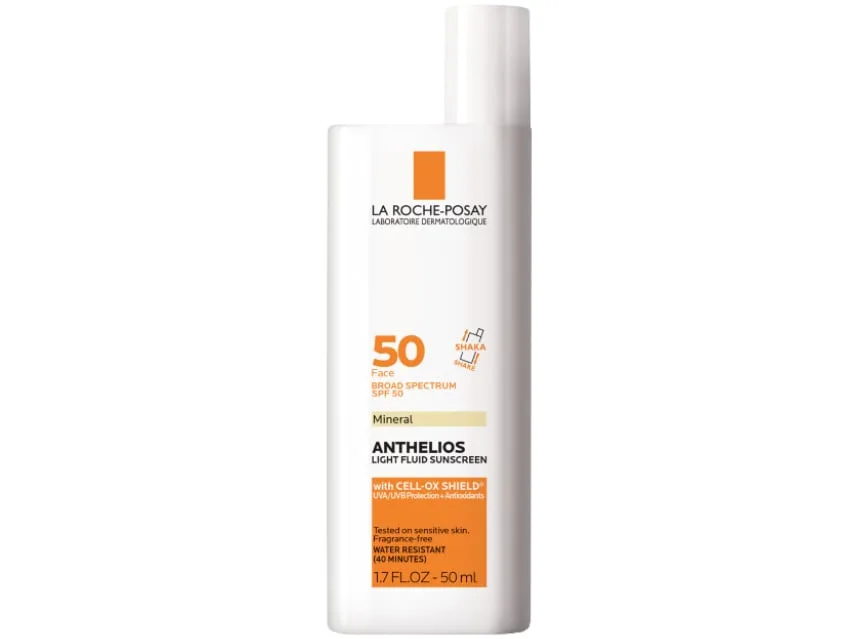
 Anthelios Light Fluid Face Sunscreen SPF 50
La Roche-Posay's answer to the mineral sunscreen texture problem — a 100% mineral SPF 50 that applies like a lightweight fluid rather than a thick paste. Ideal for sensitive and post-procedure skin that needs reliable UV protection without chemical filter irritation. White cast remains a concern for darker skin tones, and the price is premium, but the formulation elegance is genuinely impressive for mineral protection.
 Pure Mineral Pharmacy SPF
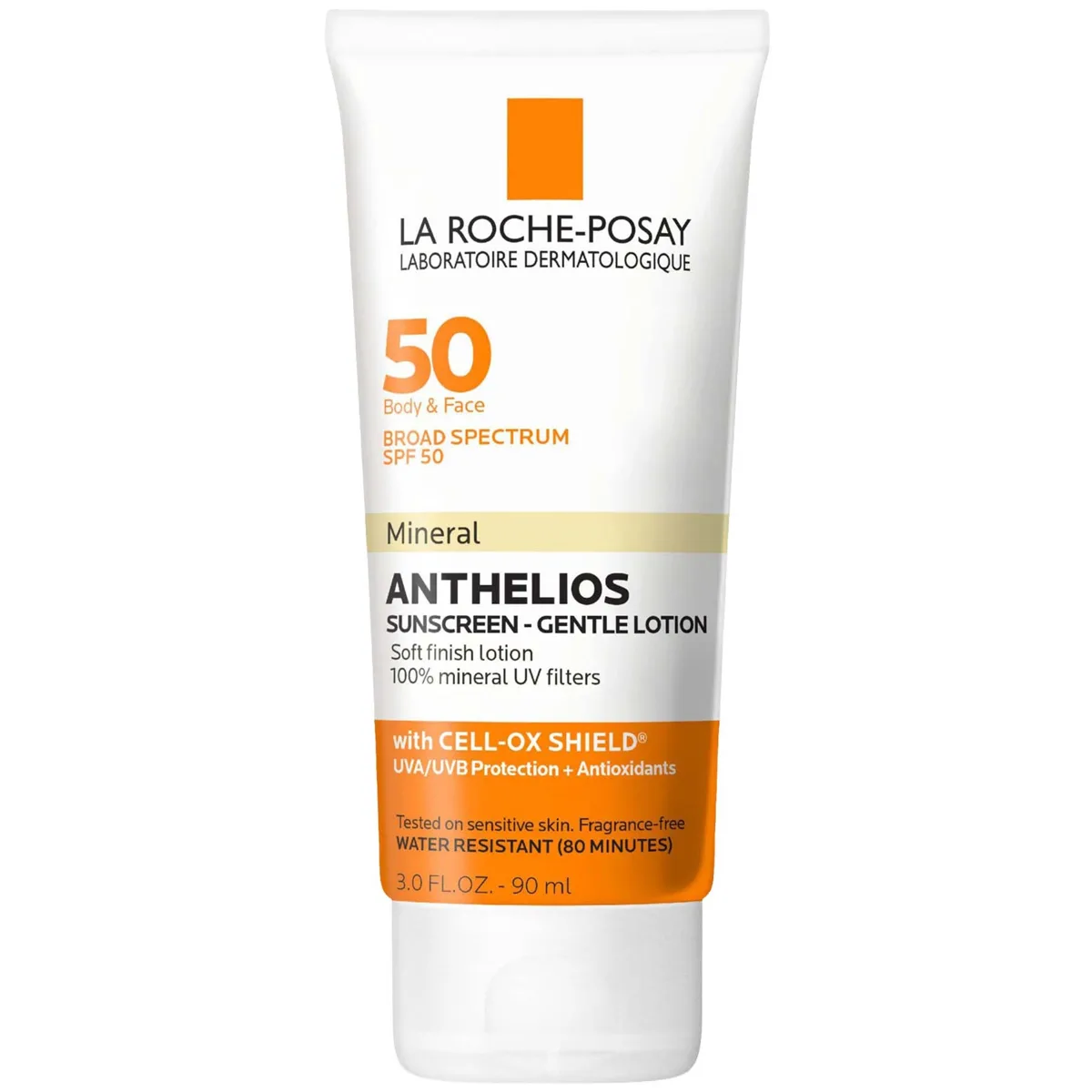
 Anthelios Mineral Sunscreen Gentle Lotion SPF 50
A high-zinc pure mineral SPF 50 that hits the sweet spot for sensitive, reactive, and post-procedure skin. At 15 percent zinc oxide plus 5 percent titanium dioxide, it delivers strong UVA coverage with a pregnancy-safe, reef-safe, fragrance-free profile. The trade-off is the usual mineral compromise: a satin finish with some white cast that shows more on deeper skin tones.
 Derm Office Staple
 Anthelios Ultra-Light Fluid Face Sunscreen SPF 40
One of the most wearable mineral-only daily sunscreens in the US market, and a go-to dermatology office recommendation for post-procedure and reactive skin. Micronized titanium and zinc in a silicone-alkane base that spreads like a chemical fluid and sets to a makeup-friendly matte. Priced at the premium end for 1.7 oz, but earns it on tolerance and texture.
 Derm Office Staple
 Anthelios UV Clear Sunscreen SPF 50
One of the only US chemical sunscreens that genuinely earns its 'for sensitive and breakout-prone skin' positioning. A photostable Anthelios filter system paired with a legitimate azelaic acid dose in a lightweight serum-fluid that disappears on every skin tone. Excellent for rosacea, acne, and post-inflammatory hyperpigmentation — and probably the single best daily sunscreen in the La Roche-Posay US lineup for those conditions.
 Anti-Aging SPF Powerhouse
 Anthelios UV Correct Daily Anti-Aging Face Sunscreen SPF 70
A smart hybrid of sunscreen and anti-aging treatment that delivers SPF 70 protection alongside niacinamide's proven skin-brightening benefits. The formula is elegant and alcohol-free, though the $45 price tag for 1.7 ounces asks a lot — even from a brand with La Roche-Posay's pedigree.
 Oily Skin Sunscreen Champion
 Anthelios Clear Skin Dry Touch Sunscreen SPF 60
The gold standard for oily-skin sunscreen: SPF 60 broad-spectrum protection in a genuinely matte, oil-free formula that won't break you out or make you look like a glazed donut by noon. Not for dry skin, but for its target audience, this is as good as daily facial sunscreen gets at this price.
 Derm Office Staple
 Anthelios UV Tone Daily Invisible Sunscreen SPF 50
La Roche-Posay's most thoughtful answer yet for hyperpigmentation-prone skin that needs daily SPF. A photostable avobenzone system reinforced with Oxynex ST, paired with a meaningful dose of niacinamide, in a serum-fluid base that goes on invisible on every skin tone. Expensive for 1.7 oz but legitimately well-built — and a rare chemical sunscreen that earns its 'for dark spots' marketing.
 Biotech Clean Exfoliator
 Bia Exfoliating Wash
A genuinely well-formulated multi-acid exfoliating cleanser built around biotech botanical actives that distinguish it from most clean beauty alternatives. Pricey for a cleanser, but the formulation depth and published clinical testing justify the positioning for users who want evidence-backed clean beauty.
 Consumer Reports Champion
 Anthelios Melt-In Milk Sunscreen SPF 60
A sunscreen so consistently excellent that Consumer Reports gave it a perfect score five years running. The Melt-In Milk earns its reputation with genuinely comfortable wear, serious UV protection, and a finish that doesn't announce itself — though the alcohol and chemical-only filter system means sensitive skin types should patch test first.
 Weightless Daily SPF
 Anthelios UVAir Daily Serum Sunscreen SPF 50+
La Roche-Posay built the UVAir line around a single obsession — making sunscreen feel like nothing — and the Daily Serum is the flagship. A modern four-filter system free of oxybenzone and octinoxate sits in a weightless, fast-absorbing serum carrying niacinamide, hyaluronic acid, and antioxidants. It is one of the most cosmetically elegant chemical sunscreens available, and the kind of formula that actually gets reapplied.
 Sensitive Skin Go-To
 Anthelios Mineral Tinted Sunscreen SPF 50
A mineral sunscreen that actually feels good to wear — the ultra-fluid texture and universal tint solve the two biggest complaints about mineral SPF. It's excellent for sensitive and post-procedure skin, though the steep per-ounce price and single-shade approach limit its appeal for budget-conscious or deeper-skinned consumers.
 French Pharmacy Pre-Sun Cream
 Adaptasun Face Cream Moderate Sun
Here is the headline you need before anything else: this is not a sunscreen. Despite the Adaptasun name and the sun-care positioning, it has no FDA-recognized UV filters and carries no SPF rating. It's a pleasant antioxidant moisturizer with an unconventional philosophy — but if you wear it to the beach instead of real sunscreen, you will burn.
The full cassia alata (senna alata) guide
Long before lab-synthesized antifungals existed, communities across Southeast Asia, West Africa, and the Caribbean were crushing the leaves of this tall, torch-flowered shrub and pressing them onto ringworm, pityriasis versicolor, and itchy eczematous patches.
Modern laboratory work has started to give that folk practice a mechanistic vocabulary, turning up measurable antifungal and anti-inflammatory activity. The catch worth stating up front: almost all of that data sits in petri dishes and animal models, with human trials largely missing, so the ingredient is best read as a promising traditional remedy rather than a proven dermatological active.
How it's regulated in the US
FDA does not classify ingredients — it classifies products, by what they are sold to do. The same molecule can be a drug active in one product and a cosmetic ingredient in the next, and only the claim on the label decides which. What follows is a statement about that legal standing, not about whether it works — the evidence question is answered separately above.
Cosmetic Cassia Alata (Senna Alata) is a cosmetic ingredient in the US: no OTC monograph covers it and it is not an active in any FDA-approved drug, so a product built around it is a cosmetic rather than a drug.
The most consistent signal is antifungal: laboratory studies show Cassia alata extracts inhibit Malassezia furfur, Trichophyton species, and Candida. A 2024 Pharmaceuticals study isolated several fatty-acid compounds from the leaf and used molecular docking to predict they bind lanosterol 14-alpha demethylase — the same enzyme azole drugs target — though this is a computational prediction of mechanism, not a confirmed binding assay. Antibacterial activity against S. aureus, S. epidermidis, and Pseudomonas is documented across multiple in vitro reports. Anti-inflammatory effects are attributed to flavonoids (kaempferol, quercetin, rutin) and anthraquinones (rhein, aloe-emodin) modulating cytokine signaling in cell models. Wound-healing acceleration has been described in animal studies. Photoprotective interest stems largely from patents held by Laboratoires Téane and in vitro DNA-damage assays; no peer-reviewed human photoprotection trial has been published. The honest read: genuine traditional validation plus encouraging preclinical chemistry, but the human evidence base remains thin.
How it works
The leaves concentrate two compound families that map onto the plant's twin folk reputation — fighting fungus and calming itch. The anthraquinones (rhein, aloe-emodin, chrysophanol) are the headline actives against dermatophytes and Malassezia, the yeast behind dandruff and pityriasis versicolor. The proposed antifungal route is interference with ergosterol synthesis, the fungal-membrane building block; a 2024 docking study actually flagged certain leaf fatty acids, not the anthraquinones, as the strongest predicted binders to the enzyme that makes ergosterol. Either way, the destination is a fungal membrane that can't hold itself together — and it's worth stressing this is modeled and in vitro, not clinically confirmed in skin. The flavonoid fraction handles the anti-inflammatory side. Kaempferol and quercetin dampen pro-inflammatory cytokines and mop up reactive oxygen species in cell cultures, while rutin lends capillary stabilization. That combination is the likely reason traditional preparations were reached for when a patch was both infected and inflamed. On wound repair, the polyphenols appear to nudge several phases along in animal models — tannins precipitate surface proteins, the inflammatory window shortens, and keratinocyte migration and collagen laydown pick up. Any photoprotective benefit reads as a secondary antioxidant effect, quenching UV-generated radicals rather than absorbing UV light, which is exactly why it can't stand in for a real sunscreen filter.
Key benefits
- Laboratory data shows it suppresses Malassezia and dermatophytes linked to dandruff and tinea
- Flavonoids like kaempferol and quercetin ease itch and redness in inflamed skin models
- Documented in vitro antibacterial reach across S. aureus, S. epidermidis, and Pseudomonas
- Polyphenol antioxidants help quench UV-triggered free radicals as a secondary effect
- Animal studies report faster wound closure across several repair phases
- Centuries of topical use against ringworm and pityriasis versicolor now partly echoed in lab work
Concentration & usage
No standardized cosmetic use level exists, and proprietary extracts (such as those patented by Laboratoires Téane) are formulated at undisclosed concentrations. In experimental work, antifungal activity has typically appeared at extract concentrations roughly in the 1–10 mg/mL range, but that does not translate cleanly into a finished-product percentage. On a label, the ingredient may appear as either SENNA ALATA LEAF EXTRACT or CASSIA ALATA LEAF EXTRACT — both are valid current INCI names for the same plant. Seeing it positioned high on the INCI list (ahead of the preservatives) is a reasonable hint that it's present at a functional level rather than a token dusting. No pH-dependency for activity has been reported in the sources reviewed.
Who it's for & who should be cautious
Who it's for
The clearest fit is fungal-prone or reactive skin — think mild pityriasis versicolor, recurring facial Malassezia flares, or the dry, easily-irritated skin that shadows eczema. It also suits anyone hunting for a single botanical that quietly addresses both low-grade inflammation and microbial imbalance without the sting of harsher antifungal actives. Rinse-off formats like cleansers are the gentlest way to try it, and most skin types tolerate it there.
Who should be cautious
Anyone with a known legume or bean-family (Fabaceae) allergy should be cautious, since cross-reactivity is at least theoretically possible — patch test before any regular leave-on use. The anthraquinone fraction has shown cytotoxicity at high concentrations in cell studies, so very concentrated leave-on products are under-characterized for long-term safety. And while topical exposure is a different scenario from eating the plant, oral Cassia alata has documented laxative and uterotonic effects, and topical safety in pregnancy simply hasn't been studied — enough of an unknown that pregnant users may reasonably choose to skip it until better data exists.
Pairs with & conflicts
Myths & facts
Myth: Cassia alata is a sunscreen and can replace UV filters in SPF products
Reality: Any photoprotective effect described in patents and lab assays is antioxidant and DNA-damage-mitigation activity, not UV absorption. It cannot substitute for tested UV filters and should never be the basis of an SPF claim.
Myth: Because it has treated ringworm traditionally for centuries, it works as well as prescription antifungals
Reality: Traditional use points to real activity, but no head-to-head human trials against standards like clotrimazole have been published. For persistent or severe fungal infections, clinically validated treatments remain the standard of care.
Myth: All Cassia and Senna species are interchangeable in skincare
Reality: Cassia alata has its own phytochemical fingerprint and was reclassified into the genus Senna, so it differs from relatives like Cassia tora or Cassia occidentalis. Findings from one species do not automatically carry over to another.
Frequently asked questions
Can Cassia alata genuinely help with pityriasis versicolor, or is that purely folk medicine?
There's real lab evidence behind the tradition. Multiple in vitro studies show the leaf extract inhibits Malassezia furfur, the yeast responsible for pityriasis versicolor, and a 2024 Pharmaceuticals paper modeled the likely mechanism as interference with ergosterol synthesis. Human clinical trials are still missing, though, so treat it as a supportive ingredient rather than a swap for proven antifungal medication.
Why does this leaf turn up in sunscreens if it isn't a UV filter?
Laboratoires Téane holds patents framing it as a protective agent against UV-induced DNA damage — an antioxidant, repair-support role rather than direct UV absorption. Any sunscreen containing it still relies on conventional filters for its SPF; the Cassia alata extract rides along as an adjunct, not the active screen.
Is it gentle enough for sensitive or eczema-prone skin?
The available evidence leans toward tolerability: its anti-inflammatory flavonoids have been studied specifically in the context of atopic dermatitis in Asian ethnomedicine, and a French lab has patented eczema-targeted formulations around it. Rinse-off products carry the lowest risk; high-concentration leave-on versions have less long-term safety data behind them.
How does it stack up against tea tree oil as a plant antifungal?
Both are broad-spectrum botanical antimicrobials, but the routes and risks differ. Tea tree's terpinen-4-ol disrupts microbial membranes fairly indiscriminately and can sensitize skin at higher strengths. Cassia alata is thought to act more selectively on the ergosterol pathway and tends to read as the milder option — though no direct comparative clinical study exists to settle it.
Why do I see both 'Cassia alata' and 'Senna alata' on labels for the same plant?
The plant was reclassified from the genus Cassia into Senna, making Senna alata the currently accepted botanical name. INCI still recognizes both CASSIA ALATA LEAF EXTRACT and SENNA ALATA LEAF EXTRACT, so you'll encounter either spelling for an identical ingredient.
Will Cassia alata clear up acne?
It shows antibacterial activity against Cutibacterium acnes in lab settings, alongside anti-inflammatory properties relevant to the redness of active breakouts. But there are no clinical acne trials and no comparisons to benchmark acne actives, so it's better viewed as a supporting player than a primary acne treatment.