The story behind Cotz Read the full story

The motivation came from the operating room, not the marketing department. Working as a reconstructive plastic surgeon through the 1980s and 1990s, the founder routinely performed CO2 laser resurfacing — procedures that deliberately strip and wound the skin's surface — and watched patients walk out with raw, photosensitive complexions that desperately needed protection they would actually tolerate and apply. He had also spent years repairing the downstream damage of decades of sun exposure. That clinical vantage point produced a simple conviction: the best sunscreen is the one a patient will genuinely wear every day.

His answer was to bet entirely on mineral filters at a time when chemical absorbers dominated drugstore shelves. The challenge was never efficacy — zinc oxide and titanium dioxide are reliable, gentle reflectors — but wearability. Pure mineral formulas tend to sit pale and chalky, so the real engineering problem was making them feel and look acceptable on a face. Tinted versions that double as primers and neutralize the telltale white cast became the brand's signature solution, and the patient profile it was built for — sensitive, reactive, rosacea-prone, freshly lasered or peeled skin — became its natural audience.

The catalog grew into a focused specialist's kit: face and body lotions, sticks, tinted and untinted options, and a children's line, with reef-conscious, cruelty-free formulations. It lives largely in the dermatologist and medical-spa channel rather than the beauty aisle, which suits its post-procedure heritage.

The honest read is that this is a competent specialist, not a hype machine. Pricing sits above generic drugstore mineral options without the advertising muscle of bigger names, and high-SPF mineral formulas can still feel heavier and leave some cast on deeper skin tones — the unavoidable physics any all-mineral sunscreen trades for its gentleness. For people who cannot tolerate chemical filters, that trade is exactly the point.

Sources:[1][2][3]

Founded
2002
Origin
United States
Heritage
Established
Type
Dermatologist-recommended
Verdicts
2 Strong choice · 1 Good choice of 5 assessed
5 products reviewed

All Cotz Products

Full protection melasma
No.1
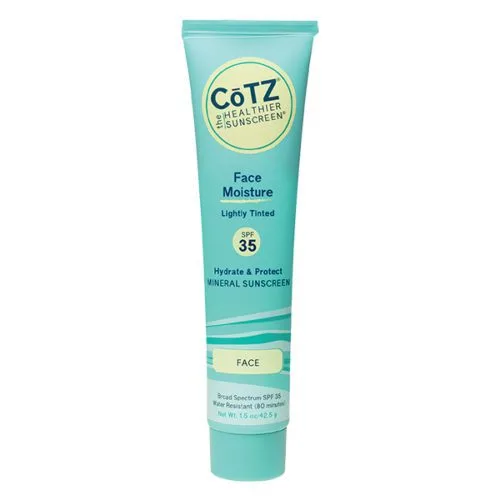
Cotz Face Moisture SPF 35 Lightly Tinted 1.5 oz squeeze tube, mineral sunscreen with iron oxides for melasma and visible-light protection Melasma Protocol Pick
Cotz sunscreen

Face Moisture SPF 35 Lightly Tinted

This is the version of Cotz Face Moisture that dermatologists now recommend first for anyone working on pigmentation, because the iron oxide content provides visible-light protection that untinted formulas simply don't deliver. Same 9.1% zinc and 2.9% titanium filter load as the untinted version, plus a universal tint that neutralizes cast and shields skin from the blue-light wavelengths documented to worsen melasma. For light to medium skin tones, this is a meaningful upgrade over the untinted original.

sensitivenormal Fragrance Free
4.5 (960)
$27.00
Full protection melasma
No.2
Cotz Flawless Complexion Tinted SPF 50 1.5 oz squeeze tube, mineral sunscreen with iron oxides and light coverage finish SPF 50 + Coverage
Cotz sunscreen

Flawless Complexion Tinted SPF 50

Flawless Complexion is what happens when Cotz leans just a little into cosmetic elegance without breaking its dermatologist-friendly formulation discipline. SPF 50, visible-light protection from a generous iron oxide load, and a mica-enhanced finish that lets the product double as light foundation for users with minimal blemishes. The price premium over the SPF 35 version is small enough that anyone with serious sun exposure or melasma concerns should probably upgrade to this one.

normalcombination Fragrance Free
4.5 (820)
$29.00
Good choice sensitivity
No.3
Cotz Sensitive SPF 40 3 oz squeeze tube, stripped-back mineral face and body sunscreen for contact dermatitis and reactive skin Ultra-Sensitive Derm Pick
Cotz sunscreen

Sensitive SPF 40

Cotz Sensitive SPF 40 is the Cotz philosophy taken to its logical endpoint — 13.5% mineral filters, minimal silicone base, nothing added that contact-dermatitis-prone skin might react to, and a larger 3 oz tube that makes it a practical face-and-body choice. It's thick, it leaves a slight cast, and it's not elegant. It is also one of the few sunscreens reactive users can wear every day without planning a backup.

sensitivenormal Fragrance Free
4.4 (1.1k)
$22.00
Supporting role rosacea
No.4
Cotz Face Moisture SPF 35 1.5 oz squeeze tube, 100% mineral zinc oxide sunscreen for sensitive and reactive skin Derm Office Mineral Standby
Cotz sunscreen

Face Moisture SPF 35

Cotz Face Moisture SPF 35 is the sunscreen dermatologists reach for when the goal is 'do no harm.' Nine-point-one percent zinc oxide and 2.9% titanium dioxide in a clean silicone base with no fragrance, no essential oils, and no plant extracts that might sensitize. It's not the prettiest mineral formula on the market, and there's a faint cast on deeper skin tones, but the reliability for reactive and post-procedure skin is hard to match.

sensitivenormal Fragrance Free
4.3 (1.2k)
$25.00
Supporting role rosacea
No.5
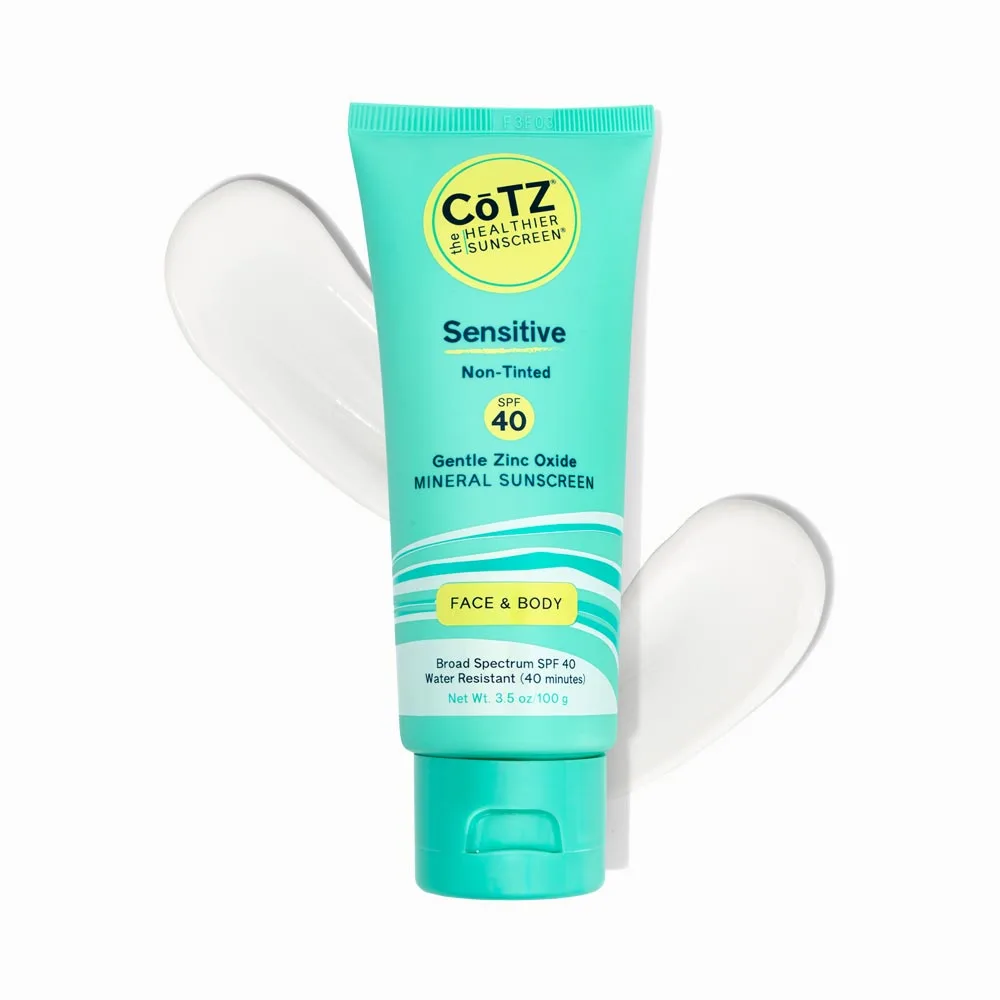
Cotz Sensitive SPF 40 Mineral Sunscreen 100g white squeeze tube Derm Office Sensitive Skin Staple
Cotz sunscreen

Sensitive SPF 40 Mineral Sunscreen

A dermatologist-developed 20% zinc oxide mineral sunscreen that has earned its reputation as a go-to recommendation for rosacea, post-procedure recovery, and pediatric use. The formulation is exactly what sensitive skin needs — no fragrance, no chemical filters, no titanium dioxide — and the price is reasonable for what you're getting. The only real tradeoff is white cast, which is manageable on fair to light skin but becomes a real concern on deeper tones.

sensitivenormal Fragrance Free
4.5 (2.2k)
$31.00

More about Cotz

Founded in 2002 by a plastic surgeon, CoTZ is an all-mineral sunscreen line using only titanium dioxide and zinc oxide as UV filters.

Mineral (physical) sunscreens are well-established and dermatologist-recommended, though CoTZ's specific formulations are not supported by published independent clinical studies beyond standard SPF testing.