TikTok Shop Broke K-Beauty's Price Floor. Distribution Changed More Than the Formulas Did.
US Korean skincare sales passed two billion dollars on 37% growth — driven by a channel that removed two markups and attached a commission to every recommendation you see.
Read the preview
From the DermApproved blog, in K-Beauty: the price collapse. Korean skincare sales in America passed two billion dollars, up thirty-seven percent — and almost none of that was new chemistry. It was a distribution change that stripped out two markups. It also quietly changed who's recommending things to you, and what they're paid when you buy. For the full breakdown, visit dermapproved.com/blog.
The numbers, and what they are actually measuring
In an October 2025 report, NielsenIQ put US K-beauty sales at two billion dollars, up 37% year over year — several times the growth rate of the broader beauty market. Roughly 70% of those sales now happen online. On the supply side, South Korea shipped a record 5.5 billion dollars of cosmetics in the first half of 2025, up nearly 15% year over year, and overtook France as the largest cosmetics exporter to the United States.
The standard reading is that Korean formulation finally won on merit. That reading is not wrong so much as incomplete, because it does not explain the timing. The formulation advantage — the essence-and-serum architecture, the sunscreen textures, the willingness to build a whole product around one ingredient — has been in place for well over a decade. Snail mucin did not get better in 2024.
What changed was the path from a Korean factory to an American bathroom. The old path ran through an importer, a distributor and a retailer, each taking a margin, with shelf space rationed by a buyer. The new one runs through a social commerce platform where a Korean brand can sell close to direct, and where discovery and checkout happen in the same scroll.
Remove two markups and you can either take the margin or drop the price. K-beauty largely dropped the price, which is why a product tier that used to feel like a specialist import now undercuts domestic drugstore brands on formulations that are frequently better. That is a genuinely good outcome for consumers, and it is a distribution story.
The part that changes the advice you are getting
Here is the structural fact worth internalising, because it is not about price at all.
TikTok Shop charges sellers a referral fee — 6% in the United States. Separately and additionally, the seller sets an affiliate commission paid to creators whose videos generate sales. Sellers can technically set anything from 1% to 80%. In practice, open collaboration defaults sit around 10–15%, targeted deals run 25–50%, and beauty specifically is one of the highest-commission categories on the platform, commonly 15–30%.
Which means: when someone in your feed demonstrates a product and a shopping link appears under the video, that person is typically earning something like a fifth of what you spend. Not a flat fee for making the video. A percentage of your purchase, paid on conversion.
This is not a scandal and it is not hidden — affiliate structures are disclosed in the platform's own documentation, and creators are required to label commercial content. But it has consequences that are rarely spelled out.
It rewards enthusiasm over accuracy, because a measured 'this is fine for some people' converts worse than a transformation. It rewards novelty, because a product everyone already owns generates no new commissions. It rewards products with a visible immediate effect — masks that peel off, essences that look dramatic on camera, tone-up creams that change the frame — over ones whose benefit is a slow structural change nobody can film. And it selects against the single most valuable piece of skincare advice, which is that you probably do not need another product.
A reviewer paid on conversion is not lying to you. They are operating inside an incentive that quietly filters what gets recommended before honesty ever enters into it.
Which brands the channel actually built
The channel does not lift the category evenly. It builds specific brands very fast, and the pattern of which ones is revealing.
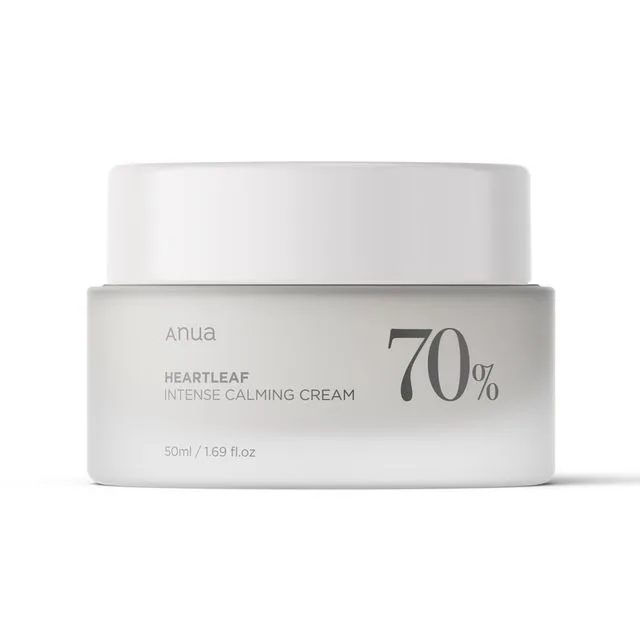
NielsenIQ's own analysis names Medicube and Anua as brands translating viral content into sales that then carried through to Amazon, Sephora and Ulta — the channel functioning as a launchpad rather than a destination. Medicube Collagen Jelly Cream and Anua Heartleaf 77% Soothing Toner are both products with a demonstrable on-camera moment.
Biodance is the purest case. Biodance Bio-Collagen Real Deep Mask is a hydrogel sheet that turns transparent as it works — a product whose defining feature is that it is legible in a fifteen-second video. That is not a criticism of the mask, which does what it says. It is an observation that visual legibility is now a selection pressure on product design.
Meanwhile the brands with the deepest formulation records in the category — COSRX Advanced Snail 96 Mucin Power Essence, SKIN1004 Centella Teca Ampoule, Beauty of Joseon Glow Deep Serum: Rice + Alpha-Arbutin — were mostly built before the channel and have benefited from it rather than been created by it. Our snail mucin and centella pages cover what the evidence for those flagship ingredients actually supports, which is worth reading before the next thing goes viral.
The churn is the other half. A brand that arrives in a feed can leave one, and formulations that exist mainly to be filmed have no reason to survive the trend that created them. The Beauty of Joseon routine and our Korean skincare ranking are both sorted on formulation rather than on momentum, which is the point of having them.
Counterfeits, and why this channel is structurally worse at catching them
Social commerce has a counterfeit problem that is not a temporary enforcement gap.
TikTok Shop publishes an anti-counterfeit policy and enforces it — removal of listings, violation points, account suspension, referral to authorities. That machinery exists. The difficulty is that the platform's defining format works against it. Automated brand-protection tools were built to scan static listings: title, image, description, price. A live shopping stream is video, in real time, with the product held up to a camera and the transaction closing before any crawler has parsed anything. Sellers removed for infringement reappear under new accounts.
Skincare is a bad category to get wrong. A counterfeit handbag is a disappointment; a counterfeit cream is an unknown formula applied to your face, and the failure mode of a fake sunscreen is invisible until it is a burn.
The practical defences are unglamorous. Buy from the brand's own official shop on the platform rather than a reseller with a similar name. Check that the seller has a substantial order history under the same account rather than a new account with high volume. Treat a price well below every other listing as information rather than a win. And check the batch code and manufacturing date on the unit you receive, not on the listing photo — if a seller will not show them, that is your answer.
Buying well inside the channel rather than pretending you'll leave it
The unhelpful version of this article ends by telling readers to stop shopping in a feed. They will not, the prices are genuinely better, and much of the product is genuinely good.
So, four rules that work inside it.
Separate discovery from decision. The feed is an excellent place to find out a product exists and a poor place to decide whether you need it. Screenshot, leave, and look the formulation up somewhere with no commission attached — the compare tool will put two products side by side on composition rather than on charisma.
Ask what the video could not show. Immediate visual effects — tightening, glow, a mask changing colour — are real and mostly cosmetic. Barrier repair, pigment change and retinoid remodelling take months and film badly. A feed systematically over-represents the first category.
Check for a cheaper equivalent before buying the viral one. The dupe finder exists precisely because the product with the best video is rarely the only product with that formulation, and the price gap between them is now often larger than it used to be. Related: price does not equal protection is worth reading in both directions, because the channel has made the cheap option genuinely competitive as often as it has made the expensive one unnecessary.
Notice the incentive without becoming cynical about it. A creator earning a commission can still be right, and many are careful. But when a recommendation is unusually urgent, unusually total, or arrives attached to a discount code that expires, the structure explaining that tone is a percentage of your basket — and knowing that is the difference between using the channel and being used by it.
Products mentioned
Independently reviewed and scored — the real products behind this piece.




- Routine Beauty of Joseon Routine: A Full Hanbang Lineup for Modern Skin Sorted on formulation rather than on what is currently moving in a feed
- Ranked list Best Korean Skincare A ranking built on formulation rather than momentum
- Ingredient Snail Mucin (Snail Secretion Filtrate) What the evidence for the category's flagship ingredient actually supports
- Ingredient Centella Asiatica (Cica) The other ingredient the channel sells hardest
- Question Do expensive sunscreens protect better than cheap ones? Reads in both directions now that the channel has made cheap genuinely competitive
Frequently asked
Why did K-beauty get so much cheaper in the US?
Distribution rather than formulation. The old path ran through an importer, a distributor and a retailer, each taking a margin. Selling through a social commerce platform removes two of those layers, and Korean brands largely passed the difference on as price rather than keeping it as margin.
Does the person recommending a product in my feed get paid if I buy it?
Usually yes, and as a percentage rather than a flat fee. Sellers set an affiliate commission that in beauty commonly runs 15–30%, with targeted deals reaching higher, on top of the platform's own referral fee. That is disclosed structurally, but it means the tone of a recommendation has an incentive behind it independent of the reviewer's honesty.
How does the commission structure change what gets recommended?
It rewards enthusiasm over nuance, novelty over what you already own, and products with an immediate visible effect over ones whose benefit takes months. It also selects hard against the most valuable advice in skincare, which is that you probably do not need another product — because that generates no commission.
Is it safe to buy skincare through social commerce?
With care. The platform publishes and enforces an anti-counterfeit policy, but automated detection was designed for static listings while the format is live video, and removed sellers reappear under new accounts. Buy from the brand's official shop, check the seller's account history, treat an unusually low price as information, and verify the batch code on the unit you receive.
Are the brands that blew up on TikTok actually good?
Some are, and some were designed to be filmed. The most durable names in the category — the ones with real formulation records — mostly predate the channel and were amplified by it. A product whose main feature is that it looks dramatic in fifteen seconds has no particular reason to outlast the trend that made it.