The ABCDE of Moles: The 30-Second Check That Saves Lives
Skincare culture obsesses over glow and forgets the one skin check that actually matters medically. This one is free, takes half a minute, and outranks every serum you own.
Read the preview
From the DermApproved blog, in Skin Cancer and Mole Checks: the ABCDE of moles — the 30-second check that saves lives. Here's something quietly absurd about skincare culture. It'll teach you seven steps to a lit-from-within glow and exactly zero steps to spot the deadliest cancer growing on your own skin. So let's fix that. There are five letters that turn your bathroom mirror into a screening tool, and one of them matters more than all the others combined. There's a number that reframes the whole thing — a survival rate that swings from almost-certain to almost-hopeless based on a single variable you can influence tonight. Plus a trick your pattern-spotting brain already knows how to do. No product moves your odds like this one habit. We'll show you exactly how. That's at dermapproved.com/blog.
The skincare habit the algorithm forgot
Open any skincare feed and you'll be taught, in exhaustive detail, how to layer seven products for a lit-from-within glow. What you almost never see is the 30-second habit that could actually save your life — checking your own moles. There's something quietly absurd about a culture that will spend an hour debating the optimal vitamin C concentration and zero minutes learning to recognize the deadliest form of skin cancer on its own skin.
Melanoma is the point. It accounts for a small fraction of skin cancers but the large majority of skin cancer deaths, and its defining feature — the one that makes early detection so powerful — is that it is highly curable when caught early and rapidly lethal when it isn't. The gap between those two outcomes is often just time: how long the thing sat unnoticed before someone looked.
The tool for looking is a mnemonic simple enough to teach a child: ABCDE. It costs nothing, needs no device, and matters more than any product in your cabinet. This is the one skin routine everyone should actually have.
What ABCDE actually means
Each letter is a warning sign — a feature that's more common in melanoma than in an ordinary mole. No single one is a diagnosis; they're prompts to get a spot looked at.
A is for Asymmetry. Draw an imaginary line through the mole. A normal mole is roughly symmetrical — the two halves match. If one half looks nothing like the other, that's a flag.
B is for Border. Common moles have smooth, even, well-defined edges. Melanomas tend toward irregular, ragged, notched, or blurred borders that seem to bleed into the surrounding skin.
C is for Color. A benign mole is usually a single, uniform shade of brown. Multiple colors within one spot — different browns, black, red, white, or blue — are a warning sign, because melanoma pigment is uneven.
D is for Diameter. Melanomas are often larger than about 6 millimeters, roughly the width of a pencil eraser — though critically, they can be smaller, so size alone never rules it out.
E is for Evolving, and many dermatologists consider it the most important letter of all. Any change over time — in size, shape, color, elevation, or a new symptom like itching, bleeding, or crusting — is a red flag. A stable mole you've had for decades is far less worrying than a spot that's doing something new. Change is the signal.
Why catching it early is everything
The reason this half-minute check punches so far above its weight comes down to a single, stark set of numbers: melanoma survival is almost entirely a function of how early it's found.
When melanoma is caught thin — under a millimeter in depth and not yet spread to lymph nodes or beyond — the five-year survival rate is around 99%. It is, at that stage, one of the most curable cancers there is: a minor surgical excision and you're very likely done. But melanoma's danger is that it can spread (metastasize), and once it reaches distant organs, the historical five-year survival rate falls to roughly 10%. Same cancer, wildly different fate, and the variable that most separates the two is time-to-detection.
That's the whole case for self-exams, and the evidence supports it. Skin self-examination is associated with the detection of thinner tumors at diagnosis, and greater skin awareness has been linked to reduced melanoma mortality risk. You are, in effect, racing the tumor's depth — and a person who checks their own skin regularly tends to catch it shallower, where the odds are overwhelmingly in their favor. No serum, no procedure, no anti-aging routine you will ever buy moves your health outcomes the way finding a melanoma at 0.5mm instead of 4mm does.
The ugly duckling, and how to actually check
ABCDE has one blind spot: it evaluates each mole in isolation, and some melanomas don't tick the classic boxes. That's where the 'ugly duckling' sign comes in, and it's beautifully intuitive. Your moles tend to resemble each other — they're siblings. The ugly duckling is the one that stands out from the family: the spot that simply looks different from all your others, whether it's darker, larger, or shaped unlike the rest. If one lesion makes you do a double-take because it doesn't match its neighbors, that instinct is worth acting on. In a randomized education study, teaching the ugly duckling sign significantly improved the accuracy and specificity of melanoma recognition over the ABCD criteria alone — your pattern-spotting brain is a real diagnostic asset.
How to run the check: monthly, in good light, in front of a full-length mirror, with a hand mirror for the awkward angles. Go head to toe — scalp, behind the ears, back (the most commonly missed spot, and a common site in men), buttocks, between fingers and toes, soles of the feet, and under the nails, where melanoma can hide as a dark streak. Enlist a partner for your back and scalp. And photograph anything you're unsure about, so next month you have an honest comparison rather than a fuzzy memory — the E in ABCDE only works if you can actually tell whether something changed. Our [abcde-check](/tools/abcde-check/) tool walks you through each letter for a specific spot, which is a useful way to build the habit until it's second nature.
When to see a dermatologist — and the prevention half
Be clear on what ABCDE is: a screening prompt, not a diagnosis. You are not trying to diagnose melanoma at your bathroom mirror; you're trying to decide what deserves a professional's eyes. See a dermatologist promptly for any spot that's new and changing, that ticks one or more ABCDE features, that's your ugly duckling, or that itches, bleeds, crusts, or won't heal. When in doubt, get it checked — a dermatologist can dermoscope it in minutes, and the downside of a needless visit is trivial next to the downside of waiting. People at higher risk (fair skin that burns easily, many moles, a history of blistering sunburns, a family or personal history of melanoma, or immunosuppression) should have a lower threshold and consider an annual professional skin exam.
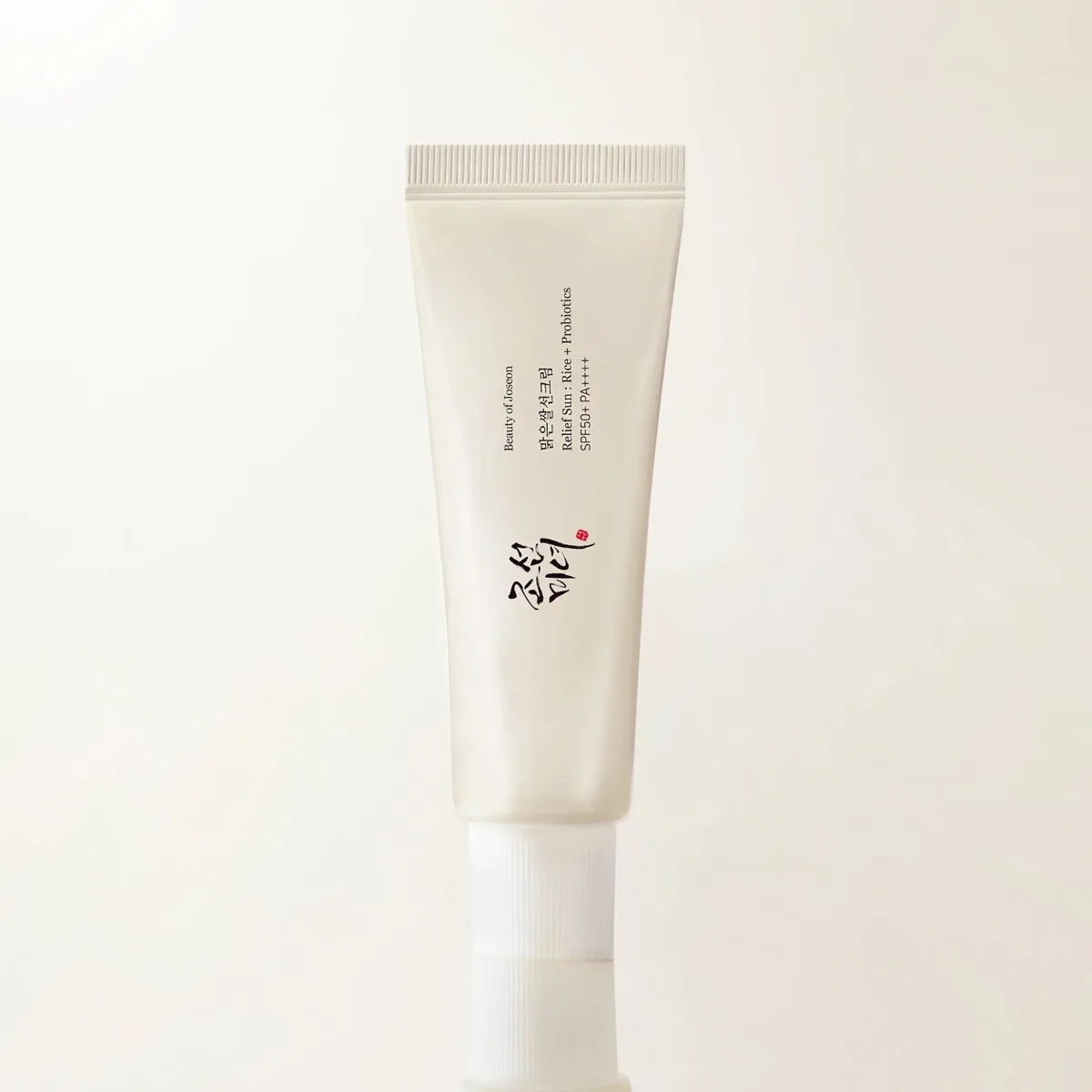
The other half of the equation is prevention, because the leading modifiable risk factor for melanoma is UV exposure. Daily broad-spectrum sunscreen, reapplied and paired with shade and clothing, genuinely lowers your risk — this is the rare place where a skincare product and a medical intervention are the same bottle. A high-UVA-protection sunscreen like La Roche-Posay Anthelios UVMune 400, a derm-counter staple such as EltaMD UV Clear SPF 46, or an easy-to-wear daily like Beauty of Joseon Relief Sun all do the job; the best one is the one you'll actually apply every morning. For building a broader sun-safe routine, our [sun-safety](/tools/sun-safety/) tool covers reapplication, UV index, and coverage. Glow is optional. This check isn't.
Products mentioned
Independently reviewed and scored — the real products behind this piece.


References
- The role of the ugly duckling sign in patient education — Journal of the American Academy of Dermatology, 2017
- Skin self-examination and long-term melanoma survival — Melanoma Research, 2016
Every cited link is verified to resolve to the paper named. Where a source could not be independently confirmed, it is listed without a link rather than pointing you somewhere wrong.
Frequently asked
What does ABCDE stand for when checking a mole?
Asymmetry (the two halves don't match), Border (irregular, ragged, or blurred edges), Color (more than one shade within the spot), Diameter (often larger than about 6mm, a pencil eraser), and Evolving (any change in size, shape, color, or a new symptom like itching or bleeding). Evolving is often considered the most important — change is the key signal.
How often should I check my own moles?
About once a month is a good cadence for a full head-to-toe self-exam in good light, using a hand mirror or a partner for hard-to-see areas like your back and scalp. Photograph anything questionable so you can compare month to month, since spotting change over time is what makes self-exams effective.
What is the 'ugly duckling' sign?
It's the idea that your moles tend to look similar to one another, so the one that stands out — different in color, size, or shape from the rest — deserves attention even if it doesn't tick every ABCDE box. Teaching this sign has been shown to improve the accuracy of melanoma recognition, because your brain is good at spotting the odd one out.
Why does catching melanoma early matter so much?
Because survival depends heavily on how deep the tumor is when found. Thin melanoma that hasn't spread has a five-year survival rate around 99%, while melanoma that has spread to distant sites drops to roughly 10%. Regular self-exams are linked to catching thinner tumors, which is why the 30-second check is so valuable.
When should I see a dermatologist about a spot?
Promptly, for any spot that is new and changing, shows one or more ABCDE features, is your 'ugly duckling,' or itches, bleeds, crusts, or won't heal. ABCDE is a screening prompt, not a diagnosis — a dermatologist can examine it with a dermatoscope in minutes, and when in doubt, it's always worth getting checked.