Summer Skincare: Sweat, Humidity, and Sunscreen That Won't Slide Off
Heat measurably reprograms your skin's oil glands — which is why the routine that thrives in July is lighter on top and far more serious about sun than the one that carried you through winter.
Read the preview
From the DermApproved blog, in Seasonal Skincare: sweat, humidity, and sunscreen that won't slide off. Here's the fact that rewrites your whole summer routine — heat doesn't just make your skin uncomfortable, it turns up your oil glands like a dial. There's a measured number for exactly how much per degree, and once you know it, the summer shine stops feeling like a personal failing. But that's only half the story. That heat rash you blame on being dirty? It isn't dirt at all — and the cozy product that saved your skin in winter might be the exact thing making it worse now. Then there's the two little words on your sunscreen label that don't mean what you think, and the one summer habit almost nobody actually wins. Lighter on top, serious about sun — the full playbook at dermapproved.com/blog.
Your oil glands run hotter — literally
The summer shine you fight every July isn't a sign you're doing something wrong. It's physics operating on a gland. In a classic 1970 study in the British Journal of Dermatology, researchers measured sebum excretion against skin temperature and found the rate climbs roughly 10% for every 1°C rise. Warm the skin, and the sebaceous glands quite literally flow faster — partly because warmer sebum is thinner and moves more easily. A heat wave doesn't just make you feel greasy; it turns up the tap.
Stack humidity on top and it compounds. Damp air slows the evaporation that would normally cool your skin, so surface temperature stays elevated and oil keeps pouring. Sweat mixes with that oil and with whatever you've layered on, sitting on the surface instead of drying. This is why the routine that felt perfect in February suddenly feels like a wetsuit in July: nothing about your skincare changed, but the environment rewrote the rules your skin plays by. The correct response isn't to scrub harder — it's to work with the thermodynamics: lighter textures, less occlusion, and a serious approach to the one thing summer punishes hardest, which is sun exposure.
Why you break out more when it's hot — and what heat rash really is
More oil plus more sweat plus more stuff on your face is a congestion equation, and summer maxes out every term. Excess sebum mixes with sweat, sunscreen, and sloughing skin cells, and in humid conditions that slurry doesn't dry down — it sits in pores and around follicles, which is a recipe for the small summer breakouts many people notice on the forehead, hairline, and back.
Heat rash is a different and widely misunderstood problem. Medically called miliaria, it isn't caused by dirty skin at all — it's blocked sweat ducts. When you sweat heavily and the eccrine ducts get occluded, sweat backs up beneath the surface and leaks into the epidermis, producing the classic prickly, itchy little bumps described in the clinical literature on miliaria. The trigger is heat, humidity, and occlusion, which is the part that matters for your routine: piling on thick, heavy layers in the heat is exactly what plugs those ducts. A greasy balm that's cozy in December can trap sweat and inflame skin in a humid August. The summer fix for both congestion and heat rash points the same direction — lighten up and let skin breathe.
Sunscreen that survives water and sweat (and what 'water resistant' actually promises)
Summer is when sunscreen gets tested hardest and applied worst. Two things break it: sweat and water sheeting it off, and heat making rich formulas feel unbearable so people skip or under-apply. The answer to both is a lighter, water-resistant filter.
First, decode the label. 'Water resistant' is a regulated claim meaning the sunscreen maintains its stated SPF for either 40 or 80 minutes of active water exposure — that's it. It is a reapplication timer, not a permanent shield; after that window, or after towel-drying, protection drops. Japanese and Korean formulas have led here for years. Something like Anessa Perfect UV Sunscreen Skincare Gel uses sweat-and-water-responsive technology designed to hold up through perspiration and swimming, which is exactly the scenario summer throws at you.
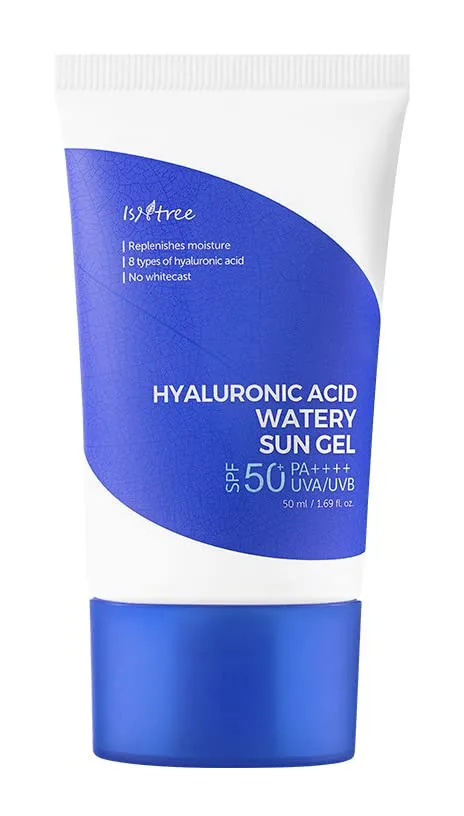
Texture is the other half of compliance. In heat and humidity you want something that dries down light and doesn't slide, because a sunscreen you resent is a sunscreen you skimp on. Watery gels excel here: Isntree Hyaluronic Acid Watery Sun Gel SPF 50+ delivers high protection in a near-weightless finish, while Eucerin Oil Control Sun Gel-Cream SPF 50+ leans matte and mattifying for skin that's already running oily in the heat. And because summer demands frequent reapplication, price matters — a budget modern-filter gel like Deconstruct Gel Sunscreen SPF 50 PA++++ makes reapplying every couple of hours financially painless, which is precisely the point. If you're not sure which filter system or texture suits your skin, our sunscreen-finder tool narrows it by skin type and finish.
Lighten the routine without under-protecting
The instinct to strip your routine down in summer is correct — but people lighten the wrong things. The move is to shed weight from your moisturizer and treatments while keeping, or increasing, your commitment to sun protection.
Start with texture swaps. The rich occlusive cream that saved your barrier in winter is often too much in humidity, where the air is already doing part of the moisturizing for you. Trading it for a gel-cream like Isntree Hyaluronic Acid Aqua Gel Cream keeps hydration humectant-forward and breathable, so skin stays comfortable without the trapped-heat congestion that feeds breakouts and heat rash. Don't skip moisturizer entirely, though — oily, dehydrated skin overcompensates with even more oil, and a stripped barrier burns in the sun faster.
Be strategic with actives. Retinoids and exfoliating acids make skin more photosensitive, so keep them at night and be disciplined about sunscreen the next day; summer is not the season to layer a fresh acid peel under midday UV. If your winter routine had four steps of treatment, summer might want two — a vitamin C or niacinamide in the morning under sunscreen, a retinoid or acid at night — and nothing heavy in between. The principle: subtract occlusion and irritation, never subtract protection.
Reapplication is the whole game — and almost nobody wins it
Here's the uncomfortable truth behind most summer sun damage: the sunscreen wasn't bad, there just wasn't enough of it, and it never got reapplied. Most people apply roughly a quarter to a half of the amount used in the lab tests that earn a sunscreen its SPF number, which means the real-world protection is a fraction of what's on the bottle. Under-application quietly turns an SPF 50 into something far lower.
The fix is boring and non-negotiable. For the face, aim for about two finger-lengths of product — our ftu-calculator tool translates that into the exact amount for your face and each body area so you stop guessing. Then reapply every two hours in strong sun, and immediately after swimming, heavy sweating, or towel-drying — regardless of the water-resistance rating, which only ever bought you 40 or 80 minutes in the first place. Reapplying over makeup or a sweaty face is the part people quit on, which is the strongest argument for a light, gel or fluid formula and a stick or mist you'll actually reach for at the beach. A perfect sunscreen applied once at 8 a.m. is a mediocre sunscreen by lunch.
After the heat: cooling down and calming skin
Post-sun and post-sweat care is about lowering skin temperature and calming inflammation, not scrubbing. If you're flushed and hot, cool the skin first — a lukewarm-to-cool shower and time in air conditioning bring surface temperature down, which, given the oil-and-temperature relationship, also throttles back the sebum surge.
For soothing, reach for lightweight, humectant, anti-inflammatory textures rather than heavy occlusives that trap heat. A cooling gel like Isntree Aloe Soothing Gel Fresh, with aloe and allantoin, calms sun-warmed skin without smothering it, and its watery finish won't plug the sweat ducts you're trying to let recover. If you've got heat rash, the single most effective treatment is removing the trigger: get cool, get dry, stop occluding, and let the blocked ducts clear on their own, which they usually do quickly once the heat and friction stop.
And if you did burn, treat it as the injury it is — gentle hydration, no actives, no exfoliation until it's healed, and strict sun avoidance while the skin repairs. Summer skincare, done right, is less about a shelf of new products and more about respecting what heat does to a living organ: it speeds the oil, floods the sweat, and melts your defenses if you let it. Run lighter on top, run serious on sun, and reapply like you mean it.
Products mentioned
Independently reviewed and scored — the real products behind this piece.



References
- The effect of local temperature variations on the sebum excretion rate — British Journal of Dermatology, 1970
- Miliaria — StatPearls, 2024
Every cited link is verified to resolve to the paper named. Where a source could not be independently confirmed, it is listed without a link rather than pointing you somewhere wrong.
Frequently asked
Why does my skin get so much oilier in summer?
Heat physically speeds up your oil glands — sebum excretion rises roughly 10% for every 1°C increase in skin temperature, and warmer oil is thinner so it flows more easily. Humidity keeps skin from cooling by slowing sweat evaporation, so the shine compounds. It's a temperature effect, not poor hygiene, so cooling the skin helps more than scrubbing it.
What does 'water resistant' actually mean on a sunscreen?
It's a regulated claim meaning the sunscreen keeps its labeled SPF for either 40 or 80 minutes of active water exposure — nothing longer. After that window, or after you towel off, protection drops and you must reapply. Treat water resistance as a reapplication timer, not a guarantee you can skip reapplying.
Is heat rash caused by not washing enough?
No. Heat rash, or miliaria, comes from blocked sweat ducts, not dirt — when you sweat heavily and ducts get occluded, sweat backs up under the skin and causes prickly bumps. Heavy occlusive products and thick layers in humidity make it worse. The fix is to get cool, get dry, and stop occluding, not to wash more aggressively.
How often should I reapply sunscreen in summer?
Every two hours in strong sun, and immediately after swimming, heavy sweating, or towel-drying — no matter the water-resistance rating. Most people also under-apply to begin with, using far less than the amount that earns the SPF on the label, so reapplying with a generous hand matters as much as the timing.
Should I stop using moisturizer in summer if my skin is oily?
No — just switch to something lighter. Skipping moisturizer entirely can push oily skin to overproduce even more oil, and a stripped barrier burns faster. Trade a rich winter cream for a breathable gel-cream that hydrates without the heavy occlusion that traps heat and clogs pores.