Winter Isn't Just Drying Your Skin — It's Running a Four-Front Assault on Your Barrier
Cold air, low humidity, indoor heat, and scalding showers each attack a different weak point. 'Thicker cream' answers one of them.
Read the preview
From the DermApproved blog, in Seasonal Skincare: the winter barrier crisis. That tight, flaky, cracked-knuckle feeling every January — here's what nobody tells you. It's not one problem. It's four, hitting your skin from four different directions at the same time, which is exactly why 'just use a thicker cream' keeps letting you down. One of the four attackers is something you do every single morning and would never suspect. Another is a layering mistake that can make a good moisturizer quietly work against you in dry air. And the season's most counterintuitive fix? Doing less, not more, with the very products you reach for when your skin panics. Get the order of two ingredient types wrong and you actively lose ground; get it right and the barrier holds through the worst of February. Four fronts, one coordinated defense — including the cracked, stinging parts below your jaw that everyone forgets until they hurt. What's attacking you, what to change first, and the layering trick that flips the whole thing? It's all waiting at dermapproved.com/blog.
One symptom, four attackers
The winter skin complaint is monotonous — tight, flaky, itchy, occasionally cracking at the knuckles — but the causes behind it are not one thing, and that's exactly why the standard advice to 'use a thicker cream' only half-works. Winter dryness is a coordinated assault, and each attacker hits a different weak point in your skin's defenses.
Outside, cold wind physically abrades the skin surface and cold temperatures pull blood away from the dermis. Everywhere, the absolute humidity of the air plummets, so the environment is constantly thirsty and drinks moisture straight out of your skin. Indoors, forced-air heating creates a desert with a thermostat. And in the shower, hot water and cleansers strip away the very lipids that hold the barrier together. A StatPearls review of xerosis lists cold weather, low humidity, dry indoor heating, and aggressive hot-water washing among the core exogenous triggers of dry skin — four separate levers, all pulled at once each January. Fix one and ignore the rest, and your skin stays miserable. The answer isn't a single hero product; it's a defense on all four fronts.
The shower is sabotaging you
Of the four, the one people least suspect is the most controllable: your shower. A long, hot shower feels like relief on a freezing morning, and it's quietly one of the worst things you can do to winter skin.
The mechanism is straightforward chemistry. Your barrier depends on a matrix of lipids — think of them as the mortar between the brick-like skin cells — and those lipids dissolve more readily in hot water. The warmer the water, the more of that protective mortar you rinse down the drain, which is why skin feels tight and squeaky right after a hot shower. Surfactants in cleansers and body washes accelerate the same stripping, extracting and emulsifying surface and intercellular lipids. Stack hot water plus a foaming body wash plus already-dehydrated winter skin and you've engineered a barrier breach on purpose, every single morning.
The behavior change is free and more effective than any product: shorter showers in lukewarm — not hot — water, a gentle cleanser used only where you actually need it, and moisturizer applied within a couple of minutes of stepping out, while skin is still damp, so you trap water rather than let it flash-evaporate into the cold bathroom air. No cream can out-perform a daily hot-water strip; you have to stop doing the damage first.
Layering humectants and occlusives the right way
Now the product side — and there's a real technique here, not just 'apply more.' Moisturizers work through three kinds of ingredients: humectants (glycerin, hyaluronic acid, urea) that attract and hold water in the outer skin; emollients that fill the gaps between cells for softness; and occlusives (petrolatum, shea, dimethicone) that form a physical film to slow water escaping. A StatPearls overview of moisturizers describes occlusives as agents that reduce water evaporation by forming a barrier over the skin surface — and in winter, that sealing step is the one that makes or breaks the routine.
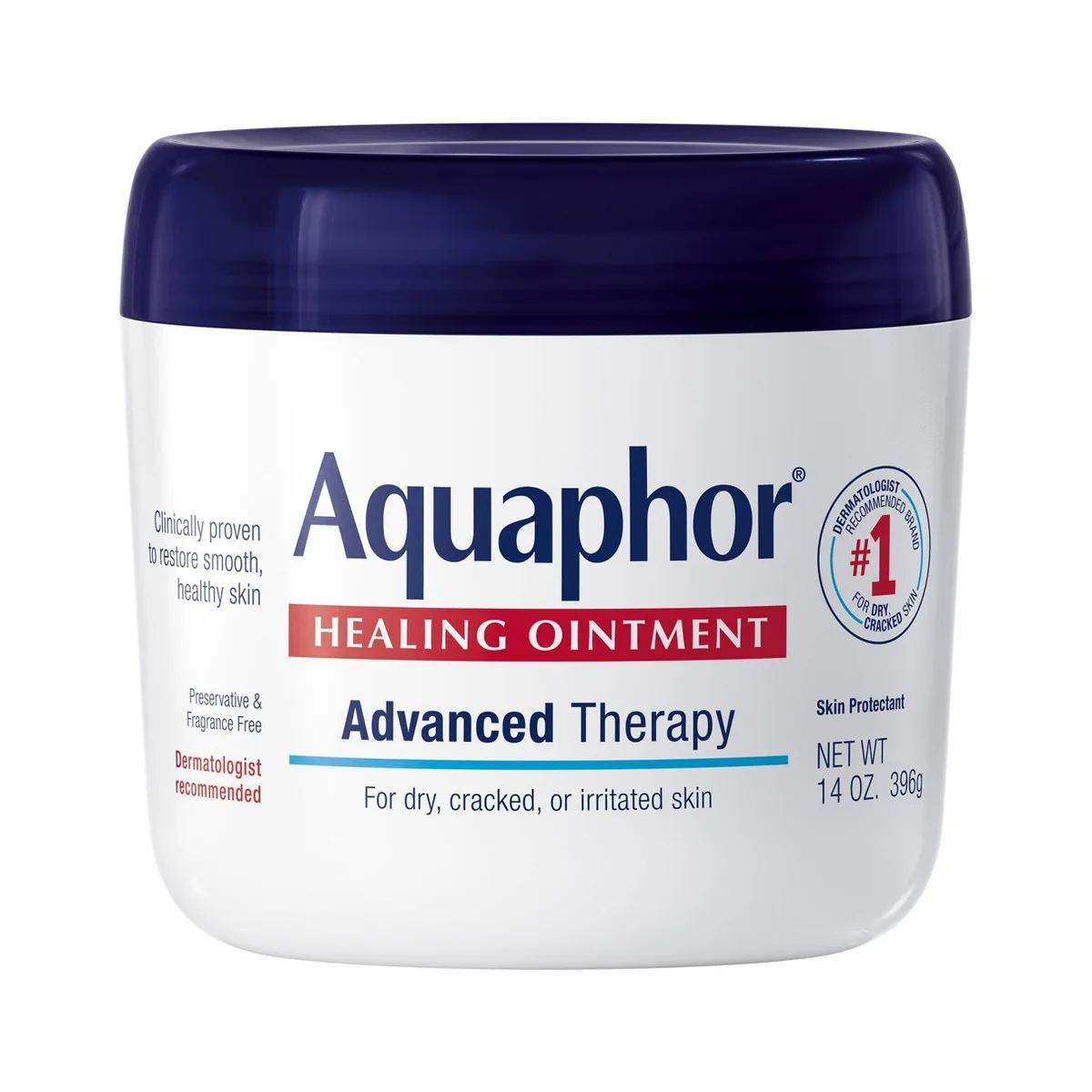
Here's the nuance that trips people up: in very dry air, a humectant applied alone can actually work against you, drawing water from deeper in the skin toward a surface that then evaporates it away. The fix is order. Apply your water-based hydrators first — on damp skin — then lock them under something occlusive so the moisture the humectant grabbed has nowhere to go. A ceramide-rich barrier cream like Versed Daily Recovery Rich Barrier Cream does much of this in one step, pairing humectants with barrier lipids. On the harshest nights, or on windburned cheeks, you can go further and seal everything under a true occlusive like Aquaphor Healing Ointment as a final layer — the 'slugging' approach — which is petrolatum doing exactly what the chemistry says it should. If you're juggling this on top of serums and treatments, our routine-order tool lays out what goes on first so the occlusive ends up where it belongs: last.
Winter is not the season for heroics
There's a counterintuitive move that separates people whose skin survives winter from people who fight it all season: doing less with your actives. A barrier that's already losing the fight against cold, dry air is in no shape to also absorb daily glycolic acid, a strong retinoid every night, and a foaming exfoliating cleanser. Pile actives onto a compromised winter barrier and you get the classic February face — red, stinging, weirdly both oily and flaky, and reacting to products that were fine in September.
Scaling back isn't giving up; it's triage. Drop exfoliation frequency — if you used a BHA three times a week in summer, once or twice may be plenty now. Buffer retinoids with moisturizer, or reduce the nights you apply them, especially if you're seeing flaking that you're mistaking for 'purging.' Be cautious about layering multiple potentially-irritating actives at once when the barrier is already stressed; if you're not sure which of your products clash, our conflict-checker flags the combinations worth spacing out. The goal all winter is a calm, intact barrier — and a calm barrier tolerates the occasional active far better than a raw one tolerates a gentle routine. Restraint is the active ingredient in January.
Lips, hands, and body: the parts that crack first
Faces get all the attention, but in winter it's usually the extremities that break down first — and they need their own plan, not leftover face cream. Lips have essentially no oil glands and a paper-thin barrier, so they chap fast; the fix is a genuine occlusive balm reapplied often, not a waxy tinted stick that flakes. Something petrolatum- or lanolin-based like Aquaphor Lip Repair actually seals, whereas many 'moisturizing' lip products evaporate and leave you licking your lips into a worse cycle.
Hands take the hardest hit because they're washed constantly, exposed to cold, and rarely moisturized in proportion to the abuse. Cracked, stinging knuckles are a lipid-depletion problem — the answer is a thick cream after every wash and, ideally, an occlusive layer overnight. The rest of the body dries out for the same reasons the face does but gets a fraction of the care; a ceramide- or lipid-rich body moisturizer such as La Roche-Posay Lipikar AP+M Triple Repair Body Moisturizer, applied to damp skin after that lukewarm shower, prevents the winter itch and the fine cracks before they start.
Put it together and winter skincare stops being a losing battle against one big enemy and becomes what it actually is: managing four smaller ones. Turn down the shower, seal humectants under occlusives, ease off the acids, and don't forget the parts below your jaw. Do that, and the barrier holds — even in February.
Products mentioned
Independently reviewed and scored — the real products behind this piece.



References
- Xeroderma — StatPearls, 2023
- Moisturizers — StatPearls, 2023
Every cited link is verified to resolve to the paper named. Where a source could not be independently confirmed, it is listed without a link rather than pointing you somewhere wrong.
Frequently asked
Why does my skin get so dry in winter even with moisturizer?
Because winter attacks your barrier from four directions at once — cold wind, low humidity, dry indoor heat, and hot showers — and moisturizer only addresses part of it. If you're still taking hot showers and using strong actives, a richer cream can't keep up. The fix is coordinated: change the shower habits, seal your moisturizer with an occlusive, and ease off exfoliation.
Are hot showers actually bad for winter skin?
Yes, more than most people realize. Water above roughly 40°C dissolves the protective lipids in your skin barrier faster than lukewarm water, and cleanser surfactants strip them further, leaving skin tight and dehydrated. Shorter, cooler showers and moisturizing on damp skin right after make a bigger difference than any single product.
Should I use a humectant or an occlusive in winter?
Both, in that order. Apply humectants like hyaluronic acid or glycerin first on damp skin, then seal them under an occlusive. In very dry winter air a humectant alone can draw water toward the surface where it evaporates, so the occlusive layer on top is what actually keeps the moisture in. Many barrier creams combine the two.
Can I keep using retinol and acids through the winter?
You can, but usually less often. A winter barrier is already stressed by the cold and dry air, so daily acids or a nightly retinoid on top often tip it into irritation. Reduce exfoliation frequency, buffer retinoids with moisturizer, and space out multiple actives. A calm barrier tolerates the occasional active far better than a raw one.
Why do my lips and hands crack in winter when my face is fine?
Lips have almost no oil glands and a very thin barrier, and hands are washed and exposed constantly, so both lose protective lipids faster than the face. They need their own occlusive care — a petrolatum- or lanolin-based lip balm reapplied often, and a thick hand cream after every wash, ideally sealed overnight — rather than whatever's left of your face routine.