'Reef-Safe' Is an Unregulated Claim Attached to a Real and Contested Question
The phrase means nothing in law and any bottle can carry it. The science underneath it is neither proven nor debunked — and the paper that changed it most came out after most people stopped paying attention.
Read the preview
From the DermApproved blog, in Sustainable Beauty: reef-safe means nothing in law — any bottle can print it. The study behind the bans was thinner than campaigners claimed and stronger than sceptics admit. Then researchers found the mechanism, and it points the wrong way for reassurance. The corals most at risk are already bleached. For the full breakdown, visit dermapproved.com/blog.
The phrase is empty. The question underneath it is not.
Start with the easy half. 'Reef-safe' and 'reef-friendly' have no legal definition in the United States. No agency sets a standard for them, no body audits them, and no test has to be passed before either phrase goes on a bottle. A product can carry 'reef-friendly' while containing a filter that a jurisdiction has specifically banned, and nothing about that is illegal.
So the words themselves cannot help you. They appear on genuinely sensible products — Vanicream Sunscreen Broad Spectrum SPF 50+ and Avène Mineral Sunscreen Fluid SPF 50+ both list a reef claim alongside their formulations, and both are perfectly reasonable zinc-based sunscreens — but the phrase is not what makes them reasonable. The formulation is. A term that a good product and a bad product can print with equal freedom carries no information.
That is where most coverage of this subject stops, usually with a knowing remark about greenwashing. It should not stop there, because the scientific question the phrase is gesturing at is genuinely unresolved and genuinely contested, and the two confident positions you will encounter — sunscreen is killing coral reefs and the coral sunscreen thing was debunked years ago — are both wrong, in ways that have changed since 2022.
This piece takes the evidence in order, gives each side its strongest case, and ends where any honest treatment of this subject has to end: with you wearing more sun protection, not less.
What the study behind the bans actually reported
The paper is Downs and colleagues, published in Archives of Environmental Contamination and Toxicology in 2016. It examined oxybenzone — benzophenone-3 — against the larval form of the coral Stylophora pistillata and against cultured cells from seven coral species, and it is worth reading the findings rather than the headline.
Oxybenzone behaved as a phototoxicant: its adverse effects were worse in light than in darkness. Exposed larvae transformed from a motile state into a deformed, sessile one. Bleaching increased with concentration. The authors reported genotoxicity, measured as a positive relationship between DNA lesions and oxybenzone concentration. And they described an endocrine effect on skeleton formation, in which larvae induced ossification that encased the animal in its own skeleton — a striking result and, whatever one thinks of the study's limits, not the sort of thing that turns up by chance.
The numbers matter for what follows. For larvae exposed in light, the 24-hour LC50 — the concentration killing half the sample — was 139 µg/L, with the 8-hour figure far higher at 3.1 mg/L. The deformity EC20 at 24 hours was 6.5 µg/L in light. Cell-level LC50s across seven species ranged from 8 to 340 µg/L.
The same paper also reported field measurements, which is the part usually left out. At Hawaiian sites the authors measured oxybenzone contamination between 0.8 and 19.2 µg/L. In the US Virgin Islands they reported a far wider range, from 75 µg/L up to 1.4 mg/L.
The criticisms — including the popular one that does not work
The standard rebuttal, repeated across a great deal of sceptical coverage, is that the laboratory concentrations were wildly higher than anything found in real reef water, making the results biologically irrelevant.
For the acute lethality endpoints, that criticism has force. Concentrations in the milligram-per-litre range are not what a reef experiences, and an LC50 derived at those levels tells you about a poison, not about a place.
But it does not dispose of the study, and here is why: the deformity threshold of 6.5 µg/L sits inside the 0.8 to 19.2 µg/L range the same authors measured at Hawaiian sites. You cannot simultaneously accept their field sampling and dismiss the sublethal endpoint as unreachable. If the measurements are wrong, say the measurements are wrong. 'Unrealistic concentrations' as a blanket dismissal is a rhetorical move rather than an argument, and it has been repeated by people who ought to have checked.
The better-founded criticisms are more technical and less satisfying to either camp. Static single-species larval assays do not represent a reef, where flow, dilution, sediment binding and community interactions all operate. The very high US Virgin Islands figures came from heavily used swimming areas rather than reef-wide sampling, so they describe hotspots, not oceans. For poorly soluble compounds, nominal exposure concentrations in laboratory work frequently exceed what actually stays dissolved, which makes reported doses unreliable. And short-term larval endpoints, however dramatic, do not by themselves establish a population-level effect on a coral colony.
The fair adjudication came from the National Academies, which reviewed the whole field in 2022 at the EPA's request. Its conclusion was neither vindication nor dismissal: the existing evidence was insufficient to make a risk determination, with several judgements resting on single or few studies; for filters with low solubility, results were typically above solubility, indicating a need for chronic studies at lower concentrations; and data were limited for the marine species that actually matter. Its central recommendation was that the EPA should conduct a full ecological risk assessment for every marketed UV filter, and that the need was urgent — because exposure of aquatic organisms in US waters is documented and the potential for impact has been experimentally demonstrated.
That assessment has not been completed. Which means the honest description of the state of play is not 'proven' and not 'debunked' but unresolved, with the regulator asked to resolve it and not yet having done so.
Then the mechanism turned up
In May 2022, a group at Stanford published in Science the finding that changes the shape of this debate, and it received a fraction of the attention the original controversy did.
The team found that oxybenzone caused high mortality in a sea anemone under simulated sunlight including UV. The counterintuitive part came next: oxybenzone itself protected against UV-induced photo-oxidation. What killed the animals was what they did to it. Both the anemone and a mushroom coral metabolised oxybenzone into oxybenzone-glucoside conjugates — and those conjugates were strong photo-oxidants. The organisms were converting a sunscreen into a phototoxin inside their own tissue.
Two further details make this consequential rather than merely interesting. The algal symbionts sequestered the conjugates, and mortality correlated with conjugate concentration in the animal's cytoplasm. And mortality was higher in anemones that lacked symbionts — which, as the authors noted, suggests an enhanced risk from oxybenzone to corals that have already been bleached by rising temperatures.
Sit with that last point, because it inverts the comfortable version of the argument. The reassuring framing has always been that climate change is the real problem and sunscreen is a distraction. This result suggests the two are not independent: the corals most vulnerable to oxybenzone are precisely the ones warming has already damaged. A stressor that matters more on a degraded reef than a healthy one is not a distraction from reef degradation.
It is also, straightforwardly, the kind of finding that a purely precautionary ban is supposed to anticipate. The legislators in Hawaii, Key West and Palau acted in 2018 on evidence that was genuinely thin for the purpose. Six years later the mechanism they were implicitly betting on had been characterised in Science. That does not retroactively make the bans well-evidenced at the time they passed — but anyone still describing them as an evidence-free panic is working from a 2019 understanding of a field that moved.
Ranking the stressors, because proportion is the whole argument
None of the above changes what is actually killing reefs, and any piece that leaves this out is misleading by omission.
Between 1 January 2023 and 30 March 2025, 84% of the world's coral reefs experienced bleaching-level heat stress, across 82 countries, territories and economies. That is the fourth global bleaching event, and the trajectory is the point: 21% of reefs in 1998, 37% in 2010, 68% across 2014–2017, 84% now. The cause is ocean temperature, driven by human greenhouse gas emissions, in a period that produced the hottest year on record.
Below that sit the local stressors that have been degrading reefs for decades and are not controversial in the slightest: nutrient runoff from agriculture, untreated and partially treated sewage, sedimentation from coastal development and deforestation, overfishing and destructive fishing practices, and direct physical damage from anchors, boats and hands.
UV filters belong on that second list, not the first, and they are a local stressor concentrated where large numbers of people enter the water in one place. Which is exactly the geography in which a targeted ban is a coherent policy and a global claim about sunscreen destroying reefs is not. The National Academies made the connecting point explicitly: whatever risk UV filters pose occurs in the context of other global and local stressors, and temperature exacerbates the effects of toxicants. These things compound. They do not compete for a single explanatory slot.
So: sunscreen is not why reefs are dying. It is plausibly a real additional insult at heavily visited sites, on organisms already weakened by the thing that is.
Mineral filters are not inert, and the marketing does not mention it
The reef-safe aisle resolves almost entirely to zinc oxide and titanium dioxide, on the implicit reasoning that a mineral is a rock and a rock cannot hurt anything. That reasoning does not survive scrutiny either.
Zinc oxide is not inert in seawater: it dissolves, releasing zinc ions, and dissolved zinc is toxic to marine invertebrates, larvae and algae at low concentrations. Nanoparticulate zinc oxide and titanium dioxide have documented effects on phytoplankton and invertebrates in laboratory systems. Titanium dioxide is photocatalytic — under sunlight it generates reactive oxygen species, which is why sunscreen-grade particles are coated, and coatings degrade. None of this establishes reef harm at environmental concentrations, and it should not be presented as though it does. But it is the same evidential position the organic filters are in, which is precisely the point: the National Academies recommended an ecological risk assessment for all currently marketed UV filters, minerals included, and none of them has one.
So a mineral sunscreen is a reasonable precaution — lower-solubility, longer-used, and the option that jurisdictions with bans have effectively selected for. It is not a demonstrated-harmless product, and 'reef-safe' asserts exactly that. If you want the mechanical difference between the two filter classes explained properly rather than as a purity story, how mineral and chemical filters actually work is the place to start, because most of what circulates on that subject is wrong in both directions.
What to do at a reef — and the sentence this cannot end on
Here is the non-negotiable. Nothing in this article is a reason to wear less sun protection, and if it produces that outcome it has done more harm than every gram of oxybenzone in the argument. The National Academies, in the same report that called for an urgent ecological risk assessment, restated that consistent use of SPF 30 broad-spectrum sunscreen reduces the risk of melanoma, squamous cell carcinoma, sunburn and photoaging — and noted that real-world sunscreen use is already inadequate for photoprotection. Both things are true at once and the health one is not in doubt.
So, in order of effect:
Cover up first. A rash guard or UPF shirt, a wide-brimmed hat, and shade in the middle of the day. Textile is the only filter that leaches nothing at all, and it solves the reapplication problem that defeats every sunscreen in water. Snorkelling in a long-sleeved rash guard removes most of your exposed surface area and most of your product use in one decision.
Use a mineral formula on what is left. Face, hands, feet, the back of the neck. CeraVe Hydrating Mineral Sunscreen SPF 50, Cetaphil Sheer Mineral Sunscreen SPF 50 and Blue Lizard Sensitive Mineral Sunscreen SPF 50+ are all straightforward zinc-based options; our mineral sunscreen ranking and the reef-safe list are sorted on formulation rather than on the phrase. The sunscreen finder will filter by filter type if you want to choose that way, and the sun safety tool covers the dose and timing questions that determine whether any of it works.
Apply twenty minutes before you get in the water. More of the film binds to skin and less of it washes straight off, which reduces both your exposure risk and the load in the water. This single behavioural change probably does more than the filter choice.
Obey the local rule. Hawaii, Key West and Palau have legislated. Comply — not because the evidence is settled but because it is a reasonable precaution in exactly the high-traffic setting where the case is strongest, and because a visitor is not the right person to overrule a jurisdiction about its own reef.
And do the bigger things. The largest contribution most visitors make to reef damage has nothing to do with chemistry: do not touch, kick or stand on coral, choose operators that use mooring buoys rather than dropping anchor, do not buy coral or coral products, and support the wastewater and runoff measures that address the local stressor nobody markets a bottle about.
The claim on the front of the bottle is empty. The concern behind it is not. And the correct response to an unresolved environmental question has never been to stop protecting your skin.
Products mentioned
Independently reviewed and scored — the real products behind this piece.
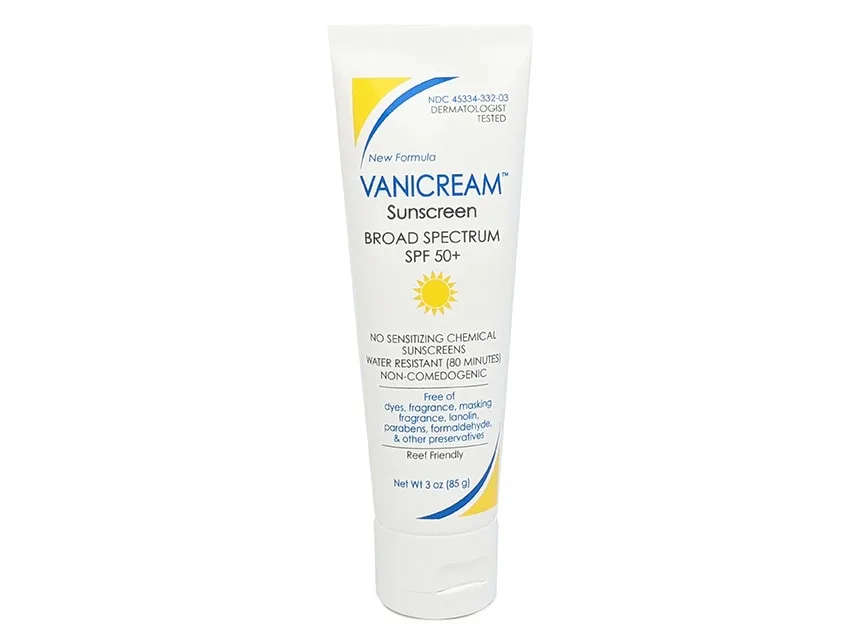

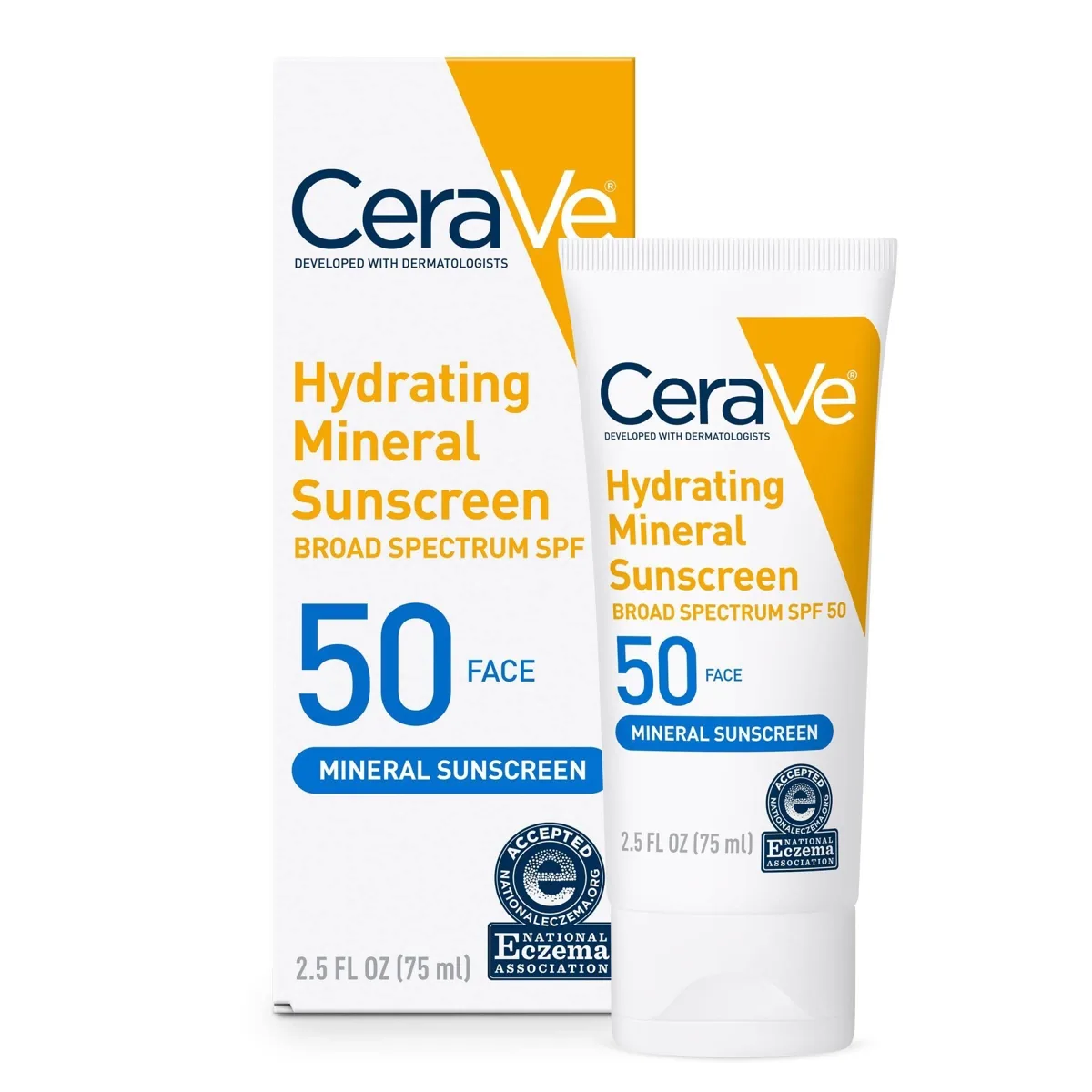


- Ranked list Best Reef-Safe Sunscreens Sorted on formulation rather than on a phrase no agency defines.
- Ranked list Best Mineral Sunscreens The broader mineral list for anyone choosing filters by class.
- Ingredient Zinc Oxide Not inert in seawater — it dissolves, and dissolved zinc is toxic to marine invertebrates at low concentrations.
- Ingredient Titanium Dioxide Photocatalytic under sunlight, which is why sunscreen-grade particles are coated.
- Question Do mineral and chemical sunscreens work in different ways? The mechanical difference, explained without the purity framing that surrounds it.
References
- Toxicopathological Effects of the Sunscreen UV Filter, Oxybenzone (Benzophenone-3), on Coral Planulae and Cultured Primary Cells and Its Environmental Contamination in Hawaii and the U.S. Virgin Islands — Archives of Environmental Contamination and Toxicology, 2016
- Conversion of oxybenzone sunscreen to phototoxic glucoside conjugates by sea anemones and corals — Science, 2022
- Review of Fate, Exposure, and Effects of Sunscreens in Aquatic Environments and Implications for Sunscreen Usage and Human Health — National Academies of Sciences, Engineering, and Medicine, 2022
- 84% of the world's coral reefs impacted in the most intense global coral bleaching event ever — International Coral Reef Initiative, 2025
- NOAA confirms 4th global coral bleaching event — National Oceanic and Atmospheric Administration, 2024
Every cited link is verified to resolve to the paper named. Where a source could not be independently confirmed, it is listed without a link rather than pointing you somewhere wrong.
Frequently asked
Does 'reef-safe' on a bottle mean anything?
Not in any enforceable sense. No US agency defines or audits the term, so any product may print it — including one containing a filter that a jurisdiction has banned. It is a marketing phrase attached to a real scientific question rather than a certification. Judge the product by which filters it uses, not by the words on the front.
Was the coral sunscreen research debunked?
No. The 2016 study has real methodological limits — static single-species larval assays, hotspot sampling, likely exposure concentrations above solubility — but its sublethal deformity threshold sits inside the range those same authors measured in Hawaiian waters. A 2022 Science paper then identified a mechanism, showing anemones and coral convert oxybenzone into phototoxic conjugates. The field is unresolved, not overturned.
Is sunscreen a major cause of coral bleaching?
No. Between January 2023 and March 2025, 84% of the world's reefs experienced bleaching-level heat stress across 82 countries, driven by ocean temperature — up from 21% in 1998. Nutrient runoff, sewage, sedimentation and overfishing follow. UV filters are a local stressor concentrated at heavily used swim sites, which is where targeted bans make sense and global claims do not.
Are mineral sunscreens genuinely harmless to marine life?
They are a reasonable precaution, not a demonstrated-harmless option. Zinc oxide dissolves in seawater to release zinc ions that are toxic to marine invertebrates at low concentrations, and titanium dioxide is photocatalytic under sunlight. The National Academies recommended an ecological risk assessment for every marketed UV filter, minerals included — and none has yet been completed.
What should I actually do when swimming at a reef?
Cover up first: a rash guard and hat remove most exposed skin and most product use at once, and textile leaches nothing. Use a mineral formula on what remains, apply it twenty minutes before entering the water so more binds to skin, and obey local bans. Then do the bigger things — never touch or stand on coral, and choose operators that use mooring buoys.